7
Test
Barfender: my idiotic friend drank all the beers
A co-op bar that collapses while you serve. 98 per cent positive, and one of the rare times chaos is the actual subject.
Alexandrosse
7 min
An icy tile-placement game where you watch the attack coming three turns out and cannot undo a single thing.
Alexandrosse
InsertCoins.press Score
8/10
Verdict
Recommended
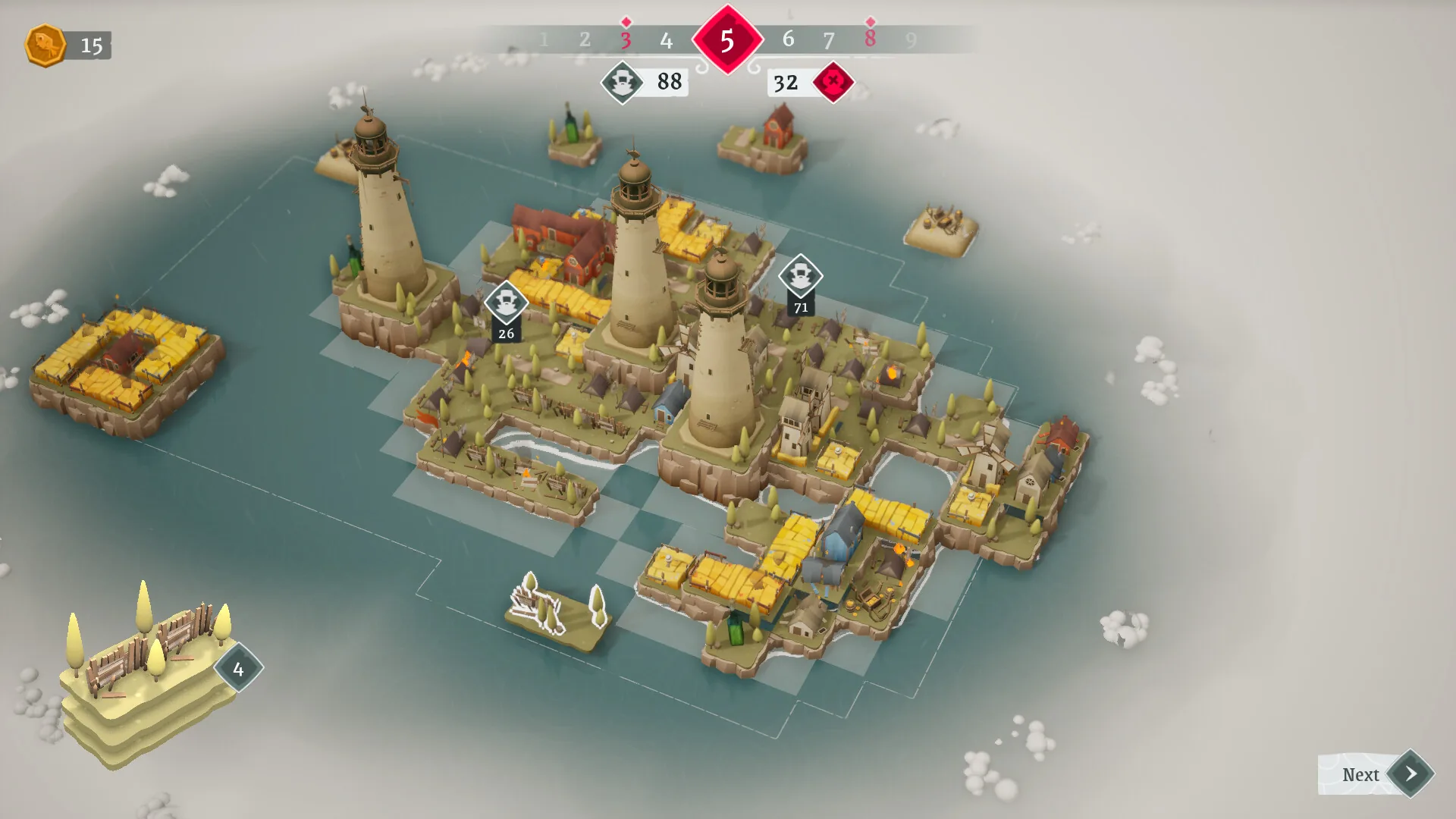
At the top of the screen there is a strip numbered 1 to 9. Two red diamonds are planted on it, on the 3 and on the 8.
Those are the nights they come out of the water.
So you know from the first turn, and that is where this game turns nasty: it never surprises you, it simply lets you watch the deadline approach while you place tiles you will never be able to take back.
Say it up front: this is beautiful, with a beauty you think you recognise.
An isometric diorama set on a milky sea, mist eating the edges of the map, washed-out ochres, slate roofs and that grey late-afternoon light that never quite gives way. The studio makes no secret of it and cites Dredge among its aesthetic influences, alongside Dorfromantik for the gesture and Bad North for the decisions.
Those three references describe the game with almost embarrassing precision. What the shop window does not tell you is how far the mood tips when the day ends.
The basic action is simple and familiar: you draw a tile, you place it, the island grows.
Two rules make it cruel.
There is no undo. A placed tile is placed. The game puts it bluntly: there is only what comes next.
The deck does not like you. Sequences are randomised, and you will never know whether the military tile you need arrives before nightfall or three turns after it.
The rest is a matter of connections. You link matching terrain, form patterns, and try to impose order on whatever chance hands you. Clean planning pays, hesitation costs space, and space is the thing you will always be short of.
What got me by the throat is that this peaceful building game is really a game about giving things up. Every well-placed tile today is a tile blocking a connection you will need four turns from now.
Money is the only real lever, and it funds four things.
Lighthouses push back the mist and enlarge the territory you can see. They are what you have to protect, and they are what exposes you.
Settlements, farms and walls bring the island to life and earn gold. That is your economy, and it occupies space you could have given to defence.
Military camps produce your units. And here is the most important mechanical detail in the game: the number of soldiers who will defend you depends on the military tiles being connected to each other. An isolated camp is worth almost nothing, two linked camps are worth far more than two camps.
Braziers nibble at the mist in turn, and uncover what it was hiding. Sometimes a gold chest or a relic left by those who came before. Sometimes one more enemy.
So you spend your day arbitrating between earning gold, earning space and earning soldiers, knowing the 3 is coming.
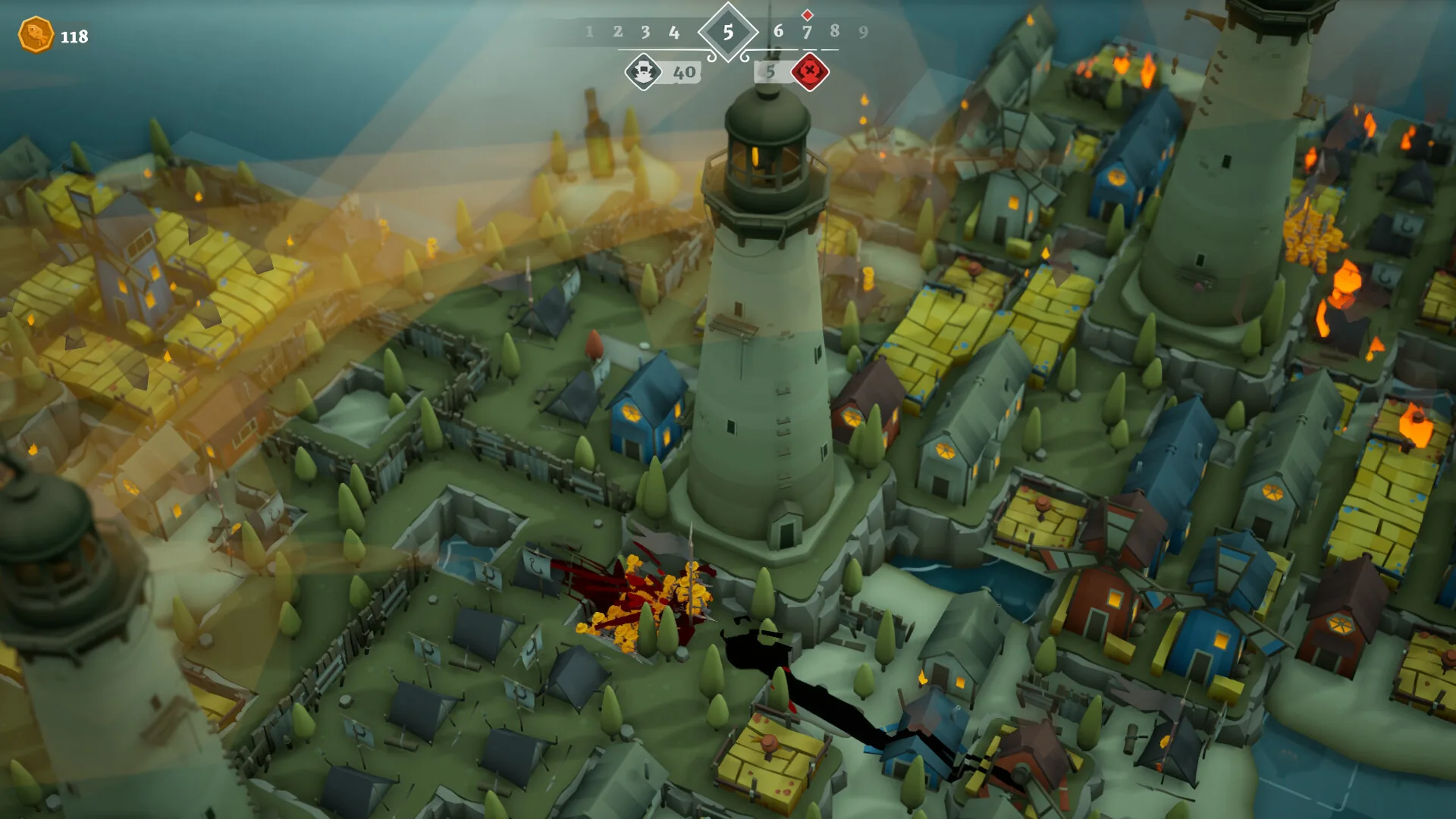
When darkness falls, the screen changes temperature.
Windows light up yellow, the lighthouse beam sweeps the roofs, and a black mass slides in from the water through your streets. They are neither men nor beasts, the game simply calls them those who lurk below, and they head for the light and for the people it protects.
The fight resolves on what you prepared. A defence figure on one side, an assault figure on the other, and your little golden troops colliding in a red burst in the middle of the village.
You can merge camps for a stronger army, split your troops to hold two fronts, and ship reinforcements by boat to cover a stretch of island cut off from the rest. It is precisely Bad North's dilemma, transposed onto a grid you drew yourself.
And sometimes it is not enough. The game says so itself, and that is a promise it keeps.
Its store page carries a list I find honest and that you should read before buying: this is not a cozy builder without consequences, it is not a safe experience, and there is no escape from the night.
That matters, because the packaging can mislead. The colours are soft, the music is calm, the gesture is that of a soothing board game. But this is a game where you lose tiles, inhabitants and lighthouses, and where a run can collapse because a draw arrived two turns late.
The atmosphere, drawn from 1960s coastlines, lives exactly in that gap: everything is pretty and everything is going wrong.
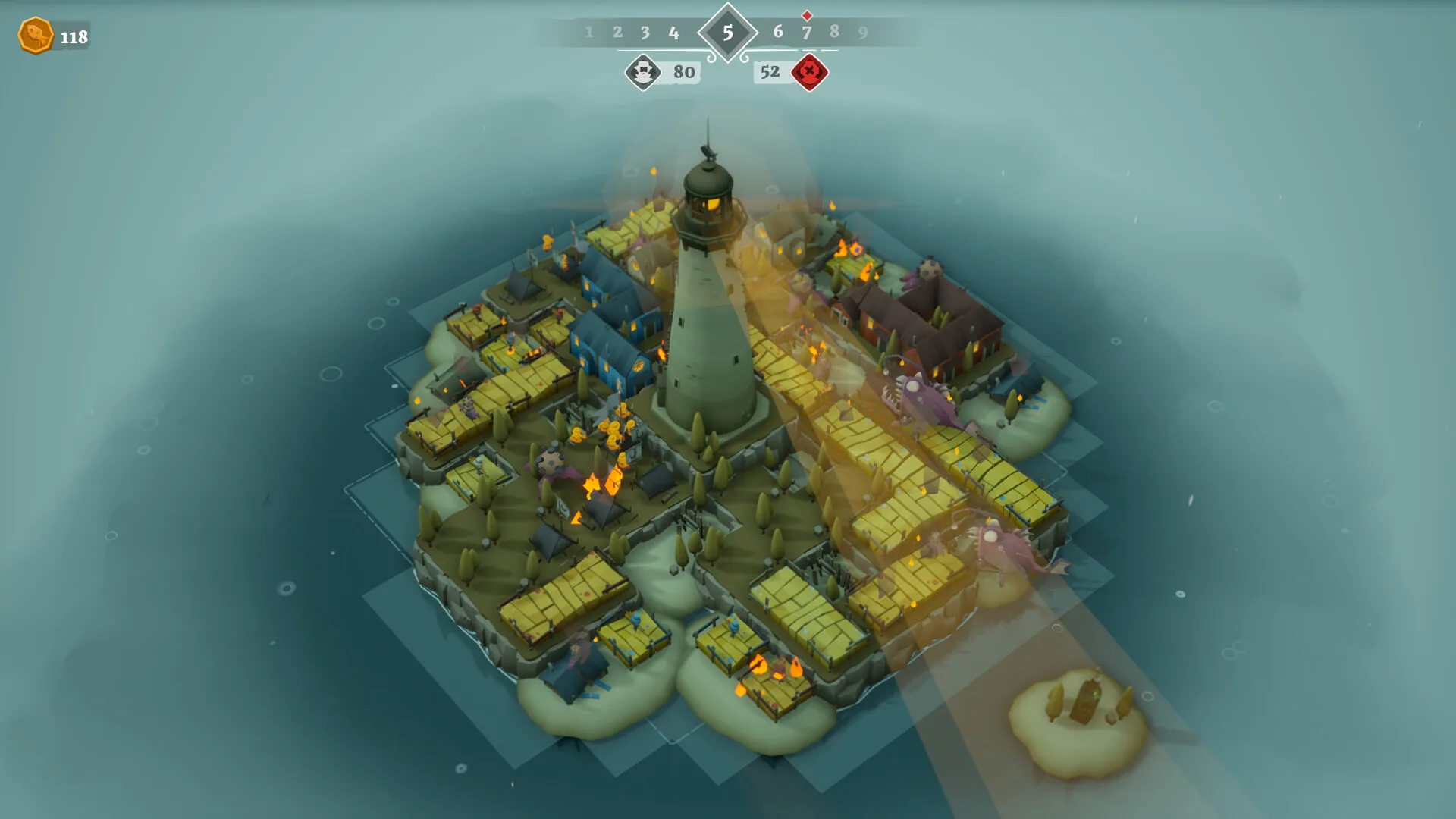
Progression works on two levels.
Inside a run, the growing island unlocks new buildings and new units through the progress map, and variety increases as the territory spreads.
Between runs, the deck changes everything. Since tile sequences are randomised, the next game never poses the same problems, and the order in which you receive your tools becomes the story of the run.
That is the right engine for this kind of game, and it works for a simple reason: you start again believing you had understood, and discover you had simply been dealt a good hand.
It is single-player only, with Steam achievements and full controller support, which suits it: you play this slumped, one hand on the stick, watching the mist retreat.
It launches today, developed by Voxel Studios and published by Noovola. The studio counted over ten thousand wishlists at the end of July, which is modest and healthy for a game this size.
A demo circulated widely this summer, including an expanded version after Next Fest, and the studio publicly stated it had folded in a share of the feedback received. That is the sort of detail that reassures about what comes next.
The price had not been posted at the time of writing, the store page having stayed pending until the last moment.
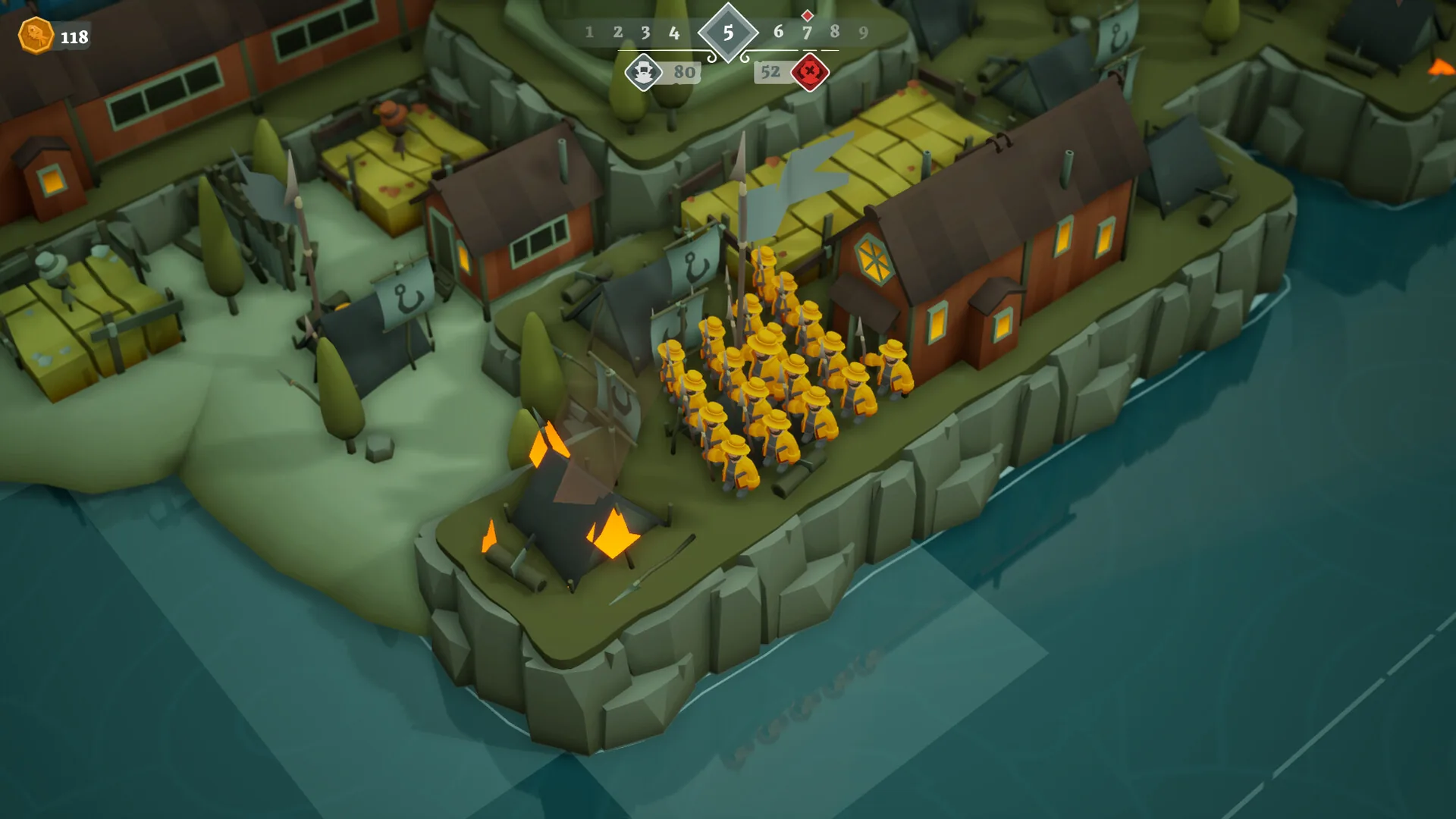
What stays with me from my runs is a slightly unhealthy pleasure I did not expect.
Placing a farm tile in the wrong spot triggers no immediate penalty. Nothing flashes, nobody tells you off. The penalty arrives four turns later, when you realise your military camp can no longer connect to anything and the eighth night is two minutes away.
The game never punishes you on the spot. It waits. And that patience is more frightening than any monster.
Your best islands, your worst collapses: the InsertCoins Discord takes both, with a preference for the second.
Community
Your rating
Advertisement
Loading comments...
You might also like
A co-op bar that collapses while you serve. 98 per cent positive, and one of the rare times chaos is the actual subject.
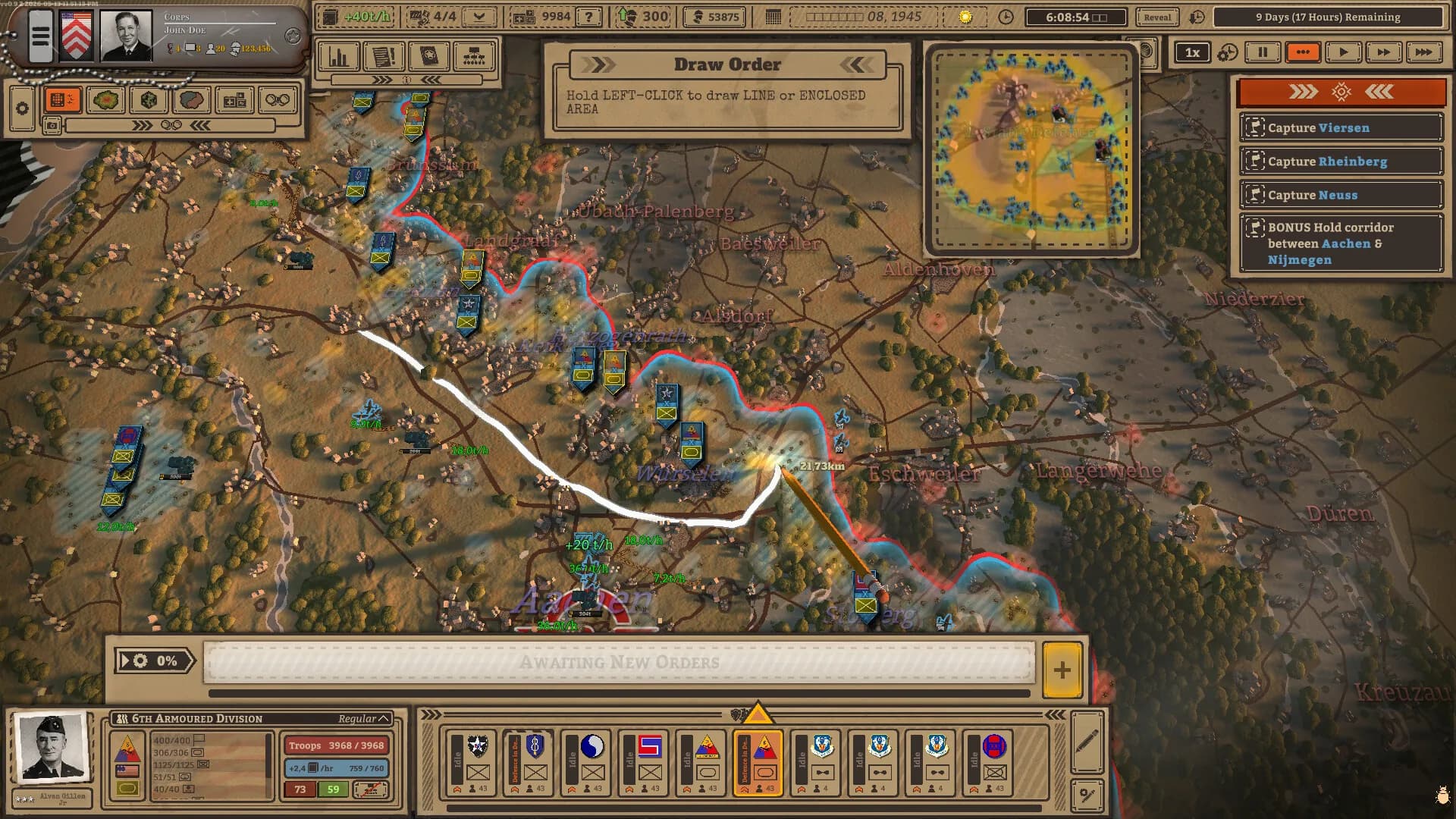
You draw a plan on the map and officers execute it alone. Except the game crashes every other planning phase.
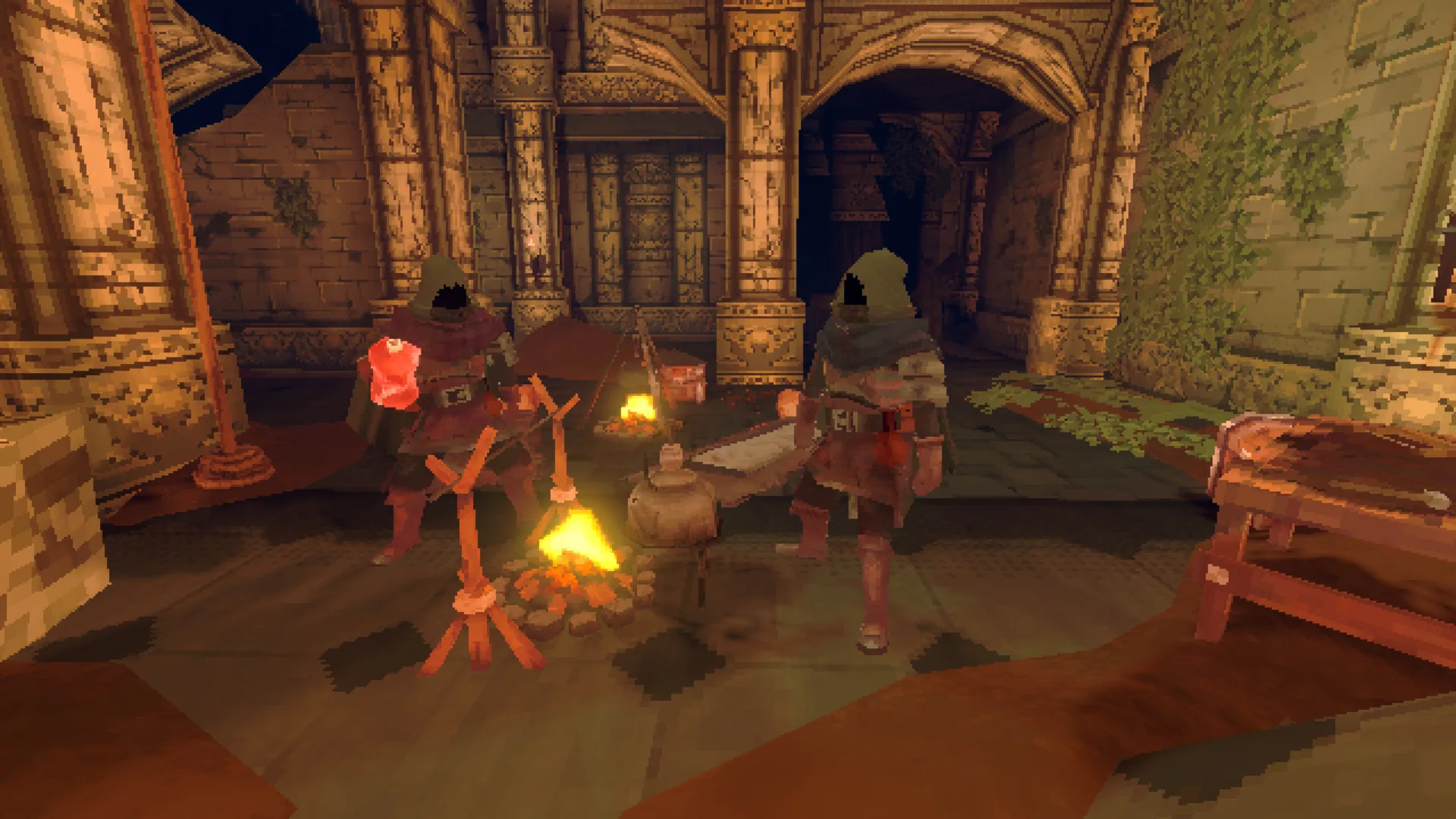
The Knights of Pen & Paper team return with a dungeon where you come back to camp, cook, and unlock recipes that change your stats.