7
Test
Dragon Shelter: grandpa's farm, dragons to raise, and a town that lost its spirits
A farming game where cooking is the heart of crafting and your dragons sense what people need. Published by Curve Games.
Alexandrosse
8 min
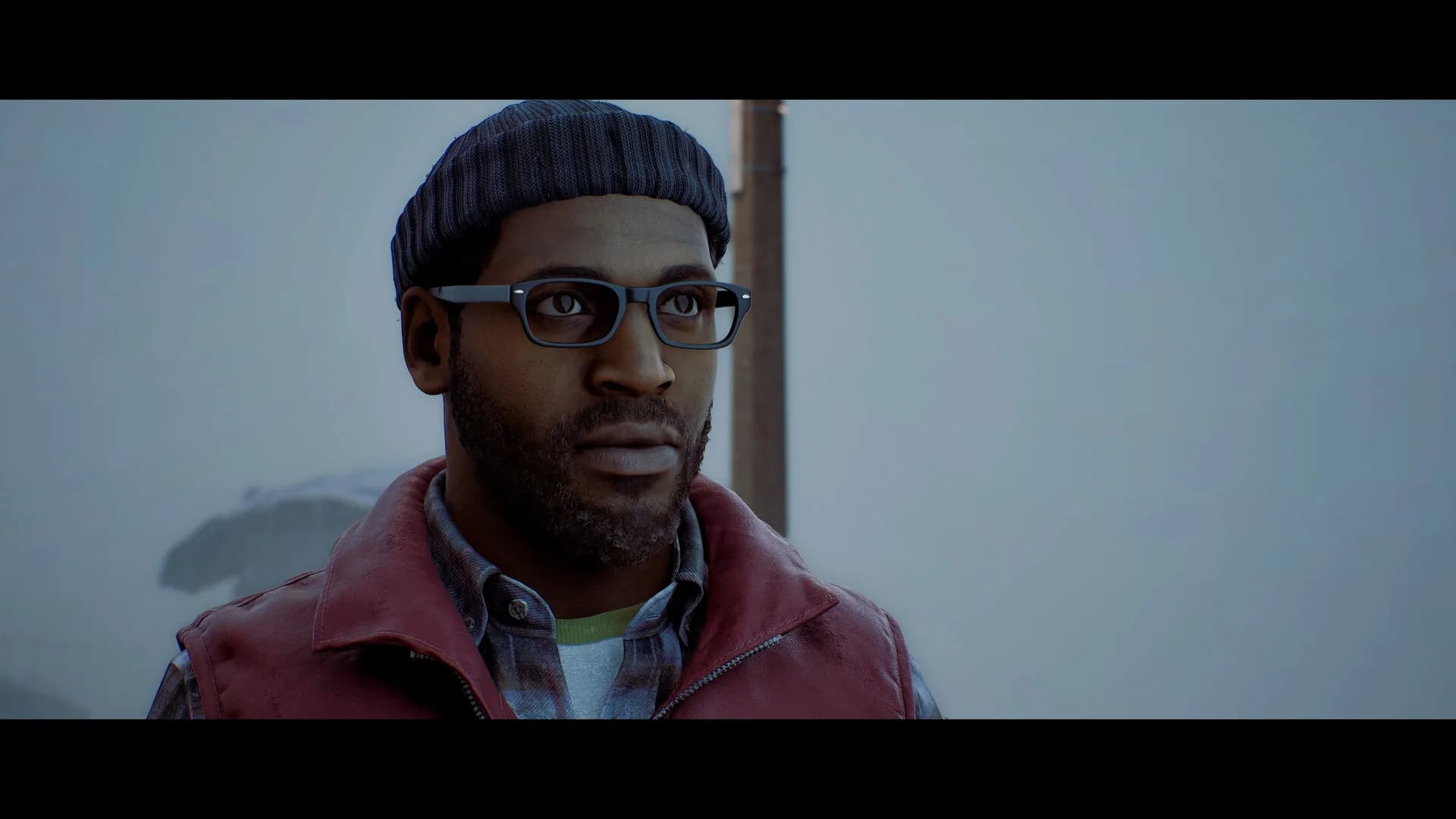
Scotland, 1996, an island that will not sleep. The setting and the sound are superb, the story divides, and performance spoils the party.
Alexandrosse
InsertCoins.press Score
7/10
Verdict
Recommended
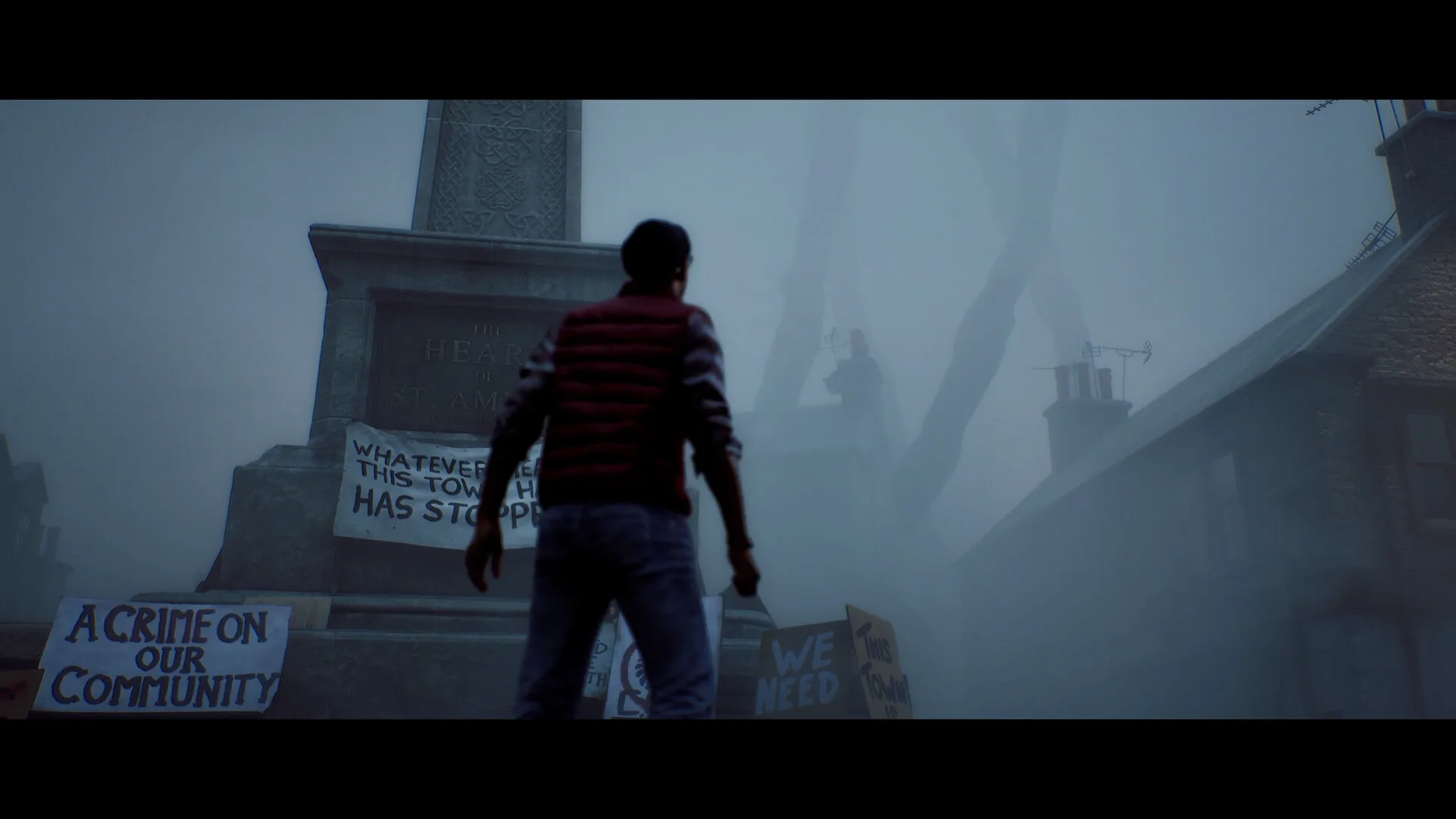
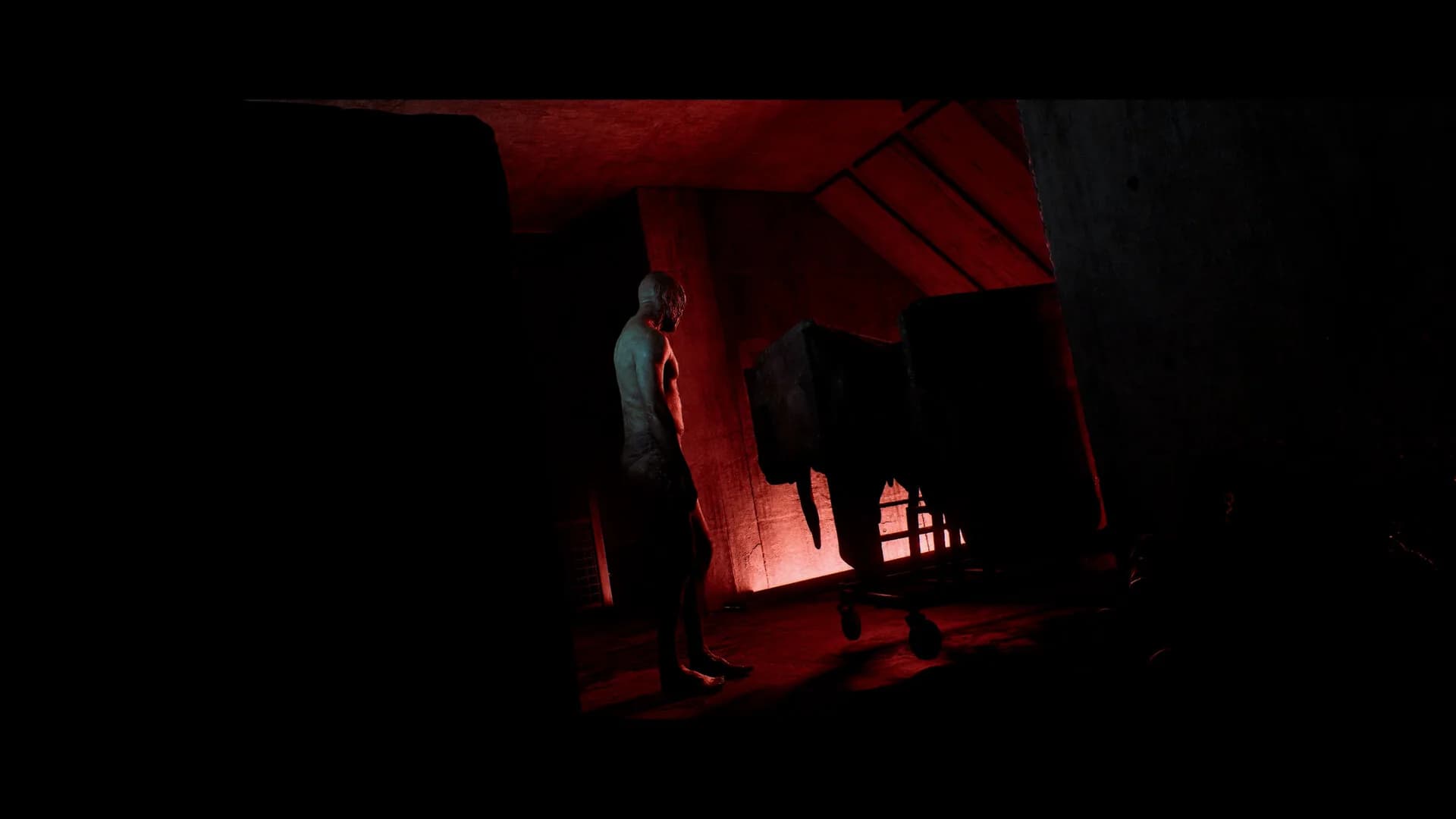
The first thing you notice in Townfall is that the fog is not a texture, it is a light.
The second is the sound. A player with eleven hours logged advises playing with headphones and calls it the best spatial audio he has heard in a game. After a few hours in the streets of St. Amelia, I understand exactly why.
Which leaves the question that matters, the one you ask of every new Silent Hill: does the writing stand up beside all that.
Simon Ordell is called back to the island of St. Amelia to, in the game's phrasing, put things right.
He finds a town lying quiet beneath a heavy fog, seemingly abandoned but not at rest. Venturing deeper, driven to understand his connection to the place and its inhabitants, he uncovers fragments of a past rising to the surface.
What is interesting is the choice of setting: Scotland in 1996. Not an American suburb, not a hospital. A cold, isolated island community whose streets tell their own story through atmosphere and through what remains of them.
And the studio states the intent plainly: more than a horror game, a tale of introspection, loss and consequence. Fear grows from small details, quiet moments, and the long shadow of Simon's past.
That is a Silent Hill promise, the real one. Not the one about monsters, the one about a man returning to a place he owes something to.
And here the reviews split, which is precisely the interesting conversation.
On the convinced side, a player who has followed the series since the third entry writes that it is one of his favourite stories in the saga, and that it kept him guessing for most of the game. That is the most valuable compliment available to a story like this.
On the disappointed side, a Spanish player with eleven hours says he worked out where the plot was going within the first hour, and considers the alternative endings poor. Another, ten hours in, finds that by the final third the narrative still has not delivered a jolt and that the characters lack depth.
There is a structural criticism too: you do not only play Simon. A second figure is handed to you, and her sequences are slow stealth, with a lot of hiding and twisting paths. Those who came for Simon's story find those passages long.
My reading, having weighed all of it: Townfall tells a story of guilt rather than a story of revelation. If you are waiting for a twist, you will see it coming. If you accept following a man who already knows what he did and has to return to the scene, it works very well.
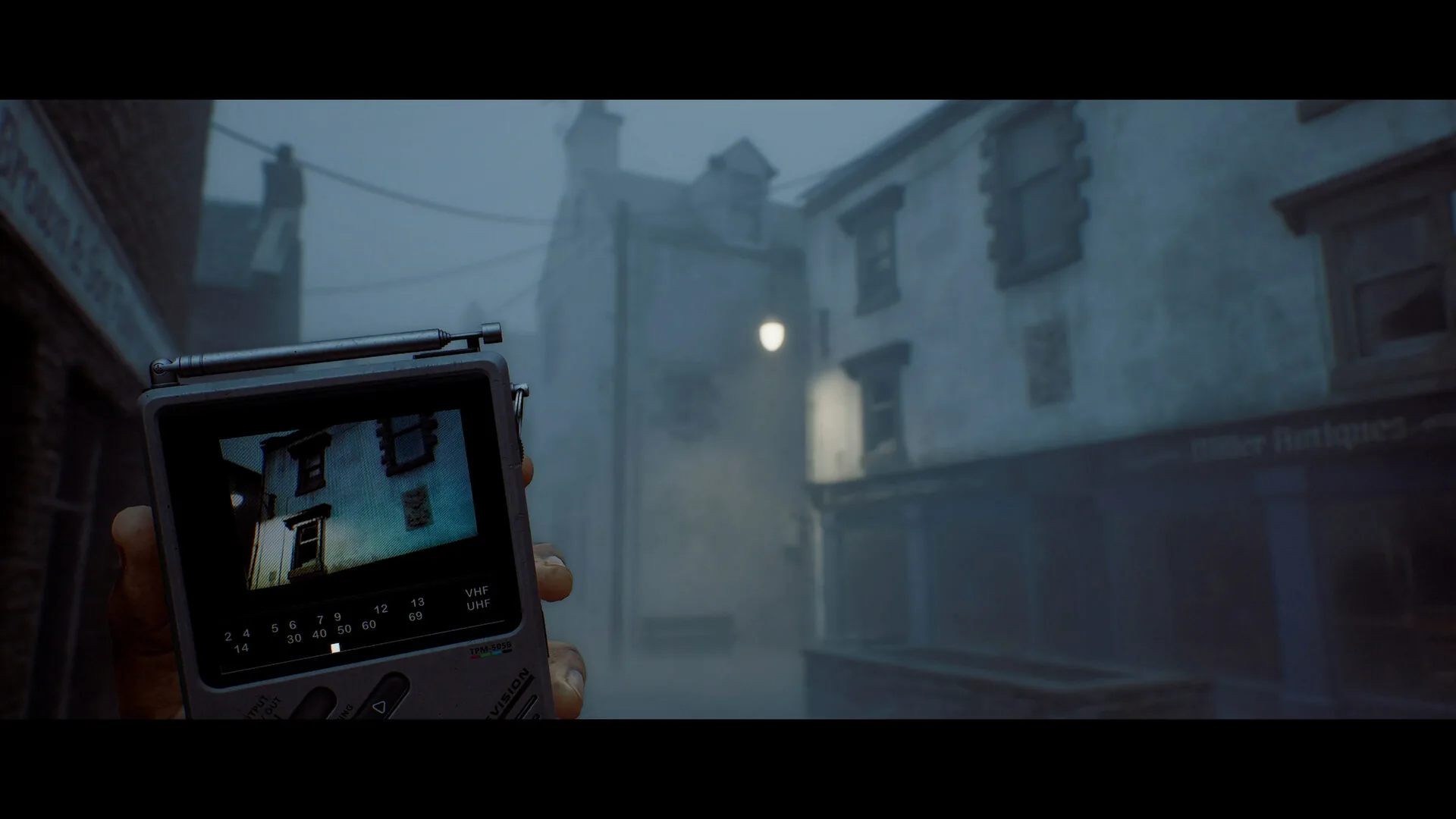
This is the game's signature object, and it is worth a pause.
You carry a pocket television that lets you tune into unstable signals. It is not a disguised torch: it is a tool for reading the place, materialising the idea that the town is broadcasting something.
The series has always had an object like this, from the radio to the flashlight. Replacing it with a screen in 1996, when television was still the central piece of furniture in a house, is a period choice that says something.
Everything is experienced in first person, a genuine change for the series.
Simon explores, evades and survives with a limited set of weapons and tools. You can swing and block in melee, keep your distance with firearms, or slip past danger through stealth and avoid the encounter entirely.
The puzzles are narrative, meant to reveal a truth that refuses to stay submerged.
On that point, one specific complaint recurs among players: some puzzles in the final third require guessing symbols with no reference provided, and a pipework sequence uses a notation the game never explains. That is not difficulty, it is ambiguity.
It has to be said clearly, because it dominates the negative reviews.
The game shows 516 positive reviews out of 715, roughly 72 per cent. And most of the discontent is not about the story, it is about performance.
Players report a dozen crashes across seven hours of play. Brutal frame rate drops into single digits, with permanent stuttering. A player with a high-end graphics card describes barely sixty frames per second at high resolution with upscaling, and no measurable gain from disabling ray tracing.
The nickname circulating in the reviews sums it up: Stutter Hill.
It is all the more frustrating because this game is beautiful, and its qualities run precisely through immersion. An atmospheric game that stutters loses most of what it had to offer.
At 49.99 euros, from Konami and Annapurna, with Screen Burn developing, my position is as follows.
If you love this series for its atmosphere, its light and its sound, this game will give you moments few others can produce. The choice of Scotland in 1996 is excellent, and making a television screen the central object is faithful to what Silent Hill has always been.
If you want a story that turns you over, adjust your expectations: this is a tale of consequence, well held, not a revelation machine.
And in every case, wait for a performance patch if your machine is not built to absorb it. This game deserves better than being discovered at five frames per second.
How many hours did it take you, and which ending did you get? We discuss it spoiler-free on the InsertCoins Discord.
Community
Your rating
Advertisement
Loading comments...
You might also like
A farming game where cooking is the heart of crafting and your dragons sense what people need. Published by Curve Games.
Two heroes per level, fifteen towers, eighteen missions and six bosses. Ironhide returns to Linirea's origins with its best idea in years.
You play the Martians, abduct humans from across history, and display them in enclosures. A year of early access and 92 per cent positive.