Preview
Ace Combat 8: seven years of waiting and, for the first time, an online lobby
Thirty years of the series, seven without a numbered entry, and an air base where you meet other pilots as an avatar before taking off.
Alexandrosse
7 min
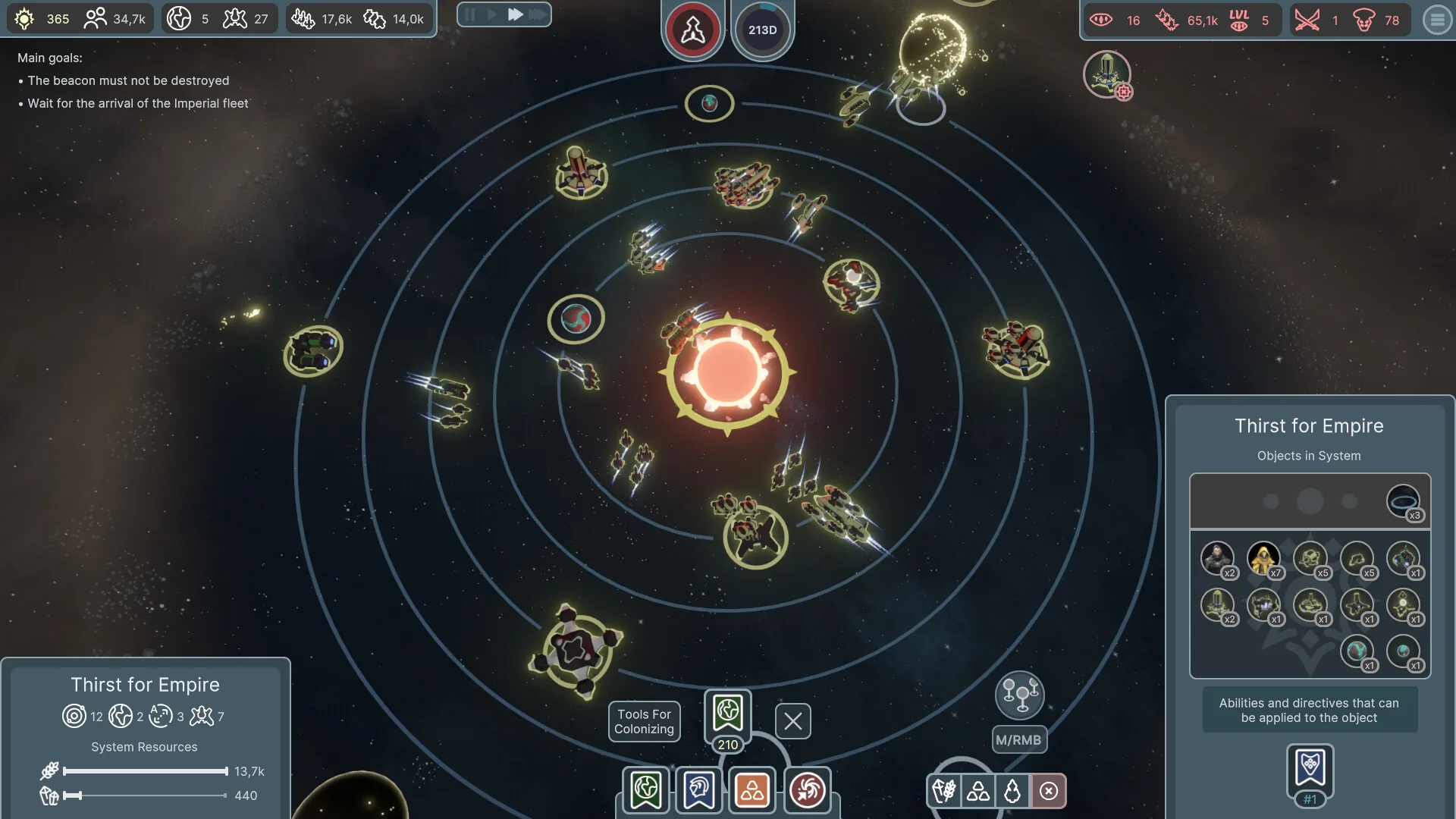
Autonomous fleets, a living economy, thousands of ships. A design gamble that is not playing on Stellaris's pitch.
Alexandrosse
My first reaction was blunt: something is missing, it is a lesser Stellaris, we may as well stick with Stellaris. Then I checked, and the check comes back mixed.
On one point that reaction is right beyond argument. On the other, I think the game deserves a hearing for what it is trying to do, because it is not playing in the same place.
Solar Wave launches today, 17 August 2026, in early access, developed by SavGus Studio with Andgo Games publishing.
It has zero Steam reviews. None. Nobody has yet delivered a public verdict on this game, which means neither of us can honestly say it is worse than Stellaris: we can say it did not convince us from a trailer and a store page, which is not the same statement.
And on the raw comparison, the gap is obviously enormous. Stellaris is Paradox, ten years of continuous development, around twenty expansions, systems for government, species, diplomacy and end-game crises that no small studio will ever catch. If you are looking to replace Stellaris, the answer is no, and it will be no for a very long time.
What is missing, to borrow the word, is actually identifiable on the store page: there is no mention of diplomacy, species, domestic politics or government. The game talks about economy, fleets and battles. A 4X that does not talk about relations between powers gives up a good half of the genre.
The developer names two inspirations, and it is the second that counts: Stellaris and Majesty.
If you never played Majesty, released in 2000, the idea was this: you did not command your heroes. You placed bounties on targets, and the heroes decided for themselves whether the job was worth the trip. You did not play the units, you played the incentives.
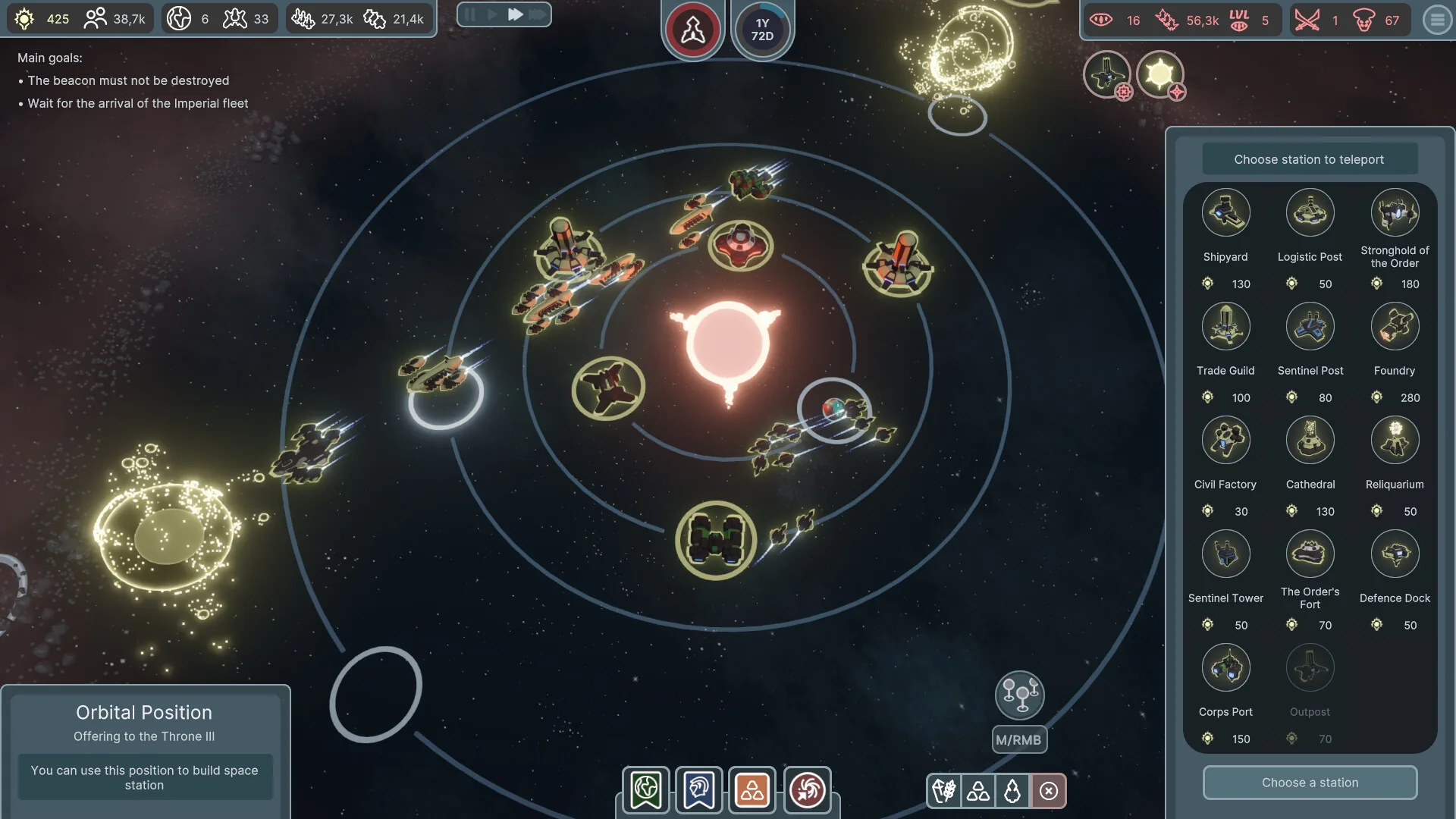
That is precisely what Solar Wave is trying to transpose to a galactic scale. You do not click each ship, you set priorities: develop here, defend this system, secure those resources. Fleets act on their own, adapting to threats and opportunities.
The stated intent is to turn the game from execution into pure decision-making. So this is not a Stellaris thinned out by lack of means, it is a different answer to a real problem in the genre: click fatigue. Anyone who has abandoned a 4X campaign mid-game, when management becomes admin work, knows exactly what that means.
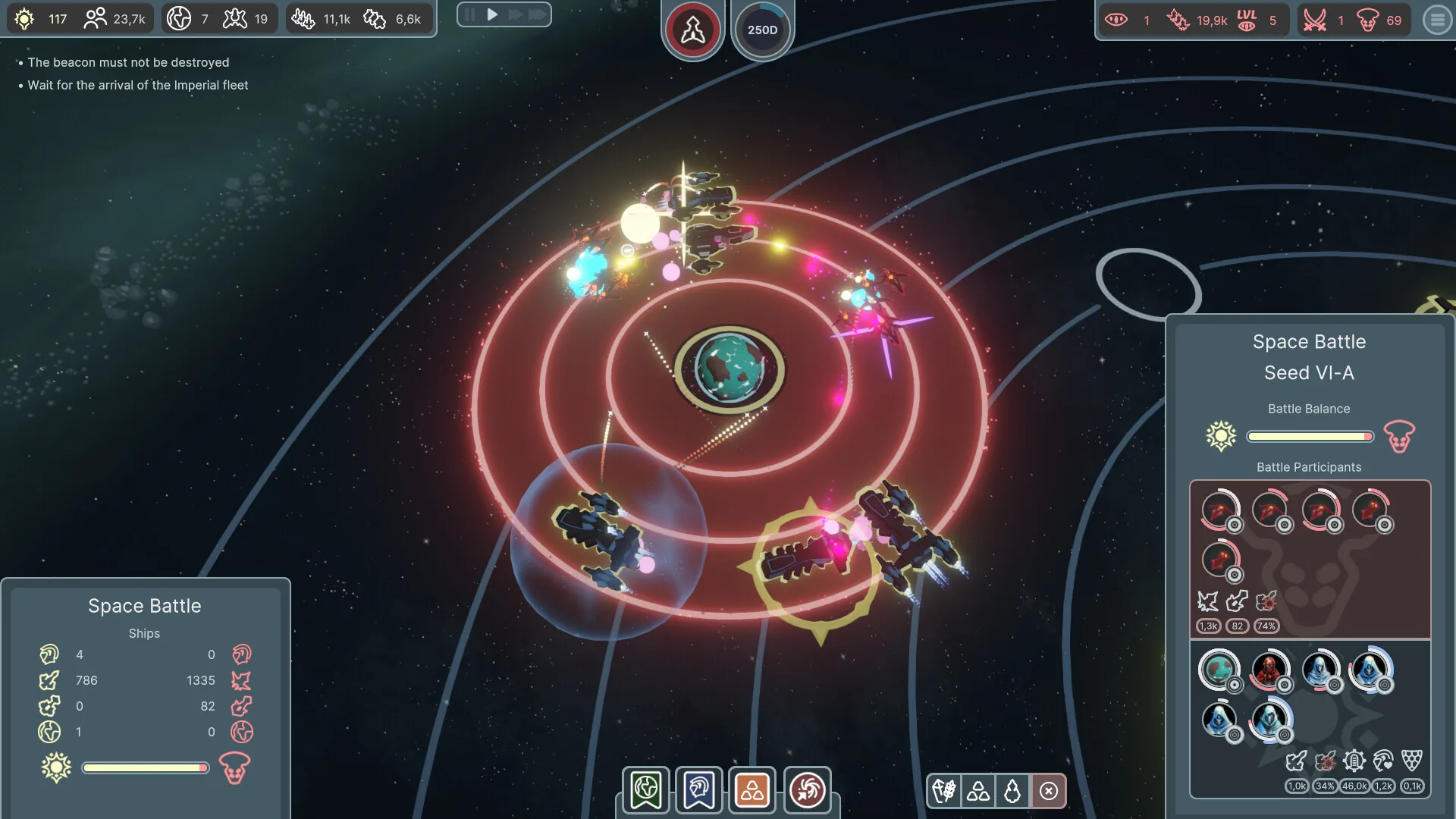
The rest follows the same logic. An interconnected economy where colonies extract, produce and supply the war effort, on the principle that logistics and industry are the real weapons. And battles of thousands of ships where, in the studio's words, preparation matters more than reflexes.
Here is where I come back to that first reaction, by another road.
Indirect control has a structural flaw: it can remove the chore and the decision at the same time. If your fleets handle everything, your role shrinks to ticking priorities and watching a map animate. The pleasure of strategy comes from making trade-offs under constraint, and a trade-off assumes you can get it wrong. A system that plays for you does not let you lose, so it does not let you win either.
Majesty dodged that trap because its heroes were stubborn, greedy and occasionally stupid: they disobeyed you, and that was the salt of the game. The question I would put to the developer is exactly that one. Are your fleets obedient and competent, in which case you have built a luxury screensaver? Or do they have preferences, mistakes and moments of cowardice, in which case you have a real game?
That is probably the missing something one senses without managing to name it. The trailer shows scale, fleets and explosions. It does not show what the player decides.
Good news, and it is this article's practical conclusion: there is a demo.
That is by far the best way to settle it, and more honest than anybody's opinion here. In twenty minutes you will know whether this indirect control gives you the sensation of running an empire or of filling in a form. This is exactly the kind of design people love or reject immediately, with no grey area.
We are not scoring a game that launches today, with not a single review, on the basis of a comparison with a monument of the genre. That would be precisely the shortcut we criticise elsewhere.
What we can say: Solar Wave will not replace Stellaris and visibly is not trying to. It attempts an interesting design gamble, inherited from a game from 2000 that too few people know, and that gamble is won or lost on a single question, whether autonomous fleets still leave the player real decisions.
Try the demo. If you come back saying something is still missing, you will then have an argument nobody can dispute, and we will gladly publish it.
Are you a total-control or a delegation player in strategy games? The debate is open on the InsertCoins Discord.
Community
Your rating
Loading comments...
You might also like
Thirty years of the series, seven without a numbered entry, and an air base where you meet other pilots as an avatar before taking off.
A global maritime logistics simulator, with real ports, automated routing rules, and 162 shipping licences to collect.
Weigh-ins, meal planning, a day job between fights, accumulating injuries and a bareknuckle circuit. Halfbrick is not joking at all.