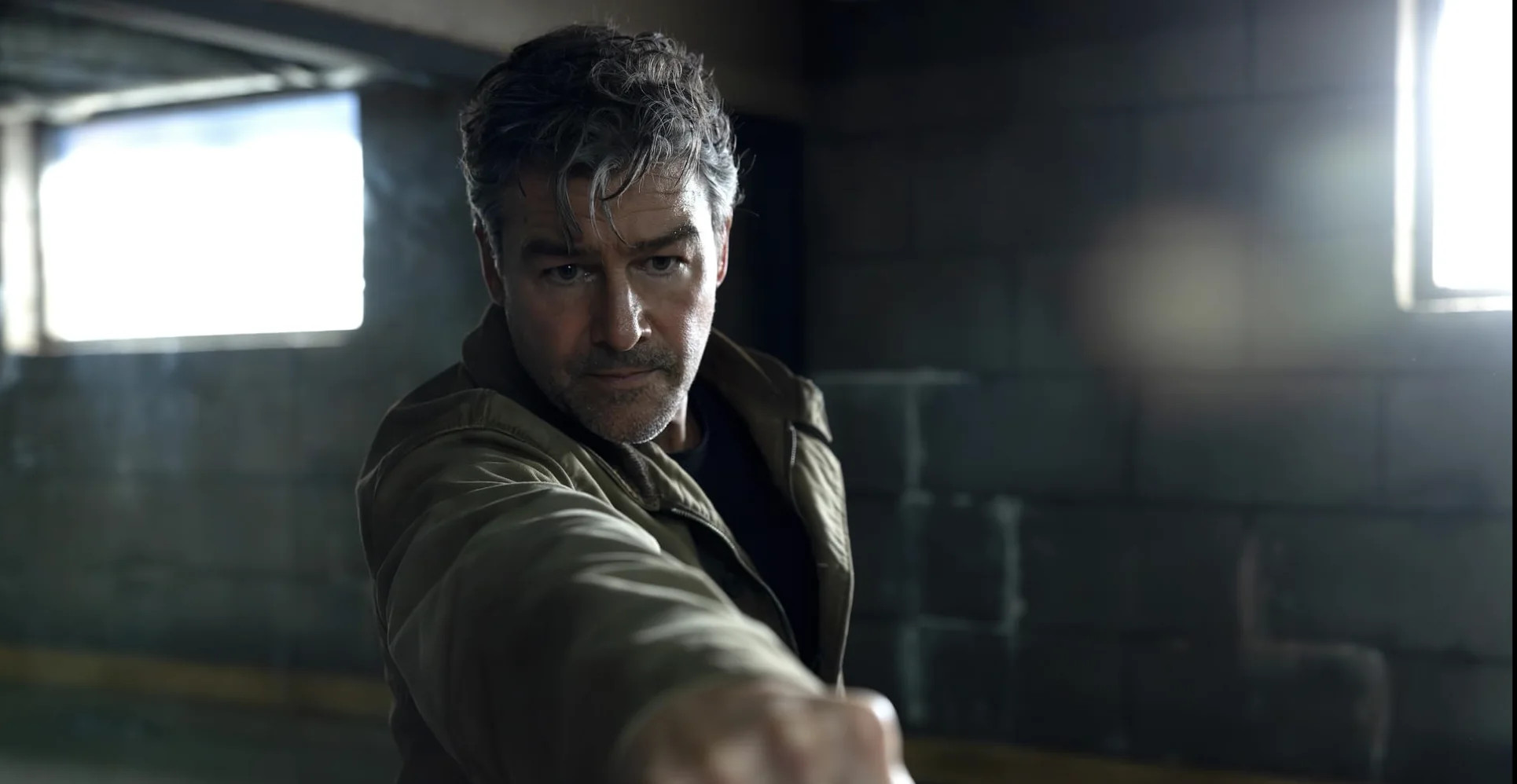
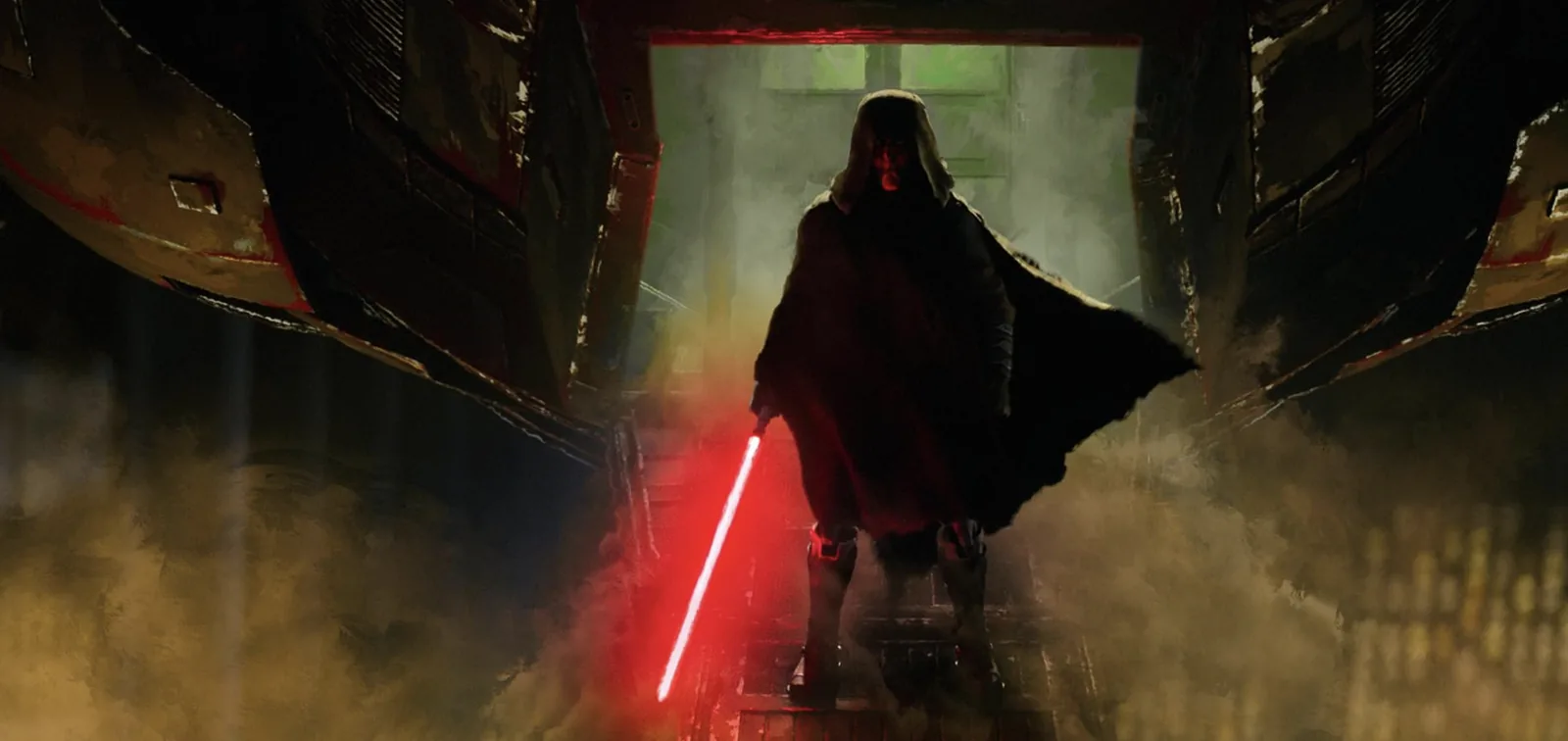
Ben Reilly is fifty years old, has a dead fiancée, a dingy office in 1933 New York, and hasn't put on the costume in five years. The Great Depression has ravaged the city, Silvermane controls the streets, and someone is knocking at his door. That's where Spider-Noir begins, on Prime Video since May 27, 2026, with Nicolas Cage in the suit and a $400 million budget invested to make it look like nothing else in the Marvel catalog.
It looks like nothing else. That's both its main strength and, at times, its limitation.
Spider-Noir is not a Marvel Studios production. It's a Sony Pictures Television production, streaming on Prime Video, with Phil Lord, Christopher Miller, and Amy Pascal as executive producers: the exact team behind Spider-Man: Into the Spider-Verse. Sony holds the live-action Spider-Man rights, which is why this series isn't on Disney+ and has no obligation to the MCU.
That freedom is precisely what makes the series possible. No Infinity Stone to locate, no post-credits to decode, no Avenger dropping by. Showrunners Oren Uziel and Steve Lightfoot built a pure genre series: a 1930s noir detective who happens to be a retired superhero. The investigation comes first. The traumatic past comes first. The costume is a complication, not a uniform. This narrative decision gives Spider-Noir a rhythm that Marvel series often forget to have: that of a story that knows where it's going and doesn't need three seasons to get there.
The most precise comparison to emerge from the community is Werewolf by Night, Michael Giacchino's 2022 Halloween special. Same logic: a strong aesthetic vision, a homage to a specific genre treated with respect rather than used as wallpaper, and an ambition to make something complete rather than launch a franchise.
The conversation about Nicolas Cage has circled for twenty years around two camps: the unpredictable genius and the paycheck actor who'll take anything to settle his debts. Spider-Noir settles the debate in one direction. Cage plays Ben Reilly the way he plays everything he's decided to take seriously: with total intensity and complete contempt for moderation.
The series was written for him. Not written for a generic actor into whom Cage was cast: written to allow Nicolas Cage to be Nicolas Cage inside a coherent character. The result is a permanent tension between the sincerity of the character, Ben Reilly as a wounded detective and war veteran, and the bursts of uncontrolled energy that define the actor. When it works, those are the scenes everyone talks about the next day. When it goes over, it's Nicolas Caging.
What's remarkable is that the script found an in-universe justification for his eccentricities. There's a diégetic reason why Ben Reilly sometimes behaves as if he learned human behavior by watching movies. It's the kind of writing detail that turns an actor's constraint into a narrative asset.
The main criticism leveled at him, notably from Variety, is that the performance sometimes overwhelms the story. That's not wrong. There are sequences, particularly in episodes 3 and 4, where the Cage show takes over from the series. For those who came for exactly that, it's a bonus. For those looking for a character, it can create distance.
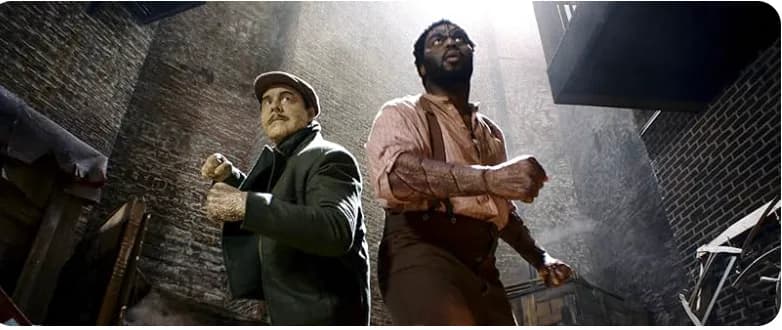
Lamorne Morris plays Robbie Robertson, Daily Bugle reporter. He's the character who balances the series: where Cage overflows, Morris restrains, and their dynamic works precisely because the two registers clash rather than blend. Morris does Cage impressions inside the series. That's the level of self-awareness the show allows itself, and it lands because Morris knows when to stop.
Li Jun Li plays Felicia Hardy, and her relationship with Ben Reilly constitutes one of the series' most solid emotional threads. The chemistry between the two actors is real, and the script gives her enough room to exist outside her role as a catalyst for Cage.
Brendan Gleeson plays Silvermane, the season's main villain. Gleeson is Gleeson: he doesn't need to fight for presence, he walks into a scene and the room changes temperature. He's perfect as a 1930s mob boss: you feel he could have anyone killed on a mere suspicion, without raising his voice, without a theatrical gesture. That's where the real danger lies with this character, not in speeches or monologues, but in the stillness. Gleeson does the dangerous man exceptionally well, the kind of man everyone in the room keeps their eyes on. His Silvermane is deliberately less theatrical than some recent Marvel villains, which fits the series' register but may frustrate an audience that wanted a more expansive antagonist.
Andrew Lewis Caldwell as Dirk Leyden, alias Megawatt, is the season's most divisive casting choice. The community is split: some find him masterfully hammy, in the tradition of the serial villains of the 1930s the series invokes. Others find his performance genuinely cringe. Both readings are defensible. Megawatt works if you accept that the series can be camp without being bad. If you don't make that concession, the character holds up less well.
Karen Rodriguez as Janet Ruiz, Ben's assistant, is the quiet revelation of the series. Not the most prominent character, but the one everyone mentions once the series is over.
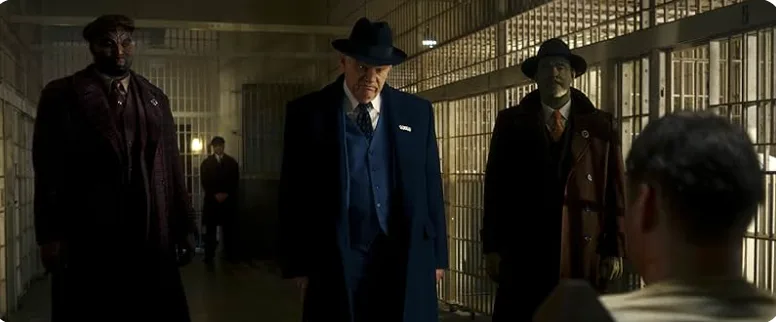
This is where Spider-Noir does something no Marvel production had attempted before. The series was shot with black-and-white cameras and filters, designed from the first day of production to exist in both formats simultaneously. This isn't a post-production colorization and it isn't a filter. It's a dual photographic intent.
The "Authentic Black & White" version is the one the series seems to recommend. The shadow work is precise and referenced: long shadows crossing sets, hard contrasts between light and dark zones, a visual grammar borrowed directly from classic 1940s film noir. New York 1933 in black and white doesn't look like a historical recreation, it looks like a pulp-era comic page shot on silver nitrate. The production decision to use real lenses and filters rather than digital treatment is felt in the image texture.
The sound also changes between versions. The black and white version integrates audio processing that emulates recordings of the era: slightly muffled, with the characteristic grain of 1930s 35mm films. The detail doesn't immediately jump out, but it creates a sensory coherence that most productions don't bother building.
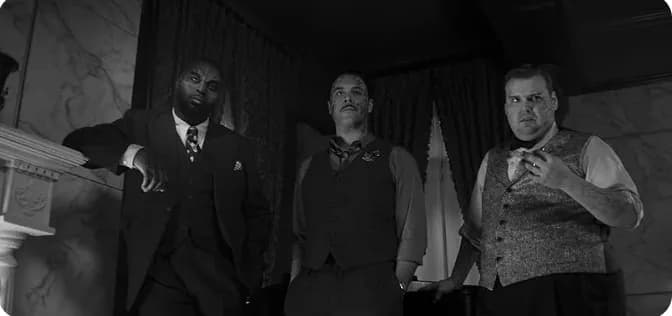
The second format, "True-Hue Full Color," isn't the default version in the sense of being the "normal" one from which a filter was removed. The production made specific chromatic choices so that color has its own logic: pushed saturation, hues that recall 1940s-50s Technicolor, with a color palette selected to create strong visual contrasts even in the darkest scenes.
The Reddit community immediately noticed that certain key scenes had been composed with awareness of both formats. One example: the reporter character wears a red suit in color, a choice that marks him as a particular figure in the racial and social context of 1933 Harlem, and which translates into a specific grey tone in the black-and-white version. The double reading isn't accidental.
There's also a sequence in episode 3, photographic in nature, where each snapshot freezes the image for a second in black and white. In the color version, it's a clear stylistic effect. In the black-and-white version, it's absorbed differently. That's the type of staging decision that only exists because the production maintained both formats in mind simultaneously throughout the entire shoot.
The series recommends watching in both formats. It's the first time a production at this budget truly makes that possible.
Spider-Noir has a pacing problem in its final two episodes. The series takes time to settle, which is a defensible choice for a show that bets on atmosphere, but certain sequences in the middle of the season extend beyond their narrative usefulness. Variety, which gave a negative verdict, points exactly at this problem: a series that sometimes prefers its own ambiance to the story it's supposed to tell.
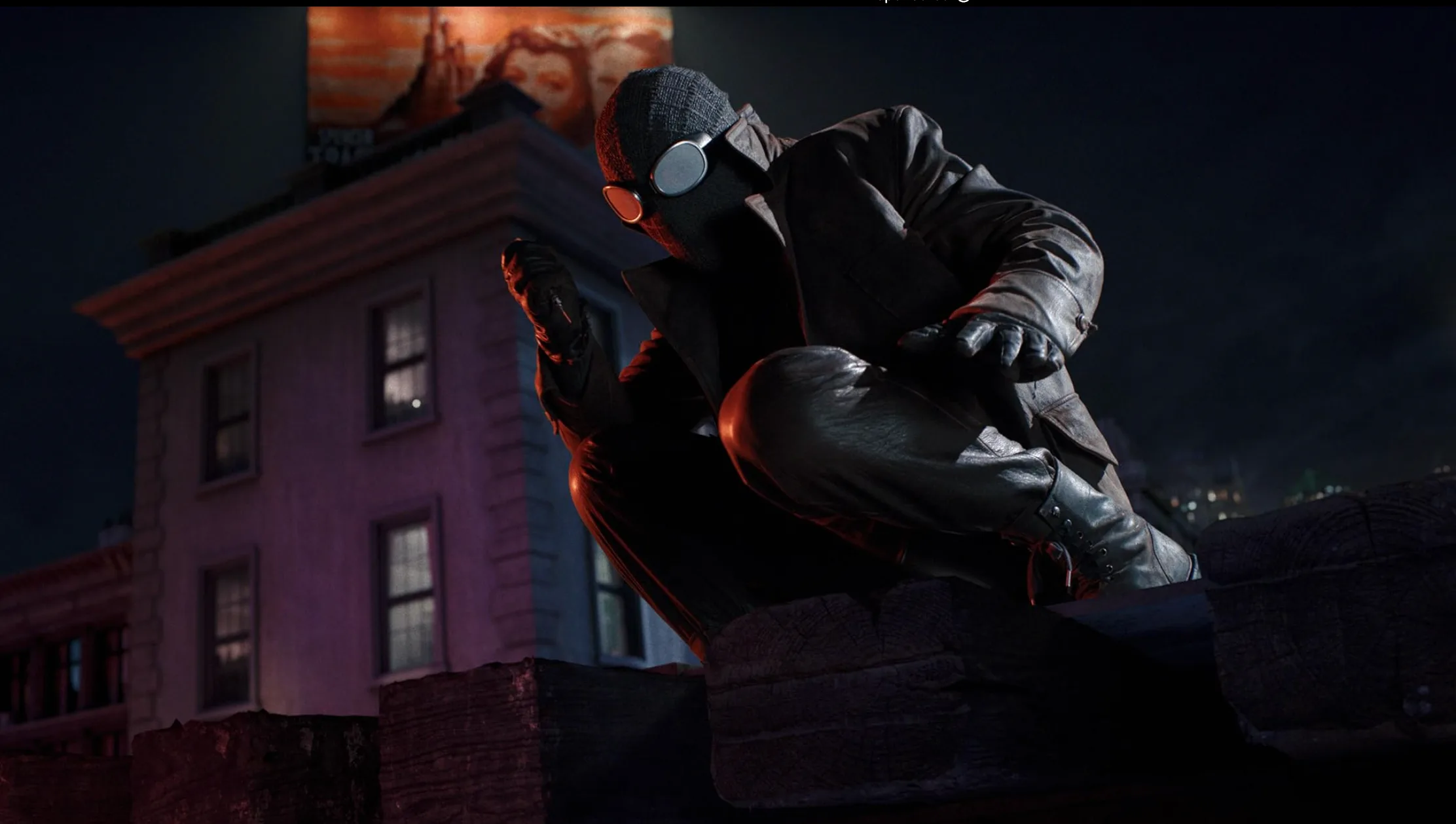
The costume is rarely present. This is a recurring criticism in Marvel series, and Spider-Noir is no exception. Ben Reilly spends the majority of his appearances in a 1930s detective suit, which is coherent with the character but may frustrate an audience that came for web-slinging in black and white.
The series' marketing was nearly nonexistent before release. Most of the audience discovered it existed a few days before the premiere. For a $400 million production, that's a strategy that clearly limited the launch's impact. The series deserved better.
Kris Bowers signs the score, and it's one of the best Marvel TV scores in recent years. The 1930s jazz, the brass, the pizzicato double bass: the music doesn't betray its era and integrates into the black-and-white version's sensory logic without sounding like a style exercise. The opening theme "Saving Grace" is cited across community discussions as one of the series' most successful elements.
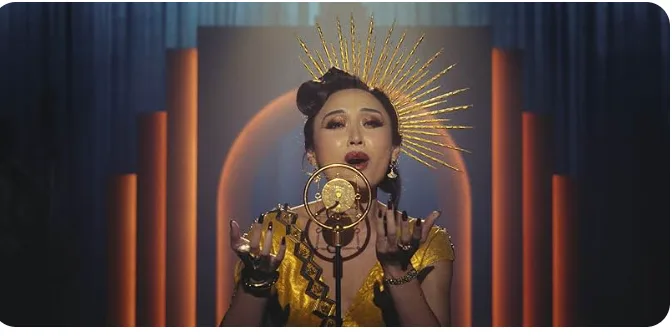
One caveat raised by part of the audience: the songs performed by the character Cat are judged too modern in their writing, too far from the jazz standards of the era to be completely credible. It's a minority criticism but it illustrates the risk of any period series: finding the balance between historical authenticity and contemporary accessibility.
Spider-Noir is the best superhero series since the first season of Daredevil. That's not a relative compliment: it's a recognition that the series has a vision, that this vision is executed with resources to match it, and that Nicolas Cage in this role, in this format, is exactly the actor this character deserved.
It's not without flaws. The pacing falters, the costume is rare, and Cage's performance can overflow onto the story. But in a genre that has spent ten years producing series designed to displease no one, Spider-Noir chose an angle and held it from start to finish. For noir film fans, it's a competent love letter. For Spider-Man fans, it's proof that Sony can do with its rights something as interesting as Into the Spider-Verse, but in live-action. For those who thought Nicolas Cage was done, it's a reminder.
Black and white version. Always.
Come and carry the conversation on over on our Discord.