Guide
Star Wars: Galactic Racer: the beginner's guide to not blowing your ride up
The ramjet, the heat, the planets that change your thermals, and the golden rule of parts: never build wide.
Alexandrosse
11 min
Made by Criterion's former boss. We wanted 1999 on the Nintendo 64, we got a roguelite Burnout. And it is very good.
Alexandrosse
InsertCoins.press Score
7/10
Verdict
Recommended
Star Wars Episode I: Racer, on the Nintendo 64, in 1999, is one of the few games for which I wore an analogue stick down to the foam.
No story mode, no cutscenes, no meta-progression. A circuit, two engines, a cable heating up, and a speed that made the grey box under the television shake. You learned a track in twenty laps and you won it on the twenty-first.
So when Lucasfilm announces a new racing game, the question is simple: do we get that back?
No. And it is worth understanding why before getting annoyed.
This is the information that explains everything else, and it slipped under the radar.
Galactic Racer is the first game from Fuse Games, a studio founded in 2023 in Guildford by Matt Webster, former general manager of Criterion Games. A chunk of the team came up on Burnout and Need for Speed.
Criterion. Burnout. There is your answer.
Now look at the vocabulary on the official store page: slam, shunt, and takedown. Takedown is not a generic word, it is Burnout 3's term, the name of the mechanic where you destroy a rival by putting them into the scenery.
This game never tried to be Episode I Racer. It is trying to be Burnout in the galaxy, and it has to be judged on that.
Players felt it immediately: the positive reviews cite Burnout 3 Takedown, Burnout Revenge, WipEout and Split/Second. Not Podracer.
Very good, as it happens.
The structure is a roguelite run-based campaign. You are Shade, a lone racer chasing revenge and glory in the Galactic League, an unsanctioned circuit born in the Outer Rim after the Empire's fall. No Force, no prophecy: syndicates sponsoring pilots and fortunes changing hands in seconds.
Between events you spend your credits on a random selection of improvements and parts to bolt onto your ride. You chain the events of a tournament, and if it goes wrong, you start again.
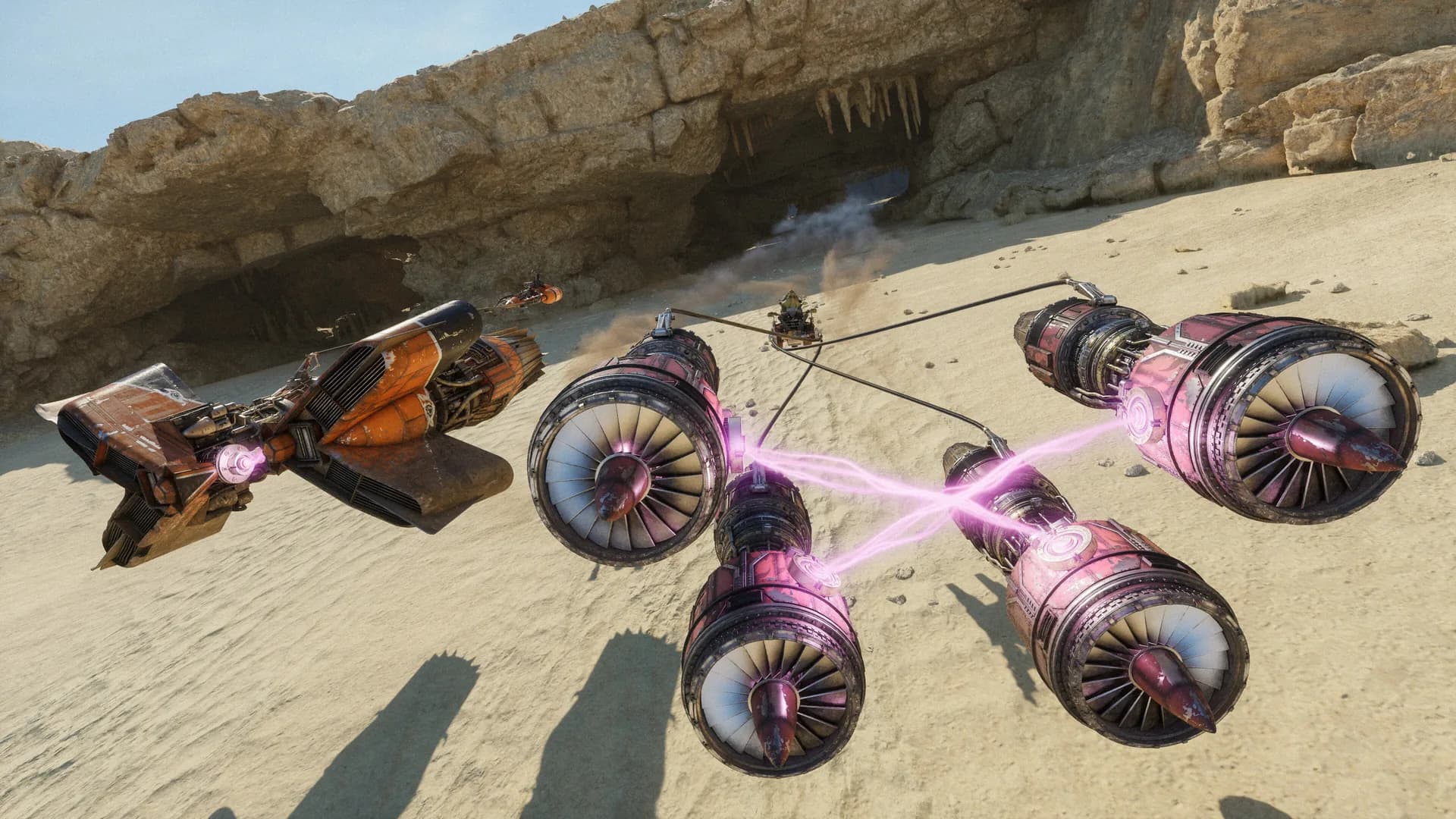
Four vehicle classes, with genuinely distinct physics: landspeeders, speeder bikes, skim speeders, and podracers.
And at the centre, the boost system, which is the best idea in the game.
There are two, and they do not work the same way.
The afterburner is the classic shove. Less powerful, available as soon as it has recharged, with its own cooldown. It is your everyday tool.
The ramjet is the other thing. It only becomes available once you reach its operating speed. It is markedly more powerful. It has to be deactivated manually. And if you leave it running too long, your vehicle explodes.
Read that last sentence again. In this game, your maximum acceleration button is also your self-destruct button, and you decide when to let go.
That is exactly the tension Burnout found with its risk-charged boost, pushed a step further: here the risk is not missing a corner, it is not knowing when to stop.
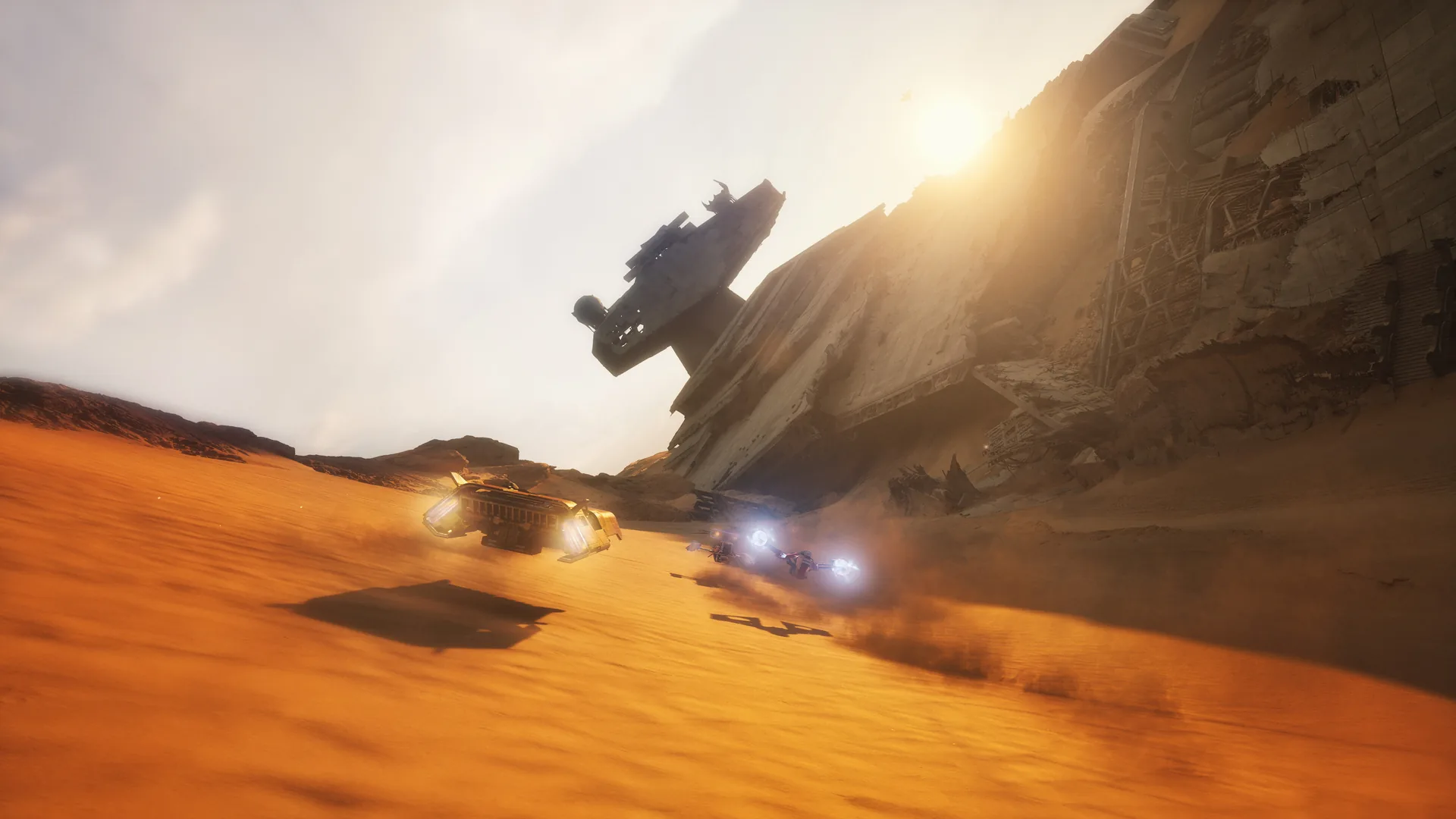
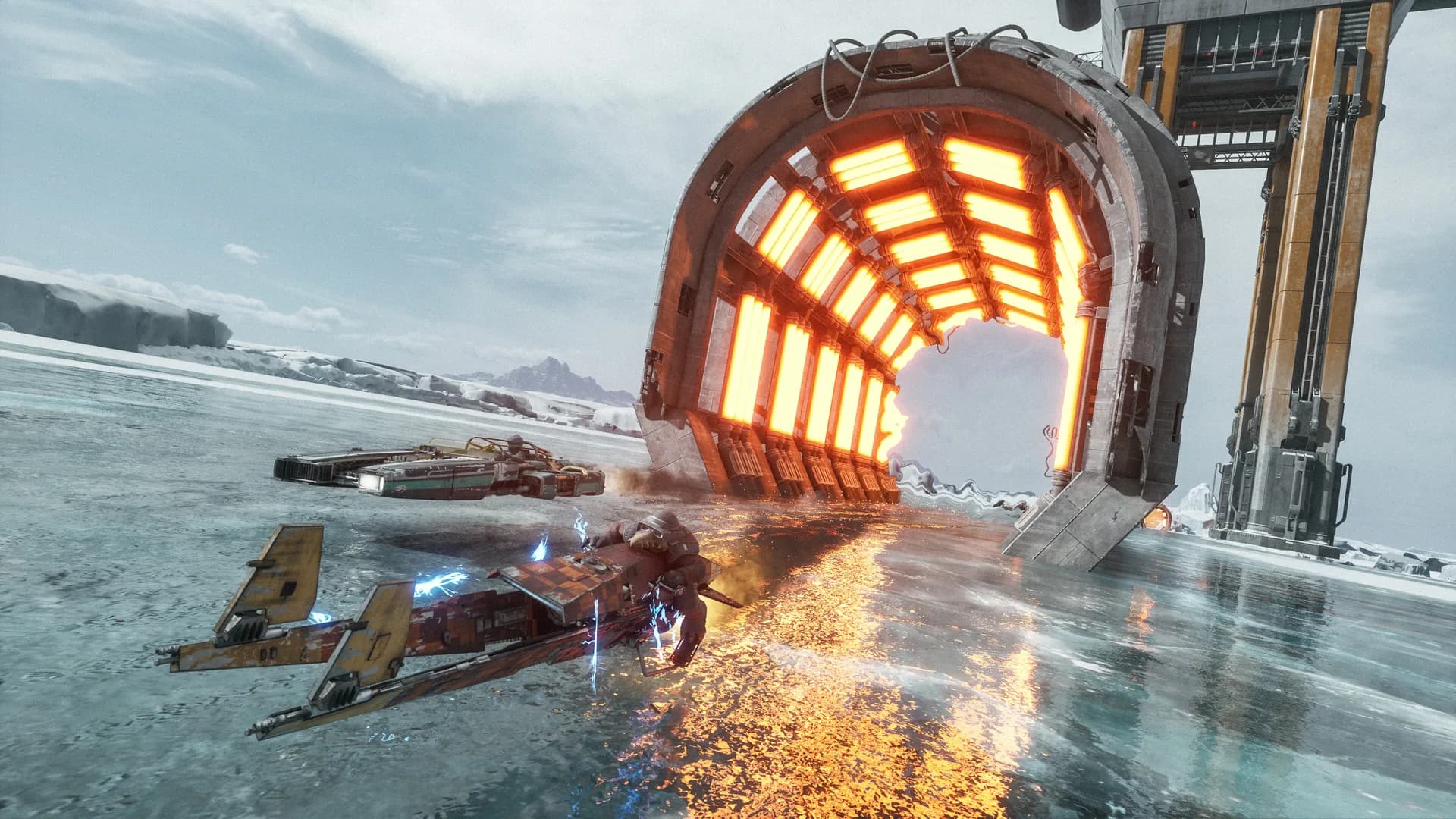
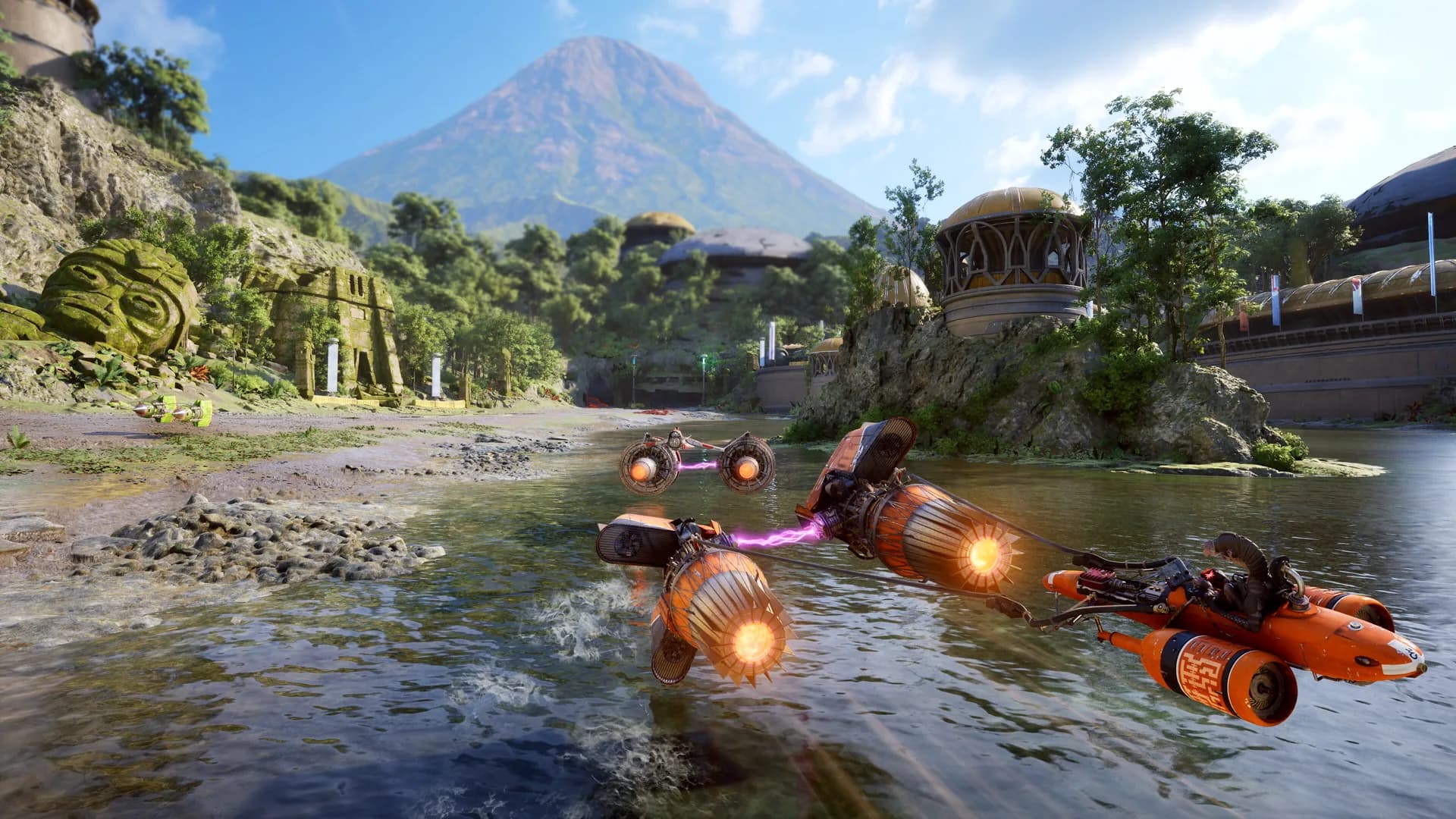
And heat becomes a geographical resource. On Jakku, the ambient heat makes the ramjet more dangerous. On Ando Prime, the cold lets you hold it longer. On Lantaana, water cools you down.
So a circuit is not merely a layout, it is a climate that changes how you drive. I have not seen that in a long time.
And for the veterans: Ando Prime is a track from Episode I Racer. Somebody on this team played the Nintendo 64.
This is where the roguelite earns its place.
Parts do not hand out simple percentages. They bring buffs, debuffs, status effects and specific triggers. And the specialist press agrees on one point: the good builds are narrow and synergistic, not generalist.
One example doing the rounds illustrates the logic perfectly: an ability called Supercooled Vent inflicts the Frozen state on your own vehicle, which lets you use the ramjet without generating heat, the downside then being offset by stacking freeze resistance and frost protection parts.
You deliberately inflict a debuff on yourself to disable the game's only limit, then pay to cancel the debuff. That is action RPG build-crafting inside a racing game, and it is very well thought out.
By the end of the campaign, runs nearly double in length and complexity.
Two names on the writing staff I did not expect on a licensed racing game: Duncan Fyfe and Chris Remo.
Remo is one of the pillars of the Idle Thumbs podcast and passed through Campo Santo. Fyfe has written games pieces that have circulated in the trade for years. These are not publishing-house hires, these are people who write well.
And Sebulba is in the game. The Dug from Episode I, the one who cheated. He turns up here as a veteran warning Shade off, explaining that he will not let him near the main villain in a podracer without a lot of practice, and who has his own reasons for helping.
The nod is heavy, owned, and rather well done.
I am not going to sell you a perfect sixty euro game.
The podracers are a minority share. That is the number one complaint from people who came for 1999, and it is justified. They exist, Sebulba talks about them, the launch trailer is devoted to pod racing. But most of the time you are on a speeder. One exasperated player wrote that there are "literally no podracers in it", which is false, but his irritation is understandable.
There is no key rebinding. No keyboard remapping. One player with a disability, who needs a custom layout, flagged it and asked for a refund, noting that even the janky PC port of Episode I Racer offered the option. On a 59.99 euro game in 2026, that is a failing, and it is the easiest one to fix.
No split screen, no co-op, no custom lobbies. Several players are asking for them. For an arcade racer whose spiritual ancestor was played four-handed on a sofa, the absence is noticeable.
Cutscenes cannot be skipped. You get talked at length before being allowed to buy upgrades, and in a run-based structure where you restart a lot, that is enemy number one.
And the roguelite structure frustrates part of the audience. The game sometimes puts you in races you cannot win, and you only understand that afterwards. Some see narrative progression, others see randomness dressed as difficulty. Both readings are defensible.
Add a few in-race crashes, four event types per run that many find too few, and a track count that even the positive reviews call insufficient.
1,094 positive reviews out of 1,367, four in five, and over eight thousand people online at once. The reception is very favourable and it is deserved.
So here is my answer, and it fits in two sentences.
If you came looking for Episode I Racer, you will be disappointed, and nobody can tell you that you are wrong: the pods are a minority, there are cutscenes, there is a shop, and the brutal purity of 1999 is not here.
But if you are willing to look at what this actually is, namely the first game by the Burnout people wearing a Star Wars licence, with a boost that can blow you up, planets that change your thermal management and surprisingly deep ride-building, then it is the best arcade racer we have had in years.
Two different games, two different expectations. The one we got is not the one we hoped for, but it is very good.
All it needs is key remapping, split screen, and a button to skip dialogue. Three things that fit inside a patch.
I have put out our guide to getting started alongside this, because the game explains its own thermal system very badly.
Still got your 1999 cartridge somewhere? Come and talk about it on the InsertCoins Discord, we are comparing Ando Prime times twenty-seven years apart.
More on STAR WARS: Galactic Racer™
All about STAR WARS: Galactic Racer™Community
Your rating
Advertisement
Loading comments...
You might also like
The ramjet, the heat, the planets that change your thermals, and the golden rule of parts: never build wide.
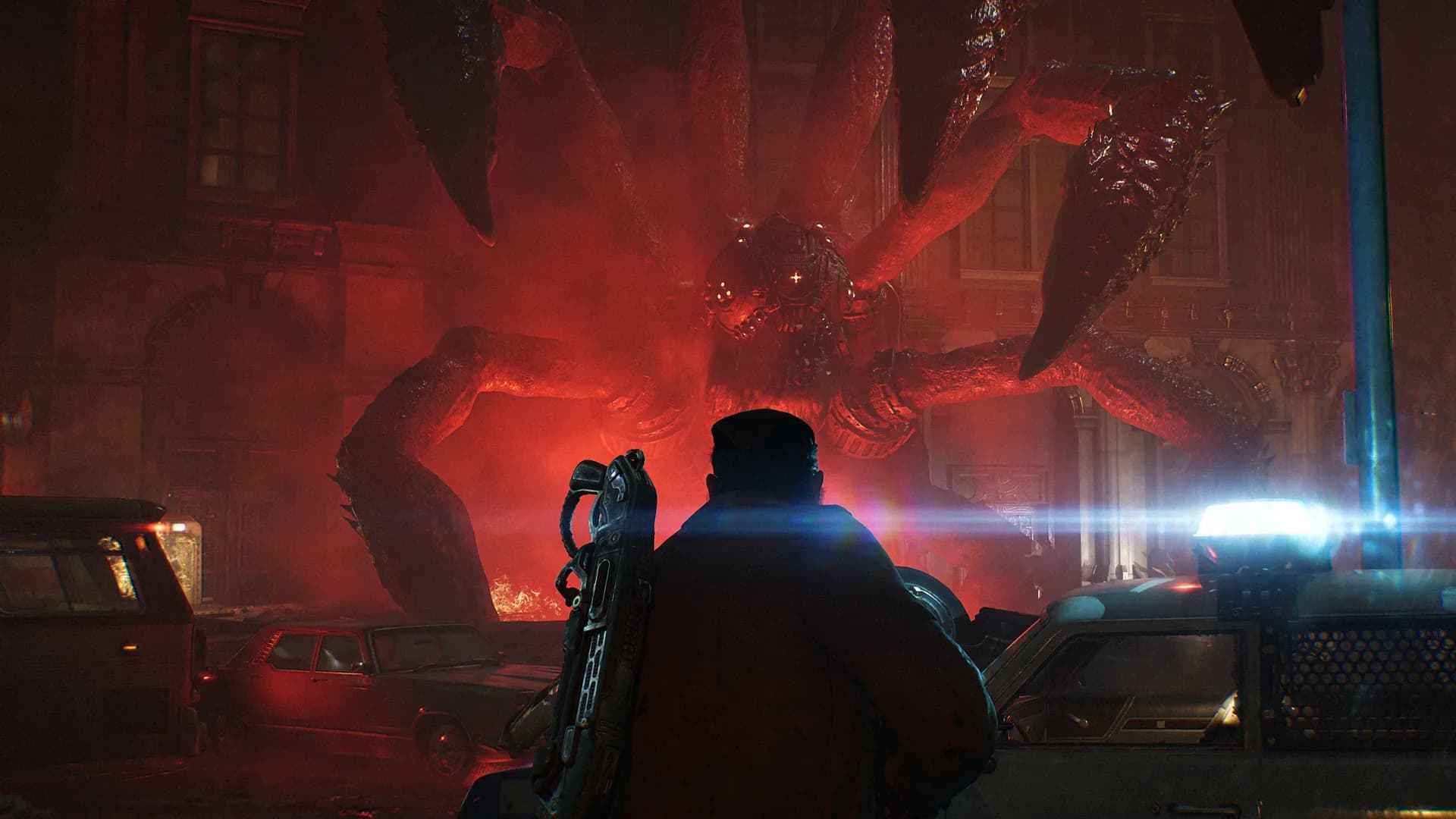
The movement has never been better and Unreal Engine 5 delivers. But Horde lost its 50 waves and there are only six maps.
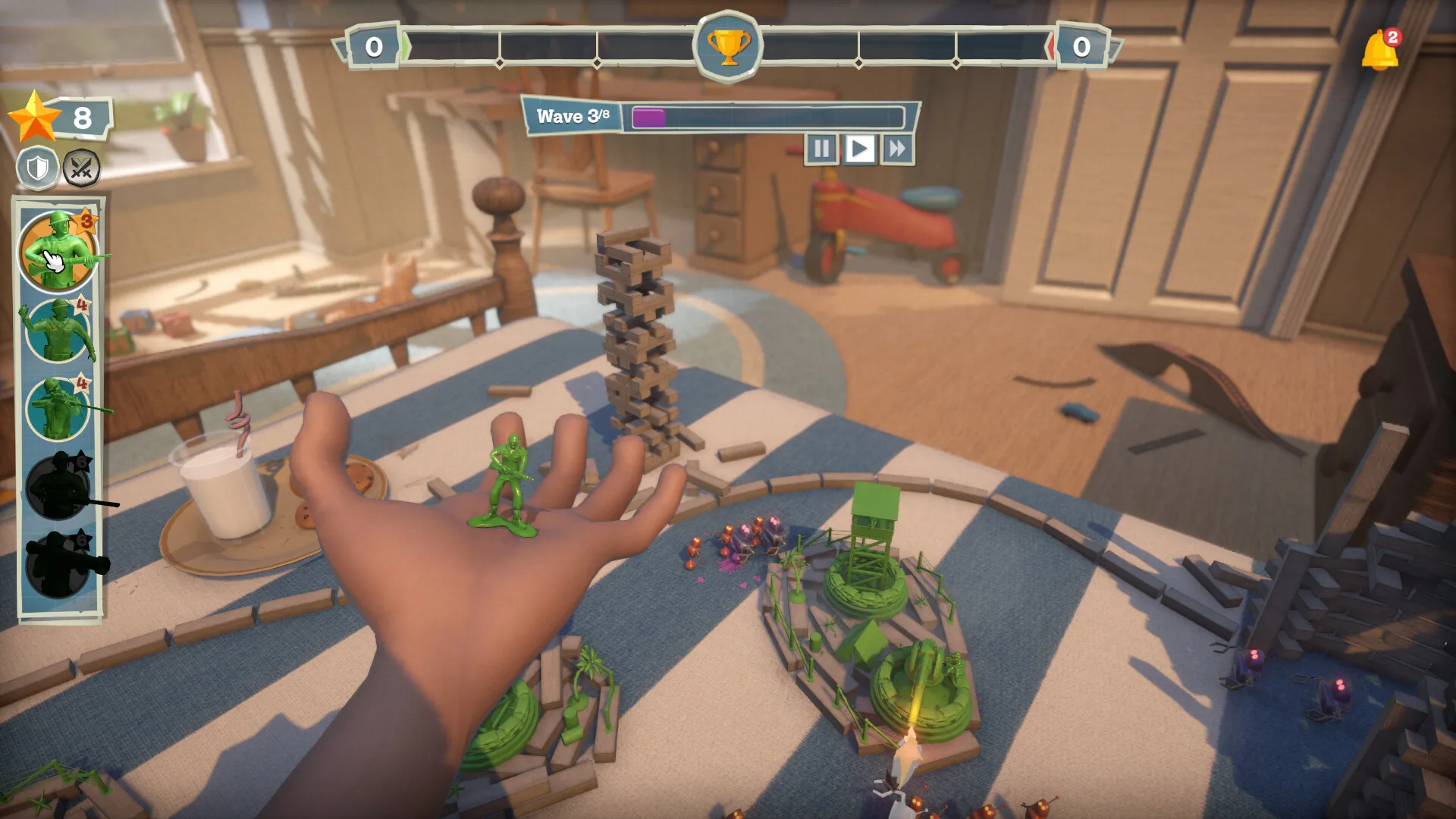
A year of silence, reviews calling it a dead project, and then a new chapter, a new boss and a rebuilt Endless Mode.
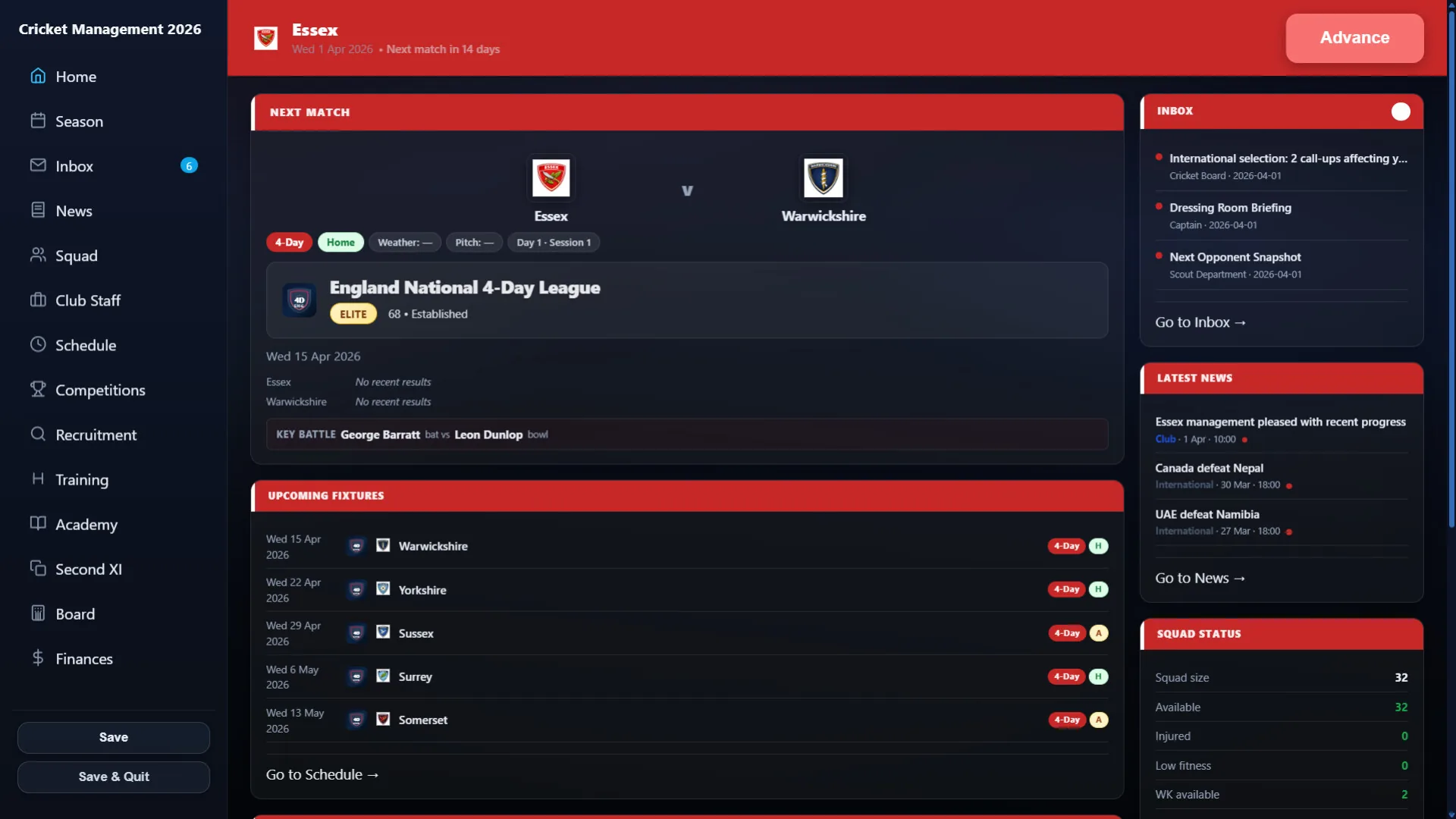
Thirty-nine patches in two months, 64 international sides, facilities to maintain and a match engine that understands swing.