The character editor took me four minutes. A face, a haircut, a species, a starting specialisation I could change whenever I liked. I had the reflex everyone has in front of a menu that short: wondering where the rest was.
Six hours later I had worked out that the rest does not exist because it would have ruined everything.
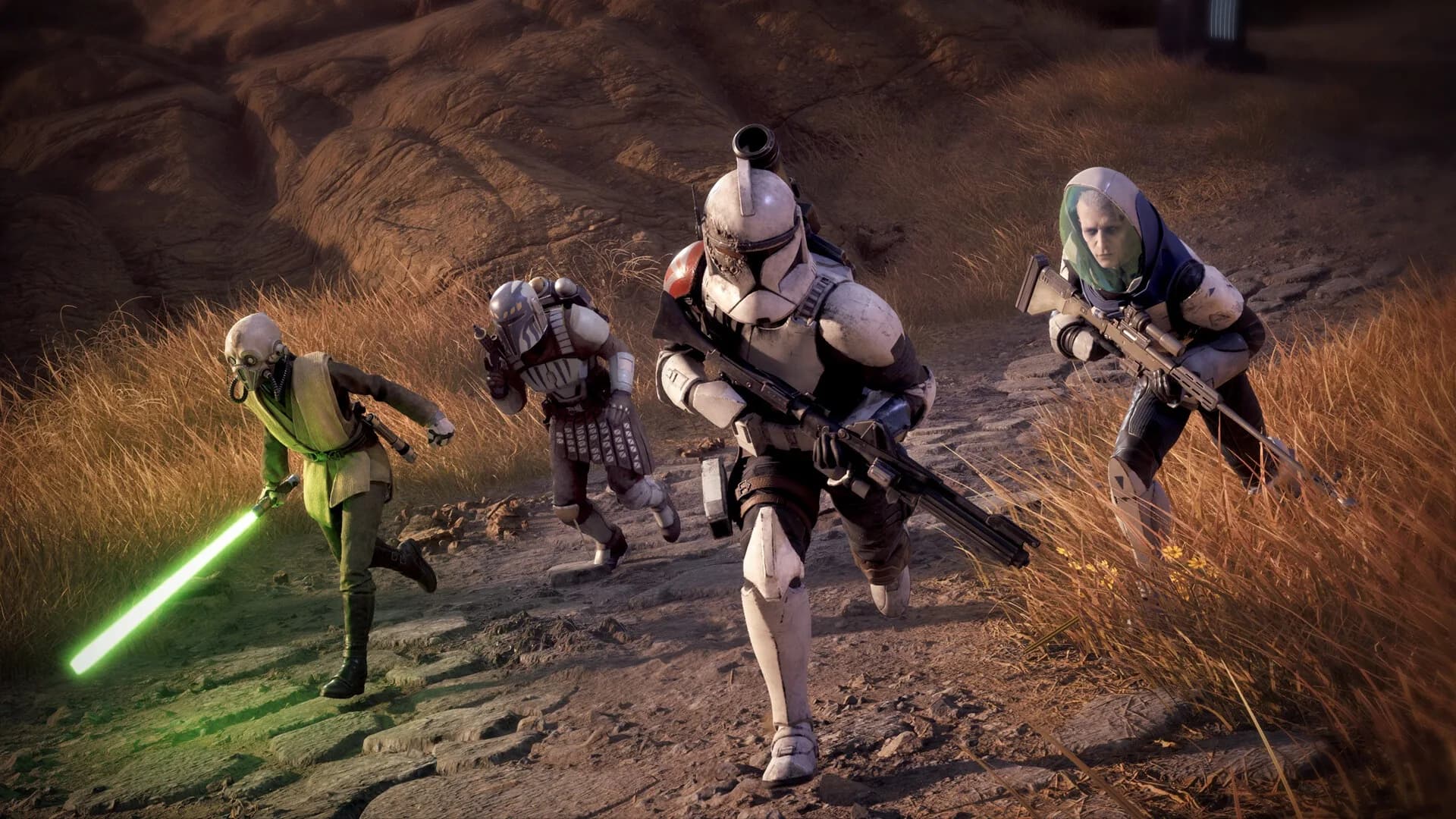
The pedigree needs stating, because it explains how solid the whole thing feels.
Bit Reactor was founded in January 2021 by Greg Foertsch, art director at Firaxis from 2005 to 2019. On his record: XCOM: Enemy Unknown, XCOM 2, Civilization IV. Around him, fifteen former Firaxis developers, roughly a third of the studio, spread across every department and mostly in lead positions.
So these are not people who played XCOM. These are the people who made it.
The industrial arrangement is conventional and it works: Bit Reactor develops, Respawn handles production, Electronic Arts and Lucasfilm Games publish. Out on 27 August on PC, PlayStation 5 and Xbox Series, at fifty euros.
Back to that skeletal editor, because that is where the real design decision sits.
You play Hawks, a former Republic officer now running with irregulars. You choose his appearance, his species, his combat specialisation. You choose nothing else. The character was written before you arrived, and your options amount to a wardrobe.
In any other game I would call that a weakness. Here it is the precondition for something tactics games almost never manage: having real characters.
The genre's problem is well known. When your soldiers are empty creations you name yourself, they cannot tell you anything. You grow attached by accumulation, because a sniper survived twelve missions, not because she holds an opinion. That is sentimental value, not writing.
Bit Reactor cut the other way. The main squad is written, performed, given histories and grudges, and it carries the campaign. The operatives you build or recruit remain supporting cast.
Once you accept that contract, everything falls into place. And honestly, you accept it fast.
The team lives on a tired freighter, and you walk it in third person between operations. That is where you upgrade gear, treat the wounded, and above all listen.
Because things happen in those corridors. Two crew members settling a disagreement, somebody trying to interpret a droid's whistling, a conversation that returns mission after mission until it becomes an in-joke. These are not major scenes and they do not change the plot. They simply make the group exist between firefights.
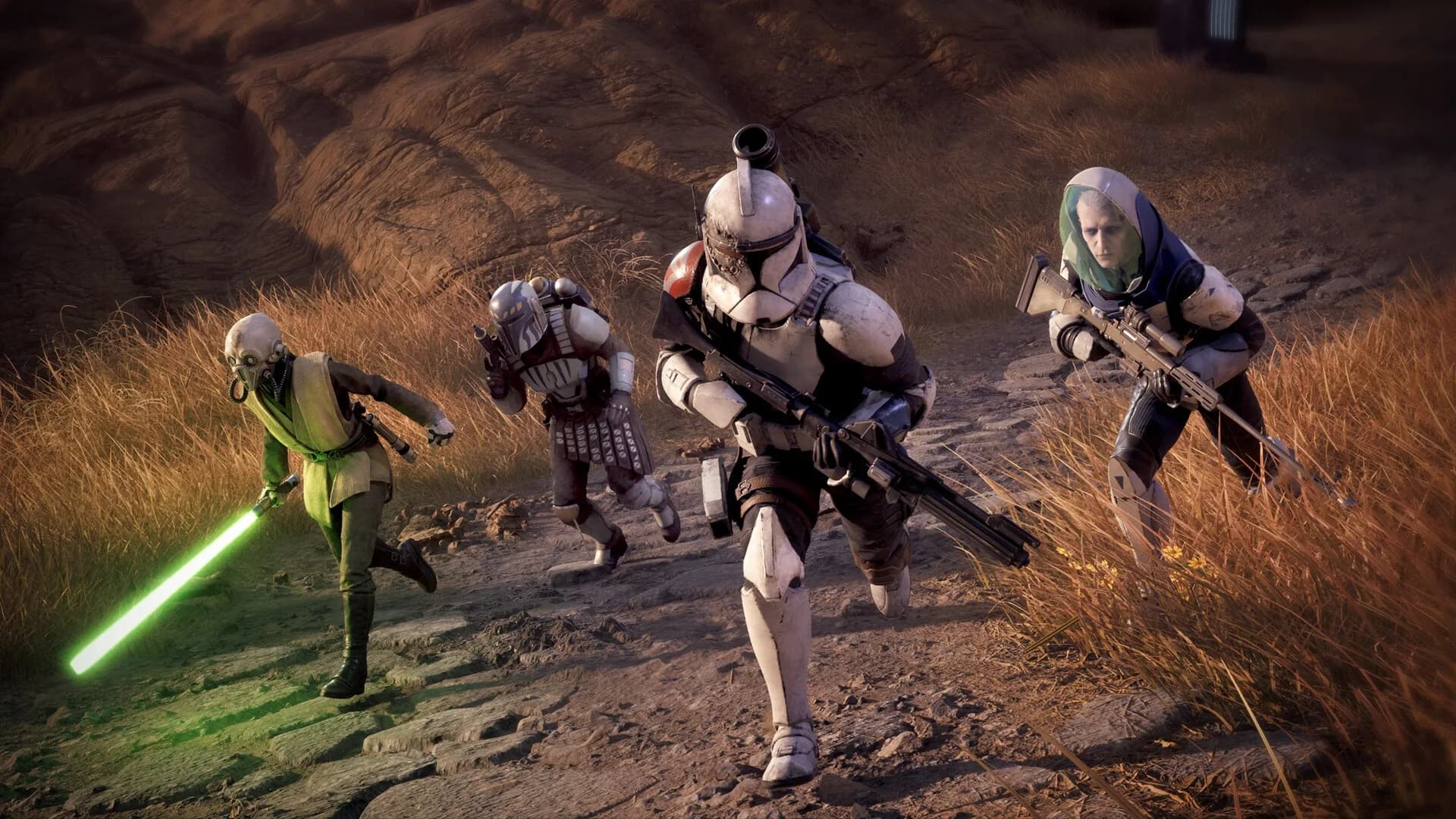
The cast was built to chafe. A clone still loyal to Coruscant rubs along with a former Confederacy accountant, a fallen aristocrat and bounty hunters counting their credits. These people have no reason to get on, and Hawks' job largely consists of stopping it boiling over.
That is corridor diplomacy, and it is the sort of thing you find in a space role-playing game, not a game about grids.
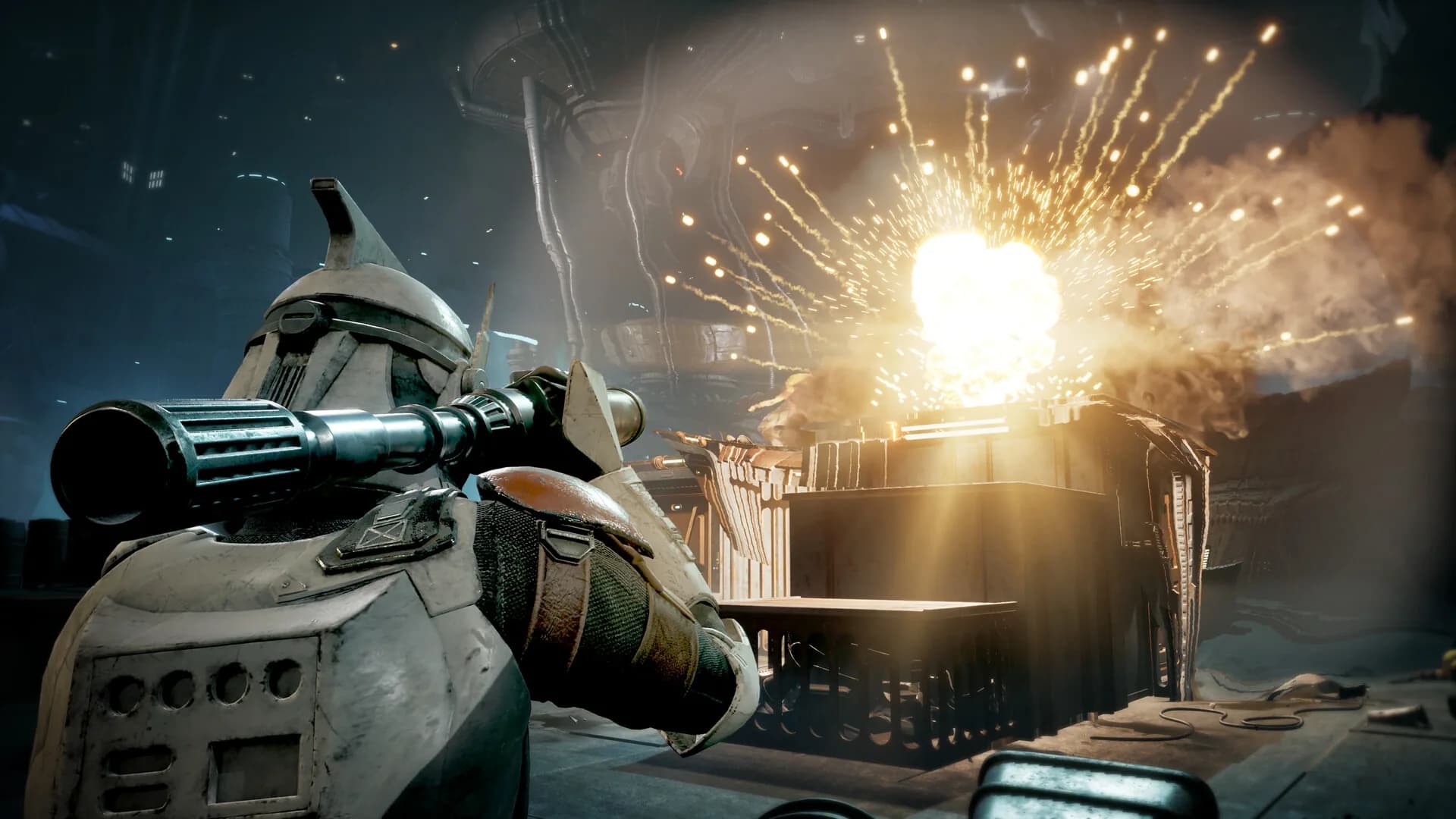
Here is the mechanic that joins the game's two halves, and it is the best idea in it.
Relationships between your operatives level up. At each tier, the two involved receive a bonus chosen from three offers, plus skill points. Two characters who trust each other develop crossed passive abilities that fire when they deploy together.
In other words, a conversation in a cargo hold has numerical consequences three missions later. Chatter is a resource.
That is rare, and it is well judged. Plenty of games lay a narrative layer over a tactical one and hope the player joins them up. Here, ignoring people costs you firepower.
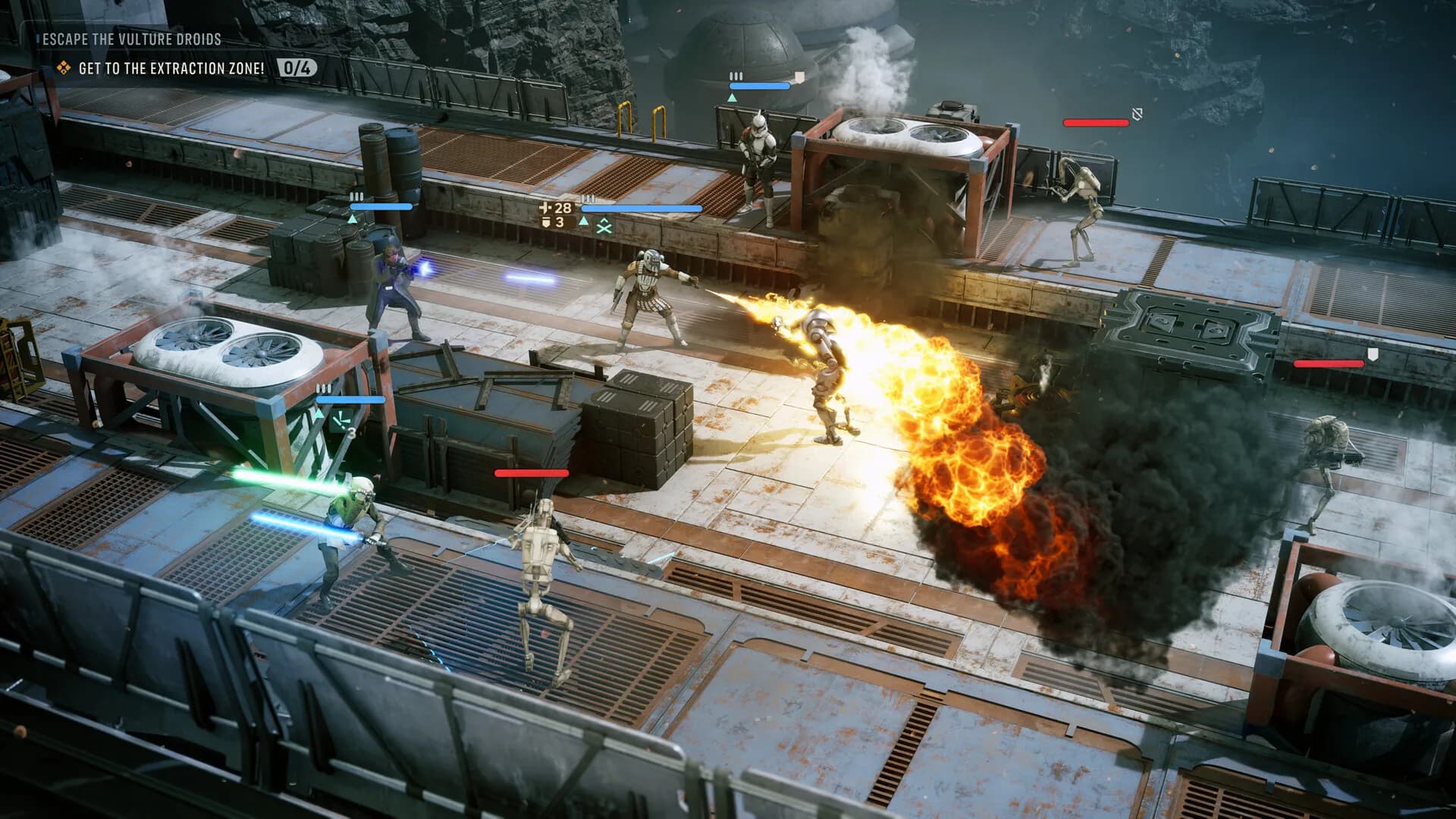
The skeleton is the expected one, executed without a stumble. Grid, cover, overwatch, top-down view.
Every unit gets three action points per turn, split between moving, taking cover and shooting. That three-beat economy changes more than it appears to: it allows composed turns, the sort where you advance, reposition, then open fire, where many games in the genre lock you into a one-way trip.
On top, two house systems.
Advantage is a gauge shared by the whole squad, fed by successful shots, unlocking the heaviest abilities. Suppressing fire, rocket salvoes, that kind of argument. Because the resource is common, the question is never merely whether a soldier can shoot, but whether he is the one who should spend the group's capital.
Backup triggers combined attacks between two units. That is what gives a well-positioned squad the feeling of working as a mechanism rather than four people shooting in separate directions.
Add partially destructible scenery and you get situations where the right move is to remove the cover rather than whoever is hiding behind it.
A dozen classes are available very early, from assault specialist to medic by way of sniper, each with unique active and passive abilities. The heroes of the main squad sometimes have exclusive profiles, considerably sharper than average.
And there is a Jedi among the deployable archetypes. I will say no more, but when the Force enters a cover equation, the geometry of the battlefield changes entirely.
The option exists and I recommend leaving it ticked.
A soldier who accumulates three serious wounds is gone from the campaign for good. No trip to the infirmary, no narrative resurrection. He is not there any more.
That transforms how you read a map. A badly judged piece of cover stops being a miscalculation and becomes a decision you will regret for twenty hours. And it gives the anonymous recruits a narrative function: they are the ones you send on the dangerous side operations, because you will not risk the people whose first names you know.
The game has the honesty to let you become that kind of commander without ever congratulating you for it.
Around that, conventional but legible base management. You invest credits in the medical bay, because a badly wounded soldier left without a bacta tank drags his penalties through several missions. You open a black market giving access to weapon modifiers unavailable through Republic channels. You recruit from a pool of generated fighters with profiles and histories that set them apart at least a little.
None of this is perfect, and three things irritated me.
The structure imposes filler. To reach the real companion quests and narrative pieces, you have to accumulate intelligence by chaining side operations that resemble each other. That is the genre's standard toll, and it is more visible here than it should be.
Bond management becomes arithmetic drudgery. With a dozen members, assigning bonuses relationship by relationship takes an unreasonable amount of time. A good idea that turns on itself as soon as the roster grows.
And you walk to open menus. Physically crossing the ship to six different terminals to consult management screens is charming the first three times and tiresome afterwards.
I will add a more tactical complaint: you deploy with very little information about what awaits. Yet certain classes are near-mandatory against certain opponents. Composing a squad blind before discovering you brought exactly the wrong profiles is not difficulty, it is a raffle.
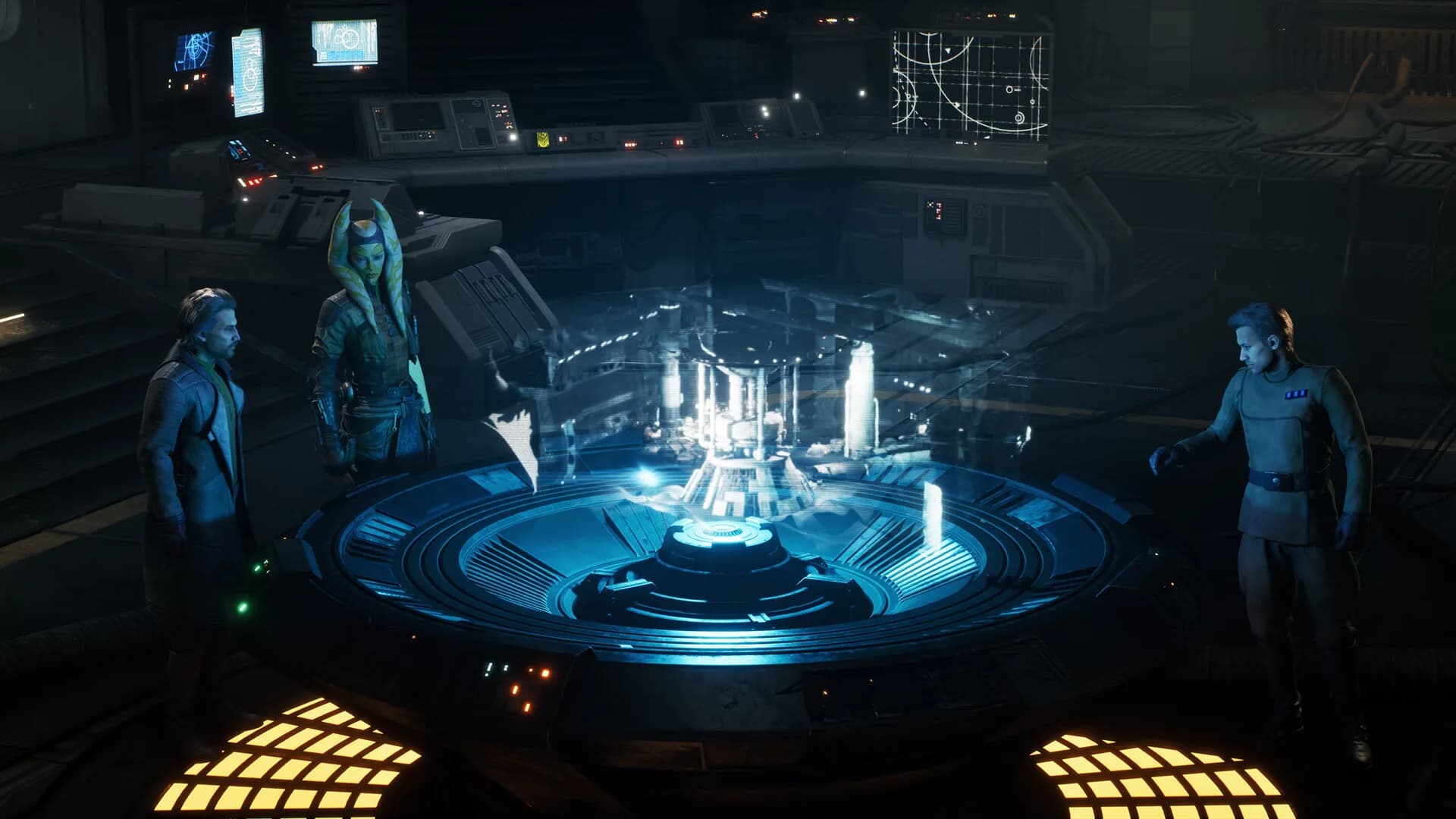
Worth a word, because it is what separates an adaptation from a coat of paint.
The action sits at the twilight of the Clone Wars, at that precise moment when alliances are fraying and the Republic is starting to stop resembling what it claims to be. That is the best possible period for a game about mercenaries: everybody has a reason to betray somebody.
The staging plays along down to the details, with the saga's signature screen transitions and sound work that has nothing to prove. Some of the vistas, glimpsed during the on-foot sequences, are genuinely beautiful.
This is not a licence laid over a grid. This is a game that read its sources.
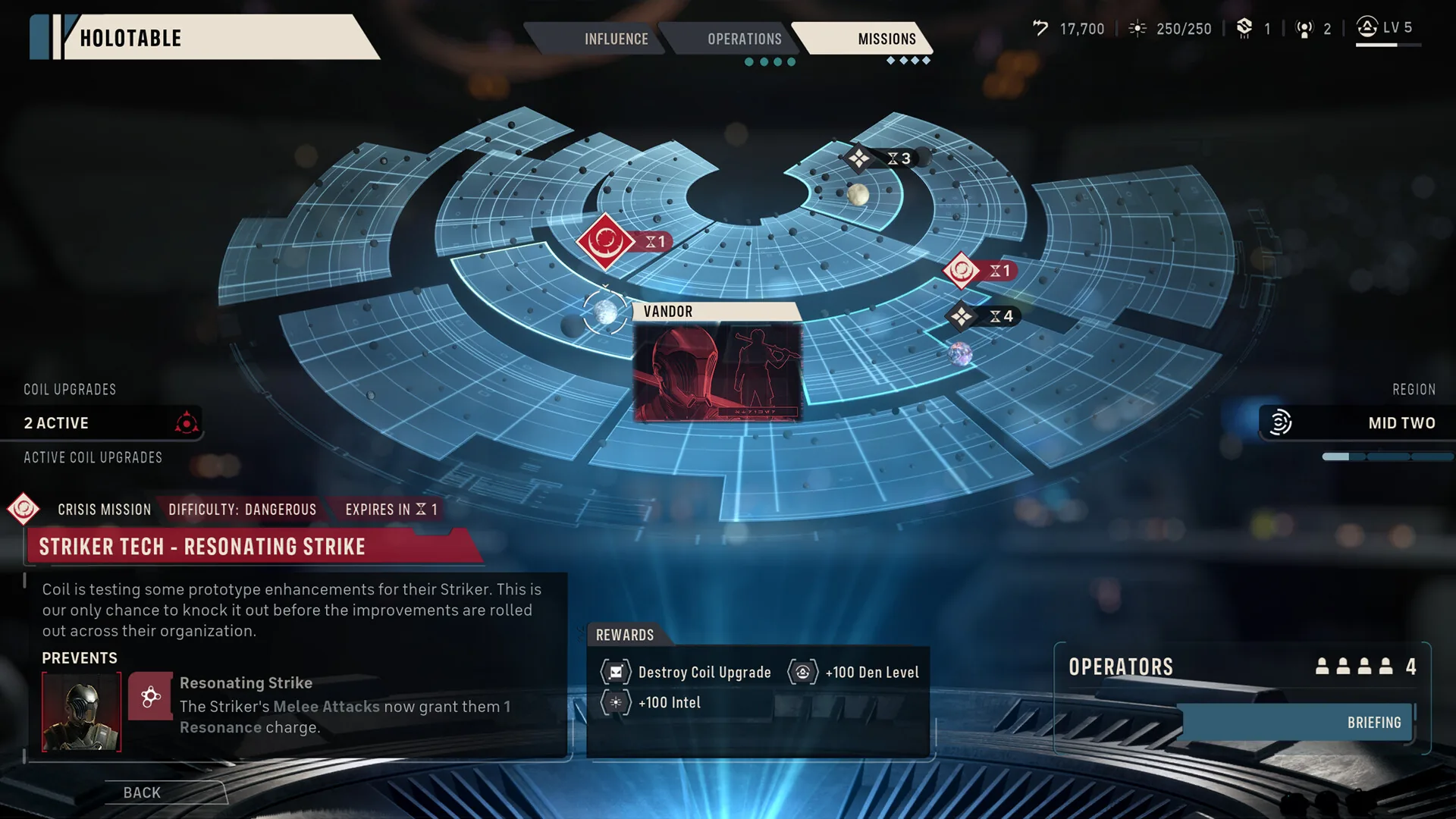
Bit Reactor has not reinvented the genre and does not pretend otherwise. Anyone looking for a tactical sandbox where everything can be circumvented will go hungry: this is an XCOM, with its rules, its cover and its missed 95% shots that make people howl.
What the studio did do is solve the problem this genre has dragged around for twenty years. A tactics game rarely remembers its characters, because they are interchangeable by construction. By writing the squad instead of making you assemble it, and by wiring relationships straight into the statistics, Zero Company gets both things at once: a campaign where you calculate firing angles, and a campaign whose first names you remember.
Getting there meant taking a little freedom away from you. It is a counterintuitive choice, borderline impolite, and it is the one that makes the difference.
One question remains, and I ask it sincerely: how long before somebody dares do the same thing without needing a lightsaber to finance it?
Which squad are you building first? Come and present it on the InsertCoins Discord, we will judge you harshly.