7
Test
Barfender: my idiotic friend drank all the beers
A co-op bar that collapses while you serve. 98 per cent positive, and one of the rare times chaos is the actual subject.
Alexandrosse
7 min
A 1936-1945 grand strategy game that fits in one evening, with a built-in scenario editor. Austere, yes. But the austerity is a method here.
Alexandrosse
InsertCoins.press Score
7/10
Verdict
Recommended
Two thousand hours in Hearts of Iron IV. And on Saturdays, a table, a map folded along the wrong creases, and little cardboard squares nudged with tweezers across hexagons, replaying Kursk or Napoleon's Italian campaign.
I mention it because it governs everything that follows. When I open a grand strategy game that makes no graphical effort, I do not ask why it is ugly. I ask what the ugliness buys.
It was simple. A hex wargame is entitled to be austere because its austerity is a discipline. The Avalon Hill cardboard counter, with its NATO symbol and two numbers, is information design: at a glance you know what the unit is, what it hits with and what it absorbs. The hexagon is not decoration, it is a rules object that carves up distance, defines adjacency and makes zones of control legible.
A game that is ugly and hex-based is a tradition. A game that is ugly without hexagons is potentially somebody who gave up the beauty without gaining any rigour.
So I looked closer. And I was wrong.
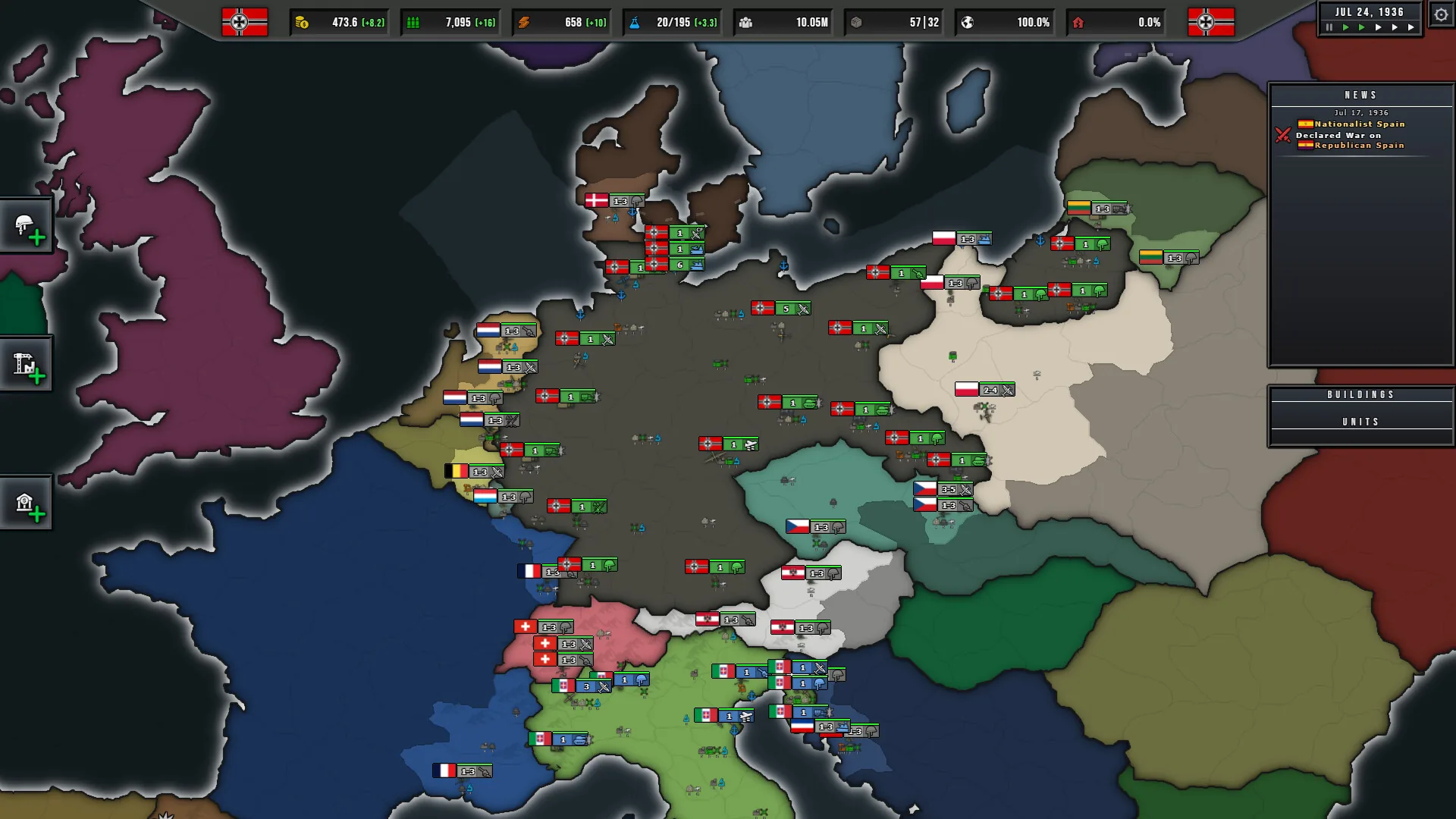
Zoom into the map. Every unit is a rectangle in two parts. On the left, the national flag and two numbers separated by a dash: 1-3, 2-4, 3-5. On the right, a green frame with a number and a NATO symbol: the cross for infantry, the oval for armour, the rest of the grammar.
That is a cardboard counter. Exactly the same one. The studio left out the hexagons but kept the entire rest of the vocabulary, down to how the values sit on the counter.
What replaces the hexagon is provinces, and honesty is required: that is a perfectly legitimate abstraction. Hearts of Iron and Europa Universalis have lived on it for twenty years. The hexagon quantises space regularly, the province quantises it politically. Both are choices, not shortcuts. The province costs tactical precision and buys strategic legibility, which is not absurd for a game about industry and diplomacy as much as front lines.
So no, the absence of hexagons is not laziness here. It is a different scale, deliberately chosen.
To the mechanics, because that is where it is judged.
You command every division directly. Infantry, armour, artillery, fighters. The system runs on crossed strengths and weaknesses: each type excels against some and collapses against others. And there are supply lines you must not overstretch, which is the only thing stopping a player charging stupidly east. Every wargamer knows a war is mostly lost through logistics, and this game knows it too.
You develop your provinces. Factories, research labs, ports, infrastructure. The economy juggles construction, goods, military supplies and manpower. You can take loans and trade on a world market. The technology tree runs from early-war infantry weapons all the way to the atomic bomb.
You choose your ideology, between democratic, authoritarian, communist and fascist, and you can remake your country through reform or through civil war. That is the mechanic promising the most replay value, because it turns domestic politics into playable ground.
And you lie. Diplomacy offers survival alliances, guarantees of independence, non-aggression pacts, sending "volunteers" into other people's wars, and betrayal when the moment is right. In multiplayer the game adds global and private messaging, and the studio's pitch is a nice one: your words are weapons too.
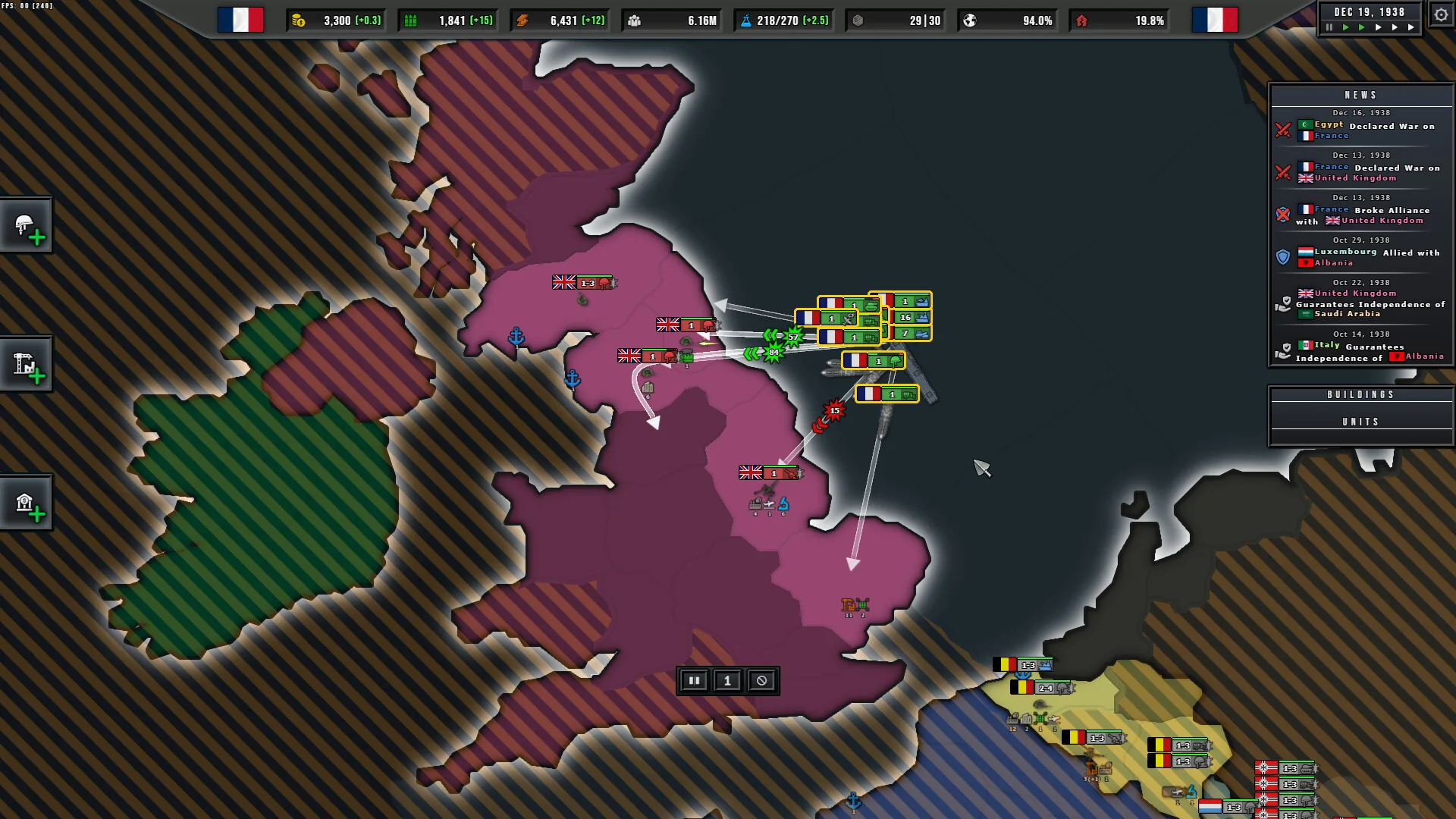
In my captures, the France of December 1938 has just broken its alliance with the United Kingdom, declared war on it, and is landing in England while Egypt declares war in turn. This is a long way from the historical rails, and that is the point.
It sits in one line on the store page, and it defines the product: a full match fits in one session.
No three-hour tutorial, no wiki open on the second monitor. You are on the map making decisions that matter within minutes.
It is worth measuring what that means coming from Hearts of Iron. A HOI4 run taken to 1945 is thirty to fifty hours, a good part of it spent watching a construction bar fill. The game is magnificently deep and completely unusable if you want to play with other people on a Tuesday evening: getting five people to commit to fifty hours of campaign does not happen.
States of Power attacks that exact point. It does not claim to be deeper than Paradox, it claims to be finishable. And for multiplayer with diplomacy, lies and reversed alliances, that is probably the best possible decision: betrayal only has flavour if the game reaches its end.
Something else worth flagging to anyone who has wrestled with Paradox modding tools.
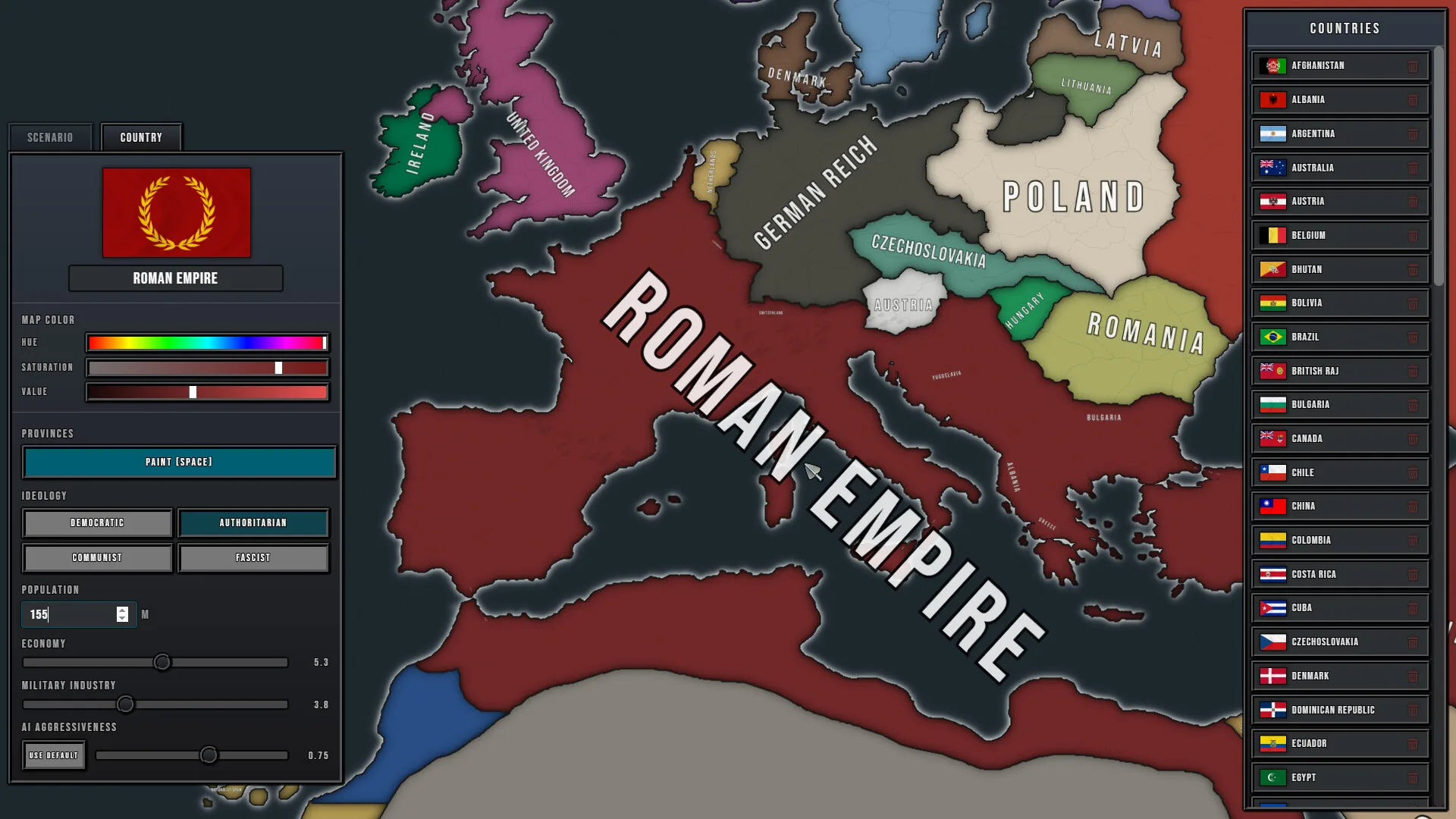
The scenario editor is built in. You create countries, redraw borders, script your own events, assemble a complete alternate history, and publish to a scenario browser where the community downloads, rates and plays.
For a game of this kind, that is the best longevity investment available. A lone developer's official content runs out; a community redoing the Seven Years' War or a Martian invasion does not. And the fact it needs no external tool changes who will use it: this is no longer reserved for people who know how to edit config files.
There are reasons for caution, and they are serious.
The AI is question mark number one. It is the Achilles heel of every game in this genre, including those with entire studios behind them. If the machine opponent cannot defend a supply line, single-player will empty out in three runs and only multiplayer will remain.
And a match in one session is a two-way wager. What you gain in accessibility you lose in escalation. The particular pleasure of Hearts of Iron is watching an industrial decision from 1936 pay off in 1943. Compressing an entire war into an evening risks turning that long causality into a simple sequence of moves.
There is a demo on Steam, and that is the right reflex before buying: thirty minutes is enough to know whether the counters speak to you.
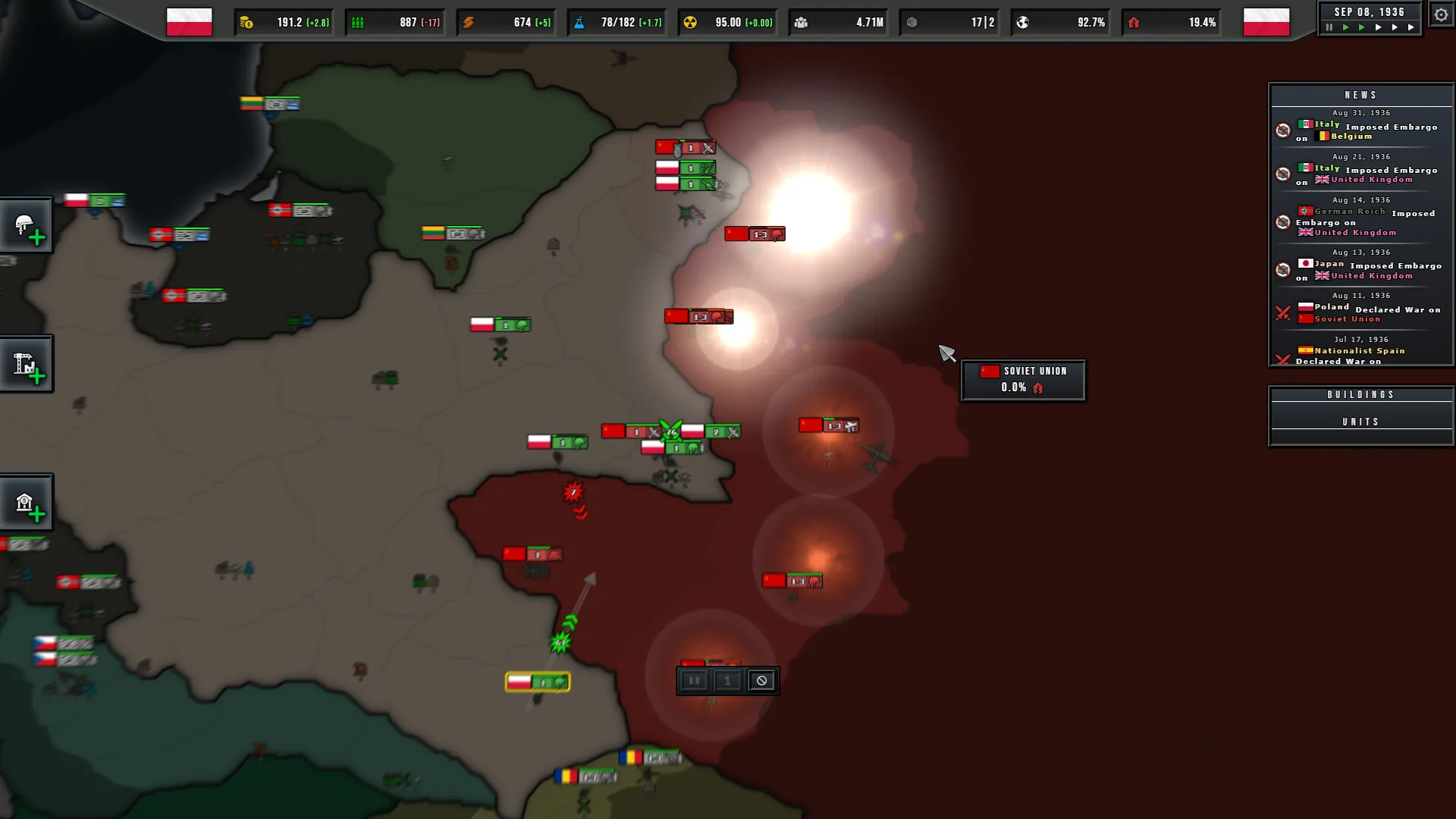
The opening accusation does not hold. This is not a game that is ugly through neglect, it is a game that chose the grammar of the tabletop wargame and laid it over a political map rather than a grid. The counters are counters, the values sit where you look for them, and the information gets through.
What remains is the question only time will settle: whether one developer can balance a machine this size, and whether the artificial opponent will stand comparison with what Paradox already fails to get right with a hundred people.
But if you have ever regretted that a Hearts of Iron run is impossible to finish as a group of five, somebody has just gone after precisely that problem. And they did it with cardboard counters, which around here is a compliment.
Do you play on screen or on a table? Come and settle it on the InsertCoins Discord, we have both camps and they do not get along.
Community
Your rating
Advertisement
Loading comments...
You might also like
A co-op bar that collapses while you serve. 98 per cent positive, and one of the rare times chaos is the actual subject.
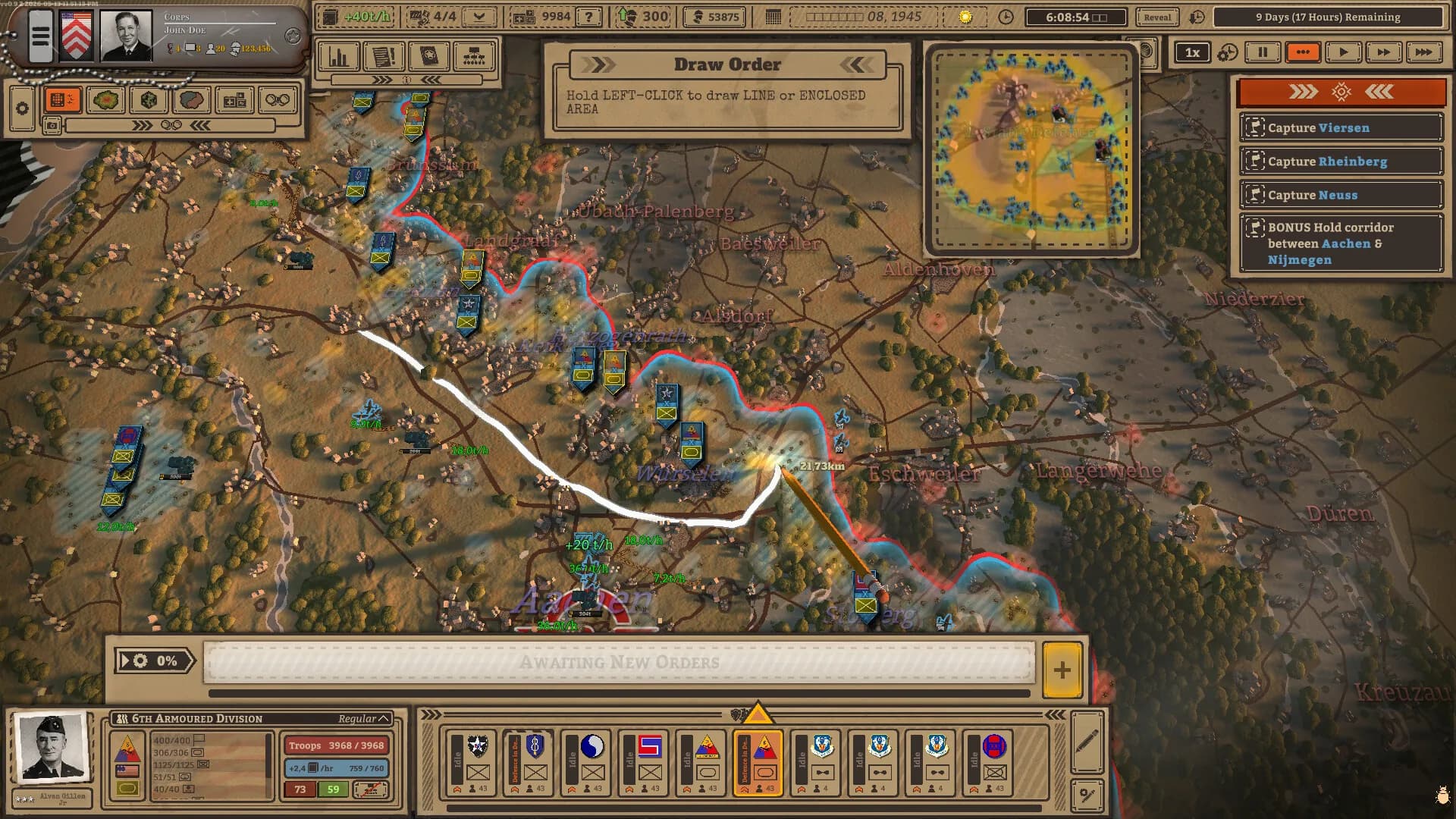
You draw a plan on the map and officers execute it alone. Except the game crashes every other planning phase.
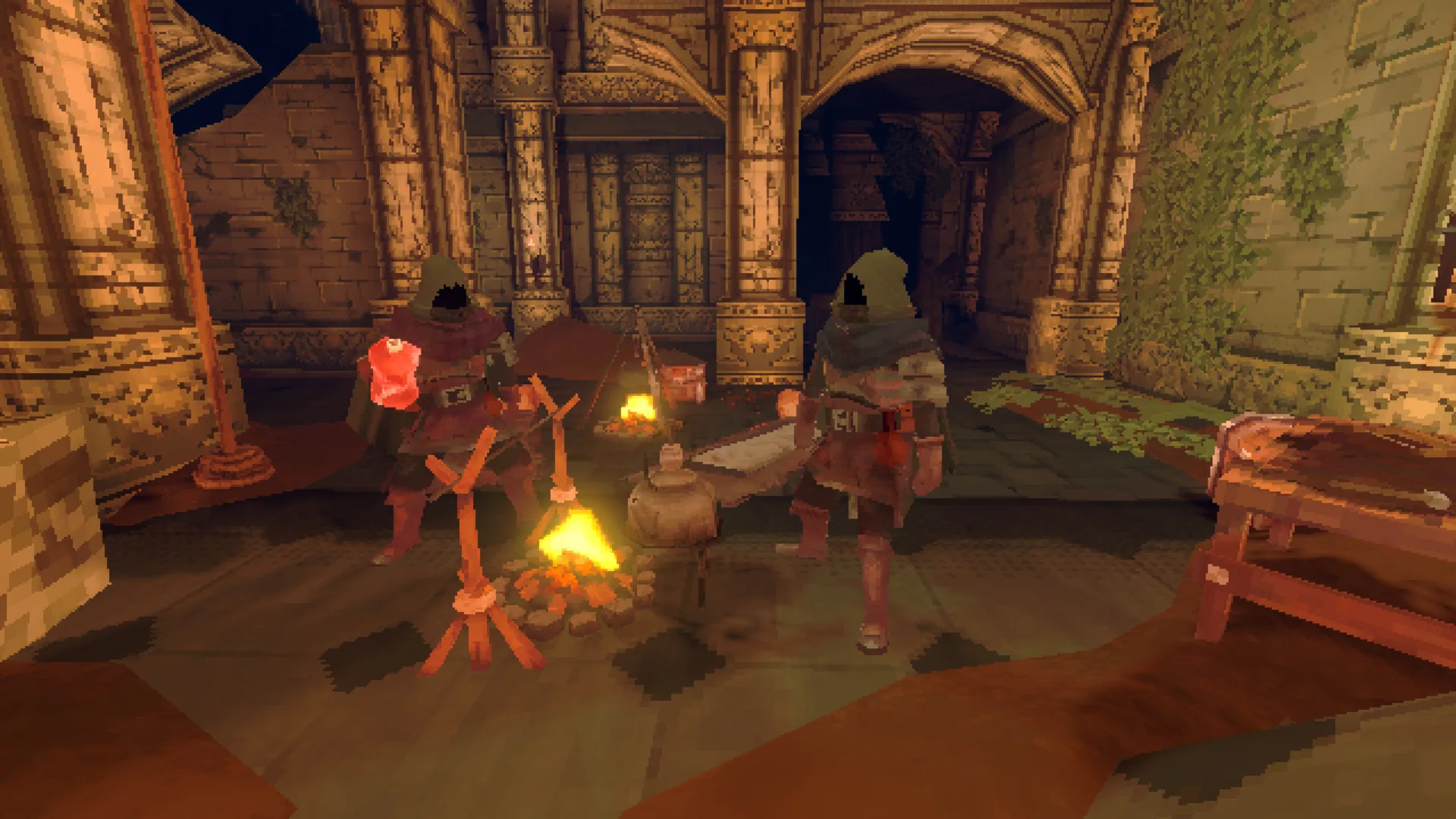
The Knights of Pen & Paper team return with a dungeon where you come back to camp, cook, and unlock recipes that change your stats.