Preview
Gridlords: an auto-battler where your opponent does not need to be there
You build a castle, you release it into the arena, and it fights other people's on its own. Goblinz publishing.
Alexandrosse
6 min
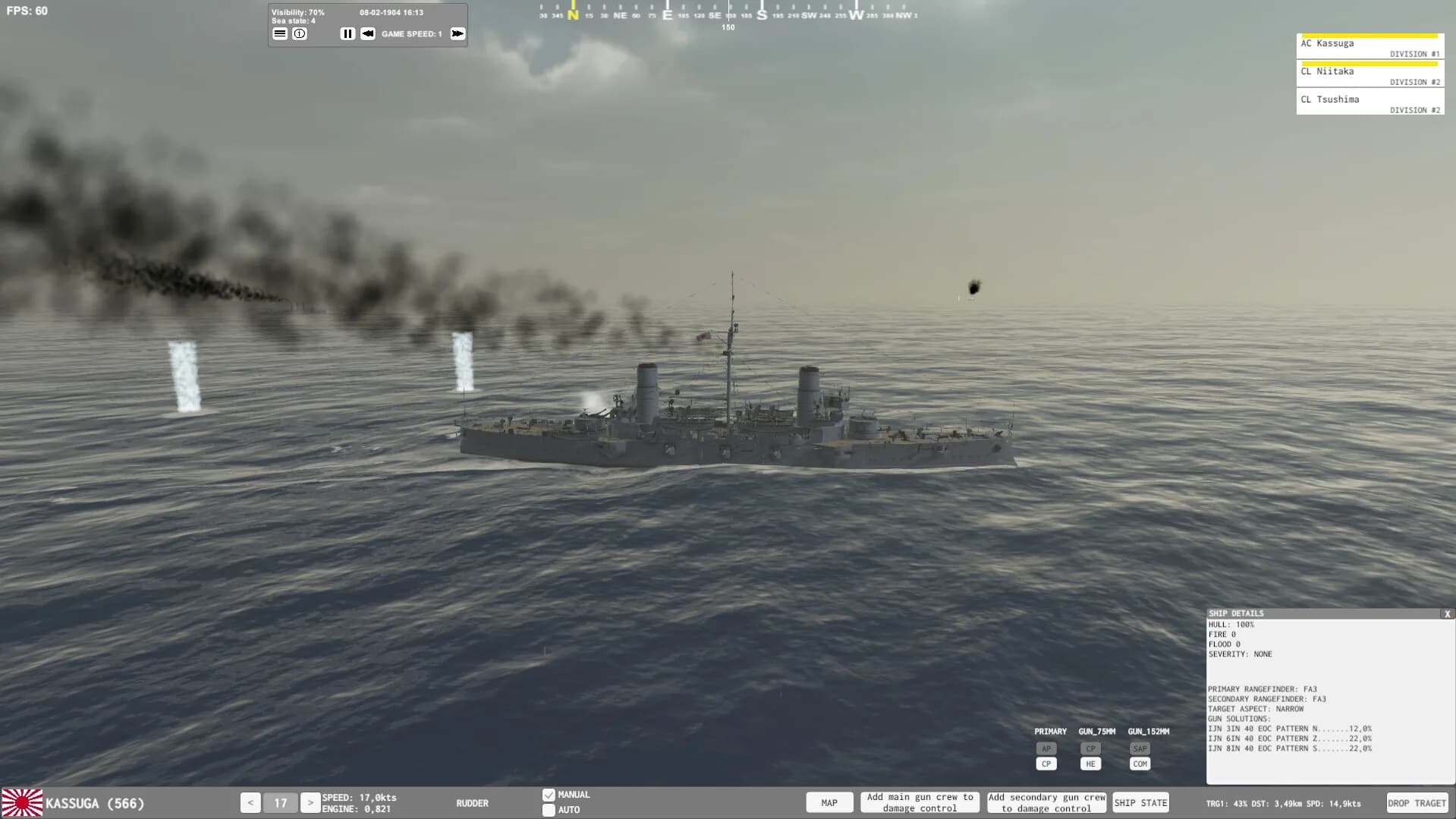
You are Admiral Togo aboard the Mikasa, in the Yellow Sea, in 1904. Fire control, flooding, sea state: all of it simulated.
Alexandrosse
Ask ten naval wargame enthusiasts to name a battle adapted into a video game. You will get Midway, Jutland, the Atlantic, maybe Leyte.
You will not get Port Arthur. And that is an anomaly, because what happened in the Yellow Sea in 1904 rewrote naval doctrine for the entire planet.
The game is announced for early access, with no firm date. No score, then, but the subject amply deserves a look.
The Russo-Japanese War of 1904 and 1905 is the moment everything tips.
It is the first time an Asian power defeats a European one in a major modern conflict. It is the full-scale laboratory of the torpedo, the mine, long-range gunnery and night fighting. And it is at Tsushima, a year after Port Arthur, that a homogeneous, fast battle line armed with a single calibre is shown to crush everything else.
The direct consequence: HMS Dreadnought is laid down immediately afterwards, and every battleship in the world becomes obsolete overnight.
In other words, the battle this game offers is the last chapter of the era before, and that is precisely what makes it interesting to play. The ships are not yet standardised, the doctrines are still being written, and nobody really knows what works.
A real-time naval simulator. You are Admiral Togo Heihachiro, aboard his flagship, the battleship Mikasa, leading the Japanese fleet against the Russian navy's squadrons of battleships, cruisers and torpedo boats.
The frame is precise: the engagements in the Yellow Sea during the siege of the Russian naval base at Port Arthur, with the ships of the Russian First Pacific Squadron and those of the Imperial Japanese Navy.
All vessels are built from real historical prototypes with accurate technical specifications, and the studio announces dozens of military and civilian ships from both fleets, with more to be added.
This is where you realise it is not an arcade game with boats in it.
Tactical combat factors in ship positioning, speed, sea conditions, fire and flood control systems, and accuracy adjustments.
Let us stop on the second to last item, because it is the rarest.
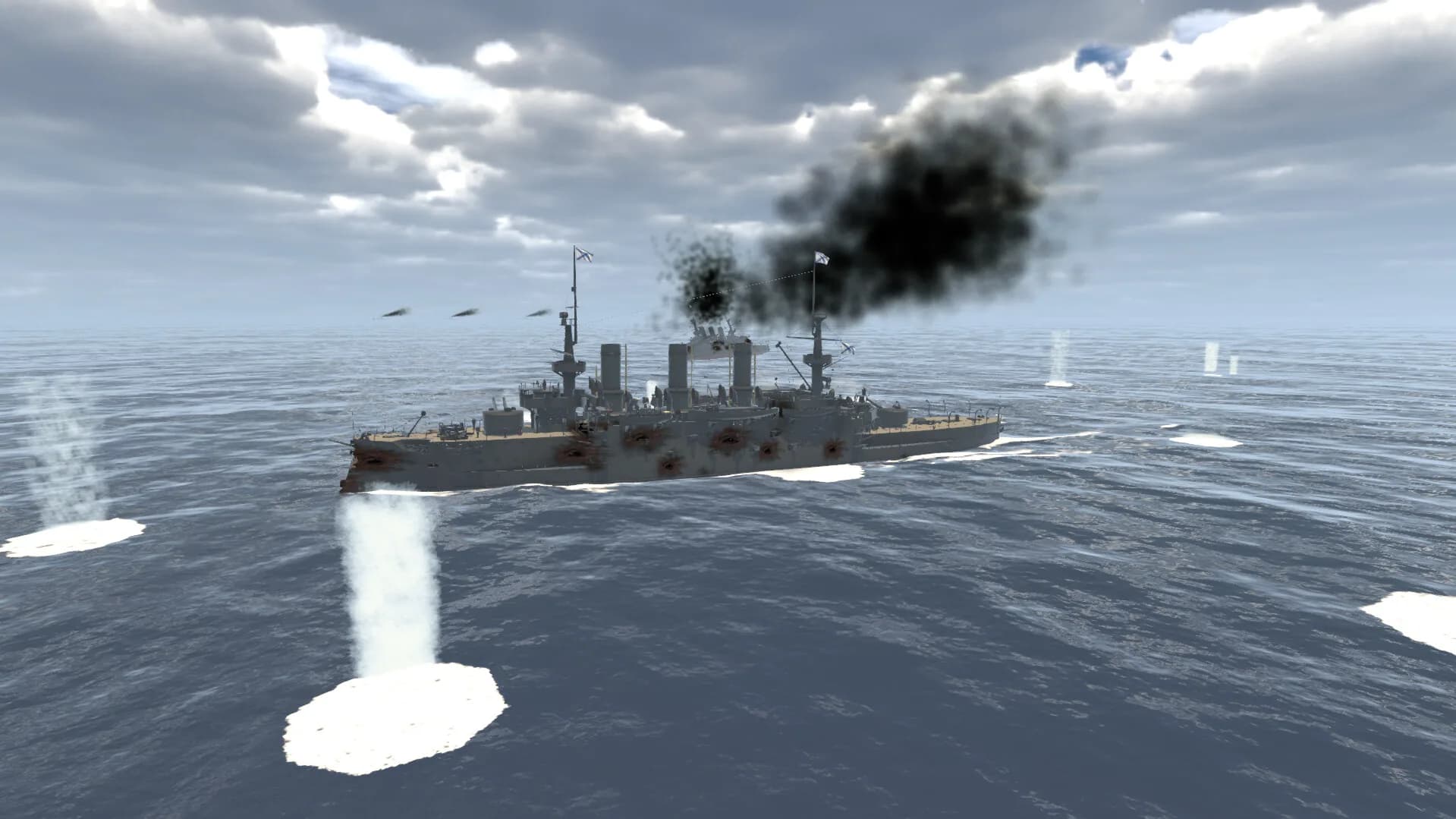
Fire and flood control. In the vast majority of naval games, a shell removes health points. Here, a shell starts a problem: a fire that spreads, flooding that produces a list, a damage control party running. A ship does not sink because its bar is empty, it sinks because nobody plugged the hole in time.
That is exactly what happened historically in this war, where vessels were lost to secondary damage rather than to direct hits.
And accuracy adjustments are the other detail that counts. In 1904 you do not aim, you bracket: you fire, you watch the splashes, you correct, you fire again. Simulating that rather than a reticle is choosing the right era.
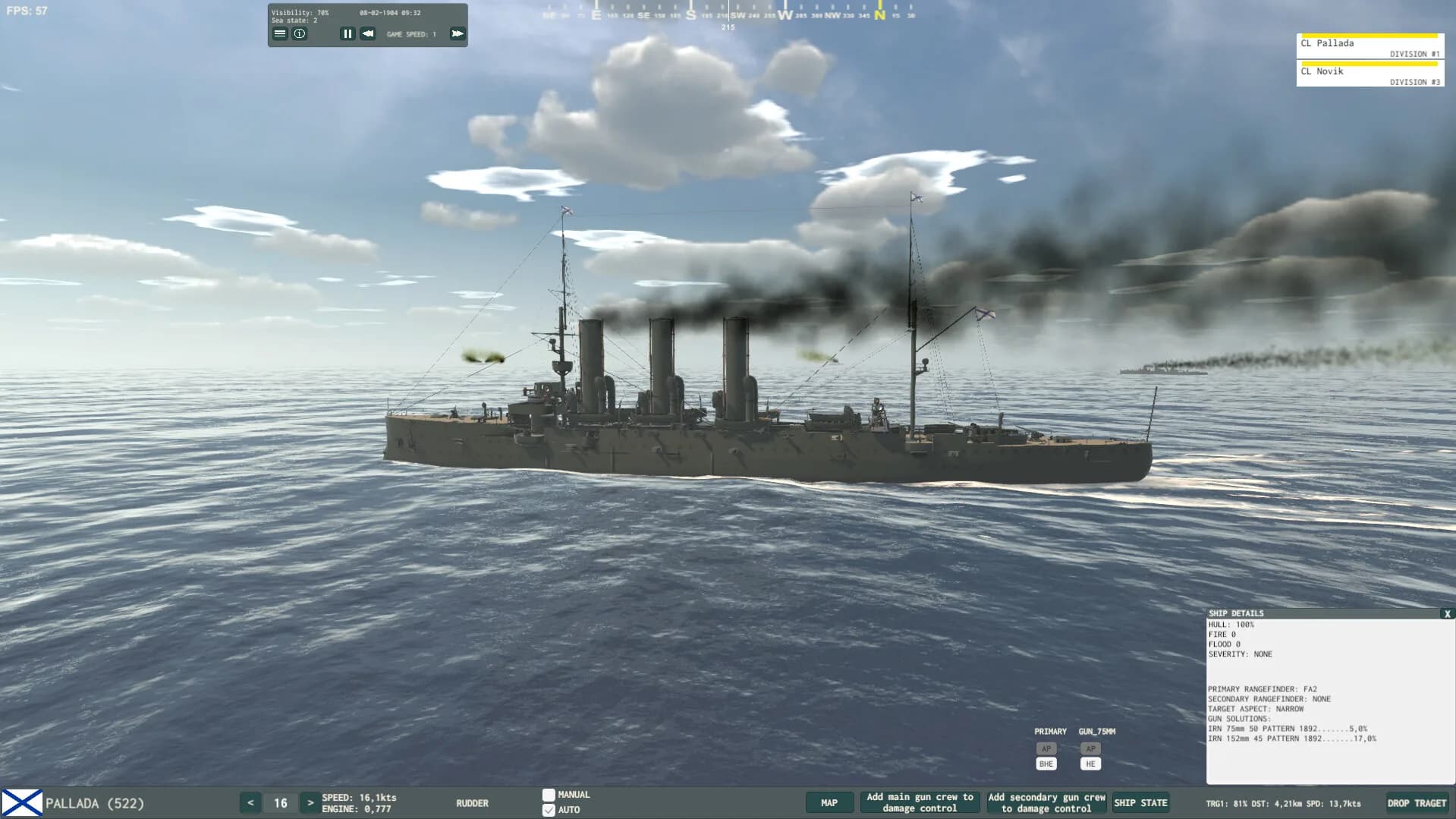
Weather, sea state and time of day directly affect combat.
The game offers ready-made missions, and crucially a built-in editor for creating your own.
For a niche simulator, that is the smartest possible decision. The audience for this kind of game is exactly the audience that wants to replay an engagement with two fewer cruisers to see what changes. Handing over the tool rather than promising fifty missions lets the community produce the content the studio cannot afford to make.
And this is where to pay attention, because the list tells you the project's real state.
Planned: a dynamic campaign for the Yellow Sea battles, for both sides. New theatres of operation, notably Vladivostok and Tsushima. New ships.
And also: save and load functionality during missions.
That last point is worth reading twice. Being able to save mid-mission is not a convenience feature in a naval simulator: a real-time fleet engagement can run a very long time, and having to redo one entirely after an interruption is a dealbreaker for a lot of people.
That it is still on the to-do list tells you exactly where the project stands. Writing it down is honest, and it is information you need.
The dynamic campaign does not exist yet. For now there are missions and an editor. The game stands up, but there is no thread linking your decisions from one battle to the next, and that is precisely what turns a simulator into an obsession.
One perspective for the moment. You play the Japanese side. A campaign for both sides is announced, but playing the Russian First Pacific Squadron means playing the hopeless position, and that is often the more interesting one.
And the interface will be the decider. A game simulating fires, flooding, gunnery corrections and sea state has to give you all of it on legible screens. Simulators of this kind almost always die there, not on their engine.
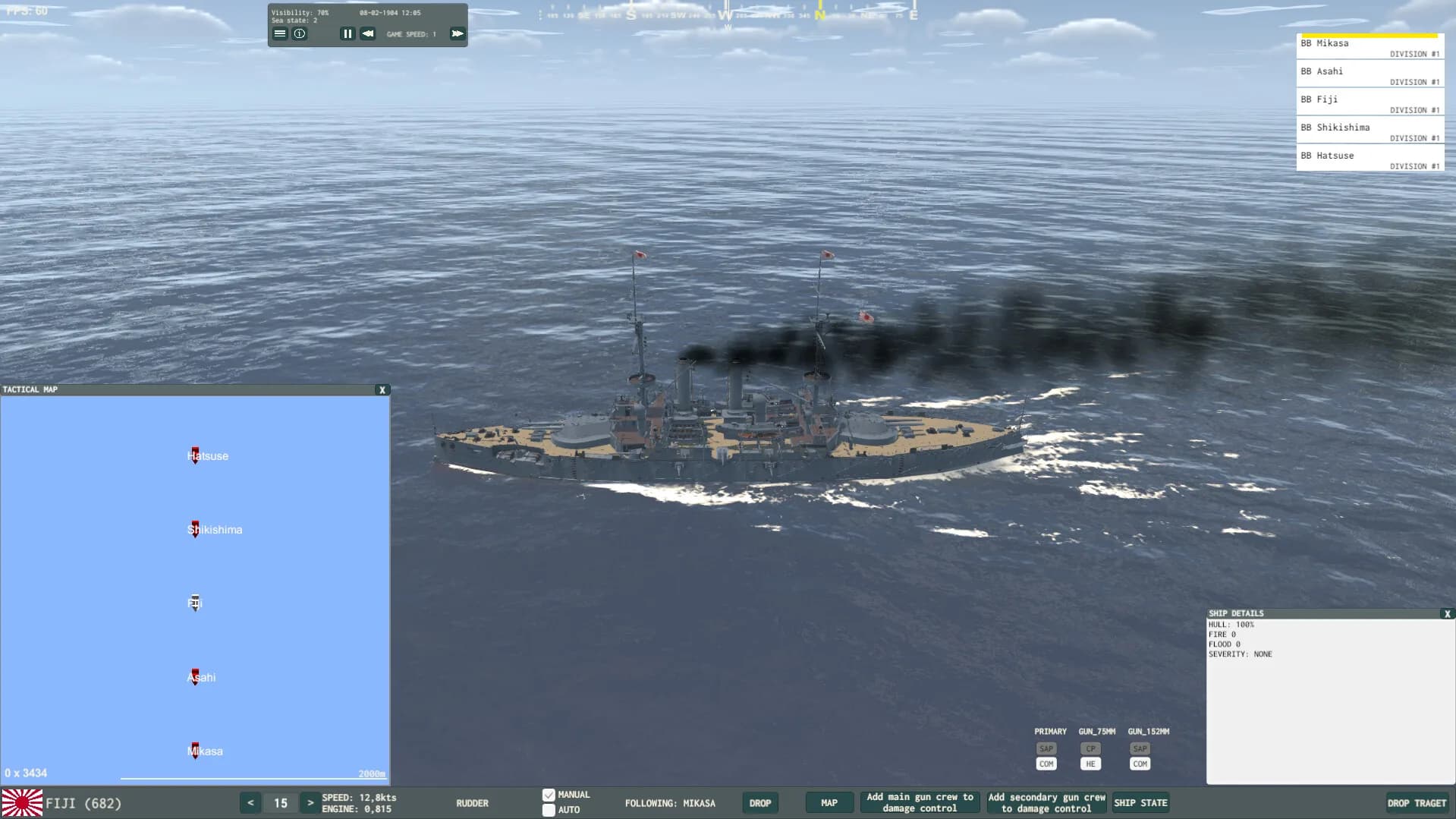
I am keeping an eye on this with genuine curiosity. There is no counting the games about the naval Second World War, and you can count on one hand those interested in the era when the battleship was still searching for its final shape.
A small studio choosing 1904, Togo and the Mikasa over yet another Pacific 1942 is already a decision deserving respect. Turning documentation into a game is the hard part.
Got a pre-1914 naval game to recommend? The list is very short, help us lengthen it on the InsertCoins Discord.
Community
Your rating
Loading comments...
You might also like
You build a castle, you release it into the arena, and it fights other people's on its own. Goblinz publishing.
The Tox Shop lets you level your cards several times per match. Good idea. The name, on the other hand, is commercial suicide.
Thirty years of the series, seven without a numbered entry, and an air base where you meet other pilots as an avatar before taking off.