7
Test
Barfender: my idiotic friend drank all the beers
A co-op bar that collapses while you serve. 98 per cent positive, and one of the rare times chaos is the actual subject.
Alexandrosse
7 min
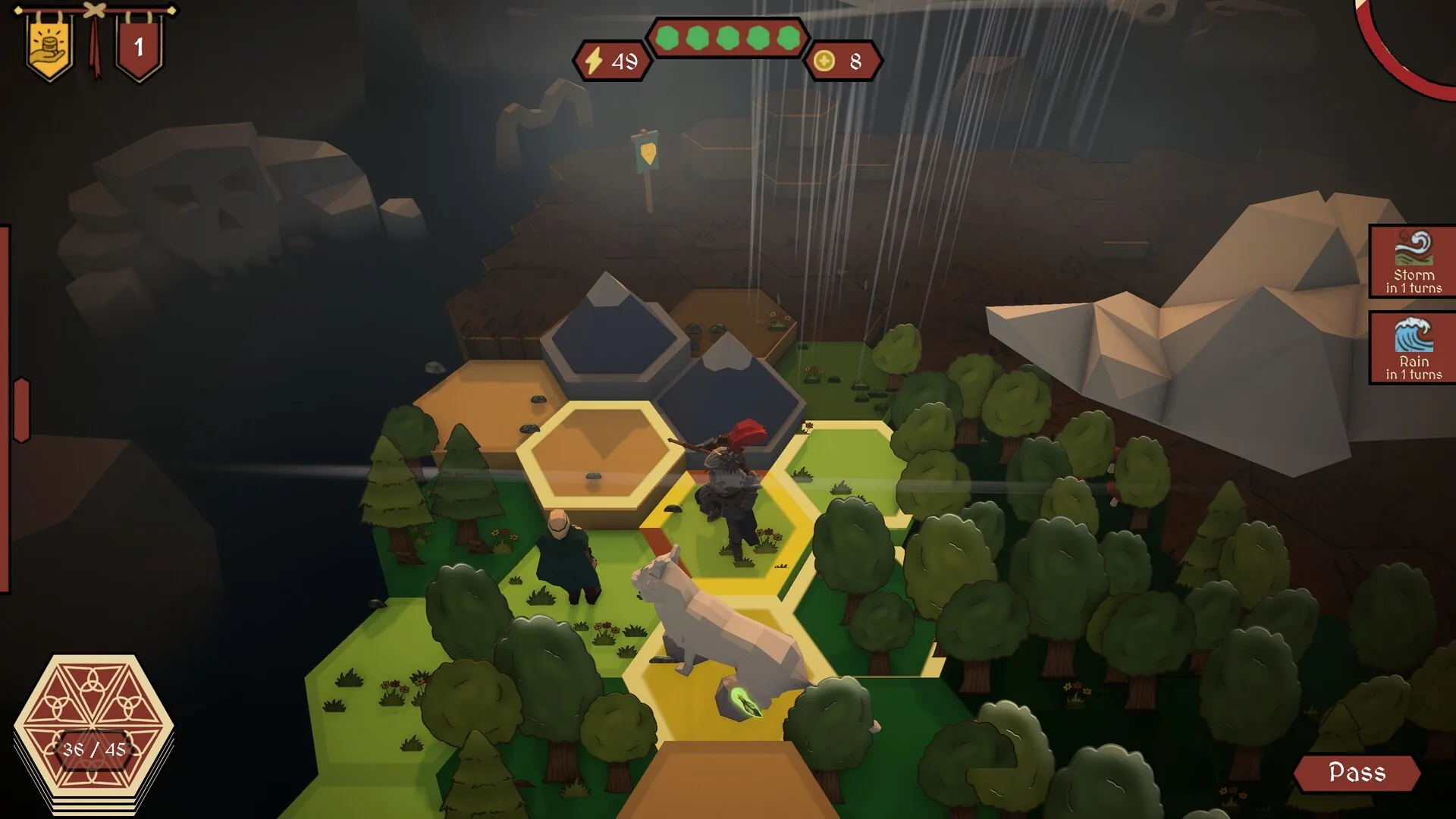
You do not just build a deck, you build the road. Four travellers, five biomes, cards that degrade and bosses that are maps.
Alexandrosse
InsertCoins.press Score
8/10
Verdict
Recommended
The deckbuilder has become the sauce we put on everything. Poker, pool, fishing, running an inn, turn-based combat. One turns up every week and most simply swap one verb for another.
So here is the only question worth asking about this one: is there depth in here, or just a good idea on a store page?
Short answer: there is depth, and it comes from an unexpected place.
You do not only build a deck. You build the road.
The game drops you on a generated medieval hex map with an exit point visible from the start. You know exactly where you have to go. The journey is the problem.
Every step consumes energy. Hit zero and the run ends. There is no enemy draining a health bar, there is a distance wearing you out.
And that is where the cards come in, because they are not for hitting things. Active cards modify the terrain. You lay roads and bridges to cut travel costs and cross what blocks you. You clear forests, carve through mountains, place buildings or useful characters where they matter.
In other words your hand is not an arsenal, it is a public works toolkit. You do not fight the map, you redevelop it.
That is an idea I had not seen stated this cleanly, and it changes the nature of every decision. In a conventional deckbuilder you ask which card plays best right now. Here you ask whether investing in a bridge will pay back across the next fifteen hexes.
This answers your worry about replayability directly, and it is the game's best find.
Cards wear down with use.
Take the measure of that. The structural problem of every deck roguelite is the moment you find the winning combination. From then on, every run consists of rebuilding the same thing, and the game dies of its own optimisation.
Here, the card that wins for you degrades because you use it. The better it is, the more you play it, the faster it disappears. Your deck is never stable, it is permanently eroding, and a run is as much about replacing what dies as building what wins.
It is elegant because it solves the problem mechanically rather than through balancing. No need to nerf the overpowered card, it nerfs itself by working.
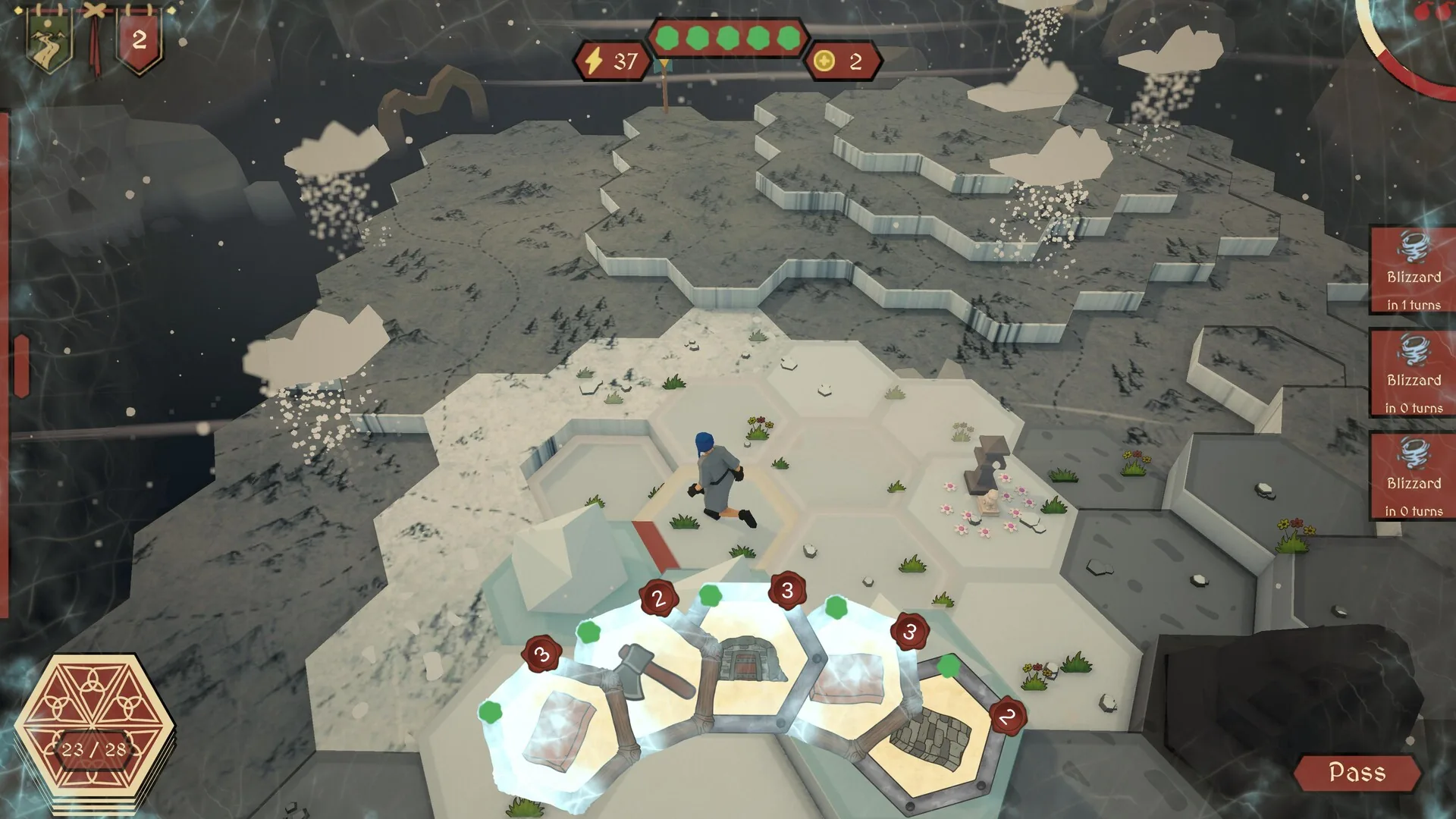
The game separates two functions cleanly: active cards shape the route, passive cards shape the run.
And it advertises six build axes: movement, energy, gold, vision, threat, durability. Six directions is not decorative, it is what lets two runs differ even on a comparable map. A vision build plays to reveal early and plan far; an energy build accepts bad routes because it can afford them.
Add tags, upgrades and your traveller's own strengths.
The market runs on a principle I like a great deal. You can spend the run's gold on specific cards. Or choose a pack type, crack it open, and keep one card from whatever falls out. The choice between the safe purchase and the steered gamble, at every stop, with a currency that is always short.
And there are legendary passives, described as run-defining, absurdly rare, and sitting far down the road. That is the late-run carrot, the one that makes you push one hex too many.
That is the second very good idea, and it is coherent with everything else.
Bosses are hostile maps with special rules. Not health sponges.
Rain turns the ground to mud. Lightning sets forests ablaze. Earthquakes wreck your structures. Wolves hunt along your route.
Think about what that does in a game where you build bridges and paths: a boss does not attack you, it undoes your work. The earthquake does not wound you, it breaks what you have just built. That is considerably more distressing than a large creature with a lot of health.
And there is a remarkable safeguard: forecasts warn you before trouble hits. The studio puts it well by saying bad luck rarely arrives unannounced, but surviving it is still your problem.
That is the right balance. The game does not punish you at random, it informs you and lets you react badly. All the difference between a frustrating roguelite and a demanding one lives in that distinction.
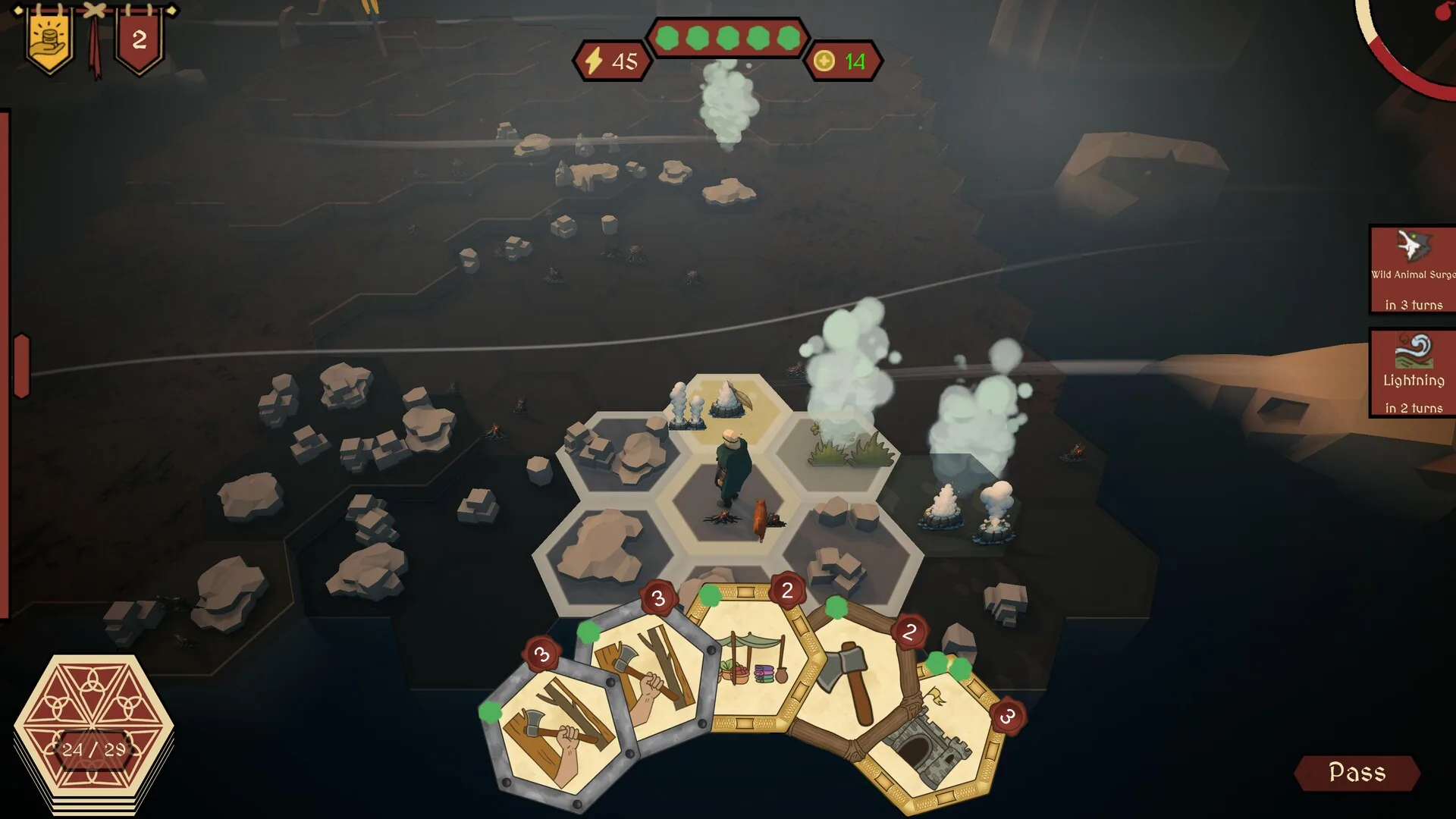
You reach the exit. You can leave. Congratulations.
And then the game invites you to stay.
Cash out: you leave the map and keep what you earned. Push your luck: you stay for more gold while threat rises, wildlife closes in and disasters get meaner.
That is the mechanic that brings you back. It turns every ending into a personal decision rather than a victory screen, and it produces exactly the kind of stories people retell afterwards. The studio's phrasing is perfect and I will leave it to them: one more hex, famous last words.
Five environments, and the studio specifies that each has a new way to ruin your route: green lowlands, sinking swamps, frozen wilds, scorching deserts, volcanic ground.
Four starting travellers with distinct philosophies. The Pathfinder favours safer roads. The Guardian controls threat. The Merchant plays for profit. The Master Planner works on timing.
Landmarks with run-changing powers, the rarest of which invite you to place a bet for a potentially huge payoff.
And a cat you take along. The studio warns it will not fix your route and is more likely to sit directly on it, which is the most accurate description of a cat I have read in a store page.
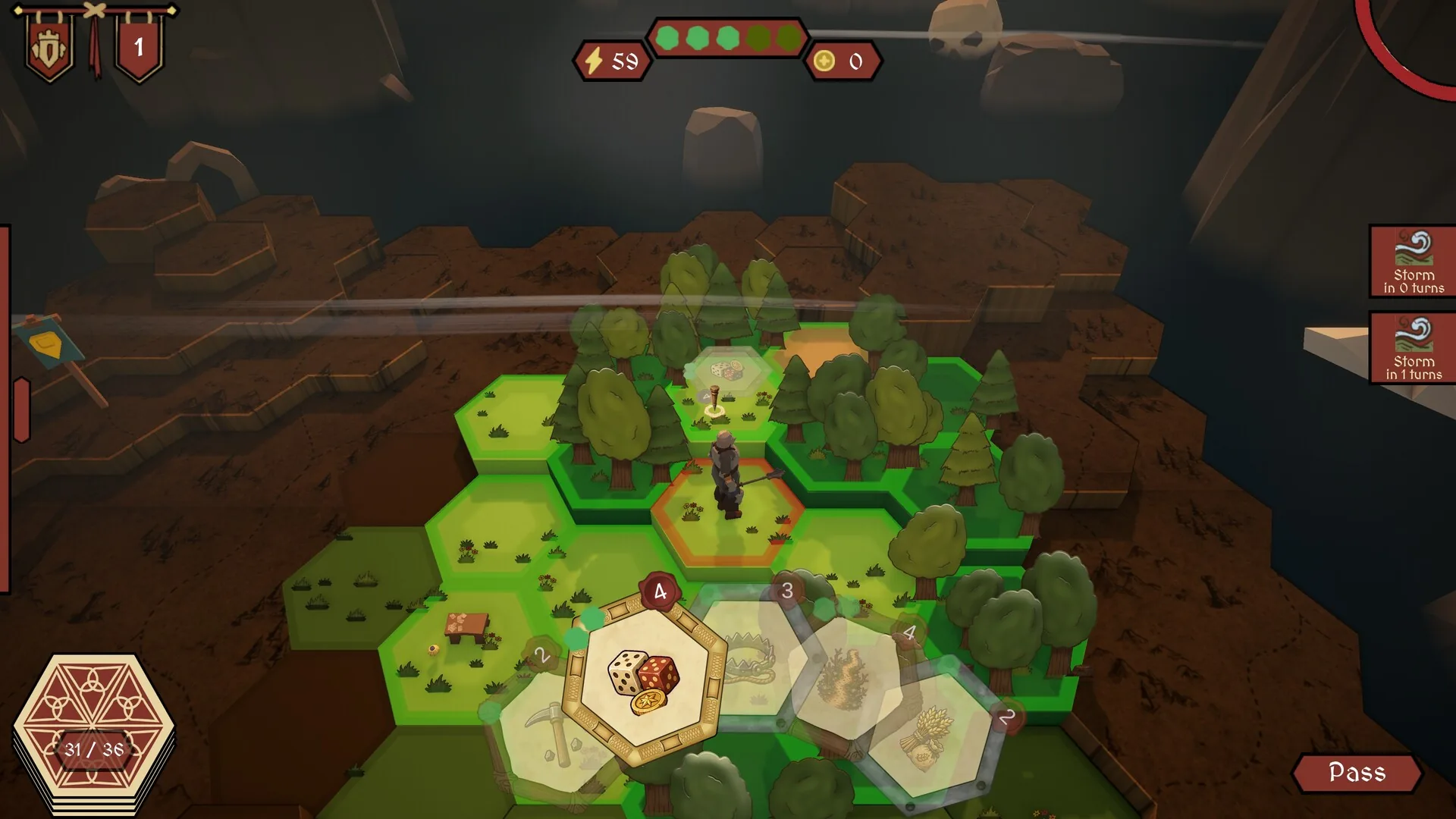
The game launches today, developed by Nyra Games, with a demo available if you want a look first.
It is single-player only, which is the genre norm.
And the honest reservation: a card decay system is delicate to tune. Too fast and it becomes a frustrating tax that strips away what you have just built. Too slow and it stops doing its job, and the game becomes solvable again. That is the dial to judge this production on in a few weeks, once the community has enough runs logged.
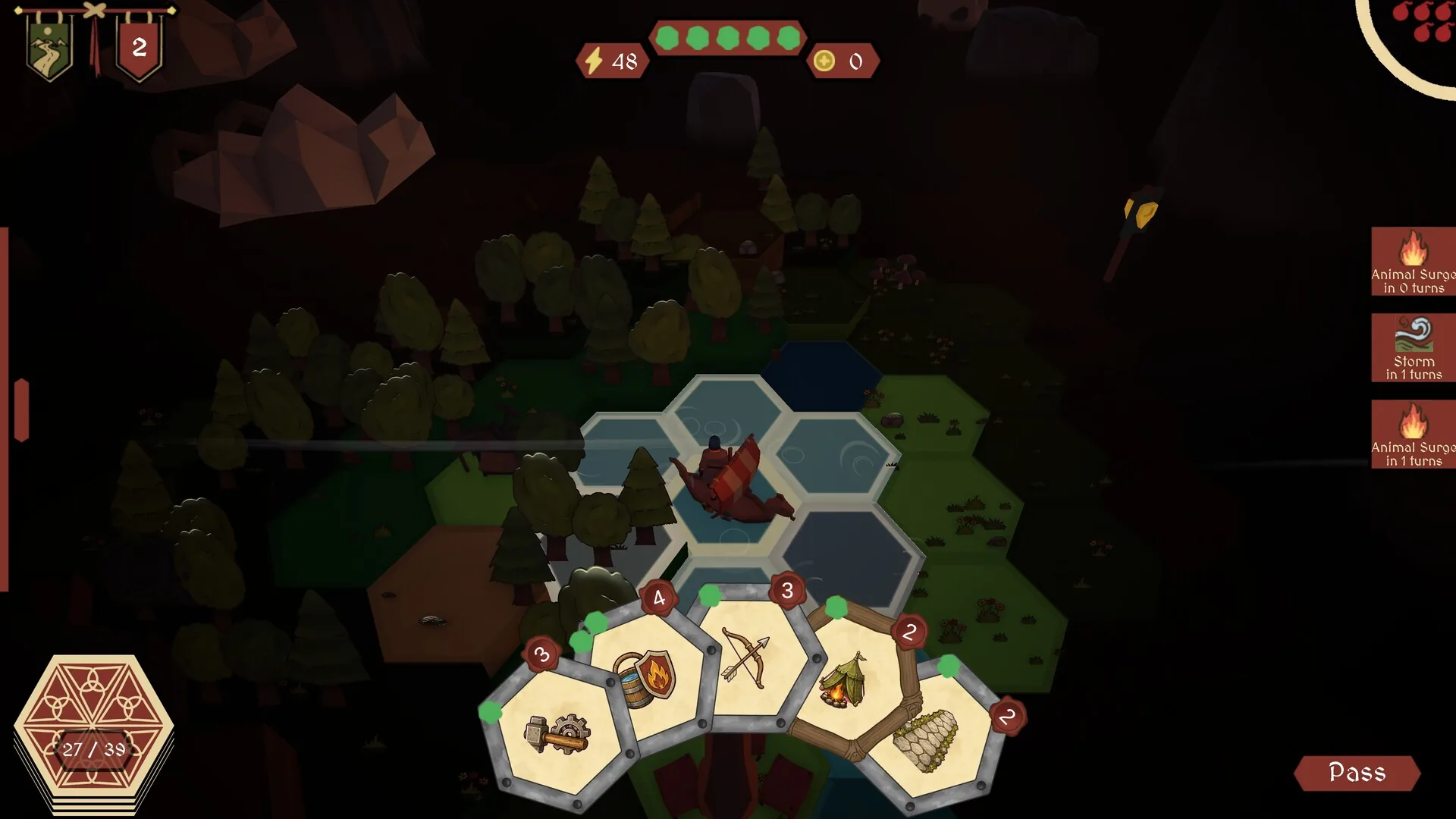
You wondered whether deckbuilding still had anything to say after being served with everything. The answer lives in what Tavrik does: it does not take an existing genre and glue cards onto it, it uses cards to ask a question other deckbuilders do not.
That question is about investment. Every road you lay costs now and pays later, provided you come back through. Every bridge is a bet on your own future route. And your best tools destroy themselves by working, so nothing is ever secured.
It is town planning disguised as a card game. Somebody had to try.
Which traveller are you starting with? Come and defend the choice on the InsertCoins Discord, we are taking bets on the cat.
Community
Your rating
Advertisement
Loading comments...
You might also like
A co-op bar that collapses while you serve. 98 per cent positive, and one of the rare times chaos is the actual subject.
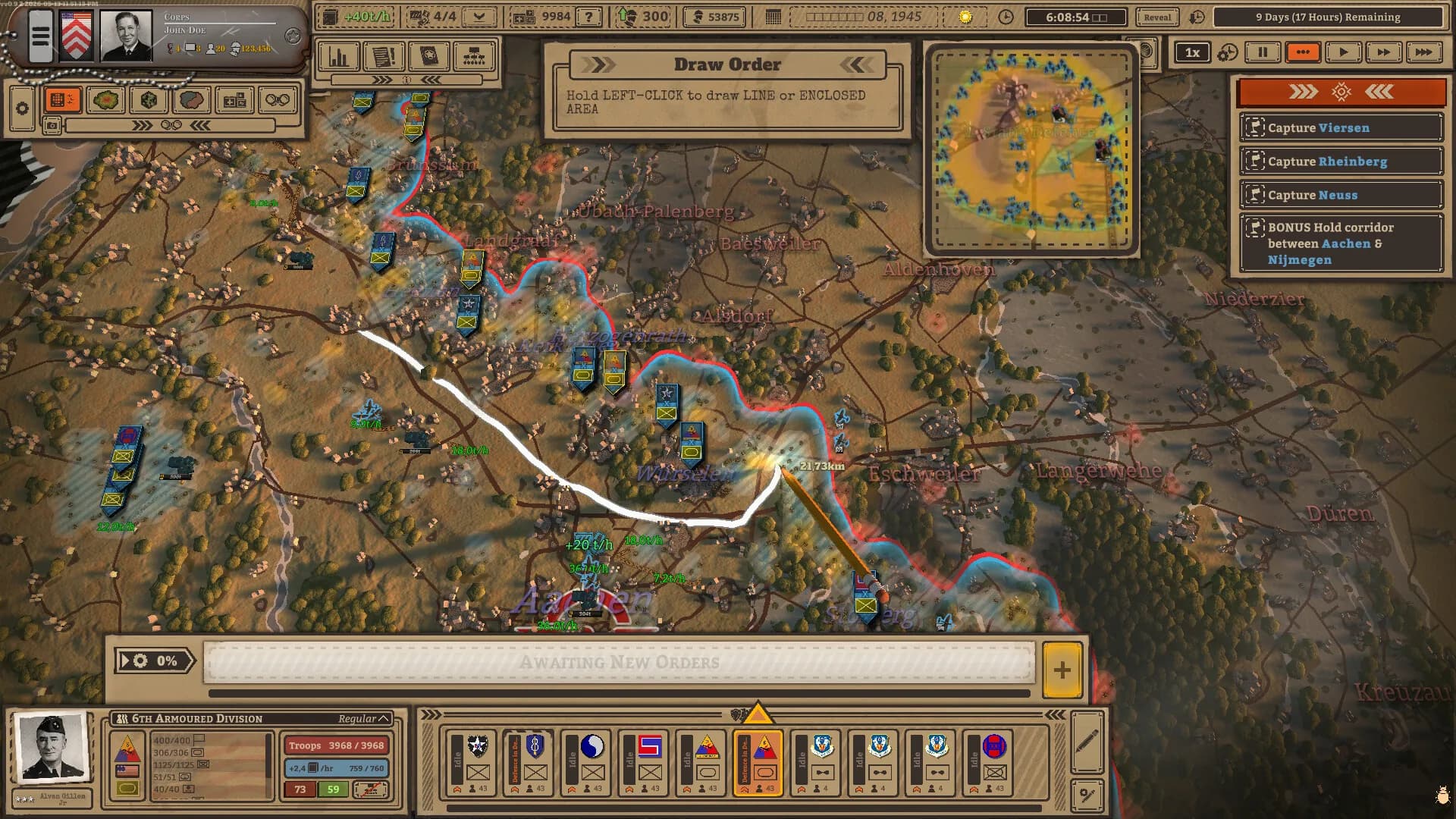
You draw a plan on the map and officers execute it alone. Except the game crashes every other planning phase.
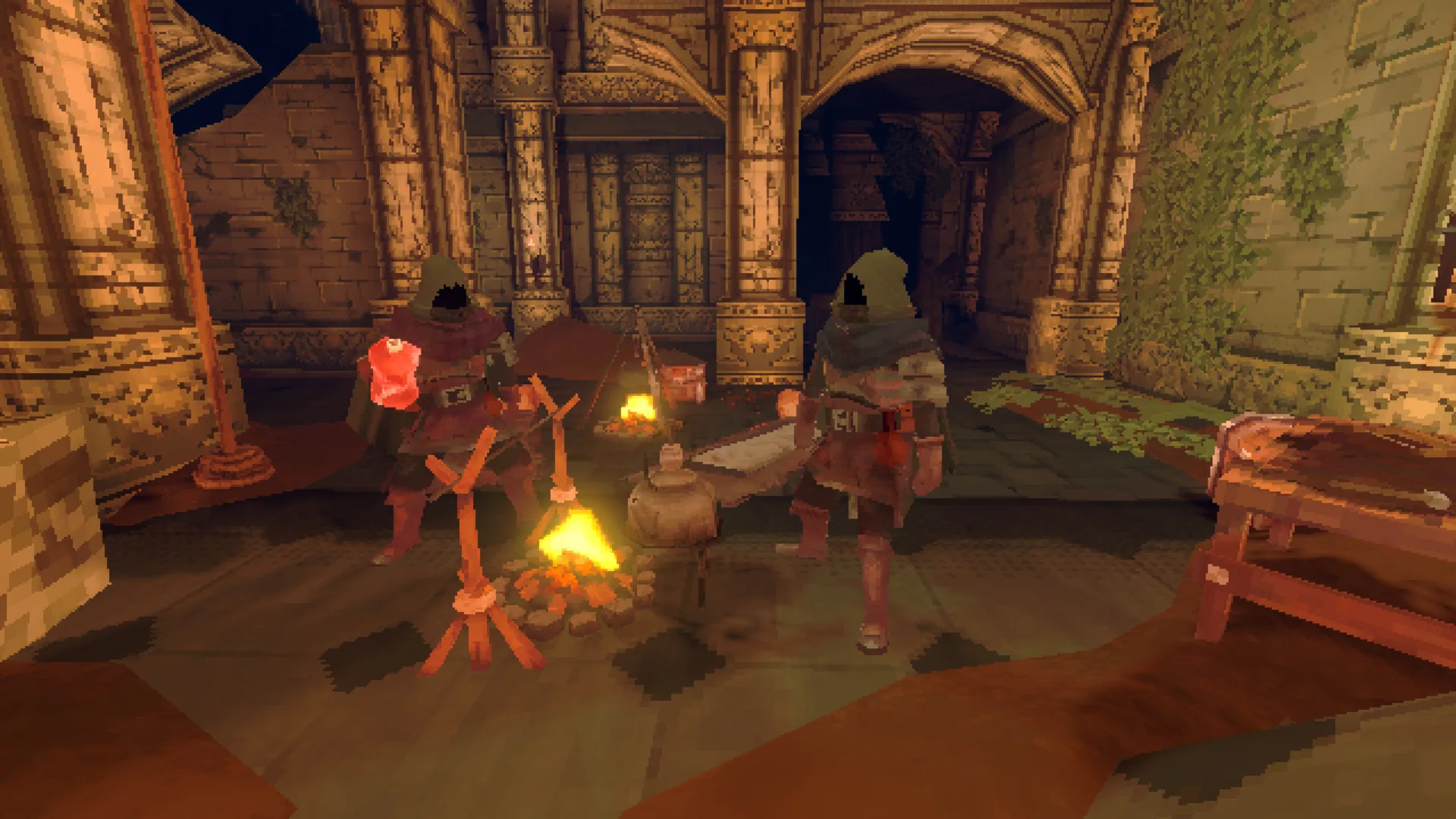
The Knights of Pen & Paper team return with a dungeon where you come back to camp, cook, and unlock recipes that change your stats.