7
Test
Dungeon Inn: running an inn while keeping two rival guilds from meeting
You struck a deal with a dragon. All that is left is serving both sides without either finding out. The 1.0 lands on 23 October.
Alexandrosse
7 min
A racing manager where you discover your own parts by running them. The races are seen from above and make no apology for it.
Alexandrosse
InsertCoins.press Score
8/10
Verdict
Recommended
There is a moment in the first season when the game clicks all at once.
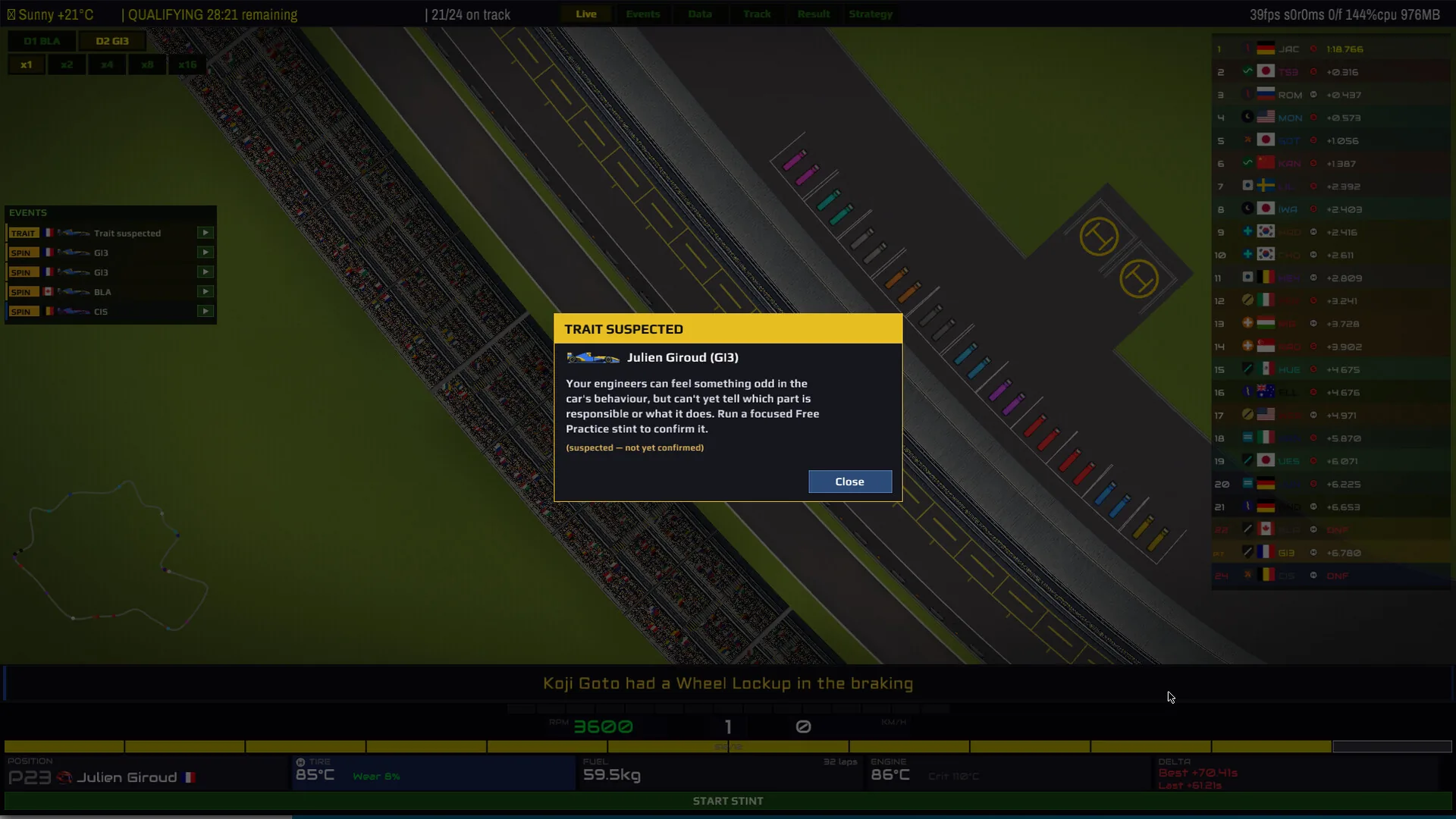
Free practice. My car was slower than expected and I had no idea why. I set a discovery programme running on the floor, a few laps, and the report came back: the part was overweight. Nobody had mentioned that when I bought it. The game had not hidden it out of malice, it did not know either, because in The Undercut a part's flaw only exists once you have found it by running it.
Practice is not a warm-up here. It is detective work.
Most management games hand you numbers and ask you to optimise them. This one starts by taking them away.
Driver stats are hidden. You uncover them only by spending the capacity of your scouting department, which is a full piece of infrastructure with a level to raise and a budget to match. Signing a cheap driver because he looks decent means signing blind.
Car parts carry hidden traits. Overweight, Low Drag, Ground Effect. Every component has its own quality and its own quirks, and you bring them to light by putting mileage on them, in practice or on your own test track.
From there the whole game becomes the management of uncertainty rather than a spreadsheet to optimise. You are not looking for the best decision, you are looking to know enough that your decision is less bad than your rival's.
It is a bold stance, and it is what puts distance between this game and its competition.
Drivers are not progress bars, they have personality traits that show up on track.
Tyre whisperers, late brakers, hot heads. The studio says plainly that a cheap signing with red traits is no bargain, and that is true: my second driver in season one was quick over a lap and cost a set of tyres per stint.
You can also grow your own. The Academy develops juniors, and the development series give them real seat time. A feeder team will occasionally ask to field one of your prospects for a season: you take a contribution at every Grand Prix, and the kid develops faster than any simulated academy programme can manage.
And since the update of 1 September, crashes leave marks on people, not only on cars. A driver can come away concussed or with a broken leg, miss anywhere from one to five Grands Prix, and your reserve steps into the seat. If you did not plan for one, your car does not start.
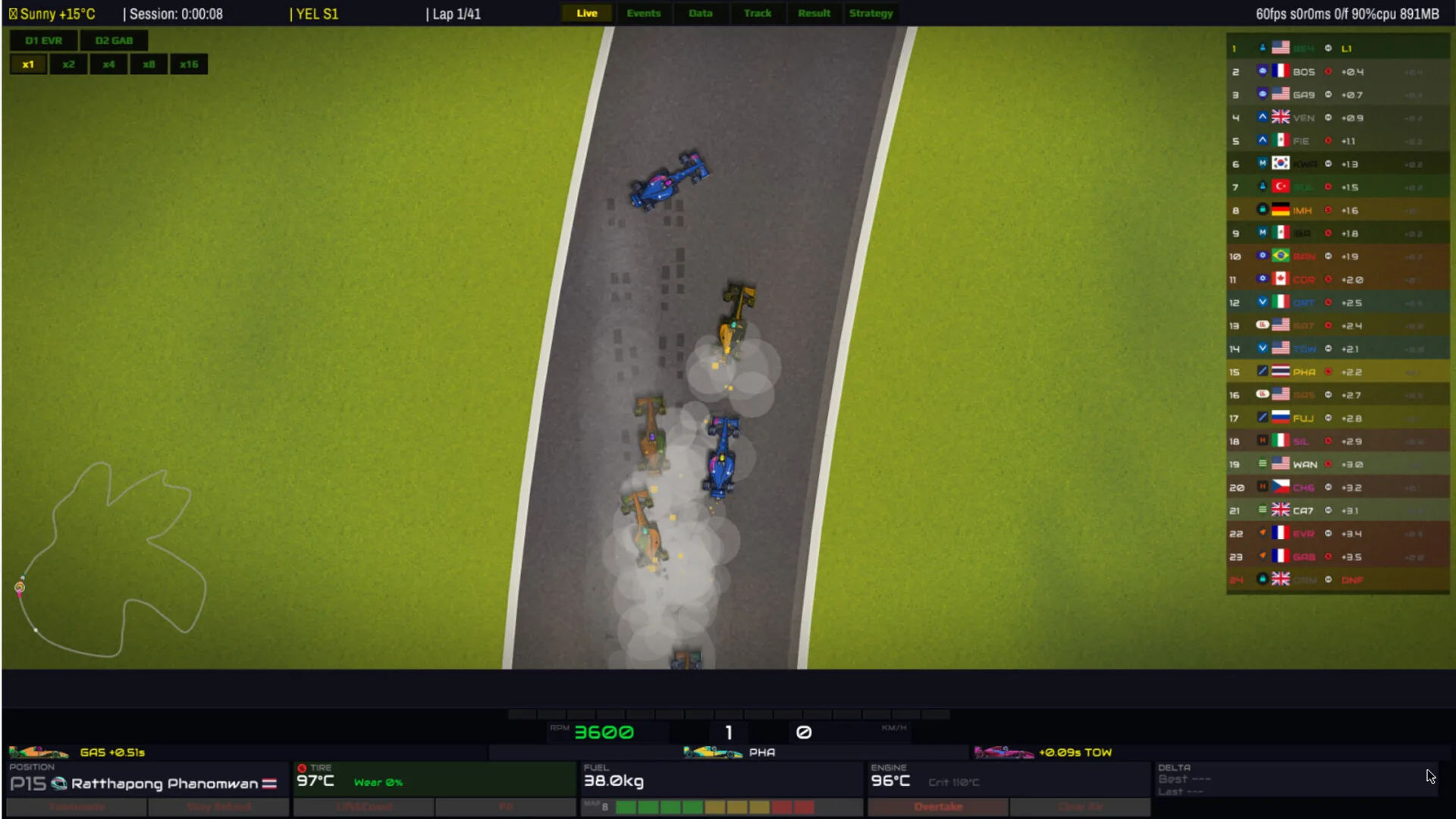
This is where I expected the worst, because in games like this sponsors are usually a menu of offers to accept.
Here it is a campaign. You choose a target, commit work units from your marketing department, and the negotiation progresses while your rivals court the same brands. A small department can still land a big name if it focuses entirely on it. You can reallocate effort along the way, and you are racing the clock as much as the grid.
Once signed, partners do not go quiet. They set expectations race after race, and your results decide whether they stay. Miss the targets and they walk, taking the budget hole with them.
The same logic applies to suppliers, engines, tyres and fuel, which enter the market, compete for teams and follow global trends.
One detail that matters: team reputation has become real currency. Prestige feeds the order in which drivers accept your offers, how the AI negotiates with you, and academy signings. A backmarker does not recruit like a front-runner, and the game models that rather than assuming it.
A recent addition made me like the game more: loading the truck.
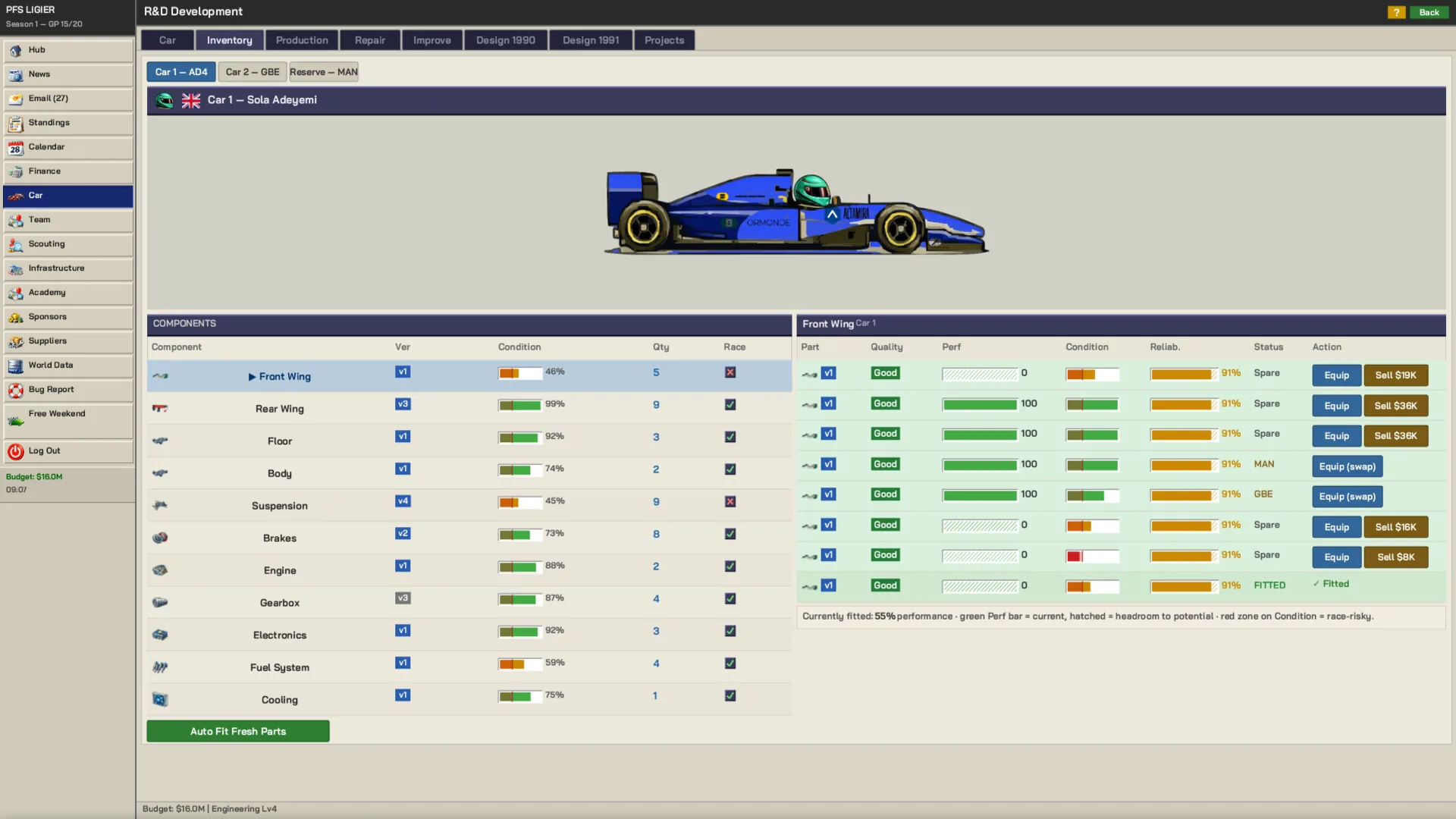
Before practice, a screen asks how many cars travel, two or three with the mule, and which spares go with them. Fitted parts follow their car, the rest only if you pack them. And once the truck has gone, there are no purchases and no sales until the race is done.
The consequence is delicious: a broken front wing becomes a pit stop if you brought the spare, and a retirement if you tried to save money.
There is also a compulsory pre-season test on a circuit drawn from this year's calendar, with development programmes, trait discovery and genuine mechanical damage. Your chief engineer briefs you beforehand and reports afterwards. The development phase will not close until you have run it.
And a permanent test track ticks along in the background, driven by your reserve, accumulating discovery mileage every weekend. It is not free: the programme reserves a share of your engineering pool proportional to the kilometres you plan.
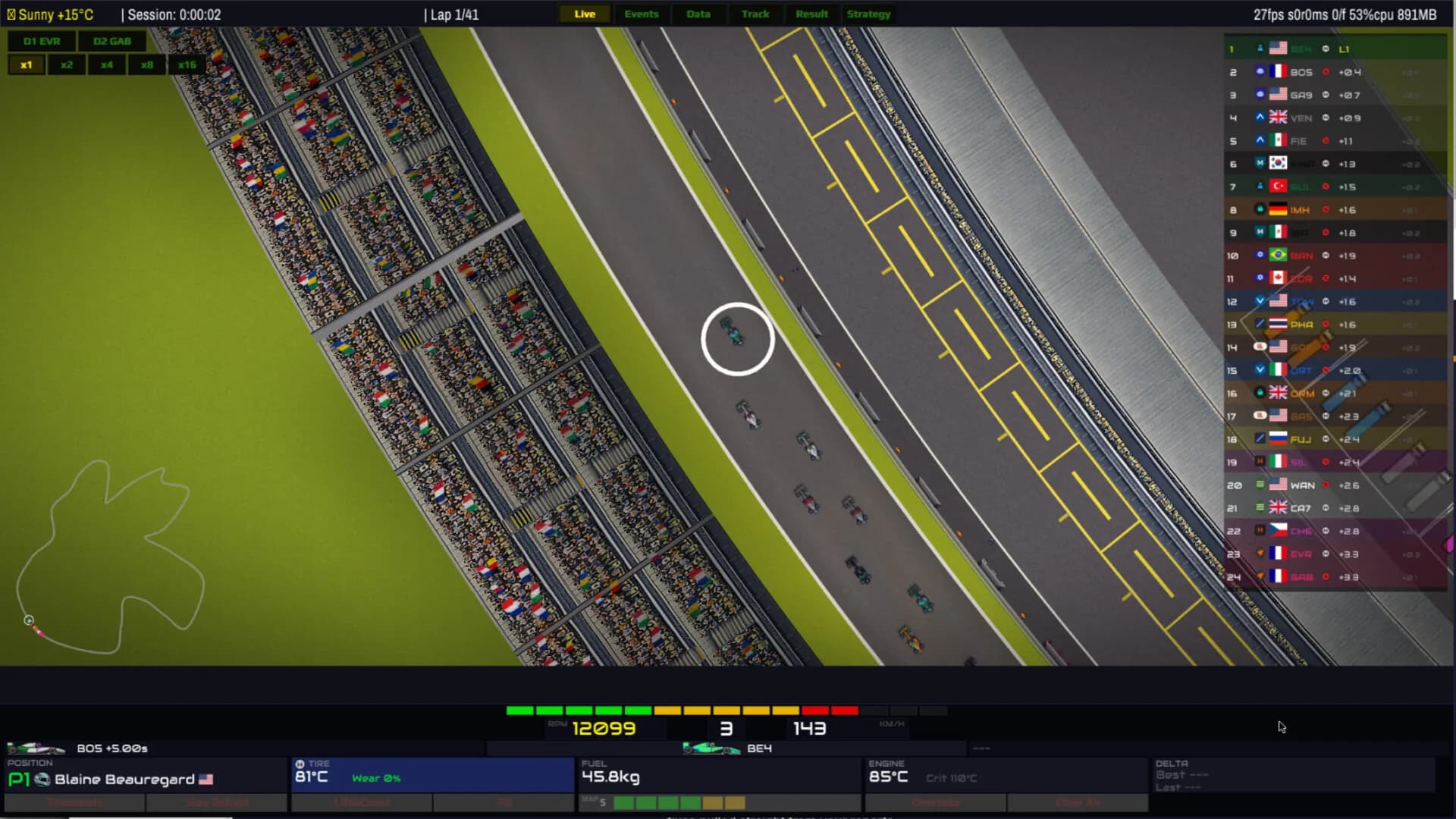
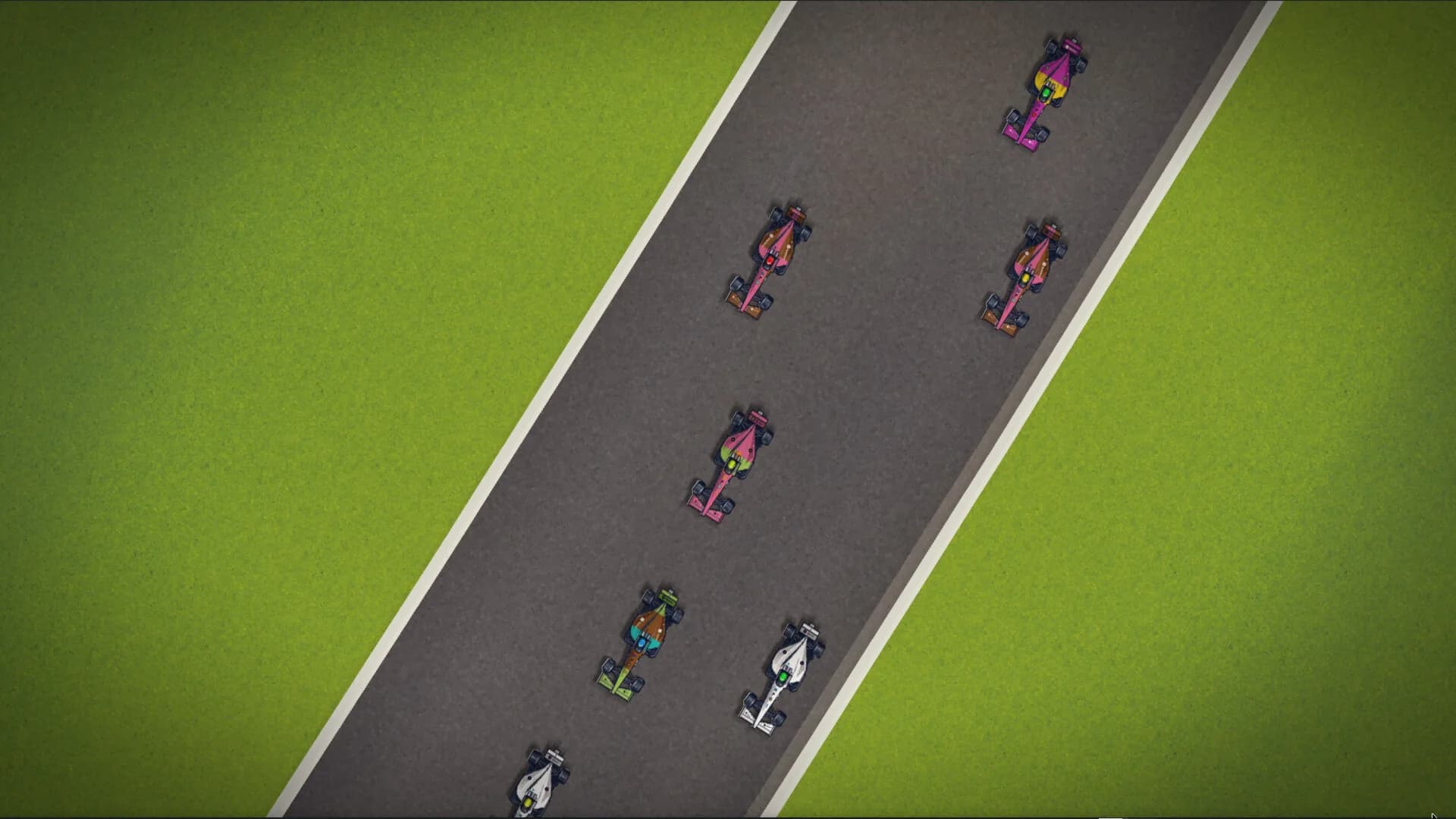
Races run in real time on a 2D physics engine, viewed from above.
Let us be blunt: it is functional before it is beautiful. The tarmac is clean, the cars are crisp sprites, the crowd is a repeated texture, the grass is flat and green. The top-down view unmistakably recalls the racing games of the same era it depicts, those circuits seen from the sky with cars the size of drawing pins. There is a hint of Micro Machines in the framing, without the toy-box side.
Except what happens underneath those sprites is nothing like it. Dirty air, drafting, tyre temperature, engine failures, malfunctions that strike mid-race and now last one to five minutes instead of a few dozen seconds. Engine cooling has become a real lever: overheating degrades progressively instead of killing the car in one go.
Above all, strategy is built from your own measurements. The race plan screen draws your stints to scale, with tyre life, lap time, pit laps, projected time and a fuel bar, calculated from what your practice actually recorded rather than from theoretical values. You can impose your own plan, number of stops, compound per stint, exact lap to come in: the AI respects it, and quick simulation honours it too.
If you would rather manage by data, you speed up to sixteen times and watch nothing but the timing tower, which is clickable so you can follow any car on the grid.
In other words, the relative ugliness of the display is the price of a simulation you can read in full. I much prefer that to flattering 3D laid over a dice roll.
This is the other impressive slab, and it is rare at this price.
Over 500 drivers, over 70 circuits now hand-drawn, around thirty engine manufacturers, eleven championships simulated across four continents, from touring cars to GT by way of single-seaters. Each recruits from its own regional pool, runs a full season, crowns a champion and feeds the news. The driver market is shared across all of them.
The circuits themselves hold contracts with the championships. They join, they renew, they expire. A recovering economy brings new races, a lost television deal kills one. Your calendar shifts from season to season the way real calendars do.
Two development series run beneath the main championship with their own regulations: over-18s, twelve teams of two drivers plus a reserve, sixteen races on a spec V6 for one; 16 to 18-year-olds, ten teams, twelve races, a frozen spec four-cylinder and no pit stops for the other. A brand backing a feeder team is unavailable to you that season. The world is shared, not parallel.
And everything is kept. A permanent archive of classifications, driver palmarès, country pages with their national halls of fame, records that survive the retirement of whoever set them.
The circuit editor is built into the game. You draw freehand, or trace from an image, with corner radius and angle sliders, a trace-fidelity setting, an analysis report based on a full simulated lap, and a test drive mode to go and run it.
The mod editor is built in too: replace teams, drivers and sponsors, write whole calendars, build scenarios. The game ships with fictional championships, and takes it as read that the community will rebuild whatever it wants on top.
Early access starts today at version 0.5.3, after two years of solo development, a closed alpha and a public demo. The price is 14.99 euros with 12 per cent off in the first week, and the developer states plainly that he is aiming for around 20 dollars at the finished version.
Here is what is not there.
It does not rain. No dynamic weather at all for now, and it is the first item on the update schedule. For a racing management game the absence is heavy: no drying line, no call for slicks two laps too early, no driver whose wet-weather head beats his dry pace.
The development series are not playable. They race, they produce results and champions, but you do not run them. Playable touring cars and GT are announced as the third and fourth updates.
There is no multiplayer, scheduled last, and for a good reason: every brick above changes what a shared season would even mean.
And it is austere. A dense interface, tables everywhere, no concession to anyone who wants to click without reading. There is a voiced tutorial, which helps, but you need to enjoy screens that look like spreadsheets.
Good news for old machines, though: an i3, 4 GB of memory and 5 GB of disk are enough, on Windows, Linux and macOS, and it is verified for Steam Deck.
I spent my first season believing I was running a team, and my second understanding that I was mostly running my own ignorance. That is the real subject of this game, and it is what makes it addictive: every hour on track buys information, and information is worth more than budget.
One person built this over two years, with an update rhythm that makes you dizzy and release notes that list the fixed bugs without dressing them up. It is neither finished nor pretty. It is already the densest racing manager you can install on a PC for fifteen euros.
Already traced your home circuit in the editor? Come and show it on the InsertCoins Discord, we are after layouts that will ruin our strategies.
Community
Your rating
Advertisement
Loading comments...
You might also like
You struck a deal with a dragon. All that is left is serving both sides without either finding out. The 1.0 lands on 23 October.
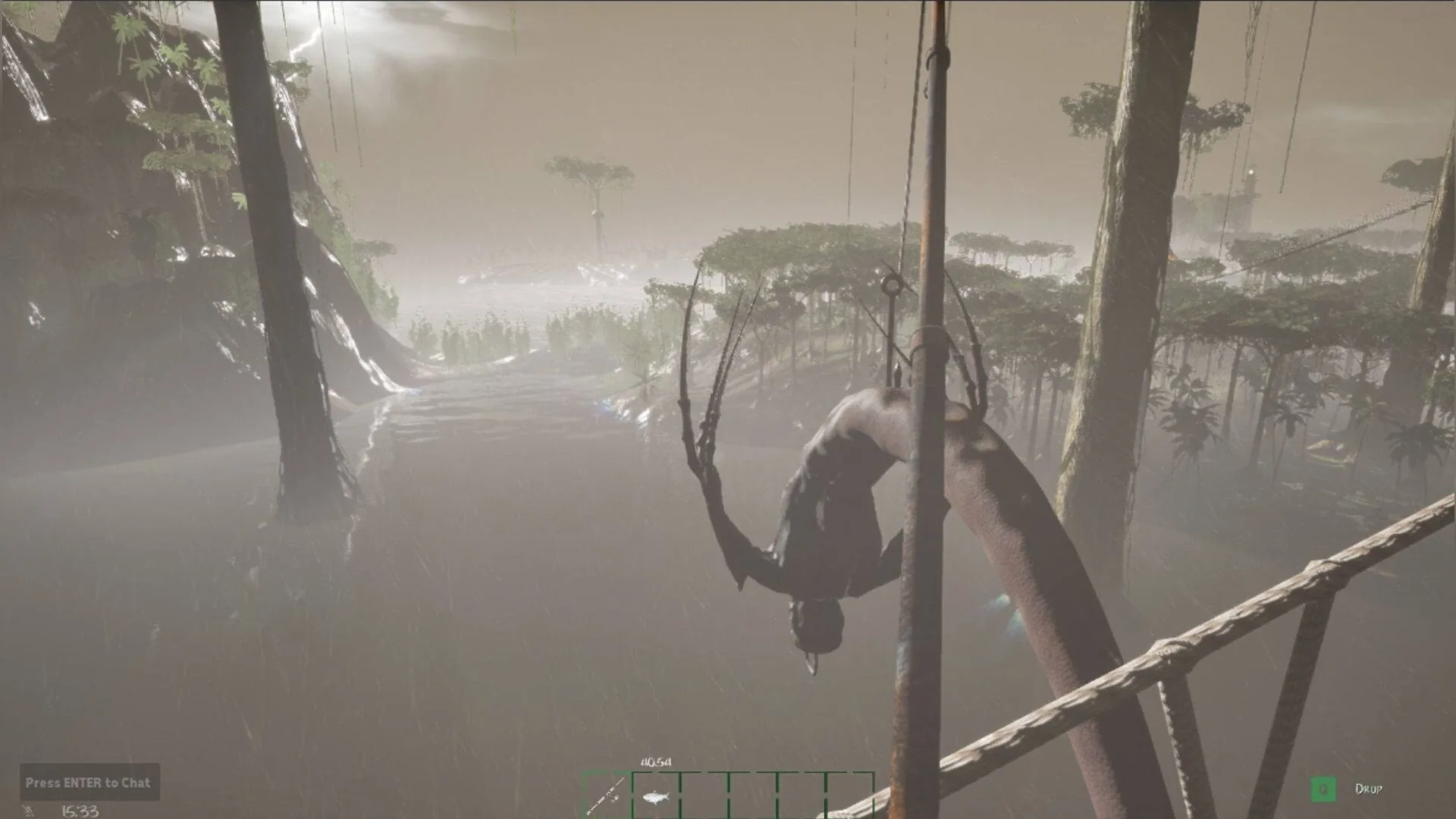
A co-op horror fishing game at nine euros. You must sacrifice fish every day, and the beast is not the worst thing out there.
Scrapheap robots sent to exterminate a planetary fungus. The 1.0 lands tomorrow, and the upgrade grid is the genre's best idea.