7
Test
Dungeon Inn: running an inn while keeping two rival guilds from meeting
You struck a deal with a dragon. All that is left is serving both sides without either finding out. The 1.0 lands on 23 October.
Alexandrosse
7 min
A first-person apartment garden where the soil matters more than the plant. And one recurring question: why not just do it for real?
Alexandrosse
InsertCoins.press Score
8/10
Verdict
Recommended
An hour into Tiny Eden, I caught myself looking at my own window.
That is a side effect no management game produces. Nobody has ever switched off a farming game wondering whether they should buy a tractor. Here the question is perfectly reasonable: the game has you growing basil on a windowsill, and you have a windowsill.
I come back to it at the end, because the answer is more interesting than the question.
You live in an apartment high above a city, somewhere, and you have almost no space.
You start with a few pots and whatever room you can find. You sow, you water, you weed, you harvest. Then you cook what you harvested, and you sell your dishes to the people in the block, who pay well.
With that money you unlock new rooms, take over the balconies, and eventually climb all the way to a rooftop greenhouse.
It is a short loop, an honest one, and perfectly calibrated for the end of the day.
That is the title of one of the studio's dev logs, and it is also the game's best design decision.
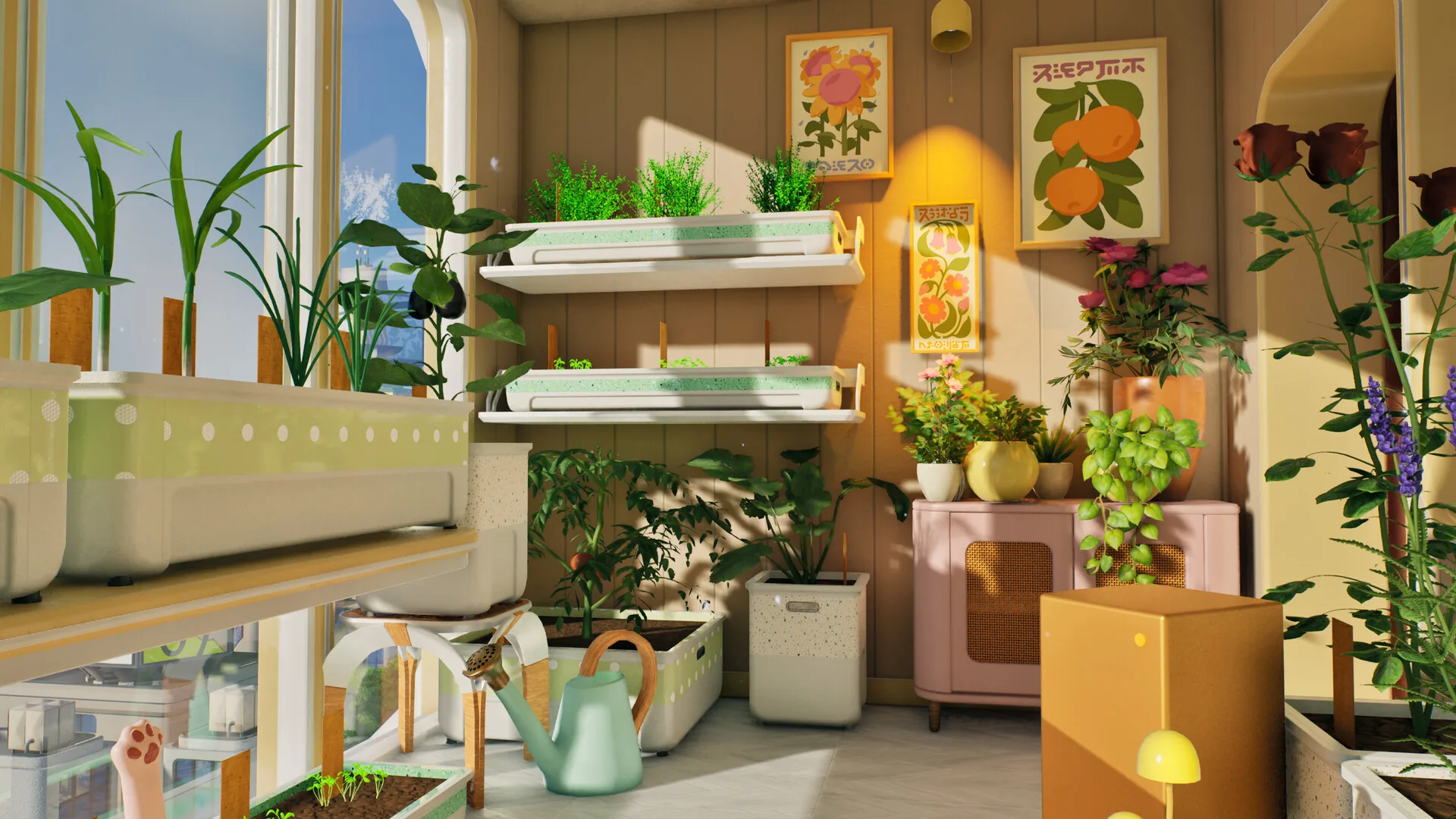
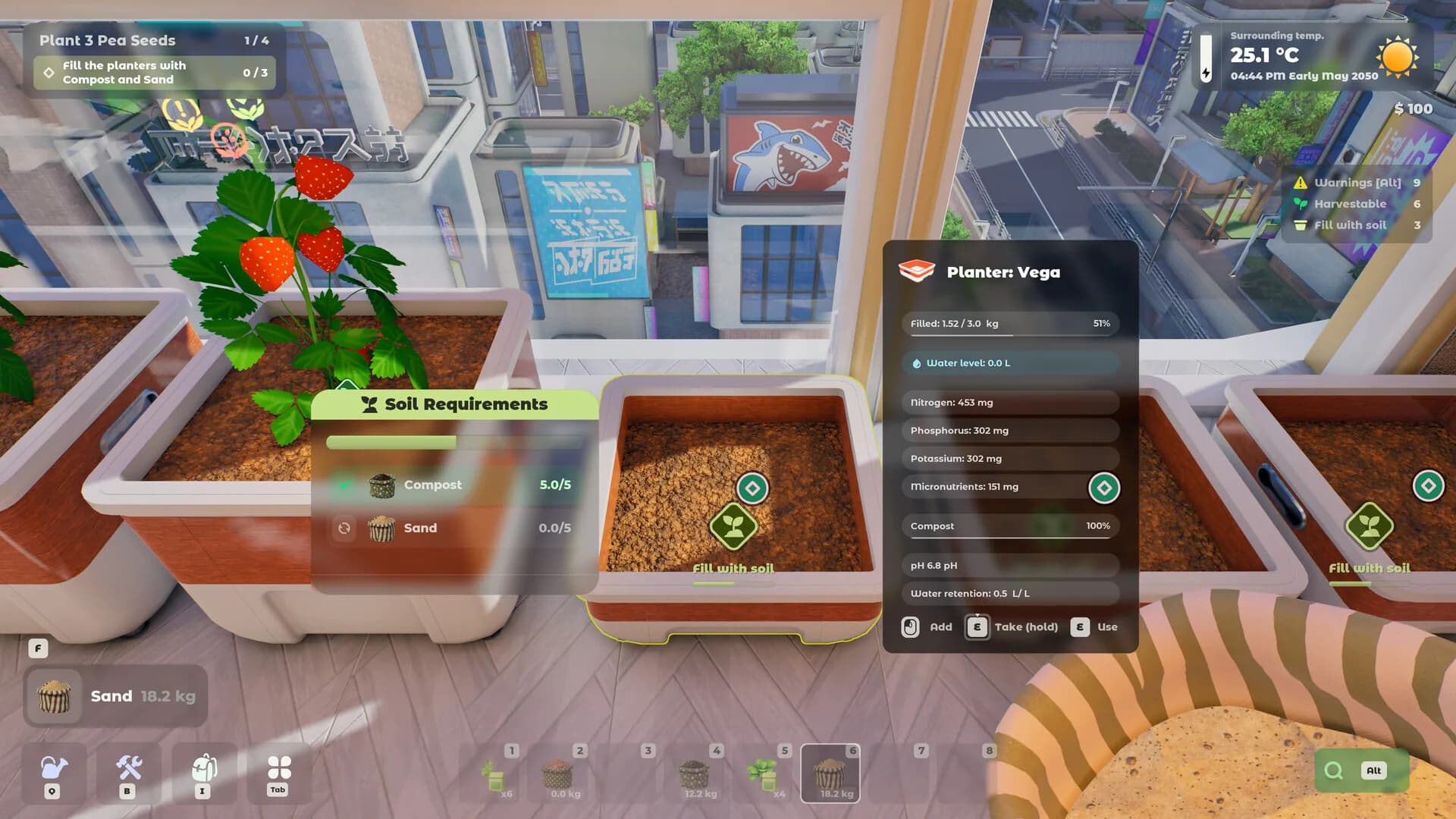
Every flower, berry and vegetable has its own needs. So you choose the container, then compose a soil mix from compost, sand, clay and the rest, then decide where to put the pot according to the light and temperature of the spot.
This is not decorative. It is the game's depth, and it sits exactly where ordinary farming games put nothing. In a Stardew Valley, soil is soil. Here, soil is a decision, and a plant that stalls sends you back to a choice you made three screens earlier.
The studio devoted an entire dev log to why it chose an apartment rather than a farm: in a small space, every decision counts for more. That is true, and you feel it in your hands.
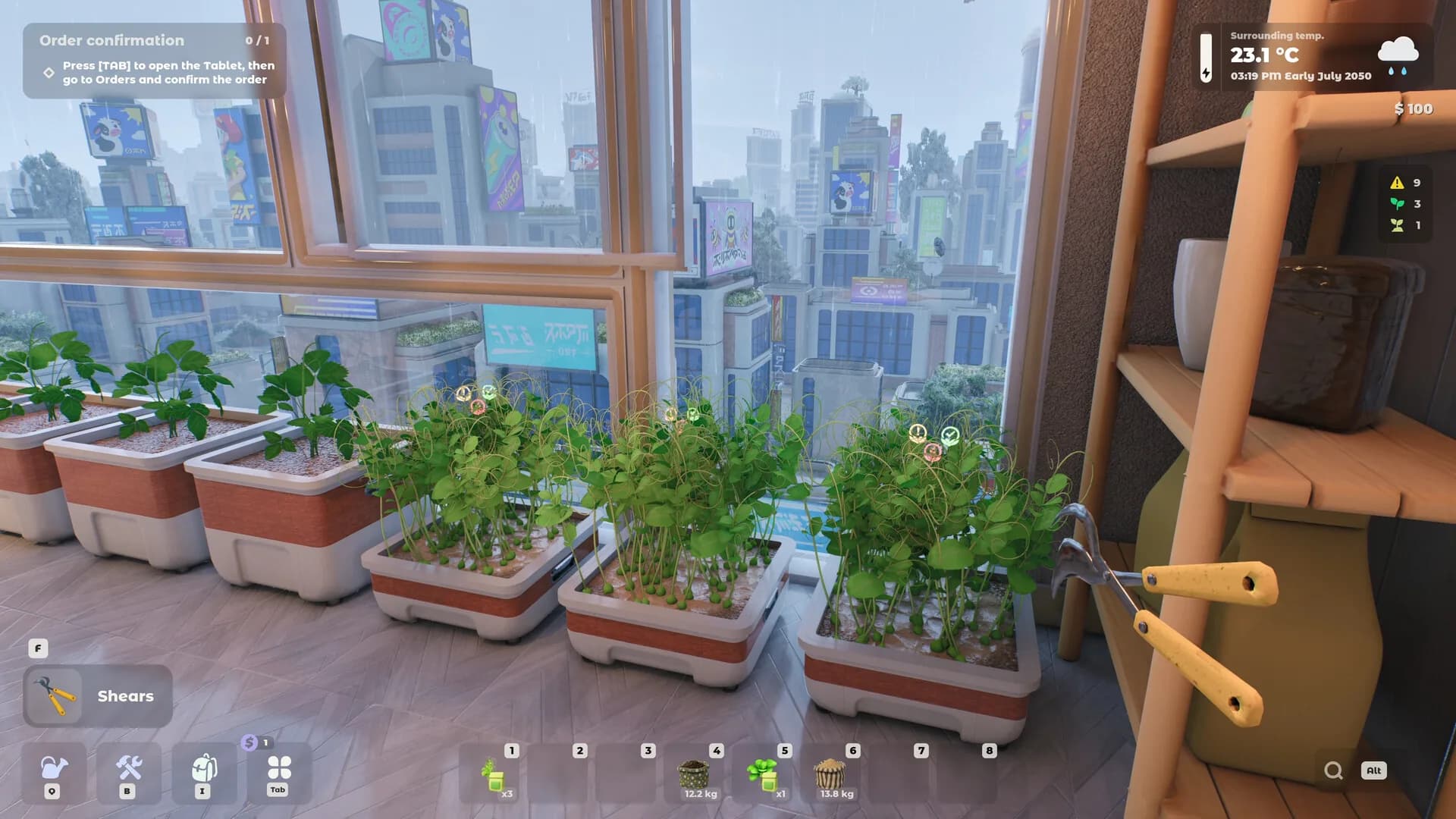
Choosing first person is not a small thing for a game of this kind, which is usually played from above with a cursor.
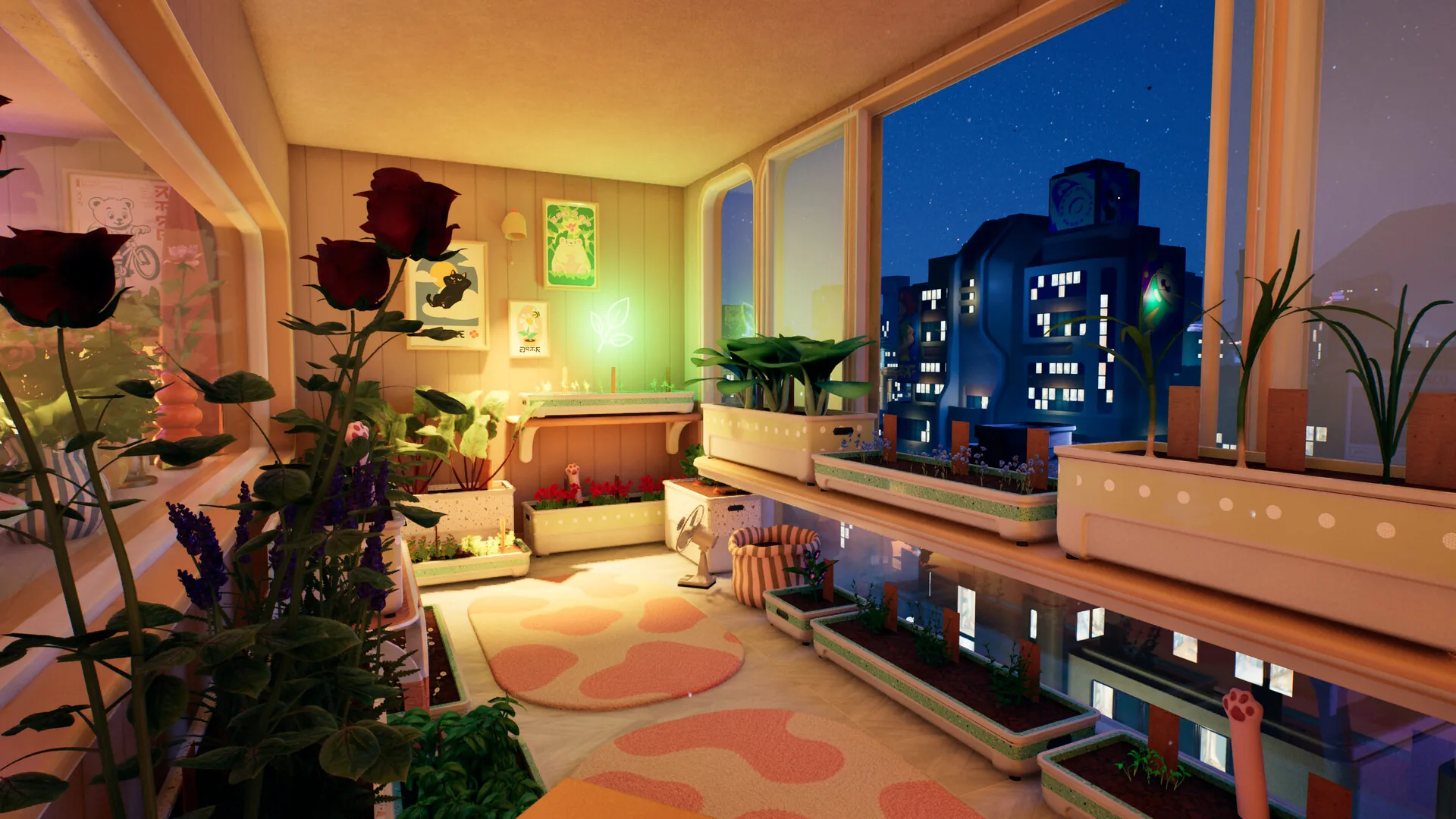
Here you are in the room. You crouch in front of a planter, you watch the sun fall across a shelf, you notice that one corner stays in shade all day. Light is not a statistic in a menu, it is something you see.
And the consequence lands directly on the gameplay: you move your pots because you observed the room, not because a number went red.
The game is not limited to the garden, and that is what saves it from being a watering simulator.
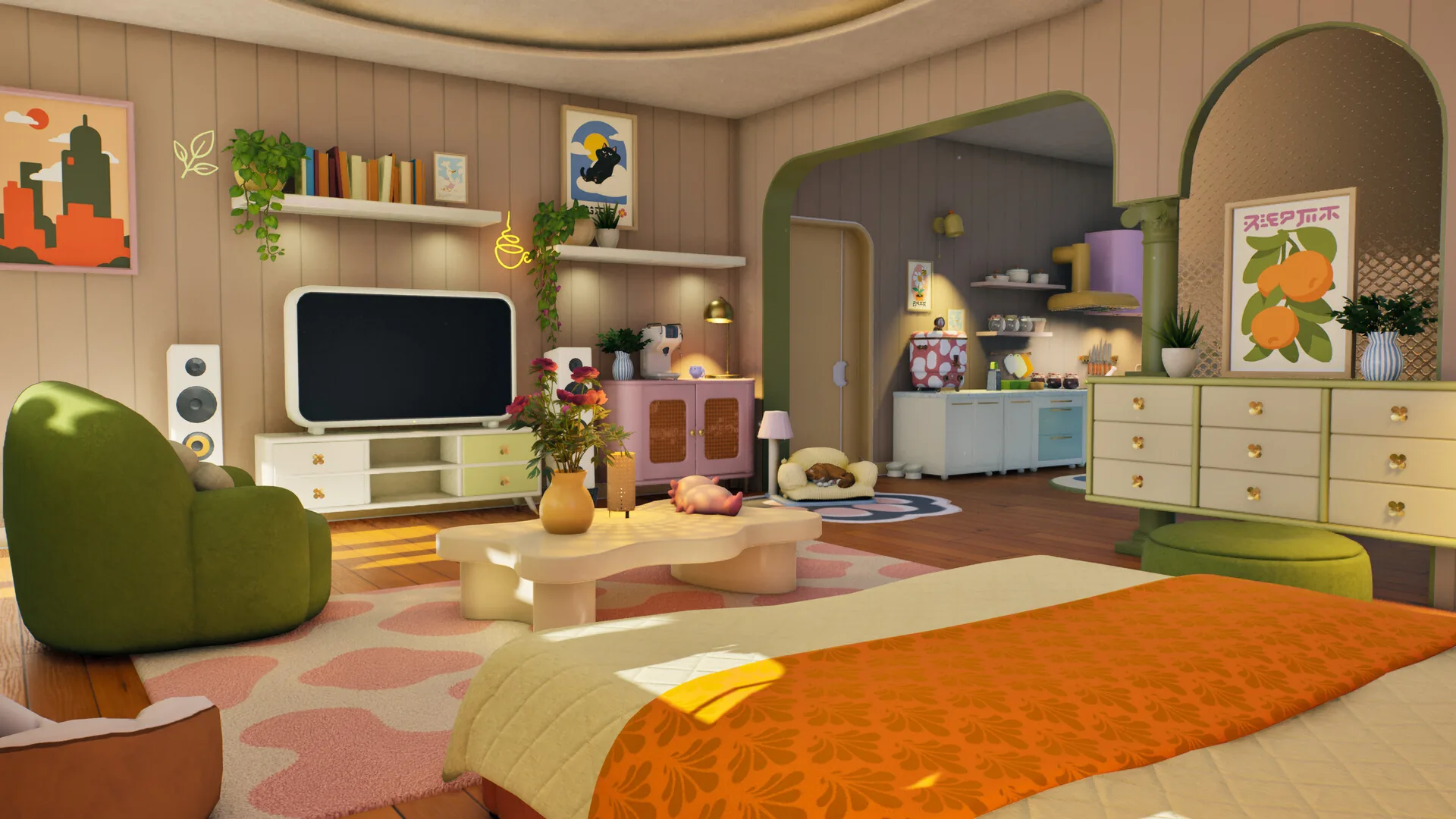
You furnish, you decorate, you mix furniture and plants so the place feels like yours. The plants end up being part of the room rather than occupying a dedicated zone, which is exactly what happens when you genuinely start growing things at home.
And there is a cat. It has to feel at home too, and in the game's first official screenshot all you see of it is a paw poking into the corner of the frame. That sums up the tone rather well.
Bajka Games, published by Digital Vortex Entertainment, announced one hundred thousand wishlists a few days before release, having announced fifty thousand three weeks earlier.
Doubling in three weeks is the sign of a trailer that travelled well, not of a community already in place. Those are curiosity figures, not purchases, and the real verdict will be written over the coming weeks.
The price is set at 14.99 dollars, with adjusted regional pricing. On hardware, expect sixteen gigabytes of memory and a GTX 1050 Ti, which is hungrier than the average calm game: this game's light is expensive.
Nothing else happens. No threat, no failure, no countdown. You plant, you wait, you cook, you sell. It is a very clear contract and you had better know you are signing it.
The pace is the pace of plants. A game that simulates growth requires you to come back later, and this is not a game to play for thirty minutes while waiting for something else.
And the economy rests on the neighbours. All progression runs through selling meals to residents of the block, which is charming, but it is a single tap. Whether it holds up over time, or becomes a chore halfway through, remains to be seen.
Back to my window.
No, this game does not replace a real garden, and it does not pretend to. What it offers is what reality cannot: compressed time, mistakes without consequence, and above all surface area. Nobody in a flat has a rooftop greenhouse, and that is precisely why you grow one here.
But there is something more interesting. A game that teaches you that light varies by location, that a container is not neutral and that soil is something you compose, leaves you with principles that work off the screen. This is not an agriculture simulator, it is a gateway disguised as a calm game.
So yes, the best possible outcome for Tiny Eden is that you switch it off to go and buy a pot, a bag of compost and three basil seeds. That would be a compliment, not a failure.
What does your balcony look like this year? We trade successes and basil corpses on the InsertCoins Discord.
Community
Your rating
Advertisement
Loading comments...
You might also like
You struck a deal with a dragon. All that is left is serving both sides without either finding out. The 1.0 lands on 23 October.
A co-op horror fishing game at nine euros. You must sacrifice fish every day, and the beast is not the worst thing out there.

Scrapheap robots sent to exterminate a planetary fungus. The 1.0 lands tomorrow, and the upgrade grid is the genre's best idea.