7
Test
Dungeon Inn: running an inn while keeping two rival guilds from meeting
You struck a deal with a dragon. All that is left is serving both sides without either finding out. The 1.0 lands on 23 October.
Alexandrosse
7 min
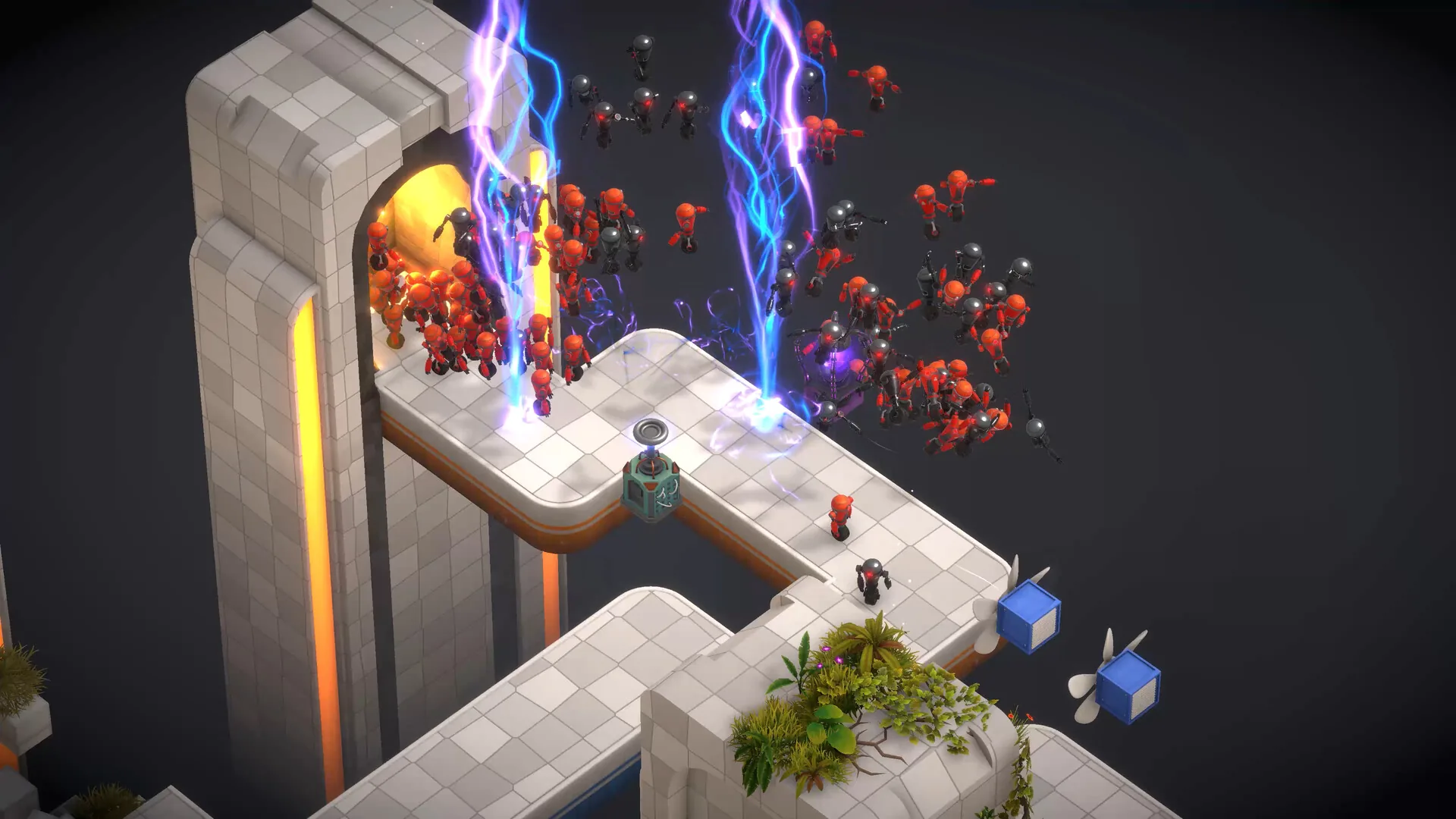
No damage numbers, no health bars. Fans, magnets, and a drop on every side of the map.
Alexandrosse
InsertCoins.press Score
8/10
Verdict
Recommended
There is a line on Tower Lab's store page that made me launch it immediately: enemies have no health.
No damage numbers spraying out, no red bar draining, no armour calculation. Robots walk along a white walkway suspended in darkness, and your job is to make them fall off it.
The whole of tower defence rewrites itself from there.
In a conventional tower defence, a tower is an amount of damage per second. Here, a tower is a force.
They push, pull, bounce, grow, shrink and fling. A fan tower blows an entire queue towards the edge. A Tesla tower throws an arc that scatters a tight platoon. A magnet can drag back towards you what another tower had just pushed away, which is either a disaster or a manoeuvre depending on your intent.
The most interesting consequence is that the level's geometry becomes your main weapon. A wide corridor is a hard corridor. A narrow walkway over the void is a gift. A right-angle turn is a place where momentum does the work for you.
I caught myself spending more time studying the shape of the scenery than reading the cards I was drawing.
That is the second strong idea, and it follows from the first.
Because everything runs through physics, towers genuinely interact instead of stacking bonuses. A projectile enlarged by one tower becomes heavier and pushes harder. A shrunken robot is easier to move but worth less. An enlarged robot is worth more and becomes a brute none of your machines can budge.
That last point is the game's real dilemma: you can choose to grow your enemies to increase your rewards. It is a bet, not a difficulty setting, and you take it every round.
And since towers are placed freely, anywhere, and can be moved afterwards, you are not building a defence, you are assembling a machine. Good runs end up looking like production lines: this tower pushes aside, that one accelerates, the third collects whatever is left near the edge.
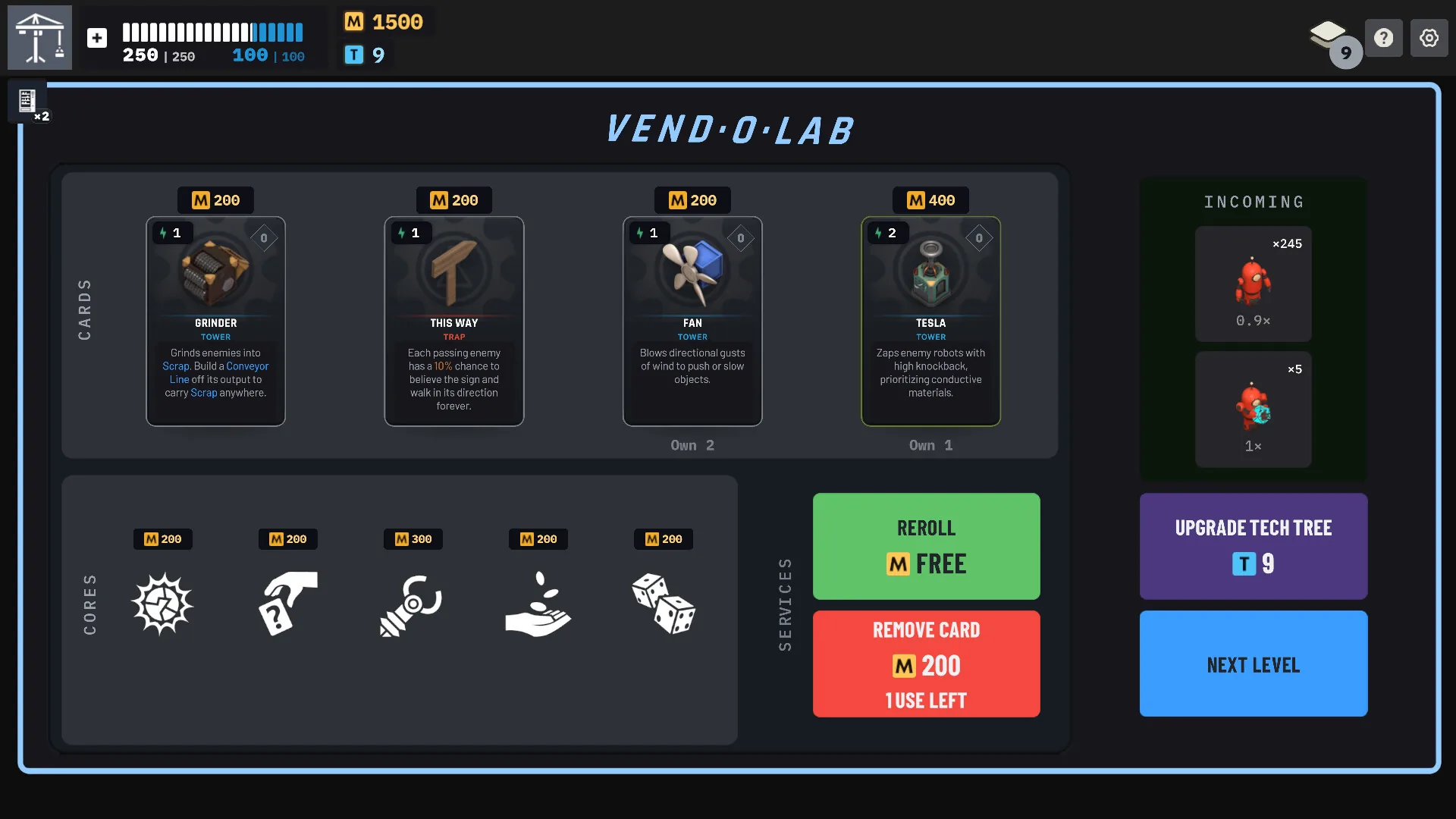
The frame around all this is a roguelite with a draw pile.
You play cards to place your towers, buy items in a shop, refresh the stock, remove the cards polluting your deck, and climb tech trees per tower, with branches and modules to unlock.
Two design details pleased me.
Utility cards are played straight from your hand for an immediate effect, which gives you a genuine lever mid-wave rather than a frozen plan. The names capture the physical ambition nicely: Aftershock, Arc Discharge, Gravity Dampener, Black Ice.
And you can reset a tech tree at the shop to refund the matter you spent and re-specialise. In a genre where one bad branch often condemns an entire run, that is a rare courtesy.
The game opens today in early access, and the announced content is far from thin for a two-person team.
Three regions with a roguelite campaign and meta progression. Forty playable cards. Twenty towers and over a hundred and fifty upgrades. Five traps, fifteen utility cards, thirty cores to steer a run, and four machines that change your starting tools, your active abilities and therefore how you play.
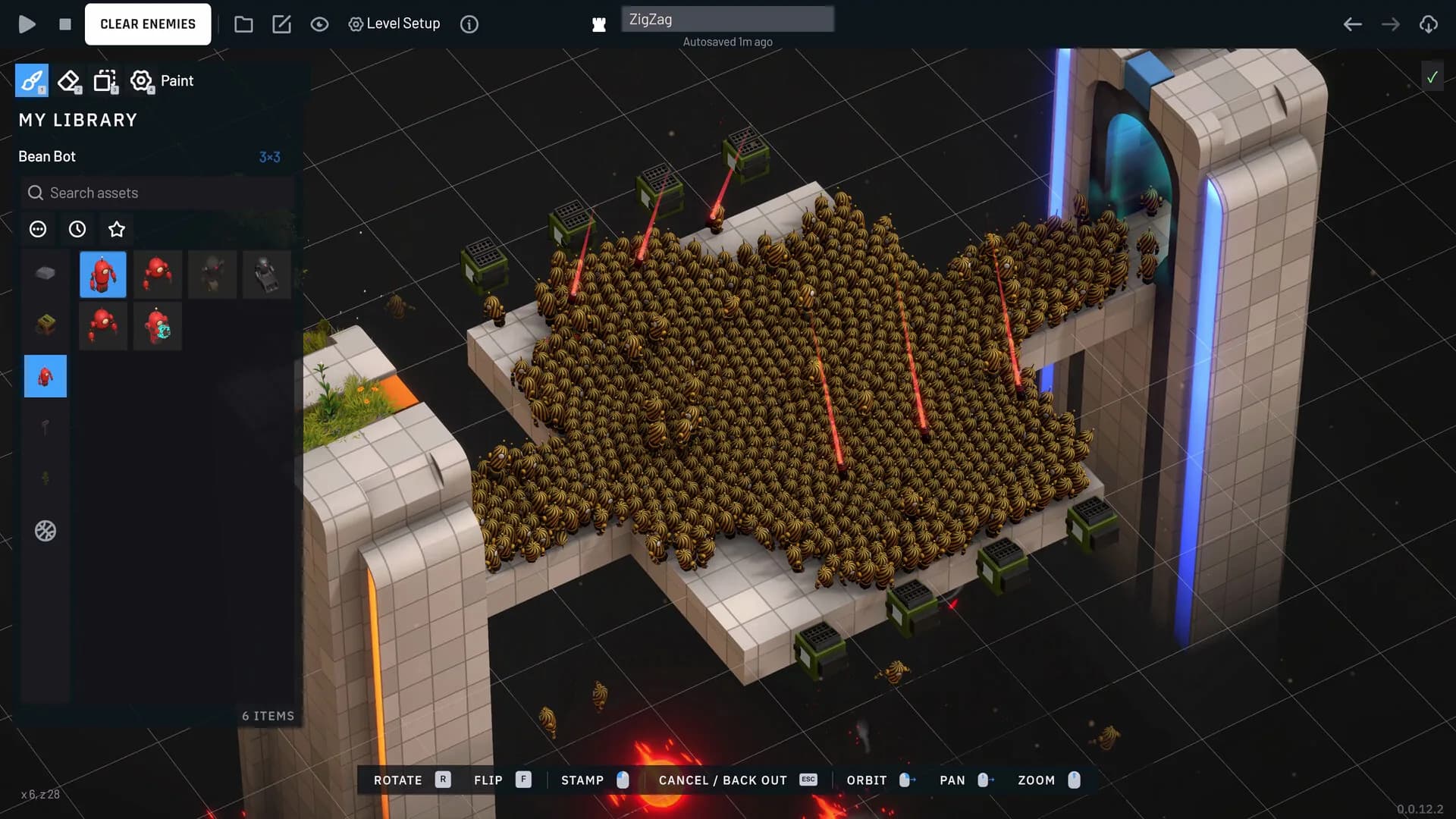
Alongside the campaign there is an endless mode with a generated map and scaling threat, a puzzle mode where planning is everything, a sandbox with everything unlocked, and a level editor with Steam Workshop sharing. There are leaderboards too.
That is a lot for a studio of two, and it shows in the demo's patch notes, which ran in public for six months with an overhaul of enemy pathing physics, card rarities added, cores made unique, and one tower fix after another.
Removing damage removes a landmark. In a normal tower defence you know why you lost: not enough damage per second. Here you lose because a trajectory was wrong, and that is harder to diagnose. The first runs are therefore a little opaque, and puzzle mode is probably the best place to learn to read forces.
Physics is a capricious mistress. A system built entirely on collisions inevitably produces absurd situations, and the demo's fixes do mention enemies that stopped pathing. That is the price of the concept, and a two-person early access will take time to cover every case.
And it is single-player only. No co-op, which is a shame for a game whose main pleasure is showing somebody the absurd machine you just built. Workshop compensates in part.
Good news for modest machines: a GTX 960, 8 GB of memory and 2 GB of disk are enough.
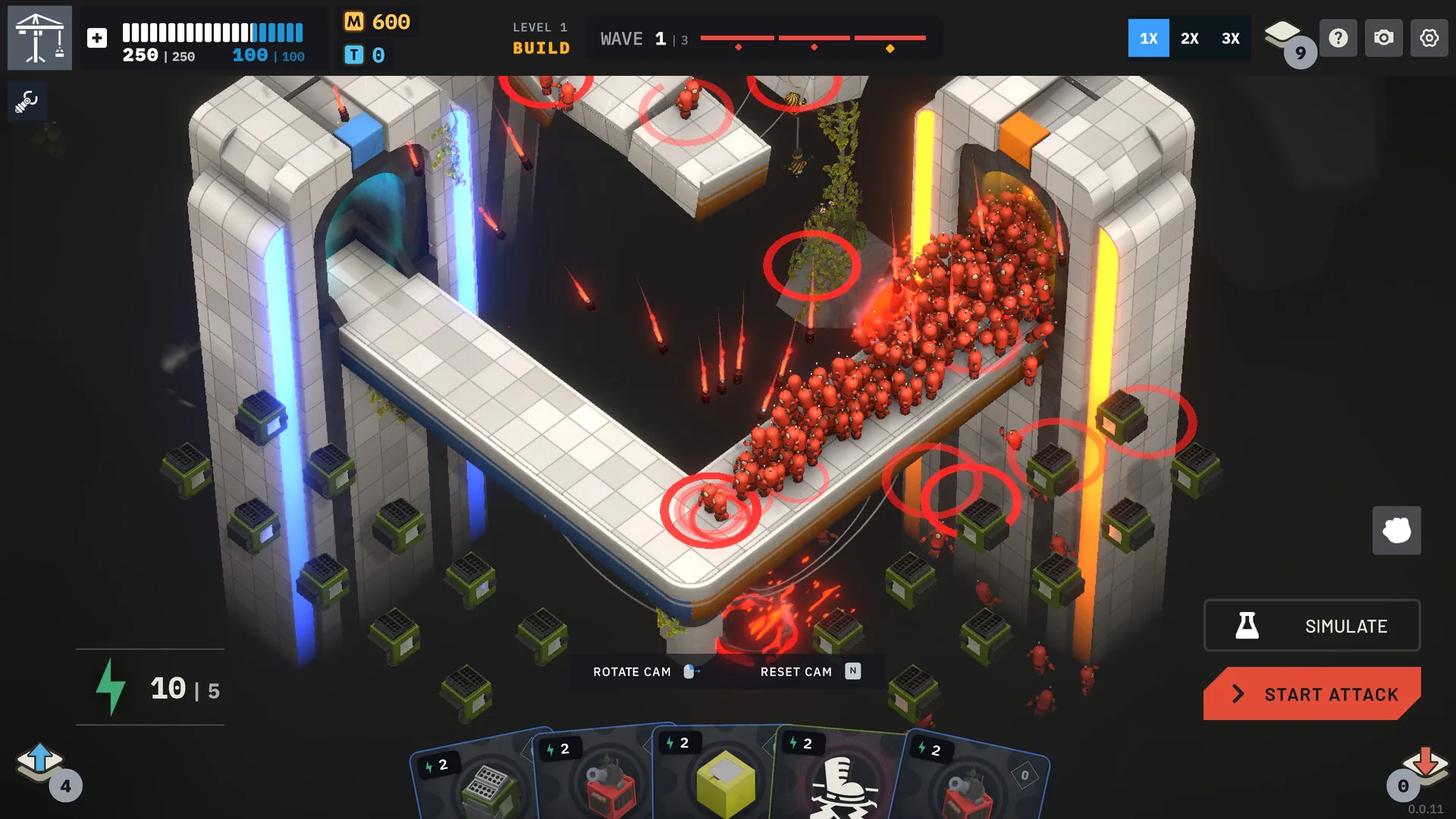
The best moment I had lasted three seconds.
A queue of red robots was coming along a narrow walkway, my fan pushed them right at the moment my Tesla tower scattered them, and the whole platoon slid into the void like a stack of plates knocked off a table. I had killed nobody. I had simply placed my objects very well.
That is exactly what the game sells, and it is rare for such a daft idea to hold up this many systems behind it.
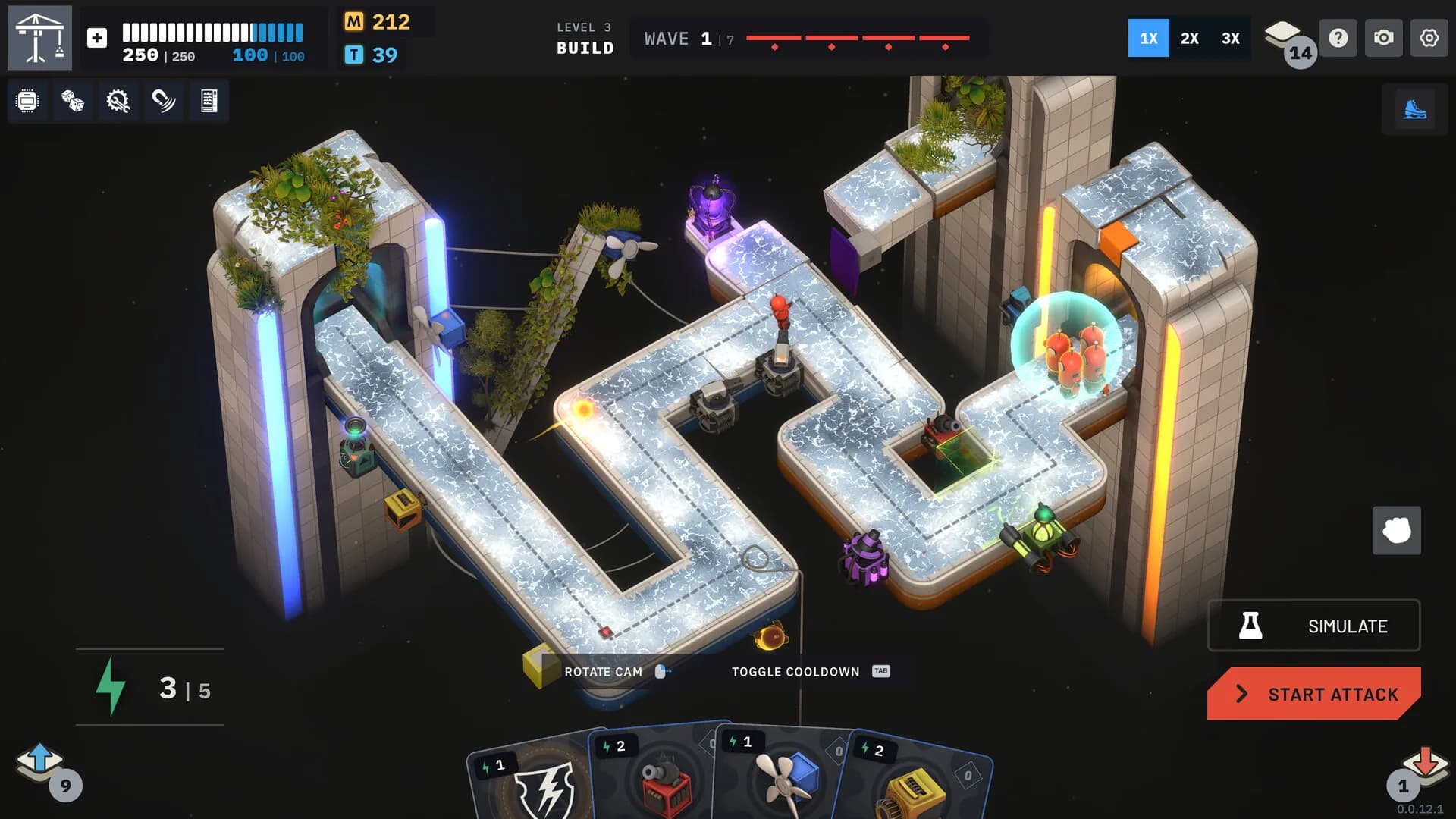
Your worst tower chain that turned against you? Tell it on the InsertCoins Discord, we have all pushed our own robots the wrong way.
Community
Your rating
Advertisement
Loading comments...
You might also like
You struck a deal with a dragon. All that is left is serving both sides without either finding out. The 1.0 lands on 23 October.
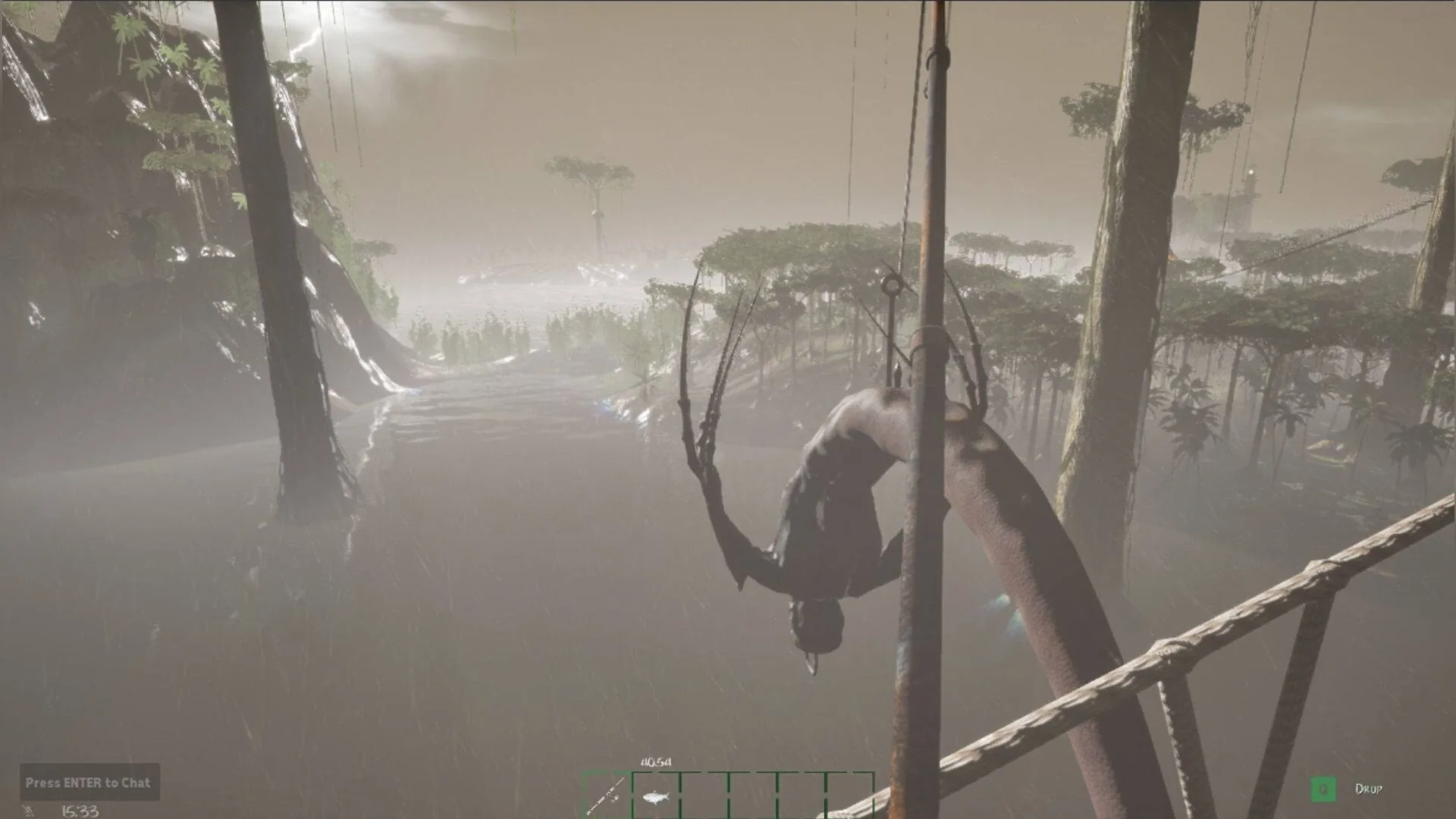
A co-op horror fishing game at nine euros. You must sacrifice fish every day, and the beast is not the worst thing out there.
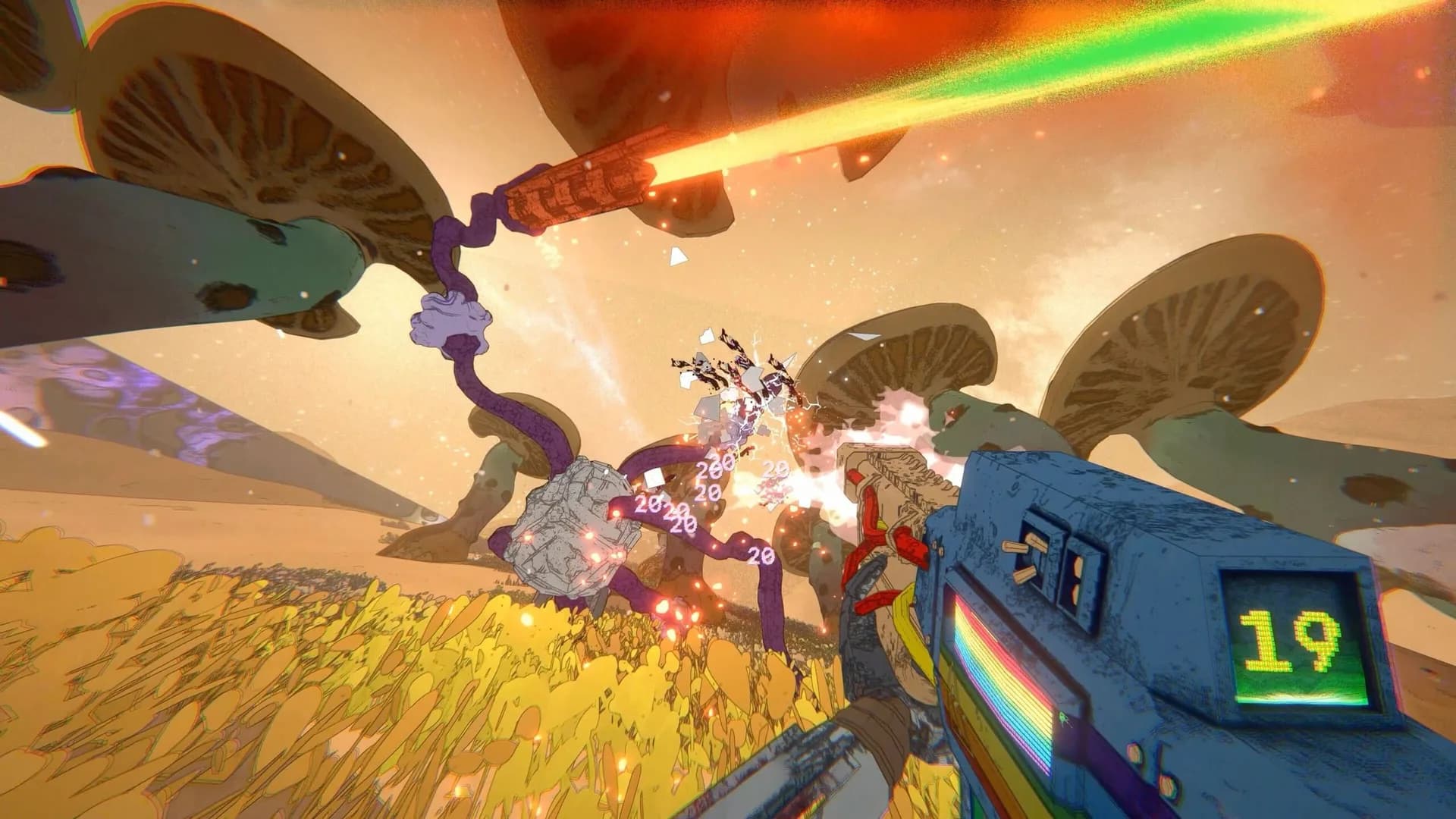
Scrapheap robots sent to exterminate a planetary fungus. The 1.0 lands tomorrow, and the upgrade grid is the genre's best idea.