Preview
Hubert: a tale of friendship, bravery, and barking at sheep
You are a shepherd dog in the northern wilderness. You see the world through movement, scent and instinct, and you gather a flock.
Alexandrosse
6 min
A conversation with Banana Blitz Studio, the team behind Void Reaver: six people spread across France, trained on WoW, convinced that the heart of a roguelite lives in the inventory.
Alexandrosse
Banana Blitz Studio isn't a studio like any other. Not because it does something revolutionary, but because its story resembles none of the usual indie game trajectories. No game school, no ex-big-studio employees striking out on their own, no fanfare Kickstarter. Just a team of six people spread across France, brought together through meetings on World of Warcraft, Twitch and Discord, working on their first game without anyone at the table having ever opened Unity before they started.
Here's what they have to say about Void Reaver.
Nibana, art director and composer, answered questions in writing. The full Banana Blitz team counts six people: Aurelie (game design and studio management), Eonir and Omox (development), Agathe (3D, art and VFX), Nibana (AD, music and everything that overflows), and Baptiste (audio integration on Wwise and sound design).
The studio's formation is worth dwelling on. Nibana met Aurelie's partner on World of Warcraft. Neither Aurelie nor Nibana had touched a game engine in their lives at that point. Eonir, their first hire, arrived through mutual contacts: a Unity developer for several years, he represents the technical foundation on which everything else rests. Agathe was spotted during an intervention at a video game school in Montpellier. Omox joined the team after being spotted streaming Void Reaver on Twitch during development. Baptiste, a chance encounter on Discord.
"Only very organic meetings," Nibana summarizes. Not the kind of phrase you expect from a studio preparing its first commercial game, and yet it's precisely what gives Banana Blitz a readable identity: nobody here followed the marked path.
The team works entirely remote, spread across France. Coordination runs through Discord, with an approach that "looks more like a passion project" according to Nibana: meetings when necessary, deadlines, but no rigid hierarchy. "We don't really have a classic boss/employee relationship."
It's everyone's first game.
Void Reaver aims for a blend of references that on paper shouldn't necessarily coexist. Games side: StarCraft for the old-school register, Risk of Rain for the low-poly, Hades for the VFX and cartoon-leaning post-processing. Pop culture side: Star Wars, Battlestar Galactica for the weapons, powers and characters.
The low-poly isn't a purely aesthetic choice. Nibana identifies it clearly as a direct consequence of budgetary constraints: "The low-poly is the result of our biggest technical and financial constraint." The team works with asset packs that Agathe reworks in 3D to adapt to the art direction. Constraint transformed into style, as often in indie when the team is honest about its limits.
The UI is the exception: "The only thing that will have changed a lot because none of us had any UI knowledge." Many iterations to reach a result that works without exceeding the team's capacities.
Unity, first in version 2022 then migrated to Unity 6. The choice is simple: Eonir is a Unity developer, and Unity's pricing conditions remain more accessible than Unreal in case of commercial success. All development stays in the Unity ecosystem, except for sound: Wwise for audio integration, Reaper, and Ableton Live 12 on Nibana's side for composition.
No major technical obstacles reported, which is partly explained by the project's deliberately limited scope. The difficulties encountered are mostly due to the learning curve for Aurelie and Nibana, the two non-technical members. "The game having a fairly simple scope and gameplay, we're managing well enough."
Void Reaver is a roguelite in two distinct phases.
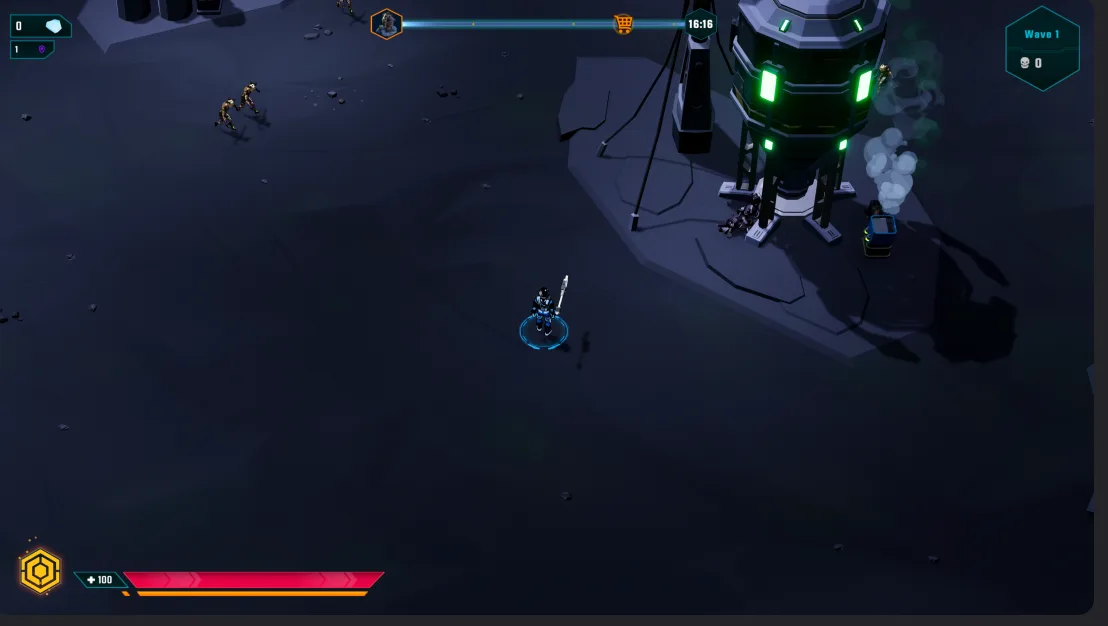
The first is a survival phase: enemy waves to repel, weapons that fire automatically at the nearest target, and the player focused on positioning, active power, and dash. Think Vampire Survivors or Brotato for the structure.
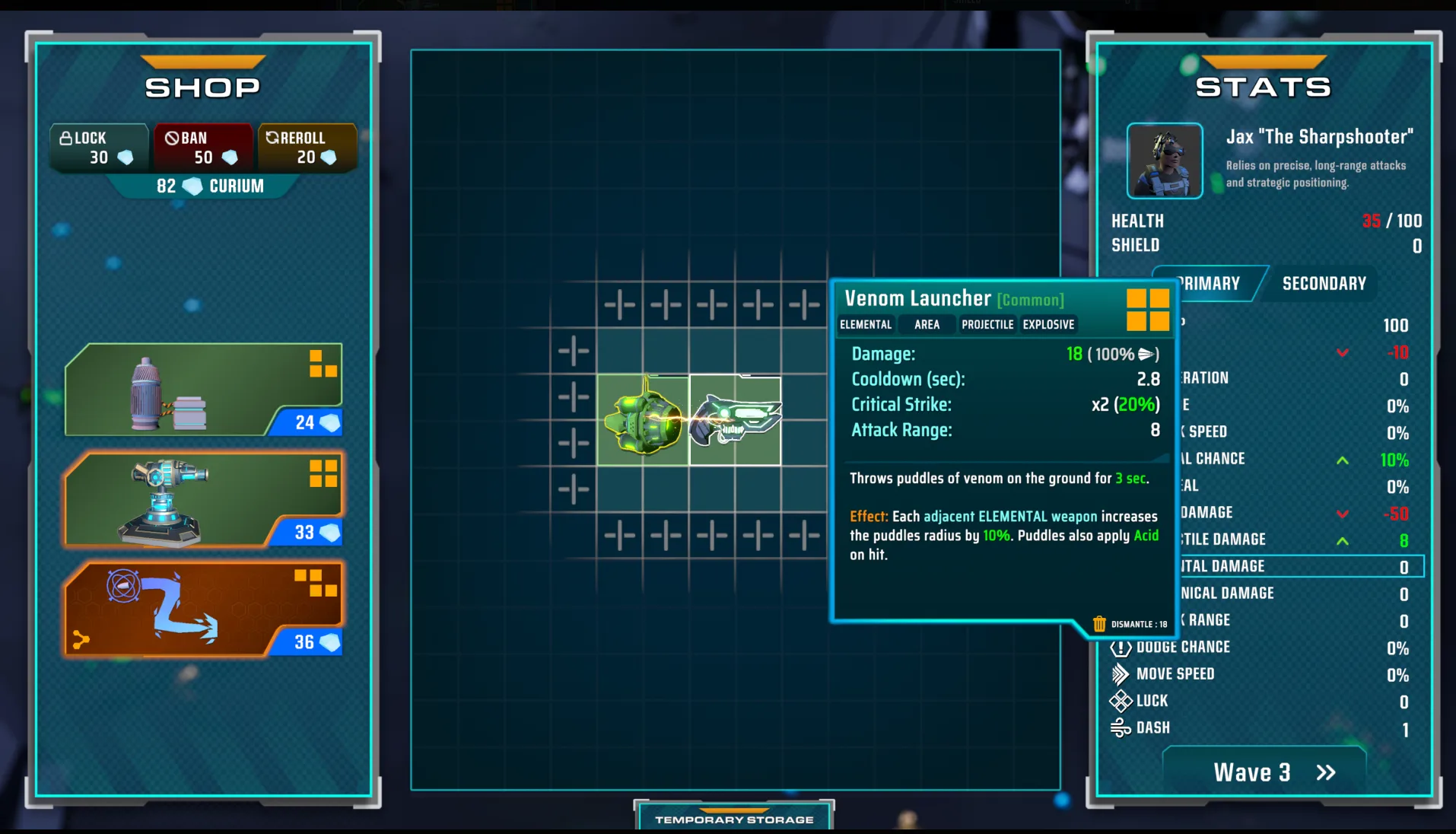
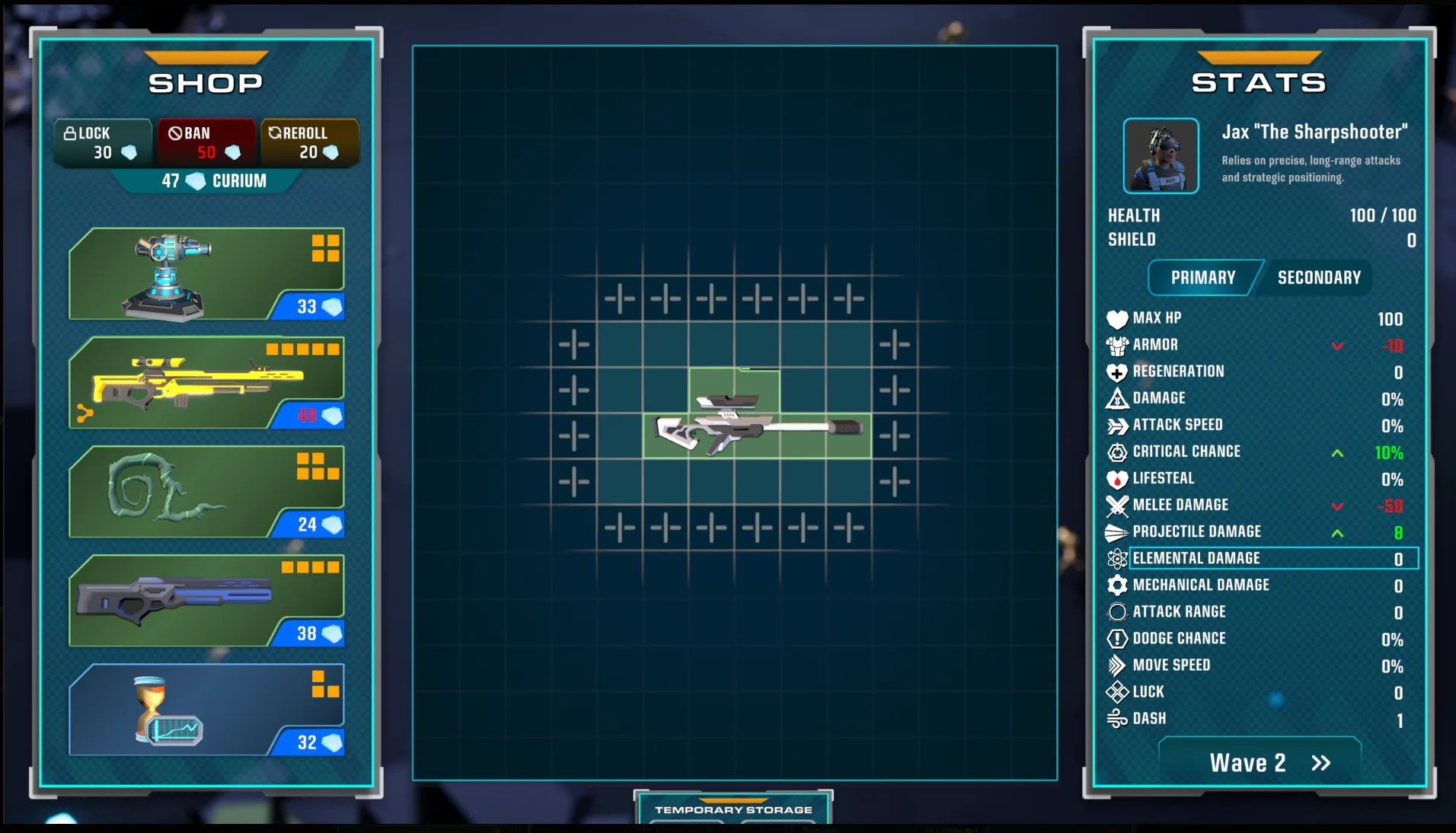
The second phase, and that's where Void Reaver takes its own direction, is inventory management. Currency earned in combat allows purchasing weapons and items that organize into a limited space. Each item has a dedicated shape and must be physically placed in the inventory, like Tetris. But most importantly: some items only activate their effects when adjacent to other items of the right type. The inventory isn't just a container, it's the puzzle you must solve to build a functioning build.
"We're betting everything on the inventory management, which we're trying to do in the best possible way, so that it's fluid, easy to manage but difficult to optimize." Easy to understand, difficult to master: that's the standard of good roguelite design, and Banana Blitz seems aware of the ambition that represents.
Meta-progression works through a per-character skill tree, with each run unlocking permanent improvements. The game targets around a hundred weapons, two hundred items, and ten characters with their own trees. The millions of possible builds aren't empty marketing promises if the adjacency system is well calibrated: the combinatorics really do explode the possibilities.
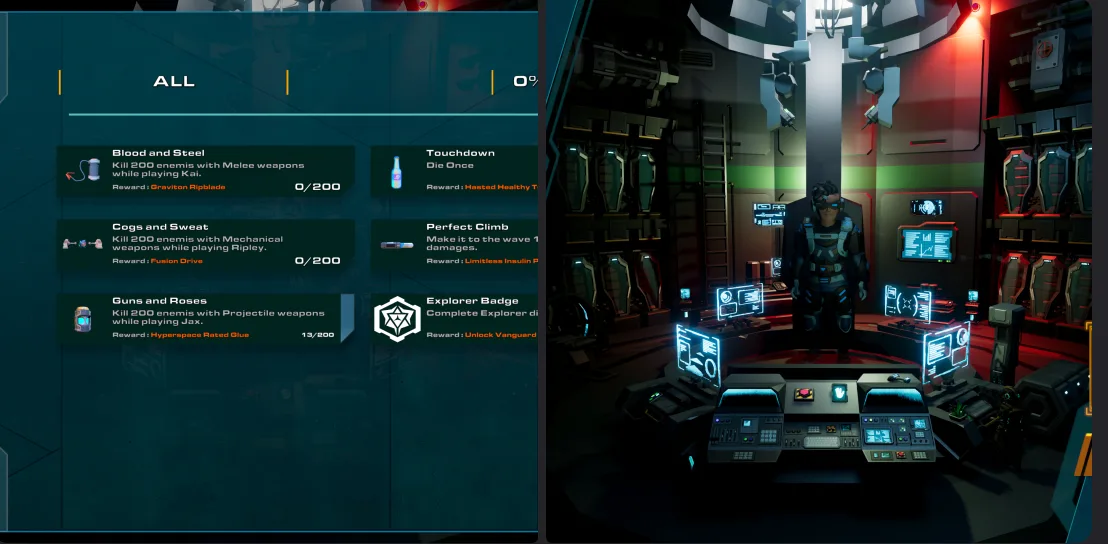
The difficulty curve was the most heated internal debate topic, with a team divided between hardcore game fans and more accessible players. The result: five difficulty levels, from accessible to very difficult, with an Endless mode in development for the tryhard crowd.
Getting there was a long road. The game started with a model of few but strong enemies (close to Brotato), evolved toward more but less resistant enemies (closer to Vampire Survivors and Soulstone Survivors), and today finds its balance somewhere between the two. A revealing detail: the team initially worked with a base damage of 1 to 10, before multiplying everything by 10 to simplify calculations. This kind of foundational iteration, only visible in a postmortem, often says more about a studio's rigor than any announcement.
Position without ambiguity: no generative AI art on Void Reaver. The only AI tools used are on the development side (code comments, organization). Not for visuals, not for narrative, not for sound design.
Nibana's response on the subject leaves no room for interpretation: "The studio holds a very firm position against the use of generative AI to replace artists, regardless of the industry in which it's used." He identifies the recent explosion of AI-generated games on Steam as symptomatic of a structural problem: soulless projects capitalizing on ease at the expense of an already fragile indie ecosystem. "We prefer a potentially less beautiful and less complete game, but more human."
It's a position with a real cost in a context where AI could compensate exactly for a small team's gaps. Banana Blitz chose not to use it knowingly.
Void Reaver was funded in three phases. First on Aurelie and Nibana's personal savings, who don't pay themselves on the project ("the scope being far beyond our budget, but we manage because we don't pay ourselves, Aurelie and I"). Then through Entalto Publishing, who joined for a few more months. And recently via Gamevestor, an invest-funding platform allowing individual investors to fund a game in exchange for a return on investment based on revenue and a percentage of sales for 18 months. A successful campaign.
The CNC was approached for pre-production support, without success. A production aid application is underway.
The publisher contract was signed with a firm clause: Banana Blitz keeps creative control and art direction, without exception. "Not at all [constrained]. We made sure to only sign contracts with the certainty we'd keep our hands on the project."
Void Reaver releases in Early Access, with no precise date specified for now. The game has approximately 100 weapons, 200 items and ten characters at EA launch, with additional content planned if sales allow funding of elements set aside (fuller skill tree, more refined menus).
The bet is readable: an original roguelite inventory system in a saturated genre, made by a team with no objective reason to succeed, moving forward anyway. This kind of studio won't release the best game of the year. It can release something honest, playable, and made by people who believed in it long enough to finish the work.
That's rarer than it looks.
Impatient, sceptical, or both? The InsertCoins Discord exists for exactly that.
Community
Your rating
Loading comments...
You might also like
You are a shepherd dog in the northern wilderness. You see the world through movement, scent and instinct, and you gather a flock.
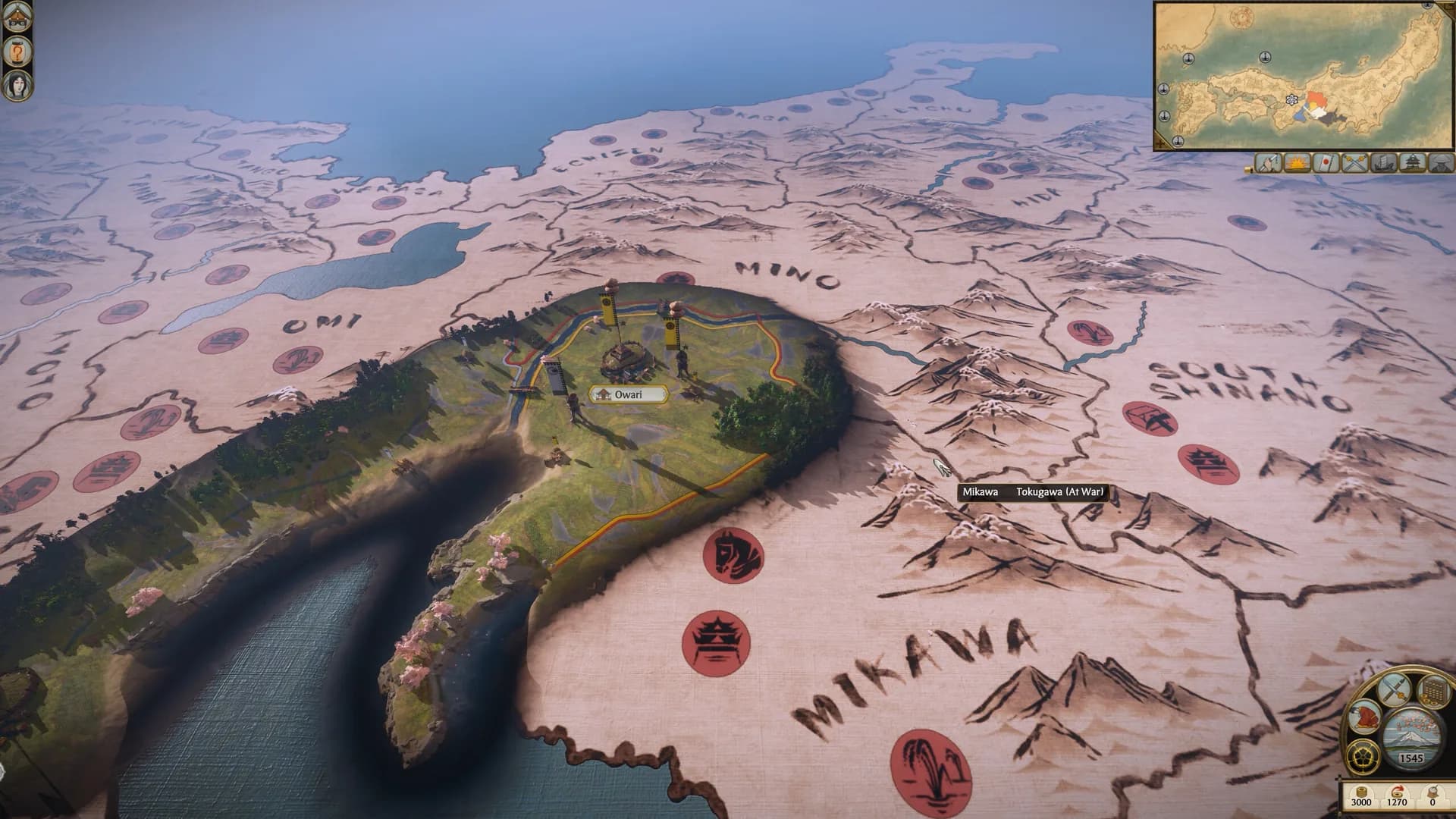
A 64-bit upgrade, built-in mod support, full Japanese voice acting, and over fifty minor factions made playable.
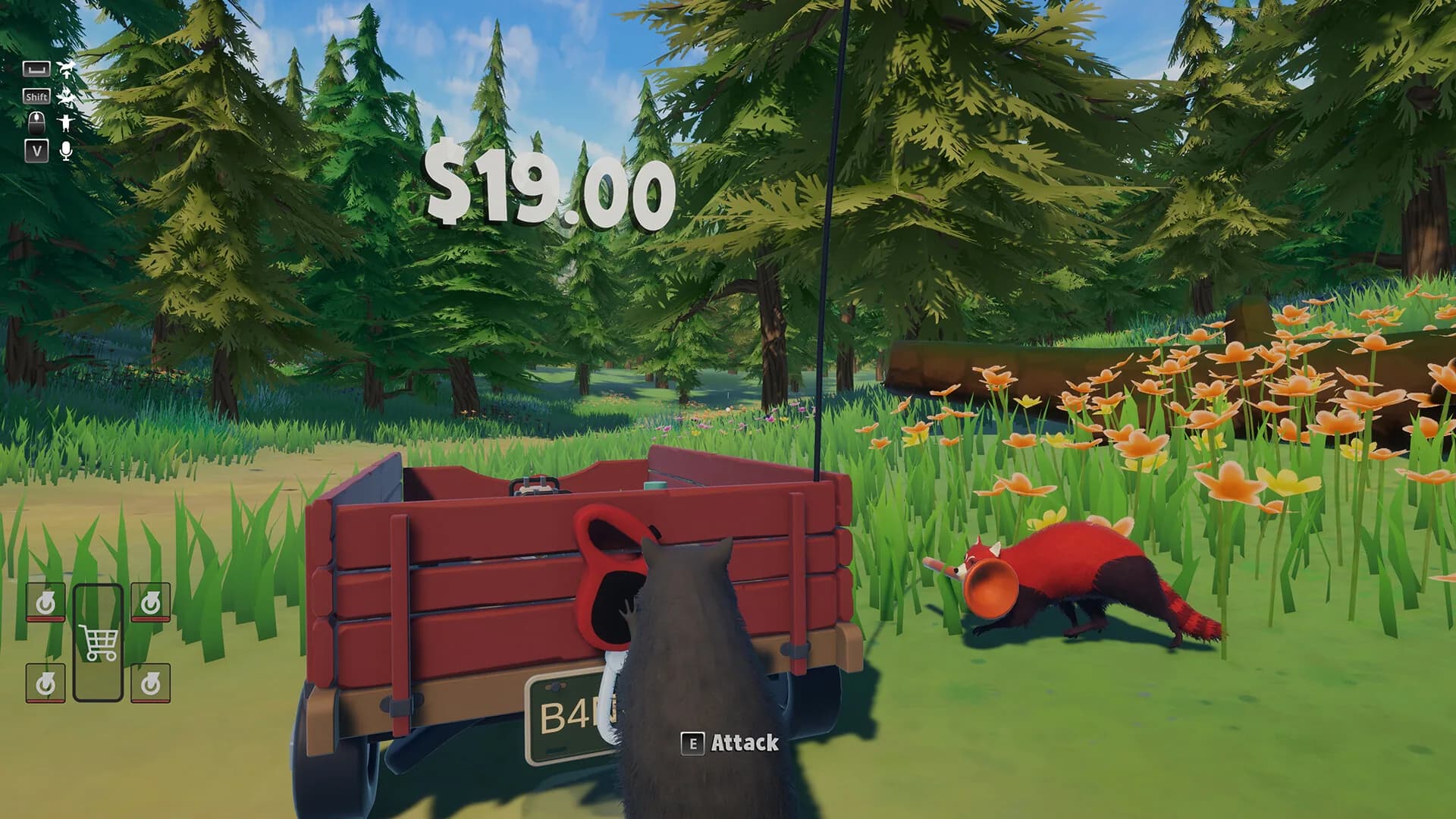
You can technically play solo, says the studio, but the wagon is a lot for one raccoon.