7
Test
Dungeon Inn: running an inn while keeping two rival guilds from meeting
You struck a deal with a dragon. All that is left is serving both sides without either finding out. The 1.0 lands on 23 October.
Alexandrosse
7 min
A peaceful roguelite deckbuilder tracing the evolution of Japanese art, from ancient scrolls to woodblock prints. Worlds Upon the Wind is as beautiful as it is gentle.
Alexandrosse
InsertCoins.press Score
8/10
Verdict
Recommended
Some games you launch first for their looks. You stumble on an image, you stop, and you tell yourself such aesthetic care at least deserves a closer look. Worlds Upon the Wind is one of those: its visual stance, which traces the evolution of Japanese art from ancient painted scrolls to various woodblock prints, is breathtakingly beautiful. But the real good surprise is that under this splendor hides a peaceful, clever roguelite deckbuilder, where gentleness isn't just a facade.
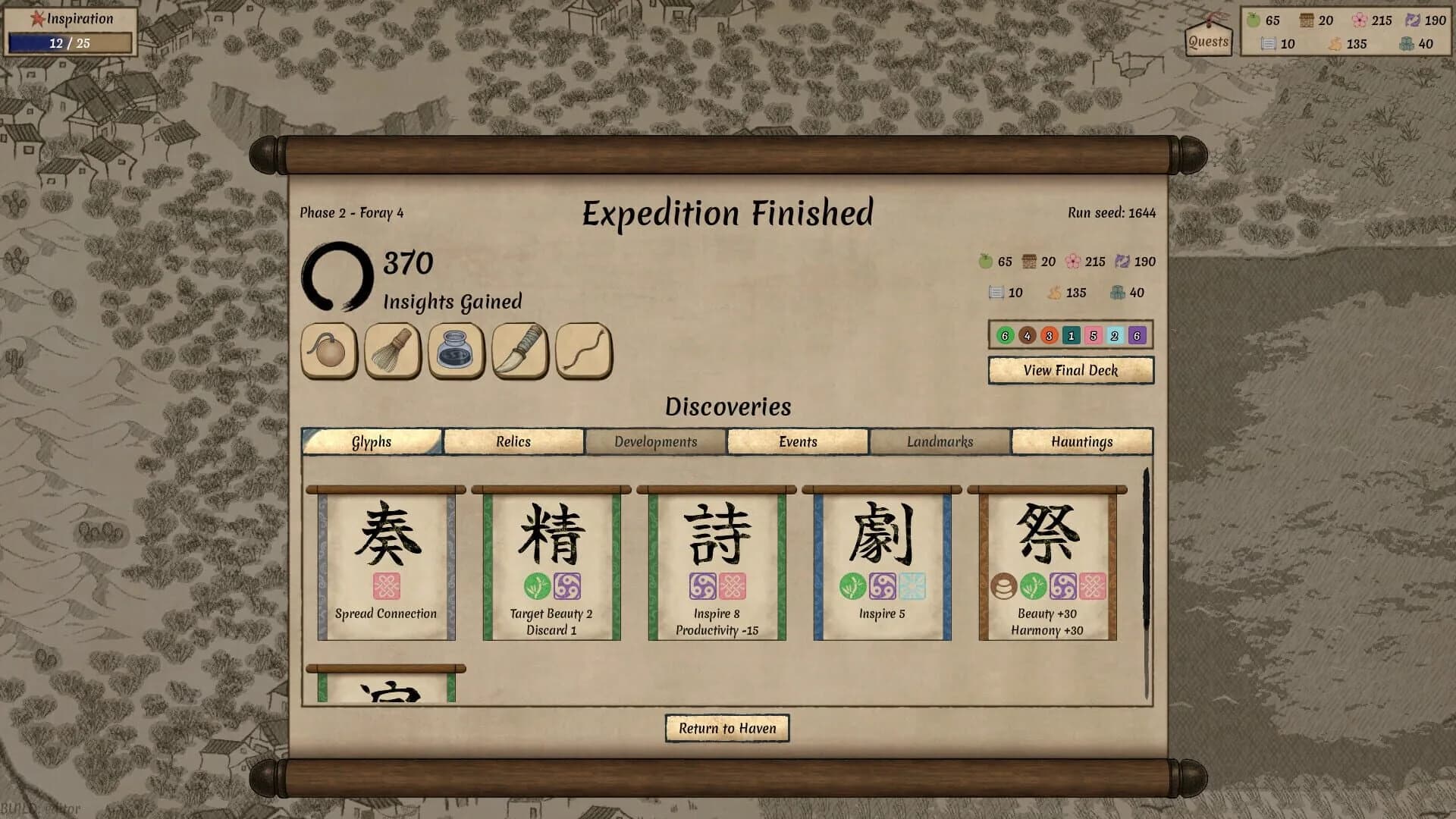
Worlds Upon the Wind is a peaceful roguelite deckbuilder developed by Max Shawabkeh, available on PC since 23 July 2026. The principle is to resettle shards of a shattered world, nurturing communities, befriending animal spirits and shaping a new civilization through choices that echo across generations. You explore procedurally generated world shards, filled with biomes, events, challenges and opportunities, where every decision seals the settlers' fate and unlocks new glyphs and relics to transform your deck. The whole bathes in an art direction that traces the history of Japanese art, from illustrated scrolls to woodblock prints.
What sets Worlds Upon the Wind apart is its philosophy of calm. Where the roguelite deckbuilder tends toward nervousness and frantic optimization, this one invites you to slow down, to weigh the consequences of your choices, to consider the reach of each decision. You explore your world shards, face challenges, earn glyphs and relics that reshape your deck, but always in a logic of patient construction rather than a race. The game owns that there isn't always a perfect answer, and that you sometimes simply choose what feels right for the community you're building. That reflective, moral dimension gives deckbuilding a rare resonance.
The other find is its companions. You can pacify the restless spirits haunting the world shards and befriend fifteen unique animal companions, each endowed with their own quest and game-changing abilities. That gallery of companions enriches deck construction by offering distinct synergies and directions, while the choices echoing across generations add a narrative depth the genre rarely visits. You don't just stack efficient cards, you shape a world and a lineage, and that dimension gives weight and meaning to mechanics you thought you knew by heart.
You have to stay honest about what this gentleness implies. Worlds Upon the Wind owns its measured pace, and that stance won't suit everyone: whoever seeks nervous tension, aggressive optimization and the thrill of a run on the brink, Slay the Spire style, may find the whole too quiet, even soft. It's a game of contemplation and patient construction, not adrenaline, and you have to love taking your time to feel good in it. Its beauty and serenity are its trump card, but they also define a precise audience, the one seeking a peaceful parenthesis rather than a tense challenge.
The other reservation is mechanical depth over time. Deckbuilders live on the richness of their synergies and the replayability of their runs, and everything will depend on the game's ability to sustain interest once the aesthetic wonder fades and the fifteen companions are discovered. The risk, with a title so turned toward atmosphere, is that the strategic layer proves less stocked than the genre's references, and that you exhaust it faster than hoped. You should approach it as much for its sensory journey and serenity as for its challenge, and judge its depth by that measure.
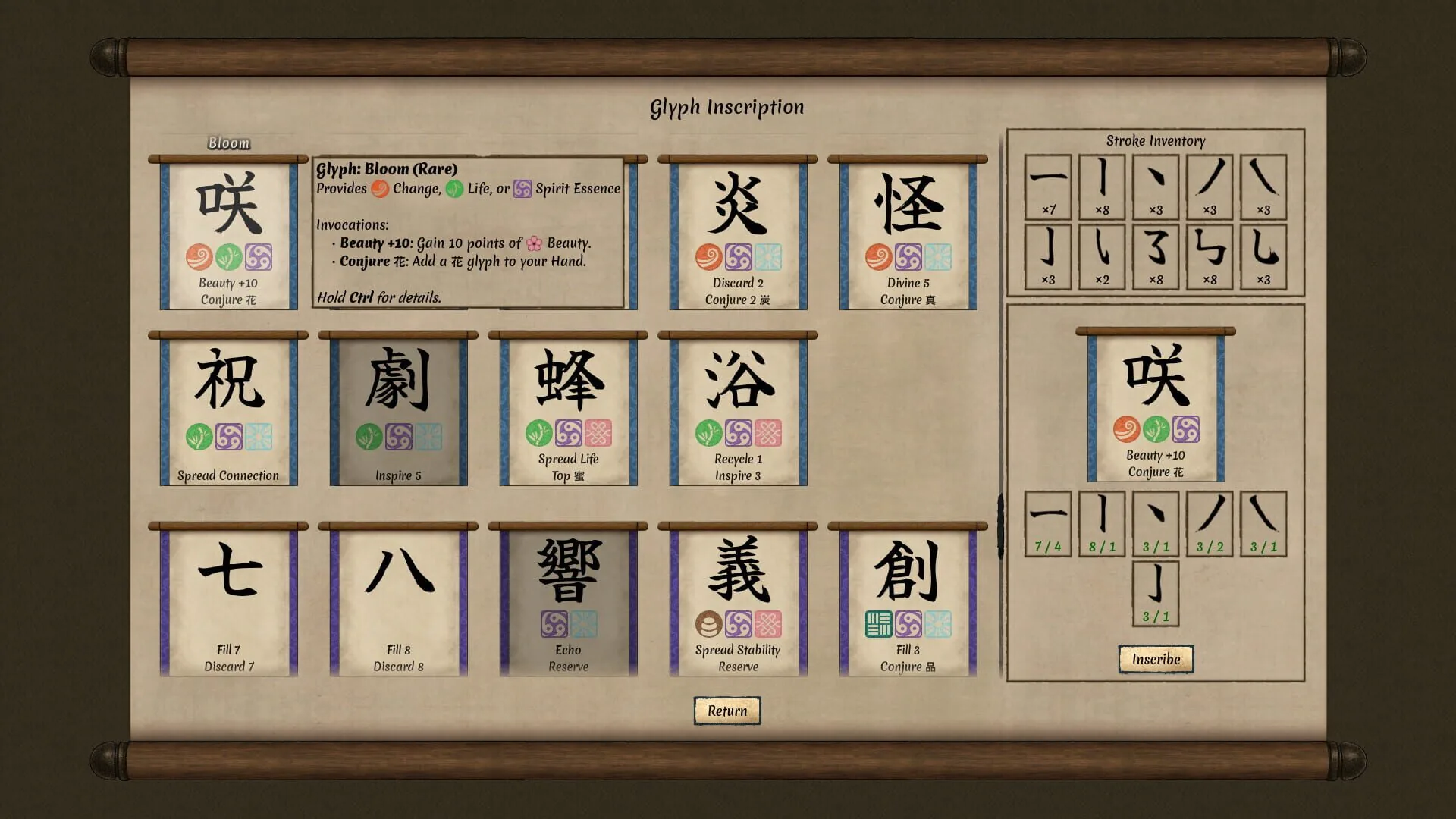
Worlds Upon the Wind is a success that first seduces through its beauty, then holds through its intelligence. Its art direction, which scrolls through the history of Japanese art from painted scrolls to prints, is quite simply sublime, and it doesn't hide an empty game: the peaceful deckbuilder it dresses, with its glyphs, its relics, its fifteen animal companions and its choices echoing across generations, has a real personality. It's a gentle, reflective, carefully crafted proposition, the kind that does you good and proves a roguelite can be an experience of contemplation as much as strategy.
You just have to approach it with the right expectations. Its measured pace and serenity, which make all its charm, reserve it for whoever seeks calm rather than nervous tension, and its strategic depth will need gauging over time against the genre's heavyweights. But for the player seeking a deckbuilder that soothes, that tells a story and that amazes, Worlds Upon the Wind offers a rare and precious journey. Sometimes you launch a game for its beauty, and you discover it also has a soul. That's exactly what happens here.
A peaceful roguelite deckbuilder of rare beauty, tracing Japanese art from scrolls to prints and binding gentleness, reflection and animal companions: a superb contemplative journey, to reserve for whoever seeks calm.
Strengths:
Weaknesses:
Tested on PC.
Disagree with the score? Come and tell us on the InsertCoins Discord, where we defend our verdicts live.
Community
Your rating
Advertisement
Loading comments...
You might also like
You struck a deal with a dragon. All that is left is serving both sides without either finding out. The 1.0 lands on 23 October.
A co-op horror fishing game at nine euros. You must sacrifice fish every day, and the beast is not the worst thing out there.
Scrapheap robots sent to exterminate a planetary fungus. The 1.0 lands tomorrow, and the upgrade grid is the genre's best idea.