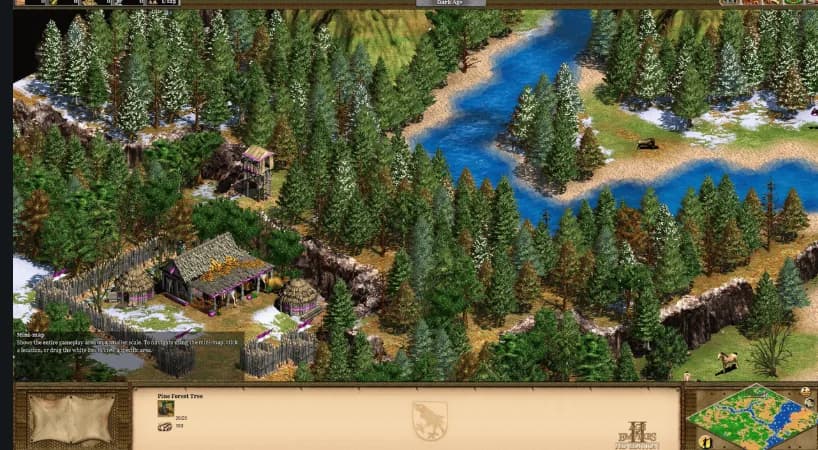
We were maybe eight or nine years old. The school computer room smelled of hot plastic and the dust accumulated behind beige towers. On the screen next to ours, a kid was building barracks while another tried to hack a Gallic town with three peasants and a priest. The teachers probably shouldn't have let us play Age of Empires on LAN one Wednesday afternoon. They did it anyway. We never recovered.
We played Warcraft 2 in that room. We conquered islands with Redbeard. We rescued Joan of Arc. We were Sigurd the Viking until the family modem made its noise of a robot negotiating a mortgage, the signal that you had to give the computer back to your older sister. The AOL CDs that arrived in the post promised one free hour of browsing. We never understood why you had to pay to look at images that took three minutes to load.
Age of Empires 1 was our game. Age of Empires 2 came out when we were already old enough to understand we'd just received something exceptional.
Twenty-five years later, people are winning tournaments on this game. Streamers make a living from it. There's a professional scene, a Titans League, a Hidden Cup, a Red Bull Wololo. And if you ask how that's possible, the honest answer is: we don't fully know yet, but it's fascinating to watch.
The announced death, and the comeback nobody predicted
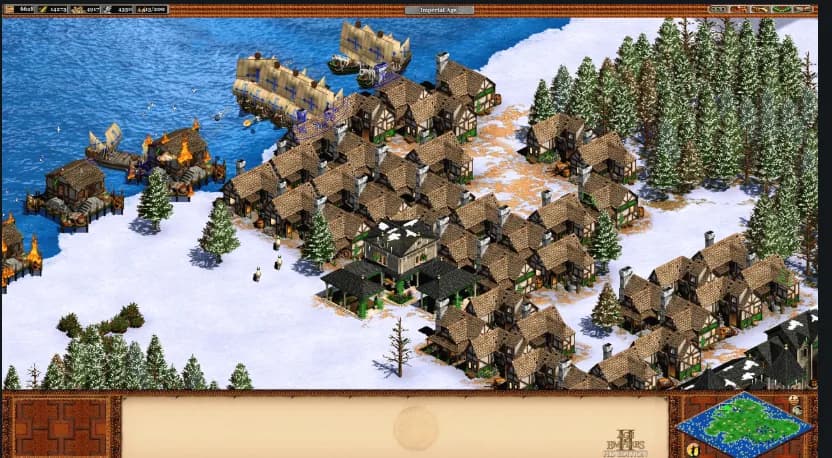
You need to understand what state Age of Empires 2 was in by the mid-2010s to appreciate what happened next. The game wasn't dead in the clinical sense. It was still breathing, thanks to Voobly, a community platform that maintained a multiplayer server long after Microsoft had officially turned the page. A few thousand dedicated players kept meeting there, mapping games, developing strategies in a game the publisher considered a monument of the past.
It was on Voobly that the foundations of the current competitive scene were laid. The players who still dominate the circuit today learned the game in that cramped environment, with limited resources and a community that held on through conviction. Viper. Daut. MbL. Names that appear in every discussion about the game's current level, some of whom started playing seriously when Microsoft's official platform was already on life support.
Then in 2019, Microsoft released Age of Empires 2: Definitive Edition. Full remaster. New resolution. Steam. Integrated matchmaking. New development team (World's Edge) with a clear mandate: resurrect the franchise. And then something unexpected happened: it worked.
The reasons come down to a conjunction of factors nobody could have fully predicted. First, nostalgia: players who grew up with the game in the 2000s were between 25 and 35, had income, free time, and the desire to find something again. Then, content: T90Official, an American YouTube creator with a gift for narrative and high-level mastery of the game, transformed pro games into accessible spectacle for newcomers. And finally, the game itself: AoE2 holds up. Twenty years of community polishing produced a balance that supports competitive analysis better than most games released the same year as the Definitive Edition.
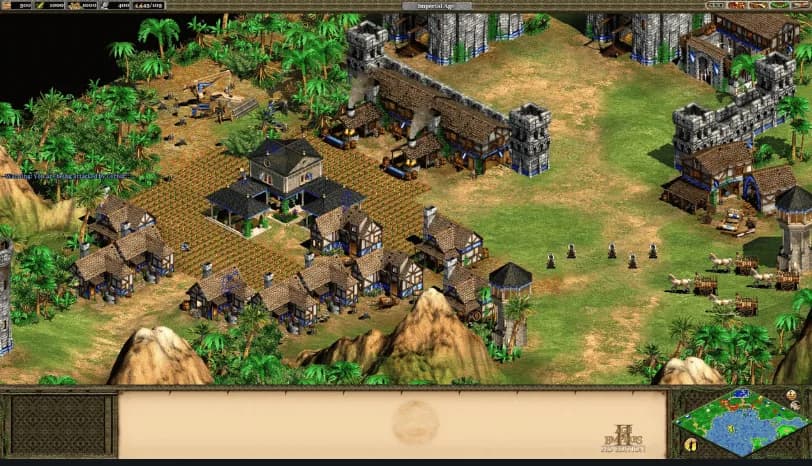
There's an observation that comes up regularly in discussions around the AoE2 competitive scene: the same names at the top for a decade. Viper. Daut. Hera. Liereyy. Tatoh. With a few recent additions like Vinchester or Barles, but a closed circle that resists any serious infiltration attempt.
It's not because these players are the chosen ones. It's mechanical.
The AoE2 ranked ladder has about 47,000 active players in a month. 47,000 people. For perspective: Dota 2 runs around 500,000 regular simultaneous players. League of Legends claims 125 million monthly active players. Counter-Strike flirts with a million simultaneous players at peak. In those proportions, even if the fraction of players capable of reaching pro level is identical, the difference in base population is abyssal.
For an exceptional player to reach Viper's level, they first need to exist in the AoE2 player population. And with 47,000 ladder players, the majority playing recreationally, the chances that a generational talent is there, available, and motivated to sacrifice years of their life for a game whose pro scene barely pays its top 30: mathematically slim.
There's also the game's difficulty itself. AoE2 is perhaps the hardest game to master in its category. Not in the sense of requiring precise rapid actions, which games like StarCraft 2 demand at an extreme level. But in the sense of requiring simultaneous mastery of economy (resource management, building placement, age timing), strategy (which build order, which civilization, how to respond to the opponent), and military engagement (unit micro, army composition, territory management). Each of these pillars would take hundreds of hours to master separately. Mastering them together, at the level where calculation errors are measured in seconds, takes years.
Result: the gap between the top 10 and the top 200 worldwide is genuinely abyssal. Reaching the top 200 globally in AoE2 represents a considerable time investment. It pays nothing. Doesn't cover rent. And even from there, the distance separating that level from the top 10 that can actually claim meaningful income is still immense.
Nili, a popular streamer and high-level player who reached the top 30 globally with a loyal audience, has publicly acknowledged struggling to make a living from that investment. Top 30 worldwide. In almost any other esport, top 30 worldwide is a comfortable salary. In AoE2, it's complicated.
The economy that rests on one content creator
What keeps the AoE2 competitive scene standing isn't a publisher with an esport vision. It's not mass sponsorships. It's an ecosystem of content creators whose streaming and YouTube revenue indirectly subsidizes pro players' training time.
T90Official is at the center of that ecosystem. He understood before others that AoE2 was better to watch than to play for a newcomer, provided someone explained what was happening. His commentary transforms technical games into narrative dramas. His Titans League, created precisely to address the compensation problem, distributes prize pools to players in the global top 48, not just the top 10. It's a private initiative from a content creator who understood that if players ranked 16 to 50 can't play full time, the scene will never renew its talent pool.
That's beautiful. And fragile, because it rests on the goodwill and financial capacity of one individual, not on a sustainable structure.
The pros themselves often juggle tournament performance with content creation. Hera streams. Viper streams. That's not a detail: for most of the top 10, streaming revenue complements (or exceeds) tournament earnings. It's a different model from mainstream esports, where players are salaried by organizations, but it's a model that works within the game's constraints.
The problem: a community that has followed its favorite creators for years isn't looking for a "new Hera" every six months. T90 doesn't sell players, he sells characters. And an audience that has attached to characters over a decade isn't favorable to the rapid rotation that big esports experience.
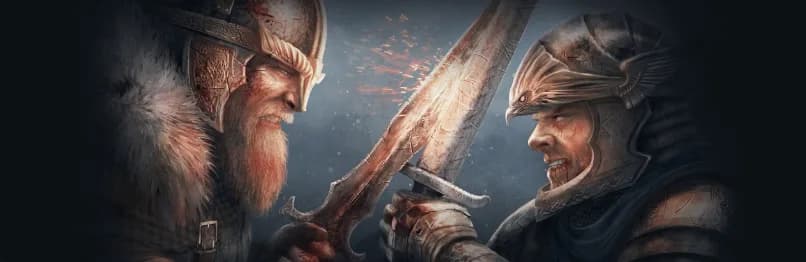
There's a tension in the AoE2 community that can't be ignored when talking about the competitive scene: the game itself is in full mutation, and not everyone is applauding.
The Definitive Edition and successive DLCs have brought dozens of new civilizations. Game mechanics have evolved. The water system has been revamped. Automated economy has progressed. And for several seasons, a persistent debate divides the player base into two irreconcilable camps.
On one side, those who believe AoE2 is more alive than ever. Active player data confirms it. Civilization variety has never been greater. Pro players' skill level has improved. The skill gap between the top 16 and top 10 is narrowing progressively.
On the other, players who've invested thousands of hours in the version of the game they know, watching the foundations shift under their feet. Unit micro is taking on growing importance at the expense of macro economy management. New civilizations introduce Dark Age mechanics (the Champi controversy, for civilizations capable of very early rushing with hard-to-counter units) that disrupt established balances. Games end earlier. The long strategic decision that plays out over multiple ages and several hours fades before increasingly refined all-ins.
These two visions are incompatible, and World's Edge walks a tightrope. Attracting new players requires an accessible game with readable mechanics and quick victories. Keeping the existing community requires respecting what made the game: economic depth, strategic decision-making, patience rewarded. These two imperatives pull in opposite directions.
What the competitive scene demands is the second. What traditional esports demand to attract sponsors is often the first. AoE2 hasn't had to choose yet, because traditional esports money has never really come into the game. But if Microsoft ever decided to seriously invest in a structured pro scene, that choice would need to be made.
The AoE2 competitive scene has an identifiable ceiling, and everyone in the community knows it. Roughly, double the active players and a total annual prize pool two to three times larger would allow an ecosystem where top 30 players could consider a sustainable career without depending on streaming.
That's not an astronomical sum at Microsoft's scale. It's a decision.
For now, the decision hasn't been made. The game receives regular DLCs that generate revenue. Tournaments exist thanks to occasional sponsors, passionate individuals like T90, and general goodwill. The system functions at a precarious but stable equilibrium level.
What could move things: a F2P version (conceivable but risky for the brand image), a direct Microsoft investment in tournament prize pools (possible within an Xbox/Game Pass strategy), or the appearance of a player who polarizes attention beyond the existing community the way Hera did at still-limited scale.
Or nothing. Age of Empires 2 could remain exactly what it is: the strategy game that achieved the impossible, surviving its own death and building a competitive scene under conditions nobody would recommend. With the same ten names fighting over the same ten spots, watched by a community that doesn't change either, and doesn't particularly care because it came for the stories, not the statistics.
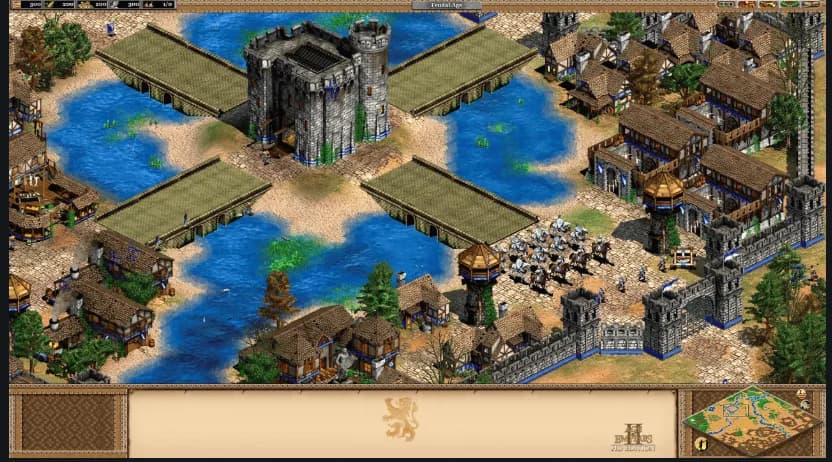
Age of Empires 2 in 2026 is proof that a community can keep something alive well beyond what the usual rules of the market would have allowed. It's a game that shouldn't have had a professional competitive scene, and has one. It's a scene that holds because people love it enough to fund it themselves when the publisher doesn't.
It's also an uncomfortable mirror for all the over-funded esports that exploded in flight the moment sponsors decided the return on investment wasn't there. AoE2 promises nothing to anyone. No franchised league, no guaranteed salaries, no aggressive marketing. What it has is forty thousand players who meet every month on a seven-year-old ladder to prove they manage their Dark Age economy better than the guy across the map.
We grew up with this game in a computer room where nobody should have let us play it. We never recovered. And apparently, we're not the only ones.
Feature based on public AoE2 competitive scene data and community discussions from Reddit r/aoe2.
Come and carry the conversation on over on our Discord.