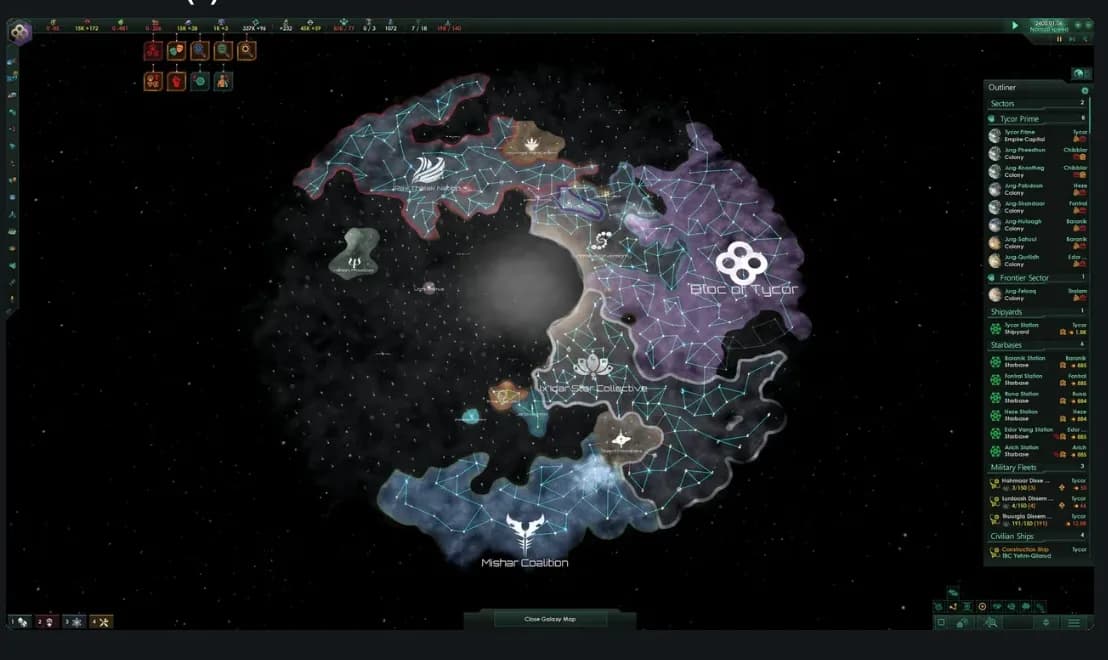
On May 9, 2016, Paradox Interactive launched Stellaris. A 4X space strategy game with outsized ambitions, mechanical depth that took hundreds of hours to explore, and a simple promise: build your own empire among the stars and see what happens. Ten years later, the game is still there, still in active development, and Paradox decided to mark the occasion in a way that says a lot, both about what the game has become and about the mistakes the studio preferred to correct rather than ignore.
From May 11, Utopia, Synthetic Dawn and the Humanoids Species Pack will be integrated into the base game. Free. For everyone.
That's a gesture of genuine generosity. It's also, reading between the lines, an elegant way of acknowledging that the entry barrier into Stellaris had become, over years of expansions, frankly absurd.
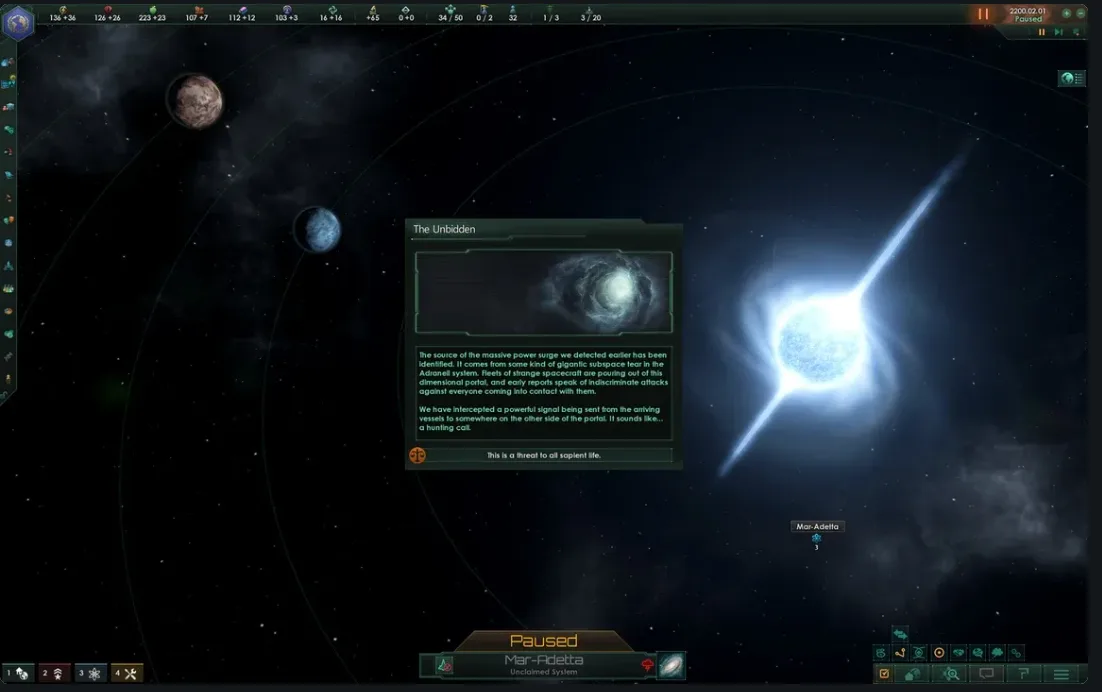
Let's start with the facts. The three expansions in question aren't cosmetic DLCs or cannon fodder. They're three pillars of the game as it exists today.
Utopia, released in 2017, introduced megastructures, habitats, Ascension Perks, Hive Minds and Fanatic Purifiers. Without Utopia, there are no Dyson Spheres. No Ring Worlds. No depth of customization that defines a large part of the game's contemporary identity. Playing without Utopia in 2026 is equivalent to playing Civilization without half the civilization tree.
Synthetic Dawn, released the same year, gave players the ability to lead Machine Intelligence empires: entire races of conscious robots with their own mechanics, their own narrative arcs, and a Machine Fallen Empire haunting the galaxy from the depths of time. It's one of the most fundamental science fiction fantasies, and it was behind a paywall.
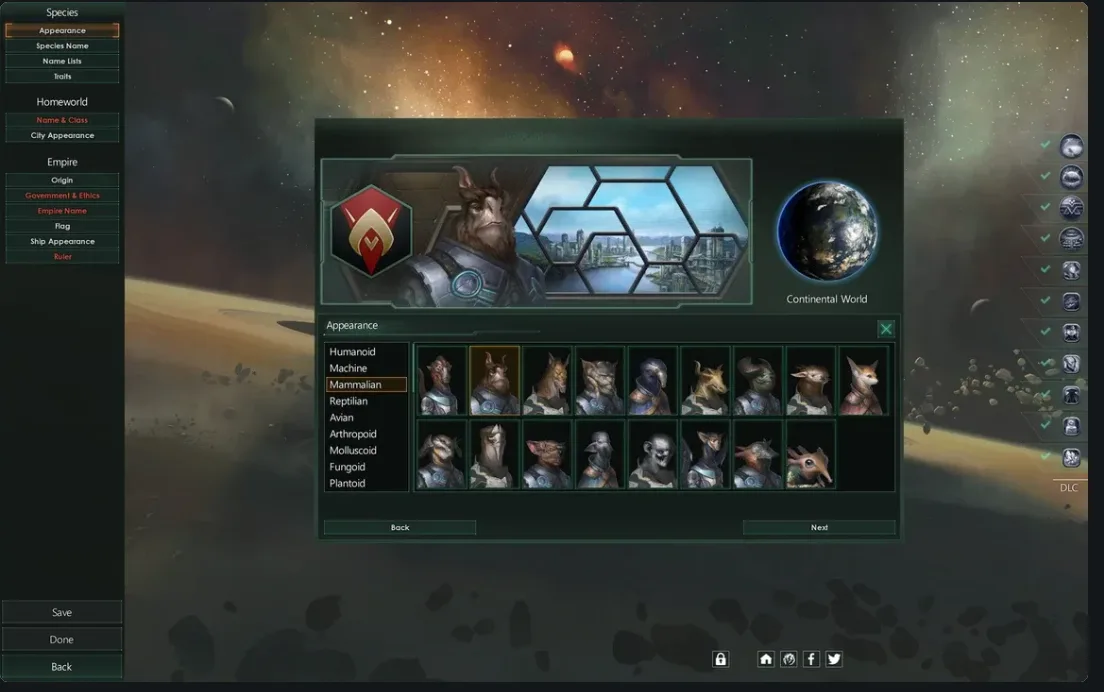
The Humanoids Species Pack is lighter in terms of systems, but it brings portraits, additional civics including the Clone Army Origin, and above all the Humanoid Shipset, recognized as one of the most visually successful. This type of content, in other games, would be distributed free to retain players.
At Paradox, it previously cost around ten euros. Which sounds like little, until you add up the full Stellaris expansion catalogue and realize the total easily exceeds 300 euros if you want everything. For a game released in 2016.
Integrating these three into the base game doesn't solve the structural problem. But it signals that Paradox is starting to understand the model has its limits.
Let's be precise: Stellaris has a business model problem that ten years haven't erased, they've aggravated.
At launch, the game was already good. It had its flaws, its gaps, its systems that needed work. But the foundation was solid. The problem is what followed: a very aggressive expansion policy, with DLCs that corrected or completed mechanics that should have been in the original game, sold at prices that accumulate vertiginously for anyone wanting to play the complete version.
This model isn't Paradox's invention, it's their trademark. Crusader Kings, Europa Universalis, Hearts of Iron all operate on this scheme. And for a long time, the community accepted it because the quality was there and the base game remained playable. But Stellaris pushed this model further than the others, to the point where players discovering the game today face a shop that looks like a punishment.
Integrating Utopia, Synthetic Dawn and Humanoids into the base game is a partial answer to this problem. Partial because there are still a dozen paid expansions, some as central to the modern experience as the ones just freed. Megacorp. Distant Stars. Ancient Relics. Apocalypse. The list is long.
What Paradox is doing today is right. What they should have done before is another debate. But the intention is good, and if it repeats in the coming years, if more aging DLCs progressively join the base game while new expansions continue to bring fresh content, then the model might find a viable equilibrium. That's the hopeful vision.
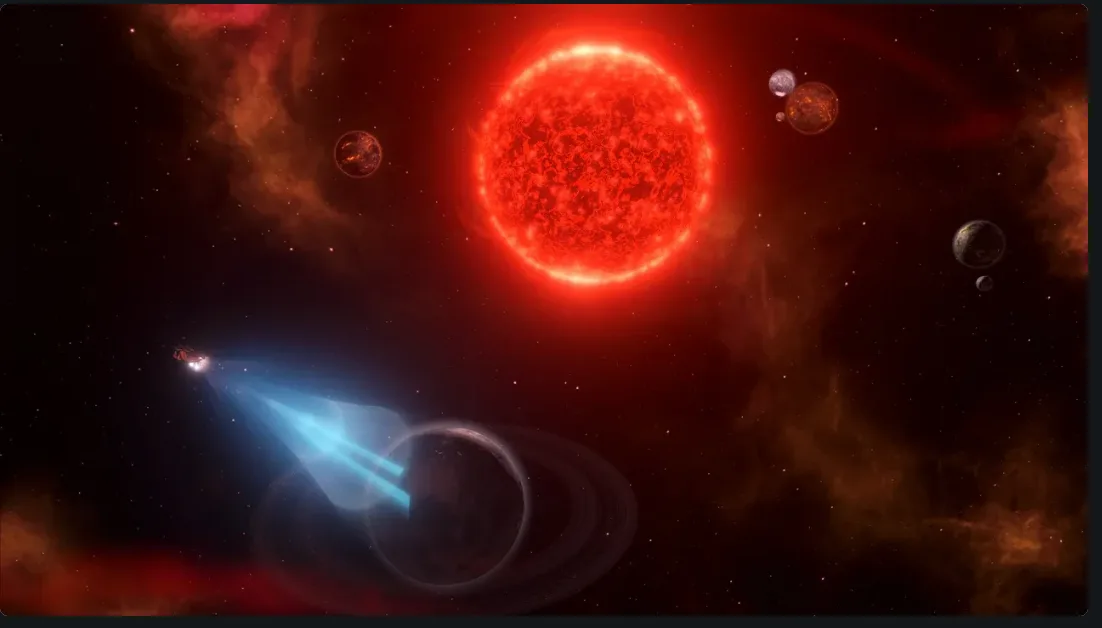
There's a conversation that returns in the anniversary announcement comments with nearly endearing regularity. The propulsion system. In the original Stellaris, players chose their interstellar travel type: Warp, Wormhole, or Hyperlanes. Three options with distinct mechanics, three different ways to organize your empire and strategy.
Warp allowed direct travel from one star to another, anywhere in range, with a charge time. Wormholes created networks of gates between fixed points, allowing crossing of immense distances in a few months. Hyperlanes limited travel to predefined corridors, creating a strategic geography close to classic board games.
Paradox removed this choice. For balancing reasons, performance reasons, and because Hyperlanes offered the most strategically interesting experience, while Warp was considered too dominant in other contexts. The decision was defensible on paper.
Ten years later, players who started in 2016 still express precise nostalgia for the way Warp changed the texture of exploration. No Hyperlane congestion, a different freedom of movement, a way of narrating expansion that no longer exists in the modern game.
This kind of nostalgia says something important about what a game can create as a relationship with its players. Stellaris isn't a game you play and forget. It's a game you remember the mechanics of even years after they disappeared. It's a game that had enough impact on some of its players that MooseTetrino, a community member, has been working for six years on an animated series inspired by its universe, despite illness, despite technical obstacles, despite everything.
That level of attachment can't be bought with DLCs. It has to be earned by building something that lasts.
What makes Stellaris's longevity isn't the game's base content. It's what players do with it and the stories they draw from it.
A player discovers the game via ManyATrueNerd in 2016 and falls immediately in love. Another finds it through Quill18 and buys every major expansion since, with consequences for their wallet. A third asks a friend to "test this game that looks cool" on console, expecting something close to Civilization, and receives instead an experience they describe as "so much better". A fourth finds themselves committing electoral manipulation by moving populations between planets, realizes Stellaris is a narrative sandbox where morally questionable actions happen naturally, and has been hooked since.
There's also the story of the alliance gone wrong. You fight the galaxy's dangers alongside a spiritualist empire. You ascend as a robot. Your ally now hates you. And what should have been your greatest asset becomes your greatest threat, not because of a script or an event designed by developers, but because your decisions have coherent consequences in a system that rewards fictional logic.
That's the promise of open 4X games realized. And ten years after launch, Stellaris still delivers it.
The community around the game has also produced its own legends. The Blorg, a mushroom alien race with a grotesque appearance and a disarming enthusiasm for interstellar friendship, became a persistent game meme. To the point where Paradox is selling a Blorg body pillow for the anniversary: an object so specific, so improbable, that it immediately generated passionate reactions in the comments. Some call it essential. Others refuse to buy the current version on the grounds that "it's not the original". The distinction between the real Blorg and the impostor is apparently a matter of principle.
That's the kind of community Stellaris built. And that kind of community doesn't build in 10 months. It builds in 10 years.
Paradox announced two more pieces of news coming next week, without giving details. In the context of an anniversary, a major content integration into the base game, and communication that seems to want to signal a turning point, speculation is running hot.
New expansion? Major free base game update? Announcement of a more systematic policy of integrating older DLCs? Something entirely different?
The truth is Stellaris has a lot more to offer if Paradox plays its cards right in the coming years. The game is alive. Its community is active. Content creators continue investing time and creativity. The technical foundation holds.
There's also, on August 16, a concert in China with the orchestra playing Stellaris's original soundtrack alongside music from other Paradox games. Already sold out for the first date. That says something about the state of the fandom.
Stellaris achieved something few strategy games reach: lasting. Not surviving through inertia or brand name, but lasting because the core of the game continues to generate unique experiences, stories that exist nowhere else, mechanics you remember even after they're gone.
The business model remains problematic. Integrating three DLCs into the base game is a step in the right direction, but it's a step, not a turn. The real question this anniversary raises is simple: has Paradox learned something from these 10 years about the relationship between a game's depth, its accessibility, and the loyalty of those who play it?
The two announcements next week will tell us a lot about that.
In the meantime: if you haven't yet claimed Utopia, Synthetic Dawn and the Humanoids Species Pack on Steam before May 11, you still have a few hours.
Feature based on Paradox Interactive's official announcement and the Stellaris community's reactions.
Does the subject speak to you? We go into it at length on the InsertCoins Discord.