Two openly retro games land on 30 June 2026, and both set us the same emotional trap. Bugscraper with its colorful pixels and frantic arcade, Bravest! with its RPG resurrected from the era of Japanese flip phones. They're built to wake a Proustian madeleine. The problem is that madeleine, we never ate. We watched it being eaten, on YouTube, by the retro-gaming channels we grew up on.
Because the coincidence is too perfect. On the same day, the market offers a hyper-polished neo-retro and a genuinely exhumed fossil, and both count on a nostalgic string to resonate. For part of the audience, the one that wore out a real hard-buttoned controller in the 80s and 90s, it works on instinct. For us, and for a whole generation of players, that string rings hollow. Our relationship to that era isn't a memory, it's second-hand culture, passed down by video creators who turned it into a show. It's the ideal moment to ask a question we always dodge: what's left of retro when you have no memory to revive?
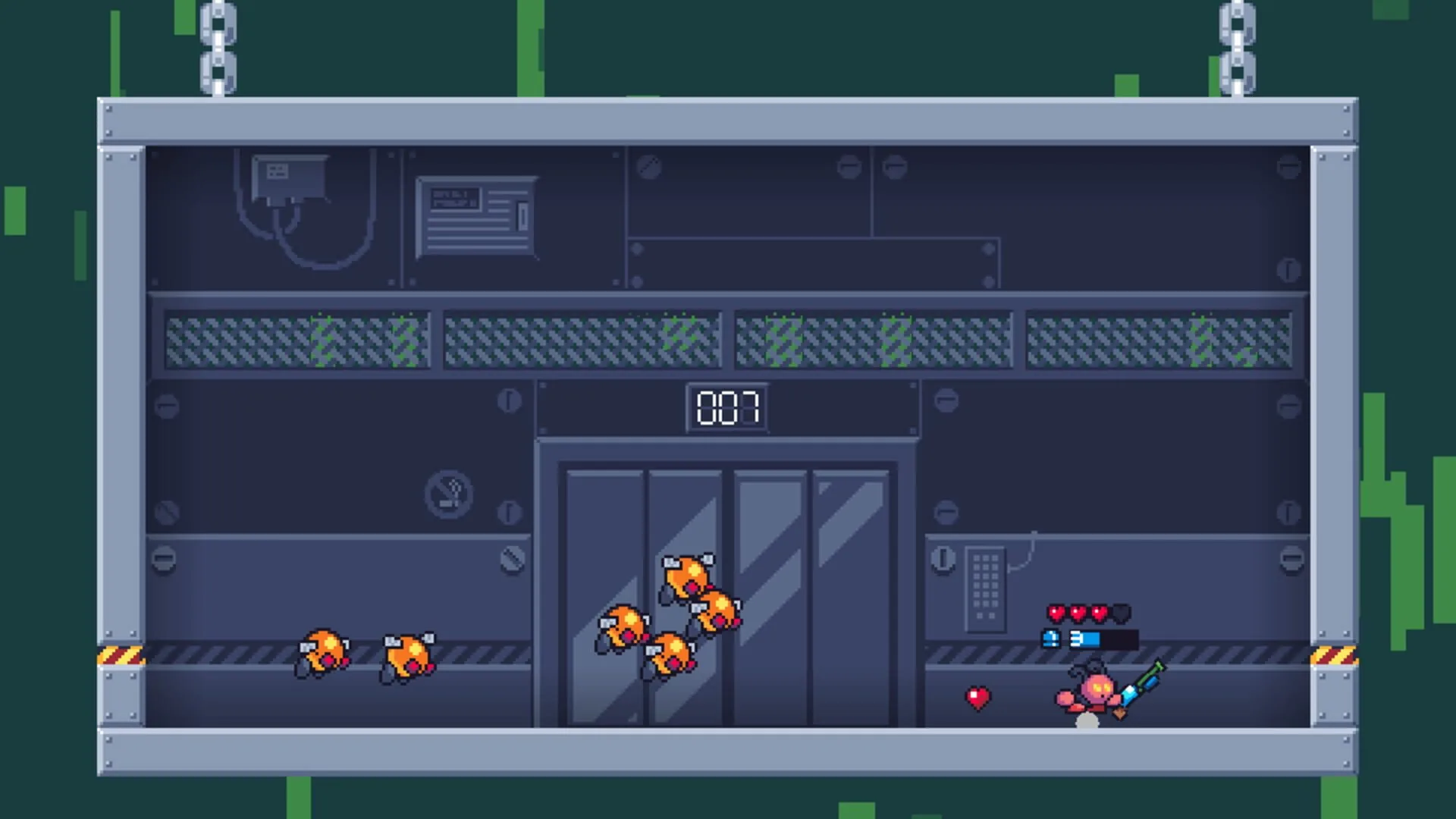
Let's start with the easy case. Bugscraper, developed by Yolwoocle and Ninesliced, is a roguelike shooter, solo or in co-op up to four players locally. You climb an infested tower floor by floor, mow down a hundred waves of enemies and tough bosses, gather new weapons and upgrades between two landings, and aim for the tyrannical boss's office at the very top. It's snappy, legible, generous, and it's translated into French among seven languages, a detail that's never trivial for a game of this scale.
The aesthetic is pixelated, cartoon, colorful. Retro, then. Except Bugscraper never asks you to remember anything. Its pixels aren't a relic, they're a style, in the same way as a drawing line or a palette. The game stands on its gameplay: the roguelike loop, the power ramp, the co-op couch thrill. Take nostalgia out of the equation and it loses nothing, because it wasn't leaning on it. That's what successful neo-retro is: a period costume on a perfectly modern body. You can have never touched an arcade cabinet and adore Bugscraper, exactly as you adore a Vampire Survivors or an Enter the Gungeon.
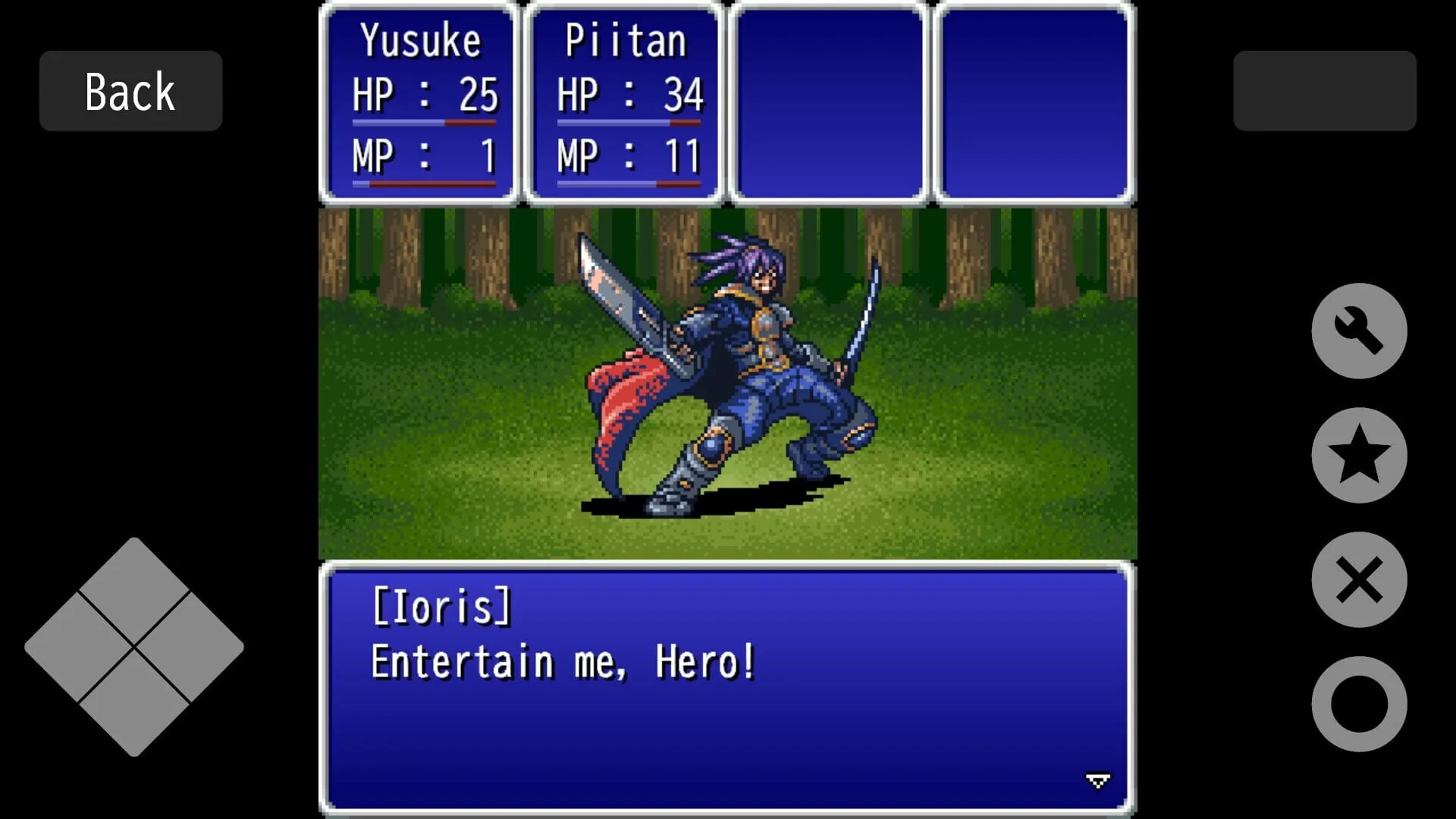
Bravest! plays in a radically different category, and that's where it gets complicated. It's the first installment of a retro RPG series born in the era of Japanese button phones, those keitai from before the smartphone, resurrected today on PC in the lineage of the great Japanese mobile heritage preservation efforts. It's not a modern game dressed up as an old one. It's an old game, truly, with its interface from another age, its tiny-screen constraints digested into its design, and all the perfume of an era the West didn't even experience.
And here, the contract changes. Bravest! doesn't just offer an experience, it offers an archaeological emotion. Its value rests largely on what it represents: a testimony, a time capsule, proof that a whole slice of video games existed on devices we threw away long ago. For the Japanese player who burned their data plan on this kind of RPG on the train, it's an overwhelming trip back. For us, it's a visit to a museum whose artists and context we don't know. The object is respectable, but the emotion it aims for passes us by, because it presumes a lived experience we don't have.
That's the heart of the matter, and it goes beyond these two games. A whole generation of players didn't live the golden age they're sold on a loop. We didn't cry over a NES Game Over, we didn't curse an impossible jump on a cartridge that cost a fortune. What we know of that era, we learned by watching retro-gaming channels dissect it with rage and tenderness, or comb through obscure games with a collector's erudition. Our retro isn't a personal memory, it's a narrative, staged, commented, edited. Second-degree nostalgia, passed down by proxy.
It's not a flaw, it's just a different relationship. You can adore that culture without having lived it, exactly as you love an old film released before you were born. But it changes everything in how a retro game must speak to us. A title that bets solely on the nostalgic reflex, on the "remember when," is addressing an audience we're not part of. It has to give us another way in: gameplay that stands on its own, a strangeness that intrigues, a quality we judge with today's eyes and not with a memory we don't have. Otherwise, we stay politely on the doorstep, admiring without feeling.
That's the criterion that separates our two guests today, and it holds far beyond them. Bugscraper wins because it asks nothing of us but to play, and it's good at that now, right away, with no emotional preamble. Its retro patina is a bonus for those it touches, never a prerequisite. Bravest! is precious, but its preciousness is largely documentary: it takes context, reverence, ideally a memory, for the object to unfold all its meaning. Without that baggage, it stays a curiosity you respect more than you savor.
The lesson isn't that preservation retro is worthless, far from it. These revivals are essential, they save a history that was headed for the dumpster. But they address first whoever can complete the emotion with their own memory, or with a genuine passion for the history of the medium. Neo-retro, meanwhile, has understood that you can no longer count on the nostalgia of an audience that didn't live it, and that you therefore have to be a great game before being an old game. Both models are legitimate. They simply don't target the same person.
So let's say it plainly. Bugscraper, we recommend without reservation to everyone, because it's self-sufficient and needs no memory to be excellent. Bravest!, we salute with respect but without false enthusiasm: it's a treasure for whoever has the context or the archivist's curiosity, and a nice museum piece for the rest, us included. We won't fake an emotion we don't have to please an era we only knew through a YouTube screen.
And deep down, it's maybe the finest tribute we can pay those retro-gaming creators: they taught us to love this history without lying to us about the fact that we didn't live it. We look at retro through their eyes, with gratitude, but with lucidity. An old game has to win us over for what it is today, not for a childhood we borrowed from others.
Bugscraper and Bravest! launch on 30 June 2026 on PC.
We want to hear your take: the InsertCoins Discord is waiting.


