
6
Test
Death at Fleming Manor: the investigation is good, it is the paperwork that fights you
You fill in death certificates in an English manor in 1959. The idea is excellent. The interface gets in the way.
Alexandrosse
8 min
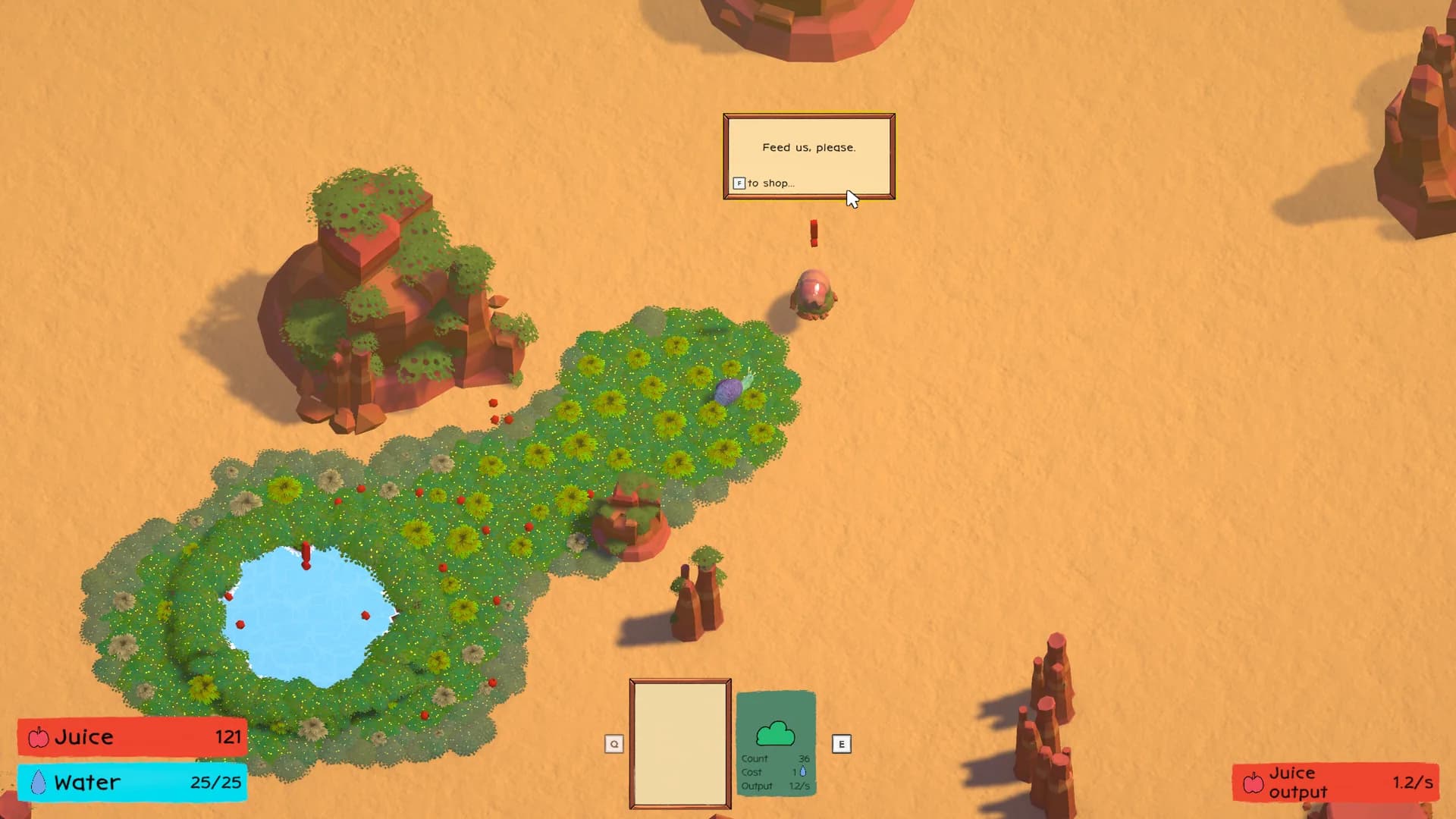
Four hours, six euros, one snail and a remarkably quick moral descent. Blood is a type of juice.
Alexandrosse
InsertCoins.press Score
7/10
Verdict
Recommended
Feed The Forest's store page ends on a sentence I cannot shake: blood is a type of juice.
It arrives after a perfectly peaceful description in which a snail grows a forest in a desert. And that is the whole game: twenty minutes of ecological poetry, then a slippery slope into the most cynical optimising you have done in a while.
You start with sand and a snail with powers. You plant. Plants produce. Production lets you plant elsewhere, and the desert retreats.
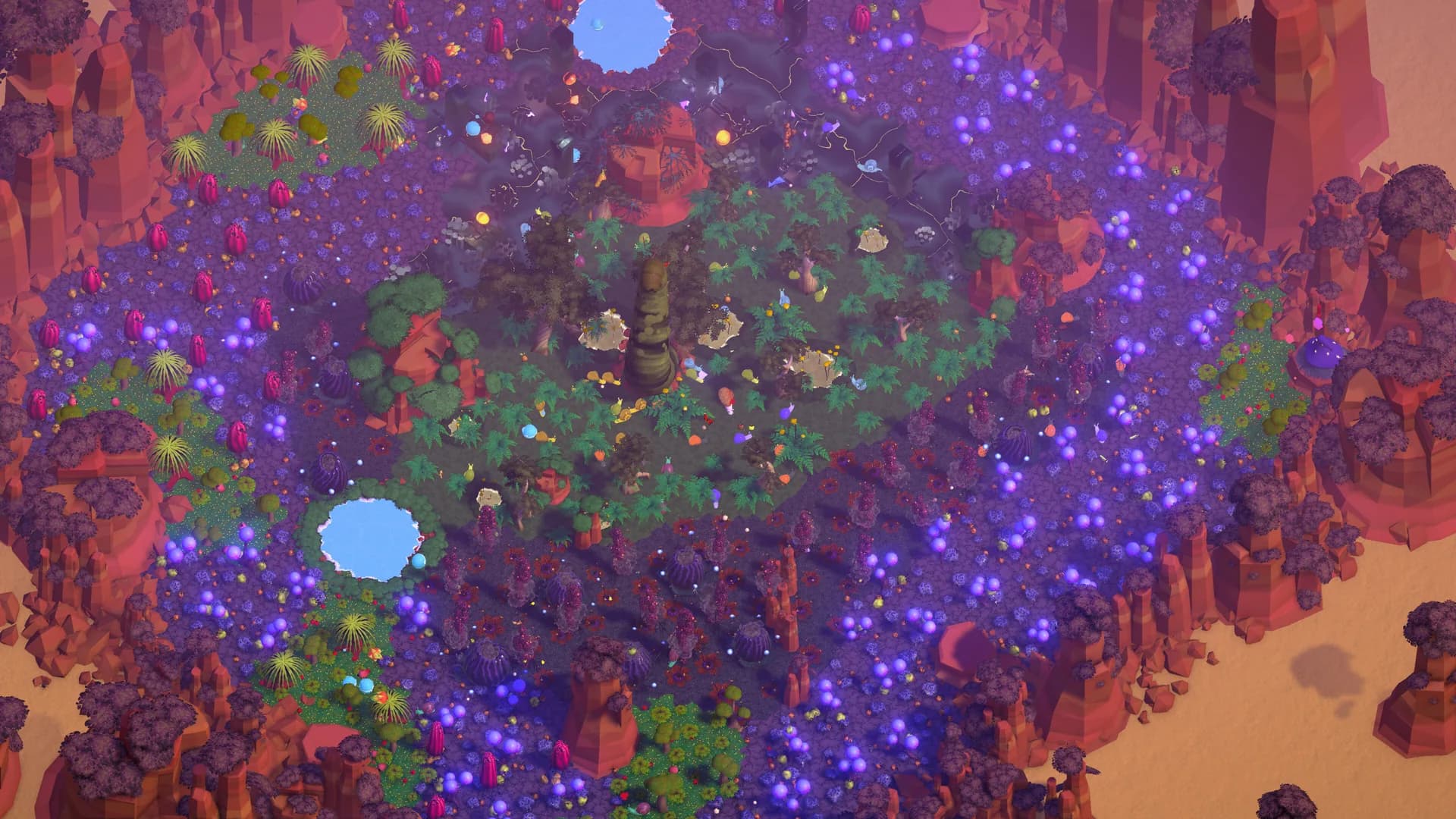
It is an active incremental, meaning you are not watching numbers rise over a coffee: you lay plants out on the map, and the arrangement matters. One species feeds its neighbour, another needs shade, and there are configurations markedly better than whatever you find on the first attempt.
The pleasure of painting a desert into a forest is real and slightly silly, in the good sense. One player puts it better than I can: it is atmospheric and relaxing, I love painting desert into forest.
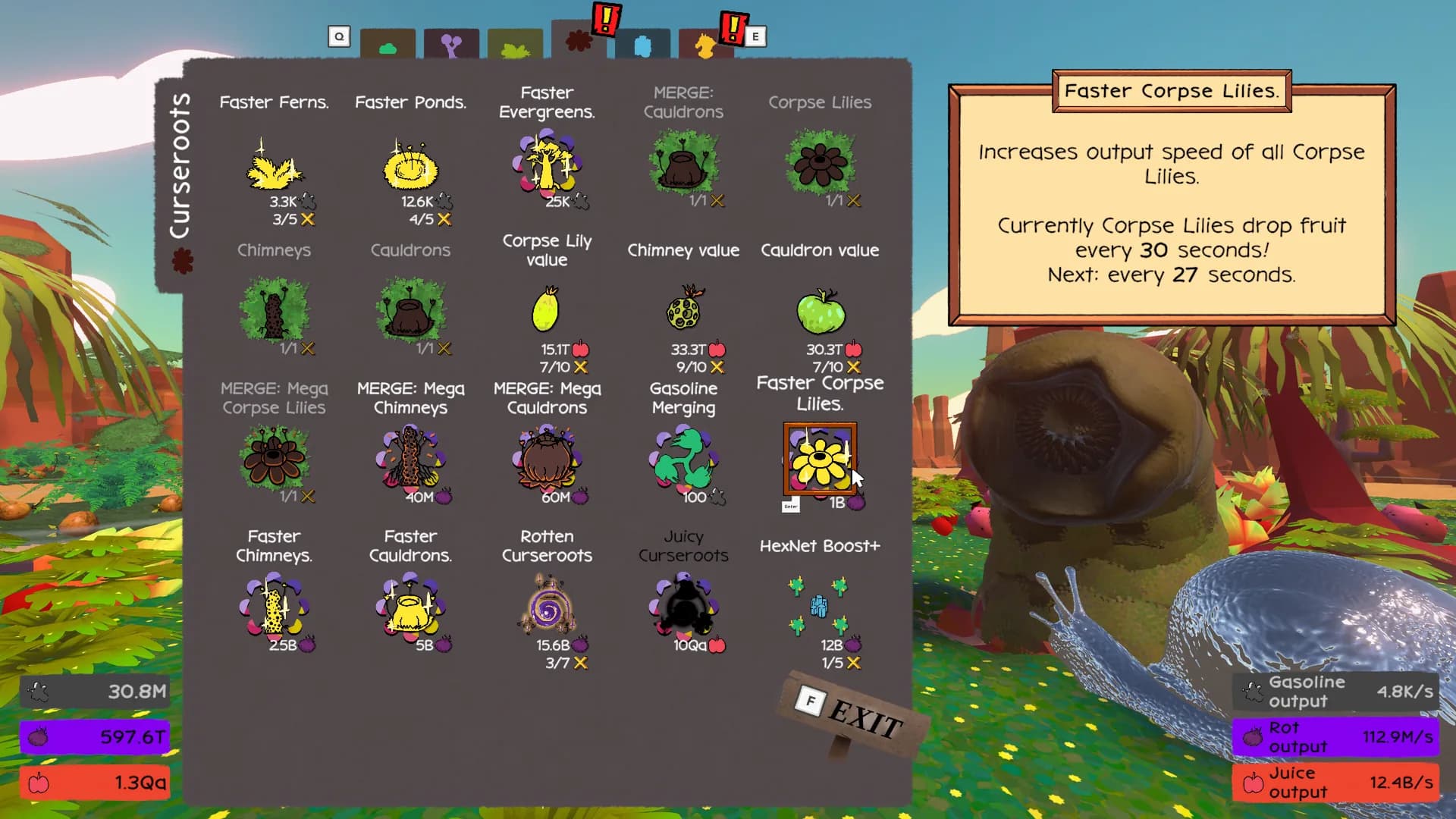
Then you automate. Then you hire minions. Then you unlock plants the game itself labels immoral, and you plant them anyway because they pay better.
That shift is the game's real idea. You have not changed mechanics, you have changed motivation without noticing, and the game points it out at the moment it is too late to claim you were greening the planet out of altruism.
It is light, it lasts a few hours, and it is considerably smarter than it looks.
Two things, and they are linked.
It is short. Three to four hours for most players, seven for the most thorough. At 7.99 euros, several positive reviews still find the ratio a little tight, and I understand them.
And it repeats. One player, thumb up, writes that he felt he was doing the same thing for hours, that the visuals are beautiful and the plot somewhat chaotic. That is the limit of the incremental format: it lives on acceleration, and when the curve flattens, only the gesture is left.
That said, 92 per cent positive, and the ending comes up often in the praise. Somebody writes that they wished it were longer, but that the ending alone was worth it. Another, having finished the story, discovers with unfeigned joy that he unlocked no achievements and will have to start over.
Yes, if you want a game to finish across an evening and a half, if optimising rows of plants does not frighten you, and if you have room in your life for a snail.
No, if you expect a hundred-hour incremental to leave running in the background. That is not what this is, and it does not pretend otherwise.
5.99 euros during the launch discount. It is a small game that knows exactly what it is, stops before it tires you, and has the elegance to mock you one last time on the way out.
The best review on the page, incidentally, is three words repeated: there should be more games with snails. There should be more snails. Snails.
I am not going to pretend this review makes a stronger case.
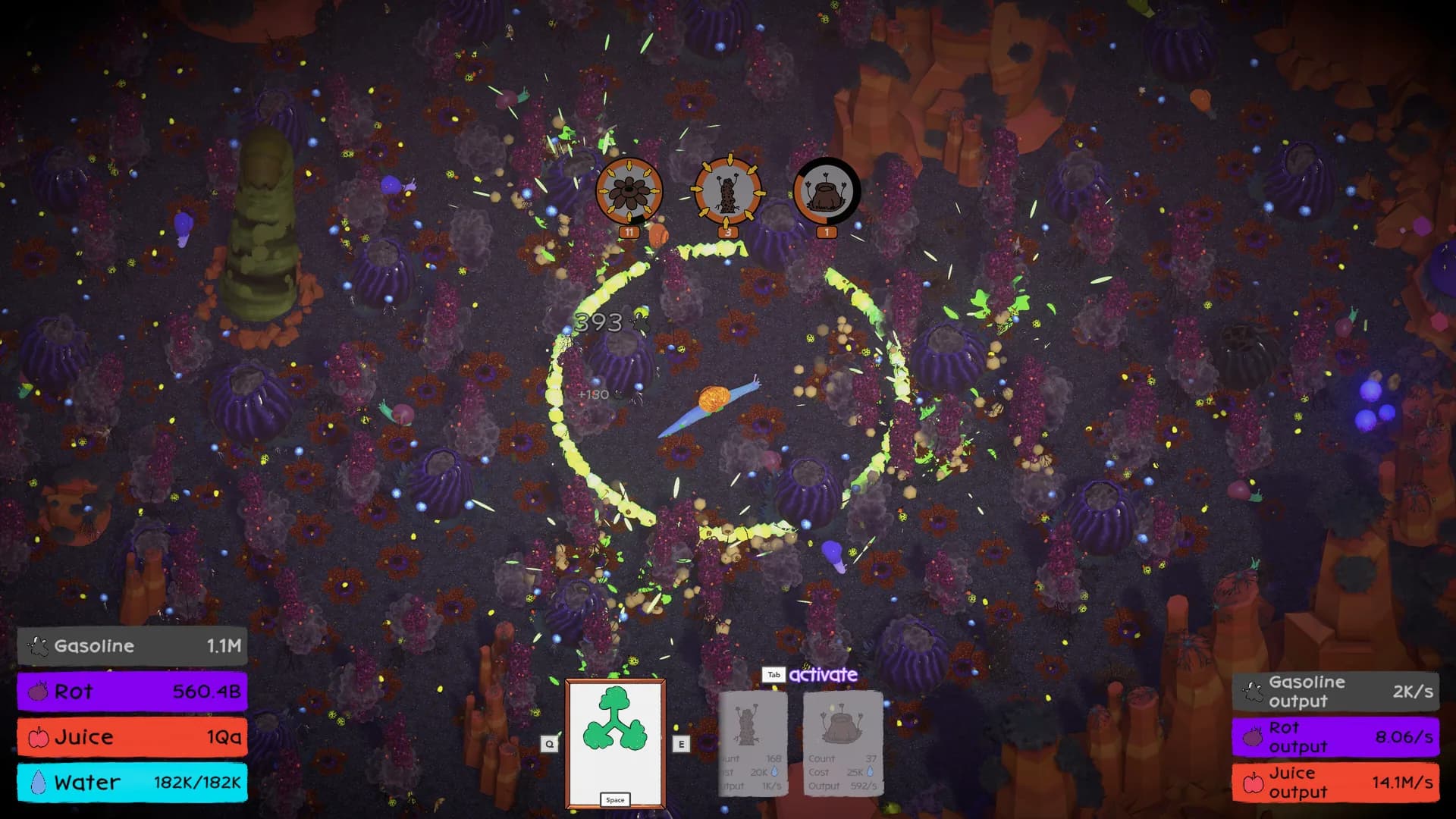
If you find a plant layout that breaks the game's economy, we want the diagram on the InsertCoins Discord.
Community
Your rating
Advertisement
Loading comments...
You might also like
You fill in death certificates in an English manor in 1959. The idea is excellent. The interface gets in the way.
The source code was sitting on a laptop a former programmer had handed down to his kid. Eight years later, the game is on Steam.

Twenty-four years after the GameCube, Pipeworks adds one genuinely new thing. It happens to be the right one.