Every player who owned a first-generation Nintendo Switch knows that moment of rage: Link walking off on his own, a cursor drifting, a character spinning in circles without you touching a thing. Joy-Con drift, that scourge of the console's early controllers, has just cost Nintendo dearly. And beyond the Japanese giant, it is a whole industry that should feel targeted.
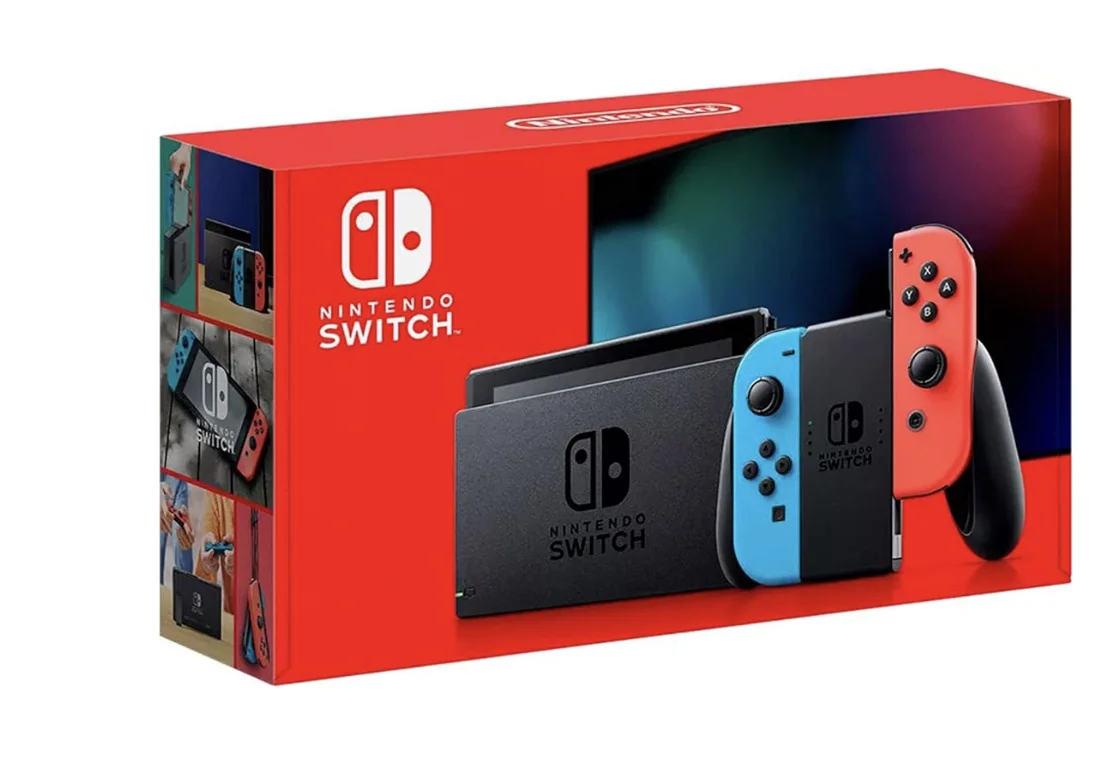
Nintendo of Europe has accepted the payment of a 35-million-euro settlement fine following an investigation by France's Directorate-General for Competition, Consumer Affairs and Fraud Control, the DGCCRF, into the drift problems affecting some first-generation Nintendo Switch Joy-Con controllers.
The investigation, opened after a complaint filed in 2020 by consumer group UFC-Que Choisir, concluded that Nintendo had been aware of the malfunctions as early as 2018, but had only begun communicating with consumers from 2020. As a reminder, the phenomenon manifests as phantom movements, unintended inputs or a loss of joystick responsiveness, capable of making the gaming experience difficult, even impossible.
According to the DGCCRF, this communication, deemed late and partial, could have dissuaded some consumers from using Nintendo's after-sales service, sometimes leading them to buy new controllers. The French authorities found that these practices were likely to alter consumers' economic behavior in their decision to repair or replace their equipment. Nintendo therefore accepted the settlement proposed by the Nanterre public prosecutor, as well as the publication of an information notice on its website.
The context
This decision did not fall from the sky, it is part of a broader European movement. Back in 2023, following coordinated action between the European Commission and national consumer protection authorities, Nintendo had committed to offering free repair of the affected Joy-Con, even after the legal warranty had expired.
At the time, the European Commission already stressed the environmental stakes of the measure. The systematic replacement of faulty controllers generated perfectly avoidable electronic waste, and the European Commissioner for Justice, Didier Reynders, had welcomed a decision that prevented the disposal of unrepaired controllers and the production of needless waste. Concretely, owners of a Nintendo Switch or Switch Lite facing this problem can still request a free repair from Nintendo's dedicated service, including once the initial warranty period has passed. If you are affected, do not rebuy, get it repaired.
This case is one of the most significant sanctions handed down in France in the video game sector for misleading commercial practices. Above all, it illustrates the strengthening of European requirements on three fronts close to our hearts: consumer information, product durability and the right to repair.
Let us say it plainly: this fine is good news, and not only for Switch owners. What is sanctioned here is not so much the technical defect, which can happen to any manufacturer, as the silence. Having identified a problem in 2018 and having let players rebuy controllers for months without informing them clearly, that is what costs 35 million euros. The message sent is crystal clear: sweeping dust under the rug now has a price.
But let us be honest, drift is not a Nintendo exclusive, and that is the whole problem. The phenomenon also gnaws at the PlayStation 5 DualSense as much as Xbox controllers, to the point of becoming a generational plague of gaming. We all have a drifting controller at the bottom of a drawer, and personally, our PS5 stick is aging far too fast for an accessory sold at a premium price. The truth is that the entire industry has tolerated for too long joystick components whose premature wear looks suspiciously like obsolescence built into the design.
So we have a hope, and this decision feeds it: that the lesson reaches beyond Kyoto. That Sony, Microsoft and the others understand that the era of the disposable consumable is coming to an end, that the right to repair is not a Brussels bureaucrat's whim but a legitimate demand, and that a product sold at a high price must last. Technical solutions exist, by the way, such as Hall-effect sticks that wear out infinitely less, and their near-absence from official controllers says a lot about the sector's priorities.
There is also a cultural shift to applaud. For years, players accepted as inevitable the idea that a controller eventually drifts, that you will buy another, that it is the price to pay. Manufacturers profited from that resignation. Yet the lines are moving: repairability scores are taking hold, consumer groups are speaking up, and authorities like the DGCCRF prove that a complaint can lead to a real sanction. The balance of power is slowly shifting, and each decision of this kind reminds makers that they no longer set the rules alone. For us, players, the best answer remains collective and individual at once: claiming free repair when entitled to it, favoring durable hardware, and refusing to treat an accessory costing several dozen euros as a mere consumable.
This sanction will not repair our old controllers, but it sets a milestone. For once, it is the player being protected, their wallet and the planet, rather than a manufacturer's comfort. We would love this to be the first domino in a long series. It is now up to the other giants not to wait for their own fine before cleaning house.
Does the subject speak to you? We go into it at length on the InsertCoins Discord.