Guide
Onimusha: Way of the Sword beginner's guide: parry, deflect, Issen and managing souls
Understand the defensive ladder, land your first Issen, know when to absorb a soul, and stop dying stupidly in duels.
Alexandrosse
11 min
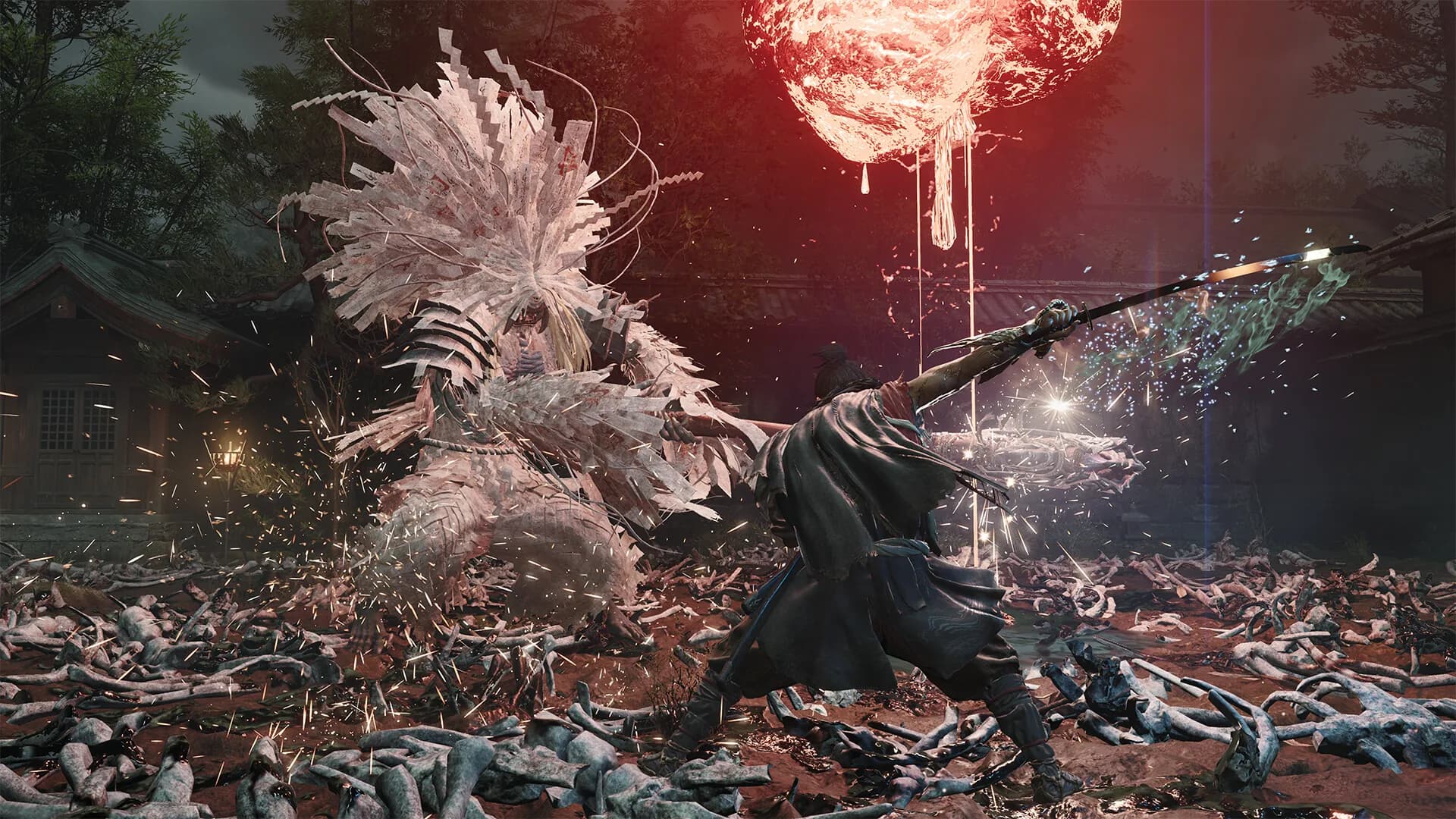
Twenty-four years on, Capcom relights the Issen and gives Musashi the face of Toshiro Mifune. The combat is superb, the rest is chattier.
Alexandrosse
InsertCoins.press Score
8/10
Verdict
Recommended
My memory of Onimusha is Genma Onimusha on the first Xbox, a corridor, a Genma that cut me down in three hits, and a teenager restarting the same stretch until he cried blood.
My evenings look rather different now: a city to make profitable, a cricket side to promote, a country to steer through to 1945. So I started this one afraid of discovering that my reflexes had died somewhere between two spreadsheets.
Good news: they had not. Bad news for my ego: the game let me believe otherwise for two hours before putting me back in my place.
That is a deliberate design decision, and it deserves explaining.
The first duels against basic Genma are more exhilarating than difficult. You cut, it sprays, silhouettes fall in two pieces, and you feel immediately good at this. It is not the Onimusha of my memories, the one that punished before it explained.
Then the real guards arrive, and the unblockable attacks with them, and the flailing has to stop.
That sequencing is probably what will let this game reach people like me, who are no longer seventeen and no longer have time to die fifty times in a corridor. The game gives you the pleasure first, then asks for the technique.
The whole system sits on a ladder of risk, and that is what makes it gripping.
Parry is the most forgiving. It absorbs a hit and nibbles at the enemy's stamina.
Deflect demands a tighter window, and it is the only way to answer attacks you cannot simply block. In exchange, it drains the enemy's stamina far more effectively.
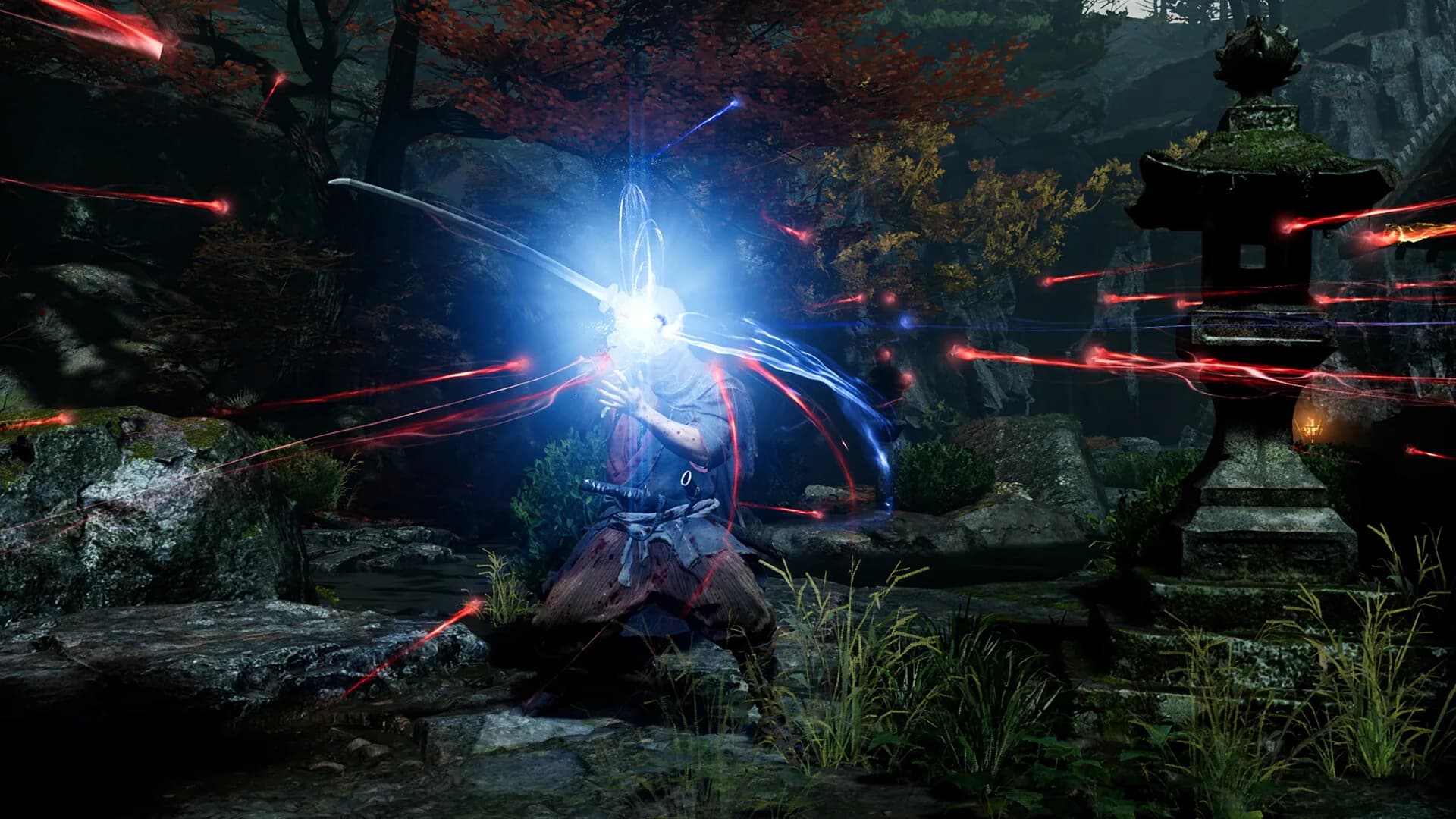
Issen is the series' signature since 2001, and it returns intact: you strike just before the enemy's blow lands, and the counter kills most ordinary enemies outright. The window is narrower than anything else, reflex dodge included. Later you unlock the ability to chain several Issen in a row, and that is when the game becomes a dance.
There is also a special execution when an opponent's posture collapses, on an enemy no longer able to stand.
What makes the ladder elegant is that no rung is useless. A beginner survives on parry. A decent player clears with deflect. A player who has understood does nothing but Issen, and the game becomes twice as fast.
The Oni Gauntlet is the series' central artefact, and Capcom has found a genuine mechanical tension in it.
Fallen Genma release souls that the gauntlet absorbs. They restore you, they feed your powers, they fund your upgrades.
Except that absorbing slows Musashi down. You are vulnerable while it happens.
So the question becomes: do I really need that health now, with two enemies still standing five metres away? It is a tiny dilemma, it recurs every thirty seconds, and it turns post-fight cleanup into a decision rather than a formality.
A voice also speaks from the gauntlet. It has an identity, it has opinions, and I will say no more.
This deserves a stop, because it is the game's finest idea and it is not merely a marketing line.
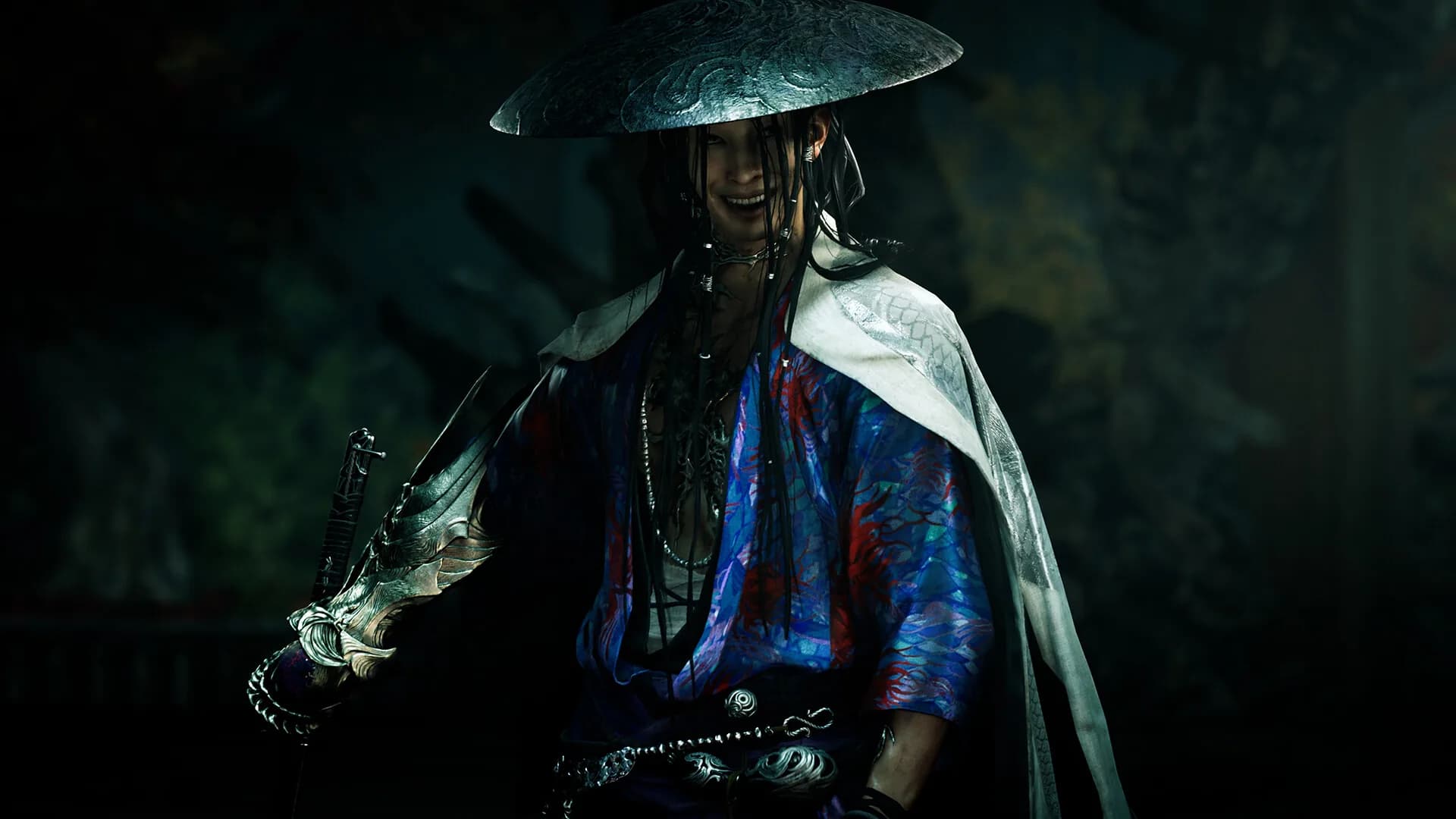
The hero is Miyamoto Musashi, a young samurai arriving in Kyoto to prove nobody matches him with a sword. And his face is that of Toshiro Mifune, the actor from Seven Samurai and Yojimbo, who died in 1997, and whose likeness Capcom obtained.
The choice is more apt than a simple homage. Mifune genuinely played Musashi on screen, in Hiroshi Inagaki's Samurai trilogy. Having that face play the role it held in cinema, inside a video game, seventy years later, is a fairly dizzying loop.
And it shows in the animation more than in the model. Musashi is expressive, swaggering, slightly hammy, with gestures enthusiasts will recognise, right down to the way he scratches the back of his head.
Capcom has always worked this way, incidentally: the first Onimusha already borrowed the features of Takeshi Kaneshiro. The series has a tradition of actors, and it continues it with the greatest of them all.
Edo-period Kyoto, twisted by something called Malice, which has opened the door to the Genma, monstrosities from the depths of hell. The capital is terrified, the temples are disfigured, Kiyomizu-dera included.
The real subject is not the threat, it is in Capcom's own phrasing: Musashi is searching for his reason to fight. He arrives for the glory of the sword, runs into something larger than his ego, and the game spends its time asking him why he kills.
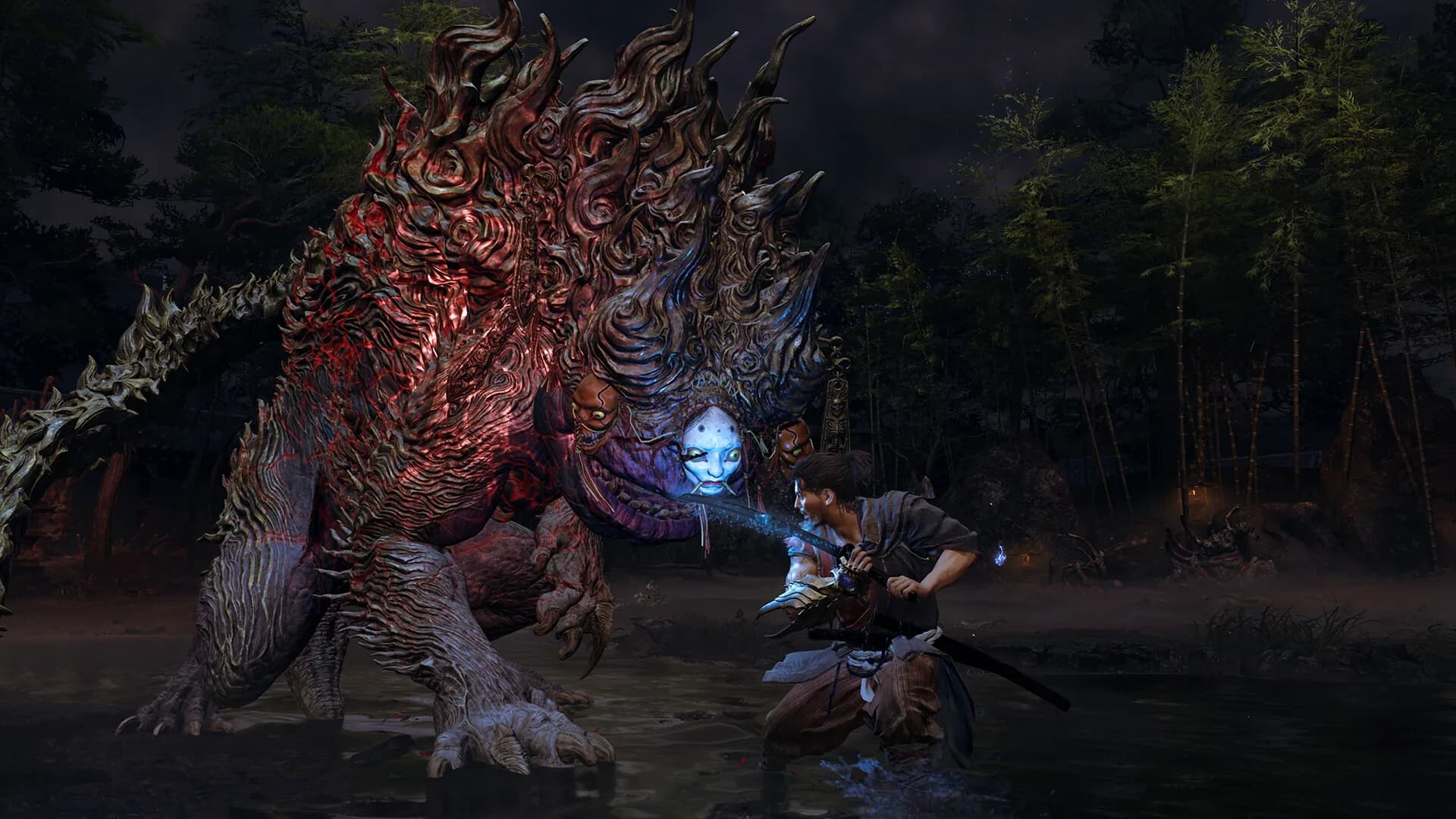
Around him is a cast that works: Genma with names, faces and a sibling bond, and above all a human rival, Sasaki Ganryu, whose duel serves as a set piece. The game loves these face-offs, and that is where it is at its best, because the combat system finally gets the room it deserves.
The length has to be discussed, because it is the point that divides the international press.
The first Onimusha finished in three and a half hours. The second in eight and a half. This one takes around thirty hours to reach the end with some side content, and more if you want everything.
That is not a flaw in itself, but it brings things the series never had: an open stretch of Kyoto alongside the closed levels, collectibles, side quests, crafting materials to harvest, a central point to return to. Several of my colleagues find that modern weight badly digested, with a dull hub, tedious gathering, and bosses that come back for one encore too many.
I am more nuanced than that, because the combat is good enough to carry the repetition. But I understand the complaint perfectly, and I find it fair on one precise point: the chains of boss phases end up diluting fights that were perfect twenty minutes earlier.
This is a game at 69.99 euros, so we should be precise about what you are buying today.
On Steam the reception is decent without being triumphant: 185 positive reviews out of 253. And more importantly, half of the negative ones are not about the game, they are about crashes.
A significant number of players report hard closures at loading or just after the first boss cutscene, on machines that ran the demo without a hitch. Others complain about the absence of key rebinding and controller recognition problems. Conversely, those without crashes describe very comfortable performance, including at 4K with upscaling.
In other words, it is a two-speed PC launch. If you are not in a hurry, wait for the first patch, particularly as the demo lets you test your machine for free before buying.
On specifications, Capcom asks for Windows 11, 16 GB of memory, a GTX 1660 and 50 GB of disk, and quotes 30 frames per second at 1080p on the low preset with upscaling. This is not a light game.
The game does not hold your hand much on its defensive subtleties, and that is where most deaths come from.
We have written our own beginner's guide, built around the parry, deflect and Issen ladder and around soul management. A French-language starter guide also exists at eGamersWorld if you want to cross-reference.
There is something stupid and very pleasant about meeting again, at thirty-six, a game that humiliated you at fifteen.
Except that this time I have the tools. I see the blow coming, I place the deflect, I land the Issen, and the Genma falls in two pieces without costing me anything. The game has not been made easy, the vocabulary has been made legible: three defences, a clear ladder, a reward proportional to the risk.
The rest, the open Kyoto, the materials, the boss encores, is the modern tax. You pay it, you grumble a little, and you go back to the sword. Because the sword is magnificent.
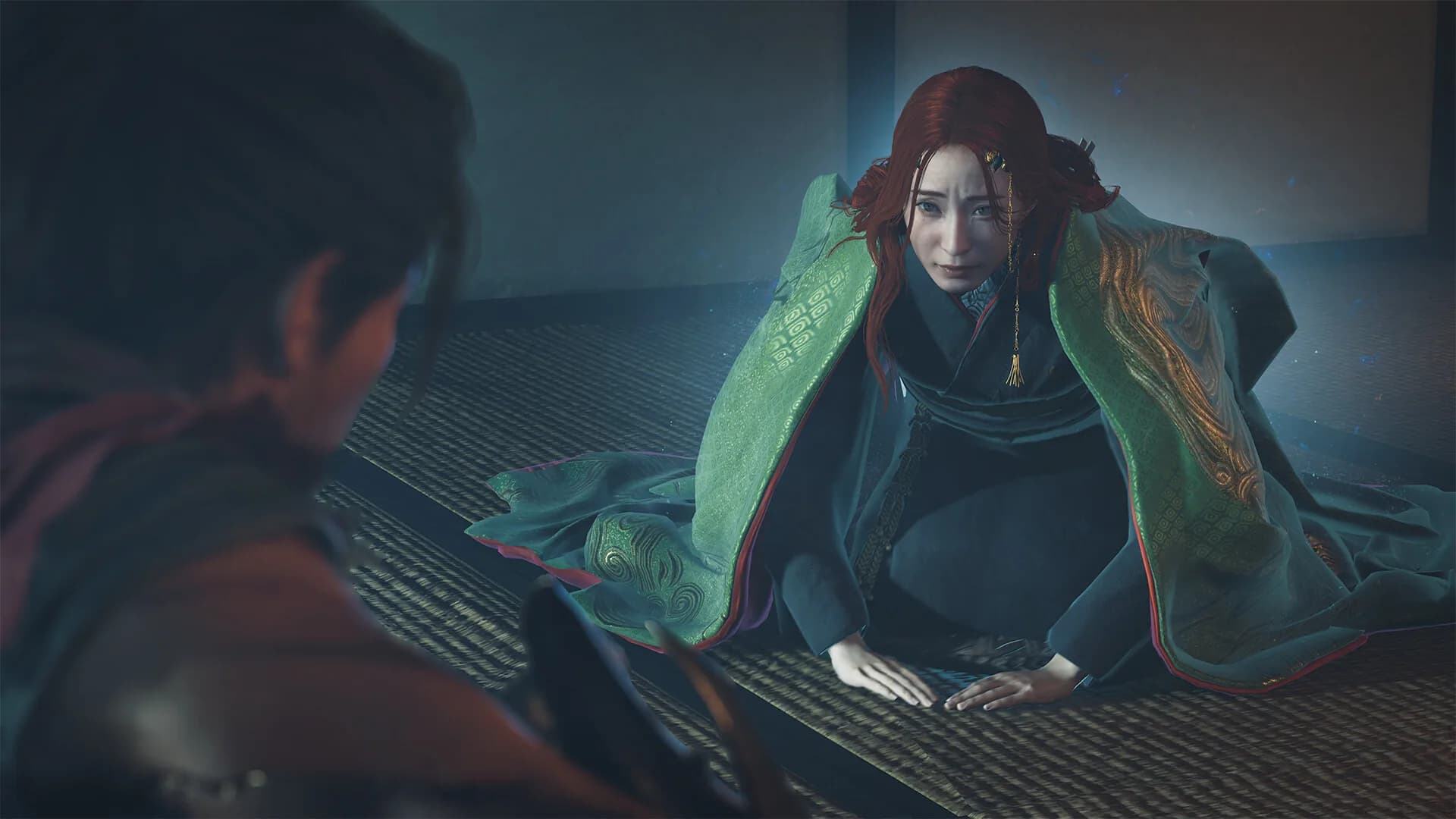
Did you land your first Issen straight away or after forty attempts? Confessions accepted on the InsertCoins Discord.
Affiliate link: a purchase earns us a commission, at no extra cost to you.
More on Onimusha: Way of the Sword
All about Onimusha: Way of the SwordCommunity
Your rating
Advertisement
Loading comments...
You might also like
Understand the defensive ladder, land your first Issen, know when to absorb a soul, and stop dying stupidly in duels.
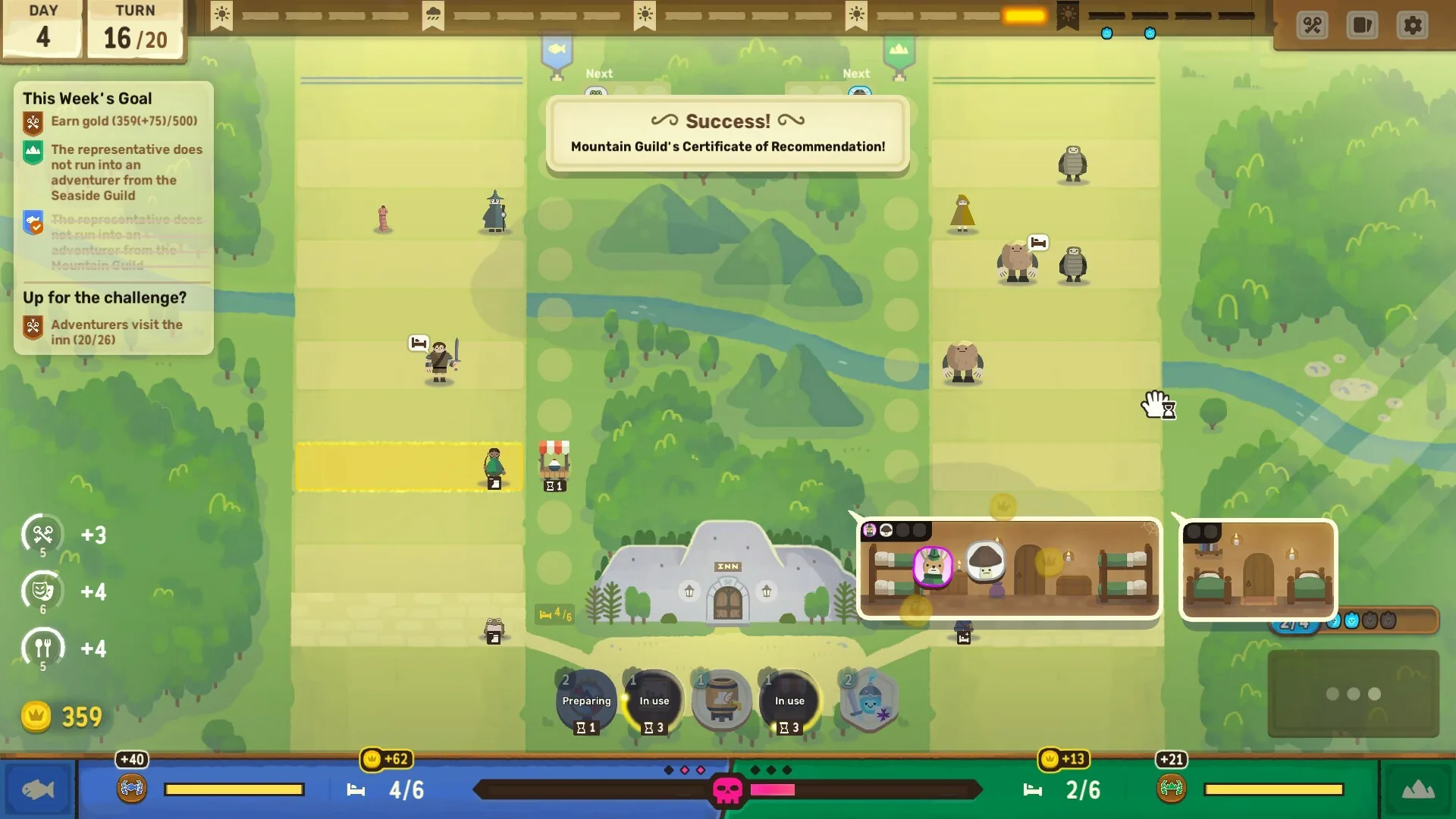
You struck a deal with a dragon. All that is left is serving both sides without either finding out. The 1.0 lands on 23 October.
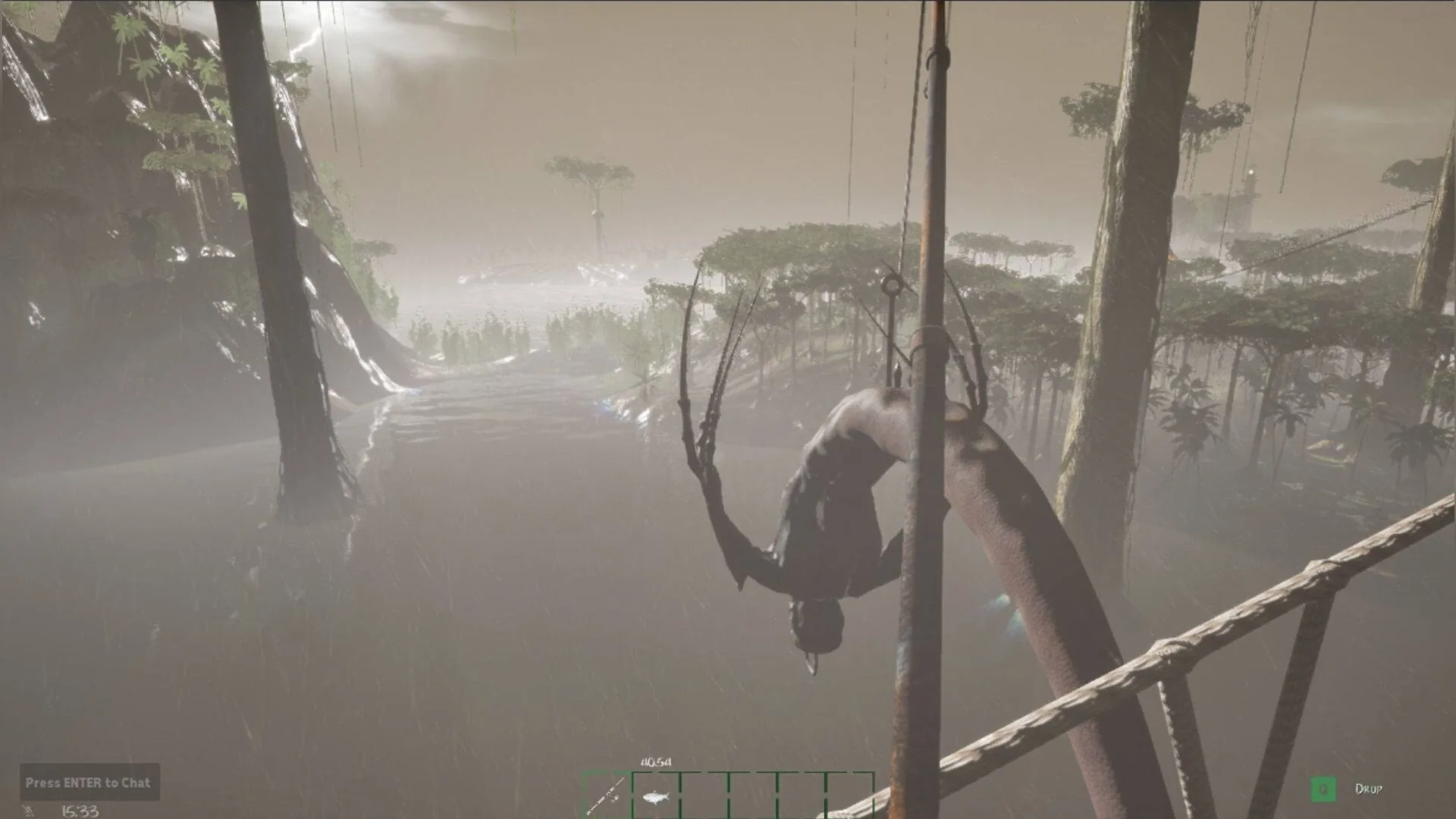
A co-op horror fishing game at nine euros. You must sacrifice fish every day, and the beast is not the worst thing out there.
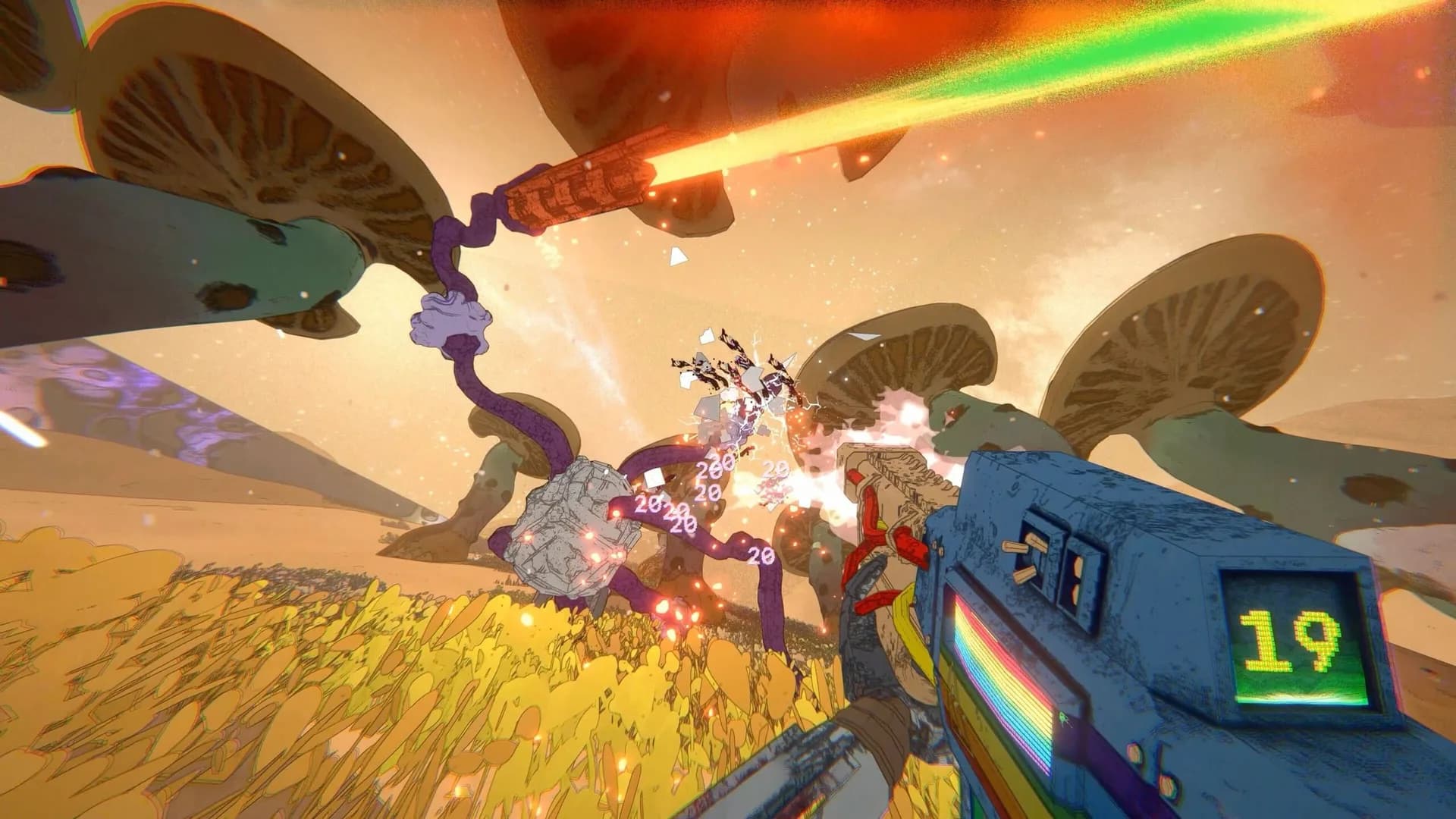
Scrapheap robots sent to exterminate a planetary fungus. The 1.0 lands tomorrow, and the upgrade grid is the genre's best idea.