We knew Shiro Games for its polished strategy games and RPGs, from Northgard to Dune: Spice Wars by way of Wartales, solo games you boot up in the evening, relaxed, offline. With SpaceCraft, the Bordeaux studio does a spectacular splits: an online space exploration and building MMO, with a player economy and microtransactions. It is brave, it is beautiful, and as we sit down to write this review, it is also terribly uncertain.
The context
SpaceCraft is developed and published by Shiro Games, and it lands today in early access. It is a massively multiplayer online exploration and building game, where you roam a galaxy of systems and planets, mine and craft resources, design and build ships, automate planetary bases and a whole interplanetary logistics, all in an economy shared between players. Let us be clear upfront, in fairness: this is an early access version, and more than that, it is an early access MMO. Two reasons to judge a starting point rather than a finished work, and to keep in mind that this kind of game is built over years.
What you really need to grasp is the scale of the turn for Shiro. The studio abandons here everything that made its comfort, the solo, the finished campaign, the offline, to dive into the deep end of the online live-service game. After a series of playtests and betas that gradually set up the automation and economic systems, here it is, loosed into the wild. And the least we can say is that the promise is grand.
The shift in philosophy is almost total compared to their previous games. A Northgard or a Wartales is a finished experience, mastered from end to end, savored at your pace and closed once completed. SpaceCraft, on the other hand, is a persistent world that never closes, whose value depends as much on the studio's code as on the crowd of players who populate it and the lifespan Shiro manages to breathe into it. You go from craftsmanship to infrastructure, from an object you own to a service you subscribe to through your presence. It is a radically different craft, with its own pitfalls, balancing a player economy, fighting boredom, moderating a community, and the whole question is whether a studio so gifted in solo will manage to master it.
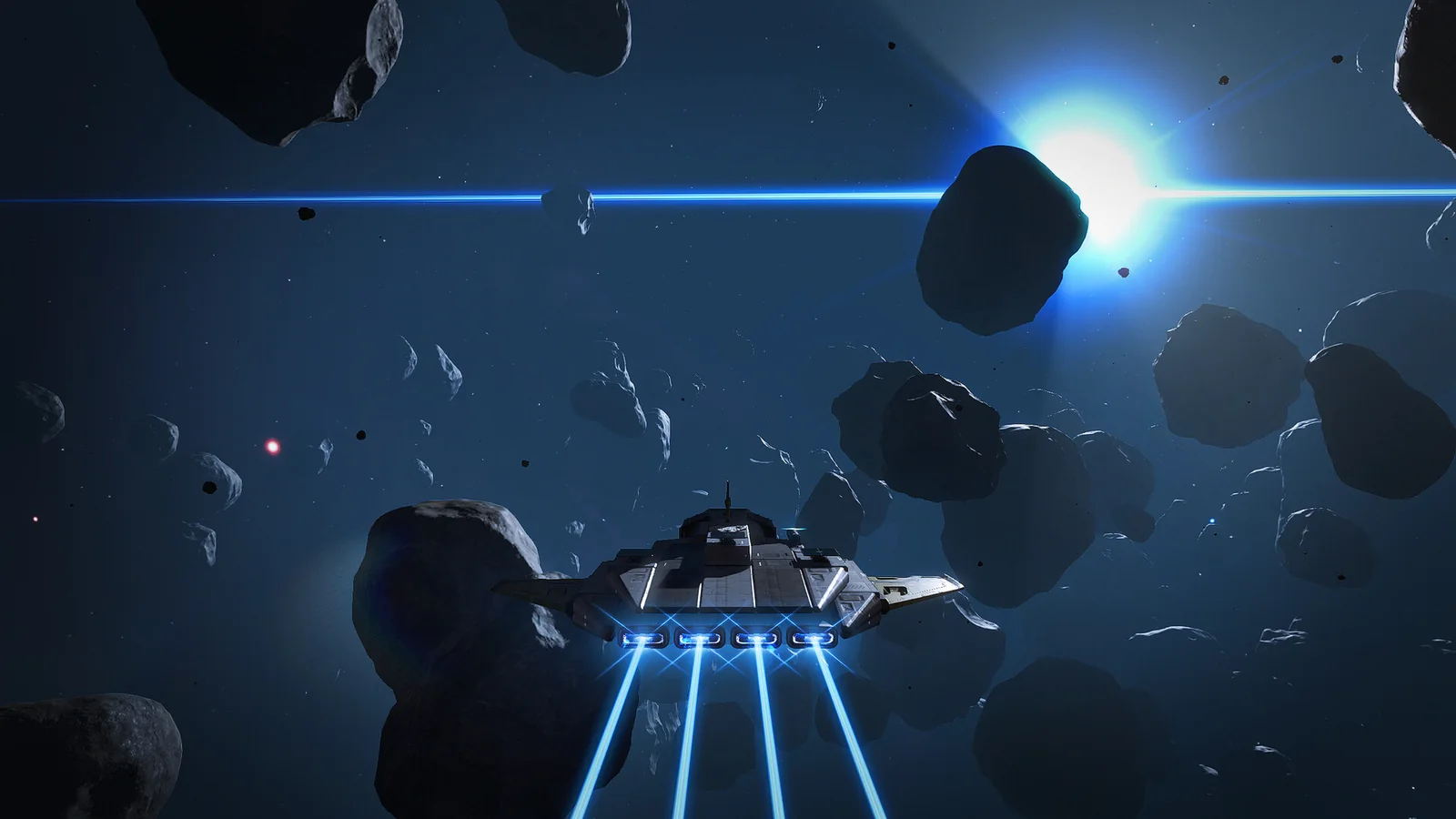
The heart of the experience is exploration, and it is also its finest success. You pilot your ship in real time, you cross asteroid fields, you pass abandoned stations and wrecks to scour, and you jump from one system to another thanks to faster-than-light technology. The transition between the void of space and the surface of planets is seamless, and there is real magic in diving from orbit toward a snowy world to set down your base. On this ground, SpaceCraft holds its own against the genre's references.
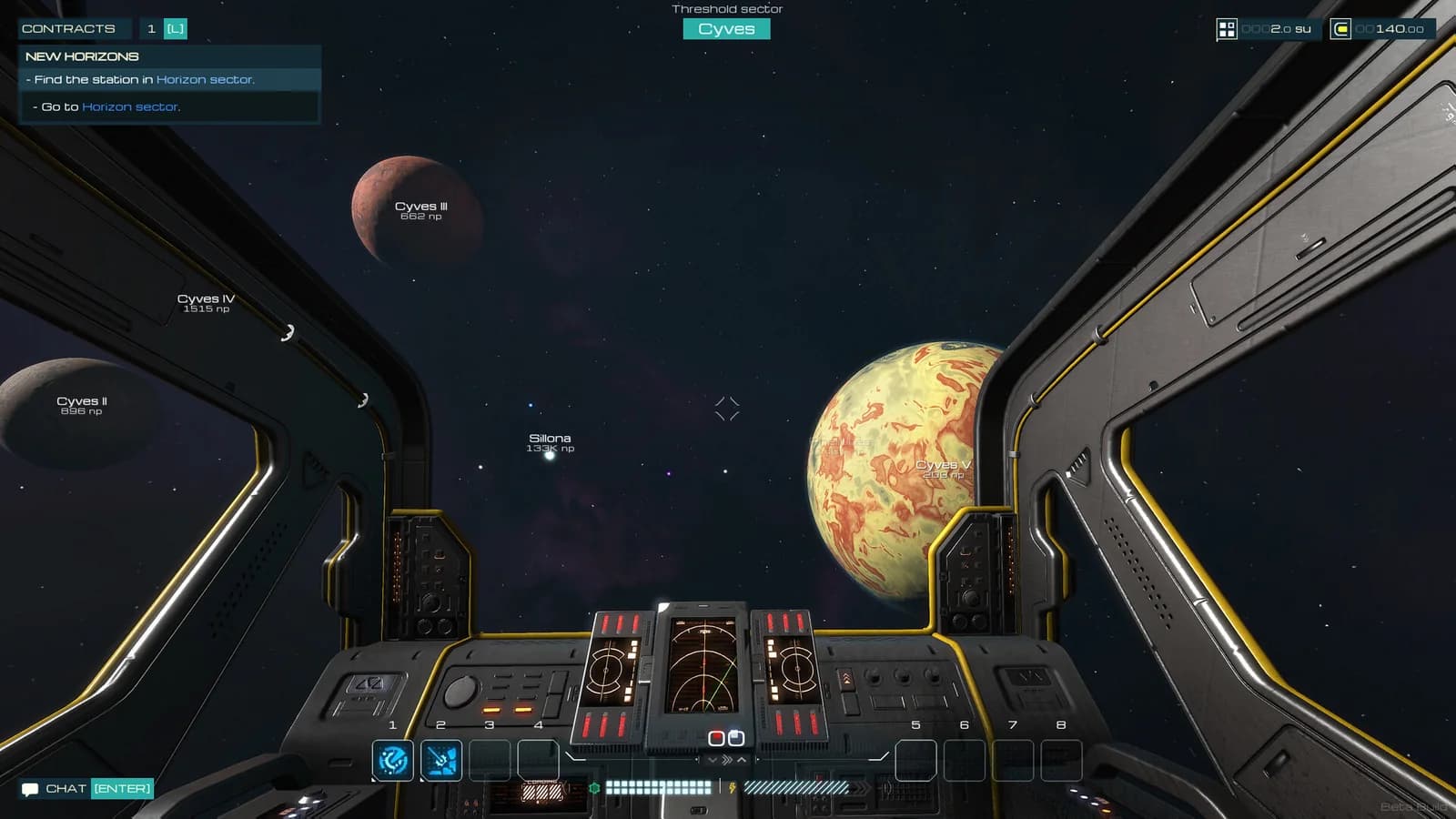
Exploration does not boil down to contemplative driving, by the way. You scan systems and planets to reveal their resources, you follow contracts that send you to hunt down a station lost in a neighboring sector, you chart your course between worlds with exotic names. This layer of discovery, punctuated with concrete objectives, gives a heading to the wandering and prevents the vast cosmos from becoming a pretty void. It is also how the game hooks the player in the first hours, and you have to admit the feeling of being a small pioneer lost in the immensity works rather well.
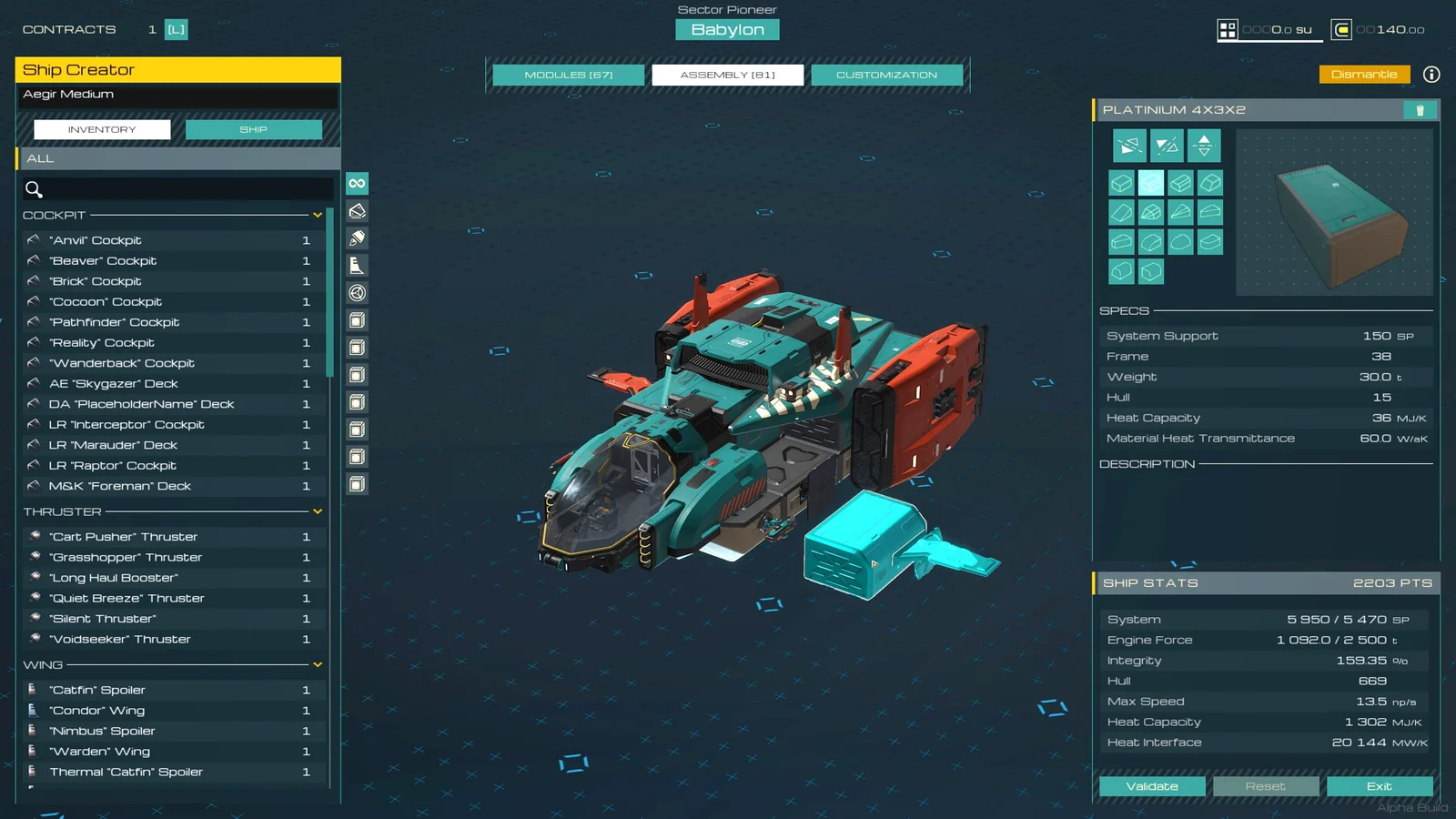
Ship building is the other big chunk, and it is frankly seductive. You assemble your craft piece by piece from crafted modules, cockpits, thrusters, wings, each component affecting weight, speed, heat and overall performance. You can aim for the small agile fighter or the big transport freighter, or simply buy ready-made blueprints from other players. It is rich, readable, and it delivers that engineer's pleasure that is the salt of this kind of game.
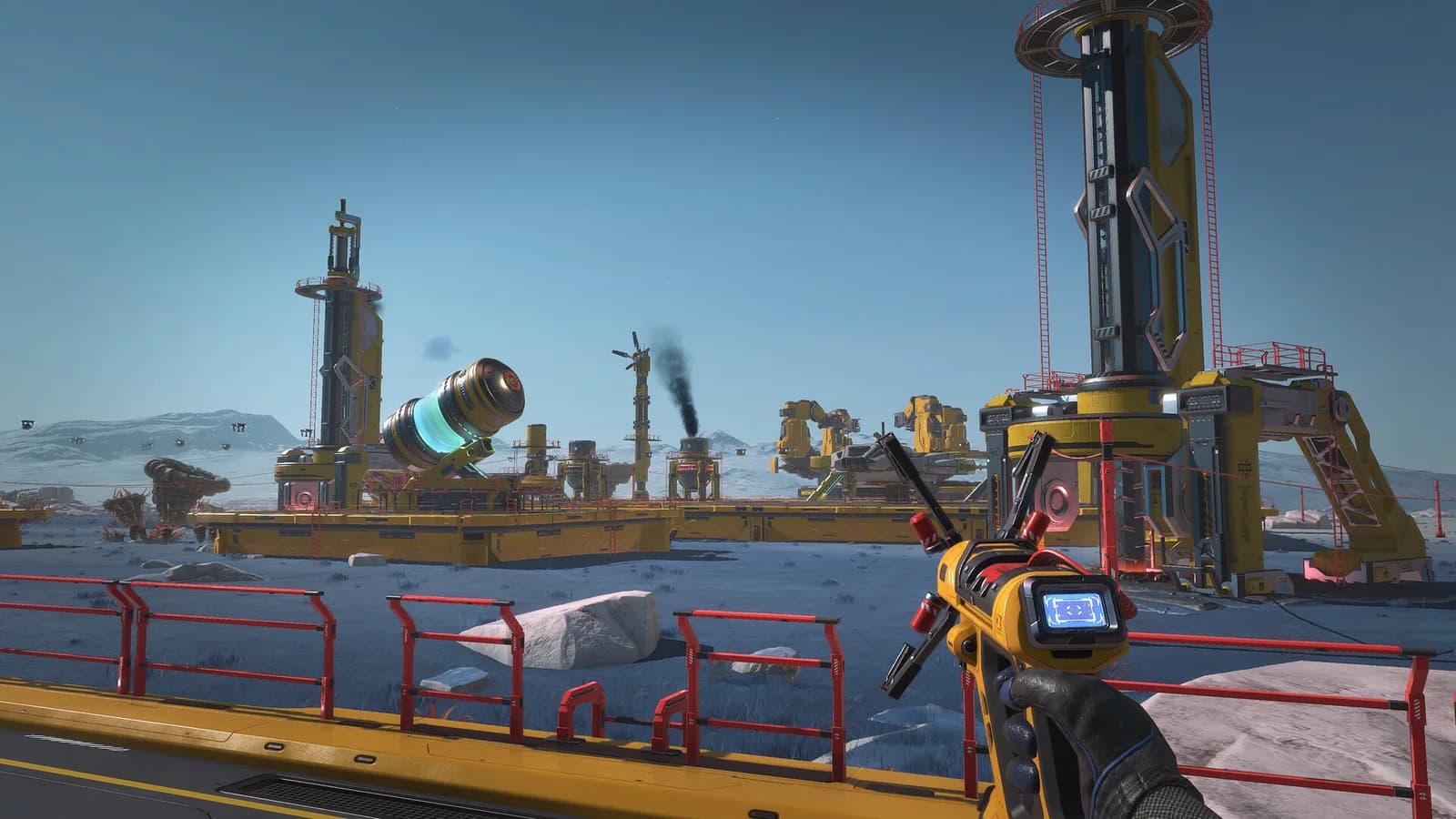
Then comes the whole industrial side, and this is where the ambition reveals itself. You claim a deposit, first come first served, you set your base nearby, you install extractors on resource nodes, then you build factories where drones automatically move materials between manufacturing and storage buildings. It is automation with a space twist, satisfying when the chain runs, even if base building remains for now fairly limited in size and complexity. You are not digging an open-air Factorio, more an optimized little outpost.
But SpaceCraft's real bet is its economy and its social dimension. The game wants to be a galaxy that evolves through player actions, where every market transaction affects prices, where you buy and sell blueprints, where you accept contracts and missions. At the center of it all, Corporations: you create one or join one, you split roles, you divide tasks, and you develop together an interplanetary logistics that can aim for the commercial empire. Solo remains possible, but the game makes no secret of it, its true power lies in cooperation. It is an intoxicating vision on paper, in the lineage of the great player-economy MMOs.
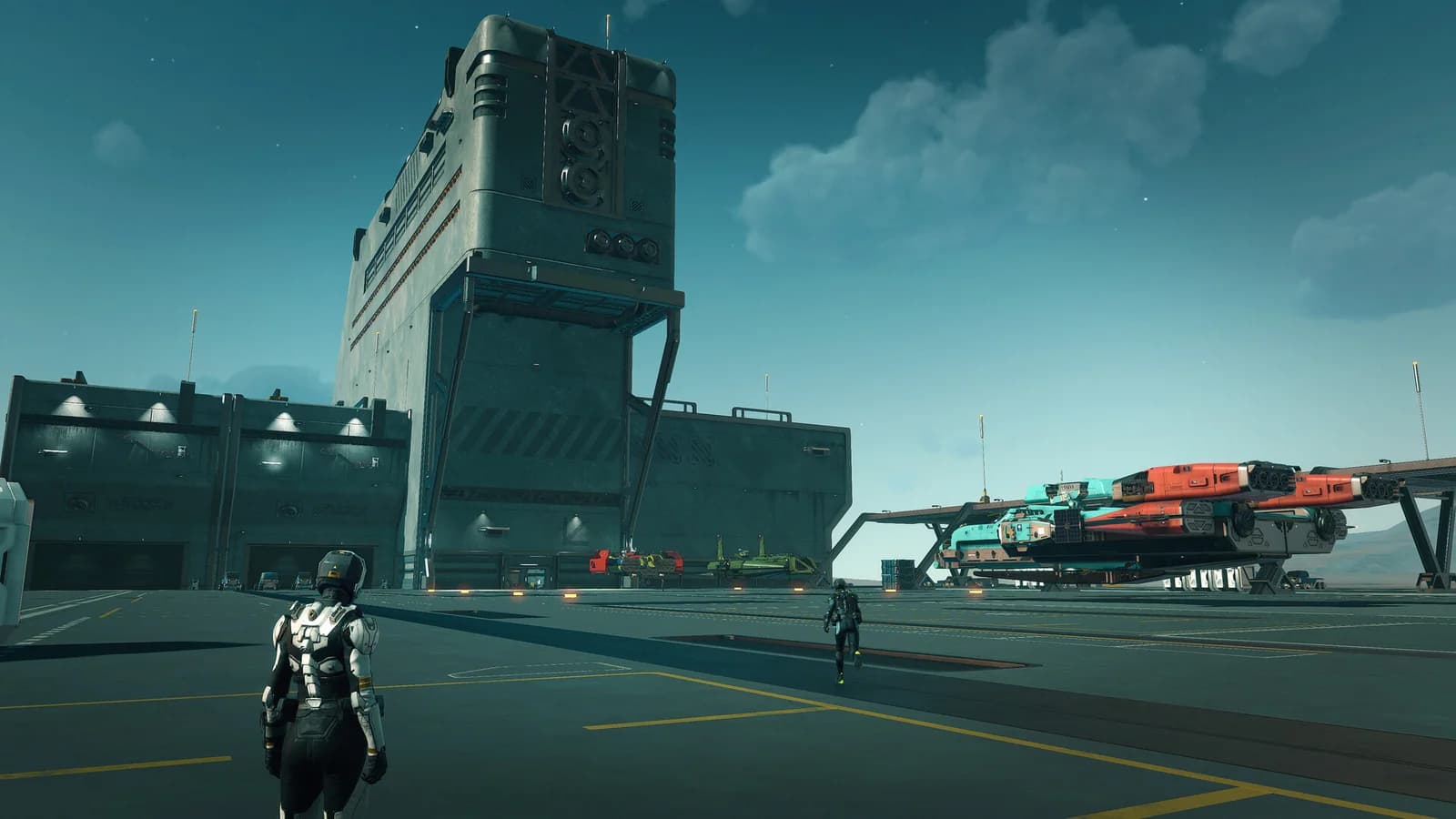
In practice, this economic fabric reveals itself in small touches. You mostly trade within your Corporation, you buy from a merchant terminal run by non-player characters whose stocks stay limited, precisely to push everyone toward the player economy, and you progressively unlock access to the auction house. The idea that nine members of the same corp help each other out while a tenth, lagging on a resource, fills their gap thanks to the others, nicely illustrates the promise: a win-win interdependence. The catch is that this mechanic only truly shines with an active, organized community, which makes it a formidable strength on paper but a real fragility if the players do not follow.
And that is precisely where it hurts at launch. This living galaxy only makes sense if it is populated and there is something to do, yet for now the content is thin. Early beta feedback said it bluntly: once the exploration and mining loop is learned, you quickly run in circles, for lack of strong and varied objectives. The studio promises to enrich all of this, but the when stays fuzzy, and an MMO that opens a little too bare risks watching its systems empty out before convincing anyone.
Add to this two weighty reservations. The first is the obligation to be online at all times, even for those who plan to play mostly alone, which irks part of the solo audience that loved Shiro's offline games precisely for that. The second, more delicate, is the presence of microtransactions in an already paid game. On an early access MMO, seeing a store roll in while the content is not yet there legitimately raises questions about priorities, and it is exactly the kind of signal that can erode trust. Finally, as always in early access, stability and support will be decisive, and some testers voiced doubts about the studio's ability to fix faster than it adds problems.
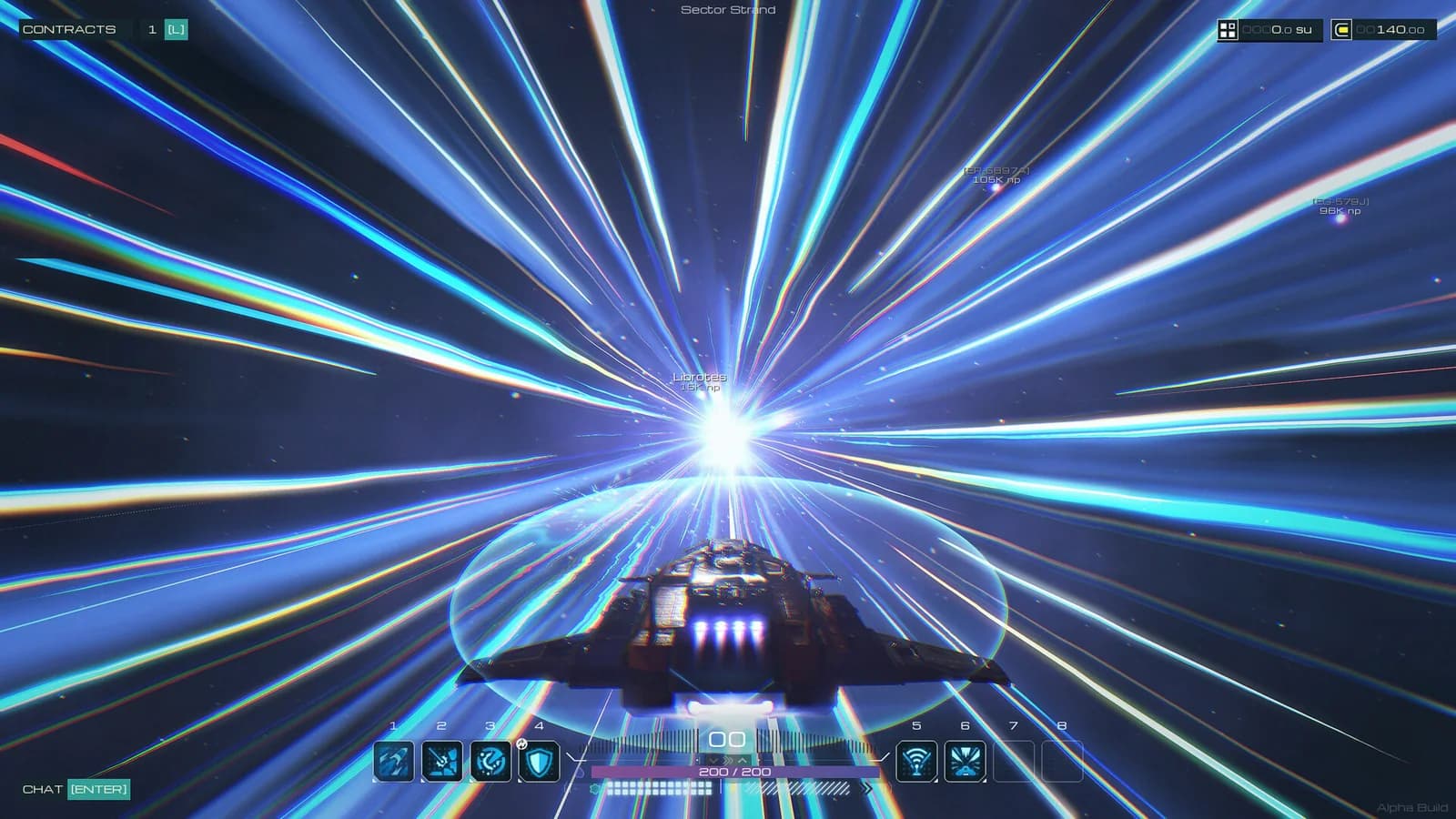
SpaceCraft is a fascinating and frustrating object at once. Fascinating in its ambition, in the beauty of its space, in the elegance of its piloting and ship building, and in that idea of a galactic economy entirely shaped by players. Frustrating because on launch day, the promise still far outstrips the reality: the content is too thin, the mandatory online will put off the lovers of Shiro's solo games, and the microtransactions arrive at a moment when they mostly leave a stain. It is a bold bet for a studio stepping out of its comfort zone, and we sincerely want it to win. But as it stands, it is a promising foundation more than a finished game, to reserve for genre fans and the patient, ready to grow with it.
A magnificent galaxy full of promise, but still too empty to truly settle into.
Disagree with the score? Come and tell us on the InsertCoins Discord, where we defend our verdicts live.