Dossier
Paris Games Week 2026: who is coming, what you can play, and the evening not to miss
22 to 25 October, fifteen years of the show, Game of Roles at the Dome de Paris, and 300 square metres for French studios.
Alexandrosse
10 min
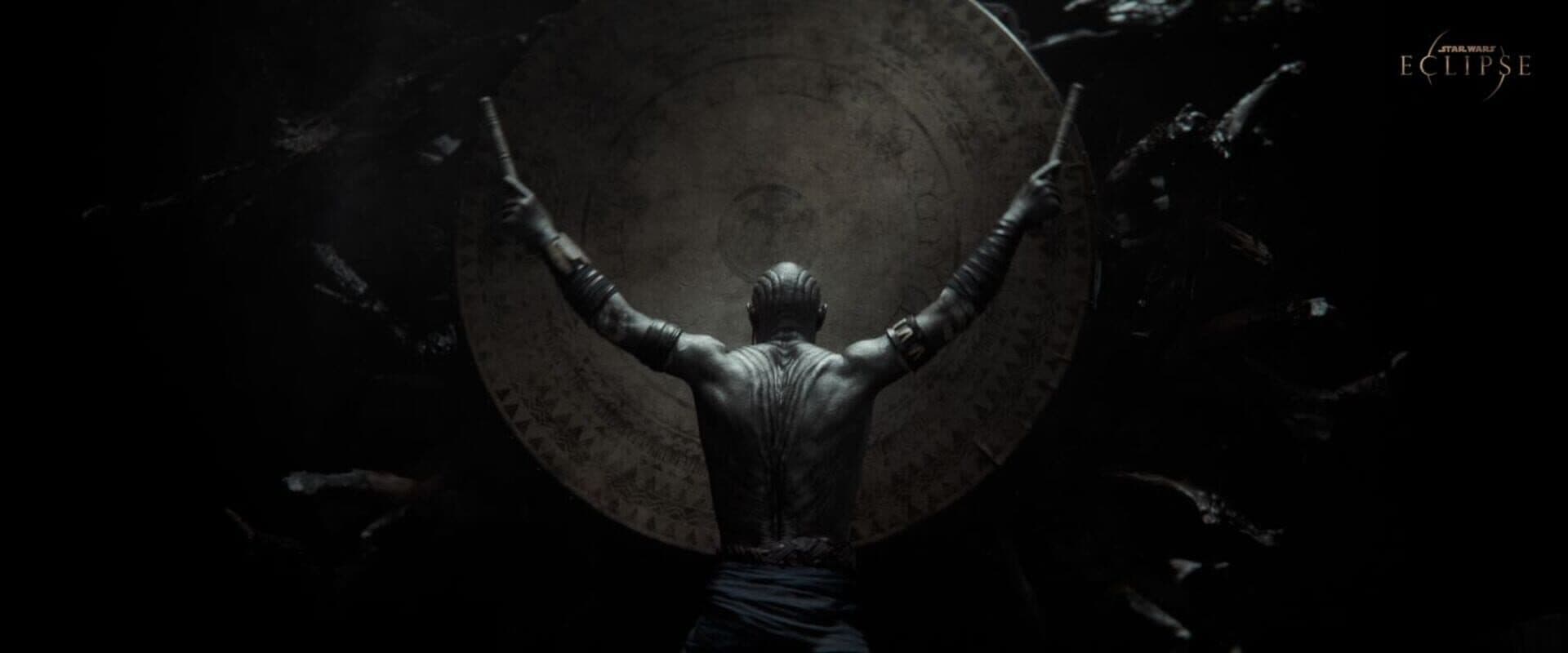
There are the Star Wars games we played. And then there are the ones we'll never play. Sometimes it's precisely those games that leave the deepest mark. Because they promised something different.
Alexandrosse
There are the Star Wars games we played. And then there are the ones we'll never play.
And sometimes it's precisely those games that leave the deepest mark. Not because they were necessarily better. Not because we really know enough to say so. But because they represented something different in a catalogue that, by playing it safe, has started to look like itself.
Star Wars is one of the most powerful licences in the history of video games. Dozens of games. Multiple generations of players. A universe capable of carrying almost any genre, any tone, any ambition. And yet, when you look honestly at what this licence has produced over the last ten years, something is off.
This feature isn't just about cancelled games. It's about what those cancellations reveal. About the symptom that every abandoned project represents. And about what it says regarding the current state of a franchise that has never lacked for material, but that seems increasingly unable to turn it into something genuinely powerful.
If there's one name that comes up consistently in every conversation about missed opportunities in the franchise, it's this one. Star Wars 1313. A project announced in 2012, presented at E3 with a demo that made an impression, then gone almost as quickly as it appeared.
The project promised something rare within the Star Wars universe: an adult vision. A dark tone. A central character who was not a Jedi, not a mythic hero, not the centre of a prophecy. A bounty hunter operating in the deepest and most dangerous levels of Coruscant, where the light of the Republic no longer filters through. An urban, grey, violent aesthetic. Something that could have resembled what the best novels of the expanded universe had tried to do, but as a video game, with the resources of a first-tier production.
It wasn't a gameplay revolution. It was a statement of intent about what Star Wars could be when given the freedom to step off its usual tracks.
And then in 2013, everything stopped.
Disney acquired Lucasfilm. LucasArts was shut down. Projects in internal development were cancelled, and Star Wars 1313 with them. Abruptly. Without follow-up. Without any direct legacy. The source code vanished into limbo, the assets were archived or lost, and the project never received an official release.
Since then, nothing has really replaced that vision. We've had quality games. We've had Jedi, pilots, space battles. But we never had that game. That tone. That direction.
And every time a player asks "why doesn't anyone make a mature Star Wars game", the answer always passes, one way or another, through the ghost of Star Wars 1313.
Star Wars 1313 had the benefit of a public reveal. Project Ragtag lived and died in the shadows before many people even knew what it was.
Behind that codename was a game developed by Visceral Games, an EA studio known notably for the early Dead Space titles. And above all, a game directed by Amy Hennig, one of the most respected creative voices in video games, director of the first Uncharted games, architect of careful narrative craft, well-written characters, adventures that held as much through their writing as their gameplay.
The concept for Ragtag was appealing in its simplicity: a heist in the Star Wars universe. A ragtag group of disparate characters, a story-driven solo adventure, a narrative game with a strong identity. Exactly the kind of experience that millions of players had been asking for from the franchise for years.
The project had been in development for several years before Electronic Arts shut down Visceral Games in 2017 and cancelled the game. The officially stated reasons were technical and strategic: the game was considered too linear, not sufficiently in line with the expectations of the contemporary market. Read: not open enough to justify a post-launch monetisation model, not close enough to the open world template that dominated major productions at the time.
Amy Hennig herself has spoken about the difficulties encountered, the tensions between the studio's creative vision and the commercial imperatives of the publisher. This was not a project that died from its own shortcomings. It was a project that died because the industry had decided it wasn't the right type of product at the right moment.
What remains of Ragtag is a particular frustration. Not the frustration of not having a good game. The frustration of not knowing whether it would have been one. And of losing, in the process, the chance to see what Amy Hennig would have done with Star Wars.
These two cancellations aren't isolated accidents. They fit into a broader movement that the video game industry went through between roughly 2012 and 2020: the fear of the linear solo game as a primary commercial proposition.
The industry, during this period, began to doubt. Multiplayer models were exploding, live service promised recurring revenue, open worlds allowed higher prices to be justified with volume content. The tight, well-crafted single-player narrative game was viewed with growing suspicion by studio leadership thinking first in terms of return on investment.
Star Wars, as a premium franchise, was particularly exposed to this logic. A property of this level cannot afford to disappoint. So you play it safe. You standardise. You avoid projects that step outside the known framework.
The result is that the two most original visions the franchise ever attempted to develop were sacrificed on the altar of that caution. Not because they were bad. Because they were risky.
And in an industry where risk has become the primary enemy of creative decision-making, being risky is often enough to never see the light of day.
The irony is that the "secured" model hasn't delivered the expected results either.
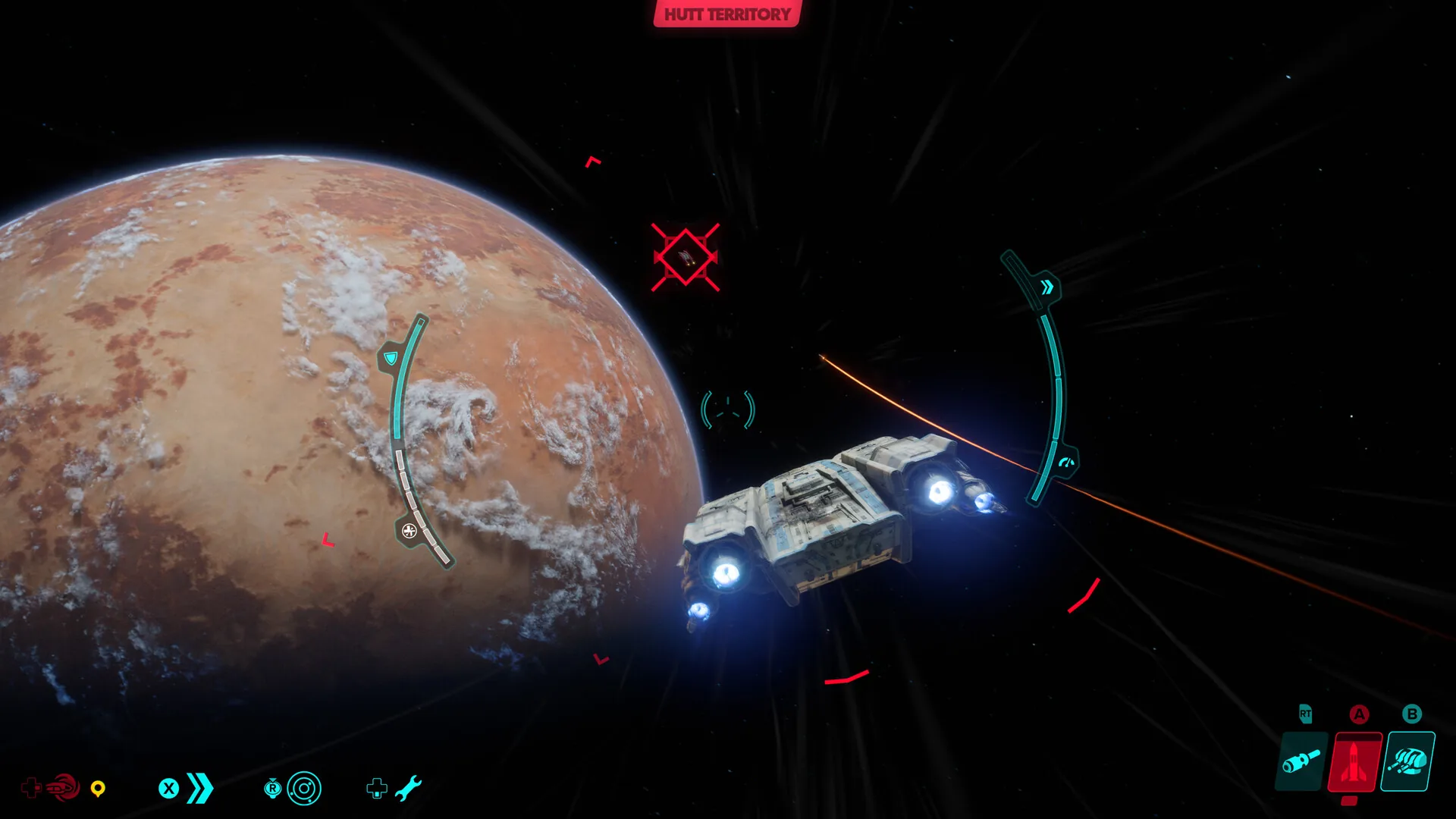
Star Wars Outlaws, released in 2024, was exactly the kind of game that a rational publisher could have imagined. An open world. A well-written female lead. A universe explored from a fresh angle. A Ubisoft production with all the resources that implies.
The reception was mixed. Sales disappointed. The game didn't find its audience with the force the franchise might have led anyone to hope for.
It's not a bad game. It's a correct one, at times genuinely enjoyable, with real writing qualities and careful art direction. But it's also a game that looks like a template. That applies recipes. That does Star Wars the way Star Wars has been done for a few years: cleanly, solidly, without ever really surprising anyone.
And the market, evidently, is starting to tire of solidity without surprise.
The relative failure of Outlaws poses a difficult question for the franchise: if the secured format no longer guarantees commercial success, what argument remains for continuing to avoid risky projects?
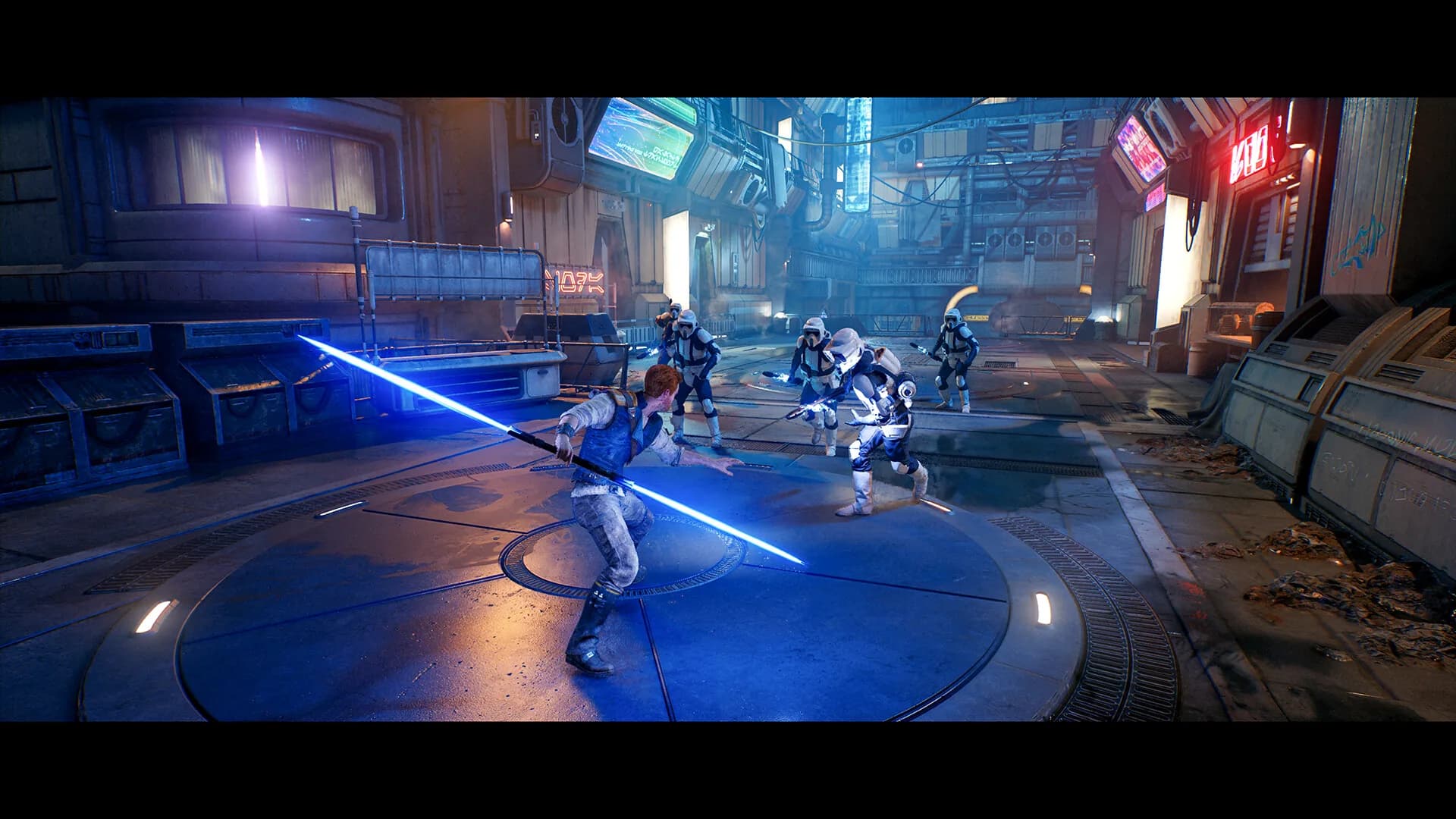
Fairness demands acknowledging that not everything is bleak in recent Star Wars gaming.
The Jedi series, with Fallen Order and Survivor, proved that it was still possible to make a good solo Star Wars game. Respawn did solid work. Cal Kestis is a likeable character. The gameplay evolved in the right direction between the two entries. And the games found their audience, which is not nothing.
But even here, something is missing. The Jedi games are solid entries in a familiar genre, taking a proven formula and applying it to the Star Wars universe with care. They are well-executed games. They are not games that redefine what the franchise can do.
And that is exactly the underlying problem. The bar now is not "is this a good game?" but "does this game do something new with this universe?" And on that question, the answer is rarely yes.
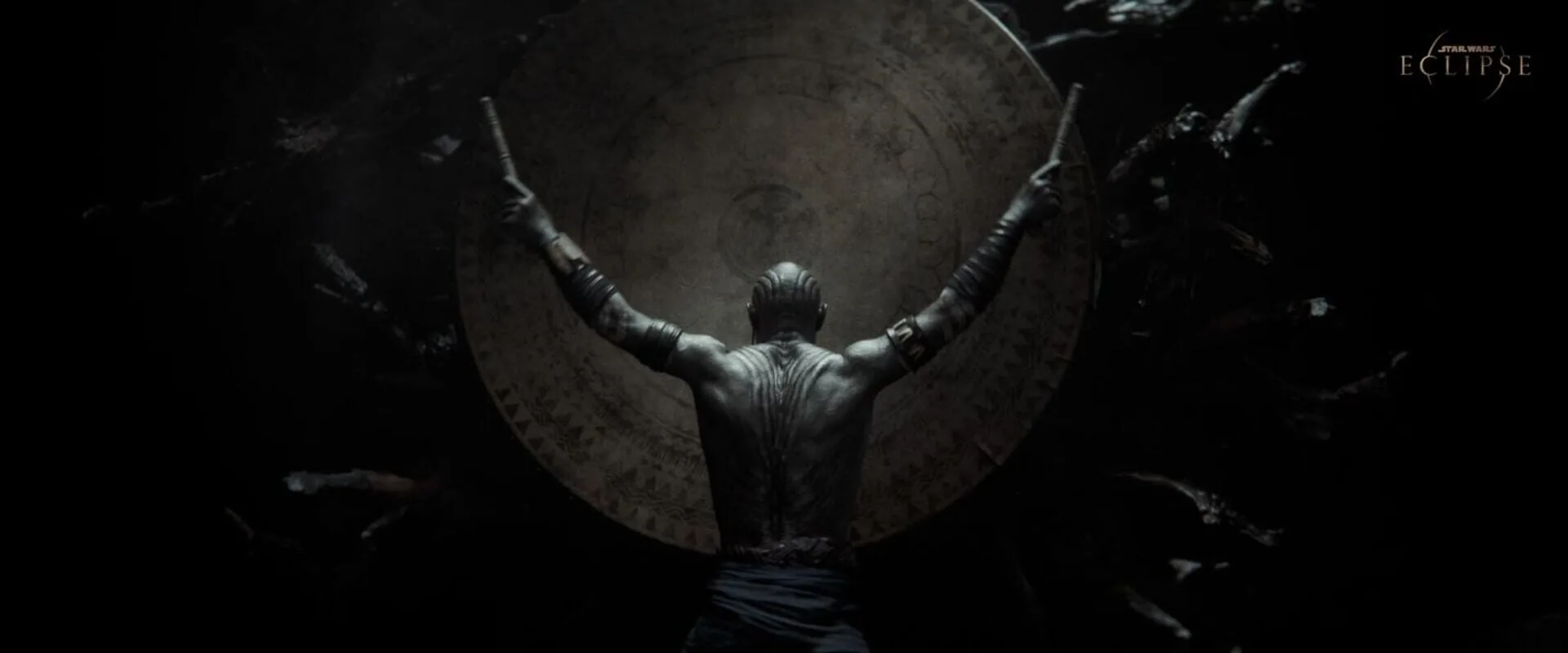
What remains as the great hope today is Star Wars Eclipse.
On paper, the project checks all the boxes. Quantic Dream, a studio known for its interactive narrative experiences. The High Republic as a setting, a period of the universe little explored in video games, which allows some freedom from the most constraining canonical characters. A stated ambition to deliver choice-driven narrative, complex characters, an immersive experience unlike anything seen before in the franchise.
This is exactly what the licence needs to do. Attempt something. Step outside the frame. Rely on creators who have their own vision rather than a proven template.
But the signals are, for now, concerning.
The game was announced with considerable fanfare at The Game Awards 2021, with a polished cinematic and a clear message about its ambition. Since then, silence. Few concrete updates on the actual state of development. Rumours of internal turbulence at Quantic Dream. Questions about the project's artistic and creative direction. And above all, a communication blackout that, for a game meant to be a major production, is starting to look like a negative signal.
Quantic Dream's track record isn't perfect. Detroit and Heavy Rain have their flaws. And the controversies that have surrounded the studio in recent years don't make unconditional enthusiasm easy. The expectations are enormous. The pressure, proportional. And in the history of video games, those two things combined have often preceded disappointment.
That's not a reason to condemn the project before it releases. But it's a reason to keep expectations carefully calibrated.
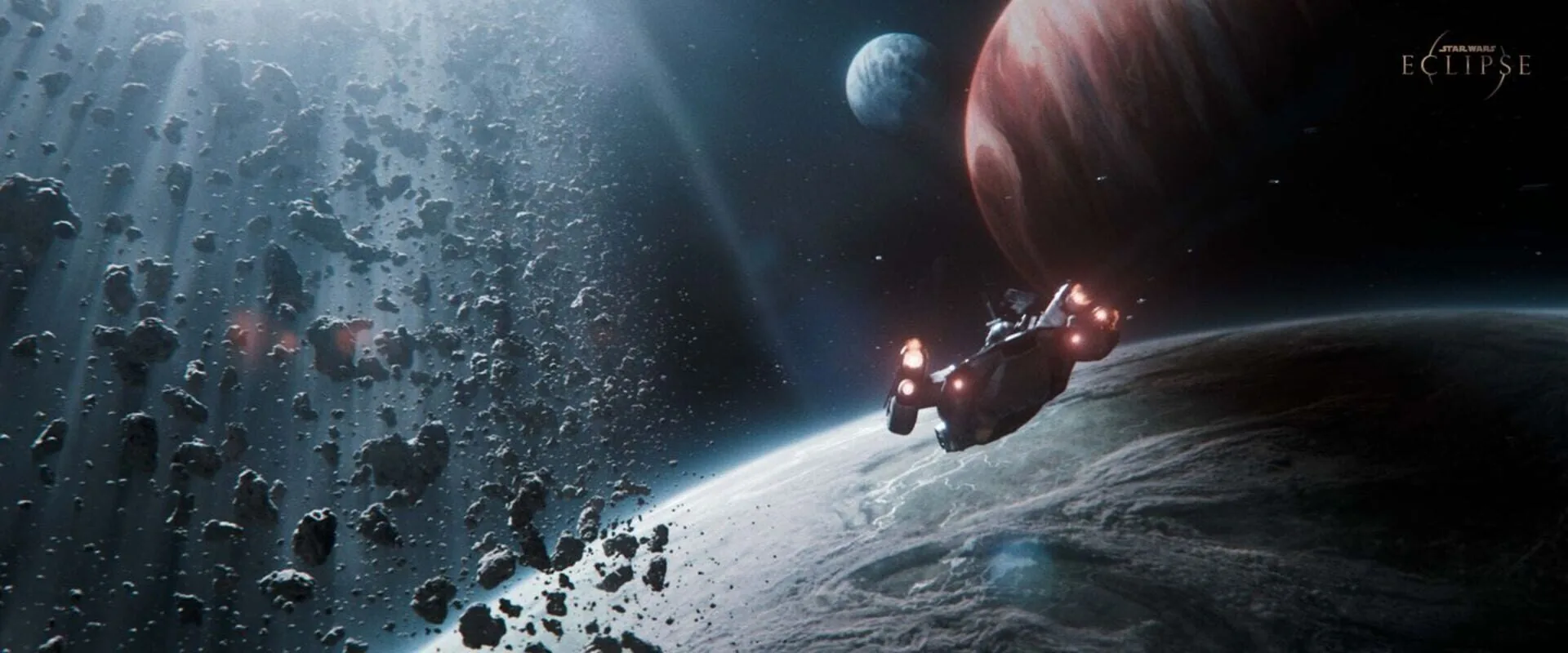
Star Wars has everything it needs to succeed in video games.
A universe of exceptional richness. A mythology capable of carrying any genre. Players attached for decades, ready to follow any project that seems sincere. And an era, this one, that has never been more open to ambitious narrative experiences in video games.
The Last of Us proved that a solo game could be a cultural event. Baldur's Gate 3 proved that an ambitious, complex RPG could become game of the year and sell millions of copies. Disco Elysium proved that a radical narrative experience finds its audience.
The moment is here. The audience is here. The franchise is here.
And yet Star Wars keeps hesitating. Between the formatted open world and the narrative project cancelled before it exists. Between excessive caution and declared ambition never truly assumed.
That's the real paradox. Star Wars is the franchise with the most potential and, proportionally, one of those that does the least with it.
The balance sheet is hard to read without a certain bitterness.
Star Wars 1313 could have been the first game in the franchise to genuinely explore its universe through an adult, cinematic lens. It never existed.
Project Ragtag could have been the first Star Wars narrative game at the level of the best productions in the genre. It never existed.
Star Wars Eclipse can still become something. But for now, it remains a promise hanging in the void.
And in the meantime, the franchise keeps producing correct, well-built, technically solid games. Games you finish. Games people talk about for a few months. Games you forget.
That isn't a disaster. It's worse than that. It's comfortable mediocrity. The mediocrity of franchises that coast on their name, that know the logo is enough to sell the first million, and that make a reason out of that certainty never to push themselves further.
What we lost:
What concerns us today:
Star Wars has never lacked for universe. But today, it's mostly its games we're waiting for, and never quite seeing arrive.
Not because the franchise is doomed. But because it seems unable, for now, to trust itself.
And that may be the real tragedy.
Feature based on information available at the time of publication
Does the subject speak to you? We go into it at length on the InsertCoins Discord.
Community
Your rating
Loading comments...
You might also like
22 to 25 October, fifteen years of the show, Game of Roles at the Dome de Paris, and 300 square metres for French studios.
Six sales running, over 700 games, and only one that expires tomorrow morning. Our sort, with the prices worth taking and the ones that are not.
Eight months, 288 reviews, an average of 7.03. Here is what that says, and voting is open in four categories including the hall of shame.