Wargame
Gundam Assemble: the wargame where one beam sabre costs you three rounds of silence
Six model kits, a hex board, no tape measure and one idea that changes everything: time is the real ammunition. Free bilingual guide.
Alexandrosse
9 min
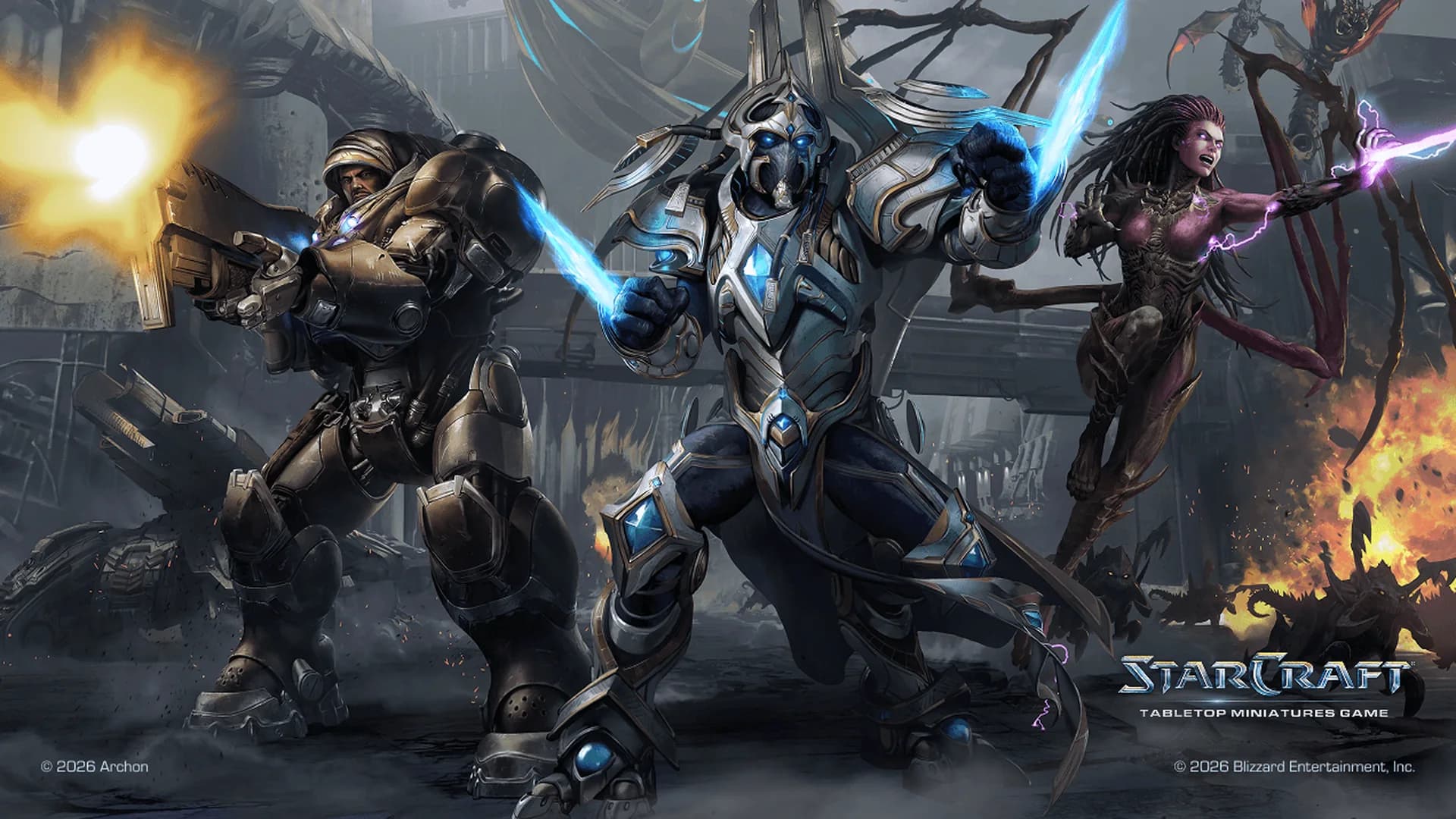
On round one the table is empty. Your army ramps up round after round, exactly like the RTS. Free bilingual guide to download.
Alexandrosse
You lay out the terrain, roll out the mat, deal the mission cards, and then you look at each other: the table is empty. Not one miniature on it. Both armies are sitting beside the board, in a zone called Reserves, and they will trickle in.
It is Archon Studio's boldest design decision, and it is also the one that lets a StarCraft player understand the match before reading a single rule. Your available Supply grows every round. You bring in what you can pay for. Your army ramps up.
Put another way: the RTS build-up has been carried over onto a wooden table, unchanged, and it works.
The book advises bringing in the cheap units first, the ones that will contest mission markers and let you watch what happens, then the expensive units on rounds 2 and 3. In practice you spend the first three minutes doing exactly what you did in front of a screen in 1998: putting down Marines while you prepare something else.
Second effect, less obvious: you never have your whole army to handle at once. Players activate one unit each in turn, through the movement phase and then the assault phase. One unit, one action, over to the other player. Nobody wanders off for a coffee while their opponent moves forty models, which, having lived the opposite plenty of times, you feel across a three-hour evening.
Third effect, and this one is a trap: anything still in Reserves on the last round counts as destroyed and scores for your opponent. Keeping a precious unit safe until the end means handing it over.
Here is the rule that made me like this game, and it fits in three lines.
On your activation you may pass instead of acting. Once you have passed you are out for the phase, and your opponent finishes their activations in peace. In exchange, the first player to pass takes the first player marker for the next phase.
Passing early in the movement phase therefore decides who shoots first in the assault phase. You move fewer units, you let your opponent commit, and you open fire before they do. That is a genuine decision, taken every phase, and it has nothing to do with the usual miniatures-game initiative where you roll a die and hope.
Elsewhere the dice are D6s and the maths stays still: a natural 6 always succeeds, a natural 1 always fails, the target number never drops below 2+ or climbs above 6+. Modifiers change the number you need, never the result on the die. You do not spend the evening recalculating.
Archon's official Core Rules Book runs to 128 pages, in English, and it is a free download. Excellent news for your wallet, bad news for your first evening: that document is written as a regulation, not as a way in.
The guide at the bottom of this article is the opposite. It is bilingual, the French half first, the English one from page 43, in the same file, and it follows the order in which things actually happen on the table.
Army building comes first, because that is where you go wrong earliest: you spend minerals on units and their upgrades, vespene gas on tactical cards, and gas is exactly 10% of the minerals for the scale you picked. At Standard that means 2,000 minerals on a 36 by 54 inch table. Anything unspent is lost, and gas does not convert.
Then the round, phase by phase. Then terrain and line of sight, which earn their own section because terrain size decides everything there. And at the end, the pages you keep open: the distances that matter (1 inch, 3 inches, 6 inches, and what each one triggers), the dictionary of the capitalised keywords covering your cards, the list of things you cannot do, the glossary. References like (8.2.1) point at the official book, so an argument ends quickly.
The two-player Founder's Edition sits at around 199 euros. For that: 12 Marines, 2 Marauders, 3 Medics, Jim Raynor and his drone on the Terran side; 24 Zerglings, 3 Roaches, 3 Roachlings, a Queen, an Omega Worm and Kerrigan on the Zerg side. Plus 15 pieces of Lost Temple terrain, a fabric mat measuring 137 by 91 centimetres, 20 six-sided dice, 14 unit cards, 18 tactical cards, 10 deployment cards and 6 mission cards.
A fabric mat rather than a cardboard board, at this price, is not nothing. Neither is the casting: the sprues are crisp, the plastic coloured, blue for Terrans and purple for Zerg, with some translucent parts.
What is missing, though, you notice straight away: there is no printed rulebook in the box, no tutorial booklet, not one page of setting. Just a rules reference. For a universe Blizzard spent twenty-eight years writing, opening a 199-euro box without a line of lore is a strange experience. The printed book exists, but it sells separately, at around ten euros.
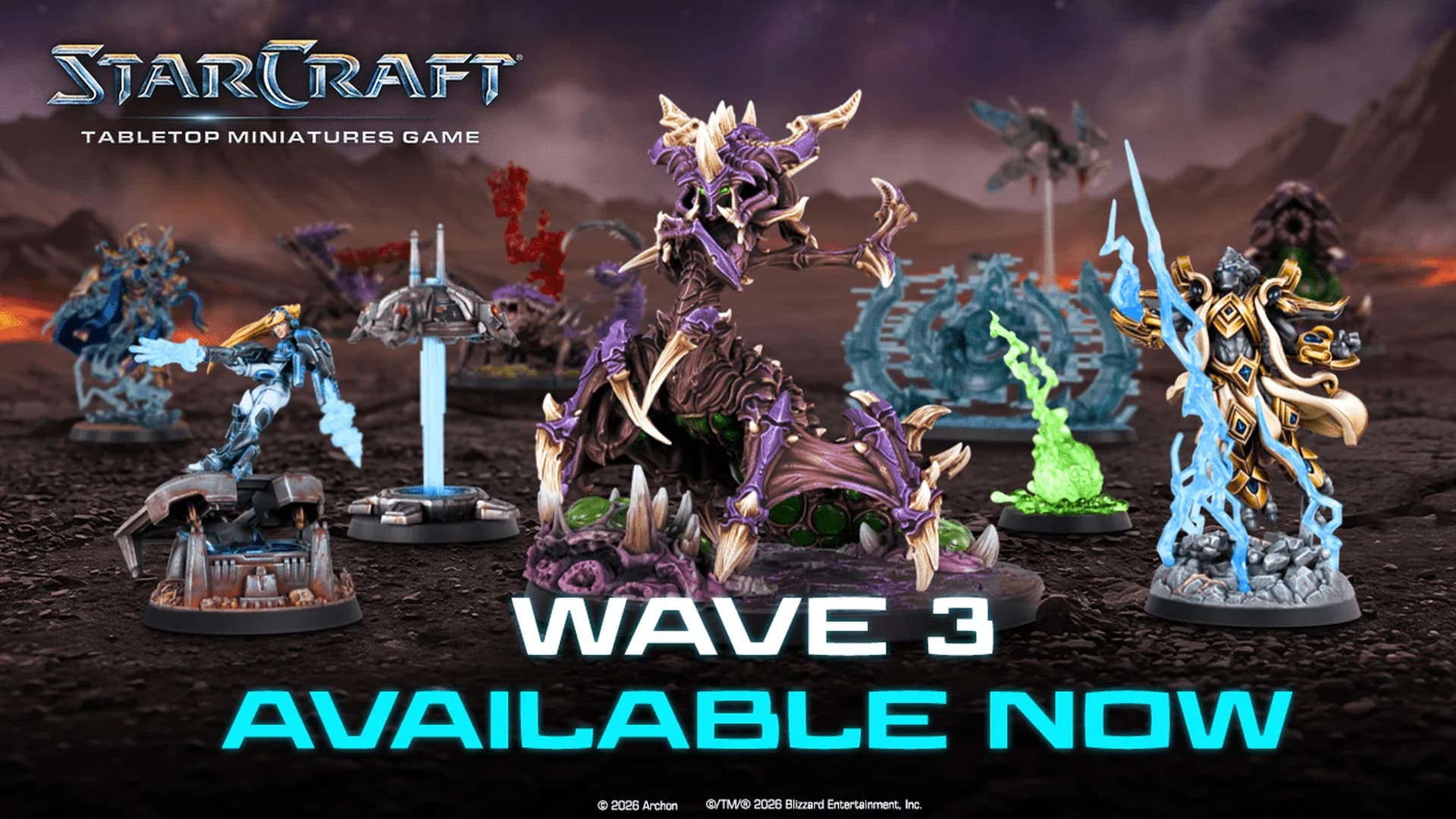
Archon has since released cheaper faction boxes, around 99 euros for the Terrans and 109 euros for the Protoss, and the third wave of miniatures is out. If you already play with somebody who is equipped, that is the door to use.
They all turn up in the first few games, and they come from the same place: reflexes from another system.
Bringing everything in on round 1. Supply will not allow it, and it would throw away the point of the design anyway.
Falling back without checking your tactical mass. Without more Supply than the enemy you are engaged with, your unit can neither shoot nor charge immediately afterwards. You retreat for nothing.
Splitting one weapon profile's fire between two targets. Every model carrying the same weapon shoots at the same unit. That one is not negotiable.
Ending a move within an inch of an enemy. Not allowed, except on a charge. One inch around every base is the engagement range, and it shapes the whole combat phase.
Forgetting that markers get in nobody's way. A marker has no physical presence: it blocks neither sight nor movement. Tokens are physically on the table: you can move across them, you cannot stop on them.
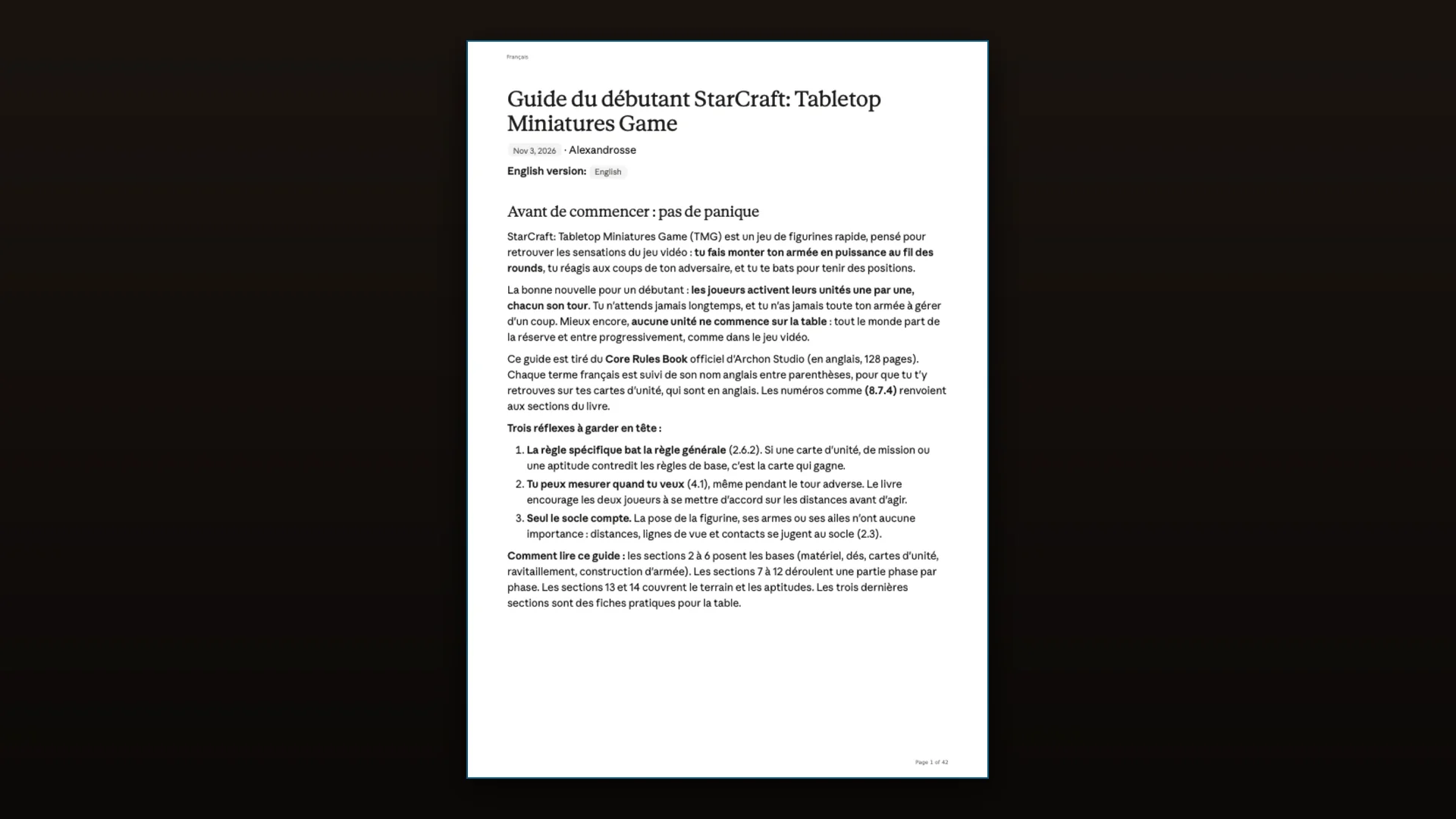
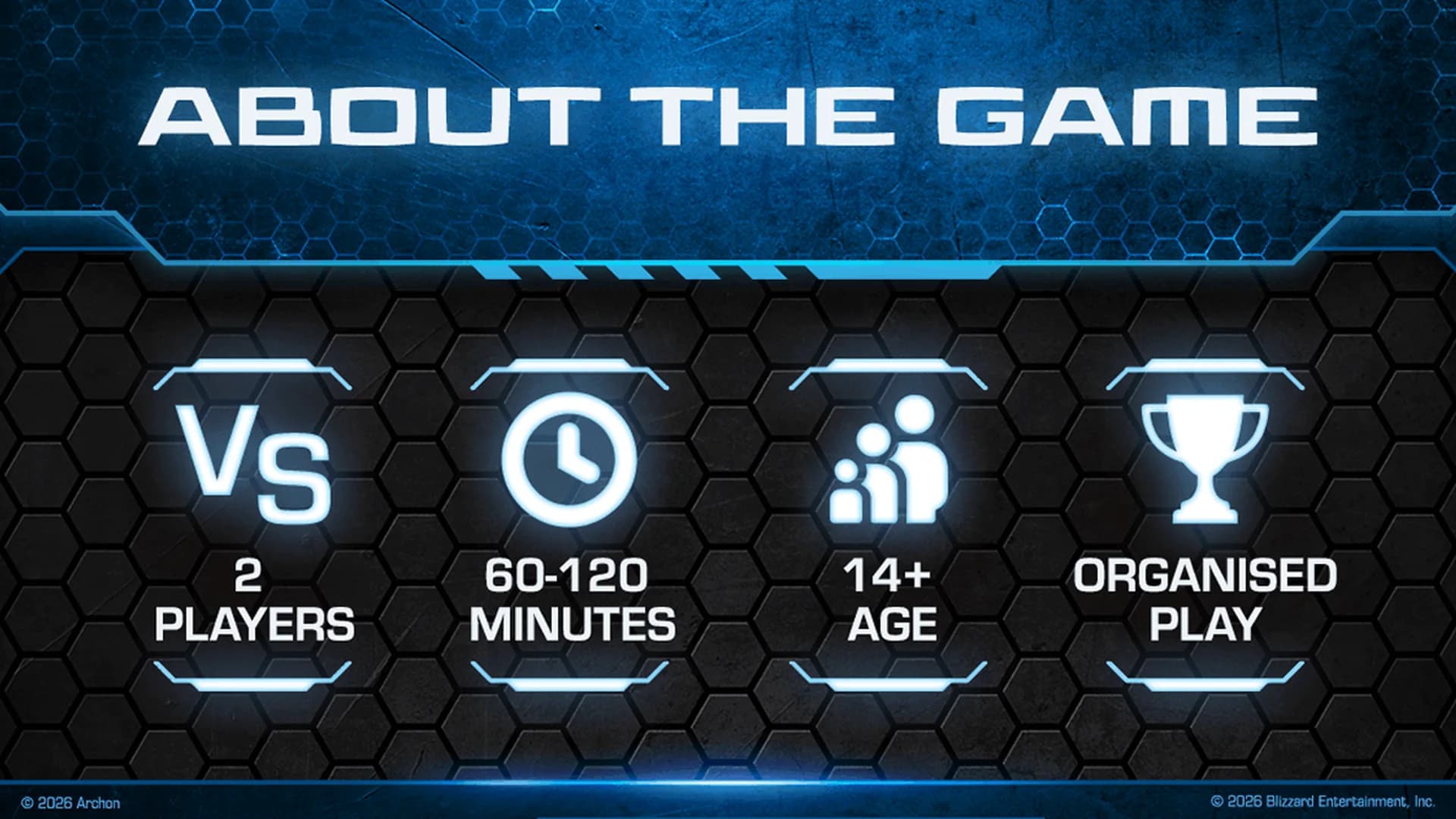
A game runs one to two hours for two players, which is exactly the shape of a weeknight. If you are looking for somebody to play the first one with, or an opinion on which race to pick when you come from the video games, the wargame channel on the InsertCoins Discord is open.
Community
Your rating
Loading comments...
You might also like
Six model kits, a hex board, no tape measure and one idea that changes everything: time is the real ammunition. Free bilingual guide.
A free bilingual PDF so you can play your first game without memorising anything. Plus a new section on the site.