Wargame
StarCraft on a table: the wargame that starts with no miniatures on the board
On round one the table is empty. Your army ramps up round after round, exactly like the RTS. Free bilingual guide to download.
Alexandrosse
10 min
Siege Tank, Immortal, Ravager, Zeratul, a ramp, then six hero boxes. What these miniatures actually change, and what they cost.
Alexandrosse
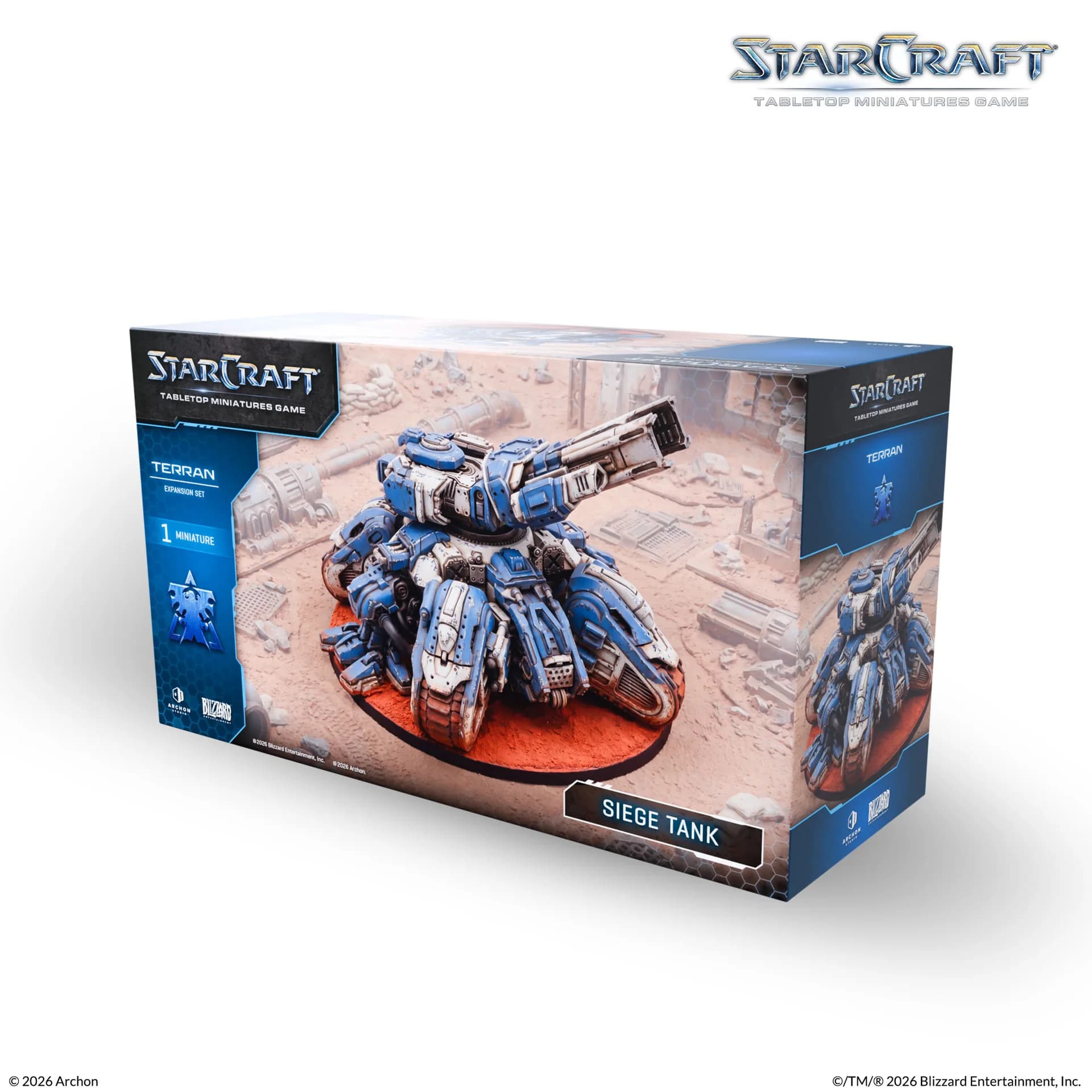
The Siege Tank sits on a 150 millimetre base. Put a two-euro coin next to it: you need seven of them to cover the surface.
That number is not a packaging detail, it is a rule. In StarCraft TMG bases never overlap, and a model that does not fit somewhere cannot go there. A 150 millimetre disc will not squeeze between two ruins, will not slip down a narrow passage, and is visible from the far end of the table. Before you have even read its card, this tank has changed how you are going to lay out your terrain.
Archon announces two modes. In Tank Mode it advances with the infantry. In Siege Mode it deploys and locks down large portions of the battlefield with long-range artillery.
To understand what that is worth here, remember one thing: in this game players activate one unit each in turn, and the first to pass in the movement phase shoots first in the assault phase. The whole positioning game turns on that question of initiative.
A deployed Siege Tank changes the equation. It is no longer asking who moves first, it is forbidding an area, and it is up to your opponent to decide whether to cross it. Passing early to shoot first loses much of its appeal when the enemy already has a gun trained on the only available route.
The downside is written into the same paragraph: a tank sitting still in Siege Mode is a tank that is not moving. It is exactly the dilemma from the video game, carried across without cheating.
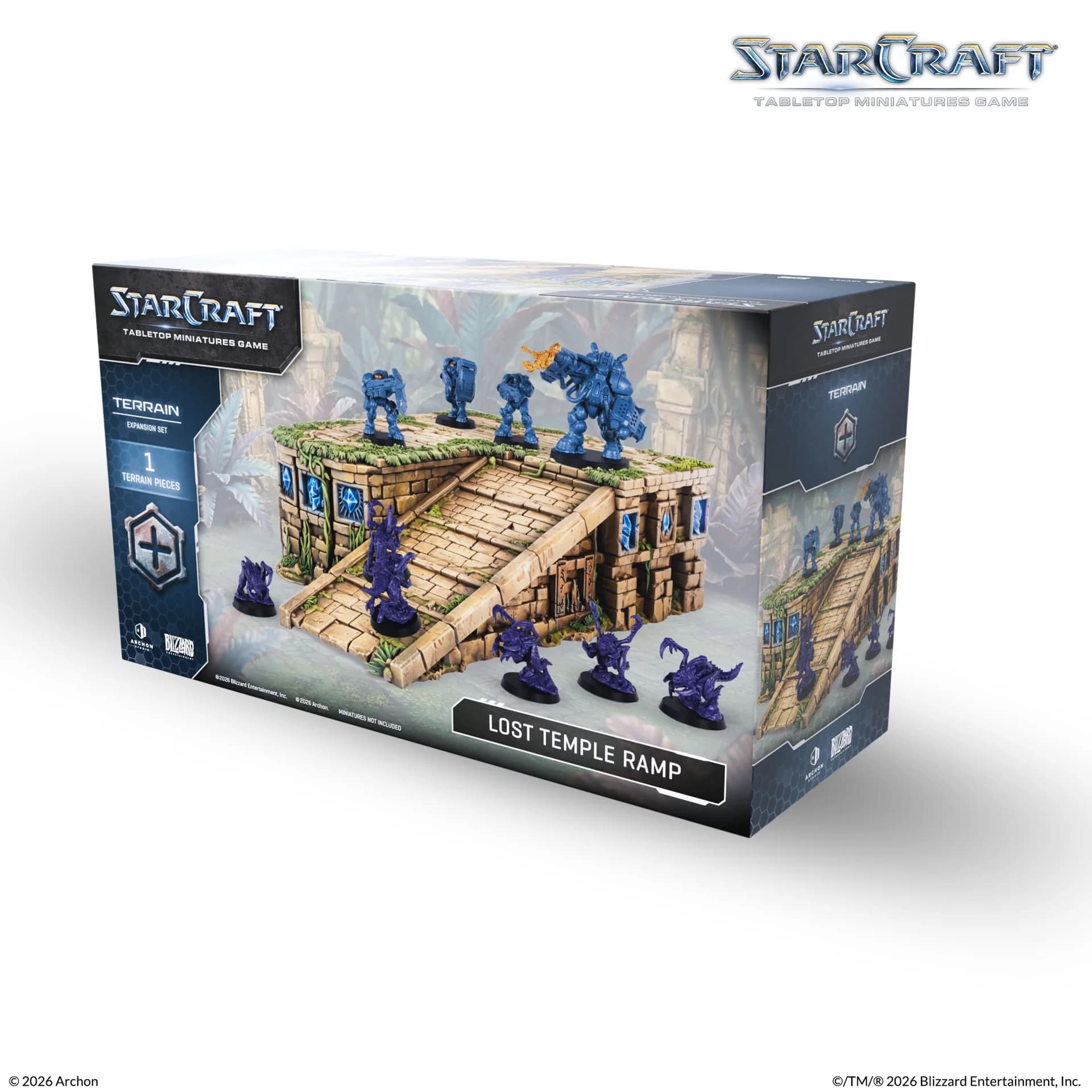
Archon released the Lost Temple Ramp at the same time. One piece of terrain, 35 euros, miniatures not included: an elevated platform with its access ramp, modelled on the Lost Temple map.
Put like that, it is an expensive lump of plastic. In the rules it is something else. You cannot change level without an access point, and terrain size decides what you can see. Until now, elevation mostly existed in theory in the average collection. A ramp is a choke point you can defend, and a firing position you can argue over.
Shipping the raised platform and the long-range artillery in the same wave is not a commercial coincidence, it is a plan. The two products sell each other, and incidentally they make games better.
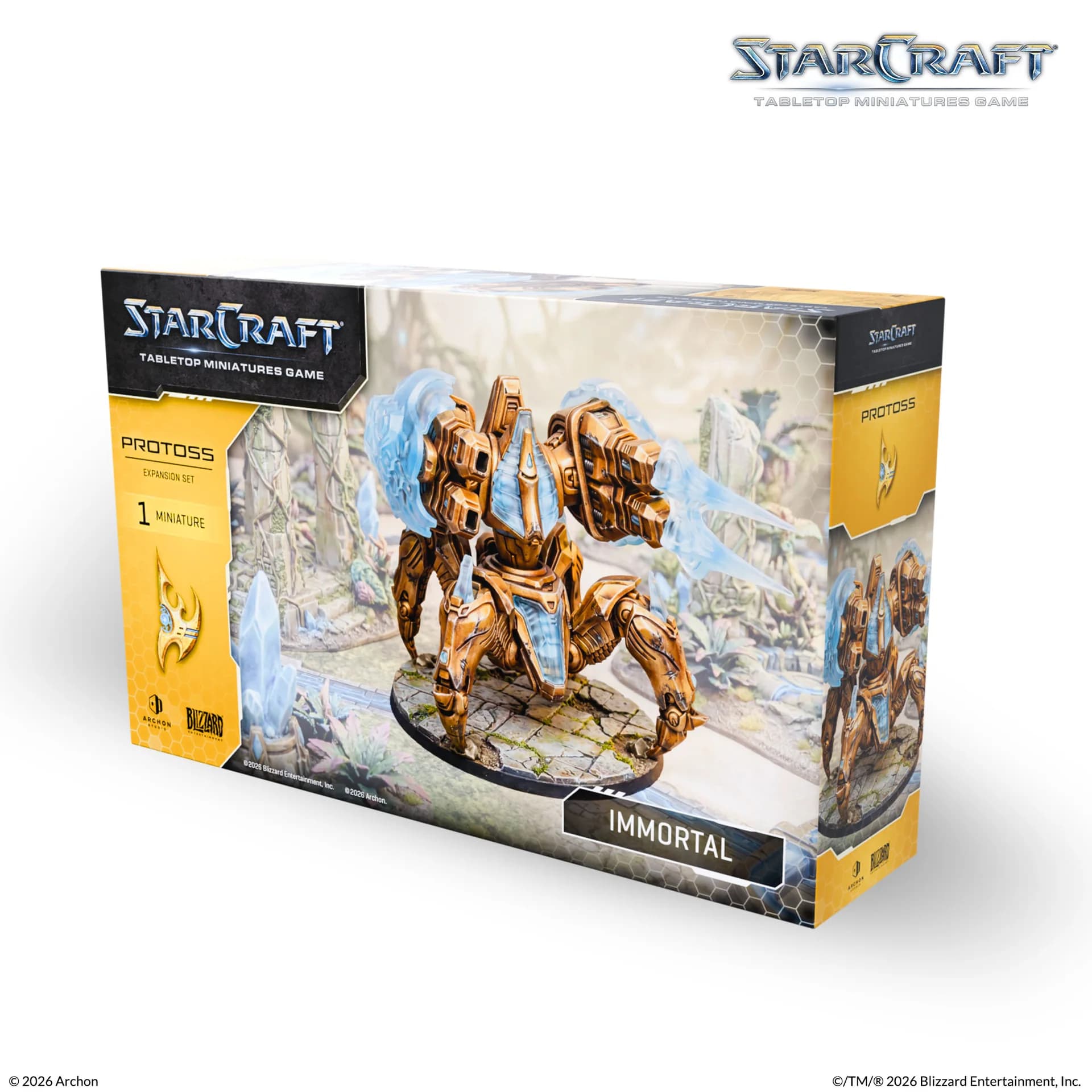
A 100 millimetre base, one miniature, 59 euros. Archon presents it as a Protoss frontline anchor, able to absorb enormous punishment while tearing through heavily armoured targets with its twin Photon Disruptors.
Translated into game terms: this is the unit you park on a mission marker and forget about. Contesting an objective requires meeting specific conditions, and shifting something that refuses to die costs whole activations, which is time your opponent is not spending elsewhere.
Until now the Protoss only had Stalkers and Zealots to hold a position, which is to say units that would rather be moving. The Immortal is the first proper nail driven into the ground.
Here is the point nobody spells out, and it is the most interesting of the four.
In StarCraft TMG a unit engaged in close combat is protected. It can only be shot at by units already engaged with it. The only exceptions are the PINPOINT keyword and template spillover. The result: a knot of infantry glued to an objective, in contact with one of your units, becomes a fortress your gunners can only watch.
Archon describes the Ravager's Corrosive Bile as precisely the answer to that: your opponent has to abandon the position or accept being bombarded while locked in close combat. In other words, the Zerg get the tool that punctures the only real immunity zone in the game.
Two miniatures for 49 euros, and to my mind the most useful purchase across both waves, well ahead of the tank. Not the most spectacular one, the one that fixes an imbalance.
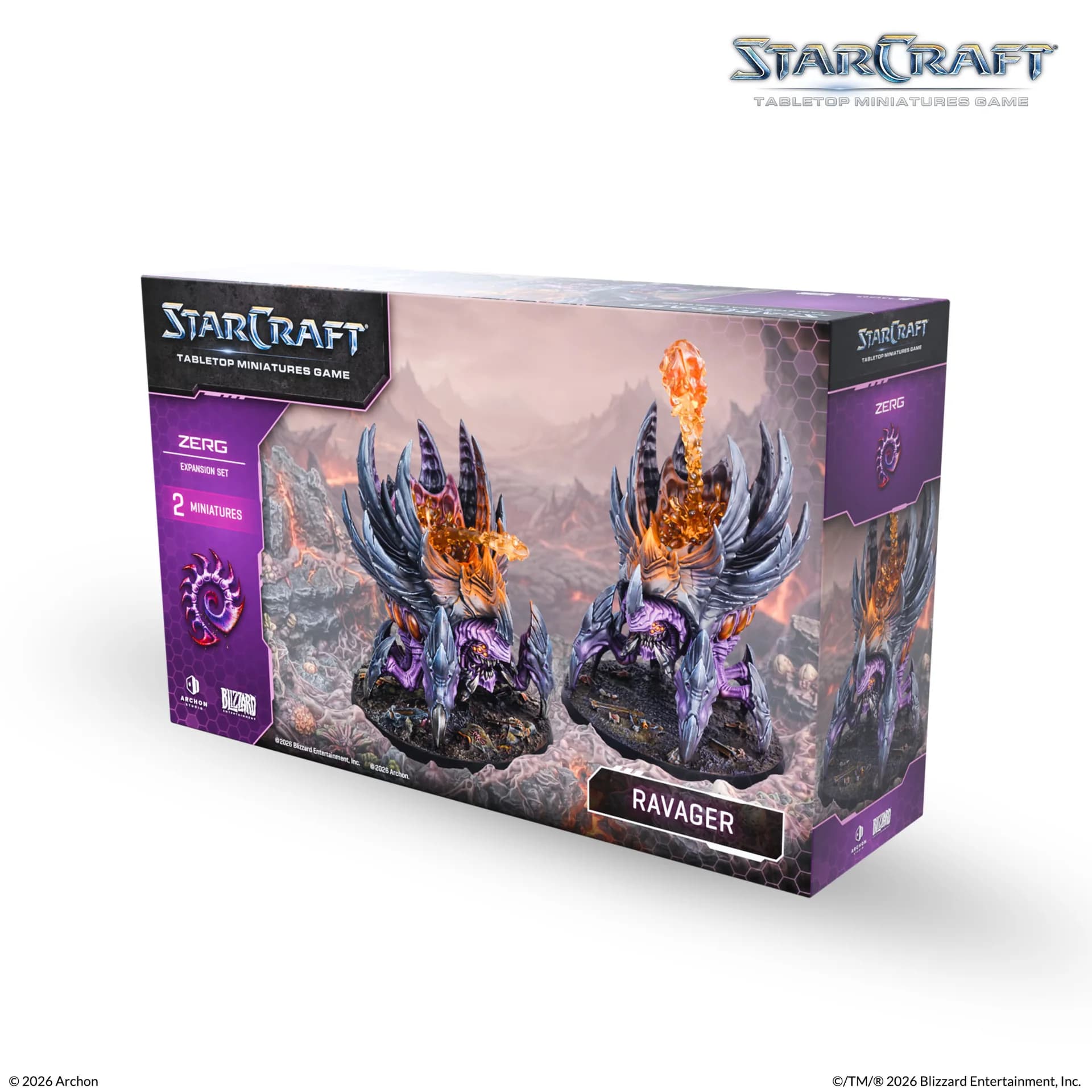
That leaves Zeratul at 35 euros, the cheapest of the lot. Fast, elusive, he bypasses heavy armour and executes high-value targets before vanishing. In a game that has just added a 150 millimetre tank which sits perfectly still in Siege Mode, releasing an assassin who walks through the lines on the same day shows a sense of humour. Or a sense of balance, which here amounts to the same thing.
Six boxes, shipping since the start of November, and a theme that jumps out once the list is laid flat.
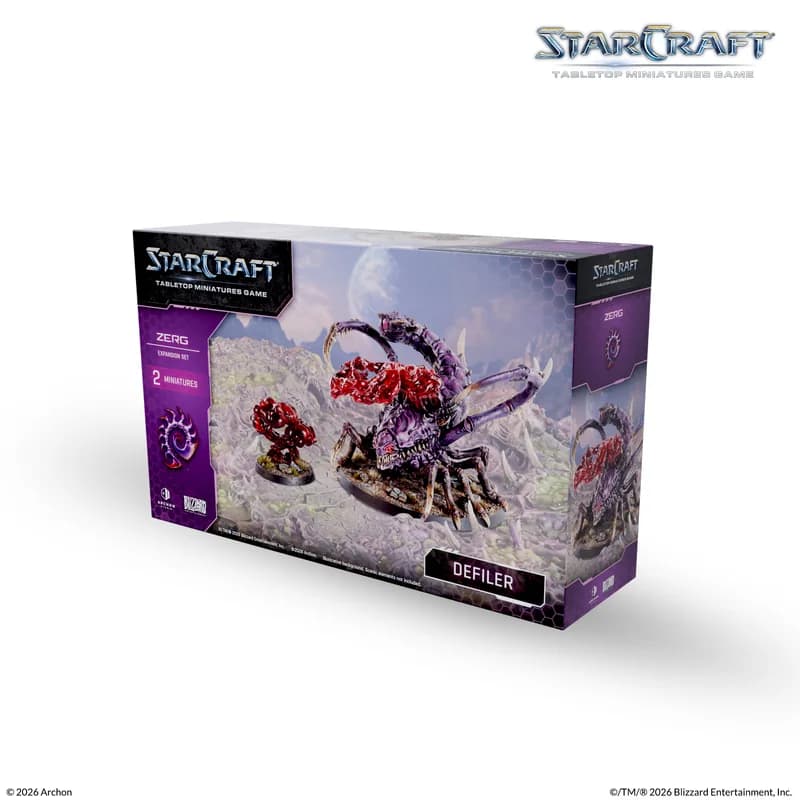
The Protoss High Templar brings four miniatures and a Psi Storm template, 49 euros. The Zerg Defiler comes with a Plague Blast template plus Burrow and Dark Swarm tokens, two miniatures for 45 euros. Zagara brings a Bile Launcher and its bomb token, 45 euros. Tassadar arrives with two Force Walls, 45 euros. Nova Terra has a Holo-Decoy and a Sabotage Drone, 35 euros. The Terran Raven brings an Auto-Turret, 59 euros.
Not one line unit in there. Nothing but templates, walls, decoys, turrets and denied zones. After a wave 1 that handed you bodies to put on the table and a wave 2 that hands you heavy hitters, wave 3 hands you board control.
That is coherent, and it is even reassuring: it means Archon has a notion of what the game should look like in two years, and not only of what sells.
The Siege Tank costs 69 euros. It contains one miniature.
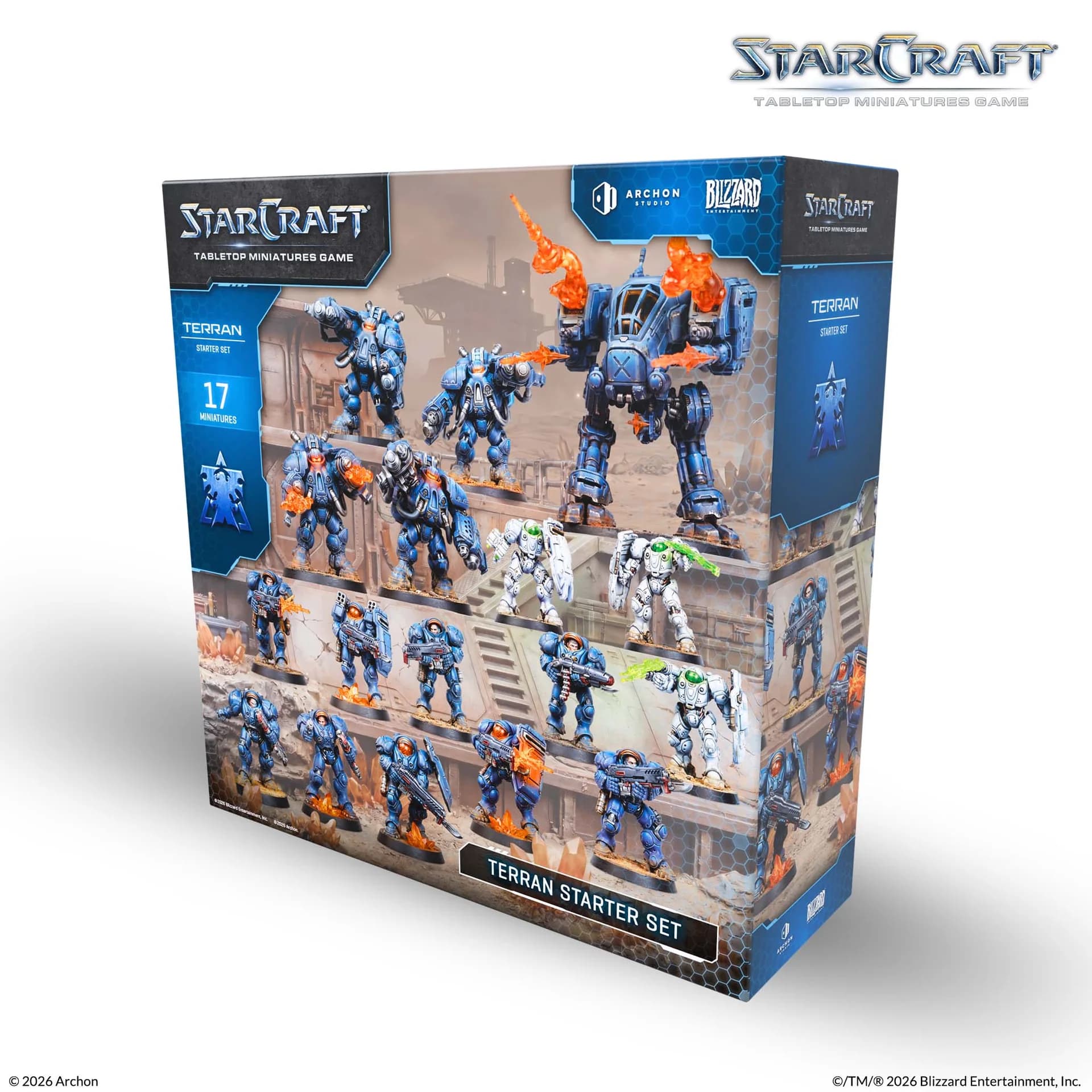
The Terran Starter Set costs 99 euros. It contains seventeen, plus nineteen cards, thirty tokens, an assembly manual and a rules reference, and it is a complete 1,000-mineral army playable out of the box.
I will accept that a vehicle on a 150 millimetre base is a lot of plastic. But thirty euros less for seventeen miniatures against one is a gap no amount of resin fully explains. The Immortal at 59 euros for a single model raises the same question.
Then there is the pace. Wave 3 pre-orders opened on 12 October, while wave 2 had not finished arriving in letterboxes. This is the second time: wave 2 pre-orders had already gone out before wave 1 was delivered everywhere. For a game that is one year old, that is uncomfortable. People are being asked to pay for what comes next before they have played what they have, and the metagame never gets time to settle.
To Archon's credit, the logistics announcements that came with all this point the right way: PayPal accepted, free shipping to the United States, the United Kingdom and Europe above a minimum basket, customs duties covered, and a British warehouse now serving local orders without routing through Poland. Those are the corrections of somebody who knows delivery has been their weak point.
If you already play: the Ravager first, because it fixes a rules problem rather than a power problem. Then the ramp, which improves all your games and not only the ones where you field it.
If you are starting out: a faction box at 99 or 109 euros, and nothing else. The full rules are a free download, the printed book is 8.99 euros, and you have months of play ahead before the absence of a Siege Tank becomes a problem. It is all laid out in our beginner guide, which also downloads as a PDF without costing anything.
If you collect: you pre-ordered the lot on 12 October and you did not read this far.
Tell us what you have put on the table, and above all whether anybody has managed to park that tank somewhere useful: the wargame channel on the InsertCoins Discord is waiting for photos.
More on StarCraft: Tabletop Miniatures Game
All about StarCraft: Tabletop Miniatures GameCommunity
Your rating
Loading comments...
You might also like
On round one the table is empty. Your army ramps up round after round, exactly like the RTS. Free bilingual guide to download.
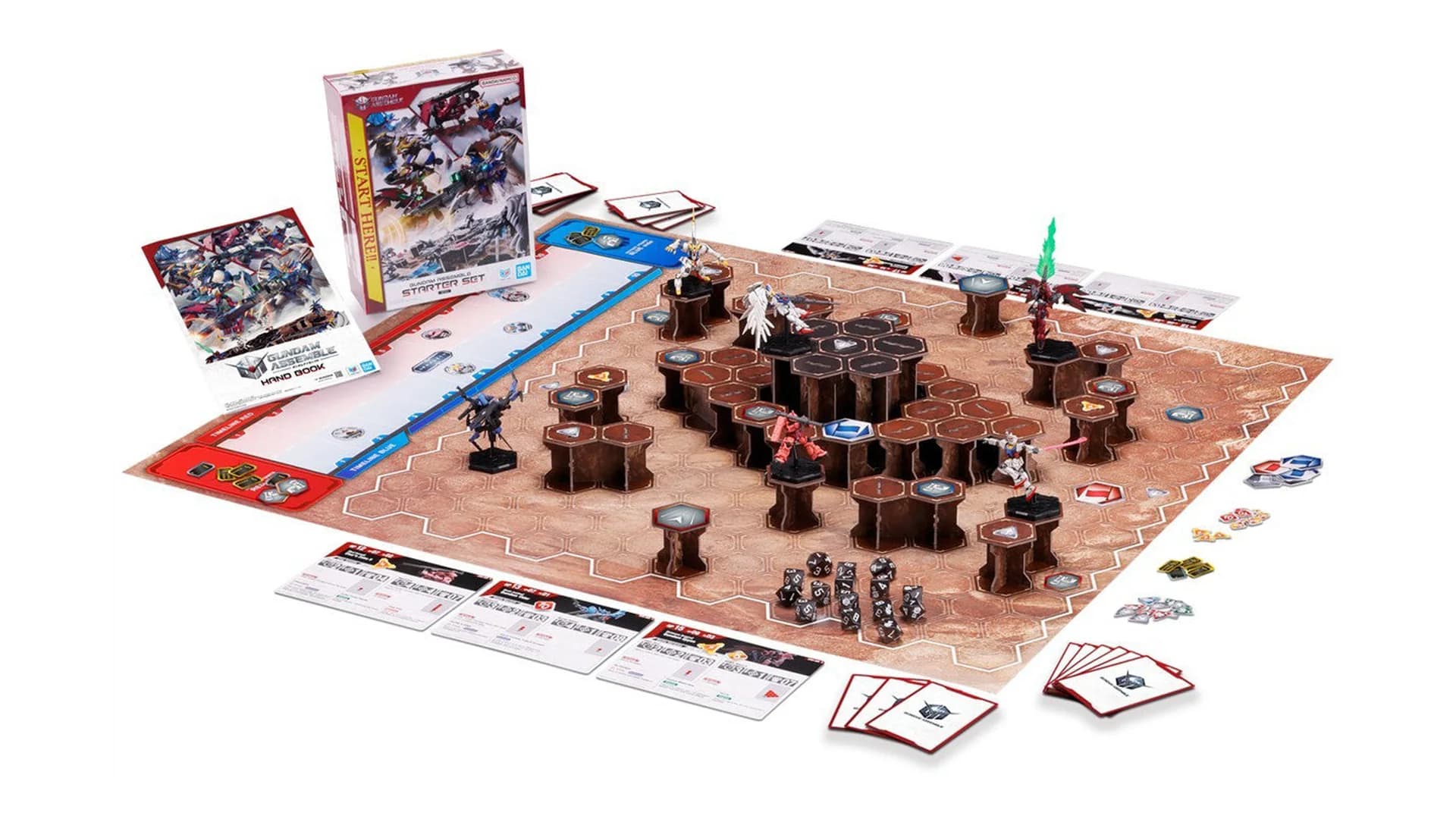
Six model kits, a hex board, no tape measure and one idea that changes everything: time is the real ammunition. Free bilingual guide.
A free bilingual PDF so you can play your first game without memorising anything. Plus a new section on the site.