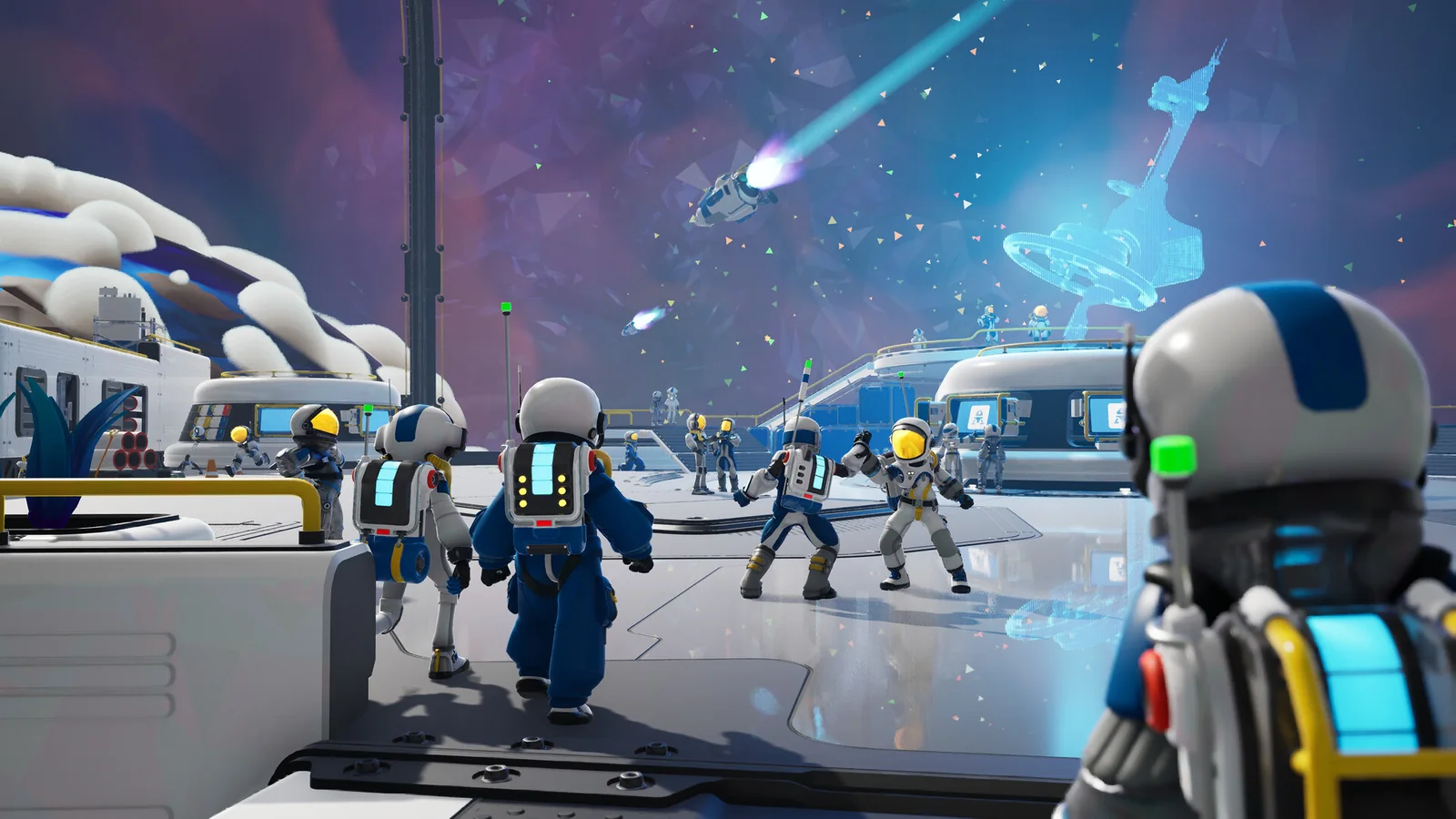
When we first saw Starseeker, we instantly recognized the signature: those round astronauts with colorful helmets, those low-poly planets soft as modeling clay, it is the universe of Astroneer, one of the most endearing space sandboxes of the last decade. Except this time, System Era Softworks is not offering a sequel, but a radical turn: an online cooperative expedition game. The result, at the time of its early access launch, is as beautiful as it is curiously hollow.
The context
Starseeker: Astroneer Expeditions is developed by System Era Softworks, the creators of Astroneer, and published by Devolver Digital. It launches today in early access, also available via Game Pass, after a network test phase and a free demo that let the community take the temperature. Let us say it upfront: this is an early access version, and the studio has clearly stated it is holding content back for launch and updates. This review therefore judges a starting state, with all the caution that implies.
The crucial point to grasp, and the source of every debate, is that Starseeker is not Astroneer 2. The developers hammered it home: it is neither a sequel, nor a survival game, nor a sandbox. It is a new experience in the same universe, centered on discovery, cooperation and camaraderie. And for fans of the first, this change of course is a sensitive subject.
Since the announcement, by the way, the game has come a long way before our eyes, without dispelling the underlying unease. At its reveal, the community did not even know whether it was a full game or an expansion, and many openly demanded an Astroneer 2 rather than this online spin-off. The first images, sparse on building and machines, had worried the fans of bases and automation, features that are indeed not at the heart of Starseeker. Across the betas, network tests and demo of recent months, System Era refined the exploration, added biomes and listened to a flood of feedback, repeating that it was not abandoning Astroneer and kept updating it. The evolution is real, then, but it mostly confirms a direction not everyone was expecting.
This is probably the most important angle of this review. Astroneer was a solo-friendly game, playable quietly on your own, built on procedurally generated planets unique to each save. You dug and deformed the terrain at will, you built sprawling bases, you automated production chains, in a creative and peaceful spirit where danger boiled down to oxygen and falls. It was a game you owned and shaped to your hand.
Starseeker turns its back on almost all of that. The planets are no longer procedural but hand-crafted. There is no more terraforming, and the heart of the game is no longer base building or automation, but the expedition: the crew of the ESS Starseeker space station lands on a world to complete planet-wide objectives, before the station resumes its journey toward new destinations. You inevitably think of a gentler Helldivers, where you drop in to do tasks as a team, or a more pastel Deep Rock Galactic. Above all, the game is played online, where Astroneer pampered the loners. It is an almost total shift of genre and philosophy, and you understand why part of the community, which mostly wanted a more complete Astroneer, finds itself disoriented.
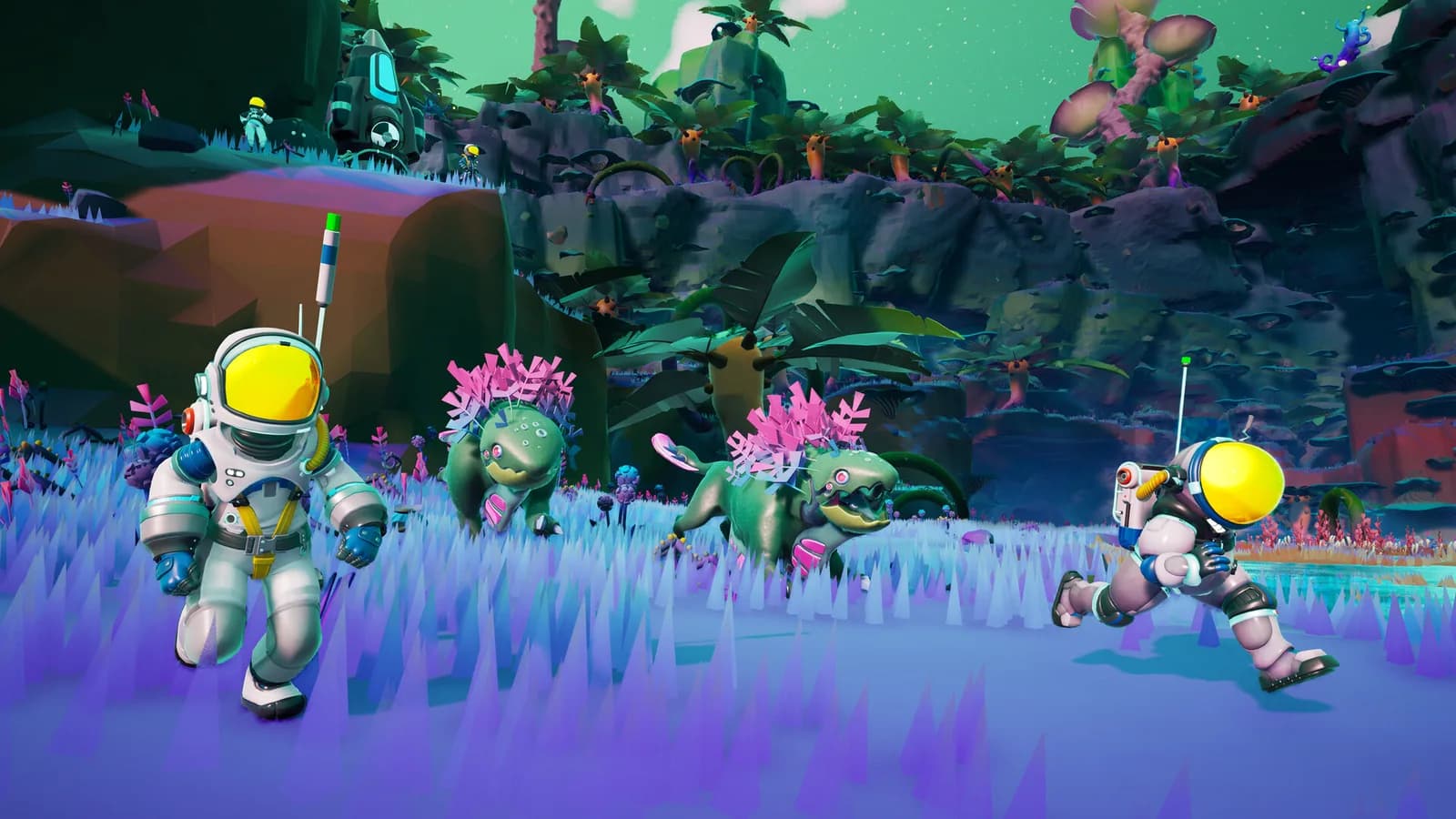
On the ground, the experience is first a matter of discovery. You explore varied and magnificent biomes, from crystalline caves to luminescent seabeds by way of alien jungles, you gather, you dig, and you gradually unlock an increasingly advanced array of tools to face the perils of space. And perils there are: fascinating but hostile creatures, dangerous flora, mysterious forces. The big novelty compared to Astroneer is this dose of threat and combat that spices up the exploration, where the original stayed resolutely peaceful.
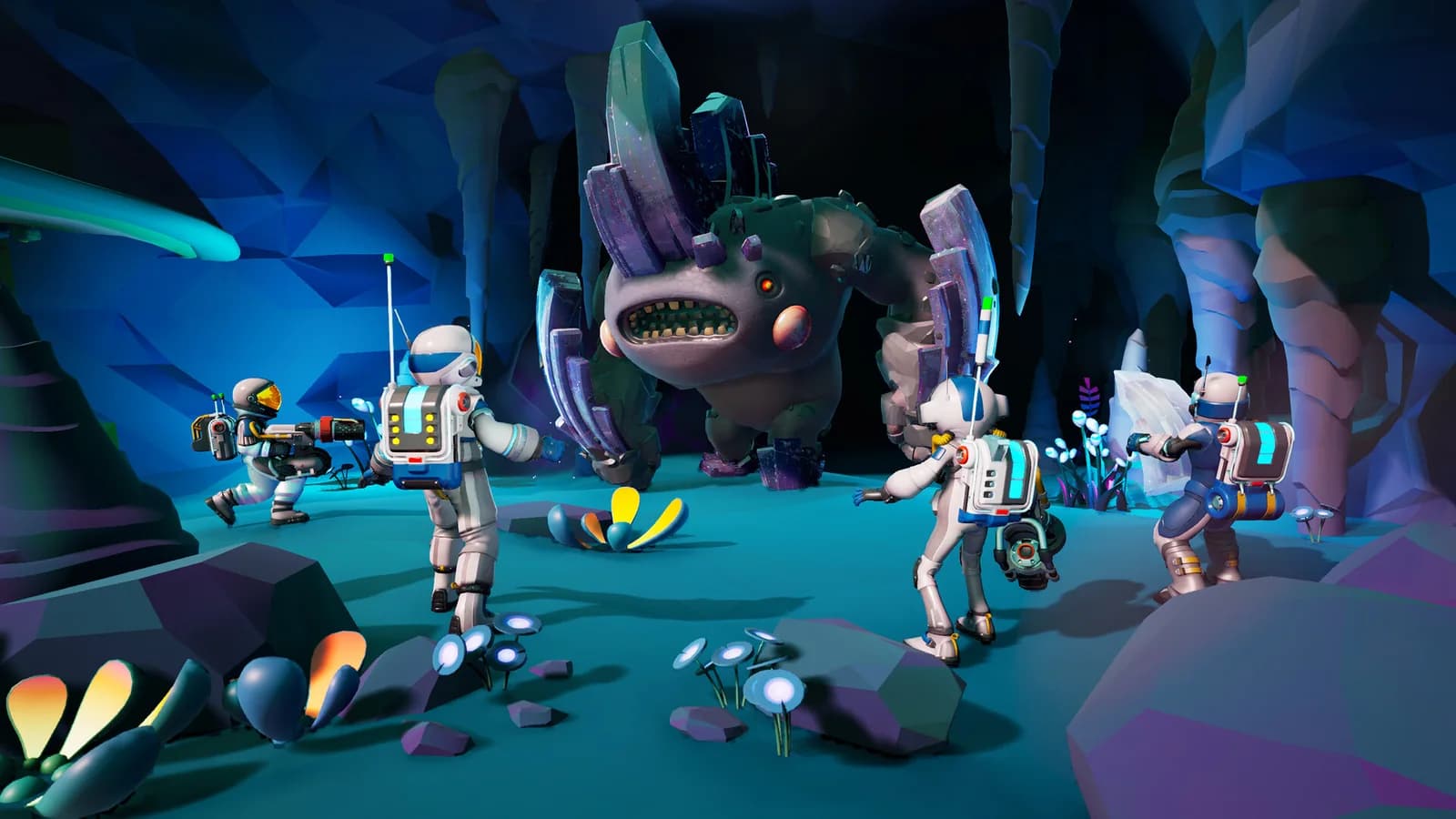
The structure itself deserves a pause, because it defines the rhythm. Each expedition is a window limited in time: the station docks with a world, the crew lands to fulfill shared planet-wide objectives, then the ESS Starseeker leaves for other systems, taking everyone with it. This idea of a collective, ephemeral voyage, where you contribute to a shared effort before packing up, gives the game a flavor of a living online service, halfway between adventure and community event. Multiplayer cooperation truly comes into its own, whether joining forces to bring down a big creature and harvest its resources, or splitting up a map to move faster. On paper, the frame is clever and unifying. The issue is not the shell, it is what you put in it.
The social heart is the ESS Starseeker station, that evolving hub where you plan expeditions, upgrade your capabilities, and hang out with other players. And there, paradoxically, lies the most telling observation of this launch: for many testers, the most memorable moment was not an epic battle or a stunning discovery, but the simple pleasure of dancing with strangers on the station. It is cute, it is convivial, and it says a lot about the current state of the game.
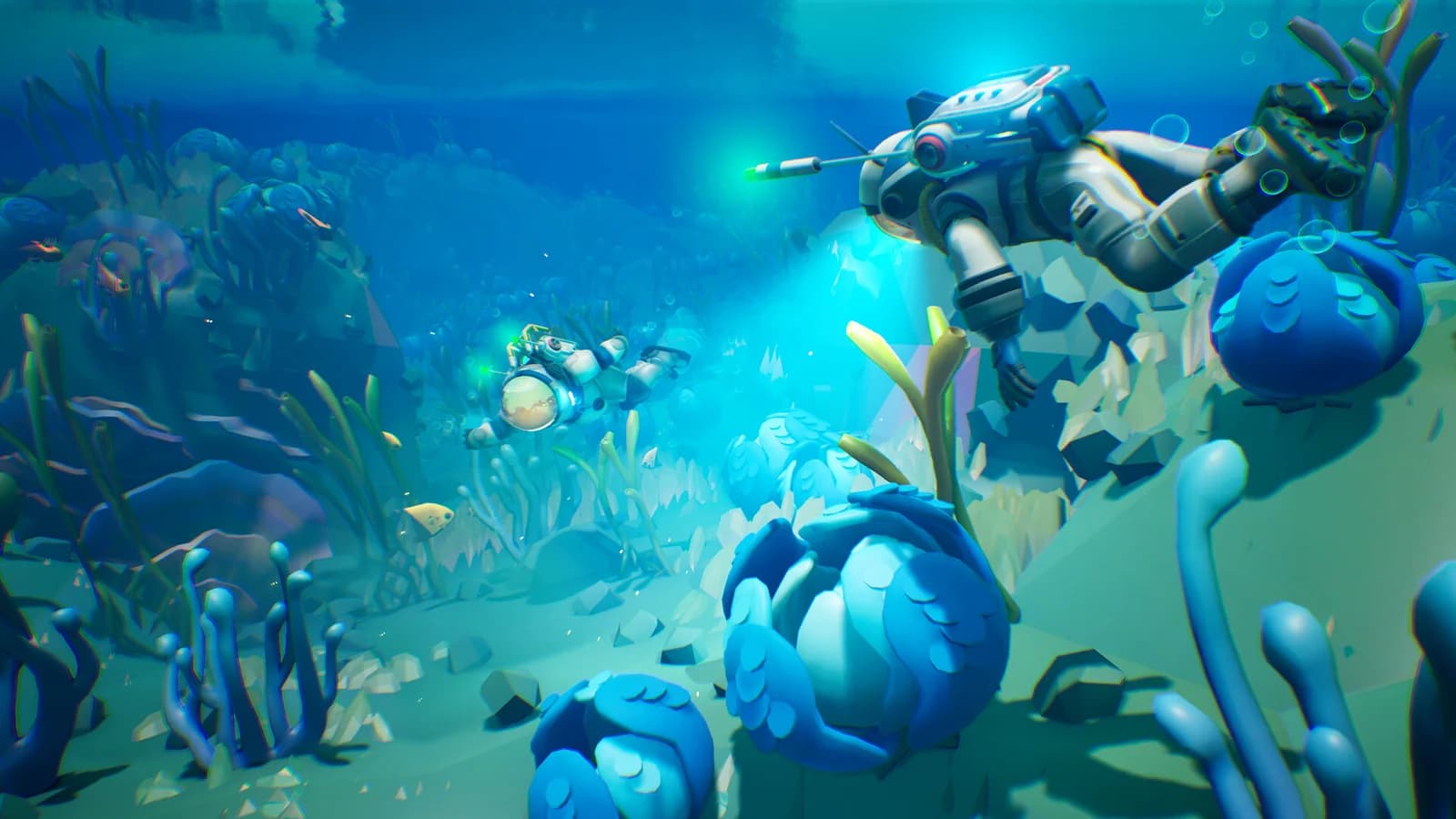
Because here is the core of the problem: a pretty world to explore does not make a game. The dominant feeling, in the test phases as at launch, is that you have an enormous amount to see but very little to do. Once the wonder of the first biomes fades, the loop quickly boils down to walking, jumping, digging, and repetition sets in faster than you would like. The objectives lack variety and bite, and the game struggles for now to give a real reason to hang on beyond the contemplative stroll. The studio promises to enrich all of this, and you have to give it that credit, but as it stands, engagement runs out of steam.
Add two more pitfalls. First, the obligation to play online, which frustrates a good chunk of the Astroneer audience, which came precisely for a quiet solo adventure. Then, the technical side on some platforms: on Switch 2, several players report stutters, a framerate locked at 30 frames per second and a markedly less flattering look, to the point that the tutorial becomes a chore to finish. For a game whose beauty is the main argument, that is a real problem where it shows up.
Finally there is the question, inherent to any game conceived as a service, of lifespan and turnout. A title that bets on collective expeditions and a social hub is only worth as much as the community that inhabits it and the steady flow of content that gives it a reason to return. If the additions drag, or if players do not show up once the launch curiosity fades, a magnificent space station can quickly become a deserted hall. It is System Era's riskiest bet, and also the one we will only be able to judge with the hindsight of several months.
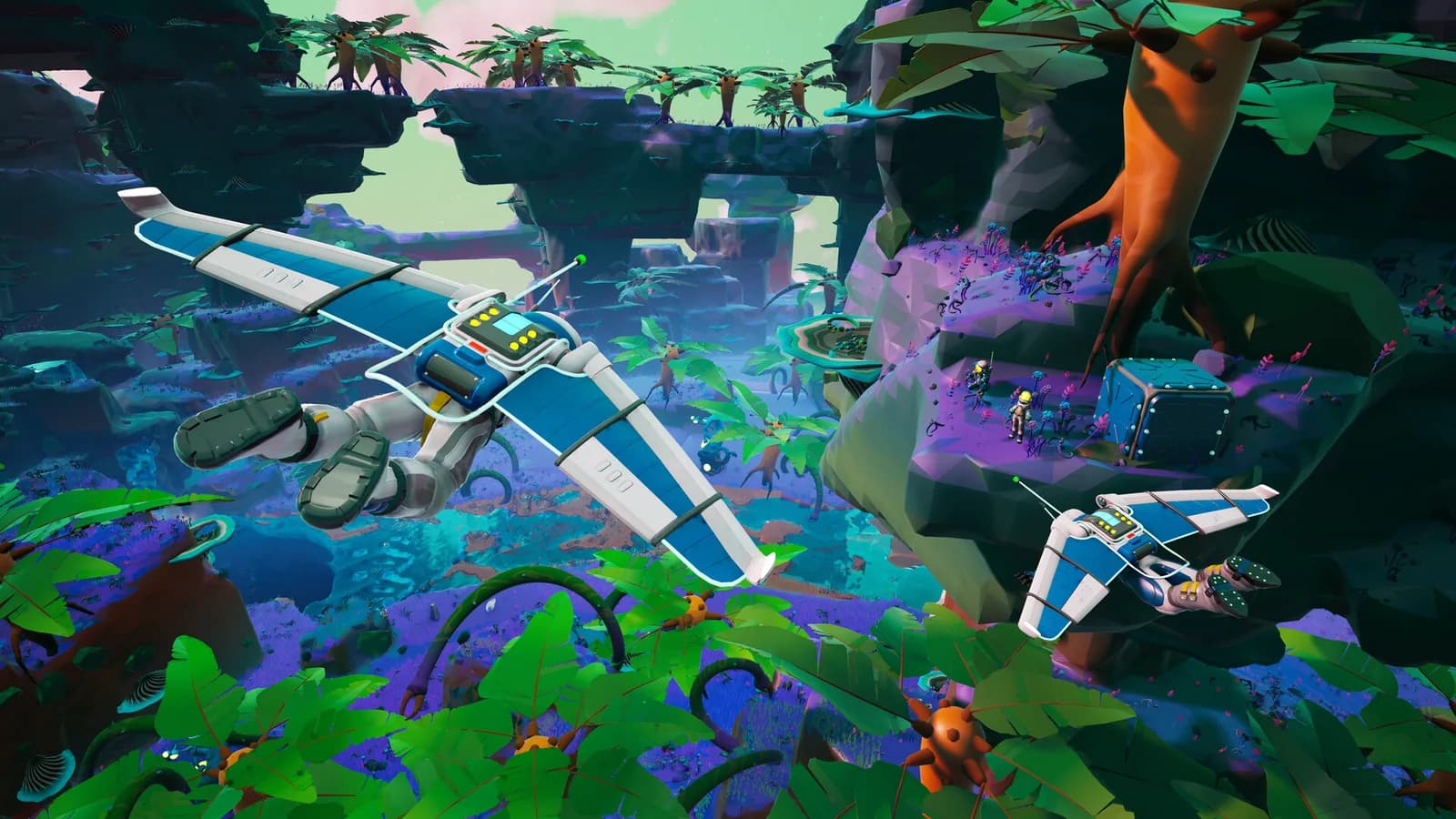
Starseeker: Astroneer Expeditions is a game we very much want to love. It is splendid, otherworldly, carried by that modeling-clay art direction that made Astroneer's charm, and its idea of cooperative expeditions punctuated by a refuge-station has potential. But at launch, it suffers from an unforgiving ailment: you wander through it more than you play it. The content is too thin, the loop too repetitive, the mandatory online will put off the solo fans of the first, and the tech falters on Switch 2. By turning its back on the creative sandbox that was Astroneer's identity, System Era took a huge risk, and for now it is only half rewarded. One to watch, clearly, but to let mature before embarking.
A sublime space postcard we would love to inhabit, the day it truly becomes a game.
The discussion carries on over on our Discord, where we relitigate scores for far longer than is reasonable.