There is a very specific feeling when you unpack your miniatures on a sticky tavern table, line up your plastic regiments against an opponent, and brace for a good-natured battle. Tabletop Tavern bottles that feeling and turns it into a video game. Mix a Total War battle engine, the structure of a Slay the Spire, and the look of a bar-counter wargame, and you get one of the cleverest little strategy treats around.
The context
Tabletop Tavern is a roguelike RTS developed by TJ, a near-solo creator, and published by Frostbloom and Gamirror Games. It launches today, after a much-noticed demo during Steam Next Fest, where the community adopted it in droves. Let us say it right away, it is a small-team game that has only just arrived, so this review judges a fresh title, with all the enthusiasm and reservations that implies. The developer, though, already has a solid reputation: hyper responsive on his Discord, he fixes bugs in the next patch and evolves his game to the rhythm of feedback. That is exactly the kind of support that inspires confidence.
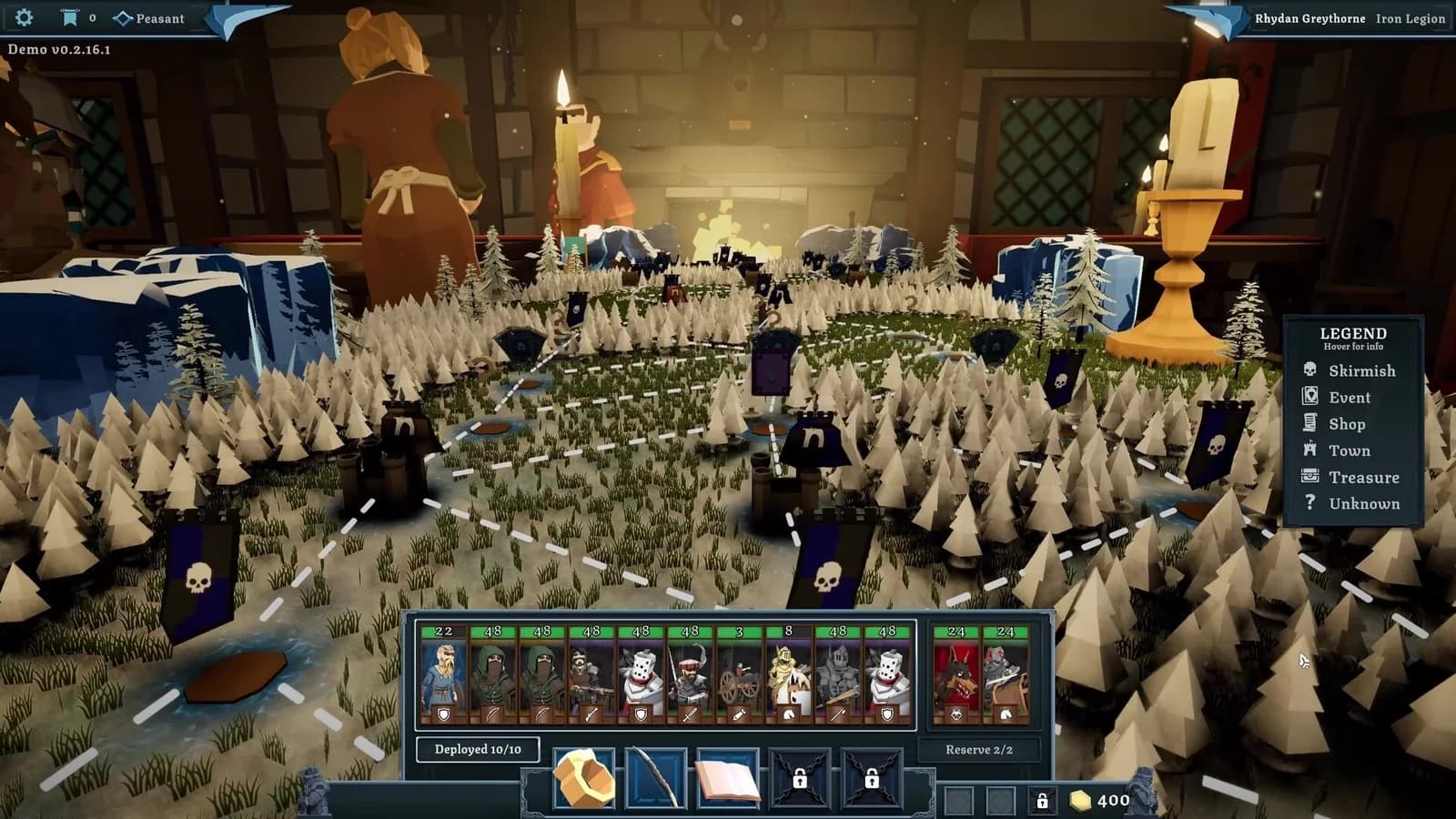
The pitch is right there in the title. You play a wargame on a tavern table, with miniature soldiers, and every clash looks like a tabletop battle caught live. We found, controller in hand, that whiff of Warhammer the Old World you roll out with friends on a weeknight, except here the opponent is the computer and the table fits inside your PC.
The heart of the game is its real-time battle, and it speaks immediately to anyone who has touched a Total War. You deploy your regiments, you form spear walls to break a cavalry charge, you protect your archers from a flank, you exploit the terrain to gain the upper hand. The controls are almost traced from the model, to the point that you are operational in two minutes, and the clashes build crescendo, from small skirmishes to big melees with hundreds of units on screen. It is sharp, readable and frankly satisfying, especially when an enemy unit cracks and flees, that little dopamine hit unique to the genre.
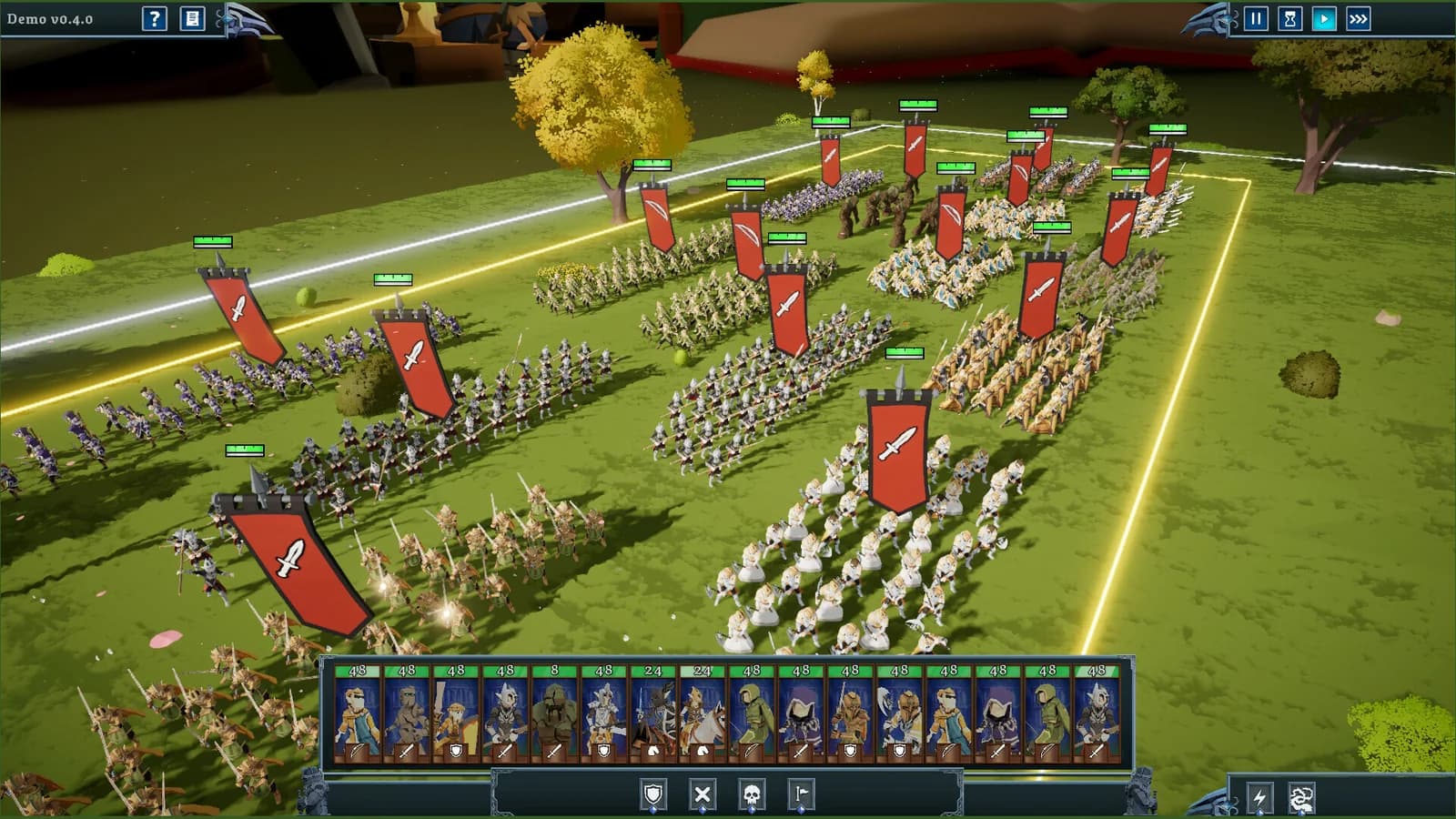
What lands is the dressing. The battles do not unfold in a generic field but very much on a table, lined with candles, tankards and sometimes a barmaid passing in the background, the regiments embodied by stylized miniatures that pop. This tavern frame is not just an aesthetic gimmick: it sets a warm, almost convivial mood that defuses the wargame's seriousness and makes you want to play just for the pleasure of the staging. You really feel like you are pushing lead soldiers around a board, and it is that personality that immediately sets the game apart from the crowd of Total War clones.
Where Tabletop Tavern departs from its illustrious model is in its structure. Forget the open-world campaign map: instead, you descend a tree of nodes à la Slay the Spire. Each branch is a choice, a battle, a random event, a shop, a town, a treasure or a mystery tile. This roguelite skeleton turns every game into a condensed run, where you build your army from scratch, draft new units as you win, dig up rare gear and unlock permanent upgrades. Difficulty climbs, encounters are random, and each run tells a different little military story. For the player who finishes a roguelike run and immediately starts the next, the hook is perfectly set.
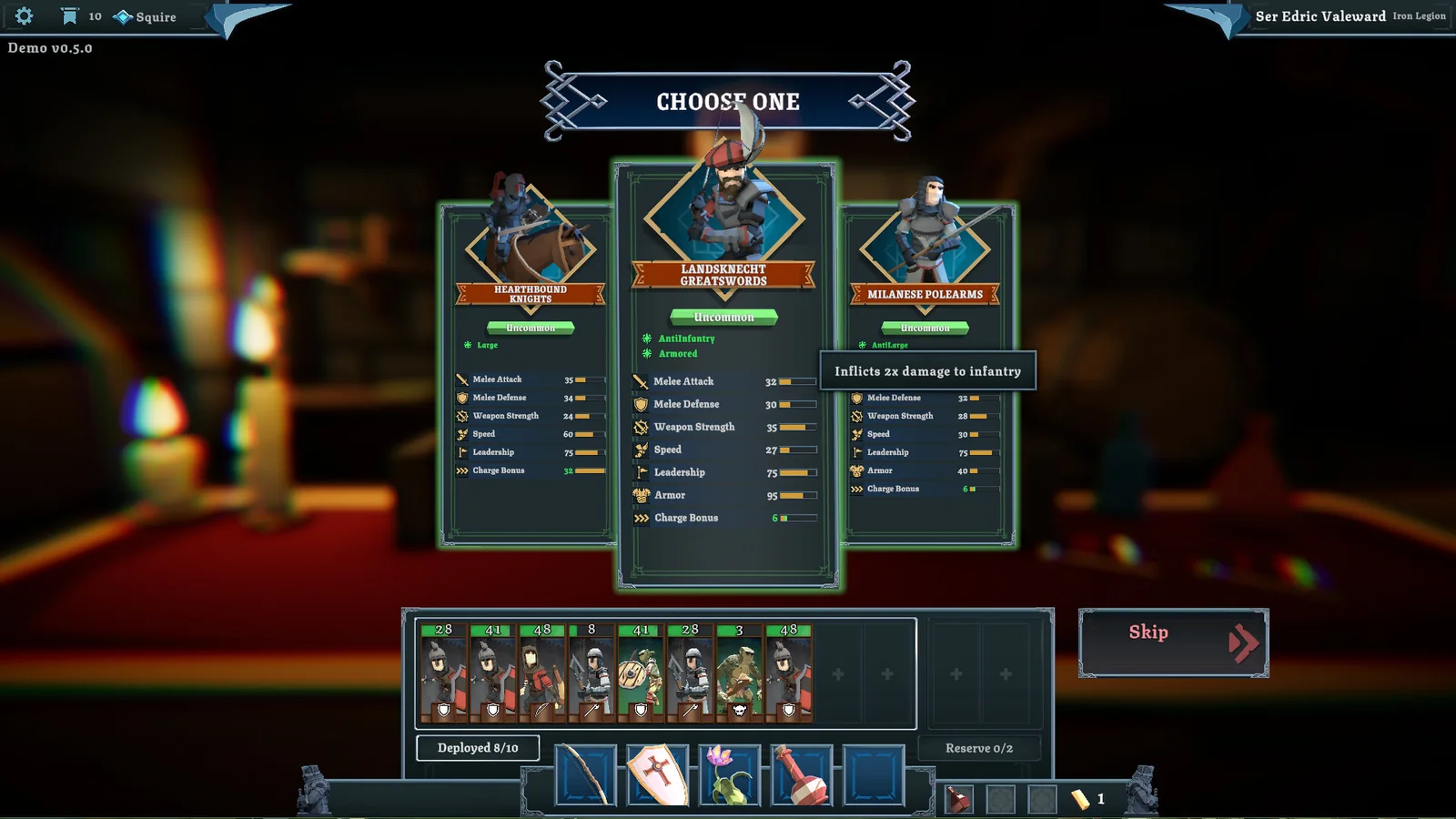
The real richness comes from the variety of factions. You find a fine gallery of archetypes, the elite infantry of the Vikings, the monstrous trolls and giants of the Orcs, the agile and flashy elves, the versatile humans, the resilient dwarves, and many more, from vampiric courts to Japanese-inspired dynasties. Each faction has its identity, its own abilities and its way of composing an army, and at the start of a run you pick a hero with a signature unit and bonuses that reorient the whole strategy. My one-night army cheerfully mixed humans, elves and orcs, and it is precisely that tinkering freedom that makes you want to chain games to test new synergies.
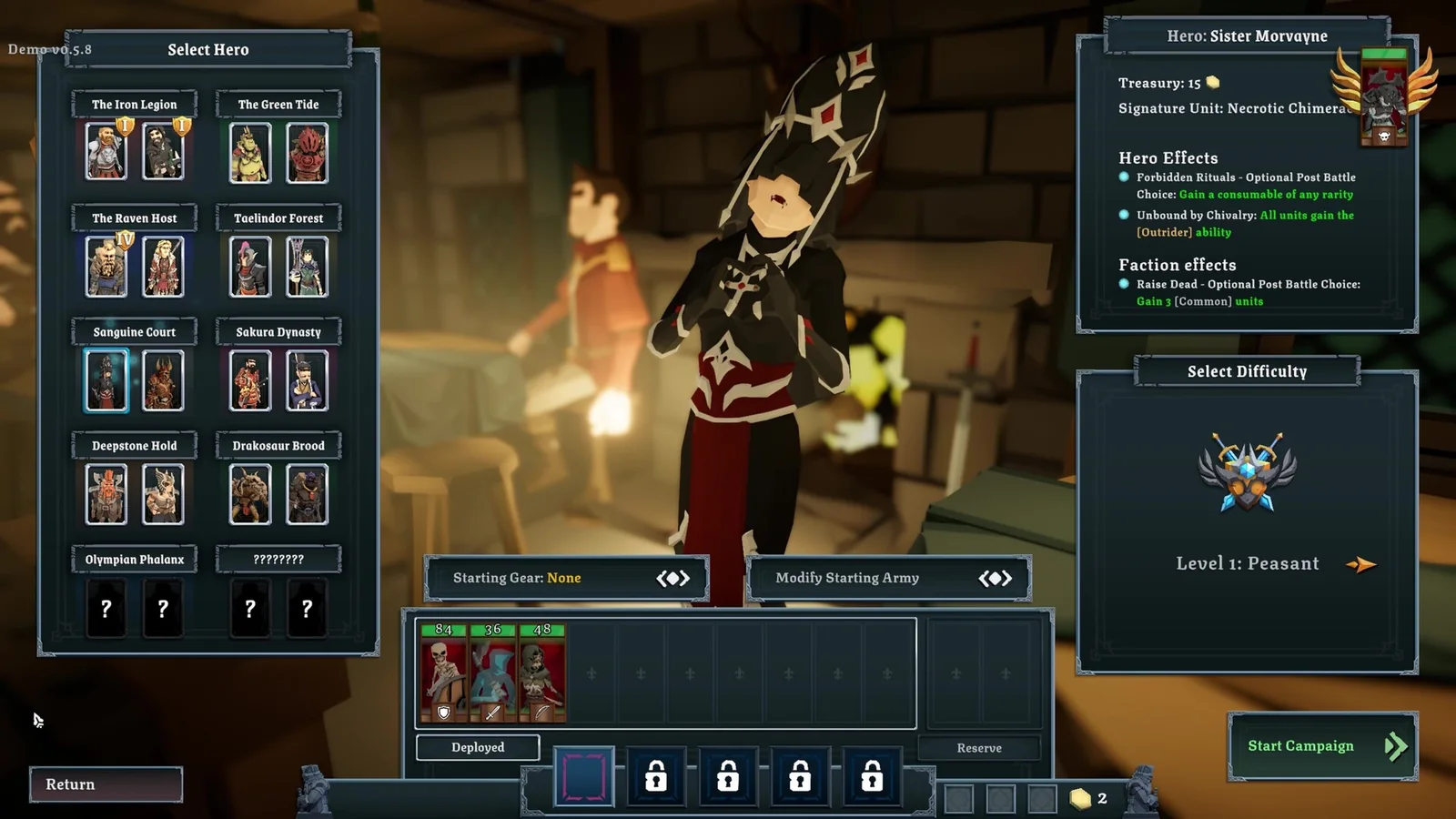
The choice of hero at the opening is no trivial matter: each brings a signature unit, faction effects and bonuses that durably shift the approach, plus a difficulty level to select, from the peaceful Peasant to nastier tiers. You progressively unlock new factions and heroes across runs, which feeds that self-improvement loop dear to the roguelite, where every defeat unlocks a little something for the next attempt. It is a well-oiled reward mechanic that pushes you to start over again and again.
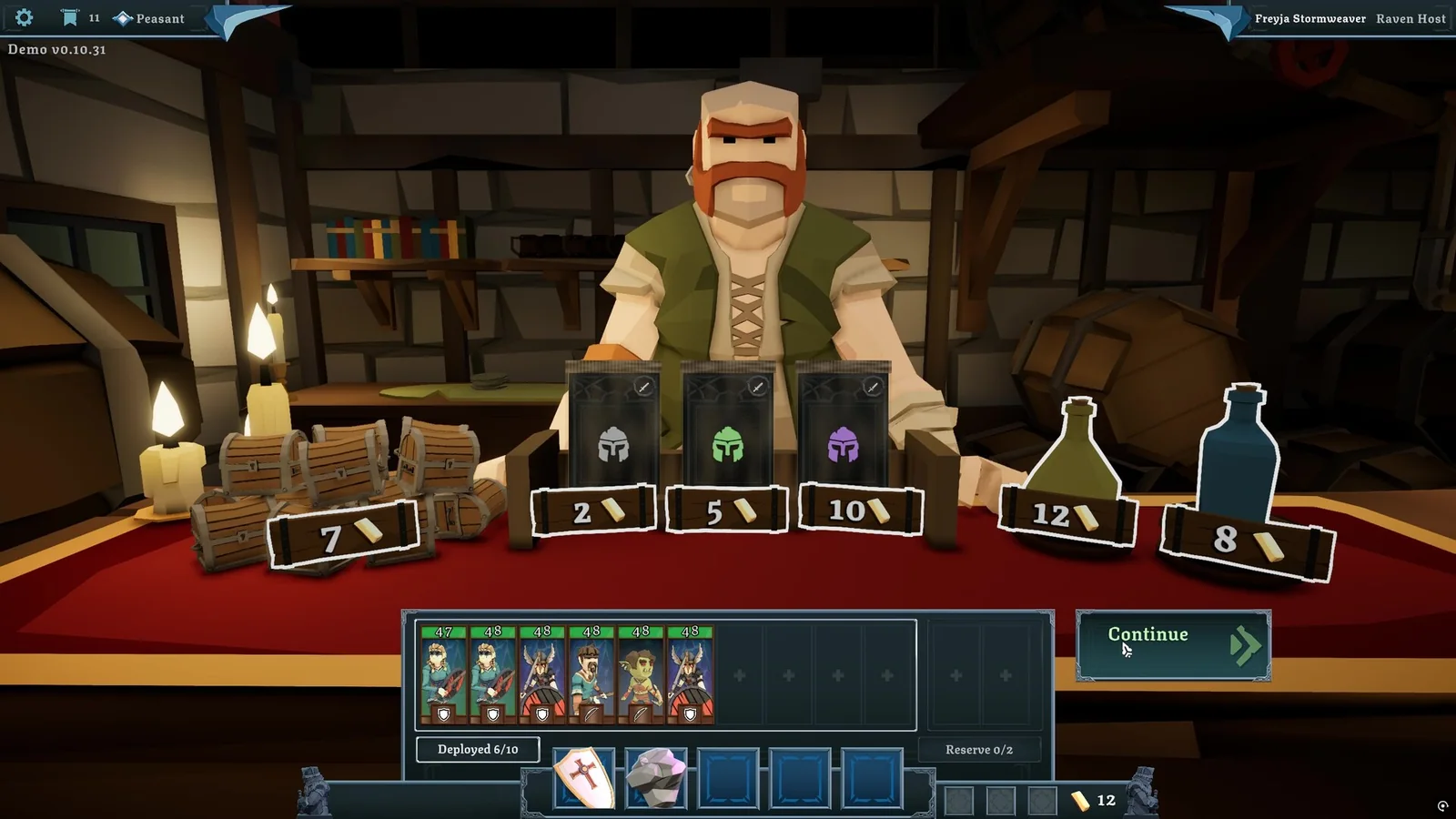
Between battles, you manage your roster, you shop at a merchant met on the tree, and you settle dilemmas that shape the rest of the run. Everything is smooth, accessible, designed for a short and rewarding session. It is a Total War decaffeinated in the good sense: smaller maps, briefer battles, less complexity, but the core of the tactical pleasure preserved. The game also makes some welcome comfort efforts, with adjustable difficulty, a mouse-only option and a mode playable without timed input, small touches that widen the audience without distorting the offering.
Let us be clear-eyed, because this accessibility has a flip side. Tactical depth quickly shows its limits, and some systems, like armor, stay fairly basic, to the point that you can feel the fun dull after the first few hours if you are after a real long-haul strategy game. It is an immediate, delicious amusement, but not necessarily a strategic abyss to sink hundreds of hours into.
Second gripe, the computer opponent. As often in this kind of game, a player comfortable with micro-management can win battles without a single loss against a theoretically superior army, simply by maneuvering better than the machine. It all hinges on that opponent's ability not to be manipulated, and it is a classic work site of the genre to keep an eye on.
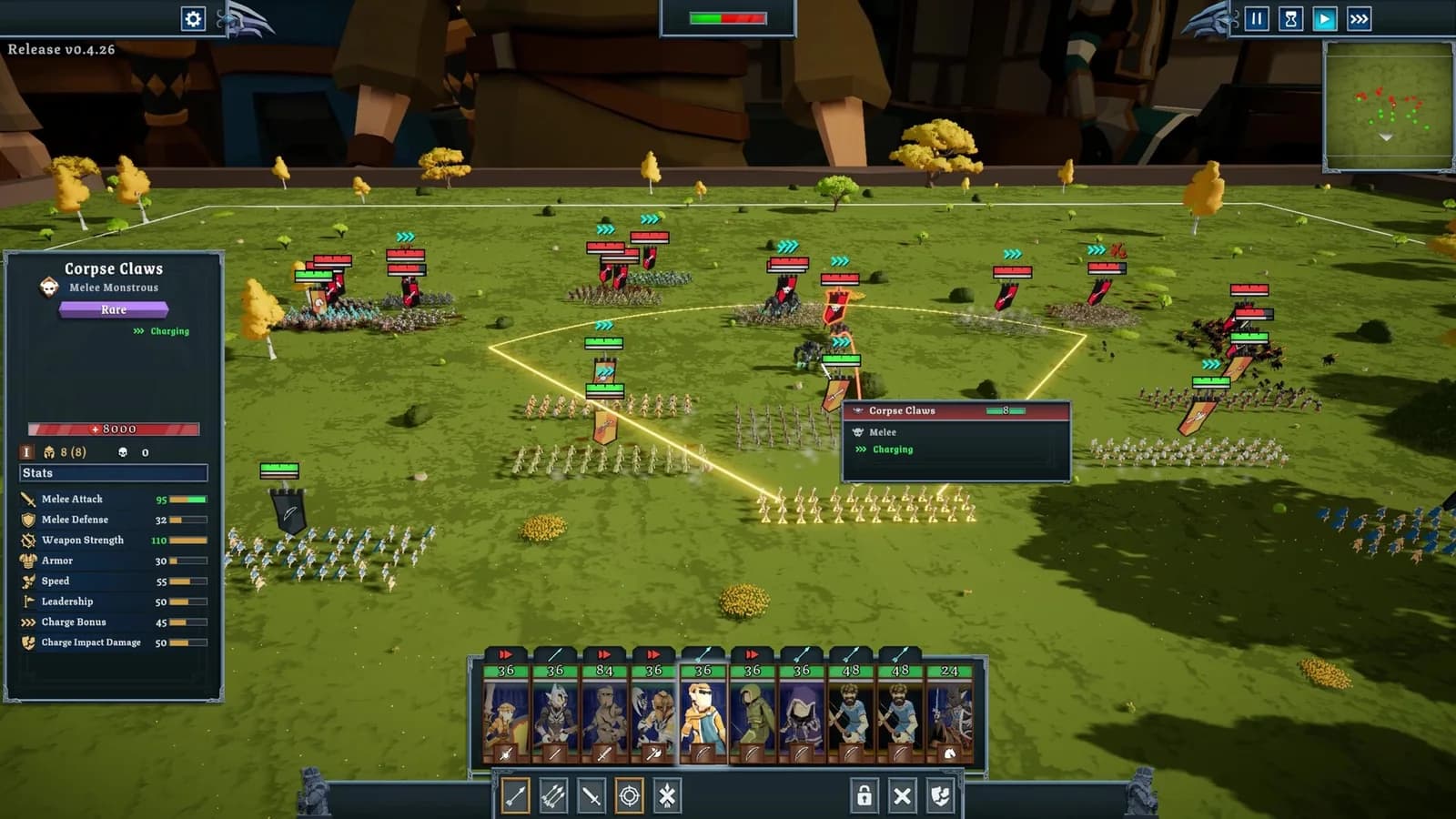
Finally, two more subjective reservations. The roguelite layer will not be unanimous: some players, won over by the battle engine, openly miss a good old classic campaign and find the node tree a touch repetitive over time. And on presentation, while we for our part love the stylized-miniature art direction, set on a candle-lit table, some will point to 3D models that smell a little of a generic asset pack. Nothing dealbreaking, but it is the kind of detail that reminds you this is a modest production.
Finally, keep in mind that the game has only just launched, after a long public demo phase. The current content is generous for the price, but it is typically the kind of title whose real value will be measured over time, as factions, units and events are added. Given the developer's involvement and legendary responsiveness to his community, we are rather hopeful, but it is a bet on the future that must be stated honestly.
Tabletop Tavern pulls off its bet with disarming charm: taking the intimidating grammar of a Total War and making it light, fast and accessible, all wrapped in a bar-counter wargame presentation we loved. It is a great game for short evenings, for roguelite fans who want the clash of armies without the weight of a fifty-hour campaign, and the developer's exemplary support bodes well for a title that will only grow. It lacks long-term depth, a craftier opponent, and the roguelite layer will divide. But for the simple pleasure of lining up your regiments and watching the melee ignite, we keep coming back for more.
The miniature wargame stripped to its essence and served on a platter: light, clever, and terribly addictive in small sessions.
The discussion carries on over on our Discord, where we relitigate scores for far longer than is reasonable.