Let us not kid ourselves: we have spent hours, and even far too many hours, painting Descent miniatures on the corner of a table, brush in hand and eyes stinging, trying to nail a gradient on a hero's cape or a dragon's scales. So seeing this monument of board gaming finally land as a video game stirs something in us, naturally.
There are board game licenses that seem made for video games, and Descent is clearly one of them. Dungeons, a band of heroes, clattering dice, bosses that make the whole table sweat: all the DNA of the old-school dungeon crawler. Terrinoth: Heroes of Descent is the very first video game adaptation of this board game landmark, and it arrives with a clear promise, to recapture the magic of a game night, but on screen. Promise kept ? Largely, yes.
The context
The game is developed by French studio Artefacts Studio, backed by Shine Group, and published by New Tales. It just launched on PC, PS5, Xbox Series and Mac. Let us be transparent upfront: the title is so recent that no established critical consensus exists yet, no aggregate review average, and this review therefore judges a freshly arrived game rather than a value already tested by months of hindsight.
What you need to know is that Terrinoth does not merely copy an existing board. It is a co-op, story-driven tactical RPG, presented as a standalone prequel to Descent: Legends of the Dark, with a fully original plot in the heroic fantasy world of Terrinoth. In other words, no need to have worn out the board game to dive in: it takes you by the hand, tells you a story, and lets you loose in the dungeons.
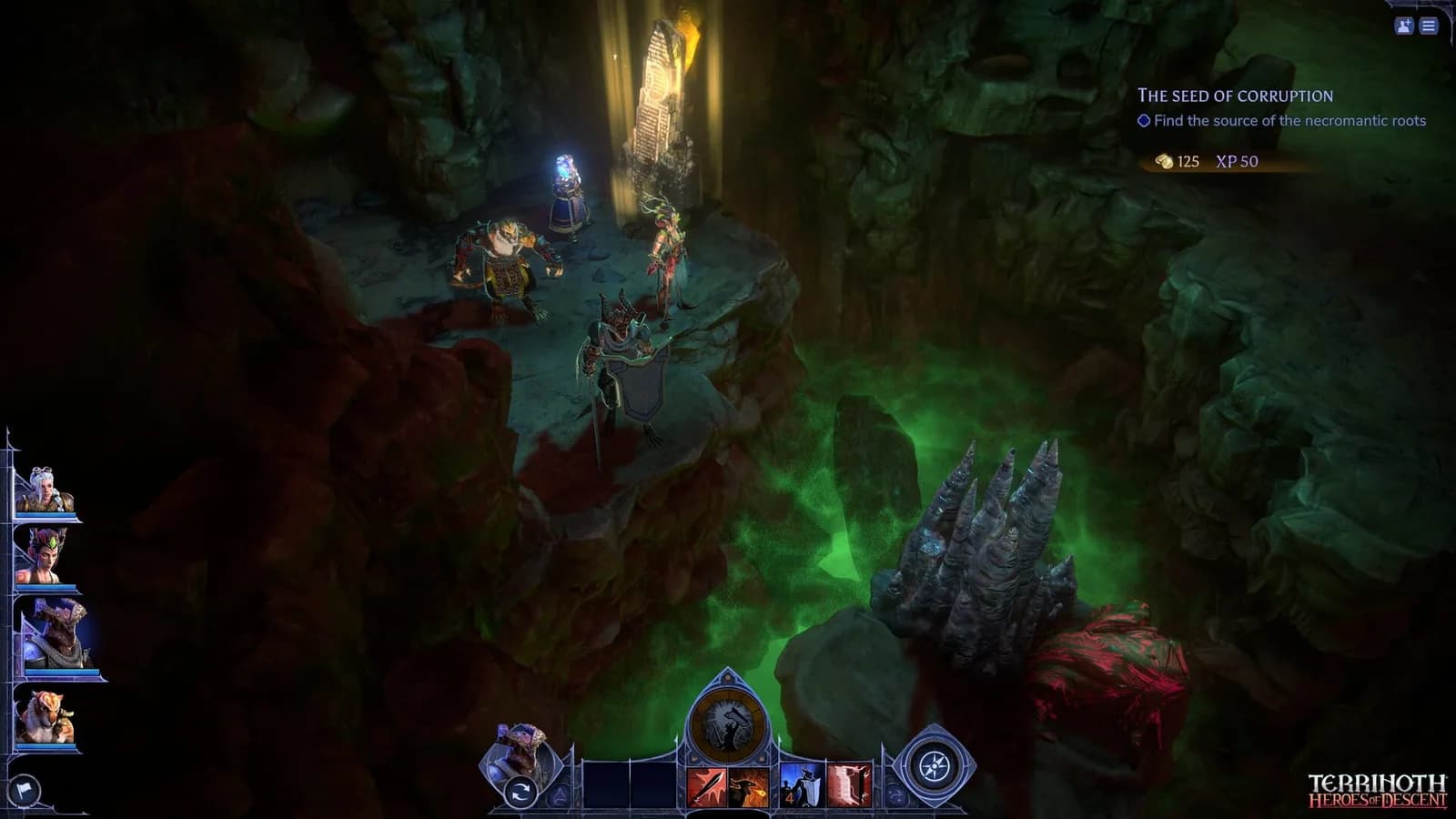
The heart of the game is turn-based tactical combat, and this is where the adaptation shows its intelligence. Rather than drowning the player under a brick of rules like the original board would, Artefacts opted for an accessible approach, with no steep learning curve. You move your heroes across isometric arenas, you play with positioning, elevation, line of sight and timing to gain the edge over enemies who give no quarter. Enemy attack tiles are telegraphed, each creature's resistances and weaknesses are clearly displayed, and you build your turn like a small, nervous chess problem.
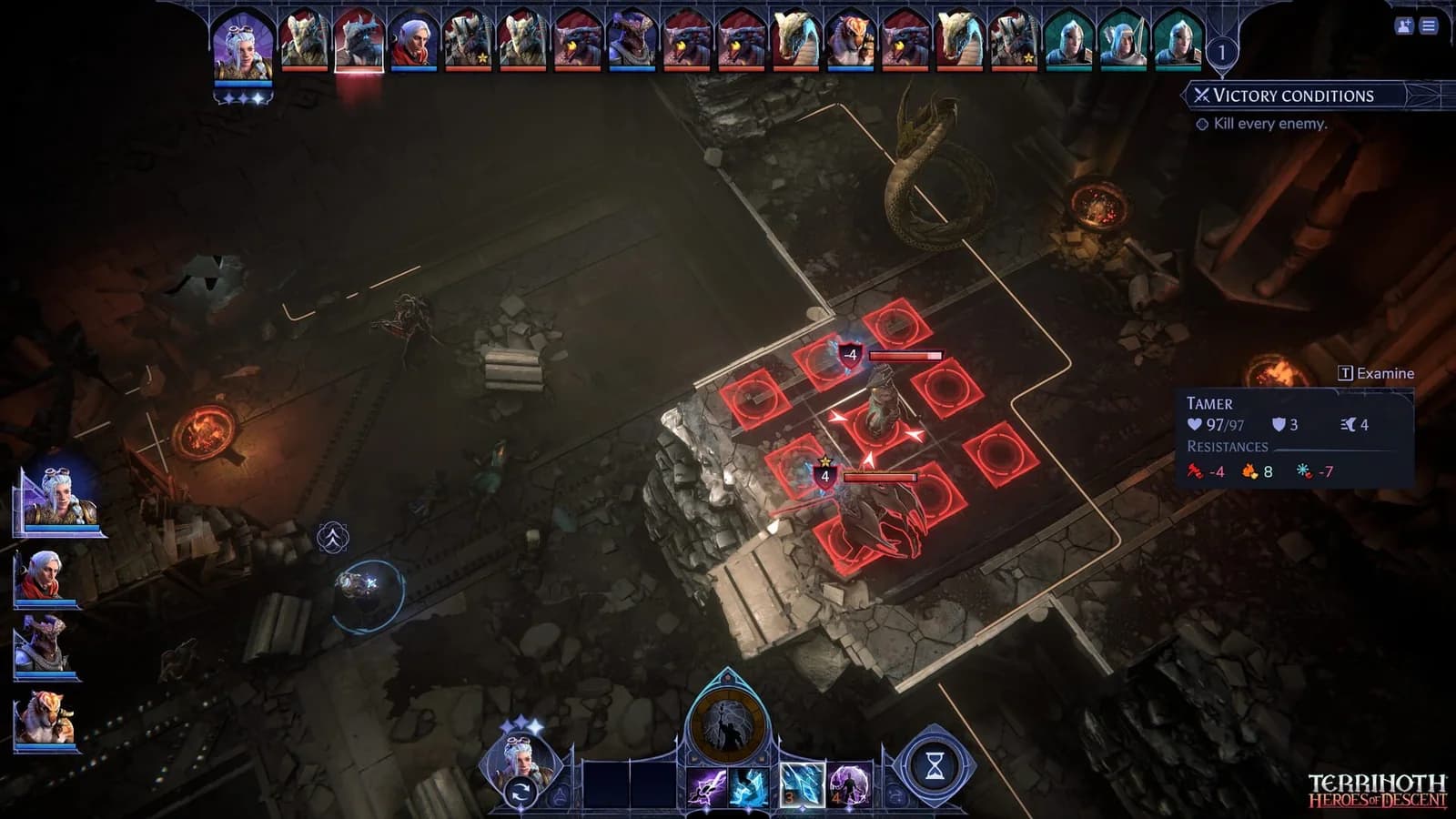
The real flavor comes from the interactions between heroes. You can chain multi-character combos and, above all, finish enemies off with devastating Synergy attacks that require coordinating your units. This is the system that lifts the game above the generic tactical crowd: a good turn is not a string of isolated actions, but a choreography where each hero sets up the next one's blow. In co-op, this mechanic takes on an added dimension, because you then have to coordinate with real human brains rather than your own plan.
On team building, you choose from eight signature adventurers, each with their own past, combat style and skill tree. You level them up, you unlock perks, and you upgrade your gear at the Forge between expeditions. Nothing revolutionary in the progression, but the whole is readable and satisfying, with that little pleasure of watching your band of misfits turn into a well-oiled war machine.
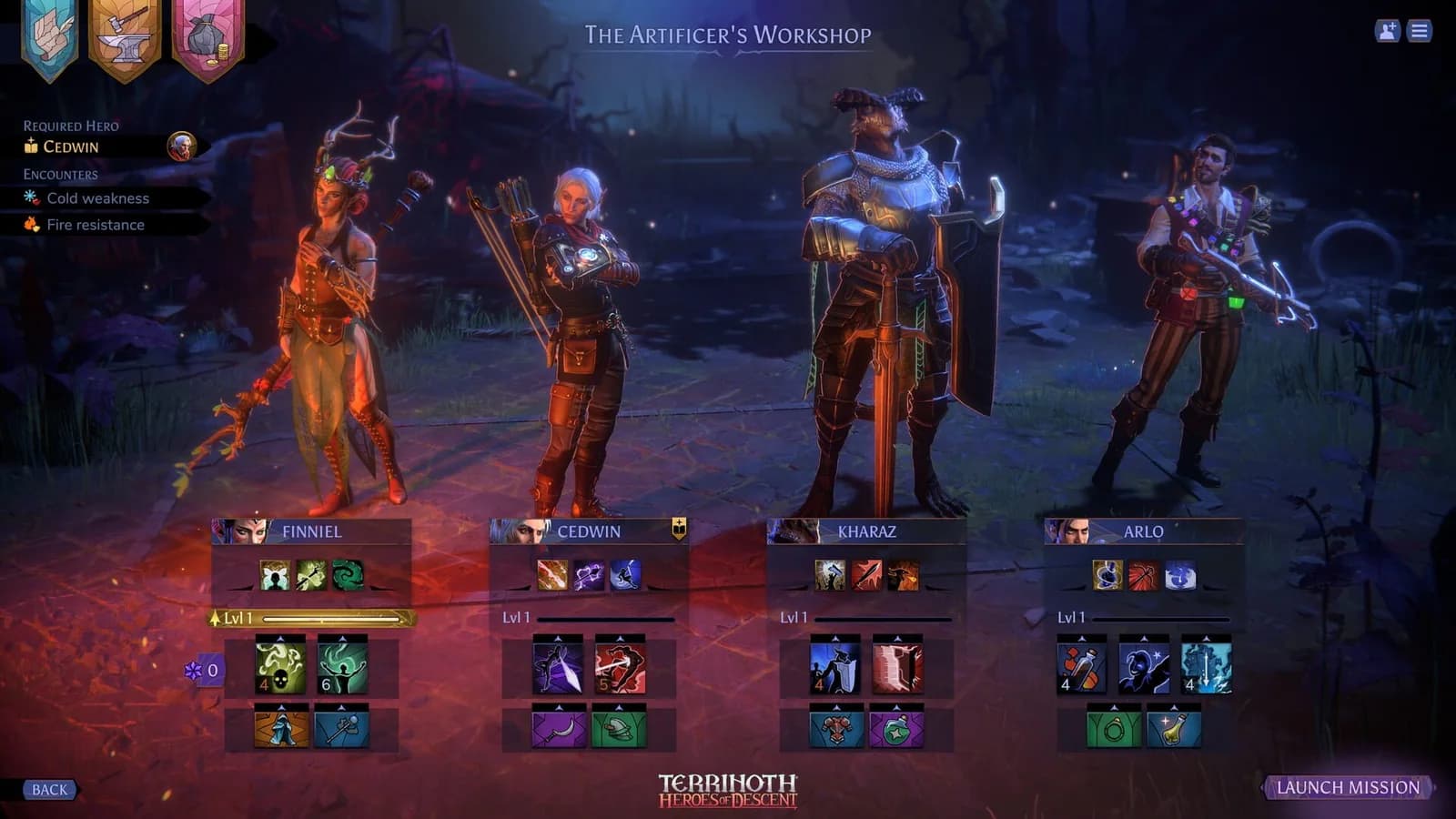
A seductive detail: before launching a mission, the game shows its hand. It tells you the encounters to expect, for example a cold weakness or a fire resistance among the dungeon's enemies, and some expeditions even require a specific hero in the company. As a result, preparation becomes a little game within the game: you build your team around the terrain, you adapt your gear to the announced resistances, you anticipate. That layer of planning, light but welcome, rewards the player who thinks before charging in and avoids the tactical pitfall of always fielding the same optimal team.
The game's architecture deserves a pause, because it is probably its cleverest idea. The campaign splits into four themed Chapters, themselves broken into self-contained Missions, each completable in a single session, like a board game night with friends. Twenty dungeons in total, each with its own environment and fully voiced storylines. This structure of short, replayable sessions is perfectly suited to the game-night format, and this is where Terrinoth finds its true identity: a game you boot up for an hour, solo or in a group, without having to dive back into thirty hours of context.
Co-op, precisely, is handled with care. You can face the darkness solo or online with friends, and they can even join a session in the middle of a dungeon, controller in hand. It is exactly the kind of flexibility that turns a good tactical RPG into a great game to share.
The story
Where many board game adaptations settle for a pretext, Terrinoth embraces real narrative ambition. Dark forces converge on the lands of Terrinoth, a forgotten relic could turn the tide, and it absolutely must not fall into the wrong hands. It is classic heroic fantasy canvas, but it is served by voiced storylines, characters with dynamic dialogues that adapt to your party's makeup, and side quests with their own highlights. We are not crying writing masterpiece, but the world holds together, and the care given to the voice acting and staging gives the dungeons a soul that many tacticals forget along the way.
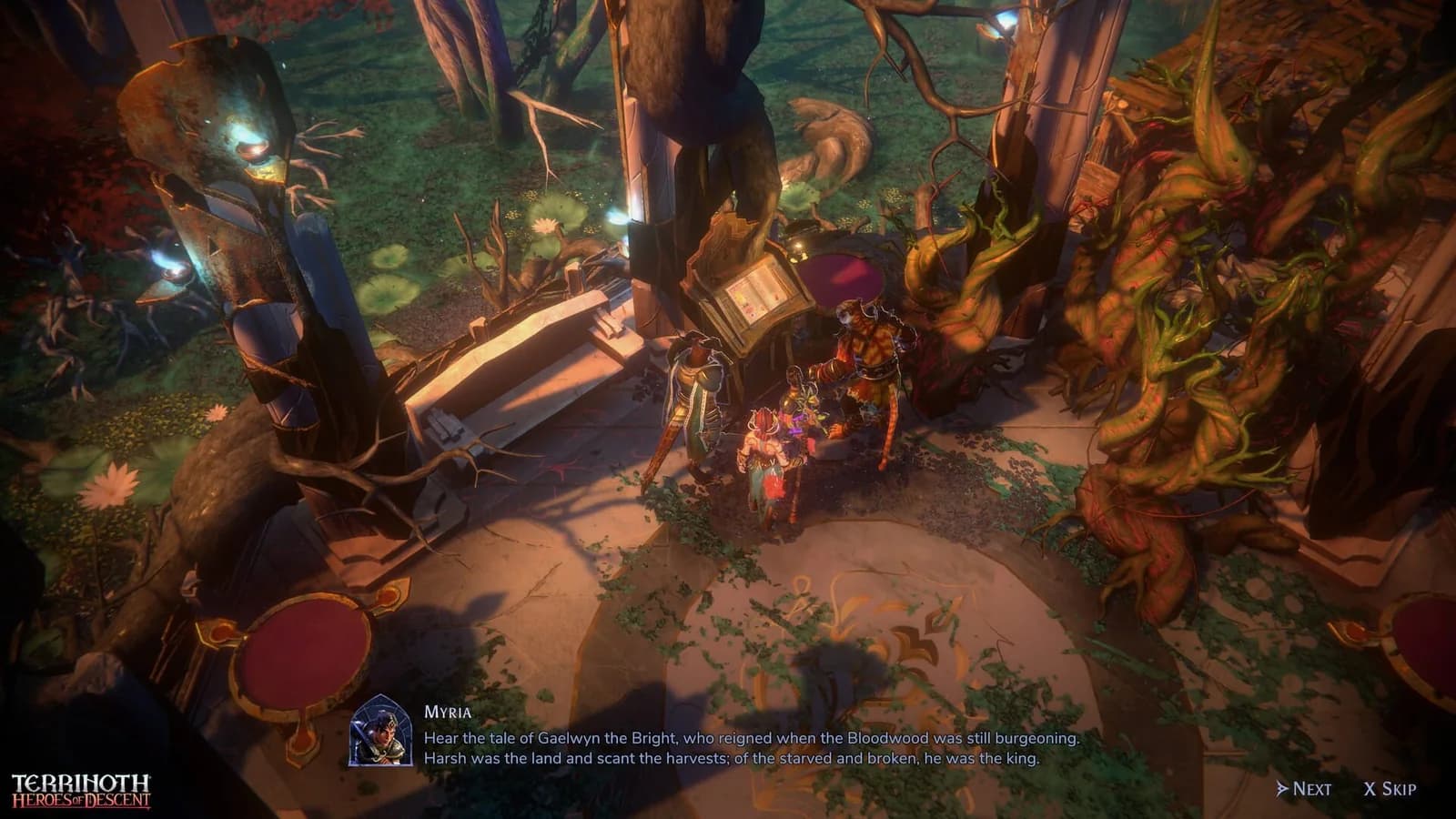
Visually, Terrinoth holds up with real generosity in the variety of its sets. You go from a blood-soaked forest bathed in light to caverns eaten away by a greenish necromantic corruption, from a madman's purple manor to fire-battered ruins, and each dungeon flaunts a marked visual identity. The isometric view stays readable even when the screen fills with effects, and the boss fights, giant fire serpents and other behemoths, know how to dazzle without sacrificing tactical clarity. And there is something moving, for anyone who wore out their brushes on the board, to finally see these heroes and monsters we spent hours painting frozen in plastic now move and strike. The models clearly echo the original miniatures, and it is a quiet but real fan pleasure.
The game also makes commendable efforts on accessibility and comfort, with adjustable difficulty, save anytime, a mouse-only option, a mode playable without timed input and full controller support. These are touches that widen the audience and fit the project's convivial spirit. On the other hand, and this is the assumed limit of this approach, the most demanding tactical veterans might find the offering a touch too soft, precisely because it refuses the dense complexity of the original board. Where some will see welcome accessibility, others may regret a lack of strategic depth over the long run. Since the game just launched, its real lifespan, its co-op balance and how its pacing holds across the twenty dungeons all remain to be confirmed in the coming weeks.
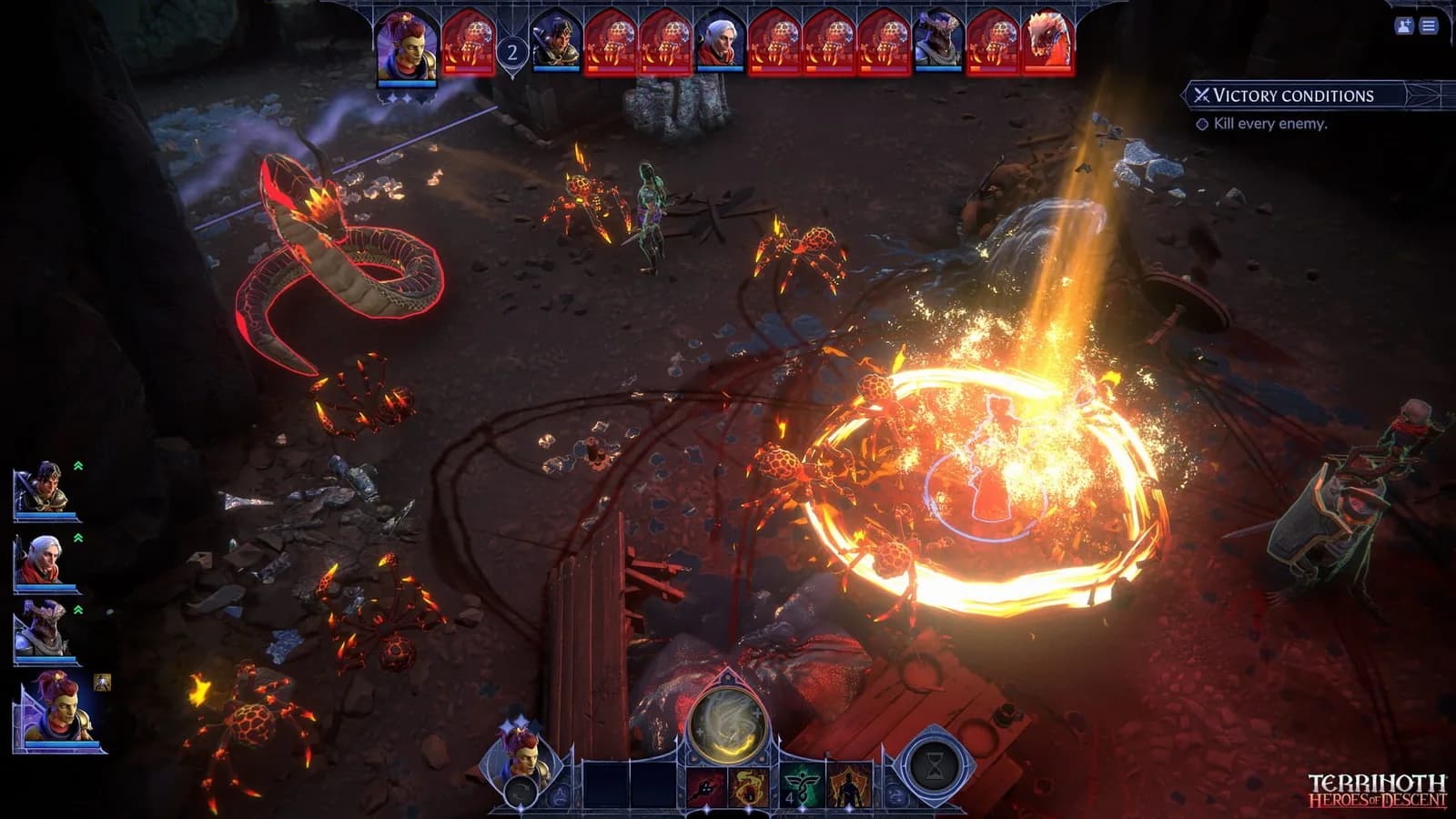
Terrinoth: Heroes of Descent nails the essential: carrying the soul of a great board game into a fluid, generous and welcoming tactical RPG. The combat built on combos and Synergy attacks has character, the one-night mission structure is a find perfectly suited to co-op video gaming, and the variety of voiced dungeons makes you want to chain expeditions. It is exactly the kind of game you want to boot up one evening with friends, no fuss, for the simple pleasure of thrashing hordes together. Its limits are those of its accessibility ambition: a tactical depth that might leave purists wanting, and all the question marks of a still-piping-hot game. But as the first video game adaptation of Descent, it is a clear and likable success.
The board game night resurrected on screen: accessible, convivial, and built to be shared.
The discussion carries on over on our Discord, where we relitigate scores for far longer than is reasonable.