5
Test
Ammossum: the best idea of the year, on a train that does not always start
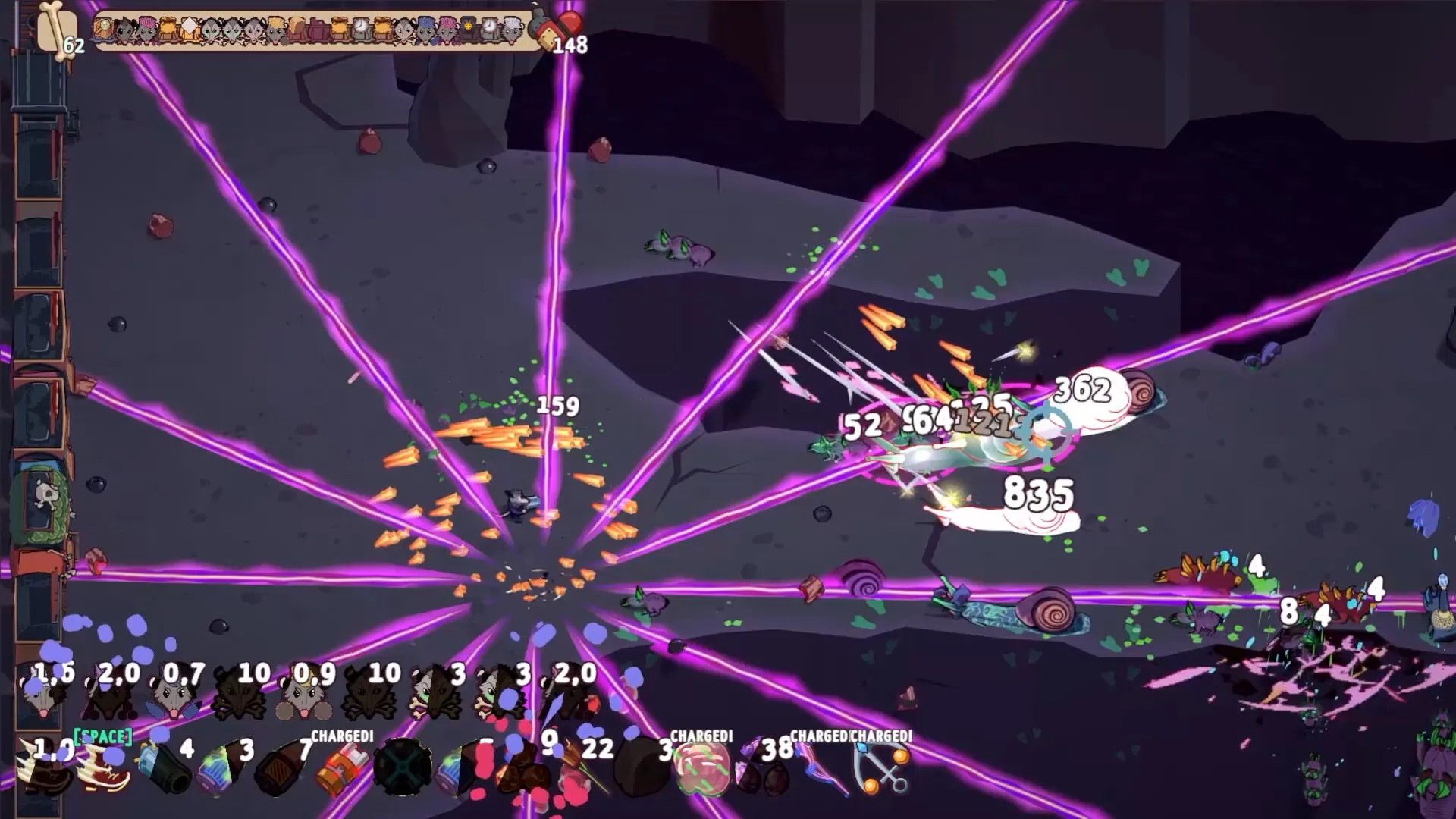
Your railcars are your health and your skills at the same time. Assuming the game gets past the loading screen.
Alexandrosse
7 min
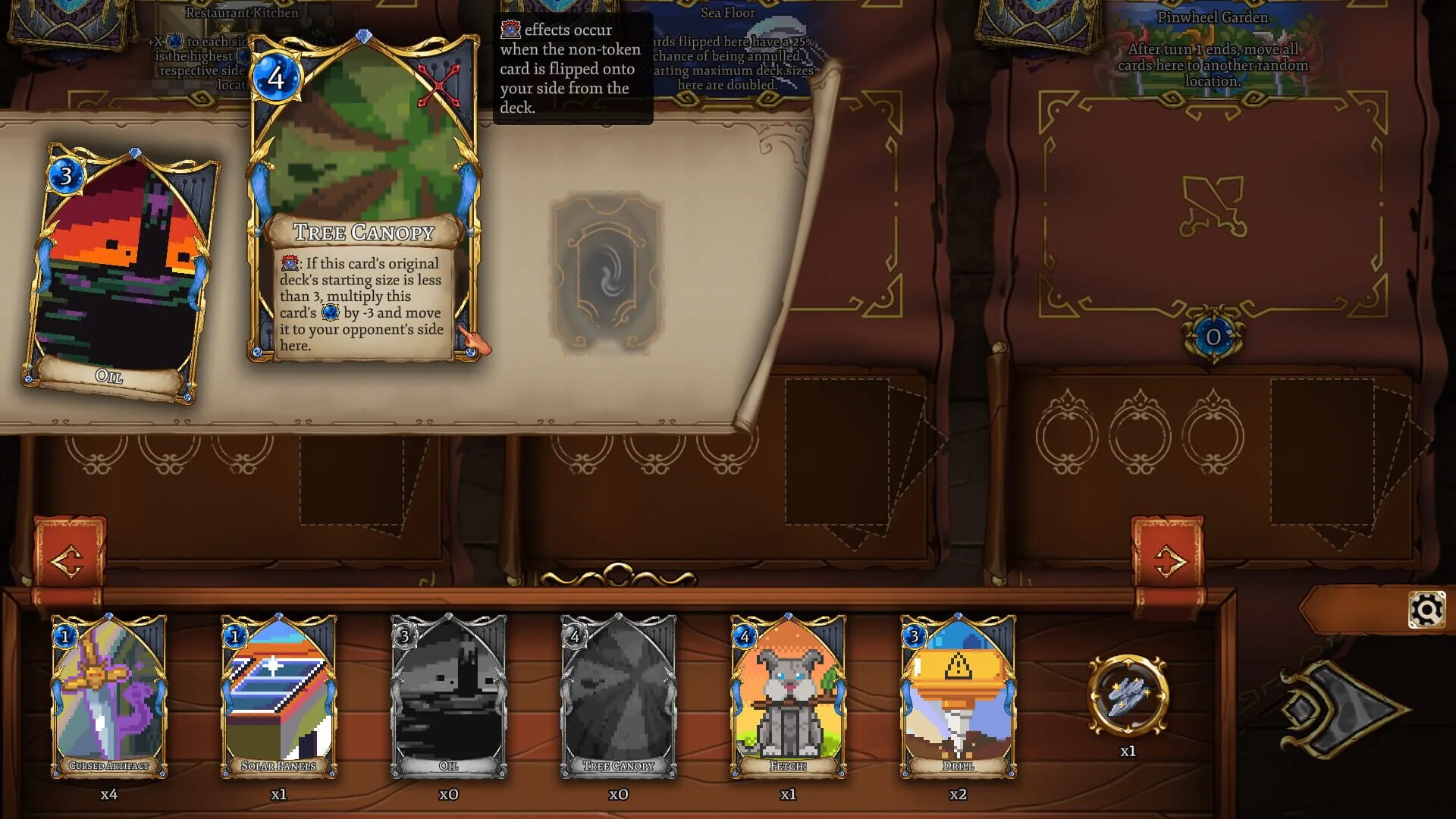
Gwent without The Witcher, Hearthstone without ten years of Warcraft: what's left? There Is No Lore answers by stripping the story to keep only the cards. Bold, and often clever.
Alexandrosse
InsertCoins.press Score
7/10
Verdict
Recommended
The title is a provocation, and we love that. There Is No Lore warns you from the title screen: don't look for the story, there isn't one, stop digging. We smiled first, then we got scared. Scared it was true in the bad sense, scared of a hollow game making its emptiness a marketing pitch. The good news is that the bet is far smarter than its joke.
There Is No Lore is a roguelite deckbuilding autobattler made by Little Flea Studios, released this week on PC for a trifling thirteen euros or so. You collect cards, build decks, tamper with them using trinkets, hunt for synergies, conquer locations and knock out bosses. All of it with no scenario whatsoever, and it's fully owned: the game's page tells you in black and white that if you want a nice immersive story, you're in the wrong place. In a genre that pushes tons of titles every month, that frankness is already a stance.
That name isn't just a gag, it's a provocation aimed straight at the heavyweights of card games. Because you have to ask the question for real: what would Gwent be worth without The Witcher, without Geralt, without Sapkowski's novels and the three games that built that world? What would be left of Hearthstone without ten years, actually far more than twenty, of Warcraft lore that give every card a face you recognize? Marvel Snap only exists because you grew up with those heroes. Legends of Runeterra leans on League of Legends. Magic drags thirty years of mythology behind every illustration. The giants don't just sell mechanics: they sell an emotional doorway that makes you love a card before you even know what it does.
There Is No Lore removes that door and leaves you alone before the bare mechanic. It's a real-scale test: with no universe, no endearing character, no nostalgia to exploit, does a card game still stand? And the answer is yes, provided you accept playing in only one category. Because There Is No Lore doesn't fight in the arena of the Hearthstones and Gwents, which live off their fandom. It sits in the lineage of Slay the Spire and Balatro, those roguelite deckbuilders that proved long ago you can become a cult classic with zero lore and a perfect gameplay loop. The title is a wink to that lineage as much as a middle finger to the mastodons.
Where the game really separates itself from Slay the Spire is on the word autobattler. You don't pilot the fights blow by blow. You build your deck, equip it, position it, then watch your cards duke it out on their own against the opponent. So the whole game plays out beforehand, in the preparation, exactly like a classic autobattler disguised as a card game. Those who love reading a match like a game of chess, decision after decision, will be thrown; those who adore optimizing a machine and launching it to see if it holds up will feast.
The content is solid for a game this size: more than 90 cards with varied effects, more than 40 trinkets that twist your strategies, a score of locations, as many starter decks and around fifteen scripted boss fights. The real find is the acquisition system. Once you win a scripted fight, you draw a card from the loser's deck to add to your own. Your deck thus builds up over your victories, straight off the corpse of your opponents, which gives each run a different trajectory and a real loot logic. It's simple, legible, and devilishly satisfying.
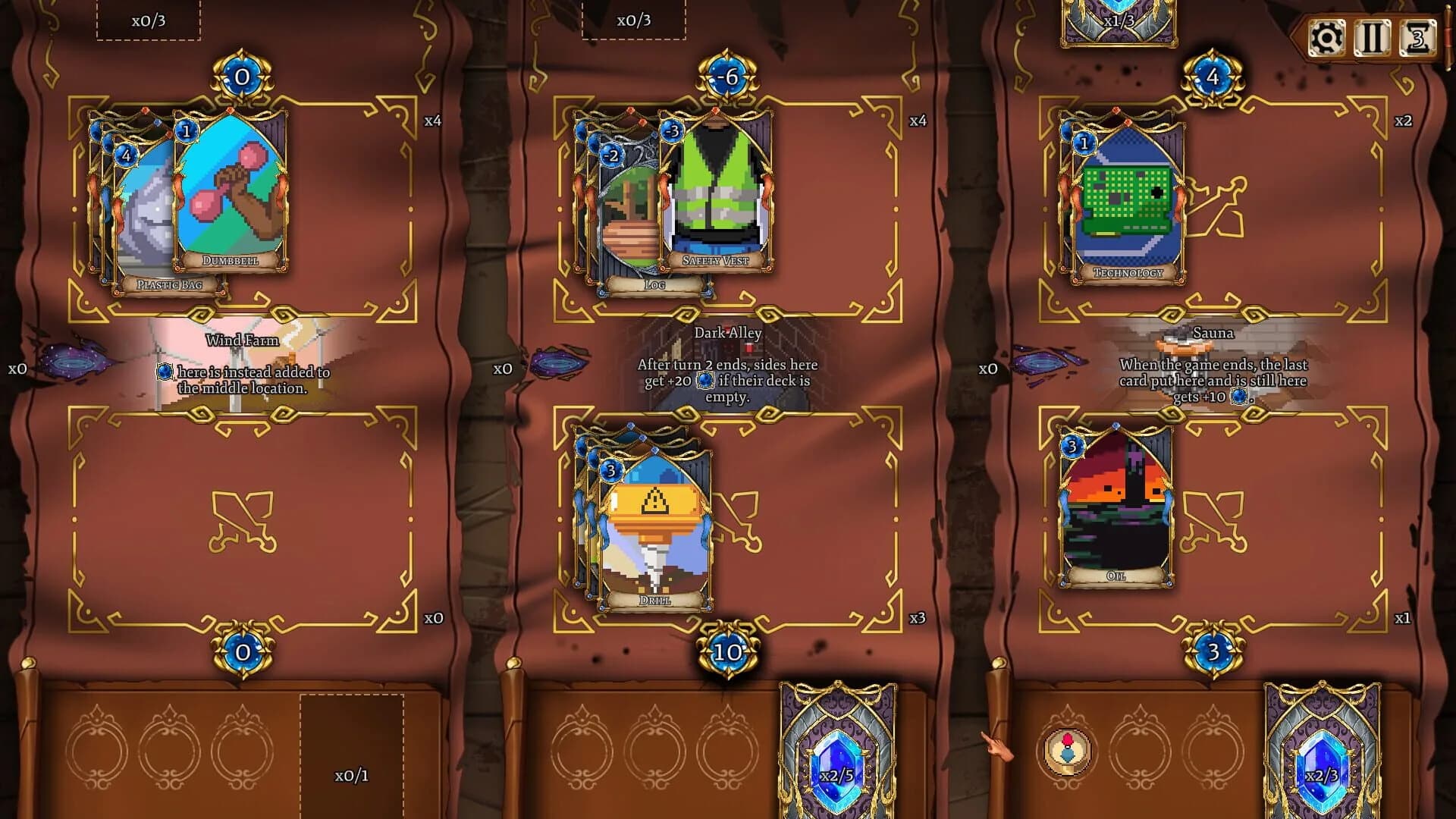
The game is built around two complementary modes. Story mode, despite a name that seems to taunt the game's own title, mostly serves to unlock the base decks and teach the systems. Draft mode is the beating heart: you build everything from scratch, you make do with what chance offers, and that's where the replayability sets in. Between the trinkets that change the rules, the synergies to sniff out and the locations that impose their constraints, the combination space is far larger than the minimalist design suggests at first glance.
That's also the great success of the no-lore stance: by depriving itself of a universe, the game concentrates all its energy on the legibility of its systems. Nothing parasites the reading of a card, no character sheet to digest, no reference to know. You understand fast, you optimize next, and the learning curve stays gentle without ever becoming simplistic. Where a licensed CCG asks you to learn its world on top of its rules, There Is No Lore gets straight to the point. The narrative void becomes a form of courtesy toward the player in a hurry to play.
We shouldn't romanticize the absence of lore, because it has a price, and it's real. What hooks a player to a card game over the long run isn't just the mechanic, it's attachment. You collect Hearthstone cards because you love what they represent, you keep a Gwent card because it tells something. There Is No Lore, by refusing all that, deprives itself of that emotional cement. Its cards are effective tools, never memories. Once the pleasure of the systems passes, that little thing that makes you want to come back for the universe as much as for the match is missing, and it's precisely that thing the giants charge so dearly for.
The other limit lies with the autobattler format itself. Watching your cards fight is exhilarating when the machine you built works, but frustrating when a run turns on a roll you don't control. The game trades the agency of turn-based play for the pleasure of upstream optimization, and depending on your player temperament, that trade will be a liberation or a small recurring letdown. With 90 cards, you're also holding honest but not lavish content, and genre veterans will see the bottom of it faster than they'd hope.
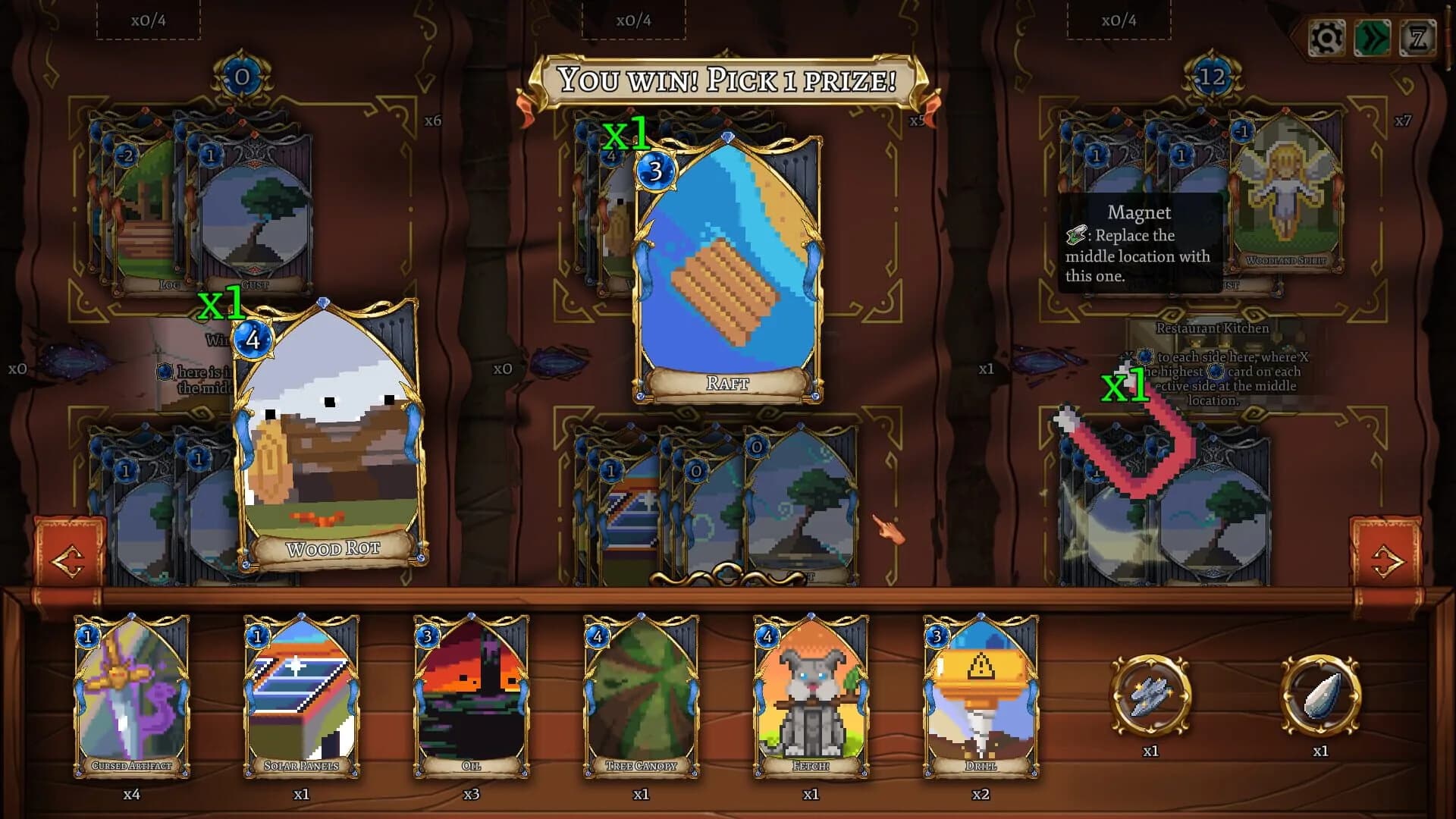
There Is No Lore does exactly what its title promises, and it's a success finer than it looks. By removing the story, it doesn't deliver a hollow game, it delivers a demonstration: yes, a card game can stand on its mechanics alone, provided they're good, and these are. The system of stealing cards from bosses, the wealth of trinkets and the cleanness of the reading make it a frankly recommendable autobattler deckbuilder, one that owns its identity instead of apologizing for its minimalism. It's clever, it's honest, and it's often exhilarating.
But the bet has a downside we can't hide. By cutting itself off from any universe, the game also cuts itself off from what turns a good deckbuilder into a lasting obsession: attachment. You admire There Is No Lore, you take a lot of pleasure in it, but you don't love it the way you love a game that told you something. It wins its bet on the mechanic and loses it on the heart, and that's maybe the most glaring proof that the giants' lore isn't just window dressing: it's a crutch, yes, but a crutch that sometimes holds up the whole edifice.
An autobattler deckbuilder that removes the story to prove the mechanic is enough, and nearly pulls it off: brilliant in its systems, a little cold in the heart, exactly what its title announced.
Strengths:
Weaknesses:
Tested on PC.
Disagree with the score? Come and tell us on the InsertCoins Discord, where we defend our verdicts live.
Community
Your rating
Advertisement
Loading comments...
You might also like
Your railcars are your health and your skills at the same time. Assuming the game gets past the loading screen.
Five euros, a strip of ARPG along the bottom of your desktop, and a Steam market where you resell your minions. The success is real, so is the wall.
The train on the mouse, the drones on the keyboard, thirty-second rides. A small game that knows exactly how long it lasts.