Some video game adaptations you watch out of morbid curiosity, waiting for the moment everything collapses. And then there are the ones that surprise you. The ones that arrive without warning and do something unexpected: they work.
Warcraft falls squarely into the second category.
When it came out in 2016, Duncan Jones's film didn't win everyone over. Divided critics, mixed reception in the West, underwhelming performance in the American market. And yet, at InsertCoins, our verdict is simple and unashamed: we loved it. And ten years later, we still talk about it with genuine affection and a faint bitterness that never quite goes away.
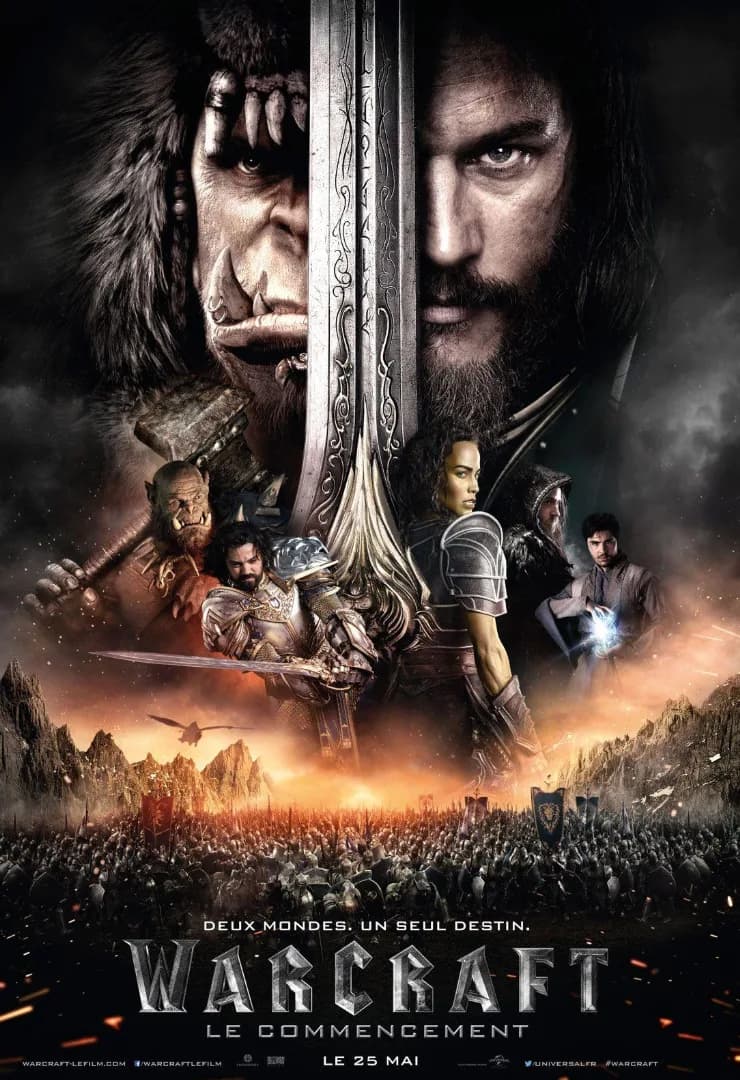
Where most adaptations fail, Warcraft makes a clear choice from its opening minutes: respect its universe, own its mythology, and resist the urge to simplify everything for an audience unfamiliar with the franchise. It's a risky bet. It's also what gives the film its identity.
The factions are well-defined, the political stakes present, the characters morally ambiguous. The film doesn't treat the audience like idiots. It assumes that people in the cinema are capable of following a story with layers, multiple sides, shifting loyalties. For a video game adaptation, that's far from guaranteed.
And it's refreshing.
There's a pride in the way the film carries its universe. Duncan Jones knew Warcraft. And it shows in every frame, every artistic decision, in the way Azeroth exists on screen as a world with a history before and after the events we're watching.
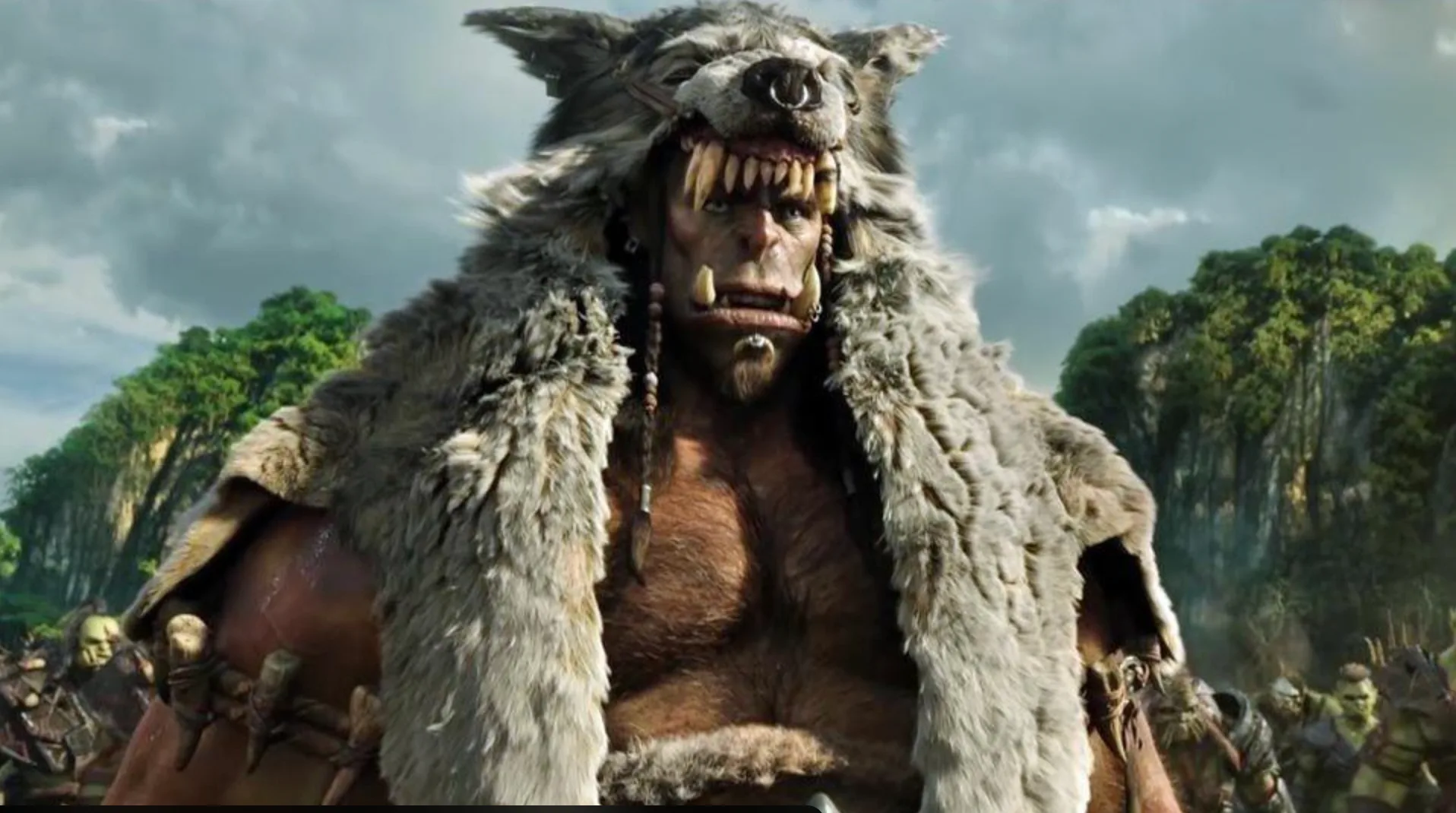
This is probably the film's greatest achievement, and the one talked about least. The orcs of Warcraft are not enemies. They're not an interchangeable threat destined to be cut down in the background. They're complex, nuanced, and sometimes more compelling than the human characters.
Durotan carries much of the film's emotional weight. You understand his choices. You feel his conflicts, his sense of honour, the tension between loyalty to his clan and the knowledge that what he's being asked to do is fundamentally wrong. It's the kind of character you don't expect to find in a blockbuster aimed at general audiences, and it's precisely where Warcraft transcends its status as an adaptation and touches something more universal.
The orcs steal the show. And that's not a complaint.
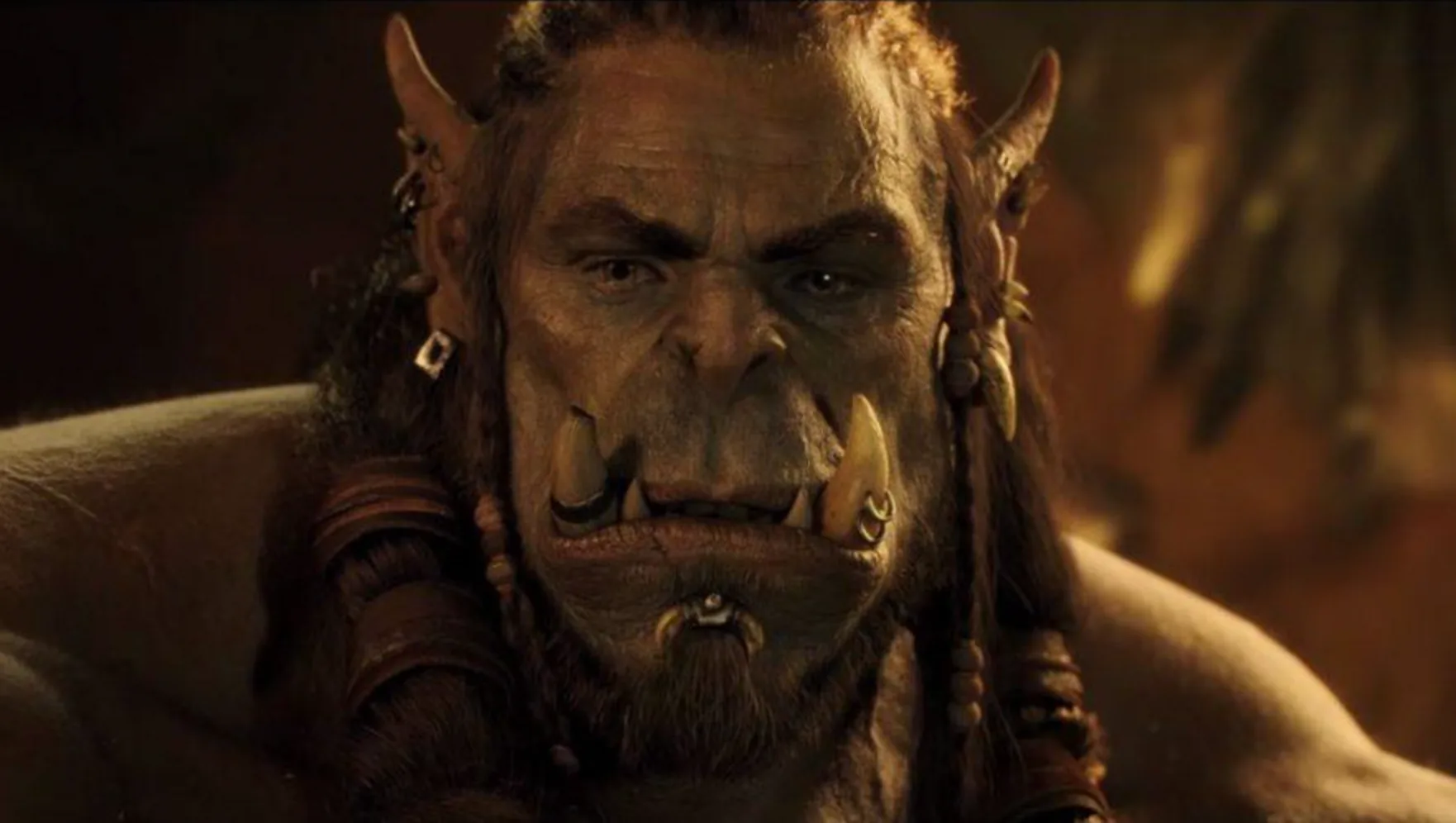
Visually, Warcraft delivers. The battles are massive, the visual effects solid for the time, the universe faithful to what World of Warcraft and RTS players had been building in their heads for years. There's a generosity in the filmmaking, a desire to show, to make this world exist on screen without reducing it to backdrop decoration.
Not everything works perfectly. The pacing stumbles in places, some of the human characters lack depth, and the film tries to cram too much into too little space. But the ambition is genuine. The film wants to exist. It wants to tell something. And that intention, even imperfectly executed, counts for a great deal.
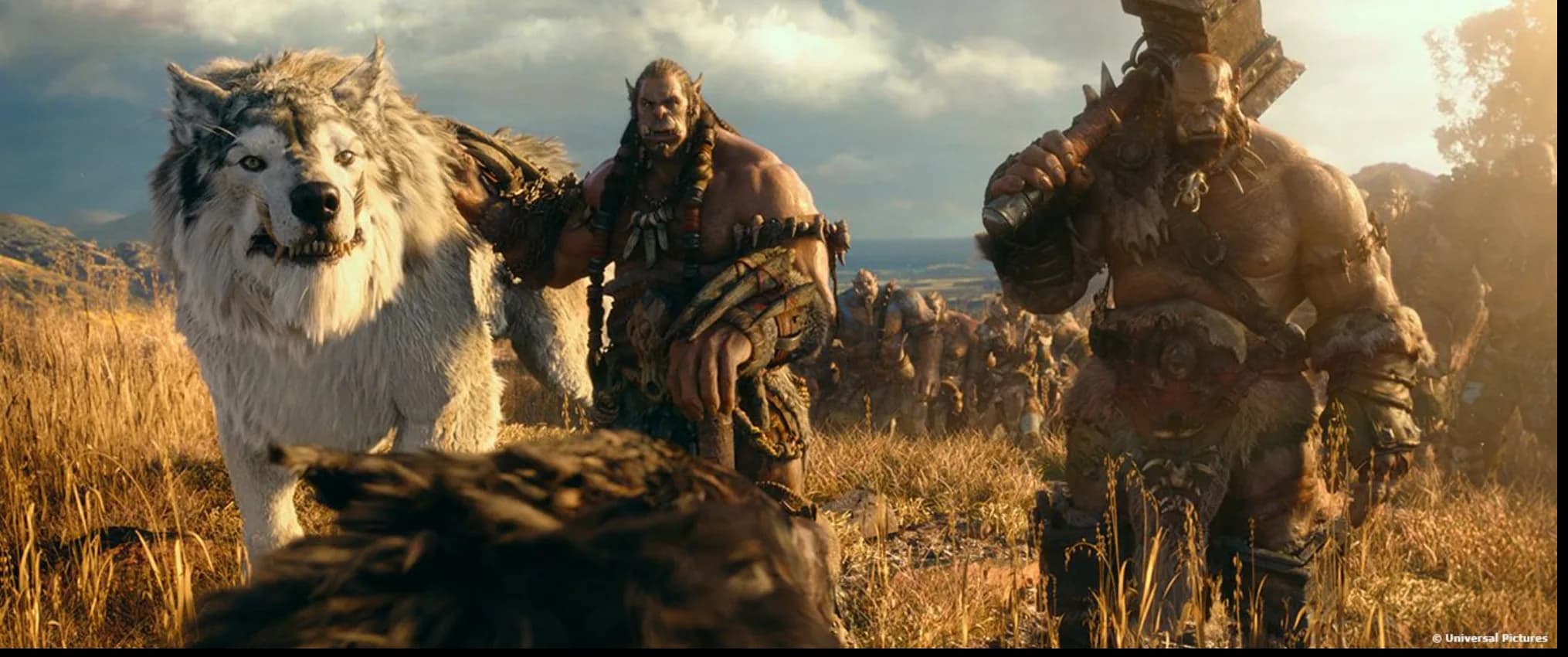
There's one specific moment in the film where something happens for those who have played.
When the images place Westfall on screen those golden plains, the grass stretching under a heavy sky, that particular light you stared at for hundreds of hours behind a screen something stirs. A memory that surfaces all at once, without warning. Not a vague, abstract nostalgia. Something closer to physical memory. As if the body recognises the place before the brain has time to find the word for it.
That's the film's real power for those who grew up with this universe. It doesn't reproduce Azeroth. It summons it. And for a few seconds, you're not in a cinema anymore. You're somewhere else, inside something that has belonged to you for a long time.
That's where it starts to sting.
Warcraft wasn't designed as a standalone film. It was the beginning of something. An introduction. A first stone laid in the construction of a franchise that could have, and should have, continued. The narrative threads left open, the characters barely touched, the stakes established but unresolved: everything pointed toward a sequel.
The sequel never came.
And at InsertCoins, we're not going to pretend that didn't break our hearts. Because there was clearly material to work with. The factions, the conflicts, the characters, the mythology: it was all there. The foundation was in place. All it needed was to keep building.
Except Hollywood looked at the domestic box office numbers, decided the film had underperformed, and shelved the franchise. Never mind that it was a massive hit in China. Never mind that it had a genuine and loyal fanbase. Never mind that there was a vision.
We're still waiting.
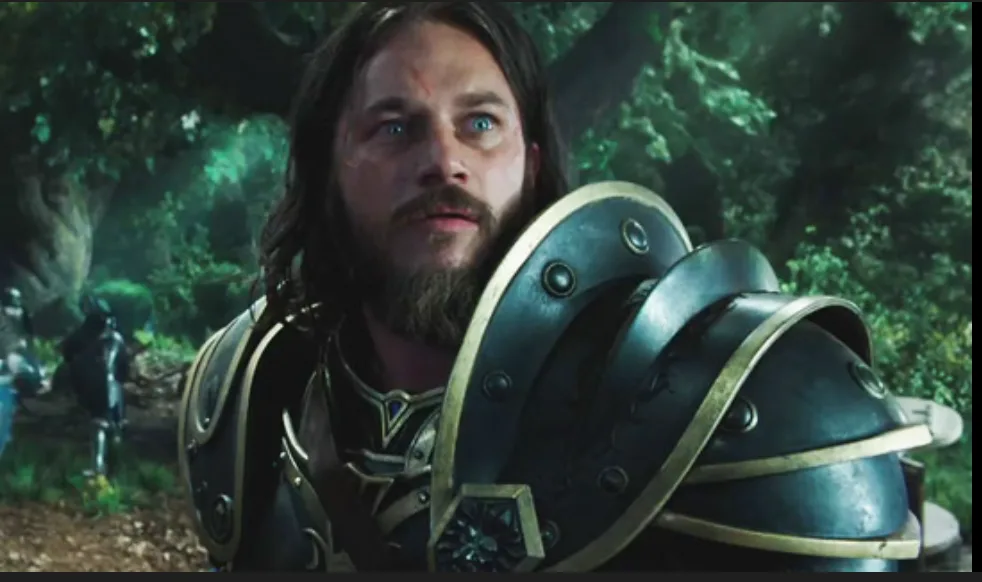
We have to talk about Travis Fimmel.
Because for a significant portion of our first viewing of the film, we kept staring at the character of Lothar thinking he looked oddly familiar. Something about the way he moved. A look. Something we couldn't place.
It was only after the credits, while checking the cast list, that it clicked.
Travis Fimmel. Ragnar Lothbrok. The man who had spent years sailing the seas with braids and a two-day beard in front of our eyes, whom we had absolutely failed to recognise under Azeroth's golden armour.
The lesson: remove the beard, remove the braids, remove the longships and the ravens, and apparently we're starting from scratch. Ragnar would probably have found that hilarious. Lothar, probably less so.
With hindsight, a question lingers. Was Warcraft ahead of its time?
Today, video game adaptations are perceived differently. The Last of Us proved you can be faithful to a universe while building something that stands on its own. Arcane redefined what animated adaptation can do. Audiences are more open, studios more willing to commit, the conversation around adaptation has shifted.
Maybe Warcraft, released today, would land differently. Maybe it would find its audience more easily, in a world where no one would be surprised to see a video game film taken seriously.
We'll never know.
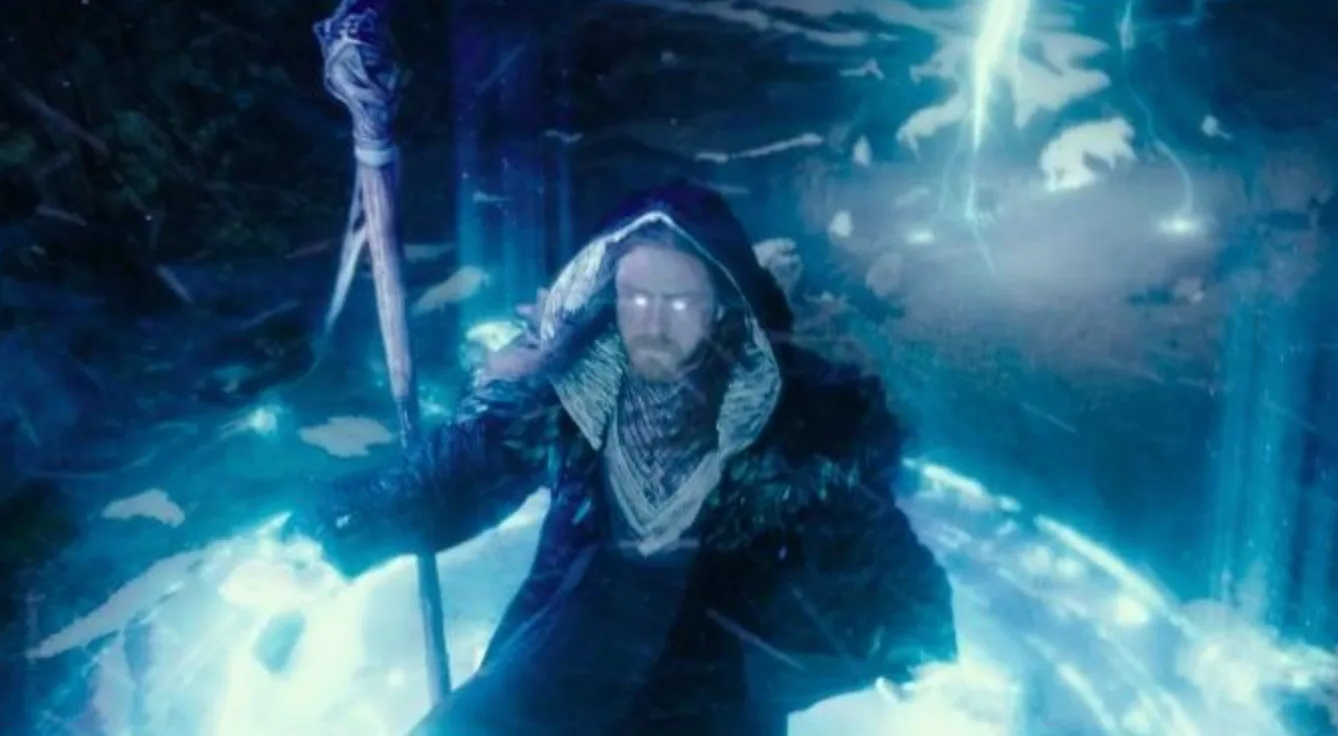
What works:
- universe respected and presented without condescension toward the audience
- the orcs, particularly Durotan, carry the film's emotion with unexpected depth
- generous spectacle, visually faithful to Azeroth
- those few seconds in Westfall that are worth the whole watch for players who know the zone
- a clear, distinctive vision that gives the film its own identity
What's missing:
- uneven pacing, some human characters underwritten
- too much material packed into a single film
- a sequel that never arrived, leaving everything unresolved
Warcraft is not a perfect film. But it's an ambitious, sincere film that respects its source material and that fully deserved to continue. The fact that it never did remains, for this team, one of the greatest missed opportunities of the decade in video game adaptations.
A film we may have judged too quickly. And one we were never really allowed to see through.
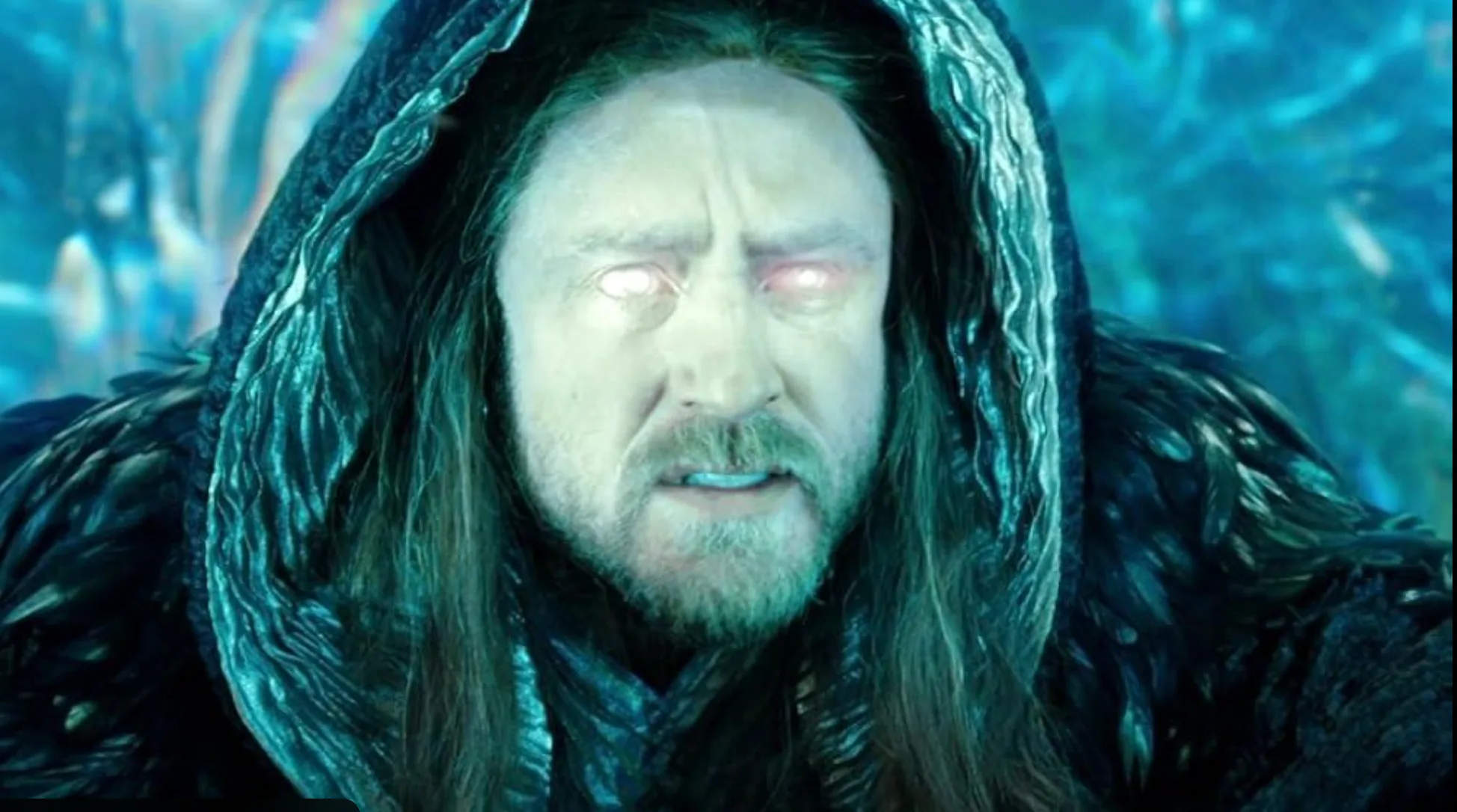
Revisited in director's cut, available on streaming platforms
Come and carry the conversation on over on our Discord.