Dossier
Paris Games Week 2026: who is coming, what you can play, and the evening not to miss
22 to 25 October, fifteen years of the show, Game of Roles at the Dome de Paris, and 300 square metres for French studios.
Alexandrosse
10 min
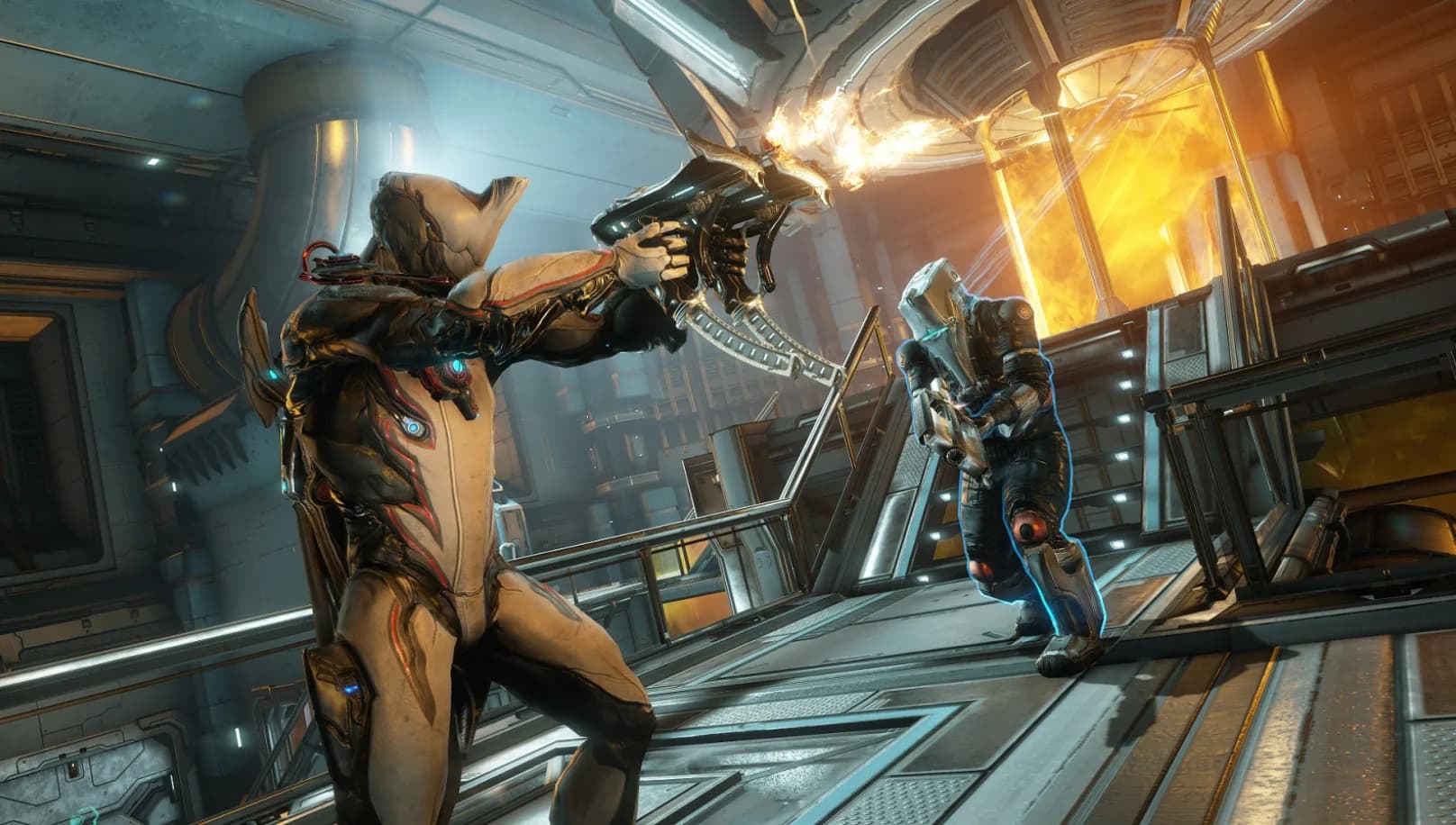
Launched in 2013 to near-universal indifference, Warframe is still running. Not because it made noise. Because it built something solid without ever needing you to talk about it.
Alexandrosse
In March 2026, Warframe turned 13. Not with a spectacular trailer or a marketing campaign. With an update, as usual.
Thirteen years. In an industry where a live service game that holds five years is considered a success, where studios close, where games-as-a-service collapse under the weight of their own promises, Digital Extremes keeps shipping updates. Regularly. Since 2013.
That's not coincidence. And understanding why Warframe is still here means understanding something important about how games can survive.
We need to remember what Warframe was at launch.
March 2013. The game enters open beta on PC, developed by Digital Extremes, a Canadian studio founded in 1993 that had co-developed Unreal Tournament with Epic and spent the years since working on second-tier projects. Dark Sector in 2008, a decent and forgotten action game. Then nothing remarkable.
Warframe arrives with limited resources, an ambitious art direction (space ninjas in an organic, strange sci-fi universe), and a free-to-play model at a time when that term was still largely synonymous with pay-to-win. Reviews are mixed. The press isn't excited. Player numbers are low.
What nobody saw then was that Digital Extremes was laying the foundations of a game that would outlast most of its competitors with ten times its budget.
The first thing to understand about Warframe is its economy.
In a market saturated with battle passes, paid seasons, loot boxes and multiple virtual currencies designed to obscure the real value of what you're buying, Warframe did something structurally different: it made acquiring all premium content possible without spending real money.
Platinum, the game's premium currency, can be traded between players. Not bought from a studio-managed virtual store, not earned through a battle pass. Directly traded between players, for in-game crafted items. A player who farms enough can get Platinum without ever using a credit card. A player who prefers to pay can buy Platinum and spend it. Both coexist in the same ecosystem.
That's not a detail. It's the backbone of the entire relationship between Digital Extremes and its community. The studio can't afford to betray players who'd been farming for five years, because those players are the liquidity of the internal market. They're the game's economic engine.
Result: in 13 years, Warframe has never introduced a pay-to-win mechanic. Never sold a direct advantage for real money. That consistency, in this industry, is almost without equivalent.
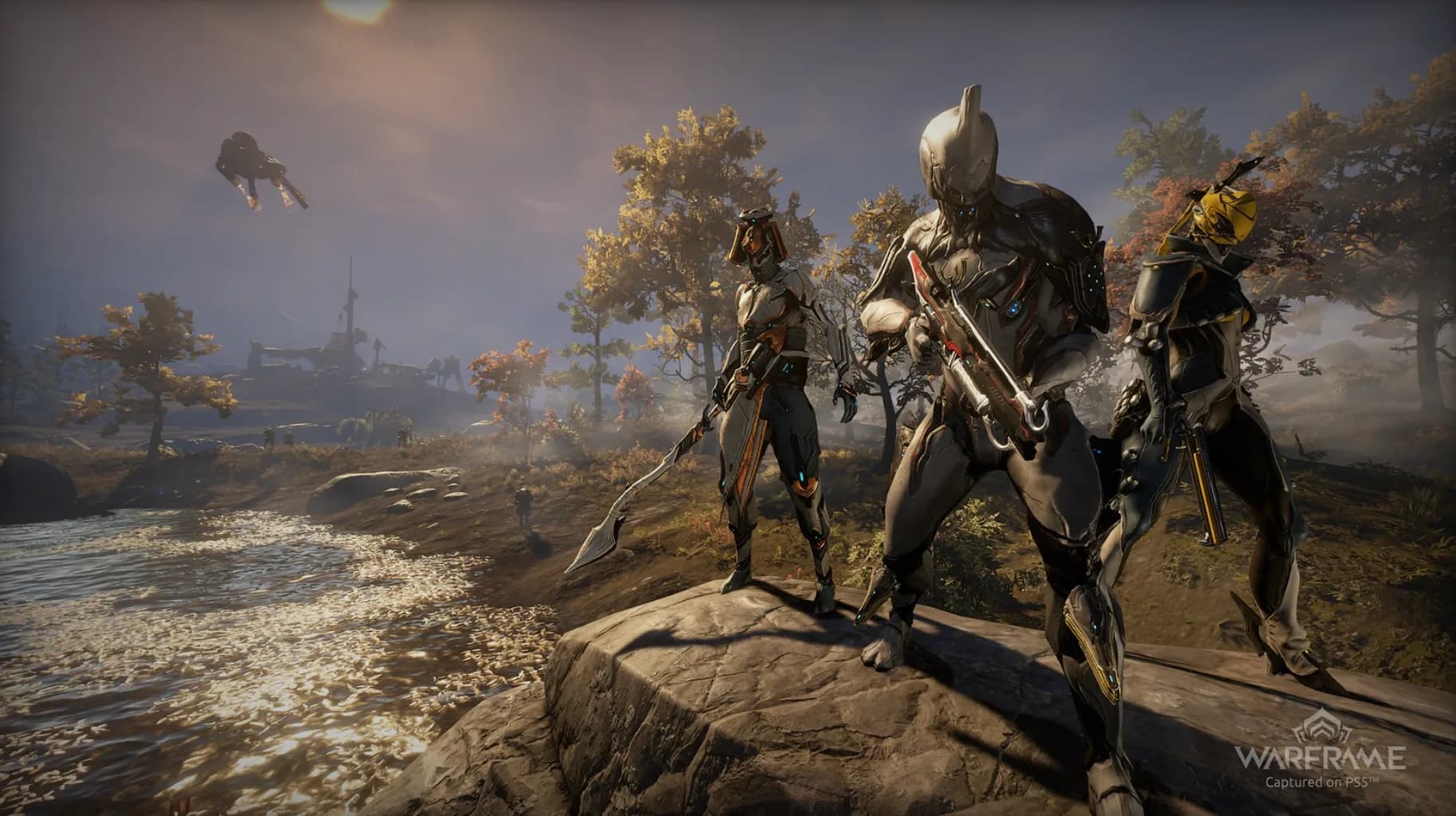
It's impossible to talk about Warframe without talking about Destiny.
The two games have been compared since the beginning. Sci-fi looter-shooters, gear progression, regular content. Destiny launches in 2014 with a colossal budget, massive marketing campaign, Bungie post-Halo. Everyone talks about it. Warframe keeps going in its corner.
What happened next is interesting.
Destiny went through a traumatic split with Activision, years of controversies around paid expansions, the "sunsetting" system that enraged its community, the Sony acquisition, and a relationship with its players that oscillated between excellent and catastrophic.
Warframe released Plains of Eidolon in 2017, its first open world. Fortuna in 2018. The New War in 2021, a multi-hour narrative quest praised by its own community as one of the game's best story moments. The Duviri Paradox in 2023. Warframe 1999 in late 2024.
Every major update was free. Every new world, every new warframe, every story extension: free for all existing players.
That's not abstract generosity. It's a model that proved it worked while better-funded models exhausted themselves.
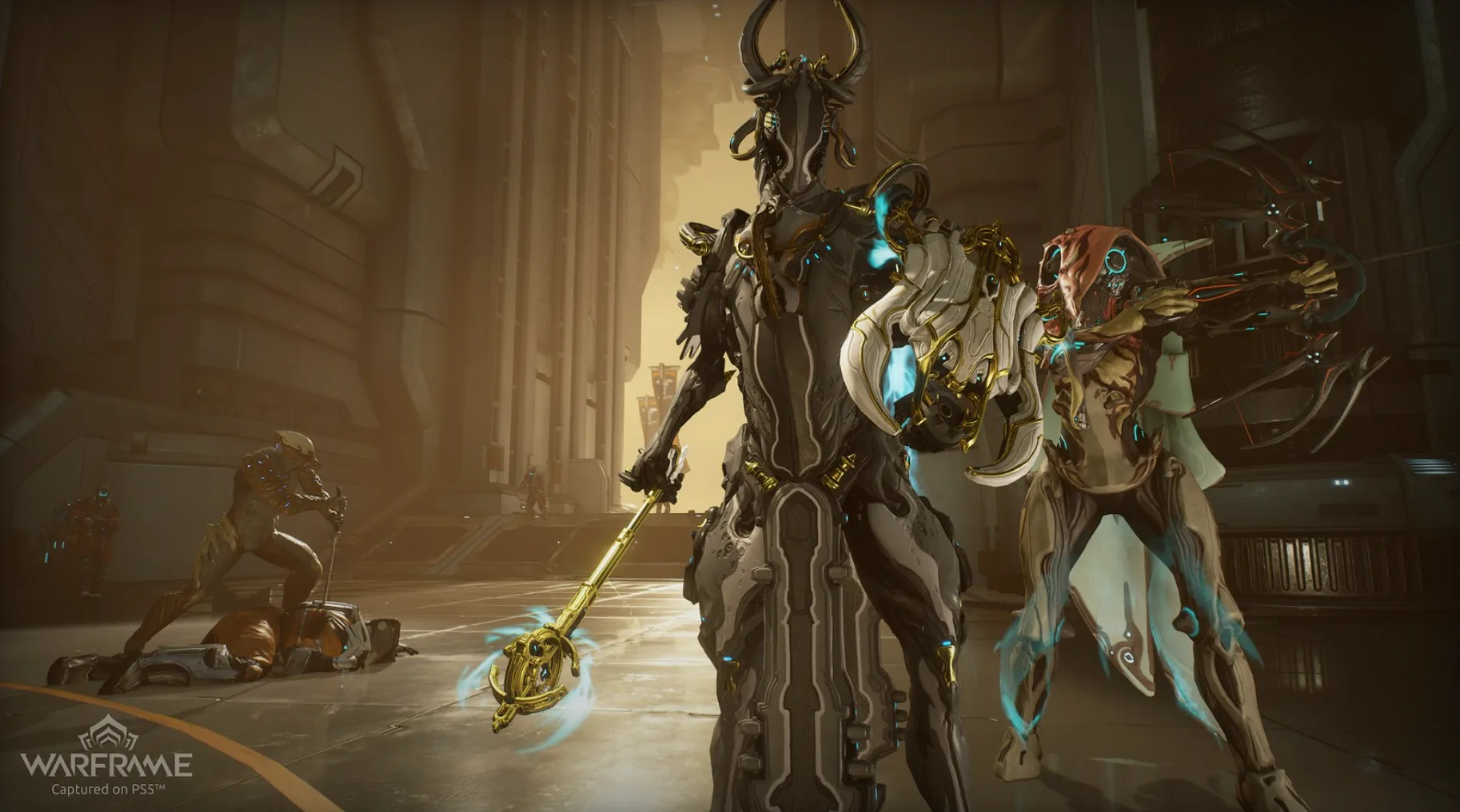
In 2015, Warframe did something unexpected.
The Second Dream is a quest. In a game that was, at the time, primarily known for its parkour gameplay and fluid combat, this quest introduced a narrative revelation that changed how players understood everything they'd played before. Without spoiling: it redefines who you are in this universe, in a way that rewards every hour played before it.
That moment, discussed in forums, YouTube videos, Reddit threads, created something important for Warframe: a collective memory. Players who'd dropped off since 2013 came back to see what it was about. New players started the game specifically to experience it themselves.
The Second Dream proves Warframe isn't just a game that survives because it's free and generous. It's a game that survives because Digital Extremes knows how to create moments players want to talk about, even from outside the mainstream press conversation.
In 2013, as Warframe begins finding its audience, Digital Extremes is a mid-sized studio surviving on the strength of the game it just launched. In the years that follow, as Warframe grows, acquisition offers arrive.
The studio stayed independent.
We don't know the details of those discussions, the names of the prospective buyers, the amounts discussed. What we know is that Digital Extremes still exists as an independent entity in 2026. That editorial decisions on Warframe are made by the same people who launched it. That Steve Sinclair, the game's creative director, was present through a decade of development.
That continuity isn't common. It partly explains the coherence of a game that went through 13 years of patches, expansions, meta changes and evolutions without losing its fundamental identity.
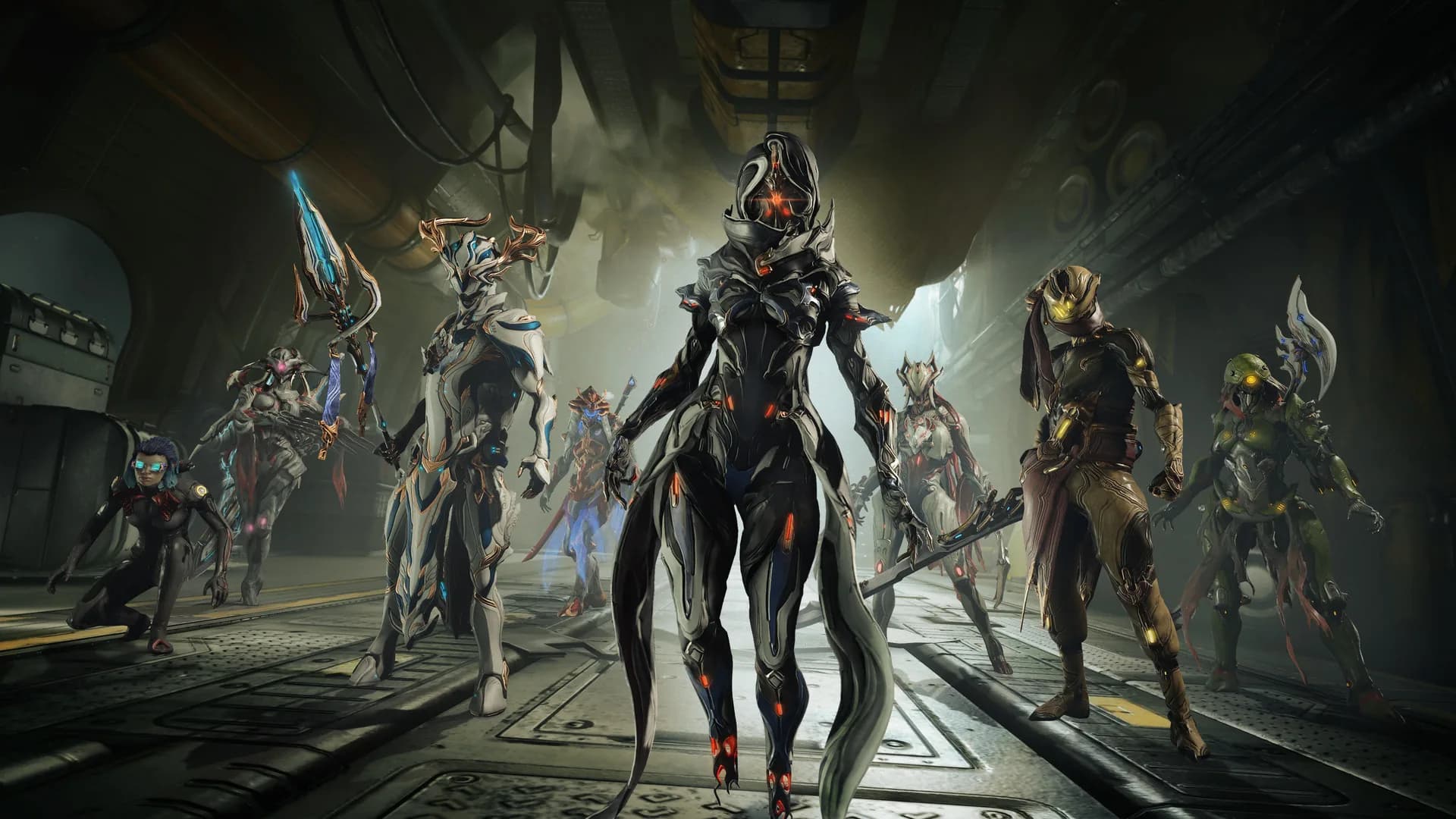
Warframe has over 70 million registered accounts. Its subreddit has over a million members. It runs Tennocon, its own annual fan convention. This isn't a game ignored by its players.
But in the mainstream gaming conversation, the one in media coverage, trending social posts, big public streams, Warframe is structurally absent. Why?
Several reasons.
First, the game is dense. Warframe's entry curve is one of the genre's steepest. The tutorial has been reworked multiple times over the years, and the latest version, deployed less than a month ago, is probably the best it's ever been. The effort is real, visible, and worth acknowledging. But Warframe is so vast, so loaded with interlocking systems, game-specific vocabulary and mechanics accumulated over 13 years, that no tutorial will ever fully flatten the slope. It's still an abrupt game to pick up : despite clear and consistent efforts to make that less true than it used to be.
Second, the game doesn't chase virality. There's no battle royale mode added to capture an audience. No collaboration with a rapper or film franchise to make noise. Warframe does collaborations (Teenage Mutant Ninja Turtles, Nora's Mix), but they're never the core of the communication.
Third, the community is self-sufficient. It doesn't need external validation. It produces its own guides, its own tier lists, its own analysis. It exists within its own ecosystem. Which means gaming journalists, usually drawn to controversy or novelty, have few reasons to return to it regularly.
In 2026, live service as a model is in crisis. Studios close after catastrophic launches. Games that promised ten years of content shut down after eighteen months. Players are exhausted by the live service promise.
In that context, Warframe is an instructive anomaly.
It didn't survive because it had the biggest budget. It didn't survive because it had the best marketing direction. It survived because it built a relationship of trust with a player base and never fundamentally betrayed that trust.
No pay-to-win. No deletion of old content. No radical mid-game business model change. No acquisition by a large group that would have redefined priorities.
The Warframe model isn't easily reproducible. It requires an independent studio with stable vision, a business model designed for longevity from day one, and a community built on trust rather than FOMO. Those are conditions the majority of live service games have never combined.
But as proof that it's possible, Warframe is irrefutable.
Thirteen years. Still here. Updated last week.
Feature written in April 2026. Data based on publicly available information at that date.
We want to hear your take: the InsertCoins Discord is waiting.
Community
Your rating
Loading comments...
You might also like
22 to 25 October, fifteen years of the show, Game of Roles at the Dome de Paris, and 300 square metres for French studios.
Six sales running, over 700 games, and only one that expires tomorrow morning. Our sort, with the prices worth taking and the ones that are not.
Eight months, 288 reviews, an average of 7.03. Here is what that says, and voting is open in four categories including the hall of shame.