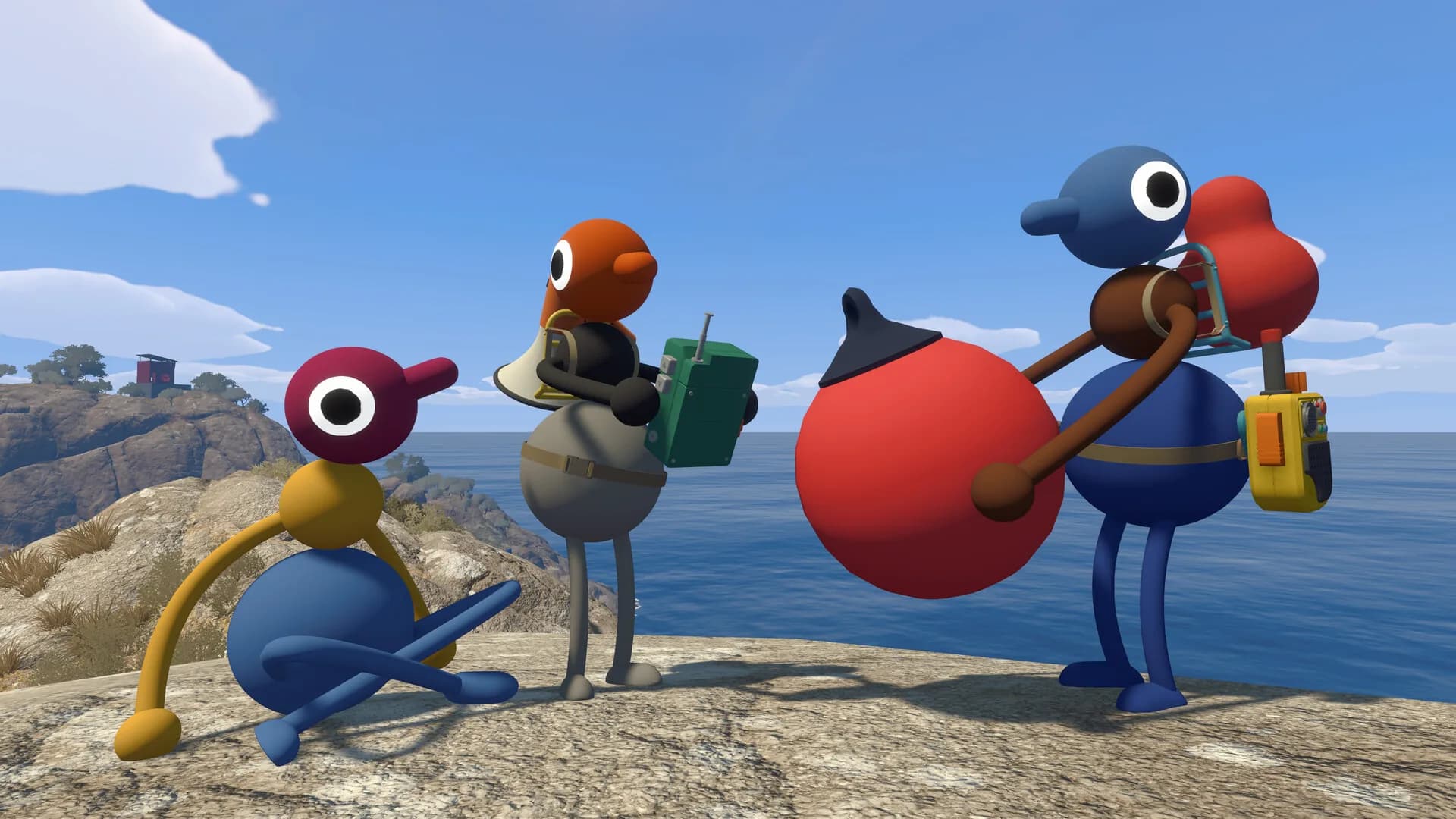
Twenty minutes ago, my friend and I were walking side by side, chatting. Then I decided to cut through a thicket to save time, he kept going straight, and his voice started fading in my headset. Further and further. Then nothing. I found myself alone in the middle of a huge bush, spinning around like an idiot, before pulling out a flare and firing it into the sky, praying he would see it. Three minutes later, he came running, dying laughing. We had accomplished nothing. It was perfect.
Welcome to Big Walk, and let me explain why it is one of the cleverest things I have played this year.
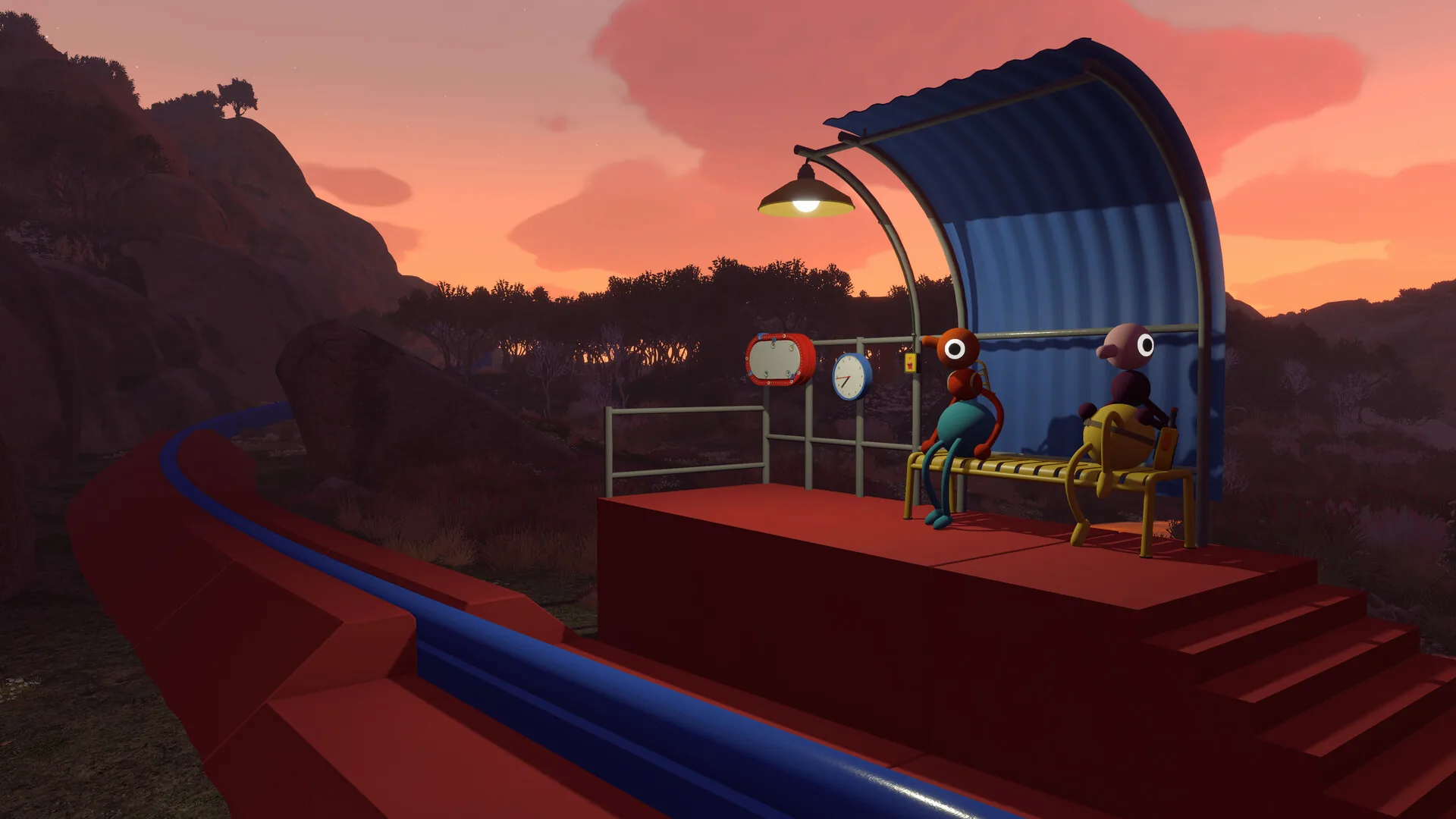
It is the new game from House House, yes, the Untitled Goose Game studio, the one where you played an insufferable goose ruining a whole village's life. Published by Panic, available today on PC, PS5 and Switch 2 with cross-play for around twenty euros. And the shift is total: where the goose game was joyful chaos, alone, against the world, Big Walk asks the exact opposite. Cooperate. Stay together. Move forward as two.
You explore a vast open world, solve challenges, discover things, and above all you talk. A lot. It is a "walker-talker", and the word is well earned: walking and talking are literally the heart of the game.
Here is what Big Walk brings that other co-ops do not: it makes communication a genuine game mechanic, not a mere convenience. The voice chat is proximity-based, and it is brilliantly exploited: the further your partner drifts on the map, the fainter their voice gets. You literally hear the distance between you. It is silly, and it is brilliant, because it turns staying grouped into a permanent stake, and getting lost into a small intimate catastrophe.
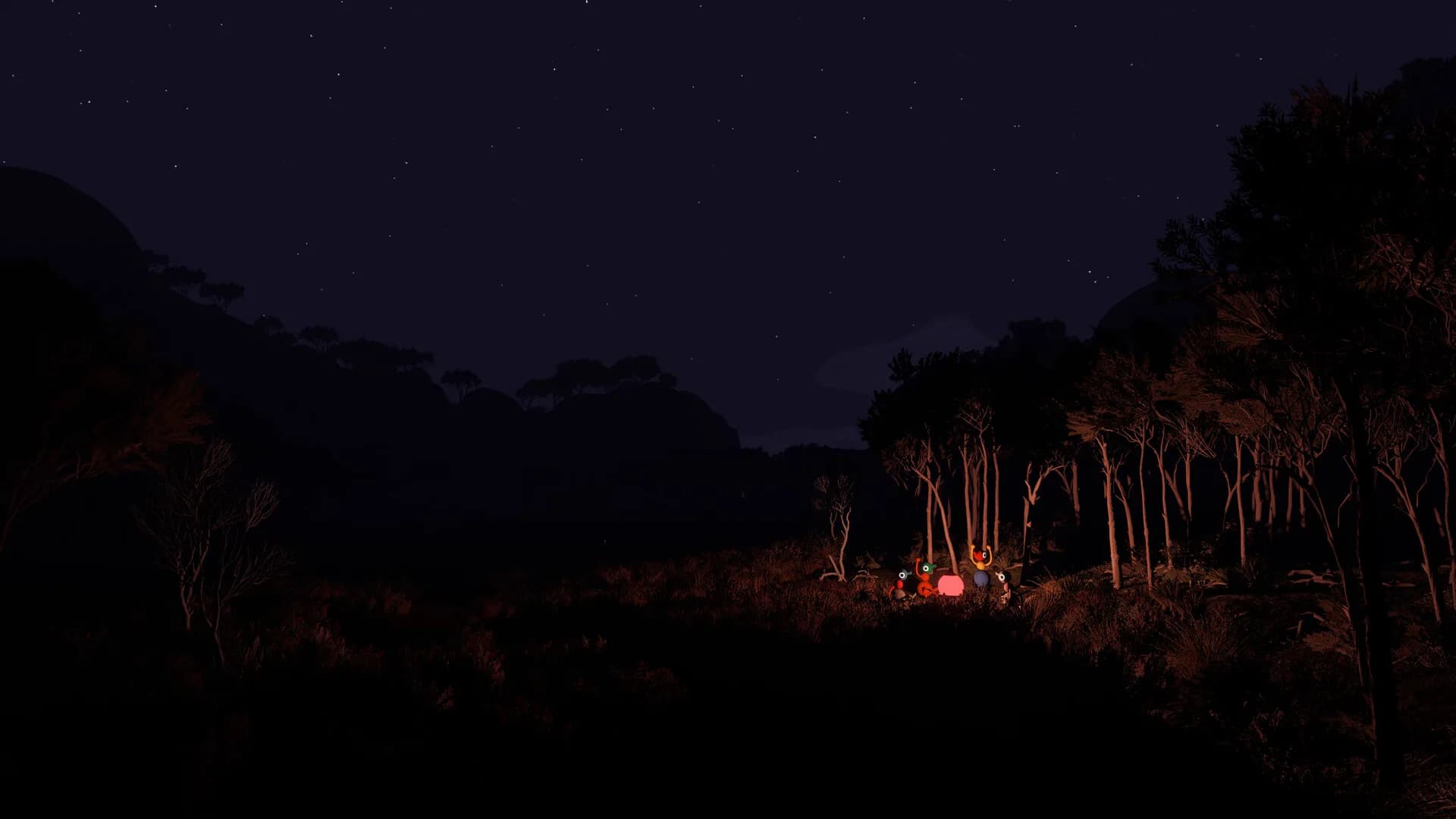
And when it happens, when you have foolishly drifted apart, the game gives you tools to find each other, and they are adorable. A megaphone to shout across the distance. Flares to signal your position in the sky. And my favourite: handwritten signs you plant in the scenery to leave a message for the other. I found my friend thanks to a sign where he had scribbled an arrow and a drawing of me crying. No other game has ever done that to me.
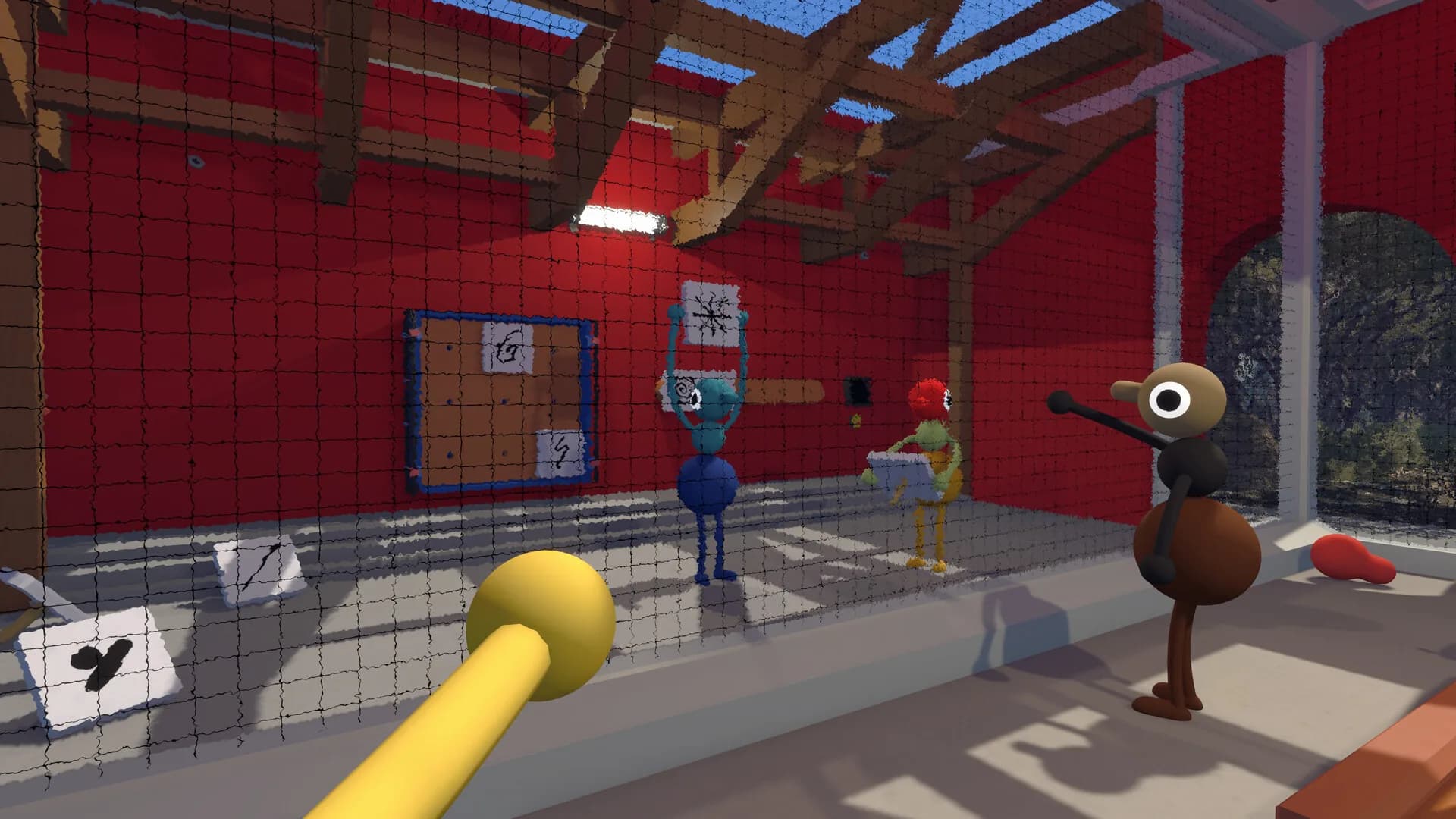
Because there is a game too, not just chatter. Progress runs through structures scattered across the landscape, in which you solve puzzles. You advance by exploring, rummaging, searching together for what unlocks the next part. Nothing over-scripted, nothing that holds your hand: Big Walk drops you into its world and lets you fill it with your own stories.
And that is where the magic happens. The real content of Big Walk is not its puzzles, decent without being mind-blowing, it is the moments born between you and your partner. The argument over which path to take, the silence when you have lost each other, the relief of reuniting, the joke you throw while climbing a hill. The game is just a beautiful excuse to spend time with someone.
Let us be clear about the limit, because it is real: Big Walk does not exist without a good partner. It is a two-player game, designed for two, and its pleasure depends entirely on who you play with. With a complicit, chatty friend, it is a gem. Alone, or with someone who does not feel like talking, there simply is no game left. The pace is slow, contemplative, and if you are looking for action or objectives that pop, you will be bored stiff.
That is not a criticism, it is a nature. Big Walk knows exactly what it is: an experience to share, not to consume alone. Take it for that, with the right person in your ears, and you have one of the finest co-op moments of the year. House House did not redo the goose trick, it did better: it made a game about friendship that never says its name. Hats off.
Played it too? Tell us how it went on the InsertCoins Discord.