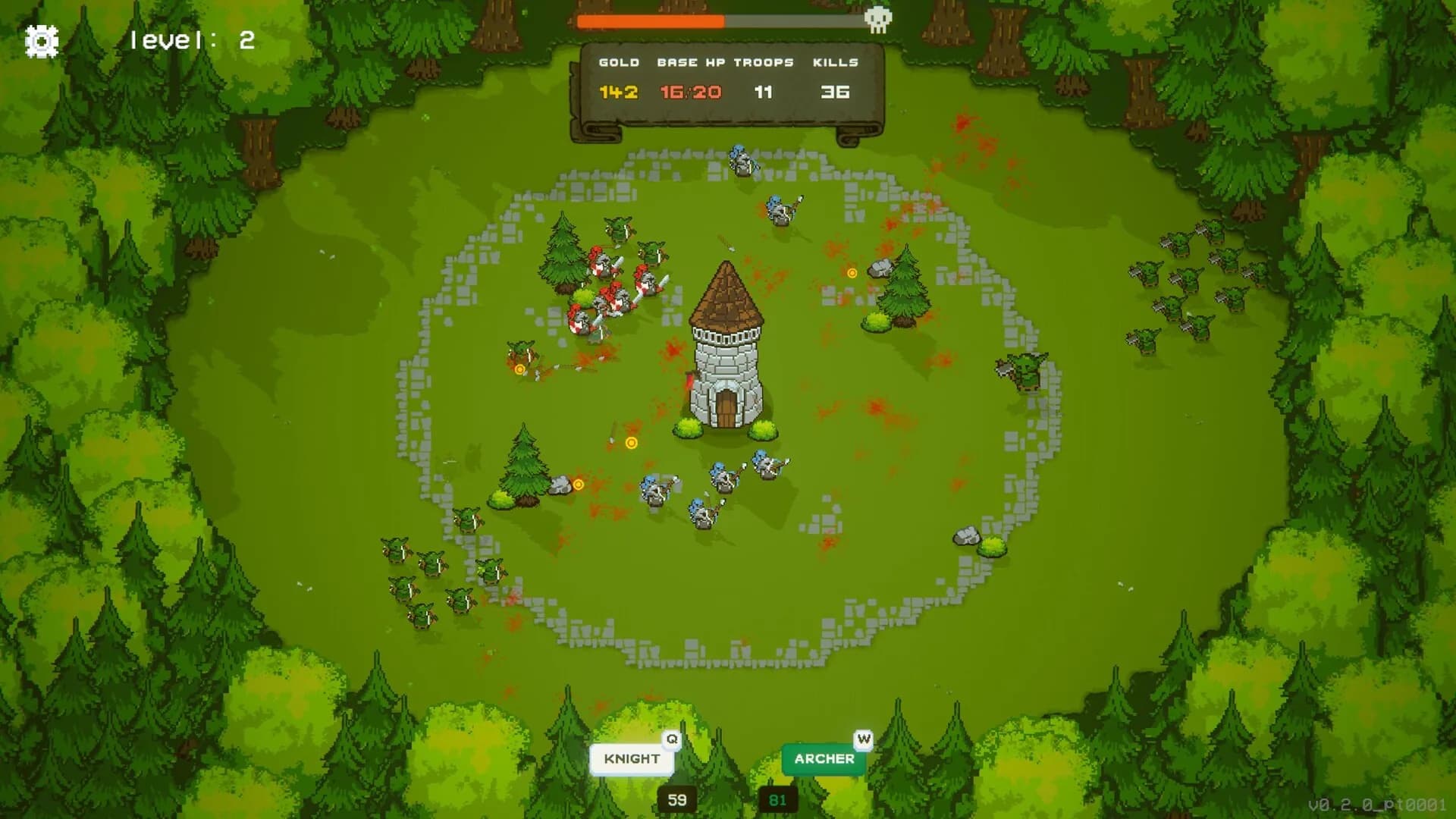
6
Test
Crown Siege: an eight-euro incremental siege game, honest about its length
You spawn troops, absorb waves of goblins, upgrade the tower. Short, owned, and sold as such.
Alexandrosse
7 min
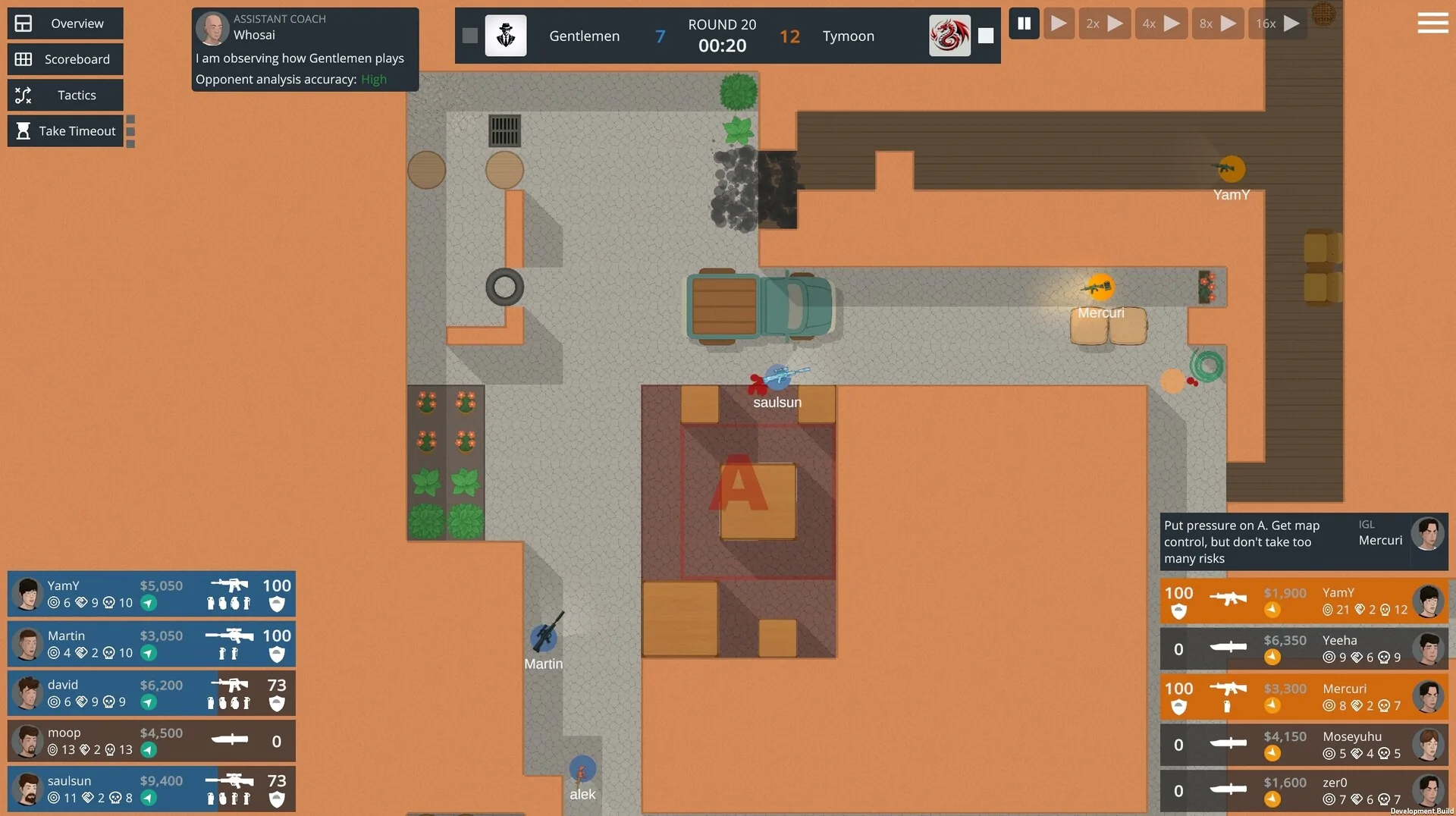
140 teams, 8 maps, cohesion that depends on the languages your players speak. The ideas are there, the polish much less so.
Alexandrosse
InsertCoins.press Score
6.5/10
Verdict
Mixed
I know this feeling and it does not wish me well. It is the one that shows up when you open a serious management game at 9pm telling yourself you will just look at the menus, and you lift your head to a sky going pale. On paper CS Manager ticks every box of the insomnia machine, with mechanics that look like they were designed by someone who has actually watched Counter-Strike.
The trouble is that between ticking the boxes and holding a player until morning there is a gap, and this debut game has not crossed it yet.
The game, developed and published by the studio Crumana, offers more than 140 teams, from elite organisations down to disorganised amateur leagues. You can also create your own organisation, choose its nationality and start at the very bottom, which is obviously the most tempting mode.
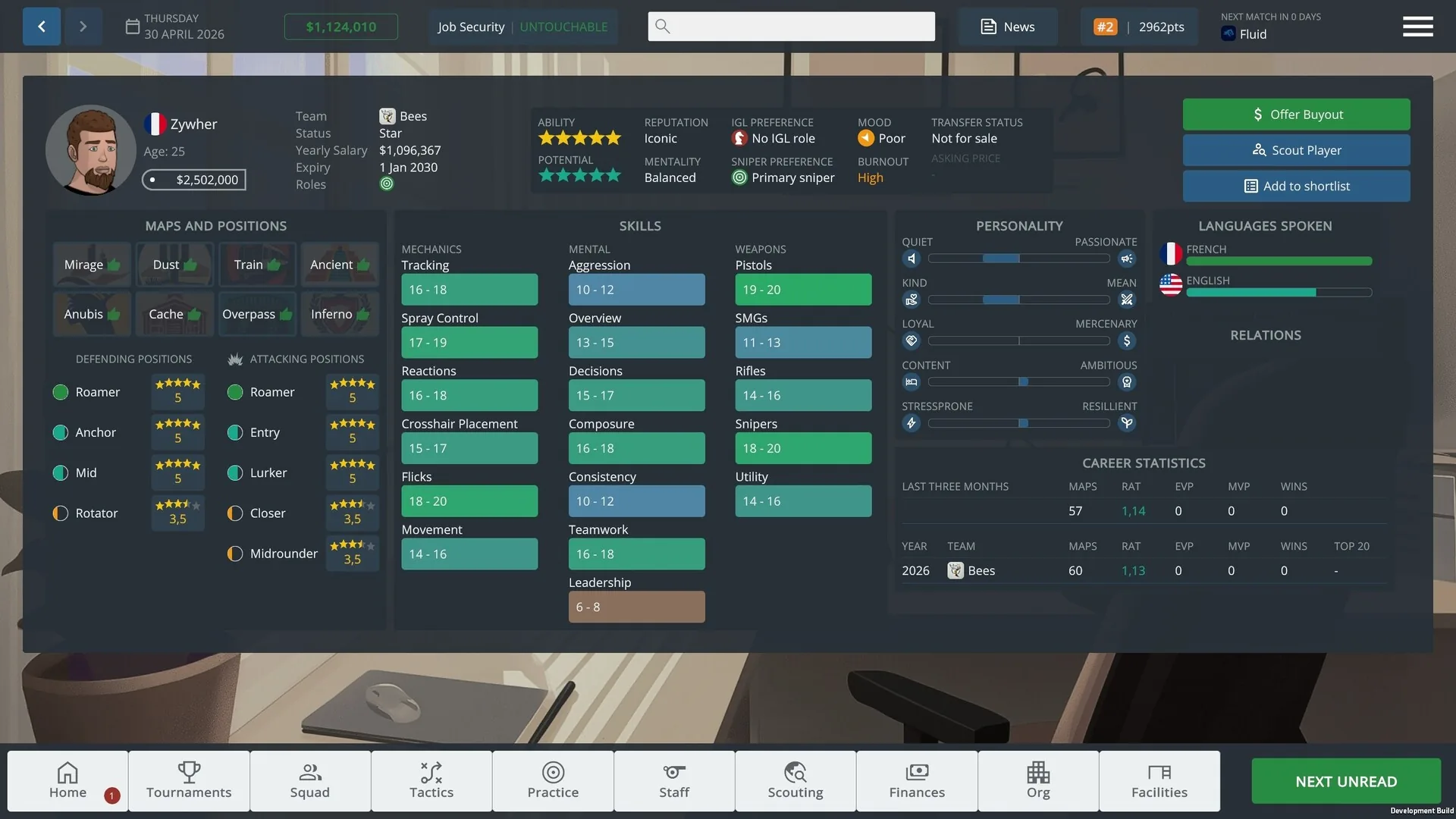
The part that interests me: signing a player is not a matter of comparing ratings. You have to think in roles, positions and maps, because an excellent player in the wrong slot is still a problem. On top of that sits cohesion, and its make-up is finer than usual: it depends on each player's personality, the languages they can speak, and the decisions you make around them. A team with no common language is a locker room with a crack in it, and the game turns that into a parameter. It is the best idea in the box.
Another rarely modelled variable: schedule endurance. The most resilient players absorb a heavy season with plenty of travel; the others do not, and you then have to build your tournament calendar around them.
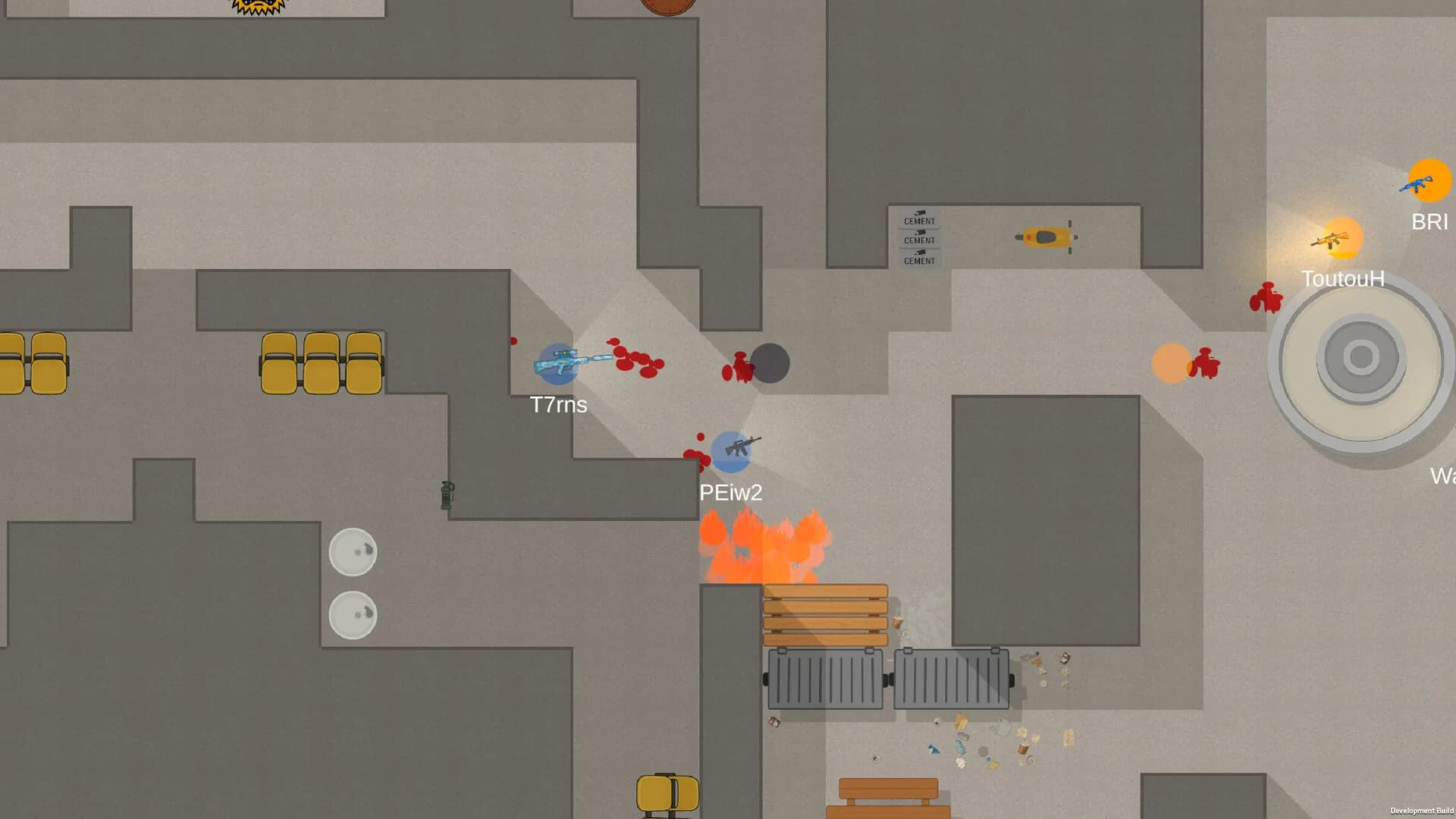
This is where the game bets everything. Matches play out in real time across eight maps, each with its own characteristics and tactical quirks. Your timeouts and your instructions are played out live, and success depends on what you say at that precise moment.
Beforehand, you set the tactical skeleton: who your in-game leader is, who takes the AWP, the pace at which your team plays, how to attack and defend each site. The game warns that mastering every map at once is very hard, and that you must prioritise your map pool according to your squad's abilities and your players' preferences.
On paper, every defeat should hand you a precise reason to restart immediately. The badly chosen map pool, the timeout called two rounds too late, the wrong sniper. That is exactly the fuel of "one more", provided the match engine makes those causes legible. And that is precisely where it falls short.
Because a manager does not only handle five players, you also have to deal with staff, finances and the expectations of the organisation's owner. That last mechanic is the cruellest in sports management games: it turns a good season into a disappointing one if you promised better, and it puts a countdown on the back of your neck.
Three reasons, and they stack. The first is the reception itself: the demo caps out around 80 percent positive across roughly forty reviews, a long way from the crushing scores collected by the other releases of the day. For a management game, whose audience is by definition forgiving of austerity, that is a signal.
The second is the match engine. It carries the whole structure, and a management sim only survives if you understand why you lost. When the causal link between your instructions and the result stays murky, the "one more" tunnel stops dead, because there is nothing left to correct, only something to hope for.
The third is the absence of licences. The game announces more than 140 teams without claiming any official partnership, where a competitor like Esports Manager 2026, a different game already reviewed here, puts its organisation licences front and centre. Running names you have watched lift trophies, or their anonymous stand-ins, does not produce the same attachment.
What remains is an ambitious debut from two Danish brothers, with sound and occasionally shrewd mechanical foundations. It needs a season or two of patches to deserve the nights it promises. I will come back to it, probably too late in the evening.
Your verdict differs from ours? The Discord is the place to make your case.
Community
Your rating
Advertisement
Loading comments...
You might also like
You spawn troops, absorb waves of goblins, upgrade the tower. Short, owned, and sold as such.
iRacing delivers a solid pad game and a contested wheel game. And the official store page discloses automatically generated voice lines.
An automation game where you manifest your own biomes, with five minigames to fill the time while the machines work.