7
Test
DIG: dig a hole, and discover the real constraint is not the pickaxe but the battery
A calm excavation game where you go down looking for blueprints and artefacts. All the tension sits in an energy gauge draining away.
Alexandrosse
7 min
The three upgrade paths, the logic of blueprints, energy management and the mistakes that cost hours. Everything to know before your first descent.
Alexandrosse
One clarification first, because it governs how to read this guide: the game launches today in early access. So there is no community value table, and no upgrade order proven across hundreds of hours.
This guide covers something else, the part that will not move: the logic of each system, the decisions that recur on every descent, and the mistakes the structure tends to provoke. The numbers will come once the community has mapped them.
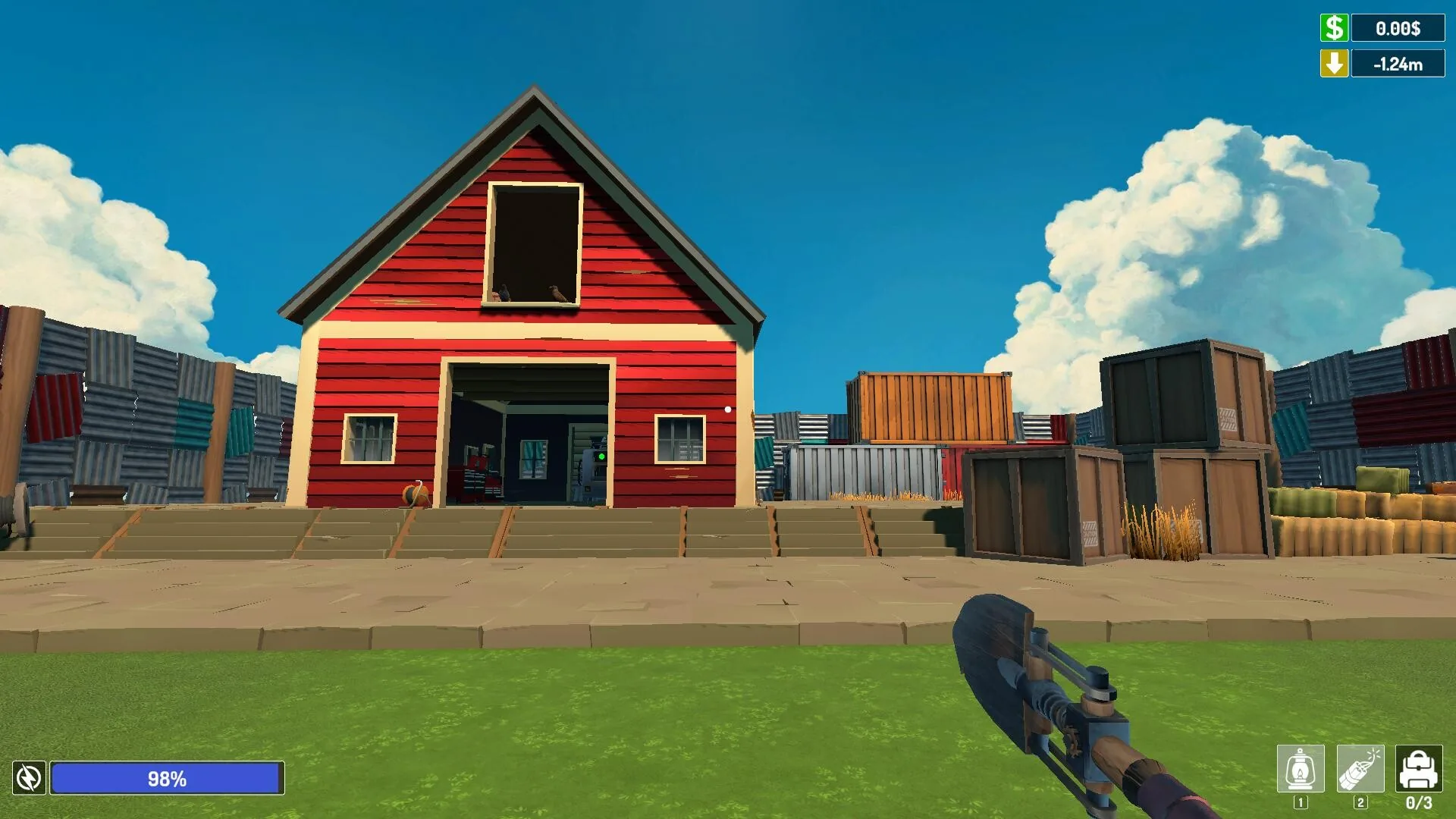
All of DIG lives in a four-beat circuit worth holding in your head from the first minute.
You descend, you collect, you climb out, you upgrade. Then you go back down further.
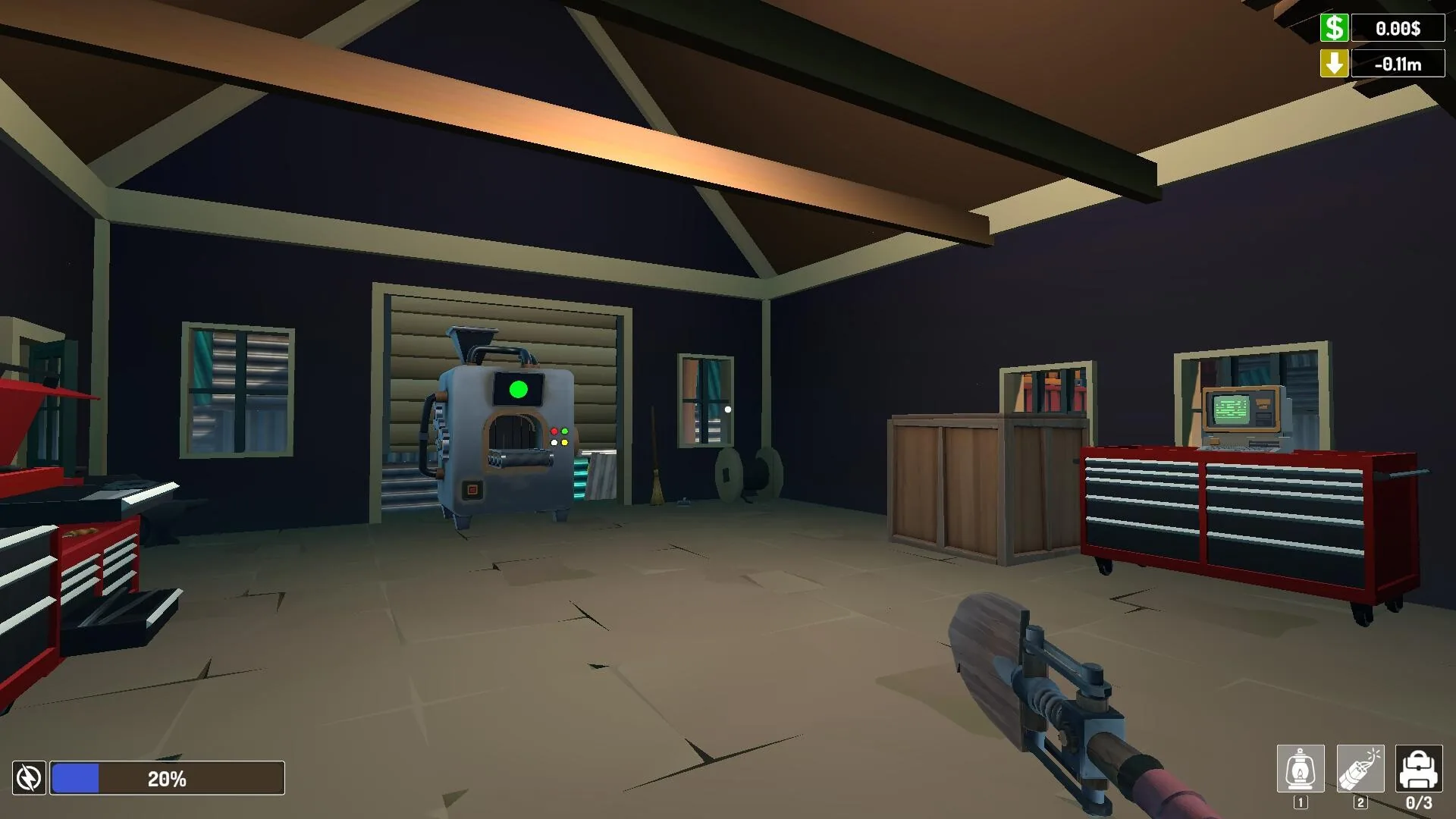
What matters is understanding where the bottleneck is. It is not how fast you break rock, contrary to what instinct suggests. It is the pairing of what you can carry and how long you can stay.
A player who only upgrades the shovel digs quickly and comes back empty-handed or out of power. They optimised the part of the game that was not the problem.
The game offers three upgrades: the shovel, storage capacity and the battery. They are not equal, and the order completely changes the rhythm of the early hours.
That is my main recommendation and it is counterintuitive.
The battery determines how long you can be down there. In a game where the good things are at the bottom, anything that lengthens your stay at the bottom mechanically increases the value of every descent.
Upgrading the battery does not make one descent better. It makes every subsequent descent better, including the ones where you hunt blueprints. It is an investment that compounds.
The sign that it is time: you regularly climb out because power ran low, not because the bag is full.
The second bottleneck arrives fast. You stay down longer, so you collect more, so the bag fills before the battery empties.
The sign that it is time: you are leaving things on the ground, or climbing out with energy to spare.
That battery-storage alternation is the heart of progression. You swap between them by following whichever is holding you back, and you should never have both gauges emptying at the same moment. If that happens, good, you are balanced.
The shovel is the most satisfying upgrade and the least urgent. It reduces the time spent removing each layer, so it indirectly extends your endurance.
Its moment arrives when hard terrain appears. A weak shovel on rock turns your battery into wasted fuel: you burn time without gaining depth. That is the signal.
Advertisement
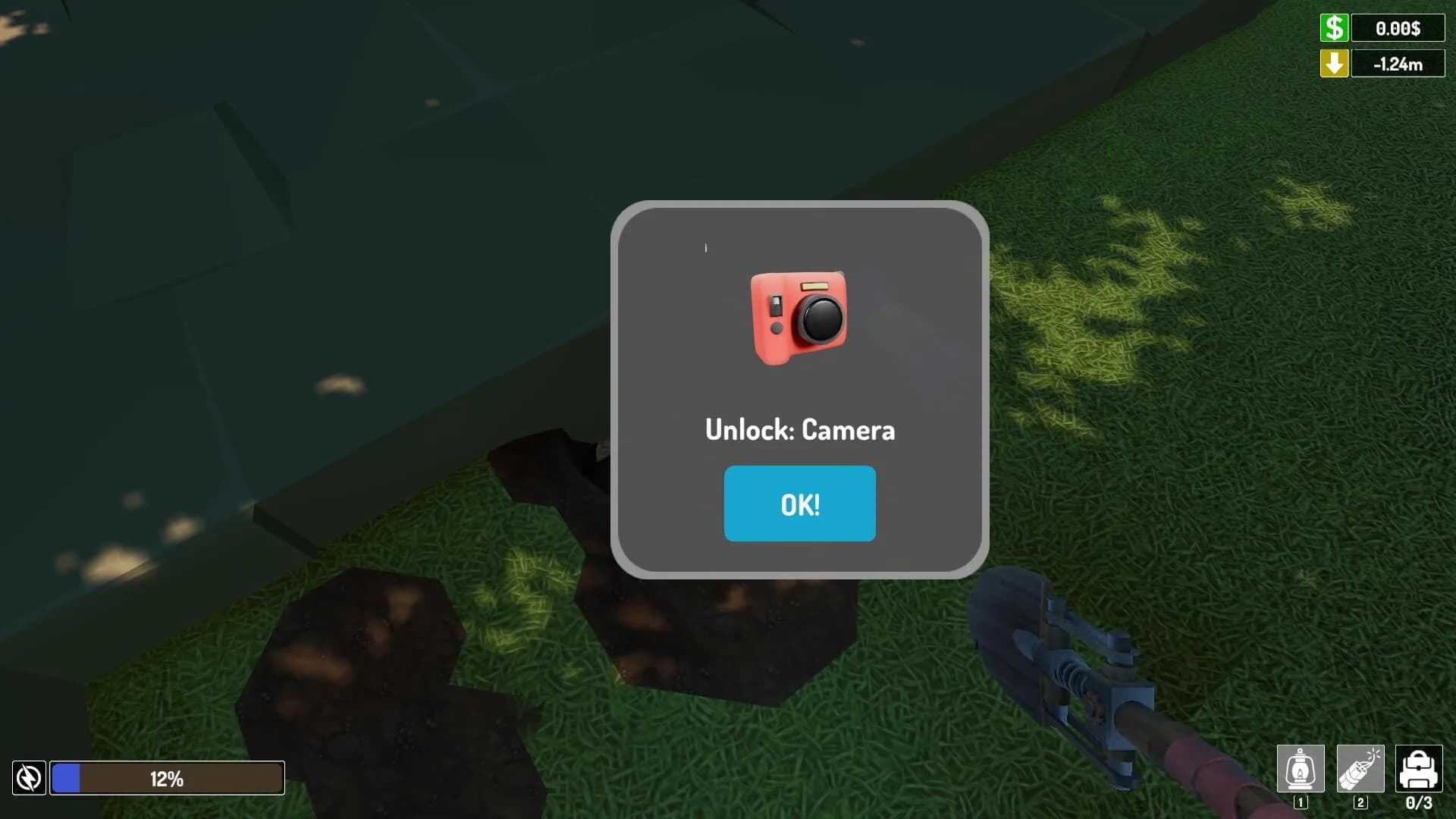
Ancient blueprints unlock advanced technology and buried items. They are the only finds with a permanent effect on your run.
Three principles.
They are deep. The rule the studio states is simple: the deeper you go, the more the world opens up. A session spent raking widely near the surface yields resources, not blueprints. If you want blueprints, you have to descend, and therefore you need battery. It always comes back to the same point.
They are worth more than loot. Faced with a choice between hauling up a bag of common material or pushing a little further into unexplored ground, the logic favours exploration. Common material returns on every descent. An unlocked technology does not return, it is obtained.
And they fund their own search. Every blueprint that improves your efficiency makes hunting the next one easier. The first hours are therefore the slowest, and it accelerates markedly afterwards. If you find the opening sluggish, that is normal, do not judge the game on it.
On every descent you will hit this exact moment: the battery is low, the bag is not full, and there is clearly something one layer down.
Here is how I settle it.
If the bag is nearly empty, push. You have nothing to lose and everything to find. Climbing out with three rocks is a bigger failure than climbing out empty after seeing one more layer.
If the bag is full of common material, climb out. You have already won the descent. Greed here does not earn you a blueprint, it loses you what you are carrying.
If you have a blueprint in the bag, climb out immediately. That is the one absolute rule in this guide. One blueprint brought home beats two blueprints lost.
And if you are torn, read the ground. Dropping a layer in sand costs little. Dropping a layer in rock can consume the rest of your power. The question is not only whether there is something below, but what it will cost to reach.
The game advertises distinct environments, notably rocky caves and sandy depths, and promises the adventure never feels the same twice.
In practice, two reflexes to build.
On soft ground, go deep. The cost per layer is low, so power should be spent descending rather than widening. This is where trips towards deep zones pay off.
On hard ground, rake rather than drill. When each layer is expensive, insisting on going down is the surest way to end up stranded far from the surface on a flat battery. Better to work the current layer horizontally.
The corollary is that you should read the ground before deciding your objective for the session. A descent without an objective is an average descent.
Putting everything into the shovel. It is the most visible upgrade and the least structural early on. It has you digging quickly into an energy wall.
Descending without knowing what you are after. A resource session and a blueprint session do not play the same. The first works a known, profitable layer; the second charges into the unknown. Mixing them gives you the worst of both.
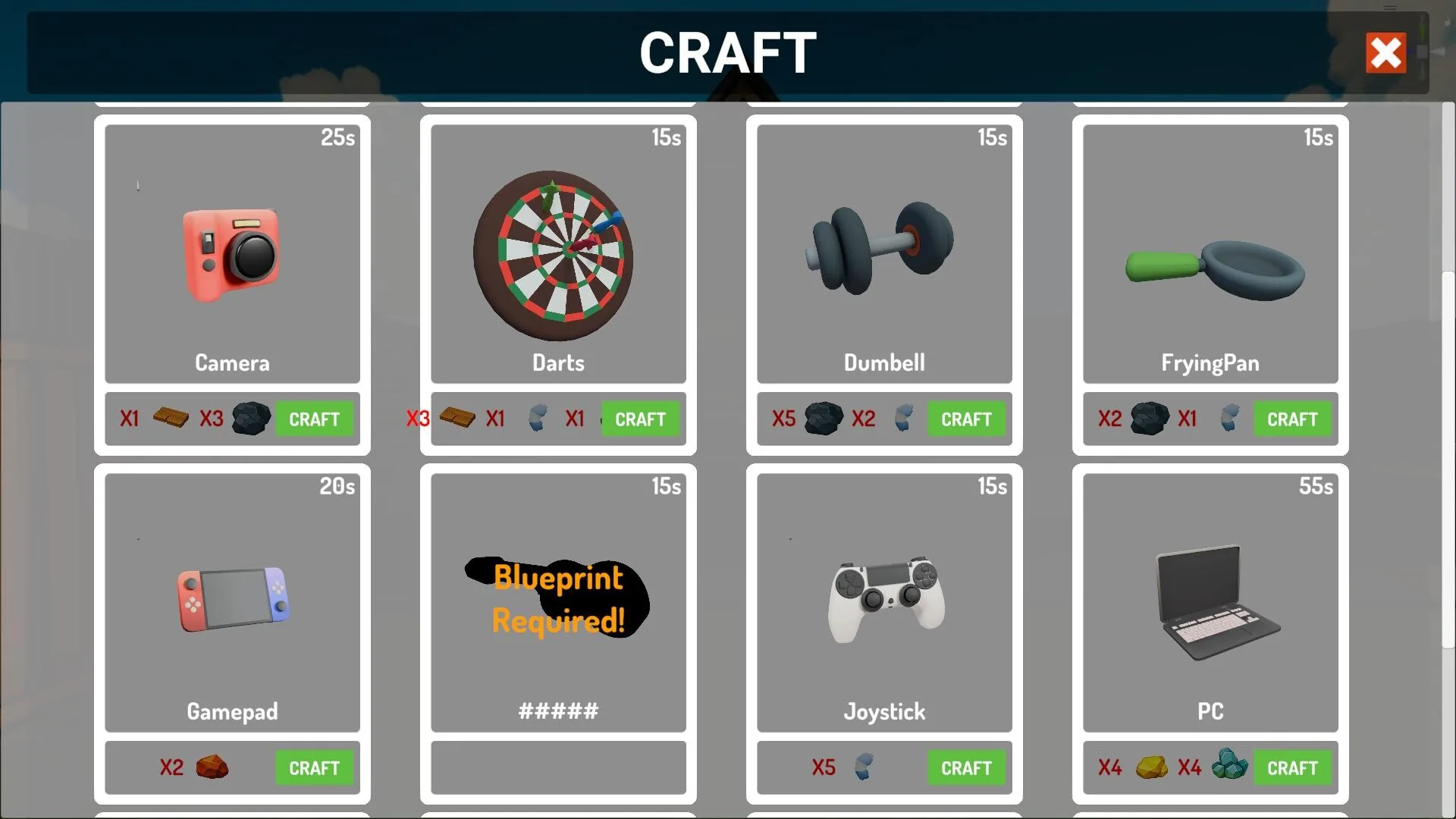
Forgetting to craft. The crafting system exists to convert your finds into efficiency. Hoarding materials without ever converting them is saving in a game that rewards investment.
Always climbing out at the last possible second. It looks optimal, it is actually the best way to lose an exceptional find that turned up thirty seconds too late. Keep a margin, especially on hard ground.
And judging the game on the first hour. The loop only becomes satisfying once two or three upgrades are in place. Before that, you are playing a throttled version of yourself.
Until the community has recorded the values, nobody can give exact upgrade costs, blueprint spawn depths or yields by terrain type.
What precedes covers the game's logic and the decisions it imposes, which is more than enough for the early hours. We will revisit this guide once the numbers are known.
One last piece of advice with nothing technical about it: this game files itself under relaxing, and it works better when you are not trying to optimise it to the last point. The right way to play is probably to follow the principles above without ever reaching for a calculator.
What do you upgrade first? Come and defend your order on the InsertCoins Discord.
Community
Your rating
Advertisement
Loading comments...
You might also like
A calm excavation game where you go down looking for blueprints and artefacts. All the tension sits in an energy gauge draining away.

Your car park is not your income, it is your conversion tool. Until you grasp that, you stall in scenario one.
The ramjet, the heat, the planets that change your thermals, and the golden rule of parts: never build wide.
100 echo shards maximum, 10,000 emeralds maximum, enchantment books reusable forever. All of it hidden.