Some games welcome you gently, and then there's DragonSword Awakening, which throws a fireworks display of colors, effects and combos in your face from the very first minutes. It's beautiful, it's generous, it's spectacular, and it's also the kind of game where you want to gently warn: if you're sensitive to flickering and repeated visual explosions, keep the brightness remote within reach. Because here, the spectacle knows no restraint, and that's both its greatest strength and its little dizzy spell.
The context
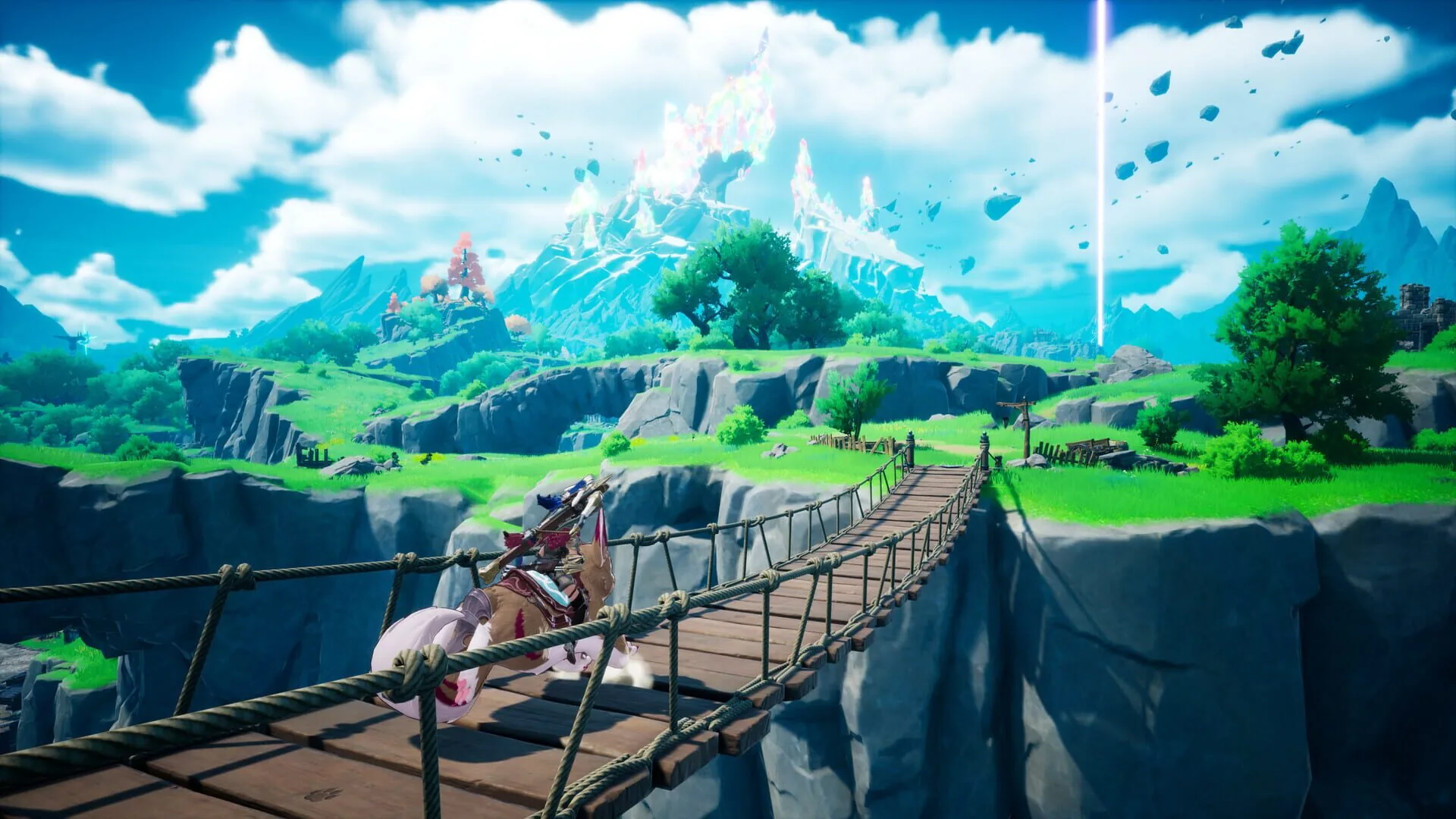
DragonSword Awakening is an open-world RPG built on Unreal Engine 5, available on PC since 23 July 2026. It unfolds an anime universe on the continent of Orbis, where you recruit singular companions to trigger tag-team clashes riddled with status ailments. The game pushes QTEs and team action to their limits, with more than nineteen playable characters each endowed with their own powers and elemental affinities. Visually, it's a splurge of bright, bold, striking art, with nature environments that bleed blue and green, and characters flaunting an impressive range of colors. The promise is one of permanent grand spectacle.
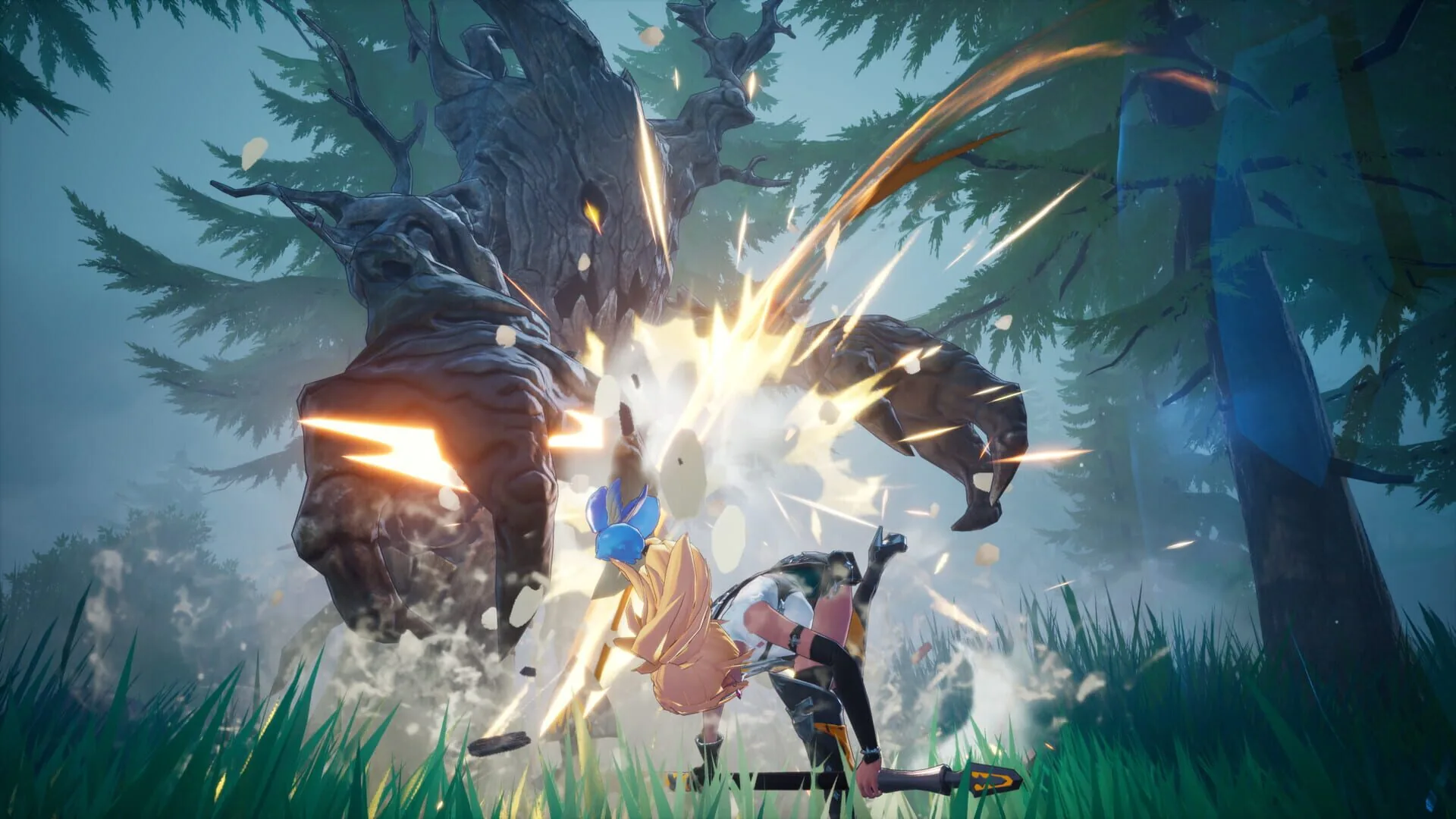
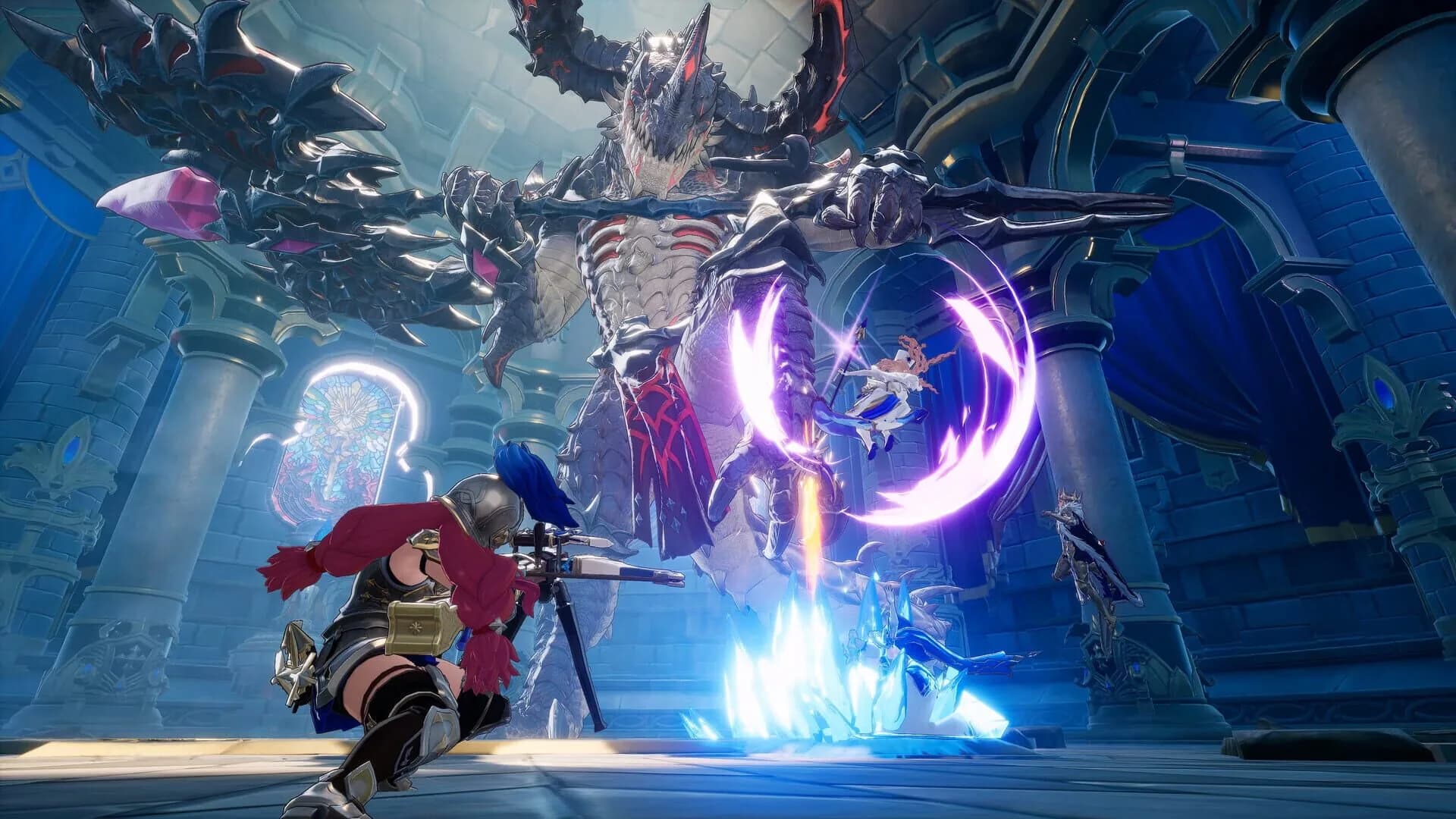
The heart of DragonSword Awakening is its tag-team combat system. You swap seamlessly between three characters mid-fight, which multiplies the combo potential tenfold and turns every brawl into an uninterrupted chain. The idea is to juggle your fighters to stack status ailments, extend the chains and keep up the pressure, in a rhythm that never lets up. With nineteen characters of distinct elemental affinities, the combinations are many, and the pleasure comes from experimentation: finding the trio that synergizes, alternating elements, driving up the hit counter. It's combat built for exuberance, and on that ground, it delivers.
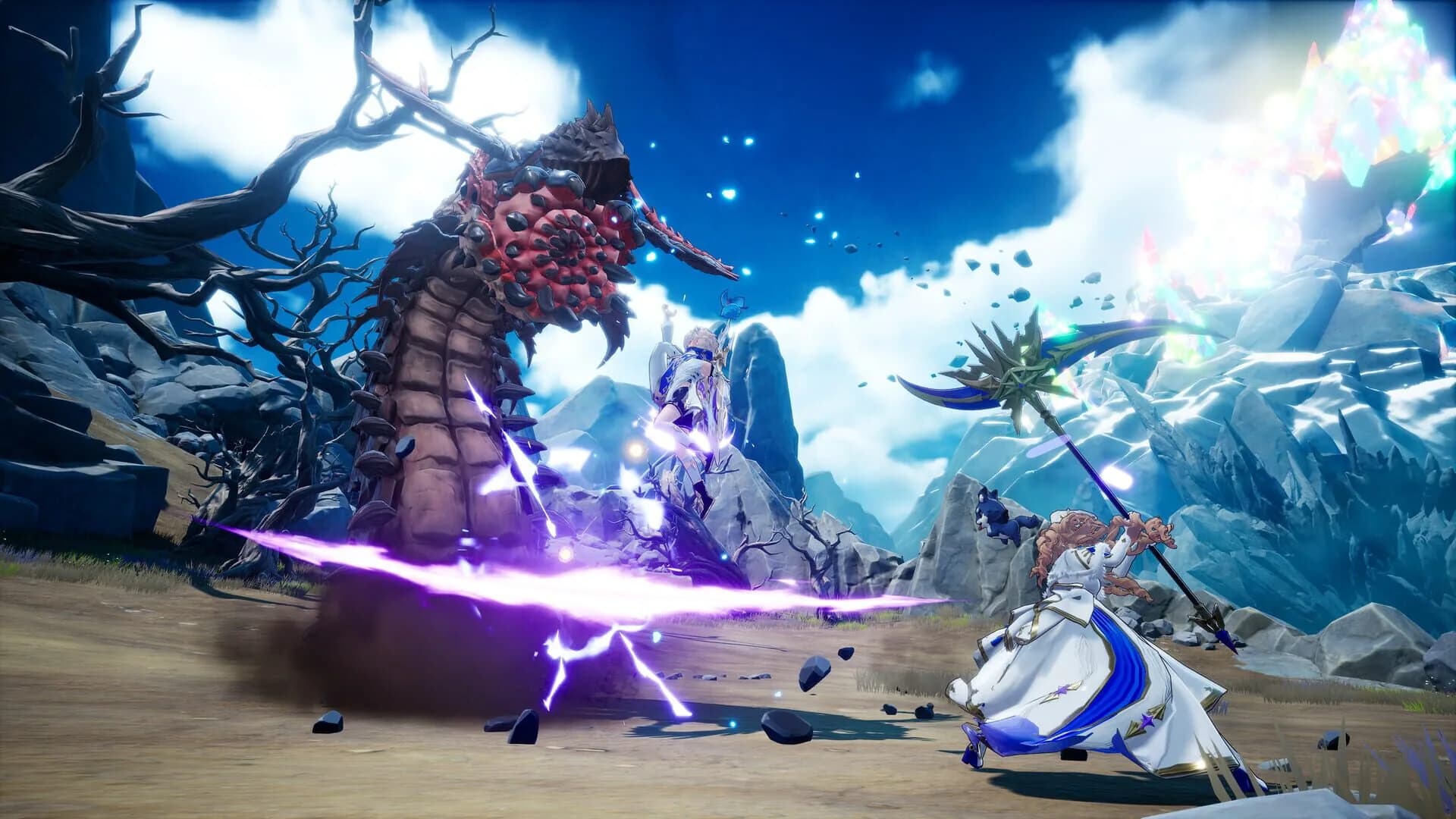
That's also where the warning takes on its full meaning. Each chain throws an avalanche of light effects, particles and colored bursts onto the screen, to the point that the action can become hard to read in the busiest moments. The game owns this visual overkill as a signature, and it's part of its slightly heady pleasure, but it demands a certain tolerance for constant flickering. The gameplay rhythm is satisfying, the nerve is there, and the system rewards mastery of swaps and timings, but you have to love screens overflowing with information and flashes to feel fully at ease.
You have to stay honest about the limits. If combat shines, exploration takes the hit: the world is dense, but traversal ends up repeating, and you find that familiar feeling of zones that resemble each other once the initial wonder fades. The game is perfectly functional, nicely put together, but several voices point out it lacks that little extra soul that would truly set it apart from the competition. You move through a superb universe without necessarily remembering what made it unique, and that's perhaps its main flaw: impressing without leaving a lasting mark.
The other reservation rejoins the warning from the start. This splurge of effects, if it delights the spectacle lover, can quickly tire, even put off the player seeking legibility and restraint. It's not a technical flaw as such, it's an aesthetic stance pushed far, and it will inevitably divide. Some will see gleeful visual generosity, others an exhausting overload over time. You have to know what you're getting into: DragonSword Awakening does nothing by halves, and its exuberance is as much its identity card as its limit.
DragonSword Awakening is a generous, spectacular action RPG that bets everything on its tag-team combat and visual splurge to win you over. The swap system between three characters, the stacking of combos and status ailments, the richness of its nineteen fighters with elemental affinities: on the ground of exuberance and immediate pleasure, it fully owns its ambition. It's beautiful, it's nervous, it's gleeful at times, and as long as you love unrestrained anime spectacle, there's plenty to enjoy controller in hand.
You just have to deal with its limits and its stance. Exploration repeats, the game lacks that grain of madness that would make it unforgettable, and its flood of visual effects, however impressive, demands a real tolerance for constant flashes and flickering. It's a title that's a feast for the eyes but doesn't shake up the genre, to approach for its punchy combat and visual generosity more than its depth. Gorgeous, yes, as long as you're not epileptic and love a game that never turns down the volume.
An anime open-world RPG with punchy tag-team combat and an owned visual splurge: gorgeous and generous, but repetitive in exploration and sometimes illegible under its flood of effects.
Strengths:
- Nervous, heady three-way tag-team combat
- Nineteen characters with varied elemental affinities
- A bright, generous art direction
- A satisfying gameplay rhythm that never lets up
Weaknesses:
- Exploration that repeats once the wonder fades
- A lack of strong identity against the competition
- A tiring flood of visual effects, not advised for those sensitive to flashes
Tested on PC.
Disagree with the score? Come and tell us on the InsertCoins Discord, where we defend our verdicts live.