In Dwarf Delve, most deaths aren't caused by the mine's dangers, but by your own greed. That last vein, that one extra room, that chest just down the tunnel: that's how you miss the elevator and lose everything. Surviving here isn't about digging faster, it's about learning to stop in time. This guide gathers the essentials to master the extraction dilemma, manage your time and greed, use your equipment and prioritize your permanent upgrades. For our full opinion on the game, head to the Dwarf Delve review.

Understanding the risk-and-reward loop is the first key, because the whole game revolves around it. Each expedition sends you into a procedurally generated mine, with a simple goal: gather materials and get back to the surface before time runs out. The temptation is to descend ever deeper, because the lowest sections hold the most valuable materials. But every meter gained toward the bottom lengthens the return trip accordingly, and if you miss the elevator, collapsing tunnels, traps and underground hazards can end your run and make you lose all the loot you've gathered.
The golden rule, then, is to always think round-trip, never one-way. Before sinking deeper, always ask yourself: do I have time to go back down for this AND get back up? The loot already in your pockets only counts if you bring it to the surface. A modest haul successfully extracted is infinitely better than a treasure abandoned on your corpse at the bottom of a collapsed tunnel. Keep that maxim in mind on every descent, and you'll survive where the greedy player fails on a loop.
Time management is the true heart of survival, and it demands a discipline your greed will constantly fight. The best reflex to build is setting yourself a point of no return: a moment where, whatever loot is in sight, you turn back toward the elevator. Constantly watch the time remaining and the distance separating you from the exit, and always keep a safety margin for the unexpected, because a collapsing tunnel can force you into a costly detour.
Greed is your inner enemy, and taming it is a skill in itself. The game is built to tempt you into going too far, and every run lost for one last vein is a lesson. Learn to recognize the moment when the risk outweighs the reward: the deeper you go, the more the danger grows disproportionately to the gain. Our advice: favor short, safe runs at first, systematically bring back your loot, and only extend the fuse when your permanent upgrades give you the means. Consistency beats recklessness: ten small successful extractions advance you far more than one big run in two that ends in disaster.
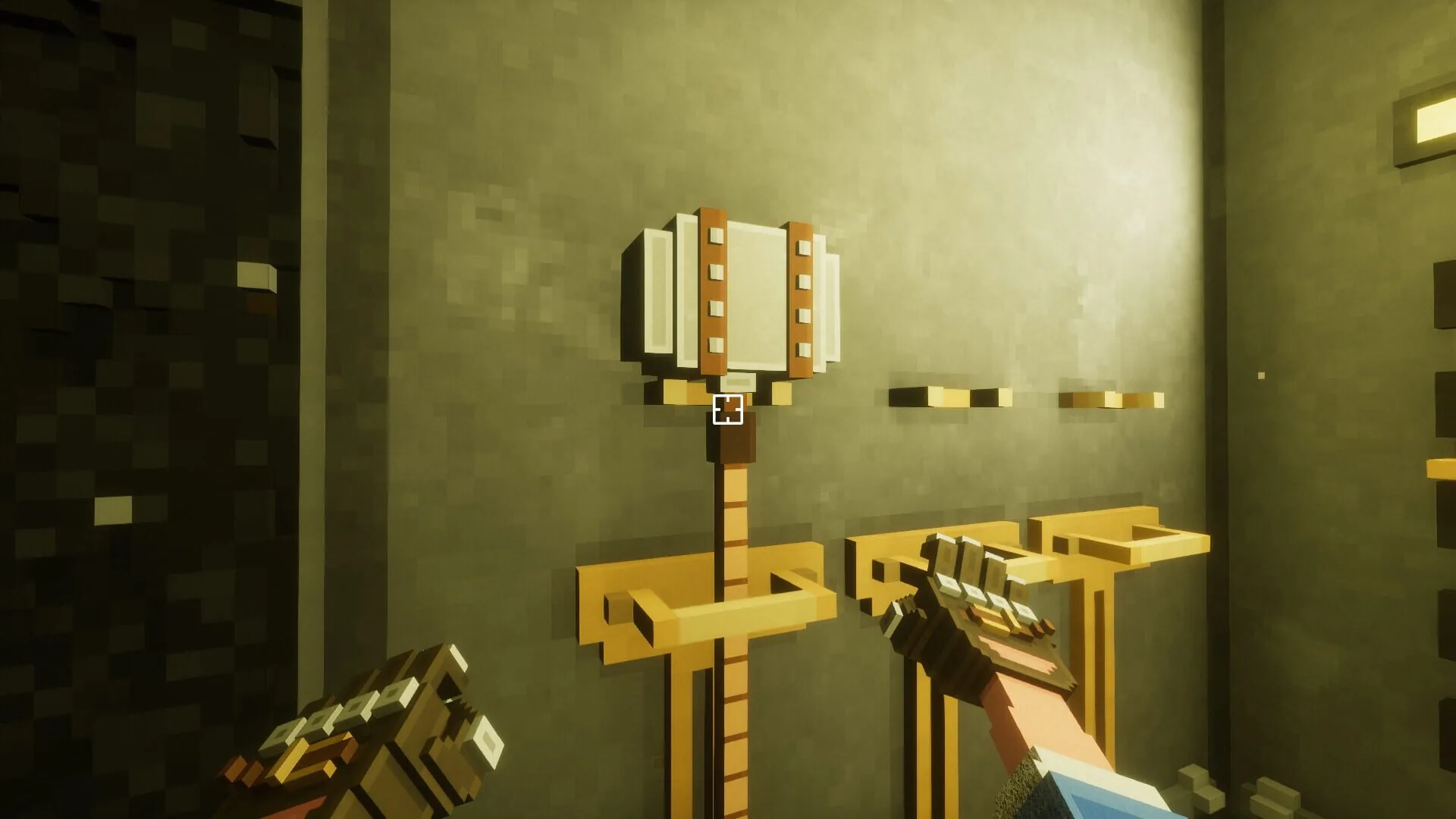
Your survival depends as much on your equipment as on your discipline, and Dwarf Delve's arsenal is rich. The Battlemallet is your base tool for breaking rock and confronting hazards: it's what opens paths and gets you out of many situations. Around it, a whole caving kit turns the mine into terrain to develop: lanterns and floodlights light the dark zones where traps hide, flares mark your return path, support beams secure passages, and ladders open precious vertical shortcuts to save time.
The tool that truly changes the game is the rail networks and minecarts. Carrying heavy ores by hand is slow and slows you down, whereas building a rail line lets you efficiently move large quantities of resources through the tunnels. Investing time in developing your mine, lighting, securing and laying rails, may seem counterproductive when the clock is ticking, but it's often what turns a risky expedition into a mastered extraction. Think of your descent as a logistical operation, not a blind race: marking your return is as important as finding the vein.
It's permanent progression that will take you from fragile survivor to elite miner. The resources brought back to the surface are refined and exchanged for permanent upgrades, new tools, skills and perks. Three axes stand out: movement speed, mining strength and carrying capacity. Each solves a different problem, and the order in which you level them depends on your style, but a few priorities hold for everyone.
Movement speed is often the best first investment, because it directly attacks your worst enemy, time: moving faster means descending deeper while keeping the same return margin, so more loot for the same risk. Carrying capacity comes next, to bring back more with each successful extraction and make your runs pay off. Mining strength, finally, speeds up the gathering itself and opens the hardest deposits. The general principle is to first strengthen what secures and monetizes your extractions, before investing in what pushes you to go further. Every upgrade should serve the virtuous loop: survive better to bring back more, bring back more to upgrade further.

When should you extract in Dwarf Delve?
Set a point of no return and watch the time remaining against the exit distance. Loot only counts if you bring it back: better a small successful extraction than a big run that ends in disaster.
How do you avoid losing your loot?
Always think round-trip, keep a safety margin, mark your return path with flares and don't go deeper than your time allows.
Which upgrade should you level first?
Movement speed is often the best first choice, because it attacks your worst enemy, time. Then come carrying capacity and mining strength.
What are rails and minecarts for?
Efficiently moving large volumes of ore through the tunnels, where manual transport slows you down. Developing your mine is often what secures an extraction.
How do you manage your greed?
Recognize that the deeper you go, the more danger grows disproportionately to the gain. Favor consistency over recklessness, especially while your upgrades are modest.
Guide written based on the PC version.
A question, a tip to share? The InsertCoins Discord is the place for it.