6
Test
Crown Siege: an eight-euro incremental siege game, honest about its length
You spawn troops, absorb waves of goblins, upgrade the tower. Short, owned, and sold as such.
Alexandrosse
7 min
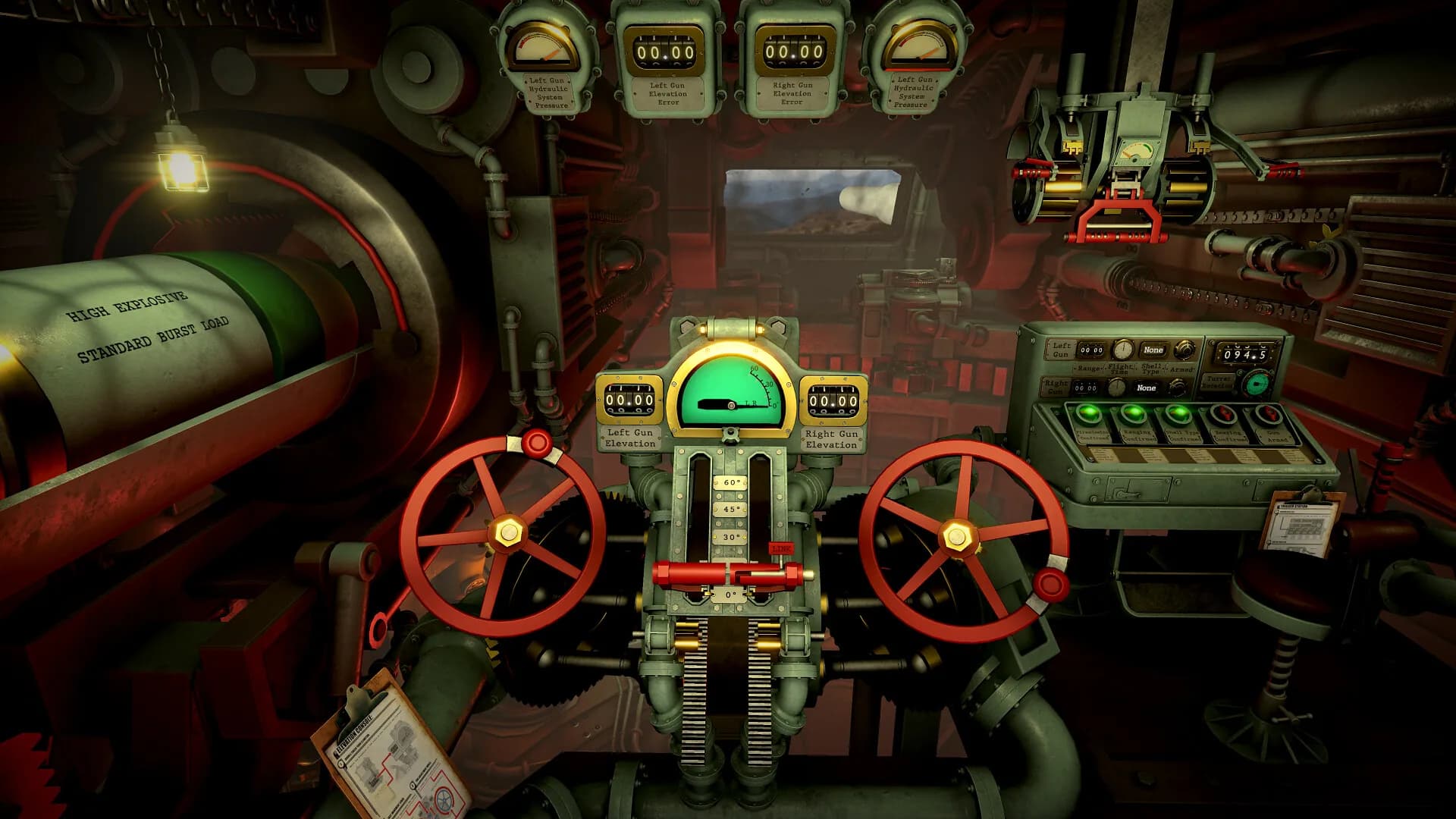
The dieselpunk we loved in Iron Harvest, seen through the sighting hole. Two developers, one monstrous gun and a heavy dose of guilt.
Alexandrosse
InsertCoins.press Score
8/10
Verdict
Recommended
First reaction to the IRON NEST banner: this smells like Iron Harvest. The same imagination of oversized war machines, the same interwar Europe run on diesel, the same silhouette of a colossus crushing a stretch of countryside. KING Art's RTS, drawn from Jakub Rozalski's 1920+ paintings, was a game we liked a lot, and clearly we are not the only ones who still remember it.
Except IRON NEST is not playing in that category at all, and that is where it gets interesting. In Iron Harvest you commanded armies from above, in strategic view, with a general's comfort. Here you are one man, shut inside a turret, and you will never see the battlefield in any way other than through numbers and aerial photographs. The point of view has flipped a hundred and eighty degrees: you are no longer the one deciding the war, you are the one who pulls.
The game is by Nick Nieuwoudt and Dominik Latos, which is to say exactly two people, self-publishing on Steam and GOG. A passion project fed on an obsession with artillery and interwar machinery, and one that made far more noise than its size suggested: IRON NEST finished first in wishlist additions at the June Steam Next Fest, and second demo of the festival by unique players. For a first-person turret simulator, let us admit that was not a foregone conclusion.
The operator's job comes down to a loop that looks simple on paper and is not. Two teleprinters chatter continuously: one relays top-priority directives from High Command, the other direct calls from the front line. It is on you to turn that stream of contradictory information into a firing plan.
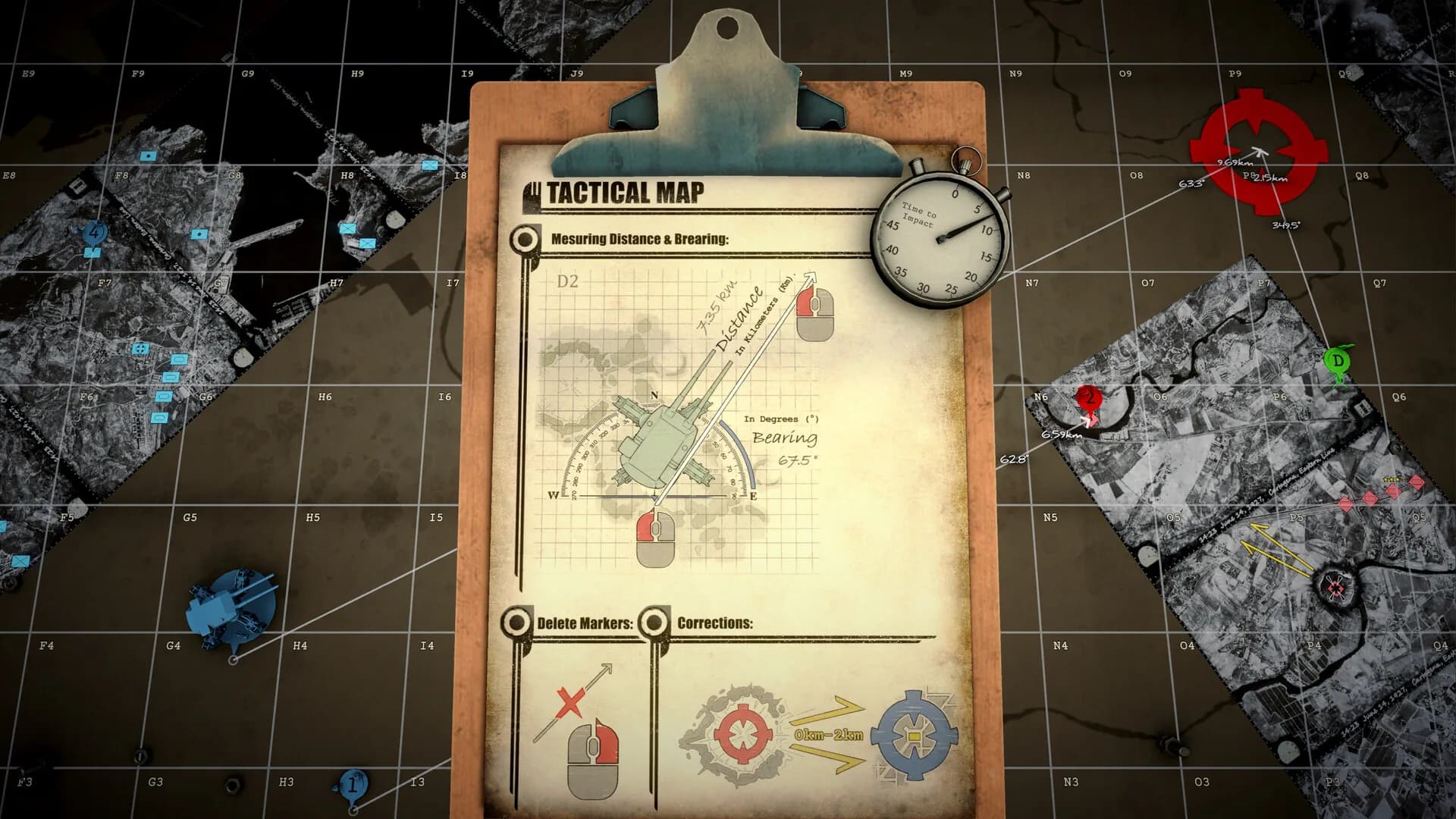
After that, everything runs through your hands. You take measurements on the map from the coordinates you received, grind the numbers through the ballistic calculator until a firing solution appears, choose the propellant charge (heavier to throw the shell to the horizon, lighter to arc it down into an enemy emplacement), crank the elevation wheel, lay the gun, fire. Then you wait for the aerial reconnaissance photos to find out what you actually hit.
The choice of shell is not cosmetic either: armour-piercing to open a bunker, smoke to screen a friendly withdrawal. And other options, let us say, less presentable. The game also warns that the machine may fail. You may not.
It is that procedural slowness, turned into tension, that won over the demo's players: 99 percent positive across more than 4,000 reviews, which remains a rare score for a proposition this austere.
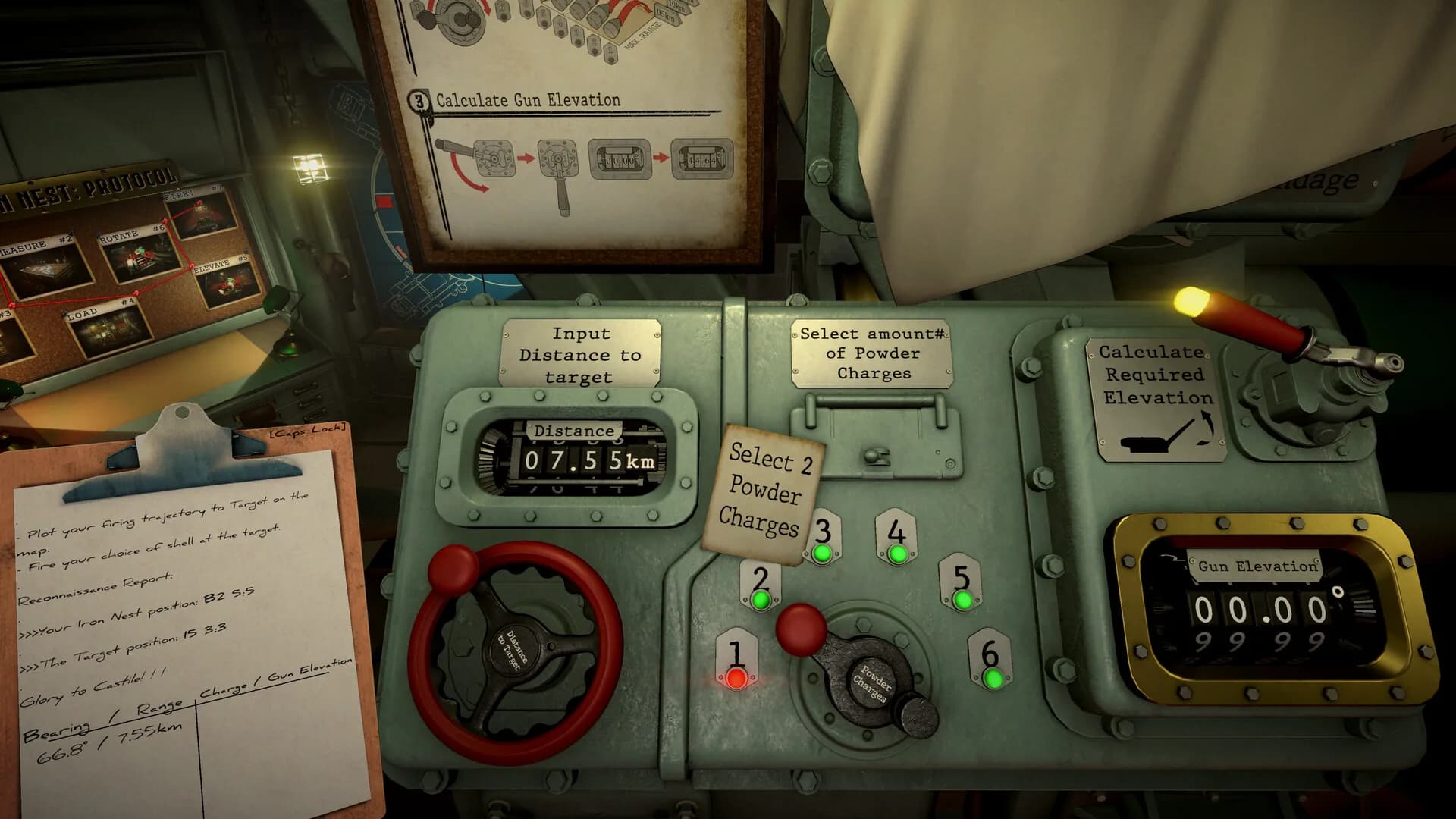
This is where the Iron Harvest comparison stops dead. The 2020 RTS was a handsome war of miniatures, spectacular and legible. IRON NEST puts guilt at the centre and refuses to dilute it. The store page goes as far as redacting its own sentences when it touches on gas, and states flatly that neither spotless paperwork nor the finest propaganda will erase your fault. The line that best sums up the mood: it never happened if there are no witnesses.
You can move the markers on the map, but the scars remain. Translation: a game where you never see your victims, and where it is precisely the absence of an image that creates the unease. High Command issues the orders, but it does not carry the consequences. That is your finger on the lever.
Two things, and they come up consistently in player feedback. The first is guidance: the game throws its measurements, charges and calculator at you without holding your hand much, and the lack of a tutorial has been the most frequent complaint. The entry curve is steep, deliberately so, but it will leave people by the roadside.
The second is the narrowness of the proposition. An artillery simulator made of measurements, calculations and waiting is a niche game, still rough around the edges in places, and it will not convert anyone who is not already curious about the subject. Those players will be bored stiff.
For everyone else, it is a singular and frankly gutsy success. Two people took a blind spot of the war game, carried it all the way to moral nausea, and pulled a mechanical experience out of it that exists nowhere else. We wanted more dieselpunk after Iron Harvest; we did not expect it to come back through the sighting hole, with dirty hands.
Gamesplanet has given us a discount code for our readers: IRONNEST, to be entered at checkout, for 29 percent off the game.
Transparency: this code was provided to us by Gamesplanet, where our purchase link is affiliated. Neither the code nor the affiliation influenced the score or the content of this review, which was written before the offer was put to us. We were not able to test the code's validity ourselves, and its terms and duration are set by the retailer.
We debrief every release on our Discord. The door is open, and so is the argument.
Affiliate link: a purchase earns us a commission, at no extra cost to you.
Community
Your rating
Advertisement
Loading comments...
You might also like
You spawn troops, absorb waves of goblins, upgrade the tower. Short, owned, and sold as such.

iRacing delivers a solid pad game and a contested wheel game. And the official store page discloses automatically generated voice lines.
An automation game where you manifest your own biomes, with five minigames to fill the time while the machines work.