6
Test
Death at Fleming Manor: the investigation is good, it is the paperwork that fights you
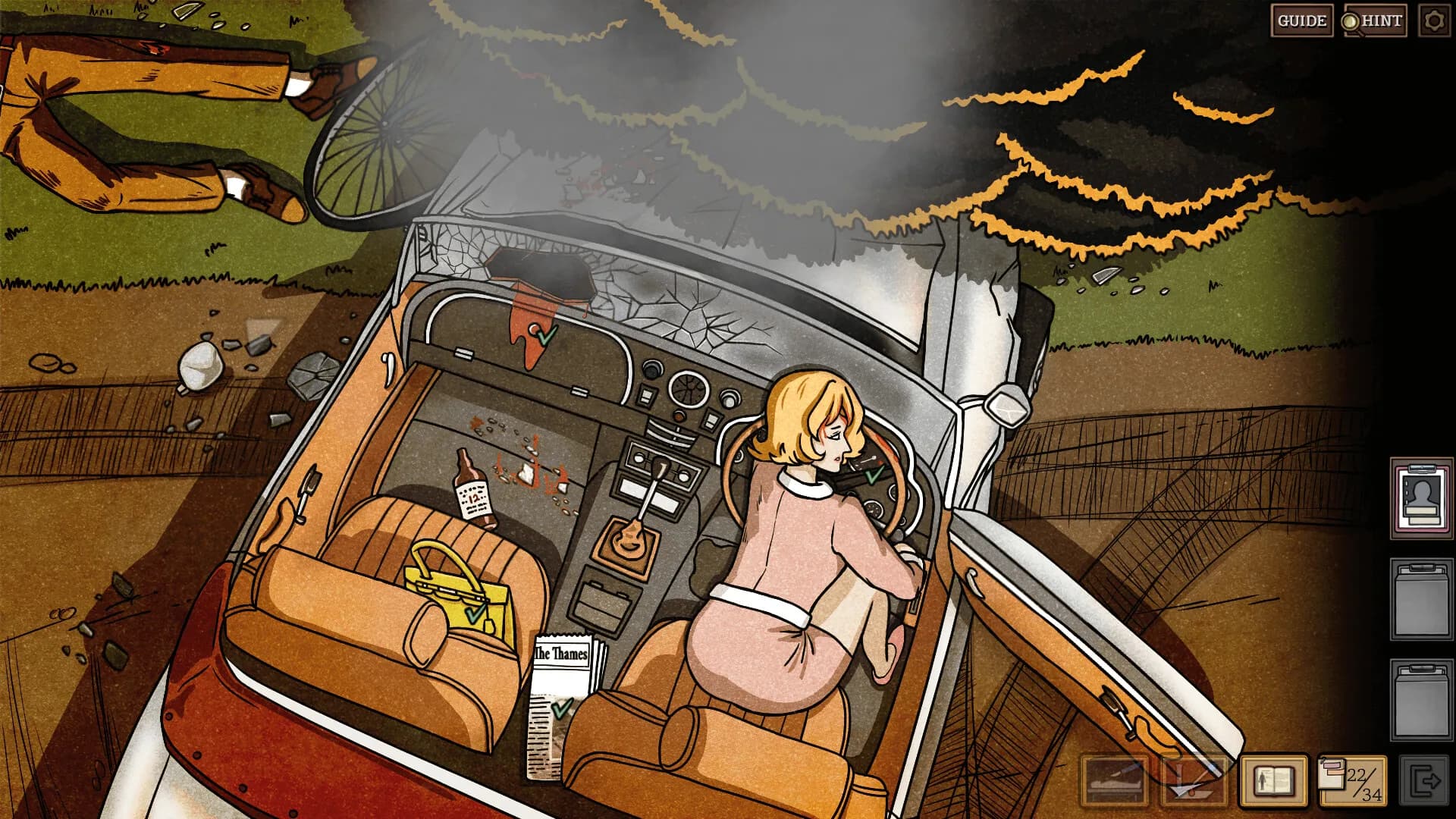
You fill in death certificates in an English manor in 1959. The idea is excellent. The interface gets in the way.
Alexandrosse
8 min
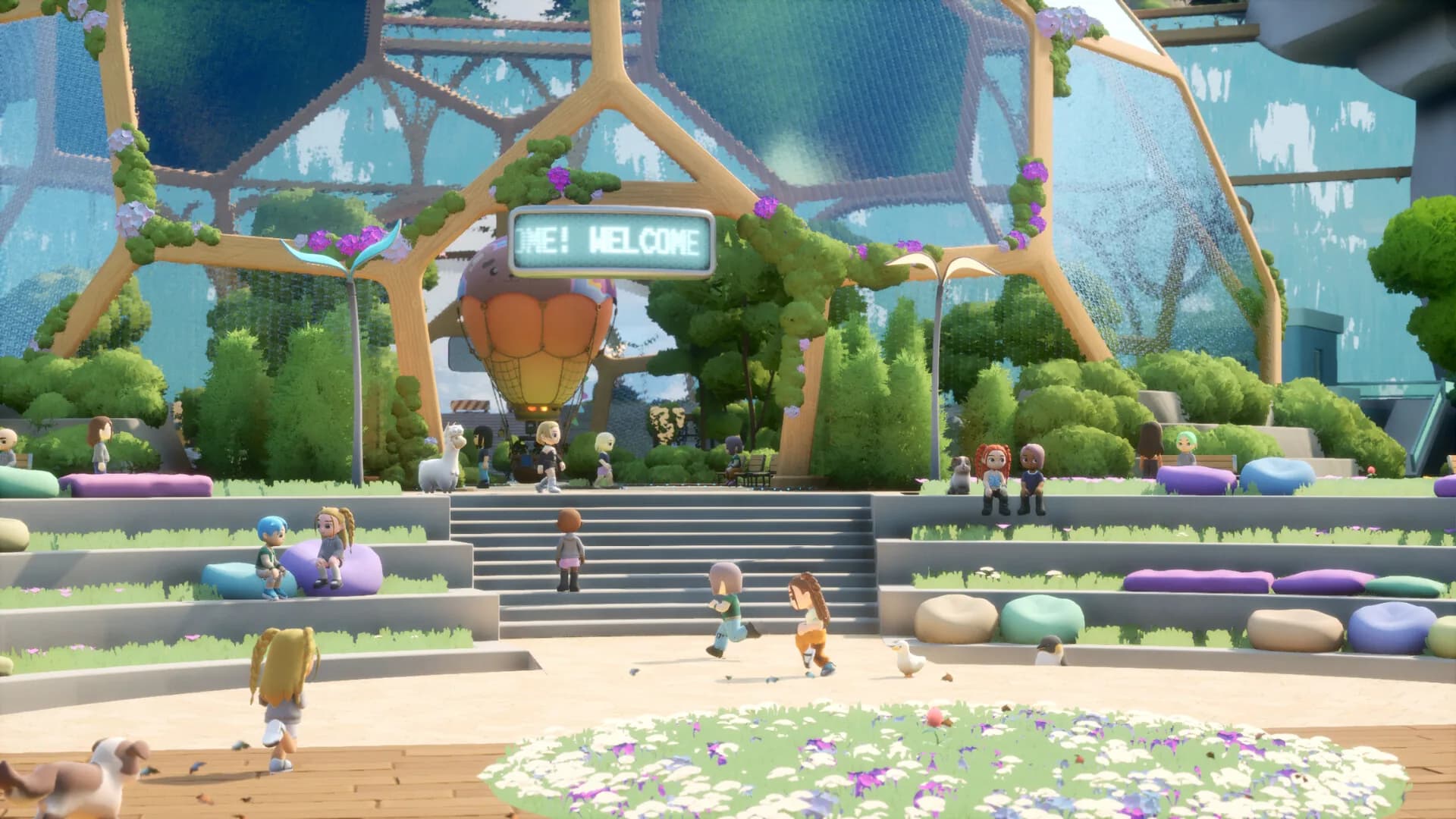
16,700 people funded this game in 2023. Three years later they are playing it. In this genre that is close to an achievement.
Alexandrosse
InsertCoins.press Score
7/10
Verdict
Recommended
The cozy online life-sim genre has a graveyard, and it is well populated.
Spectacular funding campaigns, gorgeous floating islands in the trailers, six-person studios discovering that holding up a persistent online world costs ten times what they raised. Then the silence, the quarterly updates that become biannual, and one day a post opening with "we have difficult news to share".
Loftia raised more than 1.27 million dollars from 16,700 people in 2023. On 3 November 2026 it entered early access, with seven thousand players online on day one.
That deserves saying before anything else.
I tend to distrust aesthetic labels bolted onto management games. This one holds, because it describes a mechanic rather than just a palette.
You farm, yes. But you farm hydroponically, with aquaponics, on trellises. You craft tools powered by renewable energy you have to generate. Sustainability is not scenery painted over a farming game, it is the constraint the systems were built from.
That changes two concrete things. First, verticality: on a floating island, ground space is precious, so a trellis is not an ornament, it is an answer. Second, energy becomes a production resource alongside water, which gives you a reason to invest in ugly infrastructure before you can afford pretty things.
It is a farming game that asks you to be an engineer before a decorator, and I find that more interesting than the reverse.
Each player builds an island. Islands link into neighbourhoods. And above all of it sit World Projects: shared construction efforts that unlock new resources and new islands for everybody.
That is where the game separates itself from an online Stardew Valley, and it is also where it takes its risk.
A collective objective presupposes a population. On a full server, World Projects advance, the world opens, and your daily presence counts for something. On a server that empties, they become a wall nobody clears, and the game turns into a solitary farm simulator with dialogue boxes talking about community.
Seven thousand people on opening day is comfortable. That is not the question. The question is what February looks like, and nobody can answer it today, not even the studio.
Qloud Games is precise on this point, which is welcome and not especially common.
Four story chapters across three regions: Loftia City, the Hanging Gardens and Gridfall. Side quests, World Projects, Adventures and endgame systems.
Adventures are the part that interests me most, because they have nothing to do with the rest. You leave the city to explore abandoned factories, solve platforming puzzles and run group quests across different biomes. A cozy game that allows itself a genuine puzzle-exploration module sidesteps the genre's main trap, which is offering a single activity in forty variants.
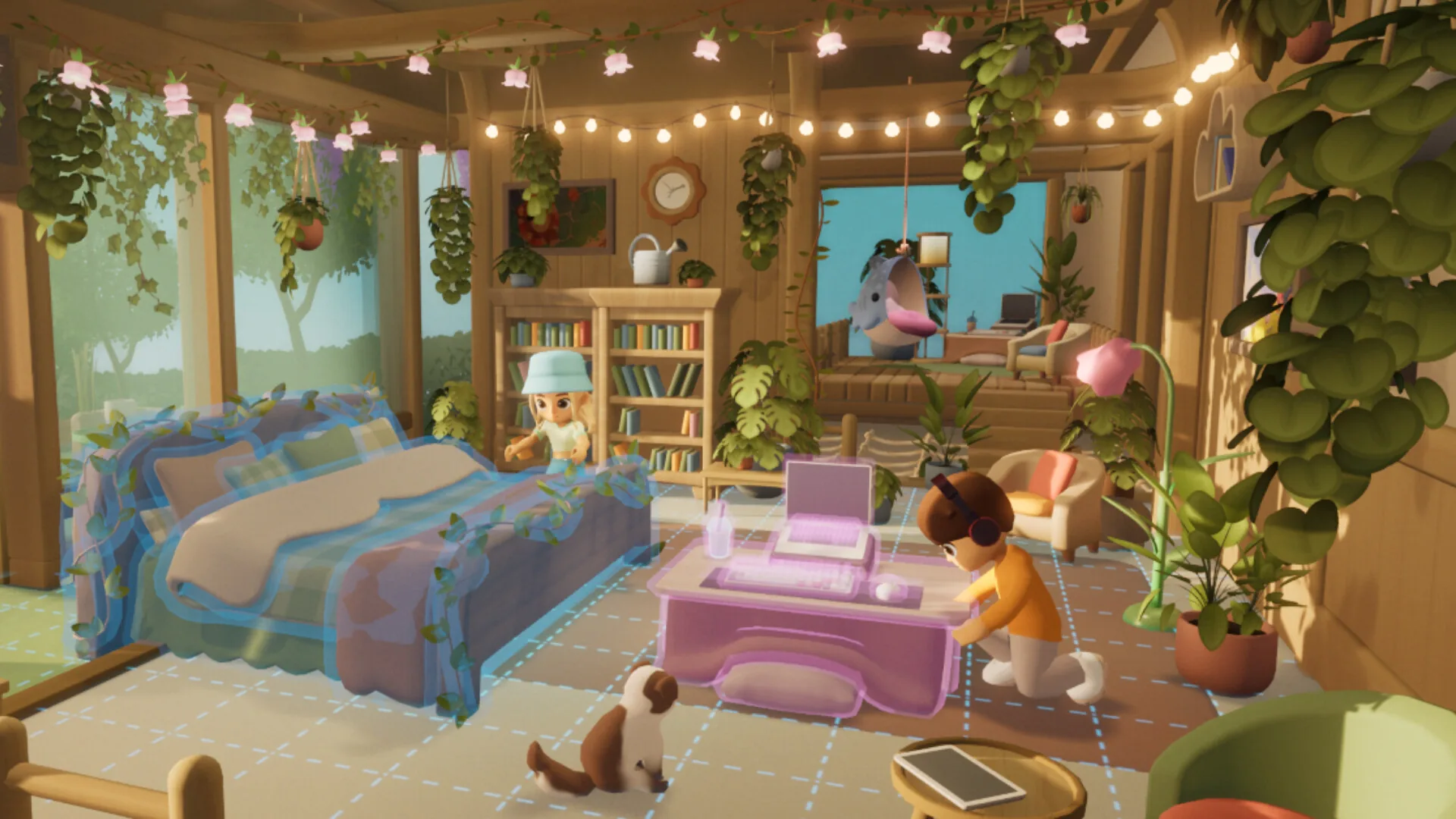
You can also rescue and adopt animals, capybaras included, and dress them. I am not going to pretend that is incidental: in this genre it is a headline feature, and somebody somewhere is already assembling a capybara wardrobe.
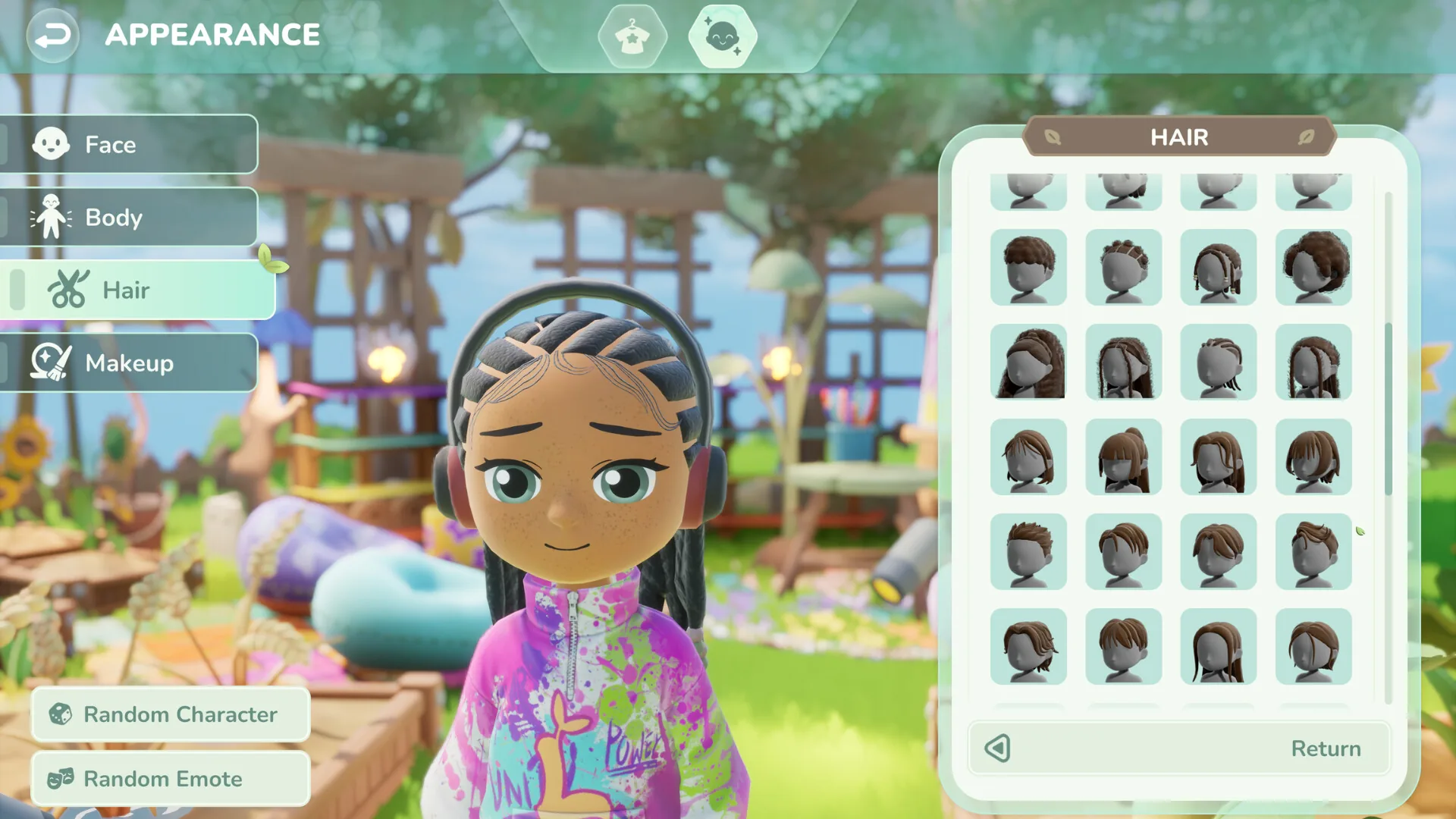
Character and home customisation is broad, with several distinct decorating styles.
28.99 euros, 24.06 euros with the 17 per cent launch discount.
And in the early access section, this line: the studio may consider raising the price closer to the 1.0 release depending on the quality improvements made.
Practical translation: if the project appeals to you, buying now is probably the lowest figure you will see. Less pleasant translation: you are paying twenty-four euros for a version the studio itself expects to remain in early access for roughly a year, and which is still missing the Study Cafe, Clubs and NPC Friendships.
It is not a trap, it is a contract, and it is written plainly on the page. But an online life-sim without a system for relationships with its inhabitants is a restaurant opening before half the menu has arrived.
The first hours are clean, which for a persistent world launch borders on miraculous. One player flagged a telling detail: you can switch off camera smoothing. That is a setting studios forget nine times out of ten, and finding it there on day one points to people who listened to their testers.
The whole thing reads well, the art direction holds without collapsing into generic pastel, and the production systems carry enough friction to make you want to optimise them.
What is missing, at this stage, is proof over time. A solo farming game is judged in twenty hours. A shared world is judged at six months, at the precise point where the daily loop has to keep earning your log-in once the novelty has worn off.
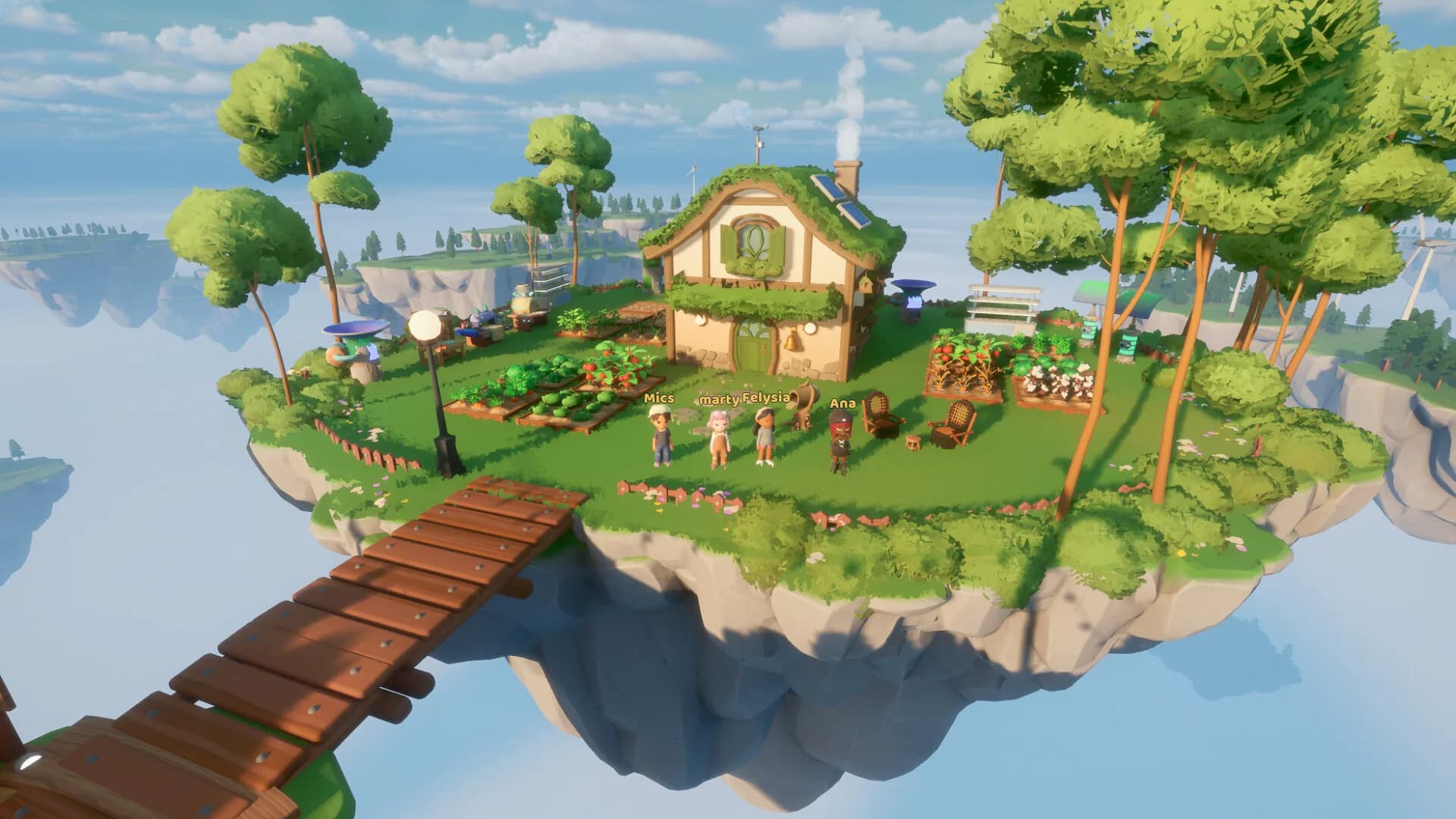
So here is where I stand. The game is here, it is pretty, it is playable, it has structural ideas its competitors lack, and it is held by a studio that delivered what it promised thousands of people three years earlier. In this genre, that sentence carries weight.
I am giving it a seven and keeping room to move. The score of a persistent world on day one is a photograph of its opening, not of its life. We will come back when we know whether the neighbourhoods are still inhabited.
Started an island and looking for neighbours? There is a channel for that on the InsertCoins Discord.
Community
Your rating
Advertisement
Loading comments...
You might also like
You fill in death certificates in an English manor in 1959. The idea is excellent. The interface gets in the way.
The source code was sitting on a laptop a former programmer had handed down to his kid. Eight years later, the game is on Steam.
Four hours, six euros, one snail and a remarkably quick moral descent. Blood is a type of juice.