6
Test
Death at Fleming Manor: the investigation is good, it is the paperwork that fights you
You fill in death certificates in an English manor in 1959. The idea is excellent. The interface gets in the way.
Alexandrosse
8 min
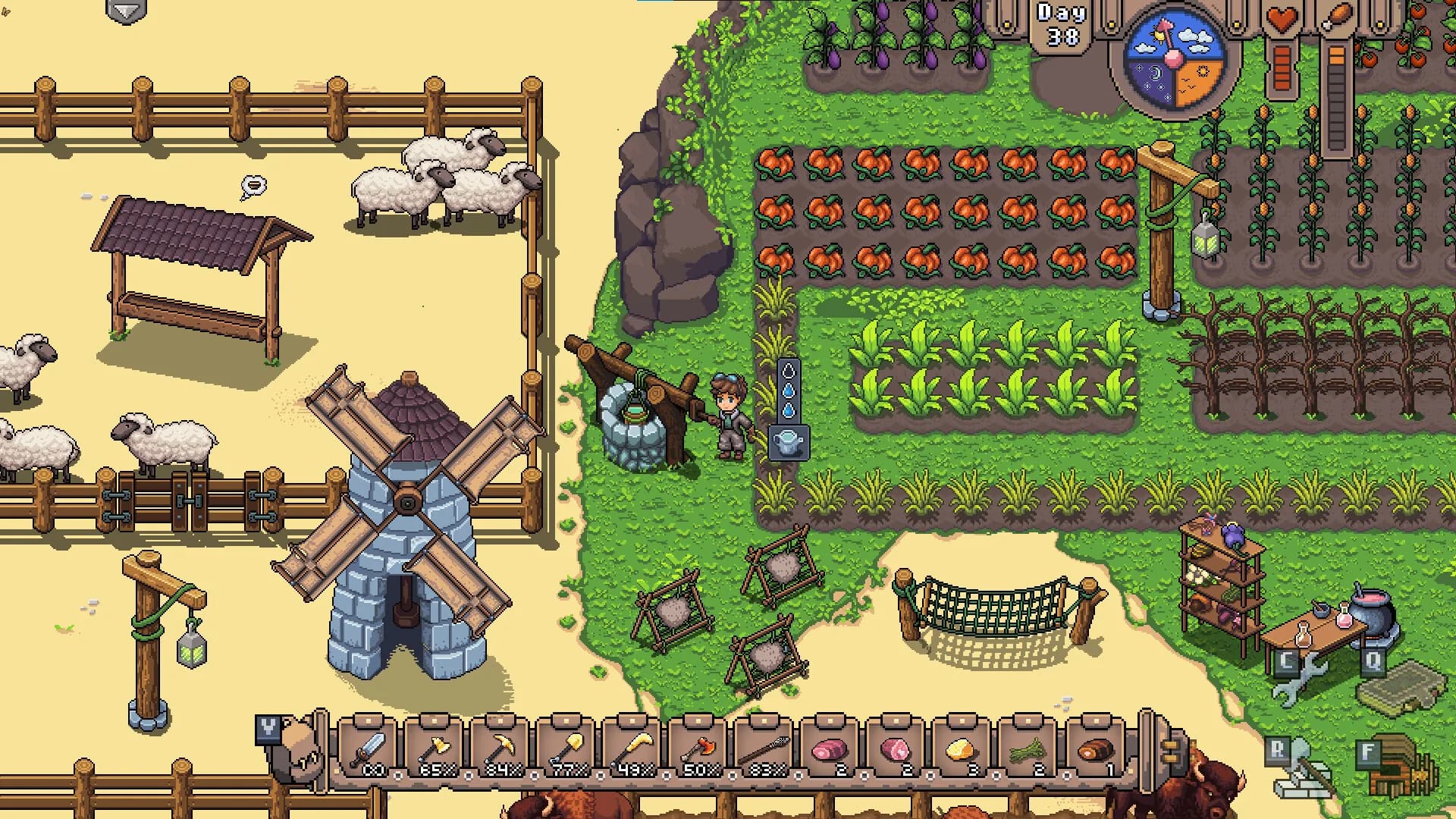
Five years of work from a small Brazilian studio, and one simple idea: the island has to be leavable.
Alexandrosse
InsertCoins.press Score
7/10
Verdict
Recommended
I have a standing complaint about survival games, and it fits in one sentence: most of them never end.
You wake up somewhere, you gather wood, you build a hut, then a better hut, then a workshop for building better huts. Forty hours later you own a magnificent base and you have absolutely no reason to return to it, because the game never told you where it stopped.
Mayday tells you in its menu: you are here to leave.
A mysterious crash, waking alone on a strange island. You hunt, you farm, you craft. Then you explore a wider archipelago, with ancient ruins, secrets and magical totems.
And you have a journal listing side objectives, alongside the main one, which is getting off the island.
Written down it sounds ordinary. It is not, and one player put his finger on it precisely: he really appreciates having a main goal of getting off the island, and the side quest list in the journal, because it gives him something to work towards.
A survival game with a destination is not an ergonomics detail. It is a different proposition. Building stops being an end in itself and becomes a means again, and every base upgrade is measured by how much closer it brings departure rather than by how handsome it looks.
The influence is obvious and every player names it: Don't Starve for the mood and the silhouette, Terraria for the progression and the tinkering.
One of them gives the exact formula: cross Terraria with Don't Starve, crank the combat difficulty down several notches, and throw in a story line. That matches what I felt very closely.
That drop in difficulty is a choice, and it will divide people. Don't Starve punishes you for misunderstanding, and part of its audience plays for nothing else. Mayday would rather let you move forward. The mechanics are basic and easy to pick up, the interface is friendly, and it runs without demanding a recent machine.
That is not design laziness, it is a target: people who like the idea of survival and hate losing eight hours of progress because they forgot to eat.
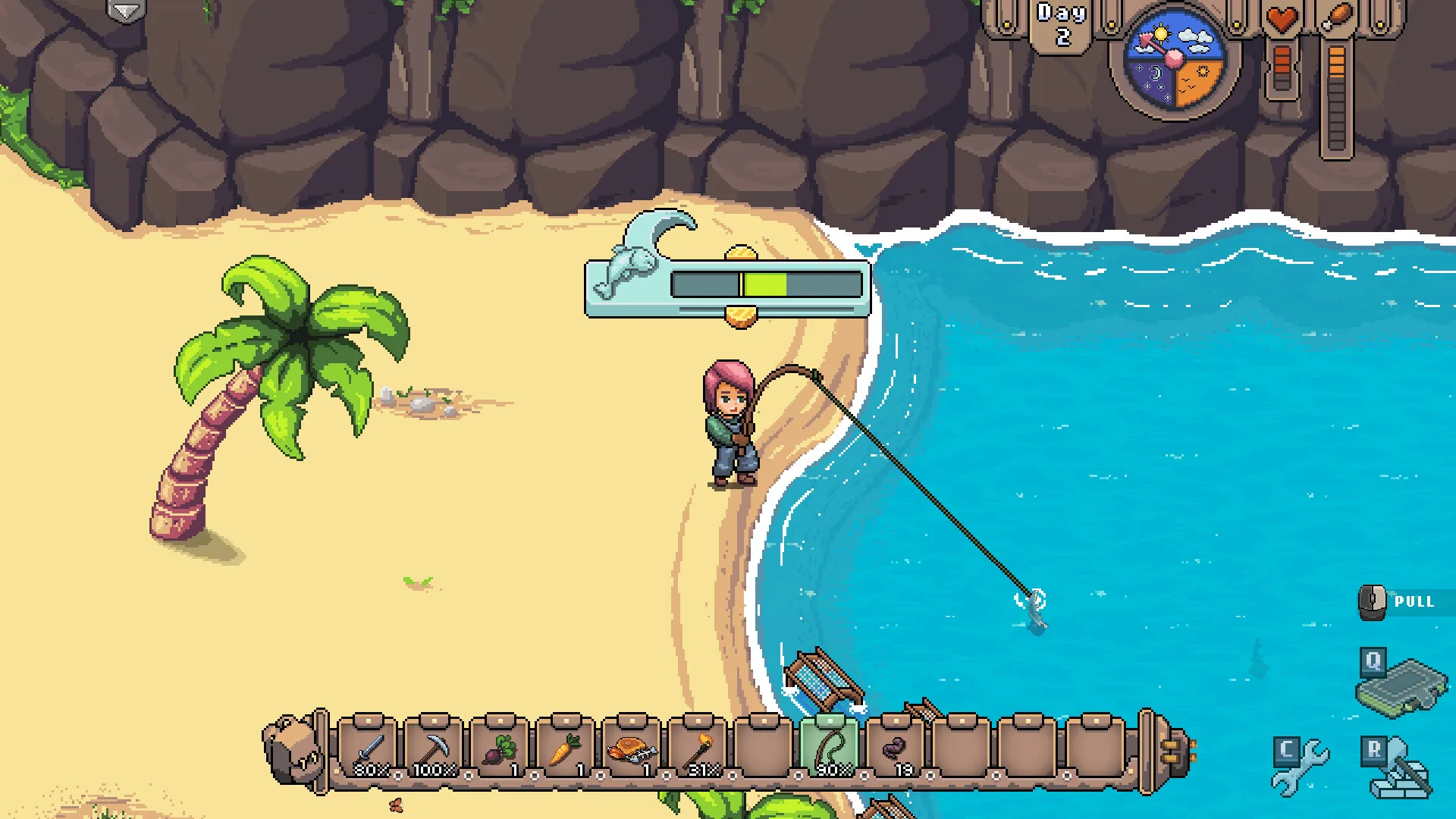
Mayday's Steam identifier goes back to 2021. Pequi Studios has been at this a long while, with a demo several players describe as generous enough to have absorbed twelve hours of their time before release.
It shows in one specific place: the density of detail. Reviews raise it unprompted, and it is usually the first thing sacrificed when a small studio has to ship. One player speaks of incredible attention to detail and a lot of heart, which is a vague formula but one that recurs too often to dismiss.
The building system paired with progressive rewards is the most cited mechanic on the enjoyment side. It is also the most conventional, so it had better be solid.
91 per cent positive. The sample is small, around forty reviews as I write, and it should be taken for what it is: the reception of a first day, not a verdict.
The first is mechanical. By softening combat and needs management, Mayday removes part of the tension that holds the genre together. In the opening hours it passes easily because exploration carries you. What happens at hour fifteen, once the map is known and nothing really threatens you, remains to be seen.
The second is technical and minor: requests for display settings recur in the reviews, particularly around borderless windowed mode. Nothing blocking, the sort of thing a first-week patch handles.
The third is the reception itself. One player writes that he was looking forward to Mayday more than GTA VI. It is a joke, it is funny, and mostly it describes a heavily invested demo community. That kind of audience buys on day one and scores generously. I do not draw suspicion from it, I draw caution.
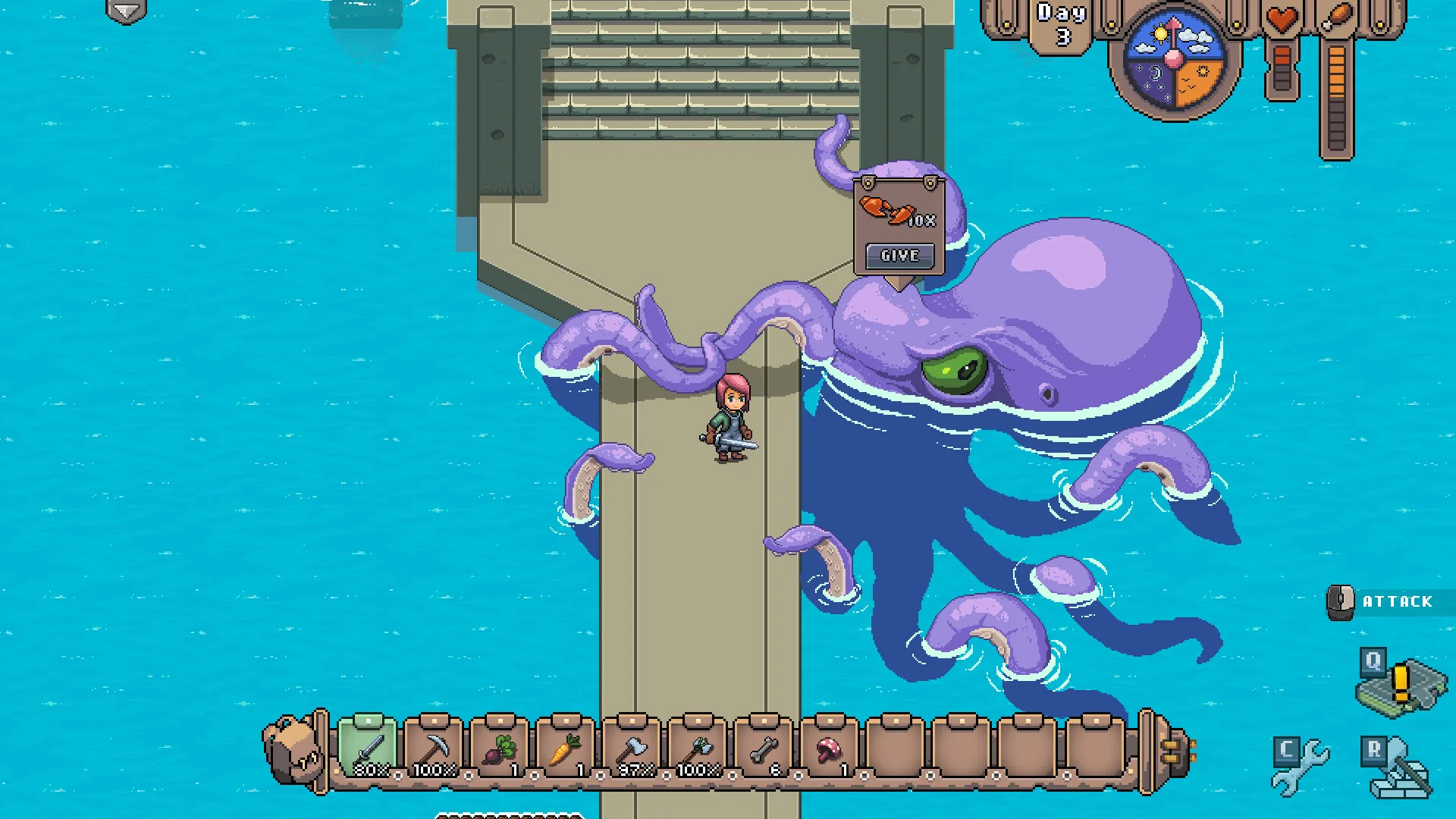
13.15 euros, 10.52 at launch, an honest rate for this volume.
If Don't Starve always appealed to you visually and repelled you with its cruelty, this is precisely the game you were waiting for. If you like survival games but always disengage the moment the base is finished, the presence of an ending should hold you longer than usual.
If on the other hand you want a demanding simulation where every calorie counts, you will find this lukewarm, and it is better to know in advance.
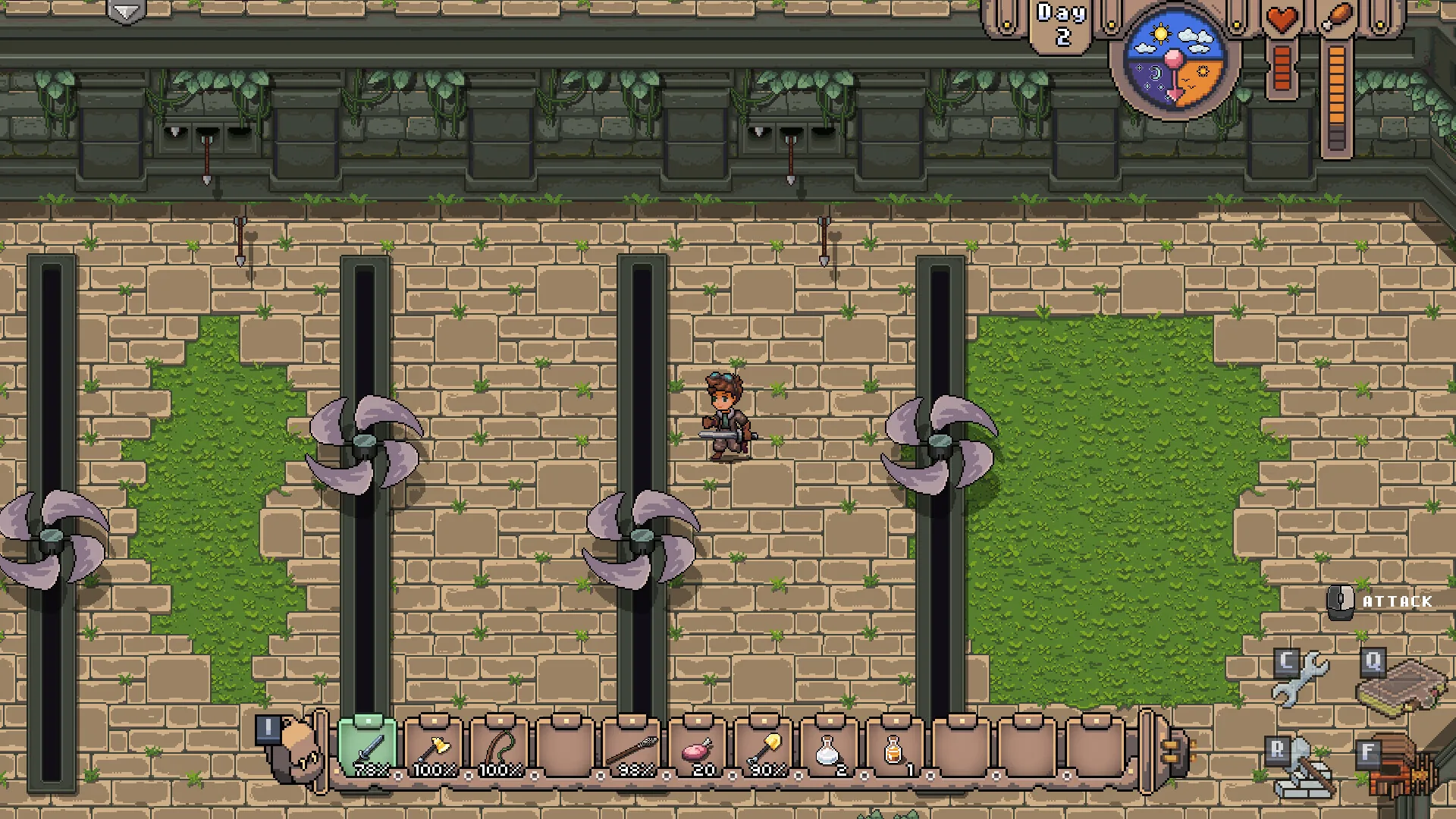
What I like most, in the end, is the economics of the project. A modest Brazilian studio, five years of work, no visible marketing budget, a demo left openly available for a long time to do the convincing, and a game that ships in a playable state at thirteen euros.
It will not make noise. It does not need to.
Have you left the island? Tell us how long it took on the InsertCoins Discord and we will compare routes.
Community
Your rating
Advertisement
Loading comments...
You might also like
You fill in death certificates in an English manor in 1959. The idea is excellent. The interface gets in the way.
The source code was sitting on a laptop a former programmer had handed down to his kid. Eight years later, the game is on Steam.
Four hours, six euros, one snail and a remarkably quick moral descent. Blood is a type of juice.