7
Test
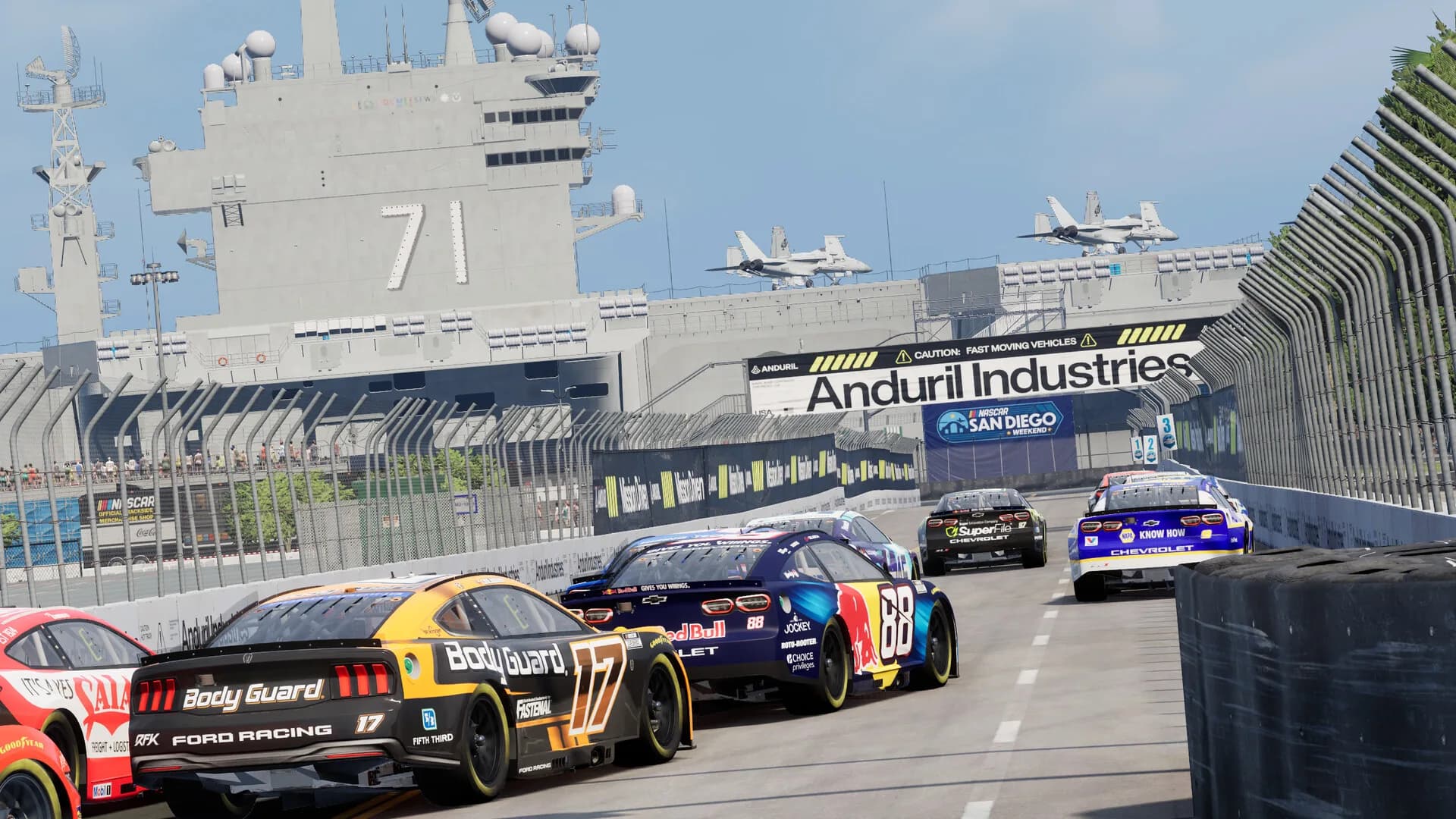
NASCAR 26: the best NASCAR game in years, provided you put the wheel down
iRacing delivers a solid pad game and a contested wheel game. And the official store page discloses automatically generated voice lines.
Alexandrosse
10 min
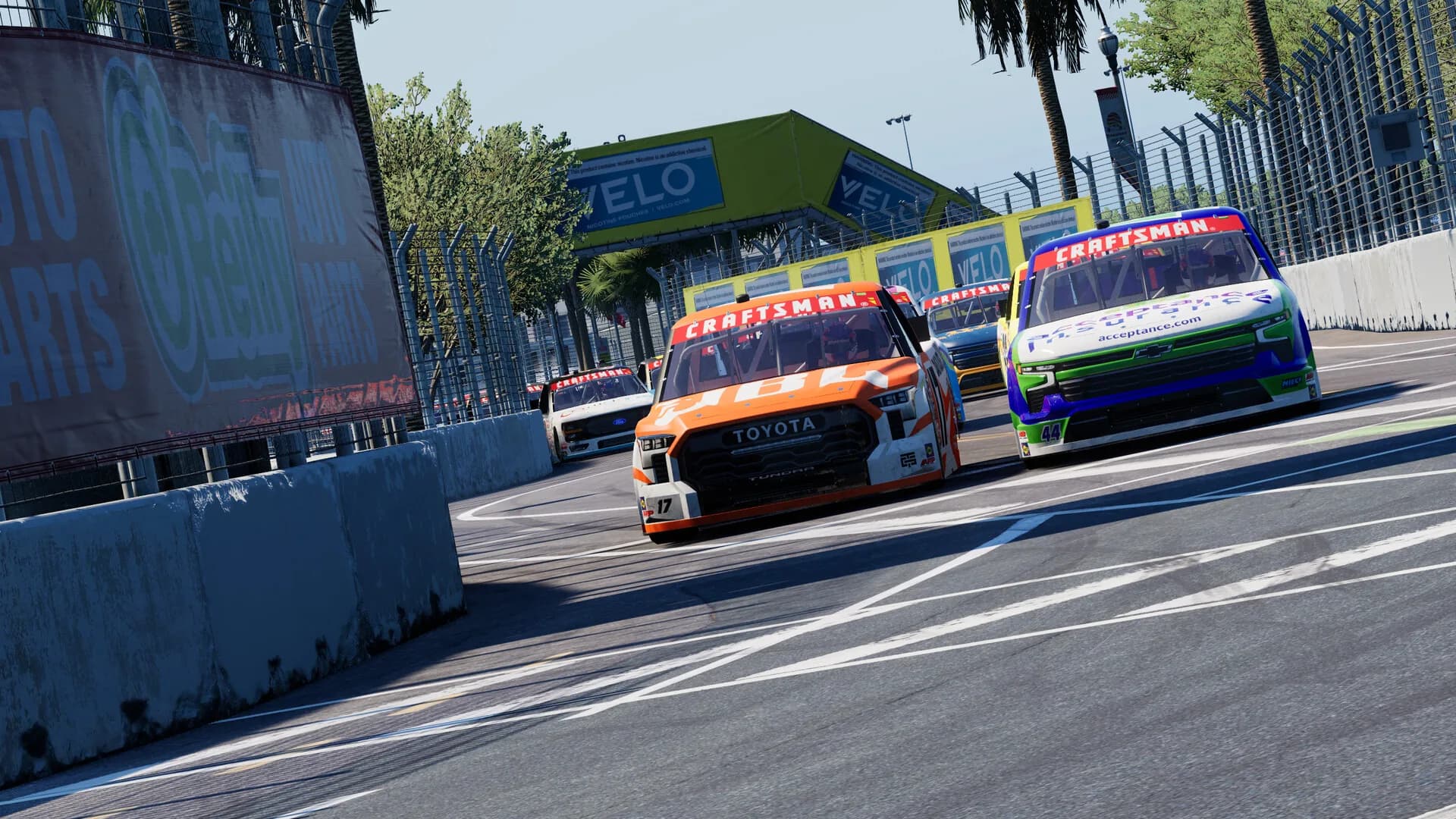
Pad or wheel, which assists to keep, how to hold a line on an oval, and why the draft changes everything.
Alexandrosse
Oval racing has an unfair reputation: turning left for three hours. It is wrong, and NASCAR 26 proves it the moment you try to pass somebody.
This guide covers what you need for your first hours. Our full review is here.
This is the most important decision, and it is not a neutral one in this entry.
As I write, the game is markedly better tuned on a controller. That is where the majority of feedback converges, and several wheel owners describe steering that heads for the wall on the first attempts.
If you own a wheel and insist on using it, take the time to rebuild everything from scratch: force feedback, sensitivity, dead zone and steering angle. And test in quick race on a short oval before starting a career, not the other way round.
If you simply want to drive and enjoy yourself, take the pad without embarrassment. That is not an admission of weakness, it is the configuration this game is best calibrated for.
The game offers adjustable difficulty and a peak performance training mode.
My advice for starting out.
Keep braking assist at first. Ovals forgive little: braking too late into a banked corner sends you into the outside wall, and your race is over.
Turn off steering assist as soon as you can. It is the one that most prevents you learning the line, because it corrects what you should be feeling.
And lower the AI level before enabling every assist. You will learn more driving cleanly against slow opponents than fighting your own car.
Advertisement
Three principles that change everything, and that are not intuitive if you come from road courses.
You barely brake, you lift. On many ovals the right technique is a progressive lift rather than a firm brake. A sharp brake unsettles the car at the worst moment.
The corner is won on entry. Too low an entry traps you behind the car ahead, too high an entry costs you speed on exit. You gain a lap on entry, not on exit.
And be consistent before you are fast. Fifty laps at a steady pace beat ten fast laps followed by a spin. That is true in a race, and truer still in a championship.
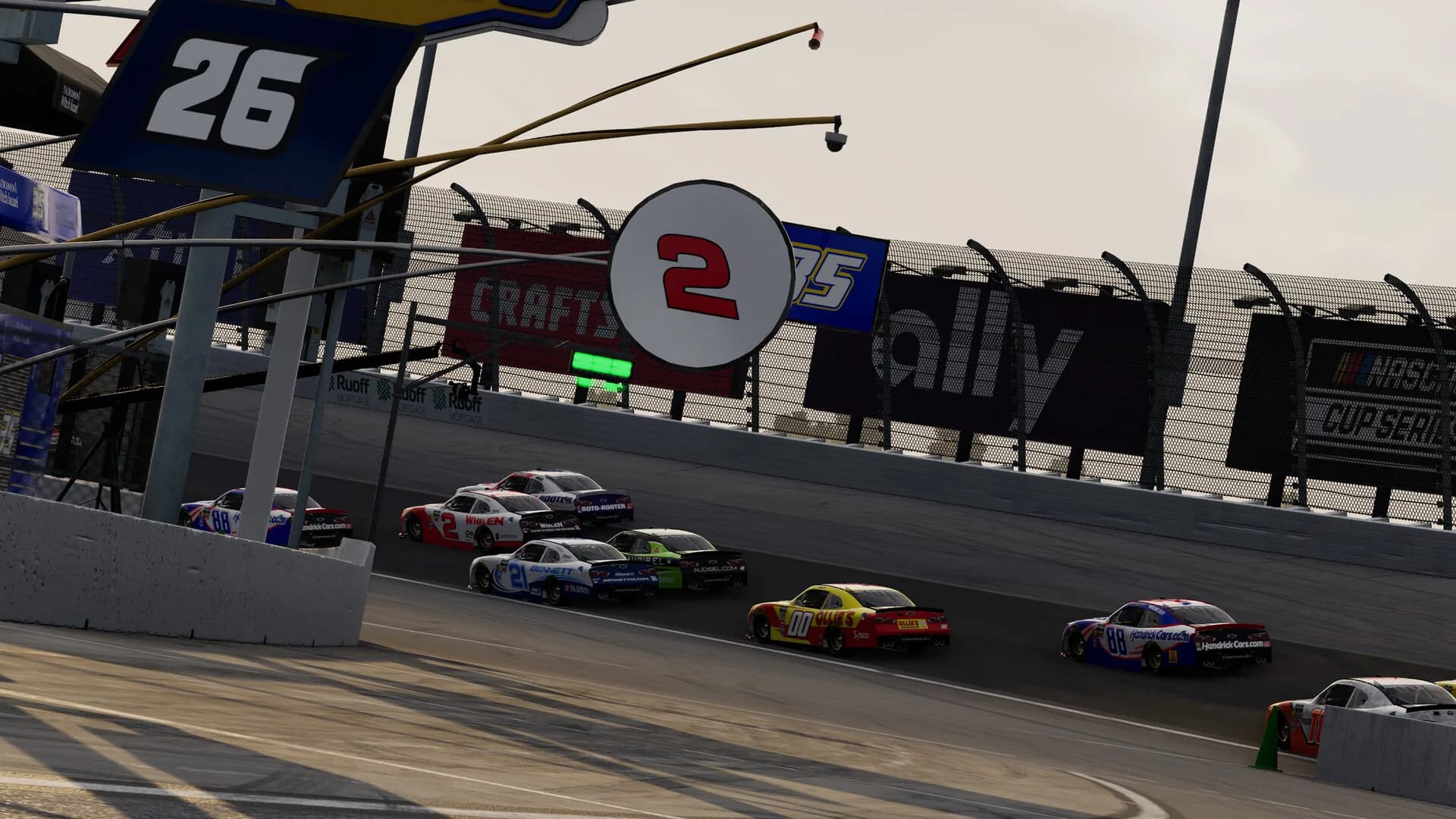
It is what makes oval racing gripping, and what new players take longest to understand.
Behind another car, you go faster. On the big ovals, that is what lets you climb through an entire pack without having a quicker car.
Three practical consequences.
Do not pass alone if you can avoid it. Leaving the draft to overtake means losing the advantage that allowed the overtake. Wait until somebody is behind you, or aim for a corner exit.
Do not sit glued for too long. Pressing your nose into the car ahead also disturbs your own cooling and grip.
And be wary at the end of a straight. That is where passes are decided, and therefore where crashes happen.
Quick race, to learn a track without consequences.
The peak performance training mode next, which exists precisely to work on your weak points.
Then career, once you can do fifty laps without touching a wall.
And save The Chase for later. It is the mode that stages the title fight, so it is where a mistake costs most.
The game has blind spots you have to accept.
The damage model is judged weak by a portion of players, and so is collision physics. Do not count on a realistic crash to tell the story of your race.
And setup management is rudimentary. You cannot load a configuration file or rename your setups beyond the circuit's name, which complicates sharing setups between players. Keep your notes separately.
Pad to begin. Braking assist kept, steering assist off, AI lowered. Lift rather than brake. Work on corner entry. Use the draft and only leave it at the right moment. And aim for consistency before speed.
Which track gave you your first top five? We compare debuts on the InsertCoins Discord.
Community
Your rating
Advertisement
Loading comments...
You might also like
iRacing delivers a solid pad game and a contested wheel game. And the official store page discloses automatically generated voice lines.

Who does what in co-op, how not to sink during the rush, and how far to push the shady side activities.
Where to start, how to gain influence, when to marry, and why your first dynasty is going to die out stupidly.
How to set prices, what to order, why your customers leave, and the discipline you need in front of a booster box.