6
Test
Crown Siege: an eight-euro incremental siege game, honest about its length
You spawn troops, absorb waves of goblins, upgrade the tower. Short, owned, and sold as such.
Alexandrosse
7 min
A horror roguelite deckbuilder in a 1990s city, where corruption changes how you rest, trade and move around.
Alexandrosse
InsertCoins.press Score
7/10
Verdict
Recommended
There is an idea in Noctiria worth stopping at, and it fits into one line from the studio: becoming stronger also means giving corruption new ways to reach you.
In a genre where you mechanically stack power, that is a rare proposition.
A 1990s city, corroded, filthy and diseased. A night that seems unwilling to end.
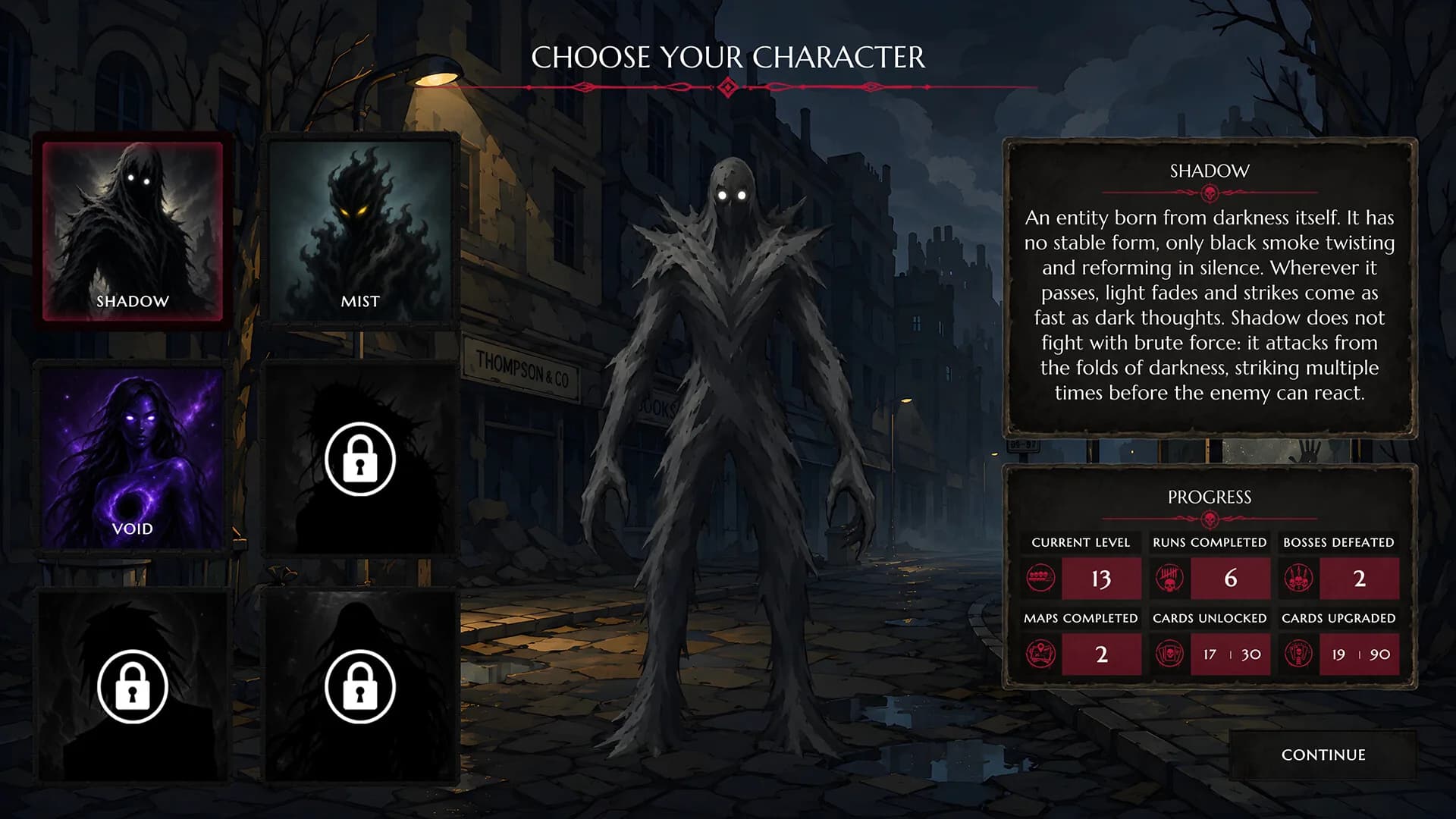
You choose one of six heroes, build your deck during the run, read enemy intentions, and combine cards, status effects and consumable relics to survive.
Between descents you unlock, develop your characters and permanently upgrade their cards.
So far that is the genre's grammar, well handled.
Here is what separates this game from the twenty other deckbuilders released this month.
Noctiria does not merely attack your health points. Corruption changes the way you rest, trade and move through the city.
In other words the penalty is not a bar going down, it is a degradation of your options. You do not lose health, you lose possibilities.
And the studio closes the idea with a phrase I find very apt: every card is a wound, every choice leaves something behind.
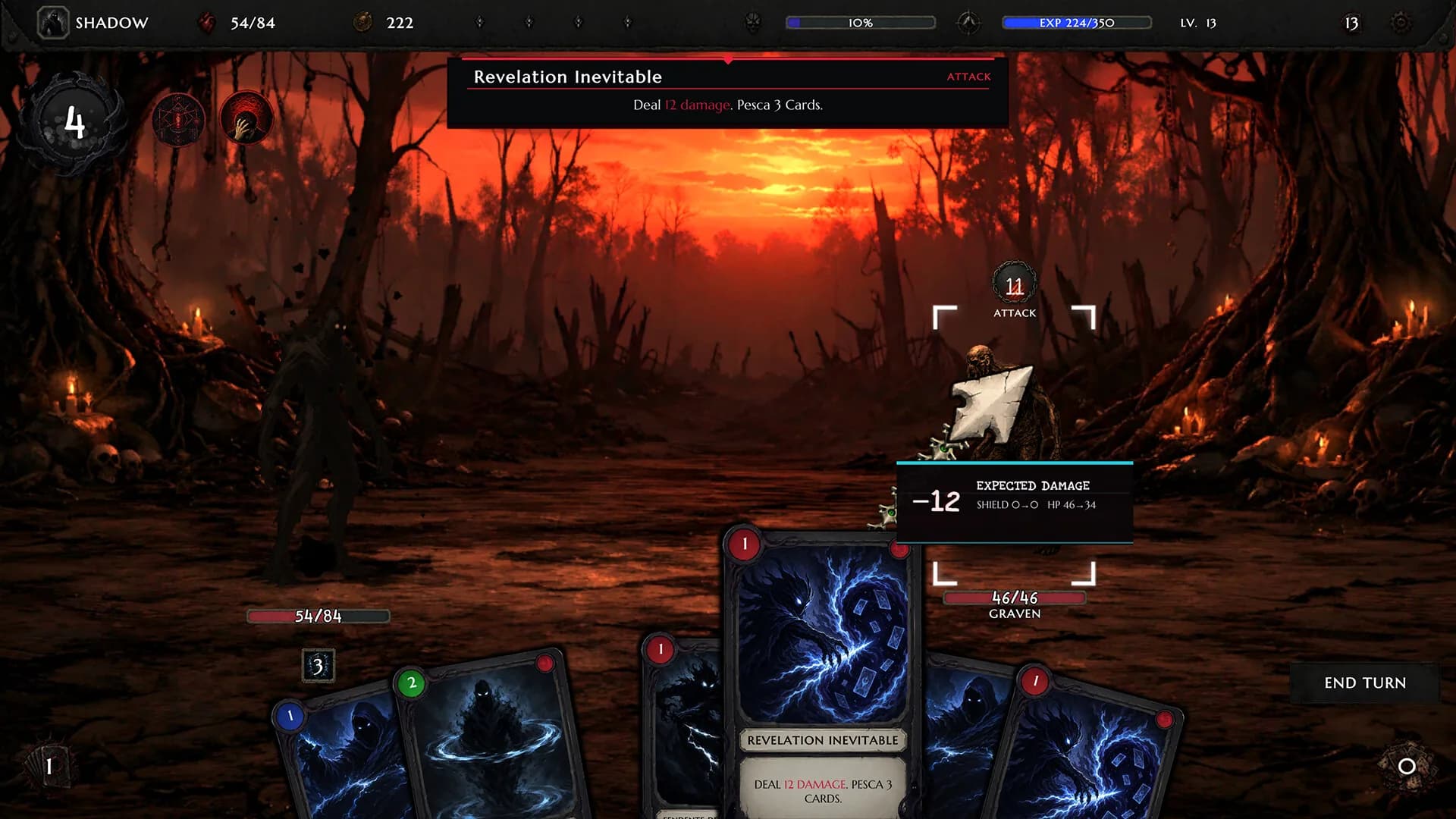
That changes how you build a deck. In a conventional deckbuilder, adding a strong card is always good. Here every addition carries a cost that is not written on the card.
The rest is solid and well considered.
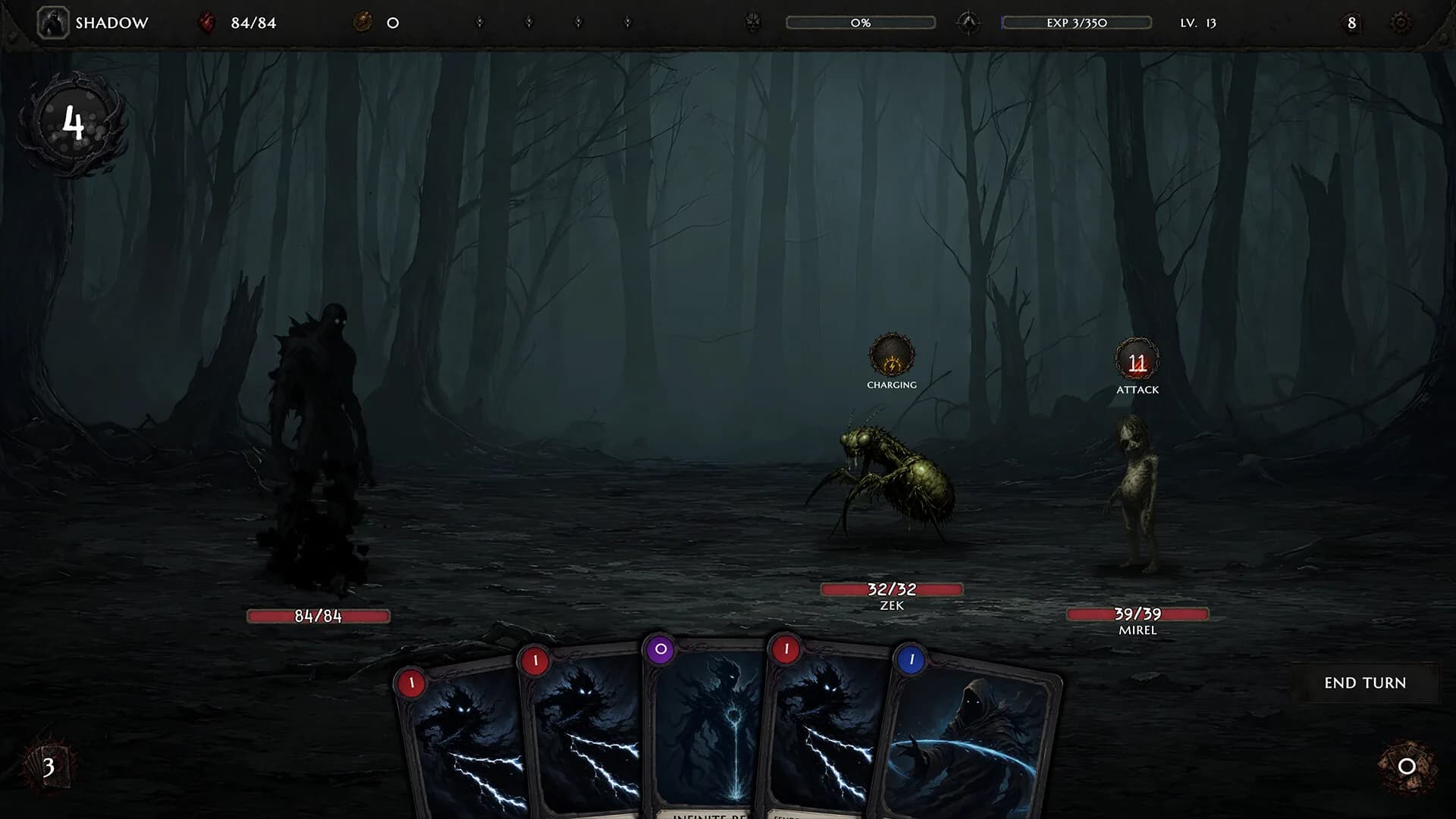
You manage mana, generate shield, manipulate your draws and stack effects capable of completely transforming the pace of a fight.
And the studio stresses the genre's most important point: choosing the most powerful cards is not enough. You have to understand which to add, which to remove, which to duplicate and which to upgrade. A deck that grows too large becomes uncontrollable, and a perfect combo collapses because of a single card drawn at the wrong moment.
The six heroes, Shadow, Mist, Void, Parasite, Abyss and Reflection, are not variations of the same character: each has its own starting deck, archetypes and mechanics.
The game launched yesterday at 9.99 euros, from a developer who goes by Daniele Doesn't Matter, and it has no reviews yet.
So I cannot tell you how it holds up over thirty hours, and I am not going to pretend. What I can say is that the central idea is good and the presentation serves it: a diseased 1990s city is a considerably more interesting setting than the genre's usual fantasy dungeon.
My reservation concerns balance, which is the lifeblood of this kind of game. A system where progression carries a hidden cost has to be tuned to the millimetre, or it becomes either painless or discouraging. That is exactly the sort of thing a solo developer takes several updates to settle.
But at ten euros, for a deckbuilder with a genuine idea rather than a copy of the same one, it is worth the detour.
Which of the six are you playing? We compare decks on the InsertCoins Discord.
Community
Your rating
Advertisement
Loading comments...
You might also like
You spawn troops, absorb waves of goblins, upgrade the tower. Short, owned, and sold as such.

iRacing delivers a solid pad game and a contested wheel game. And the official store page discloses automatically generated voice lines.
An automation game where you manifest your own biomes, with five minigames to fill the time while the machines work.