6
Test
Death at Fleming Manor: the investigation is good, it is the paperwork that fights you
You fill in death certificates in an English manor in 1959. The idea is excellent. The interface gets in the way.
Alexandrosse
8 min
83 per cent positive over a year, 61 per cent over the last month. The 1.0 landed and some players did not notice it arrive.
Alexandrosse
InsertCoins.press Score
6/10
Verdict
Mixed
There is a category of complaint no studio wants to read, and Repel The Rifts has collected it in bulk: play the demo, that is the whole game.
It is unfair. It is also, largely, true.
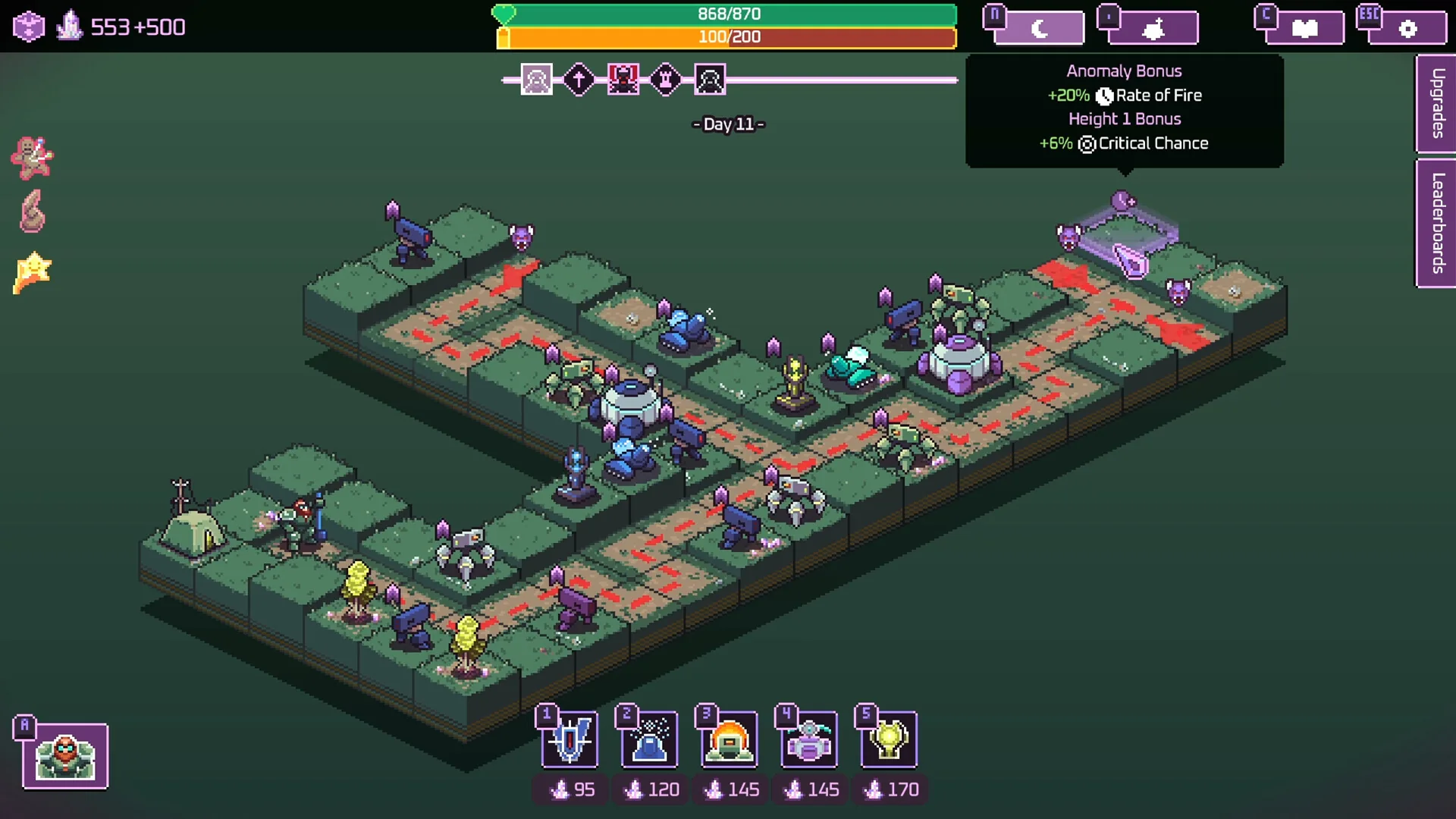
You command a mining expedition on an alien world where rifts spit out creatures. Each night you place towers and hold the line, and between waves you survey to expand the map.
That last idea is the good one. In most tower defence games the terrain is given and the pleasure lies in exploiting it. Here you uncover it in pieces, which turns every pause into a gamble: do I open eastward for space, or consolidate what I already hold because night is falling.
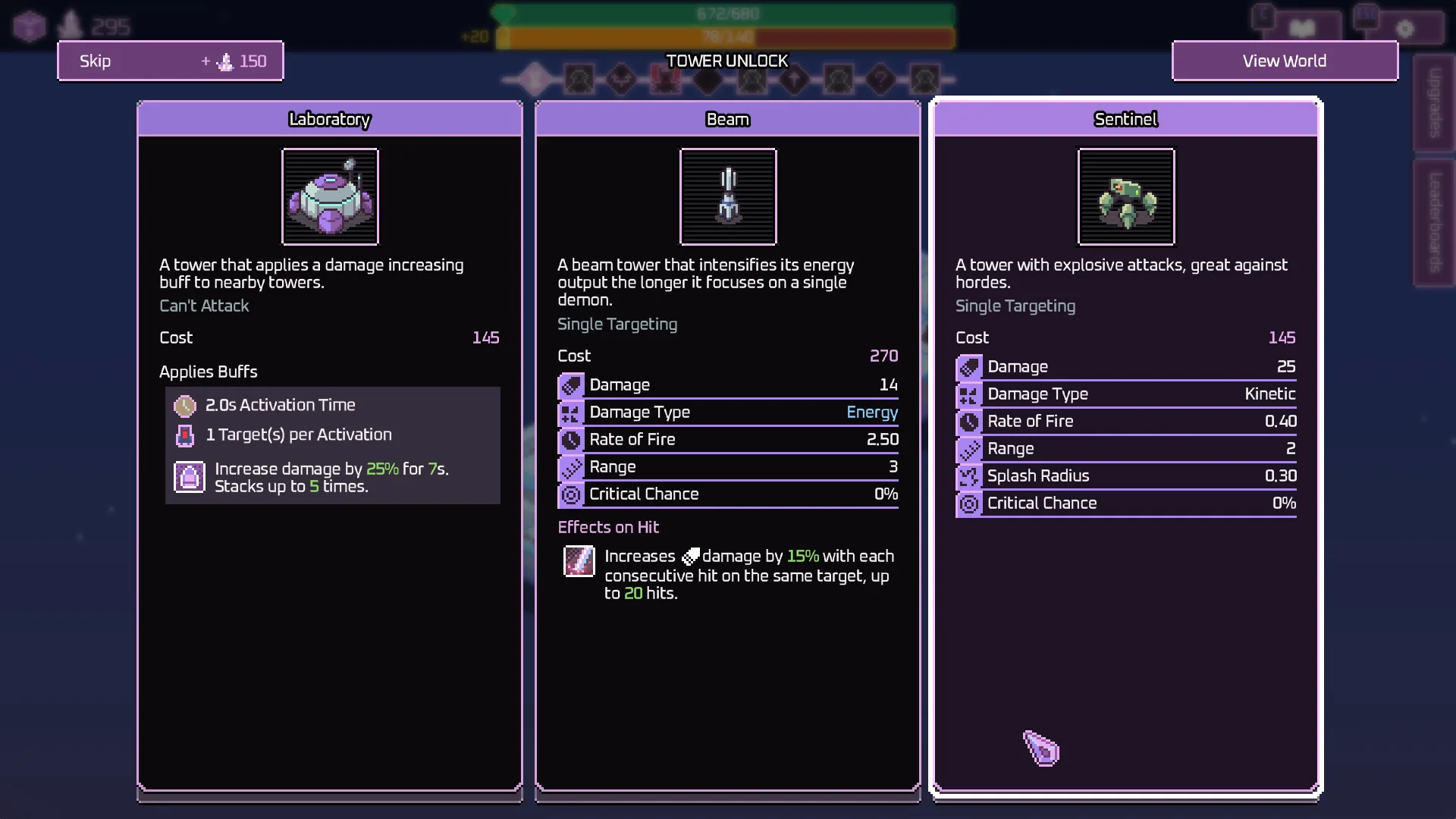
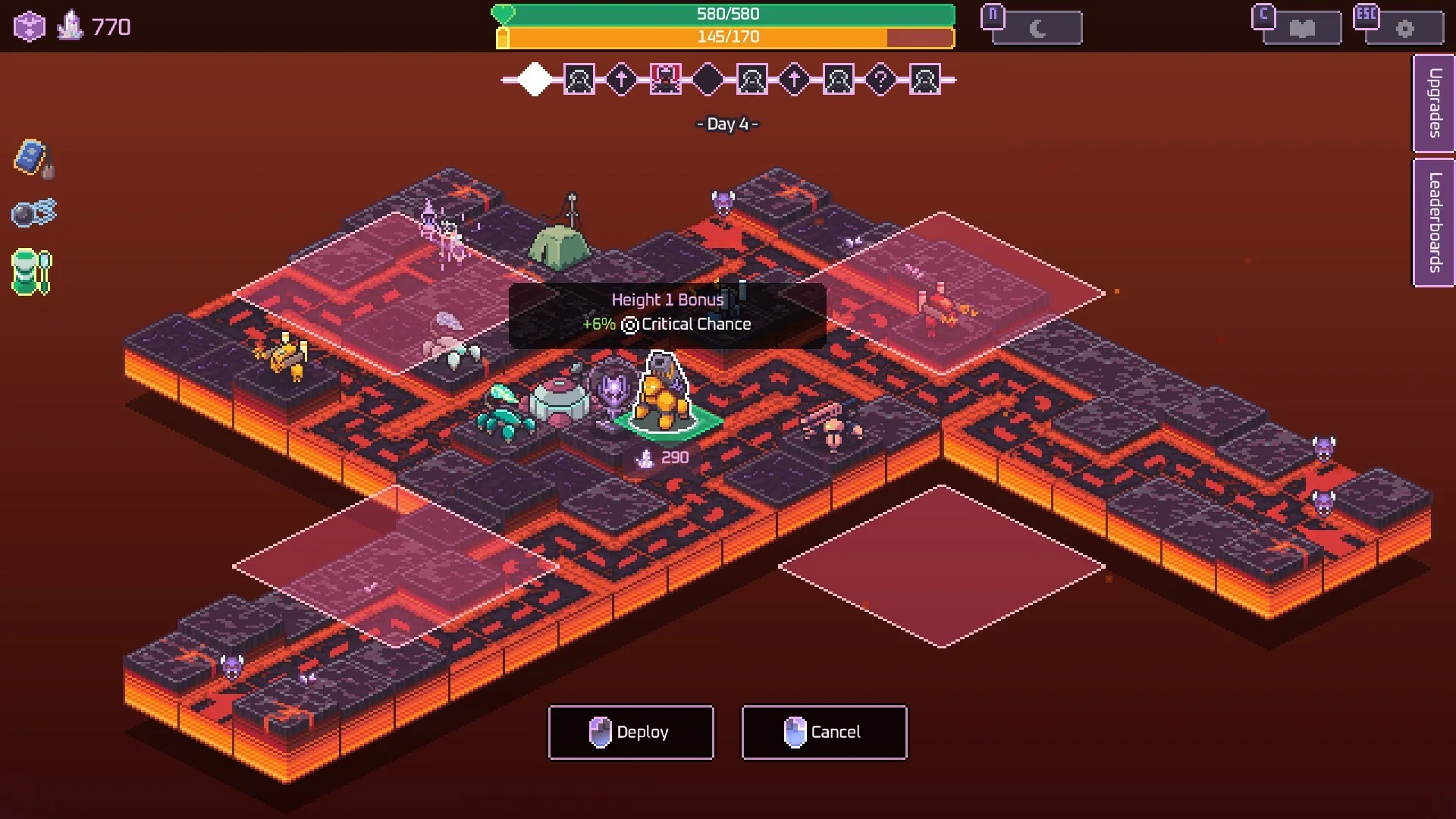
Four commanders, each with three starting towers, abilities and passives. A market for upgrading towers between rounds. Artefacts that modify your defence. Twenty-five nights to survive, then an endless mode.
It is well made. The pixel art is superb, so is the soundtrack, and the tower synergies work: a player with 41 hours explains that half his enjoyment comes from the track that kicks in during attacks, and I understand him completely.
The problem arrives quickly, and it arrives from every direction.
Twelve towers. Four commanders. Twenty-five nights. And above all: no diverging upgrade paths. A tower does not become two different towers depending on your choices, it becomes the same tower, stronger.
In a conventional tower defence, replayability comes from exactly that. You redo the map by building differently. Here, after a handful of runs, you have identified the combination that works, and it works every time.
The most detailed reviews land on the same spot. One, with 32 hours logged, explains that once the tech tree is unlocked there is not much left, and that you cannot build sprawling death mazes because once you reach endless mode the expansion stops. Either you die early, or you settle into a position that will not change.
Another, at 20 hours, says the highest difficulty stops being an obstacle as soon as you have a few tech tree points, and asks for an Ascension-style difficulty ladder so the game continues to exist after mastery.
It is the same diagnosis stated twice: the game is thoroughly enjoyable right up to the moment you get good at it.
Repel The Rifts entered early access on 24 November 2025 and left it on 2 November 2026, with biome-specific commander skills, cursed artefacts, events, skins for the remaining towers and optimisation work.
Across its lifetime the game sits at 83 per cent positive from 369 reviews. Over the last thirty days, 61 per cent from 18 reviews.
Eighteen reviews is not much, and I am not going to turn that into a statistical verdict. But the nature of the recent ones is consistent with what the long-timers say: people who loved the demo, bought at 1.0 expecting more, and found the same thing.
One player says it plainly after 5.7 hours: he loved the demo, bought instantly on release assuming there would be more, and found four characters, twelve towers, twenty-five waves.
When your demo convinces strongly enough to trigger a reflex purchase, it commits you. Repel The Rifts kept the promise of enjoyment and not the one of scale.
One review accuses the game of borrowing enough visual elements from Into the Breach to invite confusion, and says that is the only reason it was bought.
I do not really buy it. Pixel art, alien insects and tactical grids are not any one studio's property, and that particular charge gets levelled at anything daring a bluish pixel since 2018. The real family resemblance is to Rogue Tower, and it is openly acknowledged.
What is interesting in that review is not the accusation but what it reveals: the game reached the hands of people expecting a tactical depth it never promised.
Download the demo. Seriously.
It is generous, it represents the game faithfully, and it will decide for you in two hours. If you come out simply wanting more of the same for thirty-odd hours, the 9.74 euro launch price is a perfectly sensible purchase, and you will join the forty-hour players who do not understand the argument.
If you come out wondering what the other tree branches, the other tower archetypes, the other ways to lose will be: there are none, and you will be disappointed by the third evening.
I am giving it a six because I enjoyed myself and the skeleton is sound. Surveying between waves is a genuine idea, and RefinedBearGames has the art direction and the sense of pace to build a very good game on it. What is missing is the layer above, the one that makes you start another run at midnight thinking you will try it differently.
A 1.0 is no longer a promise, it is a state. This one is pleasant and short.
Have you built a defence that held forty nights without cracking? Post the layout on the InsertCoins Discord and we will go looking for the gap.
Community
Your rating
Advertisement
Loading comments...
You might also like
You fill in death certificates in an English manor in 1959. The idea is excellent. The interface gets in the way.
The source code was sitting on a laptop a former programmer had handed down to his kid. Eight years later, the game is on Steam.
Four hours, six euros, one snail and a remarkably quick moral descent. Blood is a type of juice.