6
Test
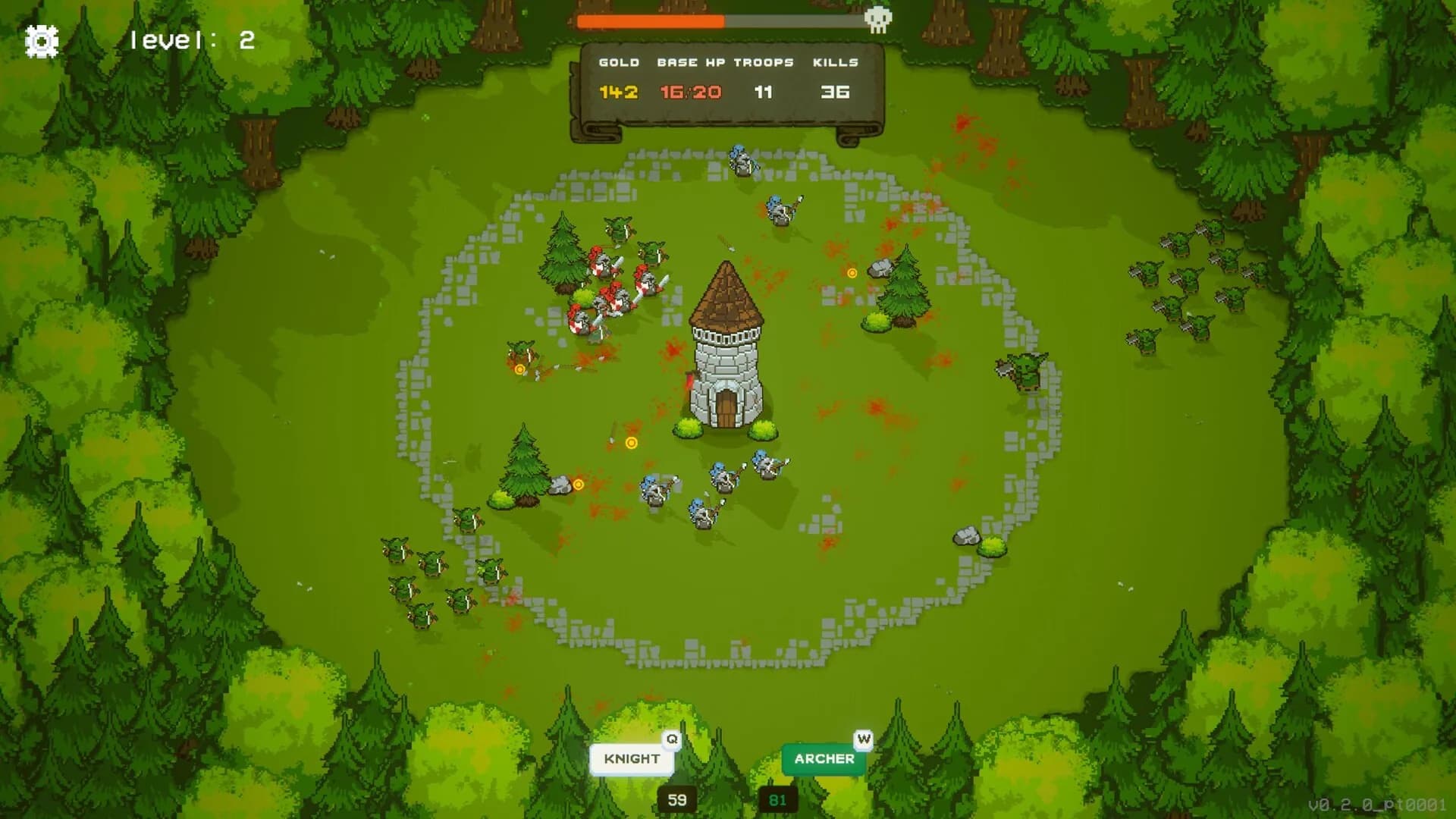
Crown Siege: an eight-euro incremental siege game, honest about its length
You spawn troops, absorb waves of goblins, upgrade the tower. Short, owned, and sold as such.
Alexandrosse
7 min
Running a repair shop in mid-2000s Tokyo. A game that speaks to anyone who has ever been mistaken for an electronics wizard.
Alexandrosse
InsertCoins.press Score
8/10
Verdict
Recommended
I need to tell you something before I get to the game, otherwise you will not understand why ReStory caught me the way it did.
A few years ago I was an IT manager at a company. On paper: servers, the hardware fleet, tickets. In practice, people walked into my office with a console that would not turn on, a bent pair of glasses, a hi-fi system that crackled. None of that was my job. None of it at all. But I did it anyway, because it was fun, and because there is a plain, silly pleasure in handing an object back to someone in working order.
The best part was their faces. People looked at me like a magician, some kind of dual-classed wizard-engineer. For the record, I am neither. A screwdriver, a little patience and no fear of opening a case are enough to pass for a mage in just about any office.
So there it is. ReStory is exactly the job I never had.
The game is developed by Mandragora, already behind I Am Future, and published by tinyBuild. You run a small electronics repair shop in mid-2000s Tokyo, and the pitch lives in that contrast: a quiet trade, in a city that is anything but.
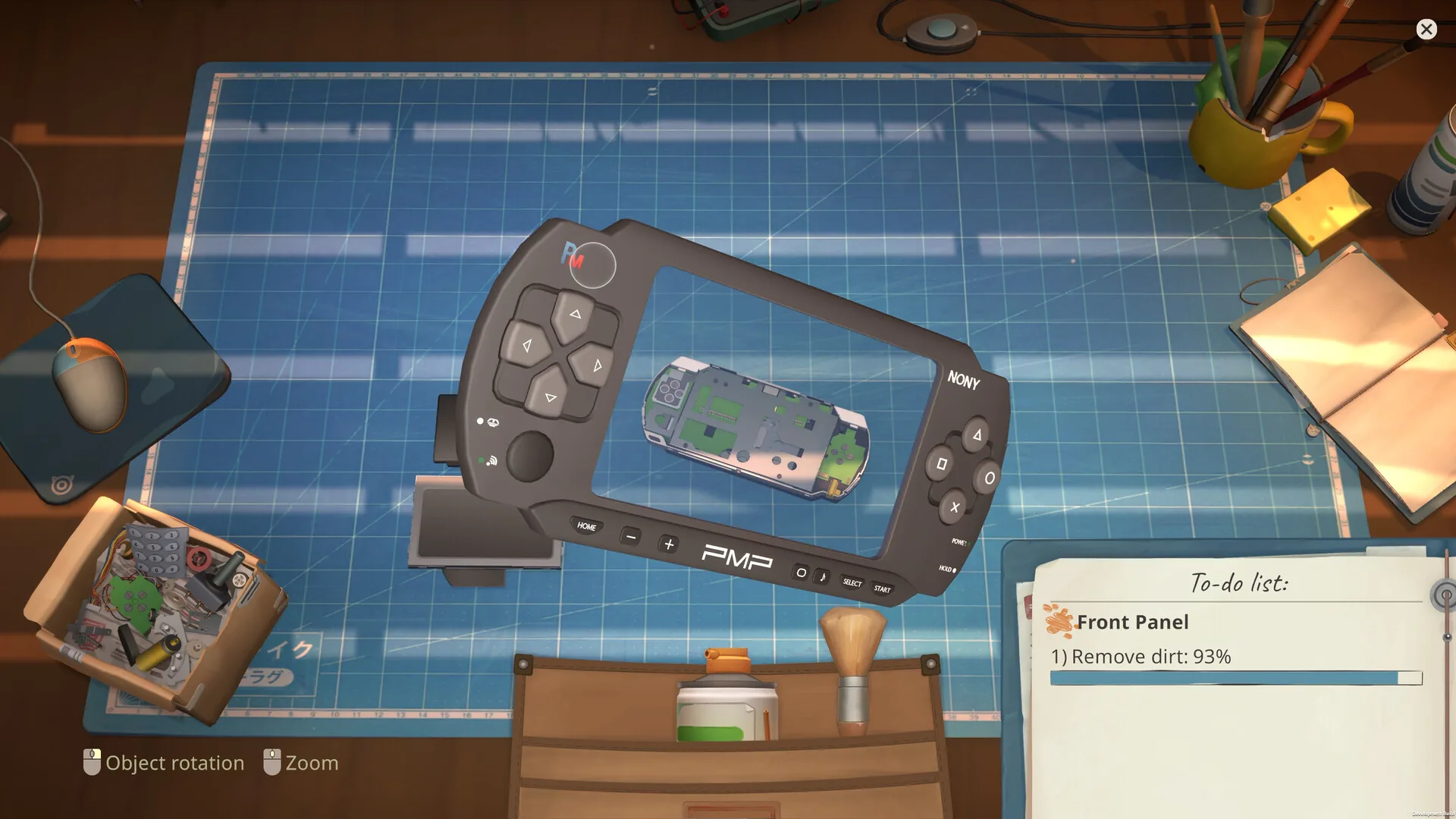
Repairing is not a drop-down menu. You take the case apart, clean it, replace the dead components, put it back together, all with a proper toolset. Through your hands pass home consoles, handhelds, phones, cameras, music players, household appliances, everything the Y2K years produced in translucent plastic. A detail worth noting: the Atari consoles in the game are officially licensed, not knock-offs with mangled names.
And to find spare parts, you browse a reconstructed period web browser. There, honestly, they went looking for the right memory.
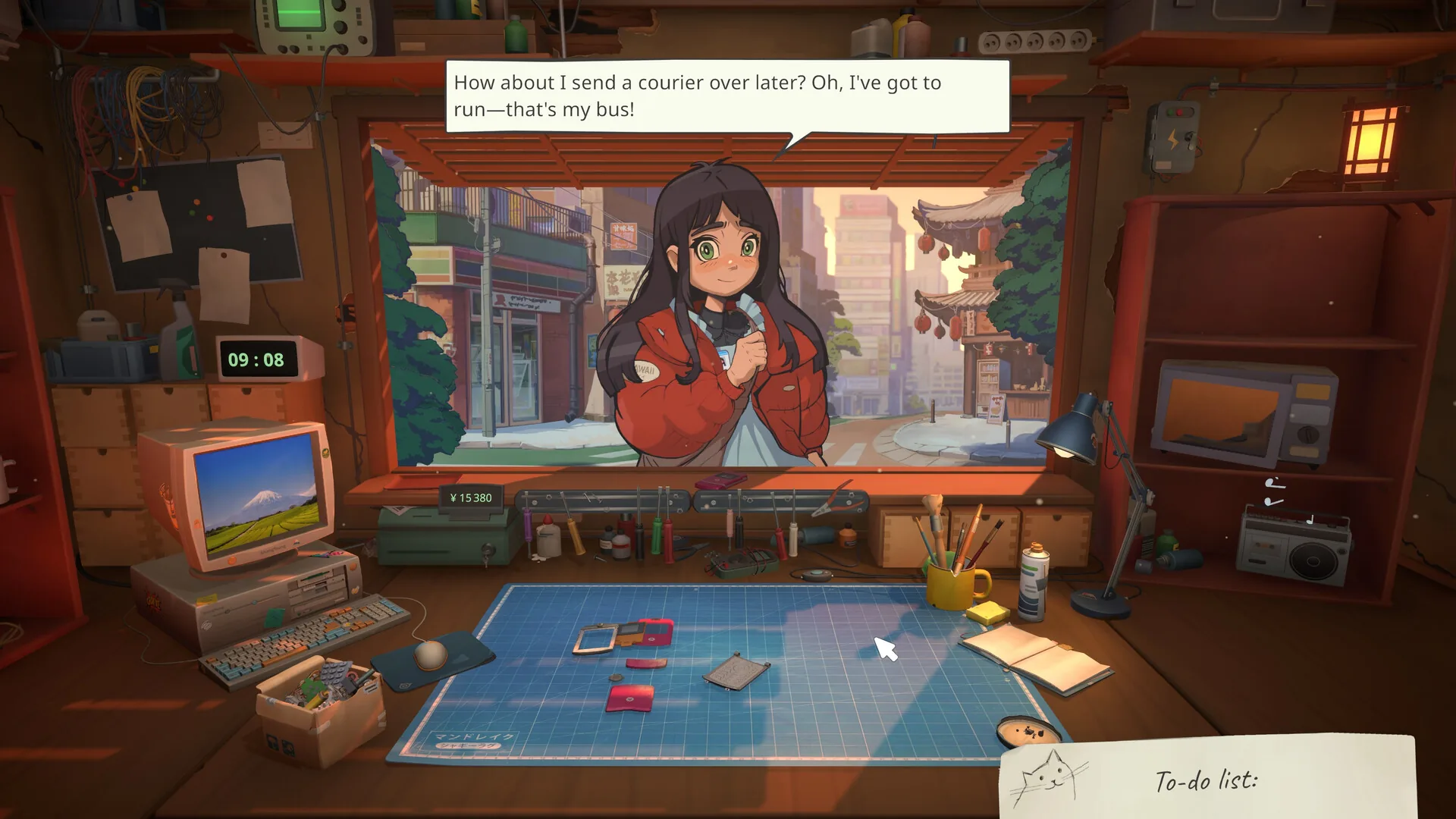
What I did not expect is the narrative layer. Every customer arrives with their own story, and your decisions branch the plot toward several endings. Two examples given by the studio: whether or not to report what you find inside a former gangster's phone, and helping a student confess to the person he loves.
That is clever, because it touches something true. When you repair someone's device, you land in their life. Their photos, their messages, their business. I have known that awkward moment when the screen lights back up on things that are none of my concern, and you have to decide very fast what you did not see. Turning that into a narrative engine is sharper than it sounds.
It also explains the reception: the demo sits at 96 percent positive across nearly 1,200 reviews, with a clear consensus on the balance it strikes between tactile handling, Y2K nostalgia and customer stories, without ever weighing the mechanics down to look clever.
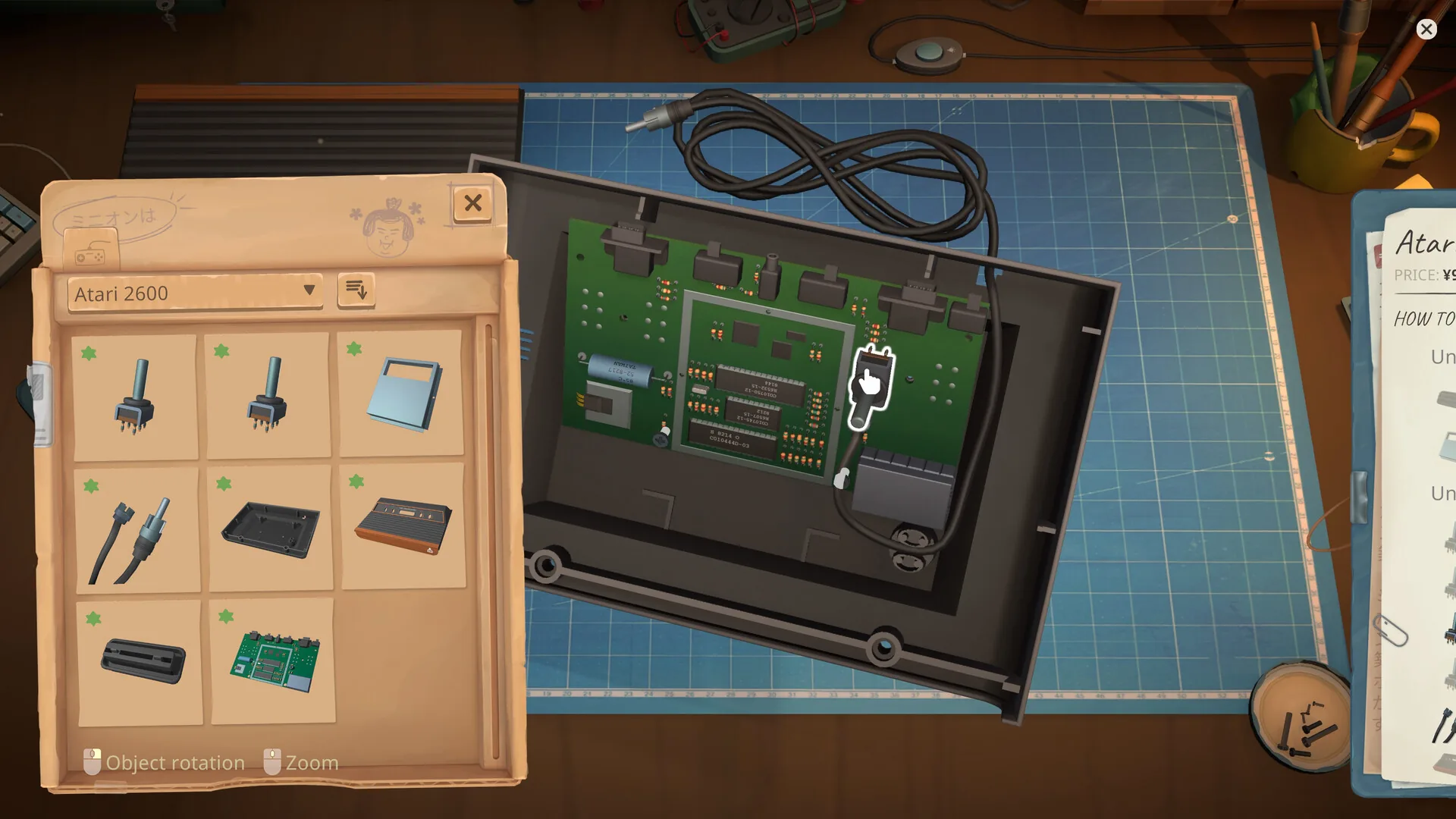
The reservations belong to the genre, and they are real. The repair simulator is well-trodden ground, and the take-apart, clean, replace, reassemble loop does become a ritual: once the wonder of the first devices fades, it is the variety of the catalogue that has to take over, and it is not infinite.
The other point is the storytelling. A branching plot is only worth something if the choices weigh, and a game that bills itself as chill naturally tends to round off the corners of its dilemmas. That is ReStory's balancing act: it wants to be a relaxing game and a game of moral decisions, and the second deserved to be a little meaner.
It remains a lovely piece of work, and for someone with my history, close to a trap. If you have ever fixed someone's console on a Friday evening and been taken for a wizard, you already know your evenings are spoken for.
We debrief every release on our Discord. The door is open, and so is the argument.
Community
Your rating
Advertisement
Loading comments...
You might also like
You spawn troops, absorb waves of goblins, upgrade the tower. Short, owned, and sold as such.

iRacing delivers a solid pad game and a contested wheel game. And the official store page discloses automatically generated voice lines.
An automation game where you manifest your own biomes, with five minigames to fill the time while the machines work.