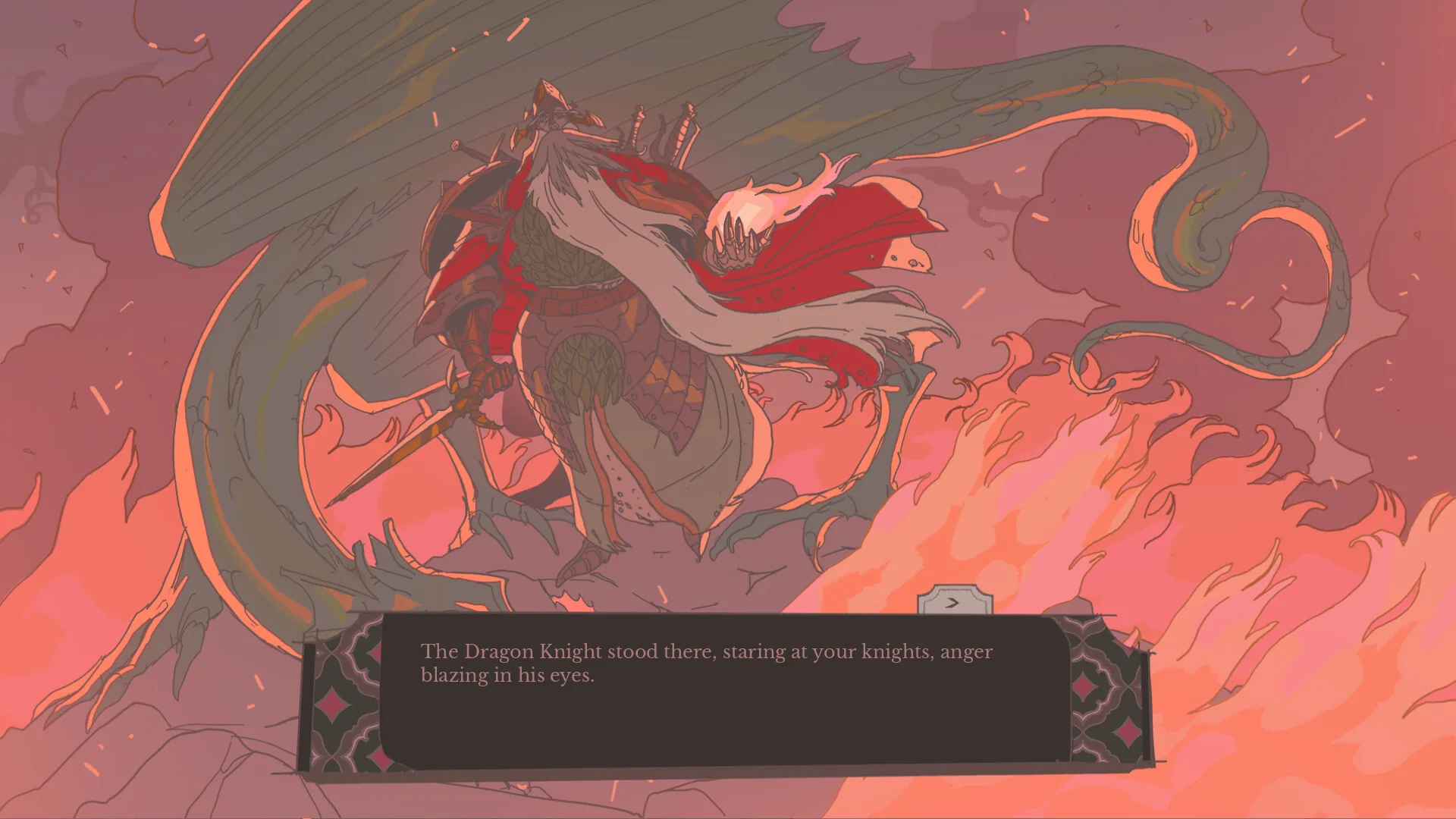
There is a promise in Sovereign Tower that should speak to anyone who has ever led a team: you are the sovereign, you have the throne, the title and the last word, and despite all that your kingdom depends entirely on a band of unmanageable knights with questionable morals. The game makes no secret of it and calls them jesters you will have to rely on.
Developed by WILD WITS GAMES and published by Curve Games, it is a narrative management RPG built around a Round Table, out today on PC.
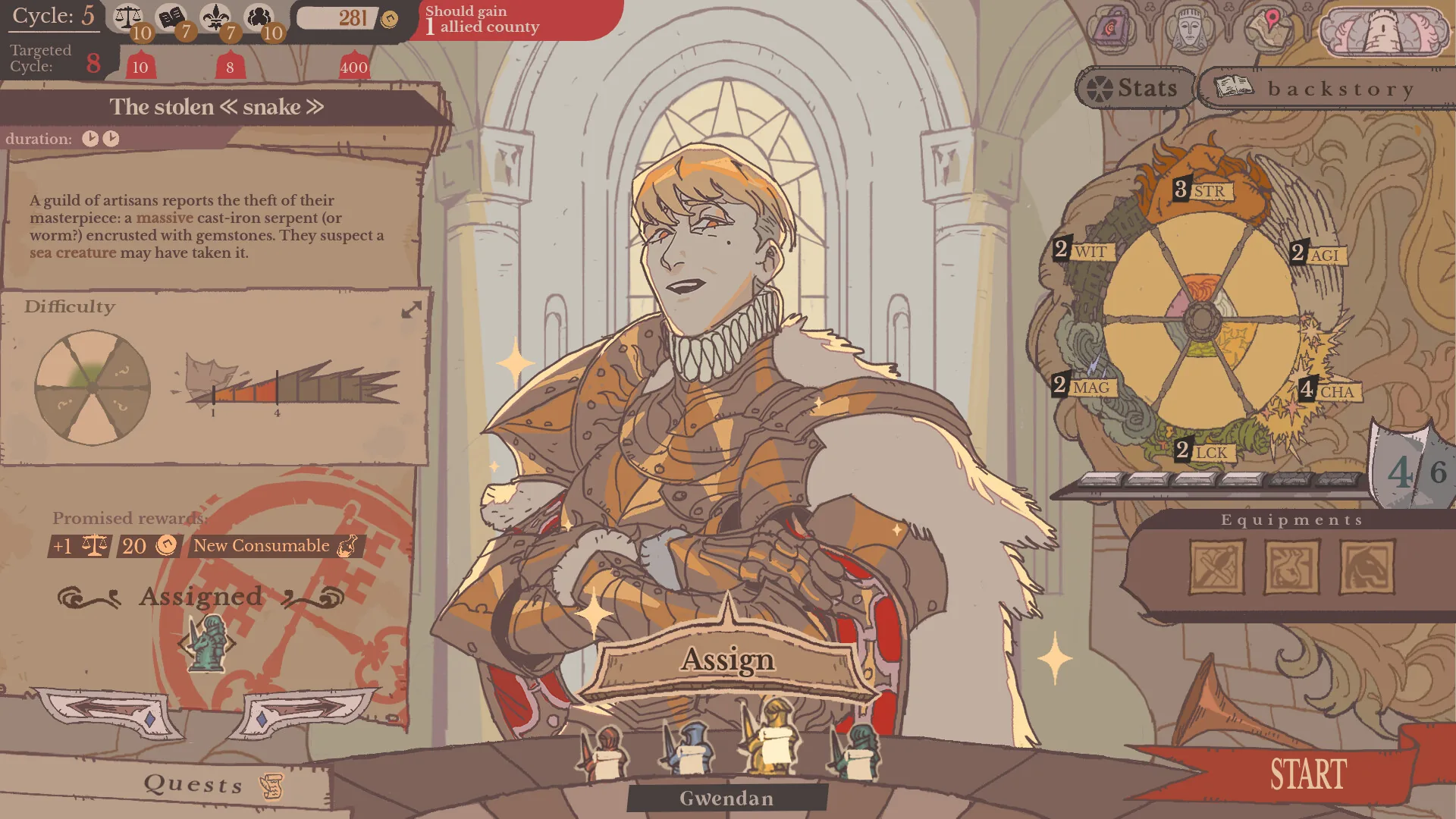
The loop is clear and well paced. In the morning you receive your subjects and listen to the problems plaguing the kingdom, from gardening to exorcisms, which sets the tone of the house humour. Every decision shapes your kingdom and your relationships, with individuals as much as with entire groups and rival rulers.
Behind that sits a real balancing act: you have to hold your affinity with five factions, the Merchants, the Mystics, the Scholars, the Nobles and the People, while watching the Treasury. The game explicitly allows you to spend it all and backstab everyone, if that is your idea of good government. An advisor named Arlin walks you through it, apparently delighted to watch you struggle.
The rest of the time you send your knights on quests, where success or disaster hinges on your judgement. You also expand your tower with new annexes and upgrades, keeping an eye on competing sovereigns.
Recruiting eccentric knights is one thing, making them coexist is another. The studio promises strong personalities, recurring drama, grievances to hear, advice to take and romances to explore, including forbidden ones. That is the part that will give the game its flavour, or tip it into medieval sitcom if the writing does not hold.
And then there is the button. You can rewind your decisions, turn back time, uncover secrets and rewrite fate as often as you need. It is a mechanic I like a lot in a choice-driven game, because it honestly settles the save-scumming problem: rather than letting the player cheat in secret, it folds the rewind into the story and makes it an owned power of the sovereign.
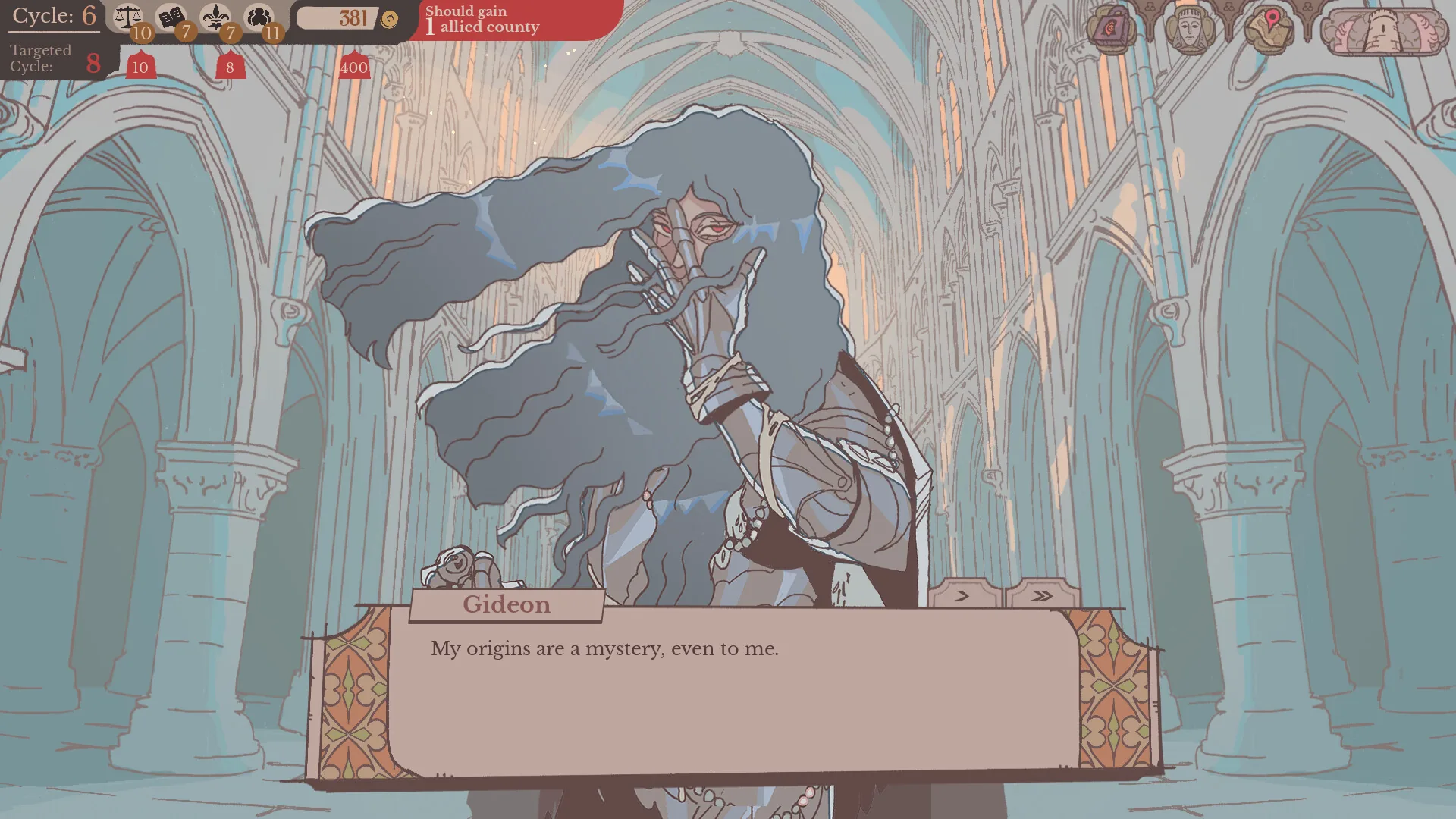
The risk is visible to the naked eye: a game resting on colourful characters and humour stands entirely on its writing. If the knights are funny and endearing, you will spend dozens of hours managing their crises. If they are only a collection of tics, managing five factions will not cover the emptiness.
The second thing to watch is the rewind. Well calibrated, it pushes you to experiment and explore branches. Too permissive, it cancels the stakes, since no decision costs anything any more. Everything will play out on that boundary.
A demo was available before release, and the game leans on Curve Games, a publisher that is fairly reliable in this space. Enough to give it the benefit of the doubt until we have spent a night or two with it.