6
Test
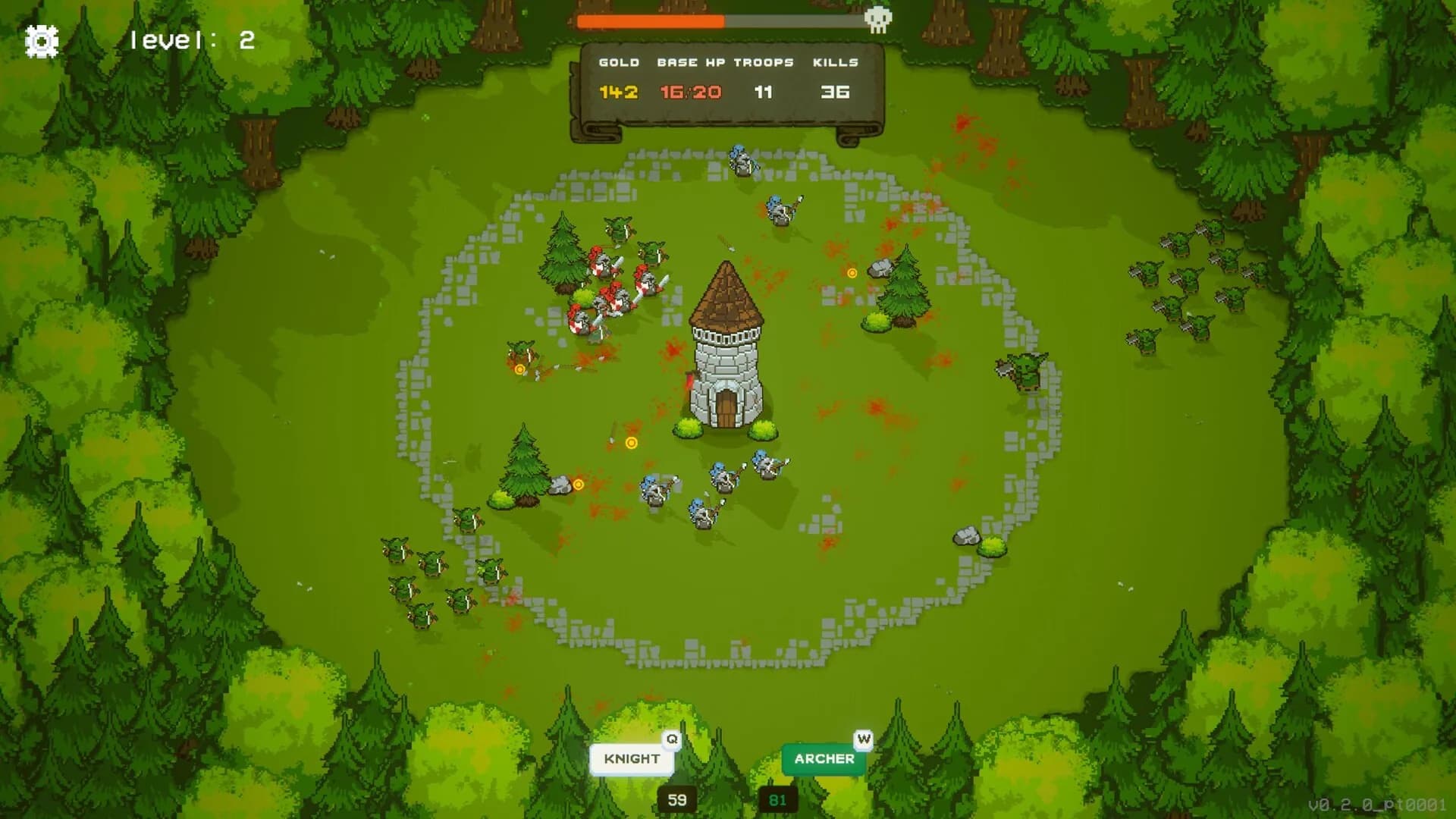
Crown Siege: an eight-euro incremental siege game, honest about its length
You spawn troops, absorb waves of goblins, upgrade the tower. Short, owned, and sold as such.
Alexandrosse
7 min
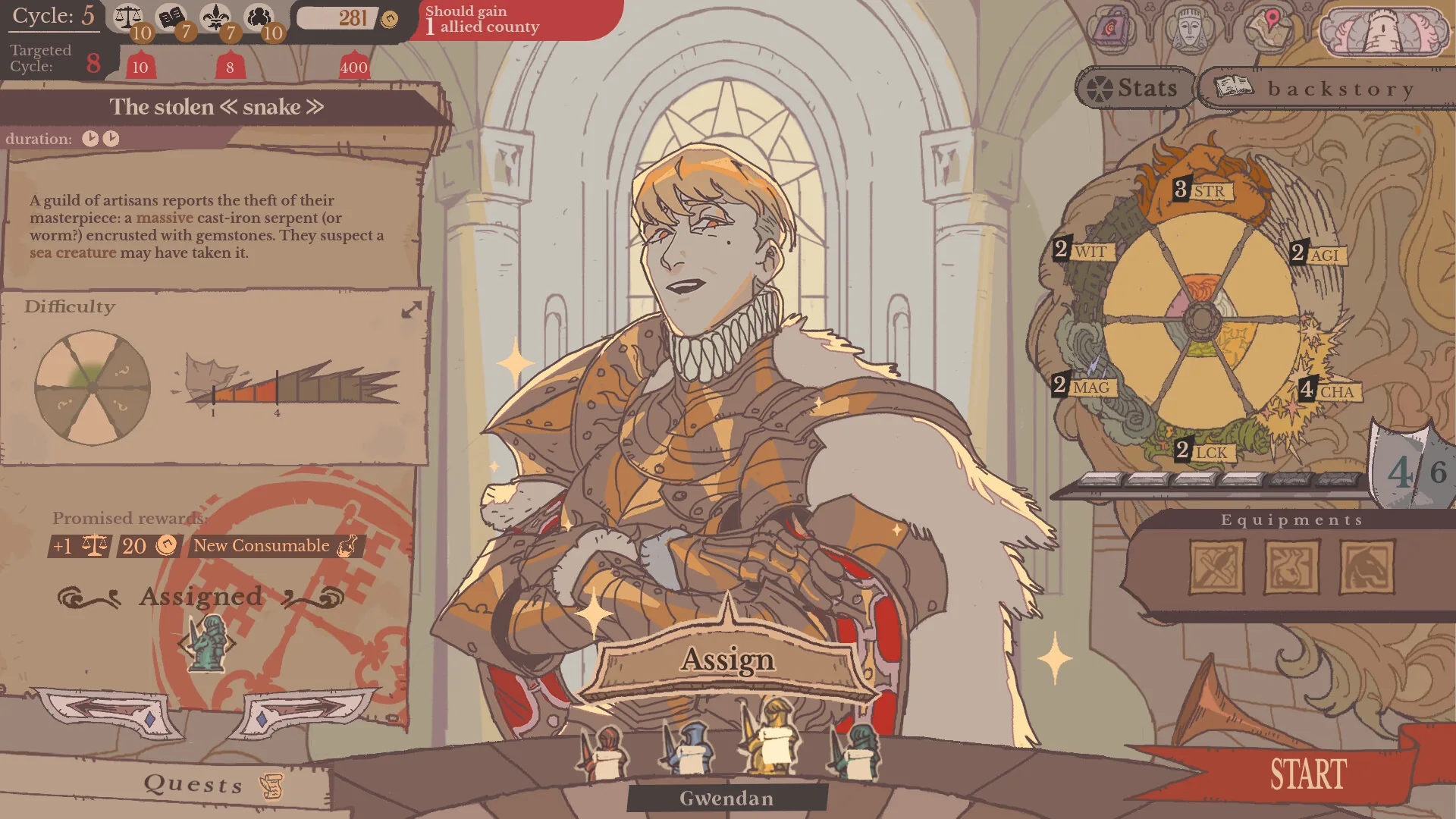
Recruit unmanageable knights, referee their egos, balance five factions and the Treasury. And rewind fate as many times as it takes.
Alexandrosse
InsertCoins.press Score
8.5/10
Verdict
Recommended
There is a promise in Sovereign Tower that should speak to anyone who has ever led a team: you are the sovereign, you have the throne, the title and the last word, and despite all that your kingdom depends entirely on a band of unmanageable knights with questionable morals. The game makes no secret of it and calls them jesters you will have to rely on.
I may as well confess right away: I am a devoted fan of Kaamelott, the French comedy series in which Alexandre Astier plays a King Arthur trying to find the Grail while surrounded by idiots. This game put me exactly where I wanted to be. I did not feel like a generic sovereign in a magic tower. I felt like Arthur. The man with a quest, a plan, a fairly clear idea of what his kingdom ought to be, who then has to get it carried out by knights incapable of following a simple instruction. You hand a mission to someone far too pleased with himself, you listen to absurd grievances all morning, you glue egos back together around a table, and the Grail moves one step further away. It is the series, transposed into a management game. All that is missing is Perceval turning up to explain the plan.
Developed by WILD WITS GAMES and published by Curve Games, it is a narrative management RPG built around a Round Table. And it is, by some distance, the best received release of this 6 August.
The loop is clear and well paced. In the morning you receive your subjects and listen to the problems plaguing the kingdom, from gardening to exorcisms, which sets the tone of the house humour. Every decision shapes your kingdom and your relationships, with individuals as much as with entire groups and rival rulers.
Behind that sits a real balancing act: you have to hold your affinity with five factions, the Merchants, the Mystics, the Scholars, the Nobles and the People, while watching the Treasury. The game explicitly allows you to spend it all and backstab everyone, if that is your idea of good government. An advisor named Arlin walks you through it, apparently delighted to watch you struggle.
The rest of the time you send your knights on quests, where success or disaster hinges on your judgement. You also expand your tower with new annexes and upgrades, keeping an eye on competing sovereigns.
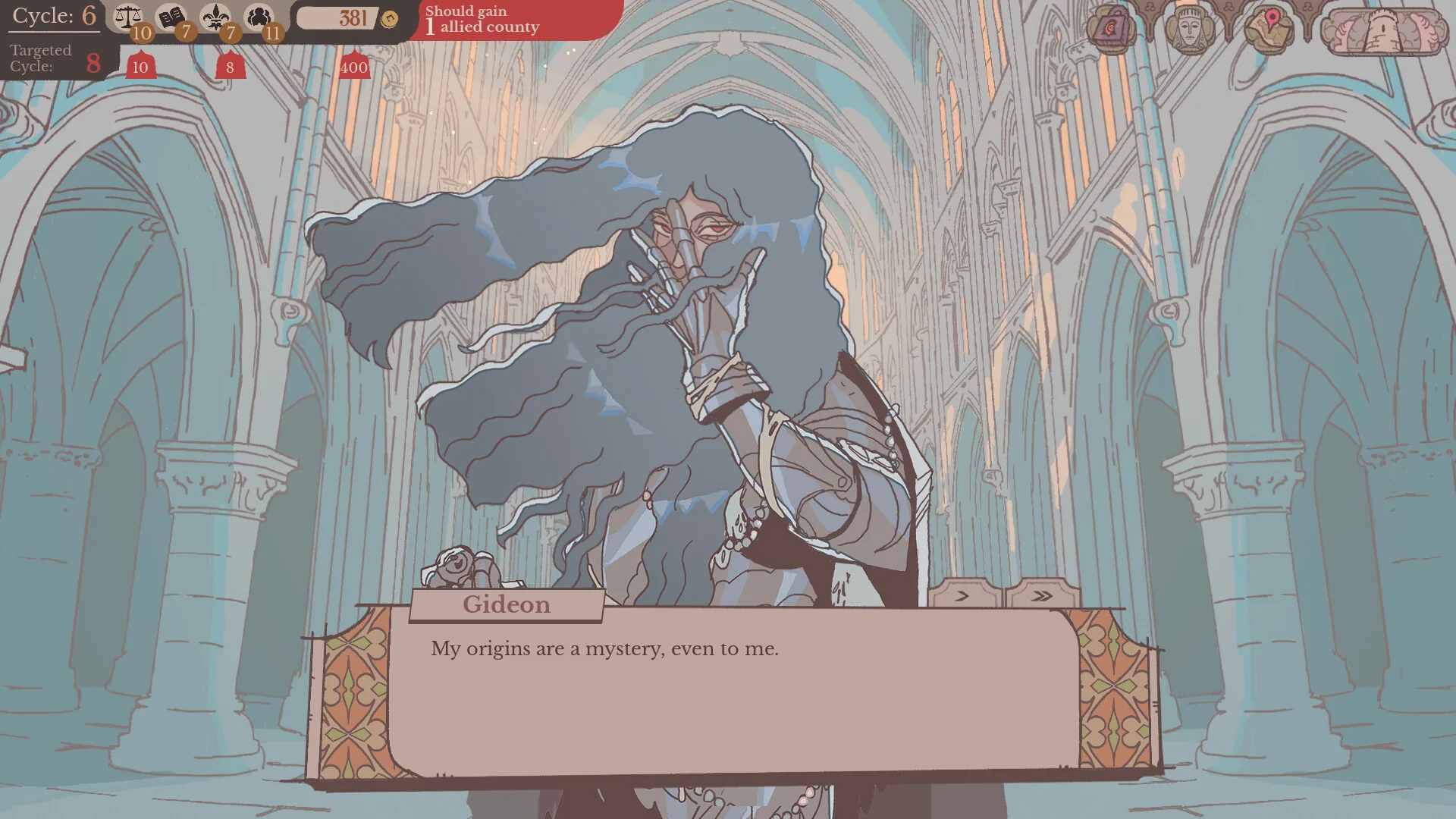
Recruiting eccentric knights is one thing, making them coexist is another. Strong personalities, recurring drama, grievances to hear, advice to take and romances to explore, including forbidden ones: this is the part that gives the game its flavour, and it is also the part critics have praised most. The writing and the character portraits, particularly lush, come up in nearly every review.
And then there is the button. You can rewind your decisions, turn back time, uncover secrets and rewrite fate as often as you need. It is a mechanic I like a lot in a choice-driven game, because it honestly settles the save-scumming problem: rather than letting the player cheat in secret, it folds the rewind into the story and makes it an owned power of the sovereign. Here too, critics single it out as the structuring success of the game.
The signals converge, and rarely at this level. CGMagazine gives it 9 out of 10 and describes a fun, deep management RPG carried by its writing and its time travel mechanic. The demo, for its part, peaks at 97 percent positive across more than 550 reviews. For a narrative management game, a genre where flat dialogue is rarely forgiven, that is the best indicator available.
Its limits are those of its shape. A game resting this heavily on its characters and its humour stands entirely on its writing: if the tone does not land for you, managing five factions will not hold you, because the simulation layer stays tame compared to a real management game. And the rewind, elegant as it is, mechanically defuses part of the tension: when everything is reversible, some decisions lose their weight, even if the game turns it into a narrative device rather than an escape hatch.
None of which stops the result from being the most solid of the batch. A Round Table of endearing incompetents, power over time, and enough of a pen to go the distance: that is exactly what you ask of this kind of game.
The discussion carries on over on our Discord, where we relitigate scores for far longer than is reasonable.
Community
Your rating
Advertisement
Loading comments...
You might also like
You spawn troops, absorb waves of goblins, upgrade the tower. Short, owned, and sold as such.

iRacing delivers a solid pad game and a contested wheel game. And the official store page discloses automatically generated voice lines.
An automation game where you manifest your own biomes, with five minigames to fill the time while the machines work.