The hashtags caught fire within hours: SaveStargate, SaveStargate, SaveStargate again. Roland Emmerich and Dean Devlin, the two fathers of the original 1994 film, have just filed an official legal document in the United States, and part of the community immediately read it as the triumphant return of the creators to the controls of their franchise. The reality is more precise, more technical, and far less spectacular. But in its own way, it remains the most interesting piece of Stargate news in a very long time.
On April 8, 2026, Roland Emmerich and Dean Devlin filed a "Notice of Termination" with the U.S. Copyright Office, a notice revoking a transfer of rights. The document is addressed to Amazon MGM Studios, the current holder of the franchise and successor to the MGM that acquired the rights after the film was written.
What exactly this notice targets is essential to understand: it concerns only the rights to the original screenplay of the Stargate film, that text registered with the Copyright Office on July 21, 1993. The film itself is not affected. The Stargate SG-1, Stargate Atlantis and Stargate Universe series are not affected either. All of it continues to belong to Amazon MGM and to be exploited as before.
The effective date is set for October 29, 2029, that is thirty-five years, almost to the day, after the film's theatrical release in October 1994. From that date, the transfer of screenplay rights that had been running since the late 1990s will end, and those rights will return fully to Emmerich and Devlin.
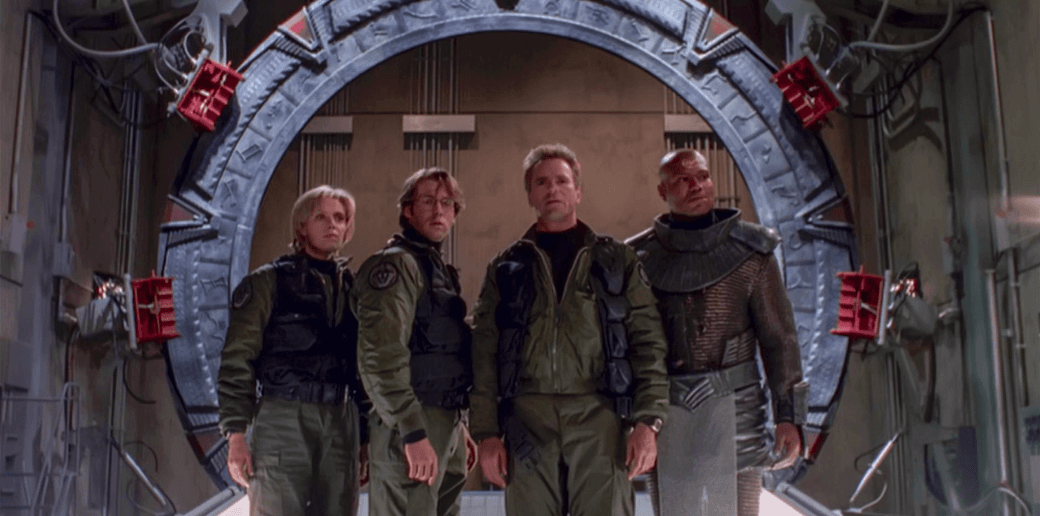
The context
To understand why a simple document is sending fans into a frenzy, you have to know the mechanism that makes it possible. American copyright law, through the Copyright Act of 1976, grants creators a window to reclaim the rights they assigned decades earlier. After a thirty-five-year delay, an author can serve notice revoking the assignment and become the owner of their work again, regardless of the signatures put down at the time. This is the mechanism, already invoked by musicians and screenwriters in Hollywood, that Emmerich and Devlin are triggering here.
And this is where it gets juicy. Because if the notice only covers a screenplay, that screenplay is the birth certificate of the entire universe. The Stargate itself, the planet Abydos, Colonel O'Neill, Dr. Daniel Jackson: all these founding elements are born from the 1994 text. The hundreds of hours of series that followed, the whole edifice that made Stargate a pillar of television science fiction, rest on those foundations. Reclaiming the screenplay is not reclaiming the franchise, but it is getting your hands back on its cornerstone.
That said, the announcement has to be put in its proper place, and our regular readers know why. Just a few days ago, we covered Amazon MGM's cancellation of the Stargate series developed by Martin Gero, on which Emmerich and Devlin were precisely attached as producers after reaching an agreement with the studio. The long-hoped-for return of the franchise to the screen had just collapsed once more. The termination notice therefore lands in an already chaotic landscape, where the studio owns everything but produces nothing.

Let us be clear to cool the excitement: this document does not hand Stargate back to its creators, and it saves nothing at all in the immediate term. In 2029, Emmerich and Devlin will own a thirty-five-year-old film screenplay. They will own neither the film, nor SG-1, nor Atlantis, nor Universe, that is to say nearly everything the public calls Stargate. The hashtags announcing a reconquest are getting the scale wrong, and that needs to be said plainly rather than feeding a comforting illusion.
But reducing the affair to a legal footnote would be just as dishonest. Because in a franchise where Amazon MGM owns absolutely everything and has, so far, delivered only a string of aborted projects, any counterweight matters. From 2029, the studio will no longer be able to produce a new film based on the characters and concepts of the original screenplay without dealing with the two men who invented them. It is not a throne, it is a lever. And it is probably the first time in thirty years that Stargate's creators hold a card that forces the rights holder to sit down at the table.
One major unknown remains, and it tempers the enthusiasm: the desire. Emmerich has repeated in recent years that he was done with Stargate, that he had moved on. Reclaiming rights has never made a film, and a screenplay severed from the rest of the universe is a starting point as promising as it is legally thorny. Between the theoretical lever and the concrete work, there is a gulf that neither a notice nor a hashtag can bridge.
Our reading, then, is twofold. No, this is not the rescue the community is already celebrating, and feeding that idea does no one any favors. Yes, it is the smartest and most meaningful move around Stargate in a very long time, because it redistributes, for the first time, a share of power back to those who started it all. The appointment is set for October 29, 2029. Until then, the gate stays shut, but someone has finally gotten one of the keys back.
Does the subject speak to you? We go into it at length on the InsertCoins Discord.


