Your first shop is going to go bust. It is almost a rite of passage, and it usually comes down to three mistakes everybody makes in the same order.
This guide exists to avoid them. Our full 1.0 review is here.
Start with the gravest and the funniest.
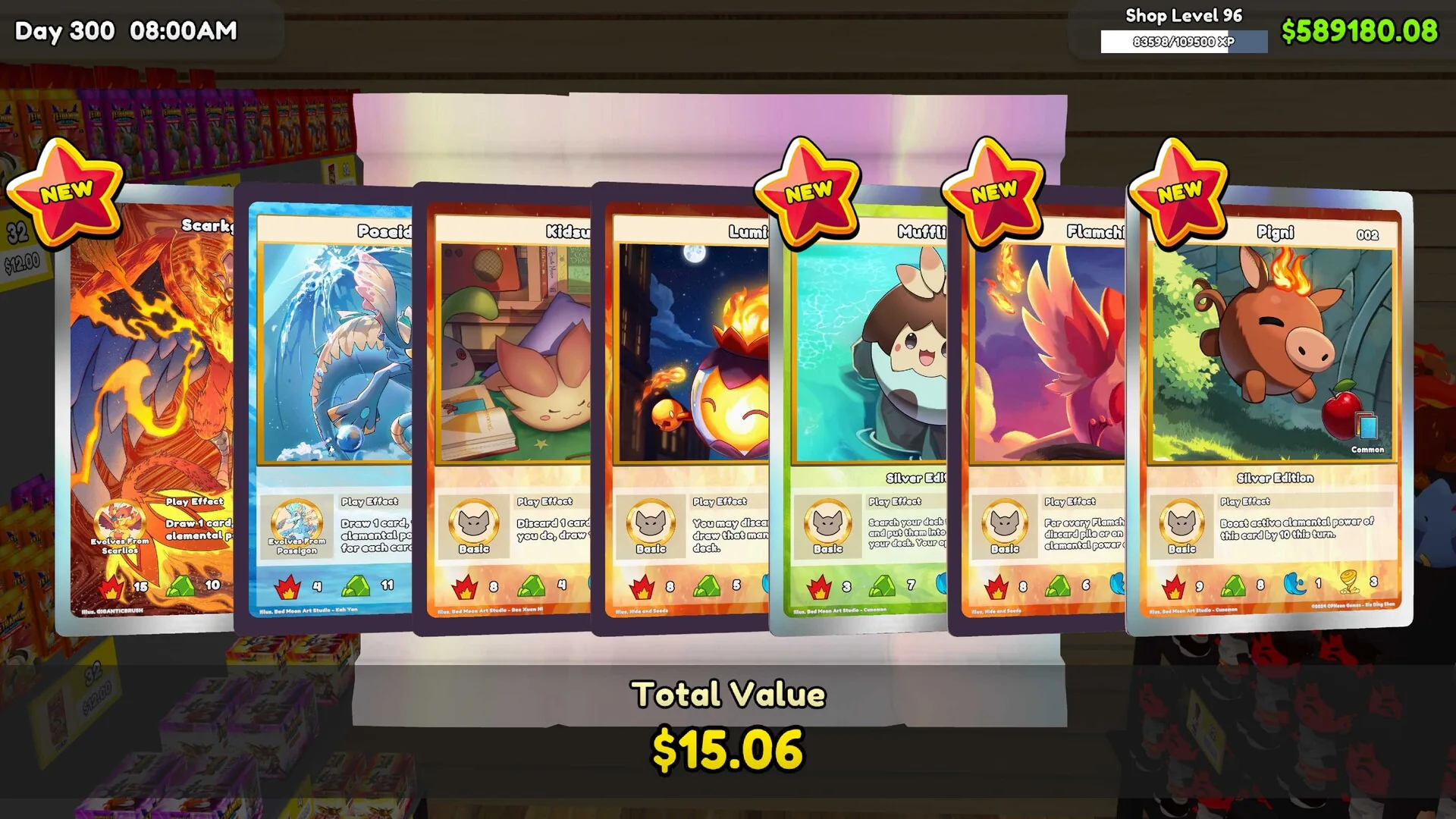
You can open the packs you ordered. The game invites you to, your brain pushes you to, and every tear-open is a small celebration.
Except that every pack opened is a pack you will not sell, bought with the shop's money. That is not a hobby, it is a withdrawal from your cash flow.
The discipline I would suggest for your first hours is simple: open nothing until you are profitable. Set a threshold, the first shop expansion for instance, and forbid yourself any openings before you reach it.
After that, make it a deliberate line in the budget. Decide on a number of packs per ordering cycle and hold to it. It is far more enjoyable when it is a choice than when it is an accident.
This is the part of the game new players underestimate most.
Your customers are not automatons: they react to the displayed price. Too expensive and they put the item back. Too cheap and you work at a loss while feeling like a great salesperson because everything flies off the shelf.
Two practical markers.
Raise prices in small increments and watch. The game tells you what stays on the shelves. A product that stops moving is a product whose acceptance threshold you just crossed.
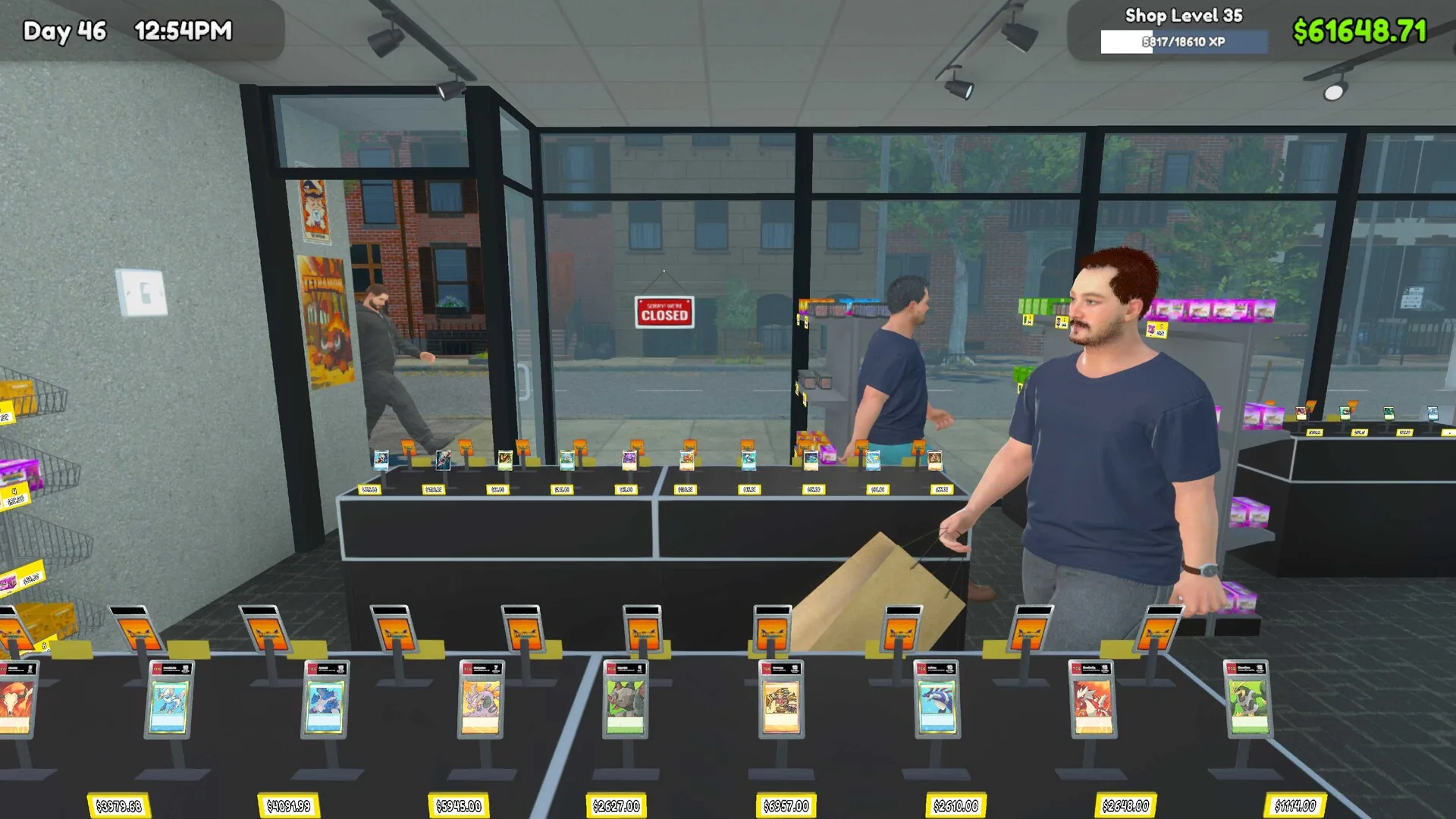
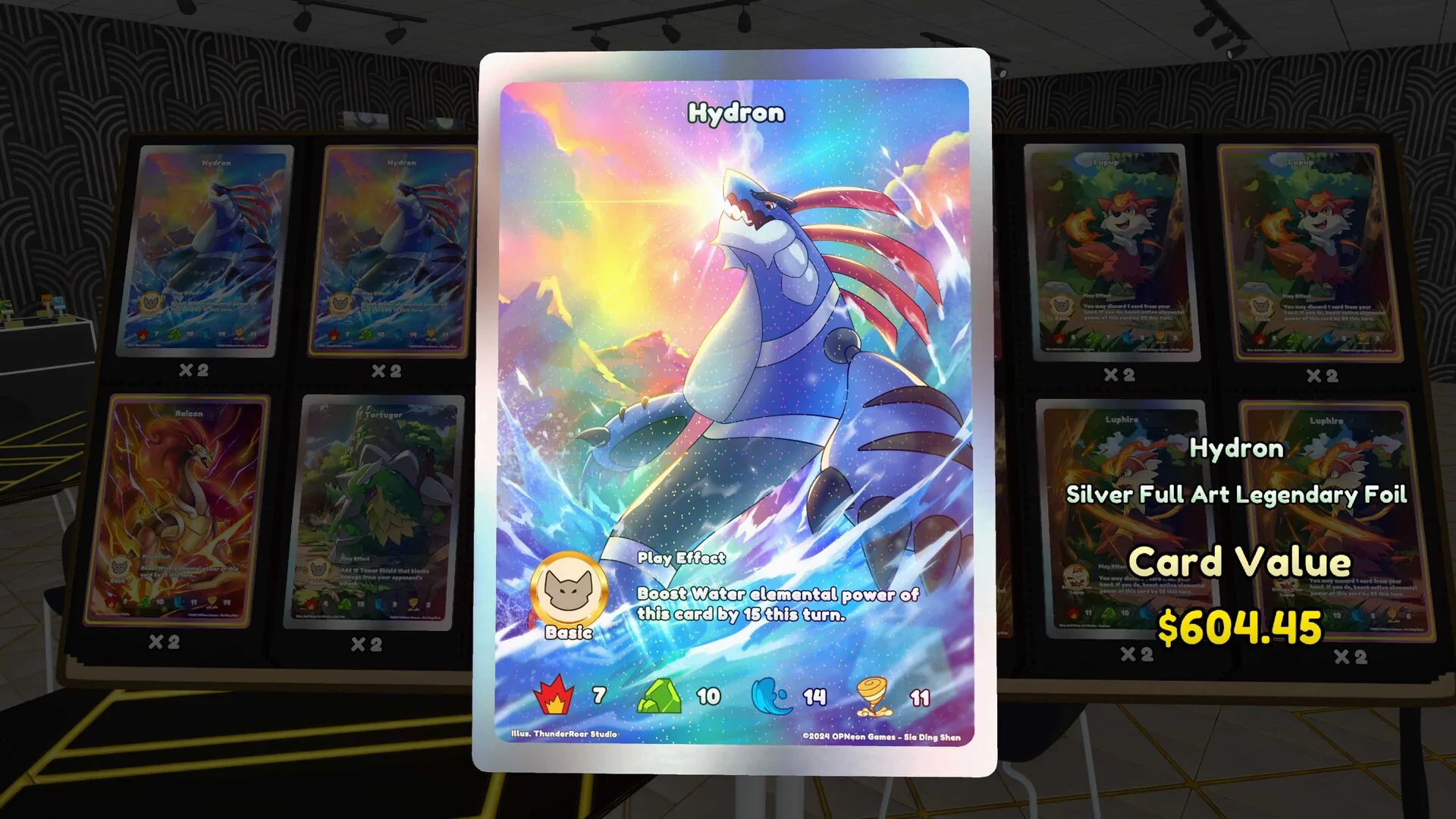
And treat rare cards differently from the rest. Everyday consumables sell on volume, the rare piece sells on patience. Dumping a valuable card because it is occupying a display case is the most expensive mistake in the game.
The game has a trend system, and it matters more than the rest.
Demand shifts over time. A product in high demand today may sit still three cycles from now, and a set nobody was looking at can become your shop's draw.
Get into the habit, at every order, of checking what moves fast and what stagnates, rather than mechanically reordering the same list. A well-stocked shop is not a full shop, it is a shop whose stock matches what people want today.
You design your store and place your shelves and displays. This is not a decorating game, it is logistics.
Three principles.
Impulse buys near the till. The small items people pick up without thinking should be on the way out, not at the back of the shop.
A route without bottlenecks. A blocked customer is a customer who leaves. Leave aisles where two people can pass.
And room to grow. Expanding space is expensive, but a saturated shop caps your turnover regardless of how good your stock is.
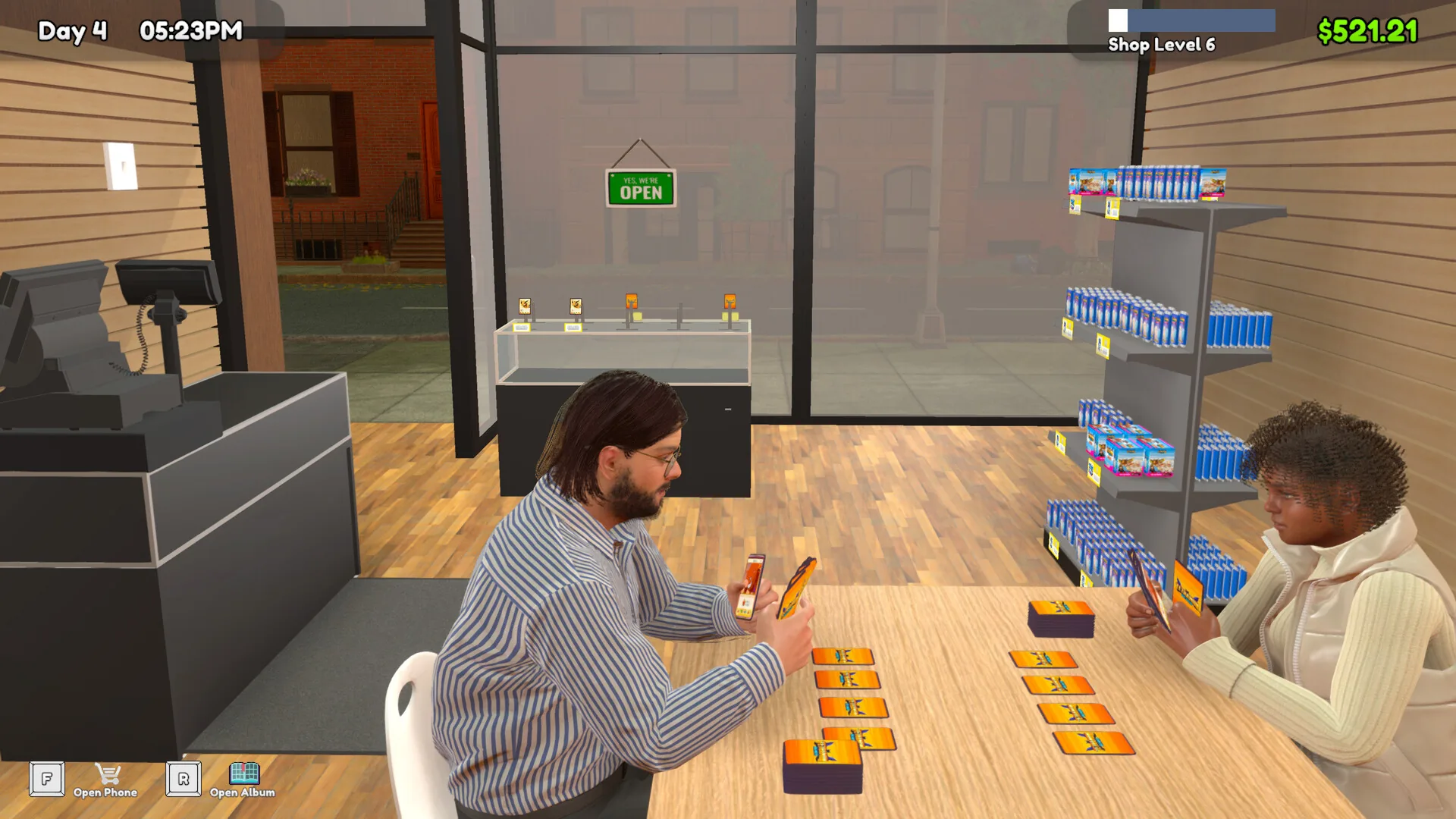
You can host players for games, choosing the format and the entry fee.
That is a second revenue stream, and above all a footfall engine: people who come to play are people who leave with a booster.
One rule to remember, and the game is explicit about it: keep the shop clean. A dirty place drives players away, and a player who leaves does not spend. Cleaning is not decorative drudgery, it is customer retention.
Here is the sequence that seemed soundest to me.
Phase one, survival. Everyday stock only, prices raised until the first slowdown, no pack openings, daily cleaning. Objective: stable cash flow.
Phase two, space. Reinvest in expansion before anything else. A bigger shop allows more shelving, therefore more lines, therefore more customers served per cycle.
Phase three, diversification. Unlock new card sets, widen the product range, start hosting in-store games.
Phase four, pleasure. You have earned the right to open packs. Enjoy yourself, complete your collection, keep the card you should have sold. That is what everything else was for.
Your saves carry over from version 0.70, so there is no need to start a new shop.
And Tetramon is played against the computer only. There is no multiplayer, and the studio does not plan any in the near future. If you were hoping to face other shopkeepers, you will have to wait.
Your best margin on a single card? Records are compared on the InsertCoins Discord.