6
Test
Crown Siege: an eight-euro incremental siege game, honest about its length
You spawn troops, absorb waves of goblins, upgrade the tower. Short, owned, and sold as such.
Alexandrosse
7 min
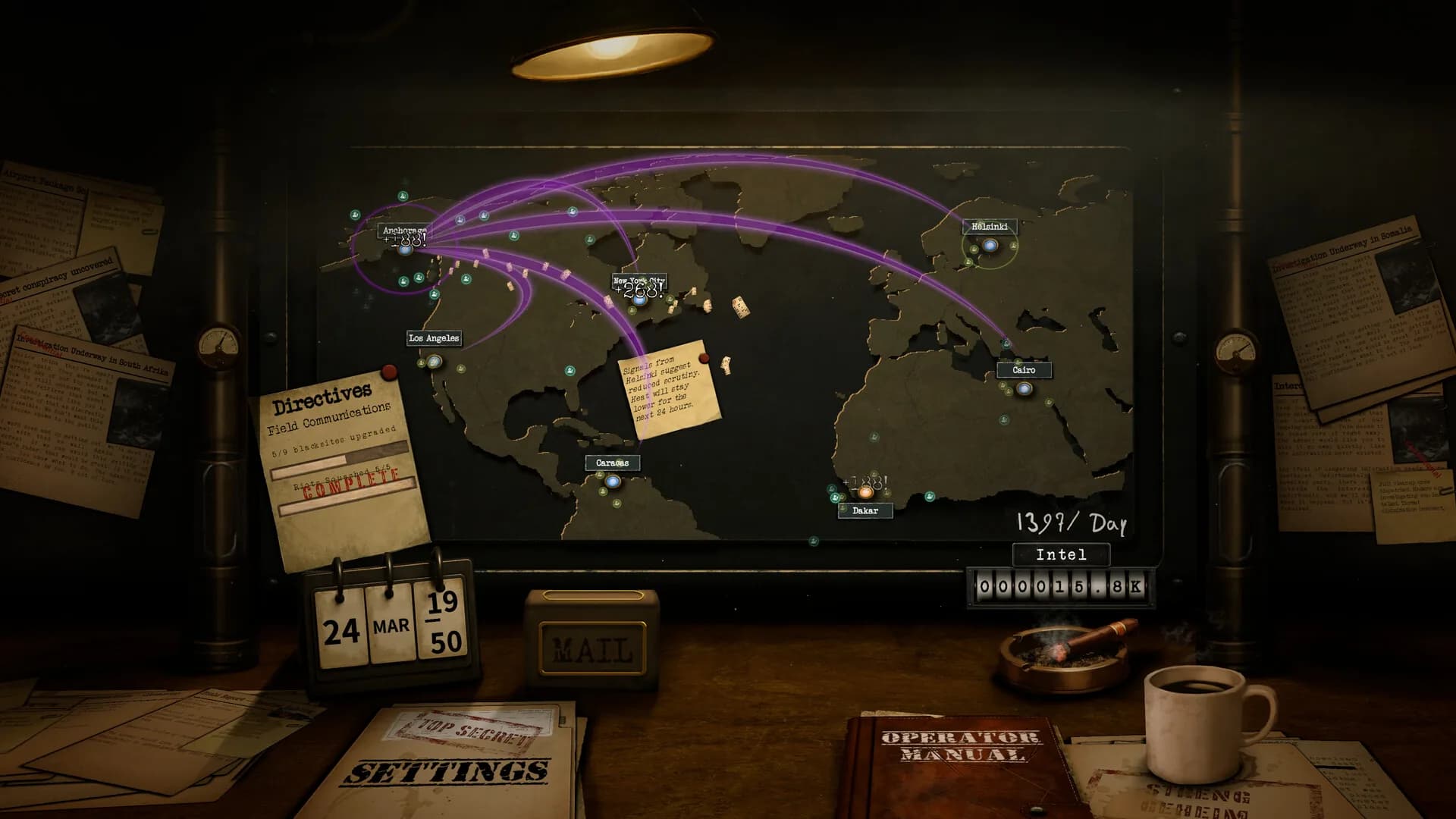
A Cold War incremental where you build your own spy network city by city. Made by one person, and built for sleepless nights.
Alexandrosse
InsertCoins.press Score
7/10
Verdict
Recommended
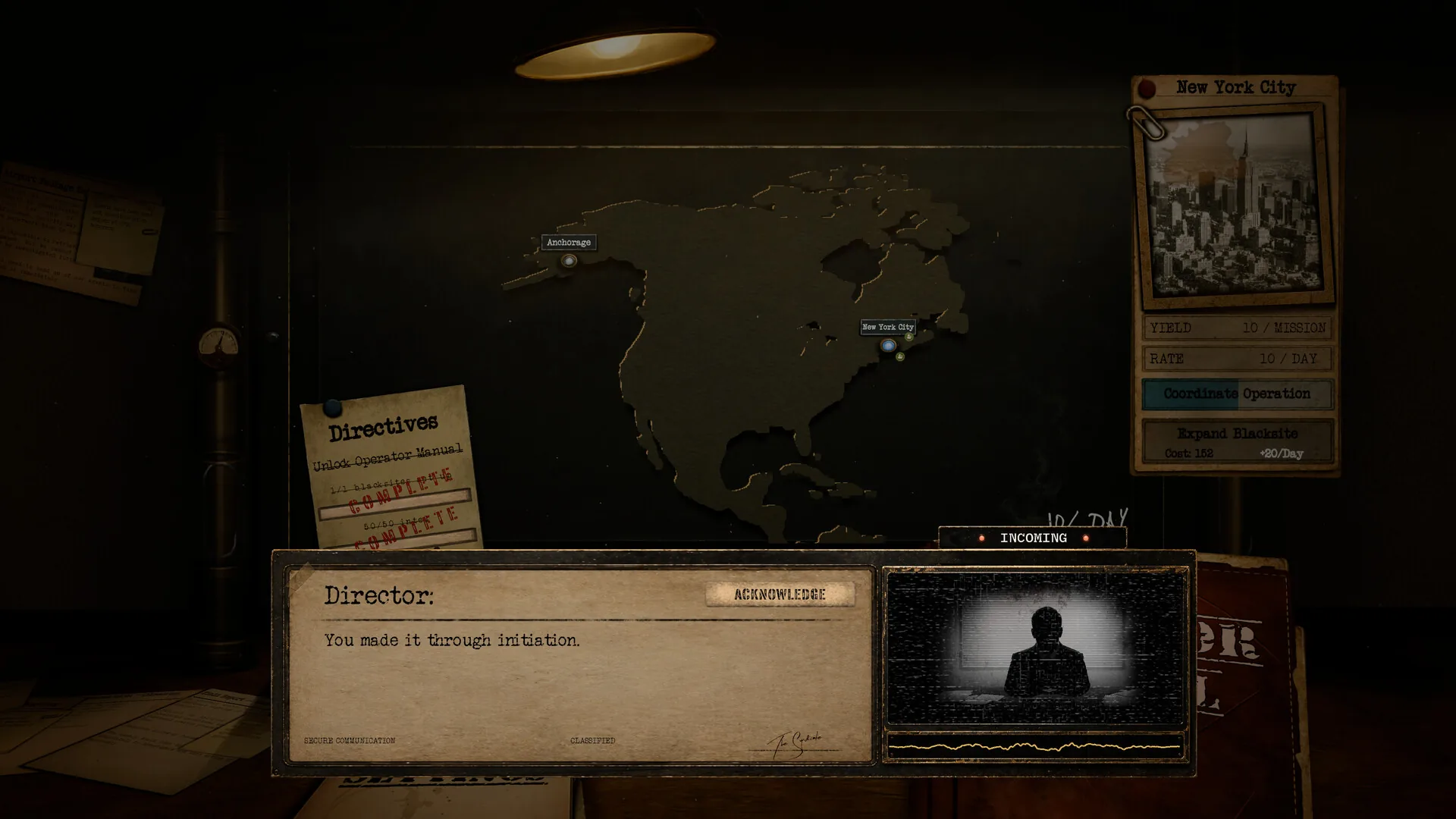
Let us start by correcting the most natural assumption, mine included: you do not pick a side between the CIA and the KGB. The Syndicate Classified Operations does not put you in charge of an existing agency. It has you build your own network, starting from a single city, until your desk controls a global spy apparatus. The Cold War is the setting and the ambient pressure, not the uniform you wear.
Which, incidentally, is considerably more worrying for your sleep than the version you had in mind.
Let us put the word down straight away, because it changes everything: this is an incremental game. Not a narrative management game in the vein of Papers Please, not a tactics game like Phantom Doctrine. You launch operations, gather resources, unlock cities, automate your agents, invest in upgrades, and the curve climbs.
The studio, A and I Software, does claim it is more than watching numbers go up. There are 465 upgrades to unlock, three escalating stages that each add new systems, and a fully voiced campaign with an original soundtrack. All of it produced by a solo Filipino developer, which makes the announced scope genuinely impressive.
If you know what the word incremental does to a brain that likes charts going up, you already know why I am talking to you about sleep. Demo feedback all points at the same spot: the moment intel point gains start ramping up triggers exactly the dopamine the genre promises.
A pure incremental always ends up spinning in place. Here the counterweight is called Heat. Every city generates it as you operate there, so you constantly have to arbitrate between growth, automation and discretion, before the situation turns against you.
On top of that come the crises of the era, which exist to break your plans: blackouts, lockdowns, riots, enemy operations, and even nuclear launches. You have to react fast, restore control, and not lose momentum. It is that tension between expansion and overheating that keeps the game from collapsing into a bar that fills itself, and it is its best idea.
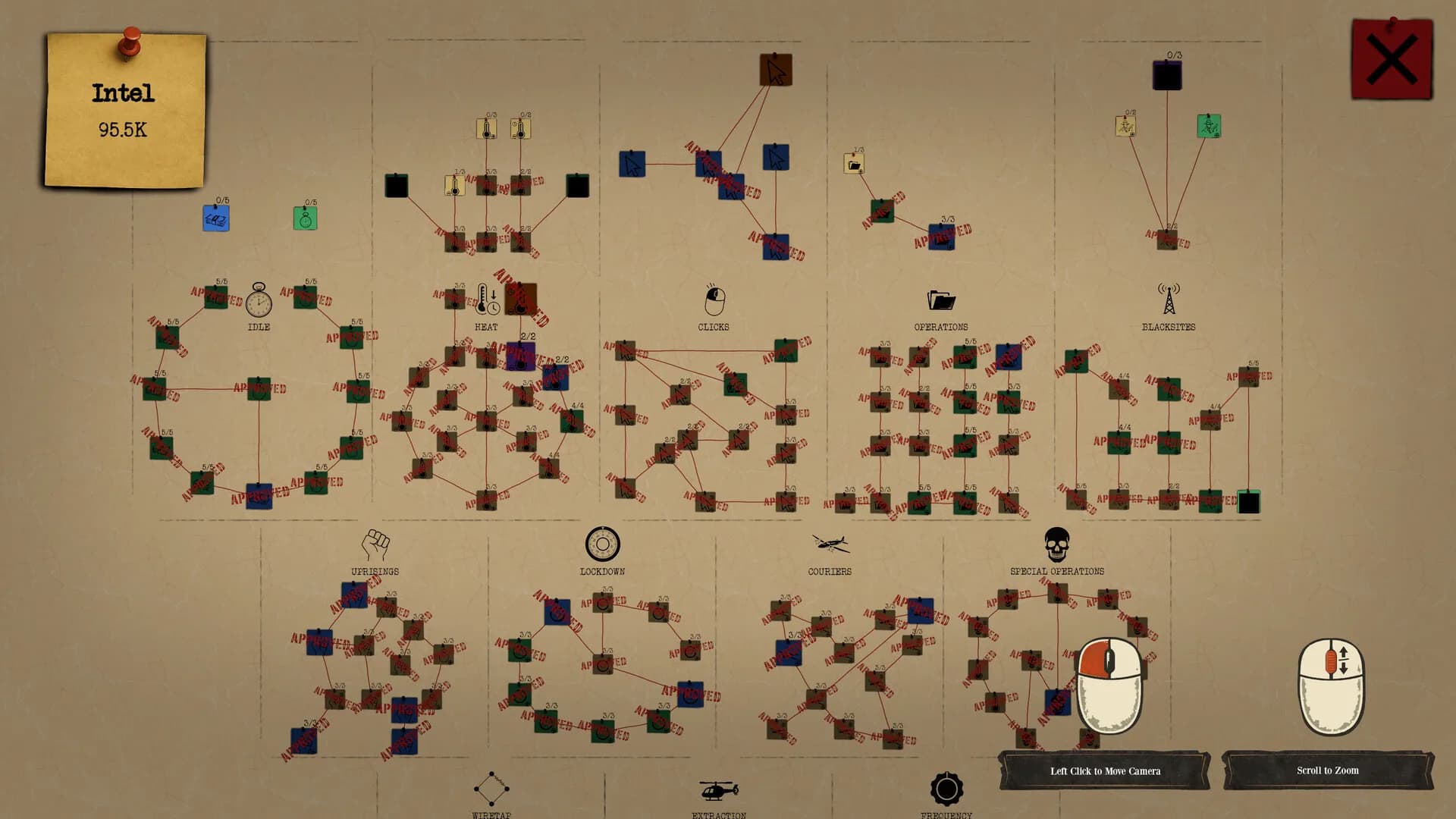
The genre itself, first. An incremental is still an incremental: the loop rewards patience and optimisation rather than skill, and you have to enjoy that. Anyone expecting a spy game with agents, identities and dilemmas will be in the wrong place, because the Cold War here is a theme and an aesthetic, not a play system.
Then the scope announced by a lone developer. A fully voiced campaign, 465 upgrades and three escalating stages is a lot for one person, and that ambition gets paid for in polish: uneven presentation, systems that stack rather than talk to each other. Finally, we still lack perspective on the balance of the long curve, the point that always decides the fate of this kind of game, and the available feedback covers mostly the first few hours.
What remains is a shrewd proposition, with an unusual theme and a genuine mechanical counterweight, released quietly on 5 August. It does not ask for much attention at once, only for all of your evenings.
Disagree with the score? Come and tell us on the InsertCoins Discord, where we defend our verdicts live.
Community
Your rating
Advertisement
Loading comments...
You might also like
You spawn troops, absorb waves of goblins, upgrade the tower. Short, owned, and sold as such.

iRacing delivers a solid pad game and a contested wheel game. And the official store page discloses automatically generated voice lines.
An automation game where you manifest your own biomes, with five minigames to fill the time while the machines work.