There is a question we could not shake while launching Company of Heroes 3 Final Stand: why? Why take one of the best tactical strategy engines on the market, the one that simulates smoke, cover and morale down to the metre, and fold it into a wave-defense mode sold separately for thirty dollars? We expected a mode inflated to product status out of opportunism. We spent our first evenings holding "one last wave". The verdict is as surprising as it is nuanced.
The context
Company of Heroes 3 Final Stand is developed and published by Relic Entertainment, the studio behind the saga and Dawn of War, now independent after its split from SEGA. The game launches on PC at 29.99 dollars, with launch discounts for owners of Company of Heroes 3. The crucial point: it is standalone. You need neither the base game nor any prior entry to play. Relic is selling a self-contained experience, not an expansion, and that is the whole debate we carried into the first match.
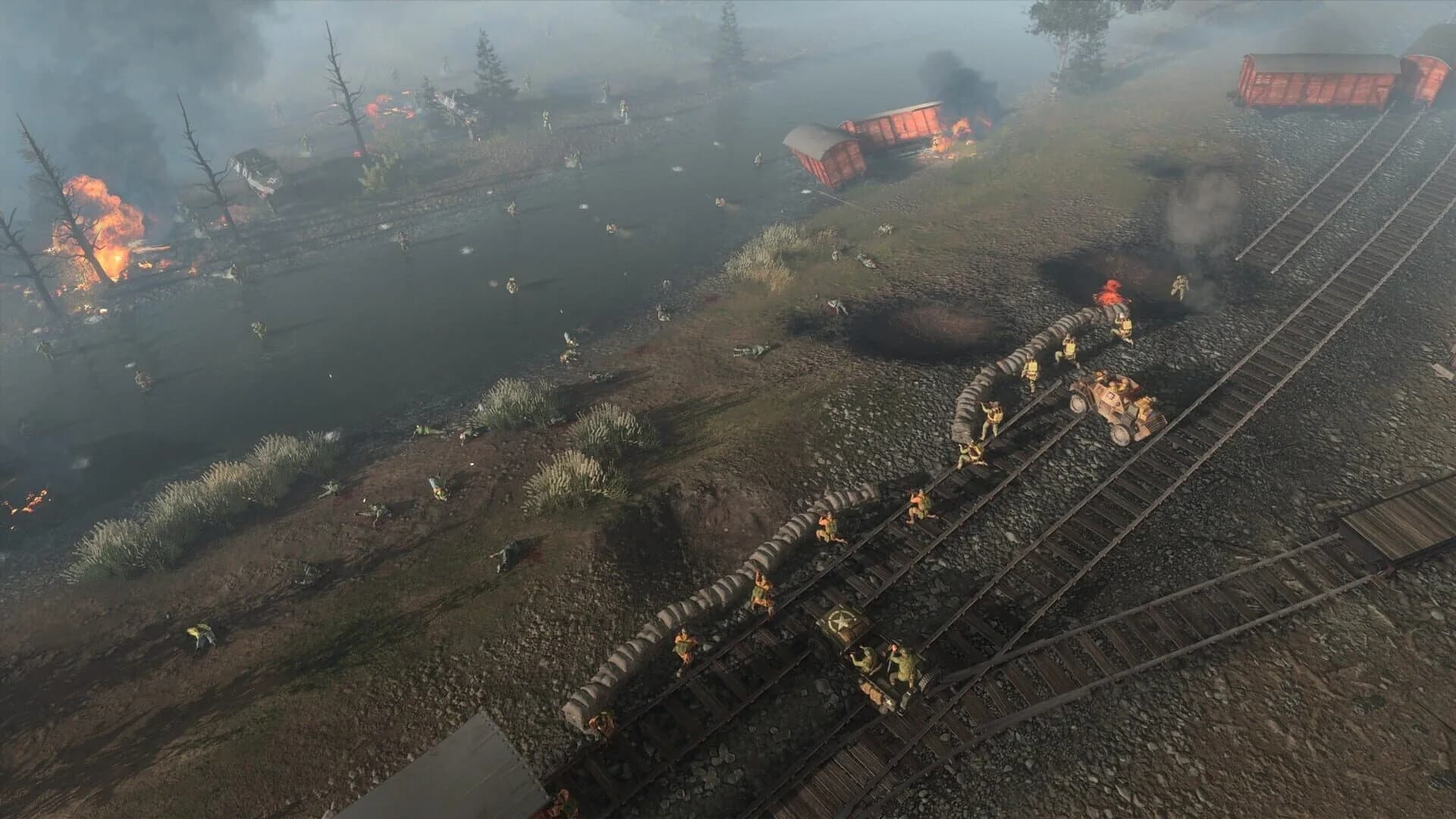
Final Stand swaps the classic RTS formula for a roguelite tower defense. No more objective capture or campaign: you dig in, stack layered defenses and hold a position against twelve escalating waves of enemies, punctuated by bosses and battlefield events. And this is where the magic happens: the Company of Heroes engine, with its handling of cover, firing angles and suppression, turns simple survival into a permanent tactical puzzle. Placing an anti-tank gun behind a low wall, posting machine guns to rake a lane, keeping a mobile reserve to plug the breach the boss just opened: every wave is a small positioning problem you solve under pressure, and the satisfaction when the line holds is real.
The roguelite layer does the rest. Between each wave you pick randomized units or abilities to reinforce your battlegroup, and each faction, US Forces, Wehrmacht, British Forces and Deutsches Afrikakorps, has its own progression tree with upgrades that persist between runs. That loop of choices creates exactly the "one more run" tension the genre lives on: you restart to try a new build, to reach one wave further, to unlock the upgrade you were missing. The content follows, with five battlegrounds, eight difficulty levels, thirty-six bosses and an endless mode for the diehards.
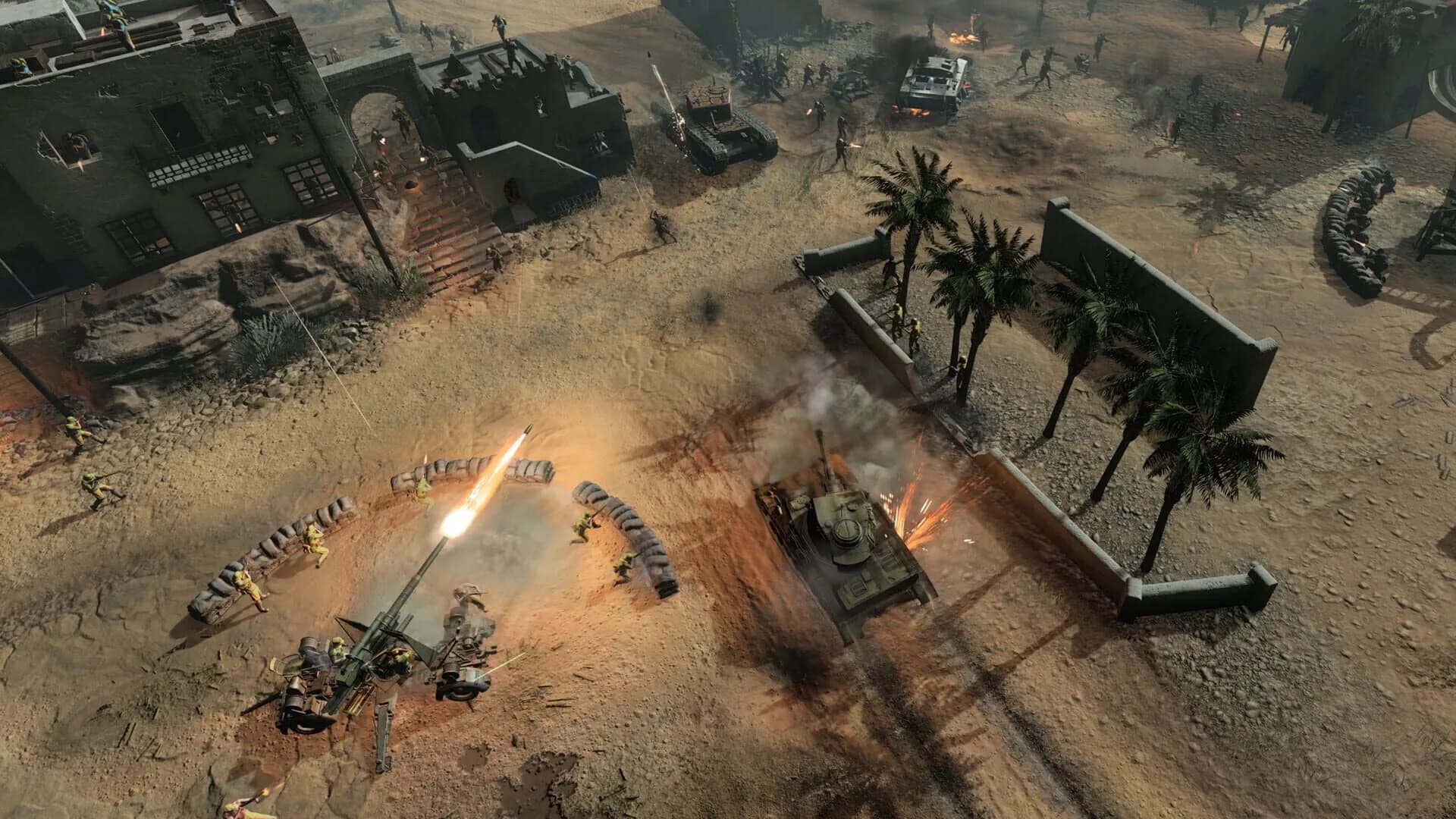
It is in online co-op that Final Stand shows its full worth. Splitting sectors between two players, coordinating a counterattack the moment the boss caves in the left flank, gently arguing over who let the tanks through: the mode turns the game into a guilty pleasure with friends, the kind you restart "quickly" at eleven and drop at two in the morning.
Not everything is perfect, though, and the opening question does come back. The variety, generous as it looks on paper, eventually shows its limits in solo: after a certain number of runs you recognise the patterns, the maps cycle, and endless mode drifts into repetition for anyone without a play partner. Some randomized builds are also clearly stronger than others, and the balance occasionally lets a run tip on a bad draw more than on a play mistake, which frustrates.
Technically, Final Stand inherits all of Relic's craft and, good news, without the chaotic launch Company of Heroes 3 suffered. The engine runs well, the particle effects, smoke and explosions remain a treat on a battlefield descending into chaos, and the tactical readability, crucial when twelve waves pour in, holds up. You feel a studio that, now sole master of its ship, shipped a solid product from day one.
The technical reservations are minor. The roguelite interface, with its between-wave choices, would have gained from better detailing the actual effect of certain upgrades, and the camera occasionally fights the verticality of some maps. Nothing that spoils the experience, but small rough edges on an otherwise very clean whole.
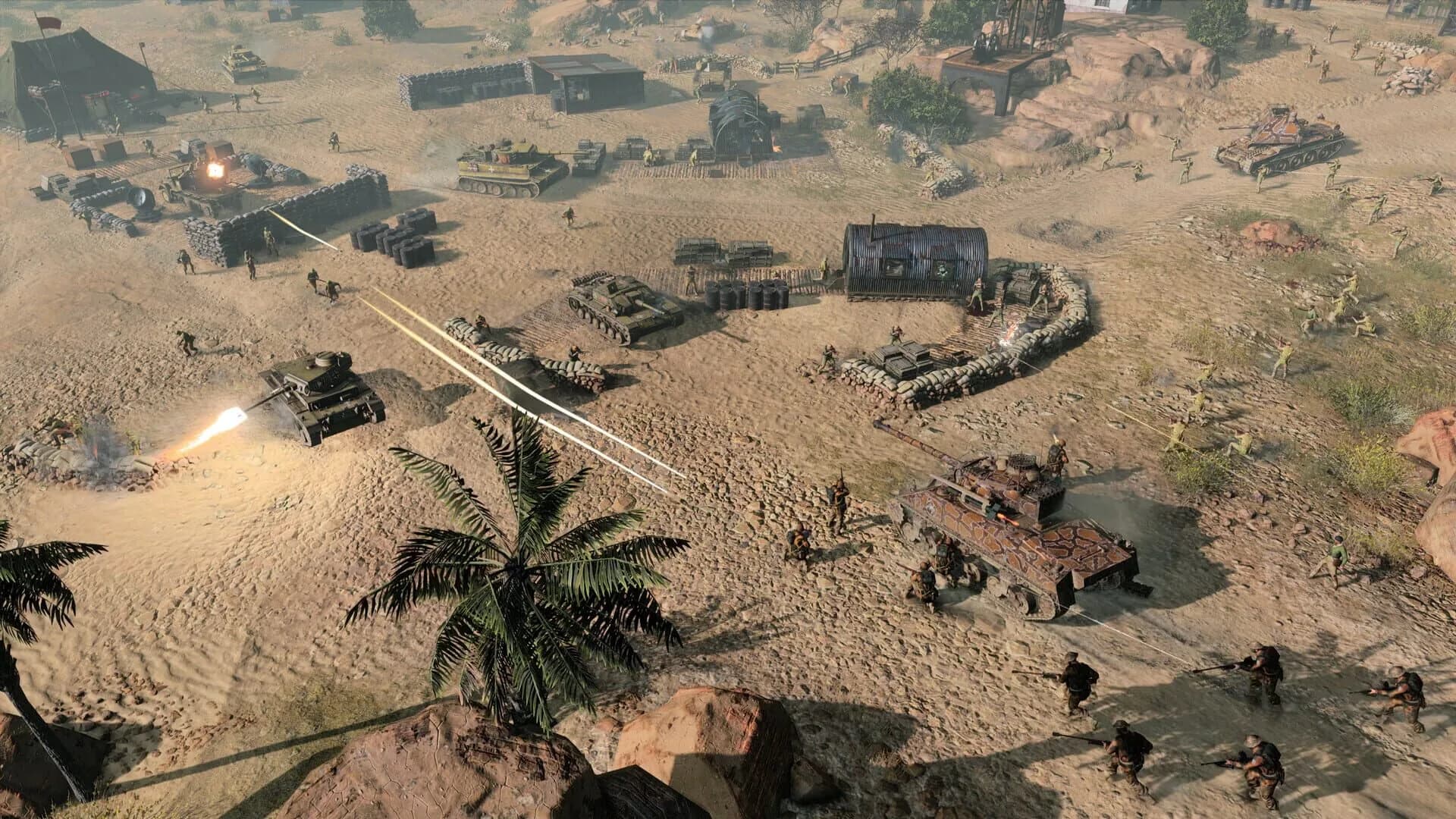
We launched Company of Heroes 3 Final Stand with a frown, convinced we were holding a survival mode overpriced into a standalone. We came out smiling, a little reluctantly: the roguelite loop works, the saga's tactical engine elevates wave defense, and online co-op delivers a ruthlessly effective guilty pleasure. For anyone who loves Company of Heroes and wants short, sharp sessions, it is a real success.
But our opening question has not fully vanished. In solo, repetition looms once the novelty fades, the build balance deserves tuning, and thirty dollars remains a debatable entry ticket for a game this focused. Final Stand does not fully justify its separate existence, but it amply justifies the hours we sank into it. A standalone we did not expect and yet struggle to put down.
A survival mode that had no reason to be this good, saved by the best tactical engine in the genre.
Score: 7/10
Reviewed on the PC version.
The discussion carries on over on our Discord, where we relitigate scores for far longer than is reasonable.