7
Test
Cricket Management 26: does the Football Manager of cricket finally deliver?
A deep, feature-complete cricket management sim in Early Access. The skeleton of a great game is here. The match engine still needs patience.
Alexandrosse
9 min
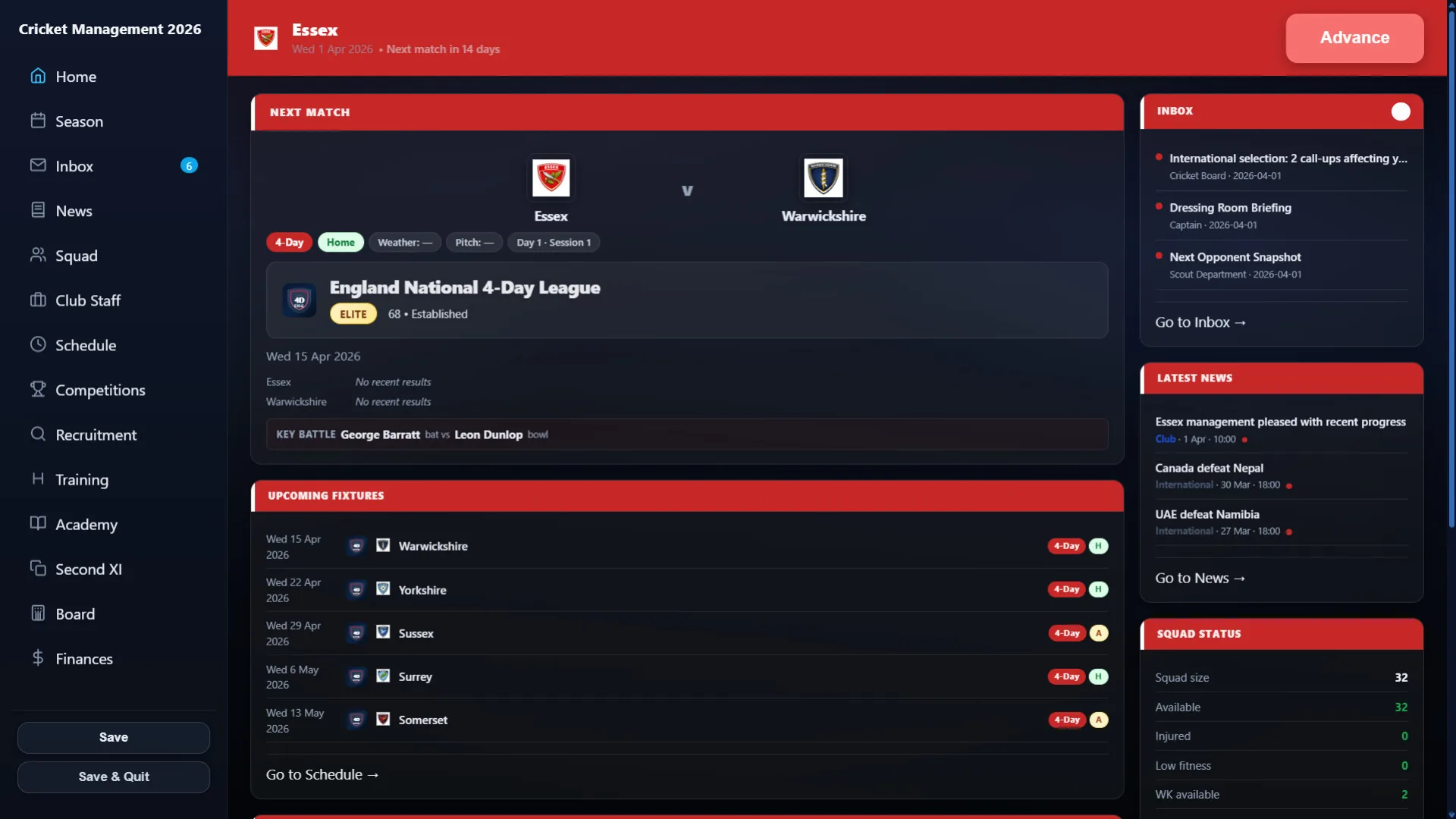
Getting started in Cricket Management 26: which club to pick, understanding red-ball, ODI and T20, building your squad, nailing transfers and keeping your budget.
Alexandrosse
You just launched Cricket Management 26 and the club selection screen is staring back at you like an exam you did not revise for. No panic: whether you are a cricket veteran or you still mix up a wicket and a delivery, this guide gives you the right reflexes to start a career without sinking your team in the first season. Straight to the point, no needless jargon.
The rule is the same as in any good management game: your first club shapes your learning curve. A big, well-funded national outfit gives you a solid squad, a comfortable budget and a generous margin for error, ideal for learning the menus stress-free. A small team, by contrast, throws you straight into the deep end: tight budget, limited players, hard objectives, but real project satisfaction when you climb.
For a first career, take a club sitting in the upper half of its national competition. You will discover the three formats and the transfer market with a safety net, before later diving into a rebuild challenge where every decision counts double.
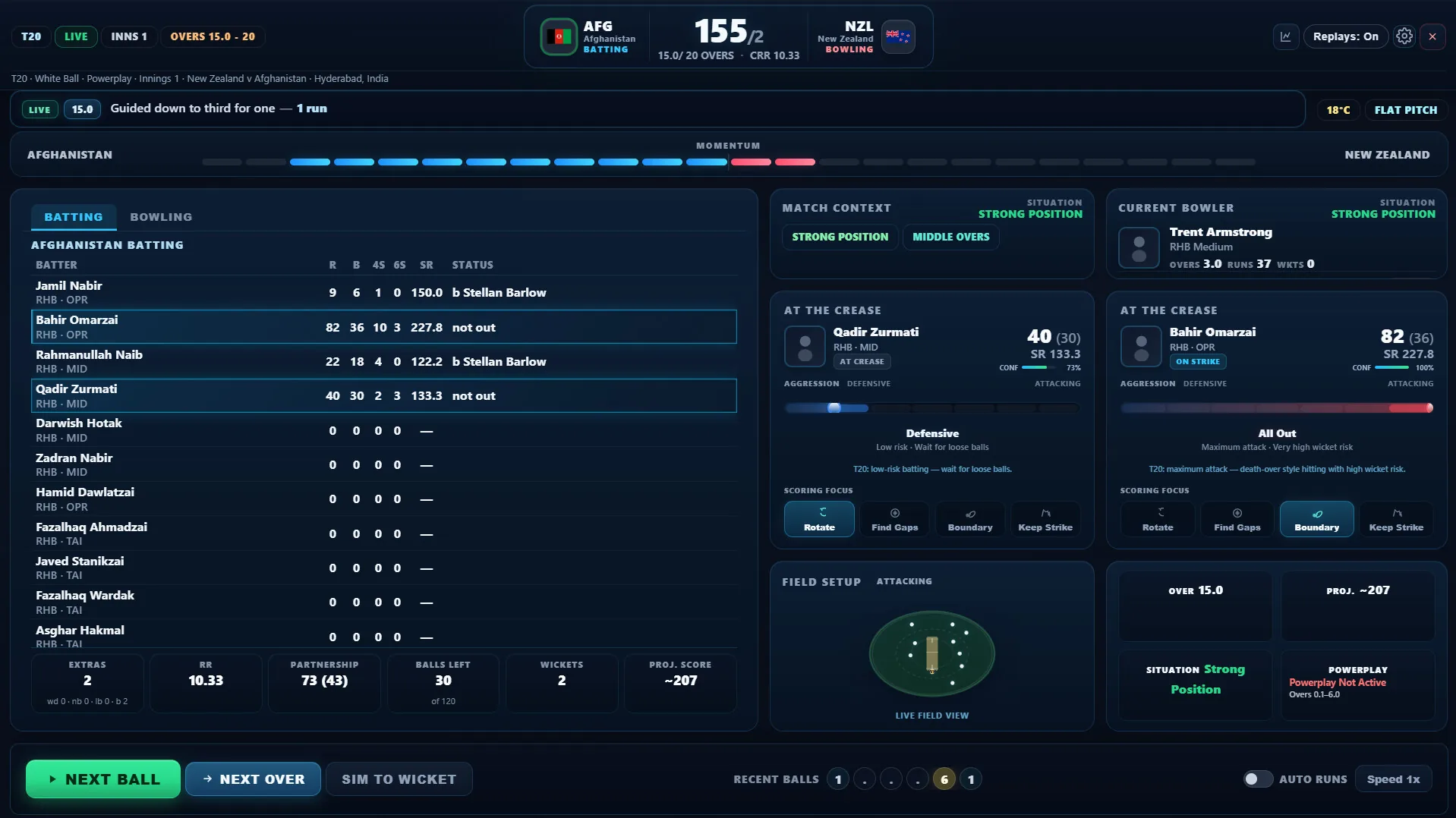
This is the heart of cricket, and so of the game. Each format demands a different player profile, and building a squad without understanding it is like fielding sprinters in a marathon.
Red-ball is the long, multi-day format: patience, technique and endurance come first, and you want solid batters and bowlers who can hold long spells. The one-day, or ODI, demands a balance between attack and caution over a limited span. T20 is the frantic, explosive version: you want batters who take risks and bowlers who break the rhythm. The key to a good career is identifying which players excel in which format, and not wasting a T20 specialist in a long-form match.
Advertisement
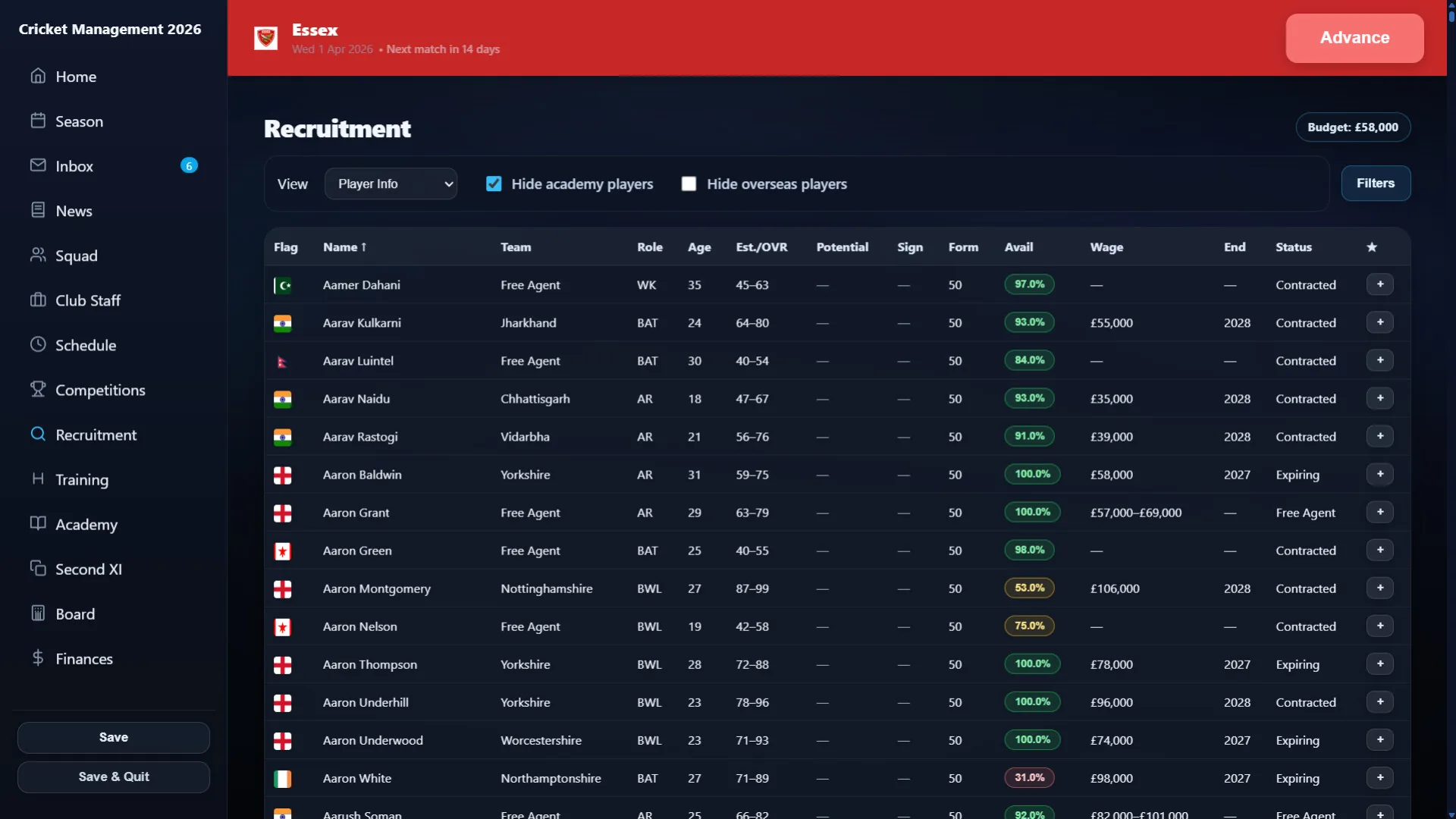
A good squad is not a collection of stars, it is a balance. Make sure you have depth at every position, because injuries and fatigue will strike across a packed calendar, and too short a bench will cost you matches for nothing.
The real long-term wealth is your youth prospects. Spot the high-potential youngsters early, give them minutes in lower-stakes competitions to bring them up, and you build a talent pool that will be worth gold three seasons later. Signing an ageing star costs a lot and returns little over time: investing in youth is almost always the better bet, provided you are patient.
The transfer market is where careers are won or scuttled. Before buying, identify a real need in a specific format rather than caving to a big name. One targeted player who fills a weakness beats three signings that overlap.
On finances, discipline pays. Balance the income from your sponsors and competitions against wages, contract renewals and staff, and always keep a reserve for emergencies and late-window opportunities. A club that smartly sells its players at the end of their cycle, before they lose all value, funds its next generation without going into debt. In sports management, budget patience almost always beats the ruinous splash.
Which club should you pick to start?
A club sitting in the upper half of its national competition, with a good budget and a solid squad, to learn the mechanics with a comfortable margin for error before attempting a rebuild.
What is the difference between red-ball, ODI and T20?
Red-ball favours patience and endurance over long matches, the ODI seeks an attack-defence balance over a limited span, and T20 rewards explosiveness and risk-taking. Each format demands different player profiles.
Should you sign stars or develop youngsters?
Developing high-potential youngsters is almost always more profitable over time than buying an end-of-career star, expensive and fast-declining. Build a talent pool early.
How do you avoid going broke?
Balance income and wages, keep a reserve, and sell your players before they lose all value to fund your next generation without going into debt.
Is the game complete at launch?
No, Cricket Management 26 launches in Early Access on 29 July 2026 and will grow over the months. Content and systems will evolve during development.
Guide written from official information and the PC Early Access version.
We help each other out on the InsertCoins Discord, so do come and ask.
More on Cricket Management 26
All about Cricket Management 26Community
Your rating
Advertisement
No comments yet. Be the first.
You might also like
A deep, feature-complete cricket management sim in Early Access. The skeleton of a great game is here. The match engine still needs patience.
Where to start, how to think about a reusable routine, why your robot stops, and how to automate heat before anything else.

What to bring, where to find Bloodgold, how to open the dungeons, and the item-stand warning you should not ignore.

Ten thousand dollars to start, a bank that follows you, three sides on the zone. Here is how not to go broke by your third match.