We are used to gladiator games that throw you into the arena to mash a button while waiting for the next victory. Ludus A Gladiator Story makes the opposite bet: here, the real fight is one of words, allegiances and betrayals, and the sand only reveals what your choices have already decided. It is an ambitious, sometimes uneven narrative RPG, but one that leaves a mark, exactly as it promises.
The context
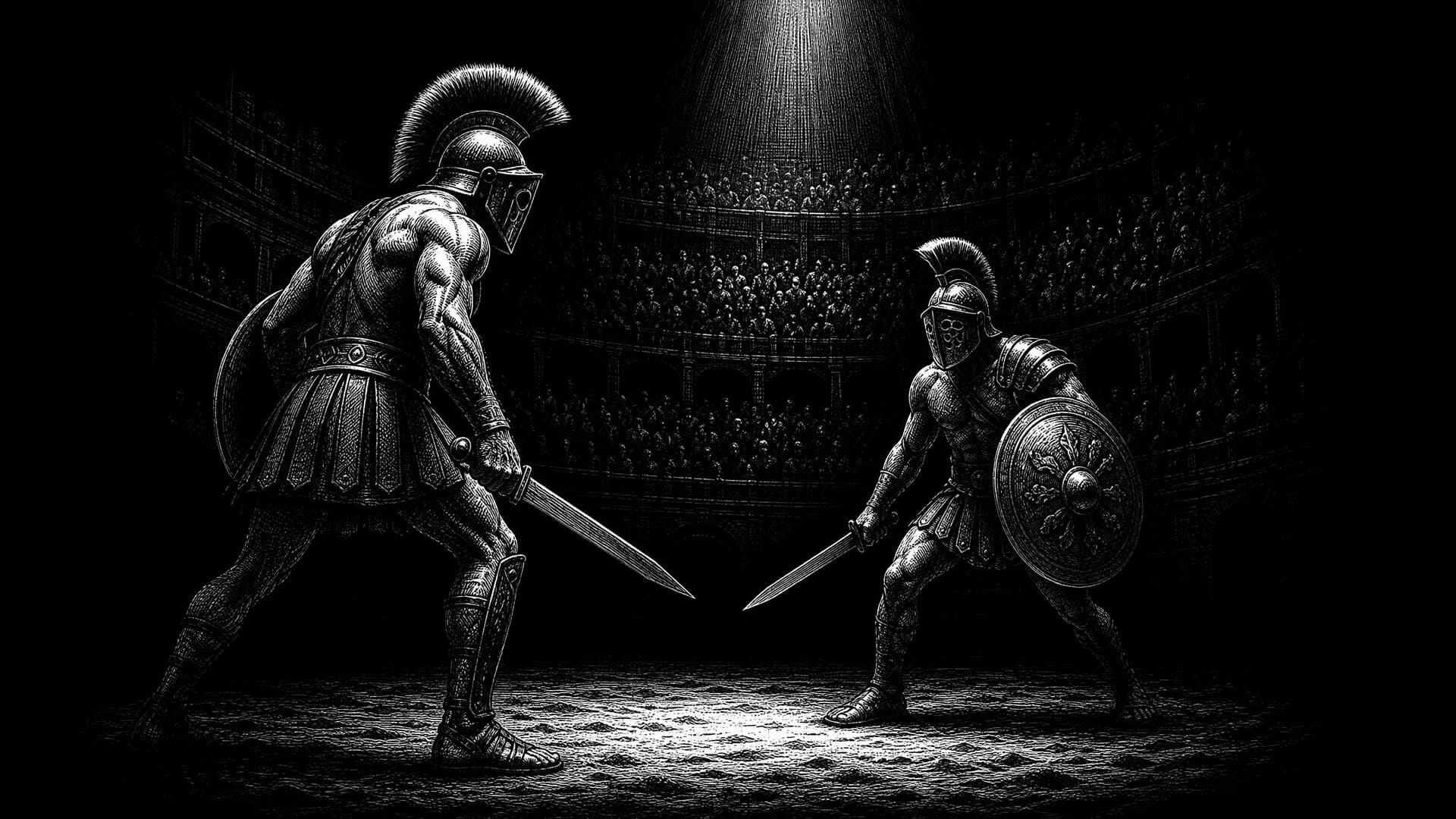
Ludus A Gladiator Story is developed and published by A Story Interactive, available on PC via Steam. It is a fully voiced branching narrative RPG, with the distinctive feature of offering a unique engraving and voice acting for every choice and every outcome. The game announces four starting origins, more than 1,800 choices and 19 different endings, around a clear promise: you will bleed on the sand, the only question being whether you bleed for them or for yourself, because every decision leaves a scar. The narrative ambition is enormous for a studio of this size.
The heart of the game is writing and branching. Unlike so many choice-driven games that give the illusion of deciding before pulling you back onto rails, Ludus takes its branching promise seriously. The four origins genuinely colour the journey, decisions have consequences that ripple over time, and the nineteen endings are not inflated marketing but the fruit of a real tree. The full voice acting, including for the outcomes of each choice, gives the story rare flesh and gravity: hearing a decision take shape through voice rather than a mere block of text changes everything in your involvement.
What makes the game strong is that constant impression that your choices are yours and bind you. The theme of loyalty, central, is perfectly served by the arena context: serving your master, betraying to survive, sacrificing yourself for a brother in arms, each dilemma carries real moral weight, and the "every choice leaves a scar" formula holds up controller in hand. You do not play to win fights, you play to discover who you become as the blood dries, and that narrative motivation holds across the whole length.
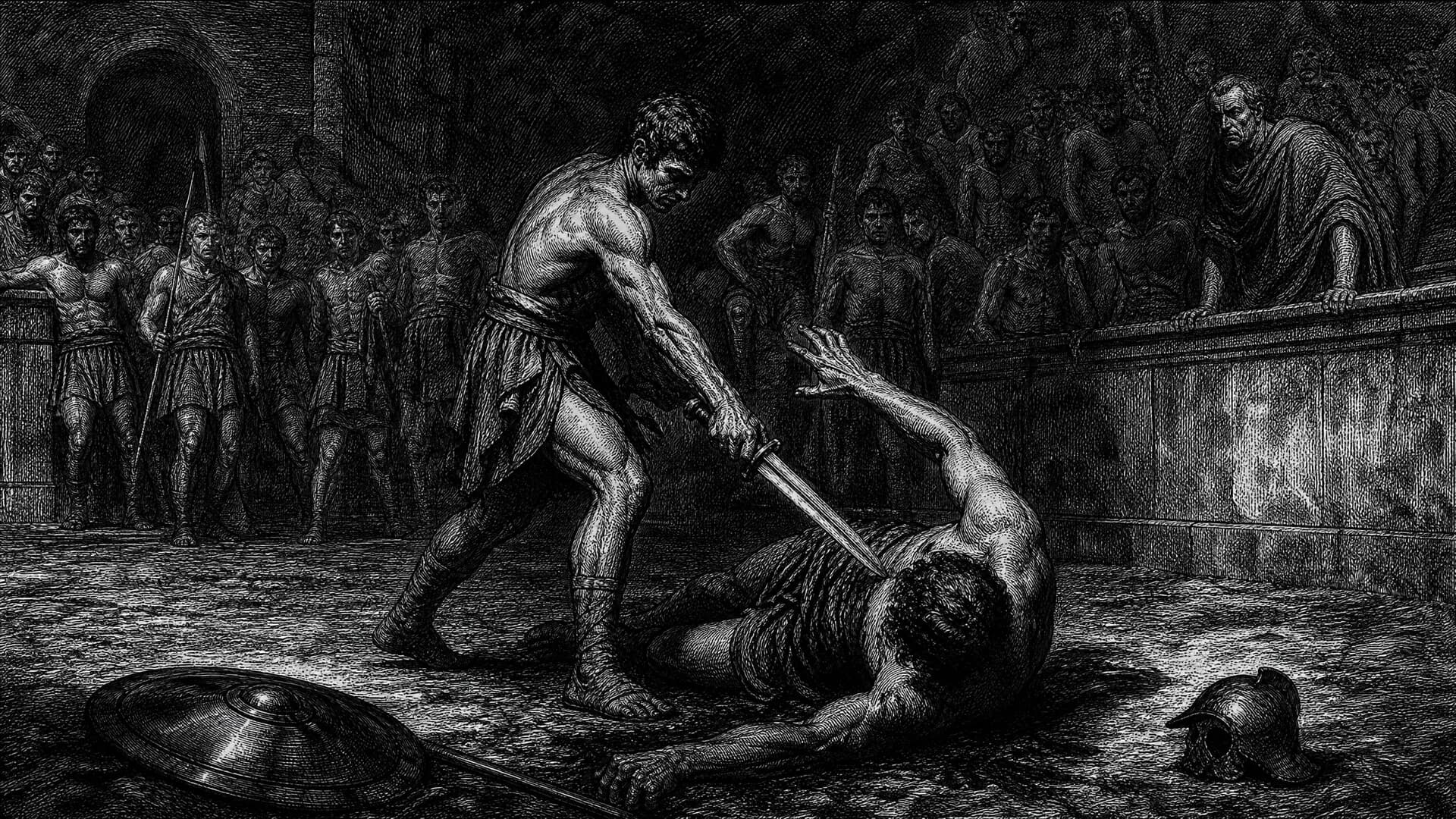
Where it falls short is the properly ludic side of the combat. Ludus is first and foremost a narrative game, and the arena fight, while it illustrates the stakes, stays in the background compared to the richness of the writing. Those who come looking for a deep, sharp gladiator combat system risk being disappointed: the sand here is a dramatic backdrop more than a demanding playground. It is an owned design choice, coherent with the title's identity, but one that narrows its audience to those who favour story over action.
The other reservation is the unevenness inherent to such a vast tree. With 1,800 choices and 19 endings, not all branches have the same density or writing quality, and some feel more polished than others. That is the flip side of an outsized ambition for an independent studio: the generosity of the content is sometimes paid for with imperfect consistency. Nothing fatal, but you feel the seams of a project aiming very high with limited means.
Technically, Ludus A Gladiator Story cares for what matters in a narrative game: the staging of the story and the voice acting. The art direction effectively sets the atmosphere of ancient Rome and its arenas, and above all the vocal work, applied to every choice and every outcome, is a feat of scale for a studio of this size. It is that full voice acting that gives the game its identity and gravity, and it keeps its promises.
The technical reservations join the question of means. The production stays modest compared to big releases, and some sequences betray the project's limited budget, notably in the depiction of combat. But the whole runs correctly and never betrays its narrative ambition through a technical flaw that would break immersion, which is the essential thing for a game that bets everything on the written word and the voice.
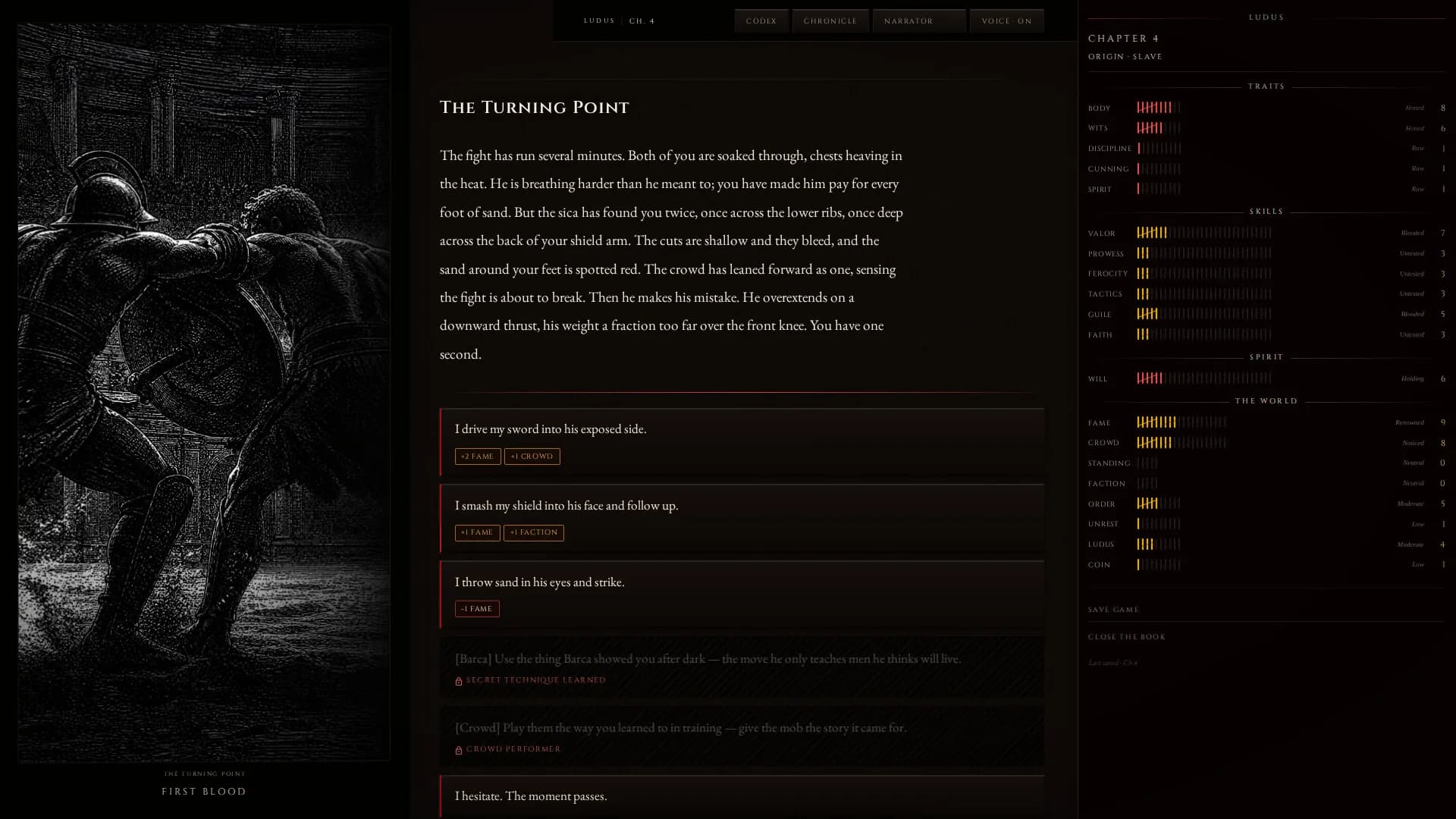
Ludus A Gladiator Story is a fine narrative success, carried by an outsized and fully owned ambition. Its real branches, its four origins, its nineteen endings and above all its full voice acting that gives body to every choice make it a memorable RPG, where the theme of loyalty finds an ideal setting in the arena. For anyone who loves choice-driven games that truly commit, there is a dense and memorable experience here.
Its limits flow from its identity and its means: background combat that will disappoint action fans, and a tree so vast that its writing quality is uneven. But in its register, that of the narrative RPG that takes its choices seriously, Ludus keeps its most important promise: every decision does indeed leave a scar. A game to reserve for story lovers, who will find a feast here.
An ambitious, memorable narrative RPG, where the writing triumphs where the combat stays in the background.
Score: 7.5/10
Reviewed on the PC version.
The discussion carries on over on our Discord, where we relitigate scores for far longer than is reasonable.